 KATERINA PARRI
By Old Boy
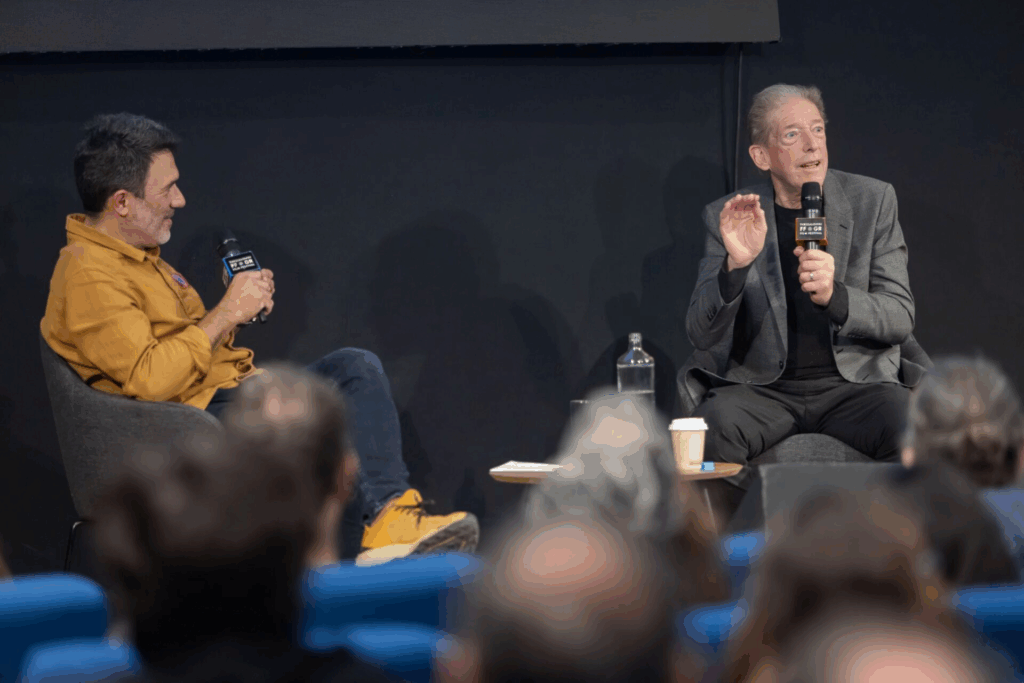
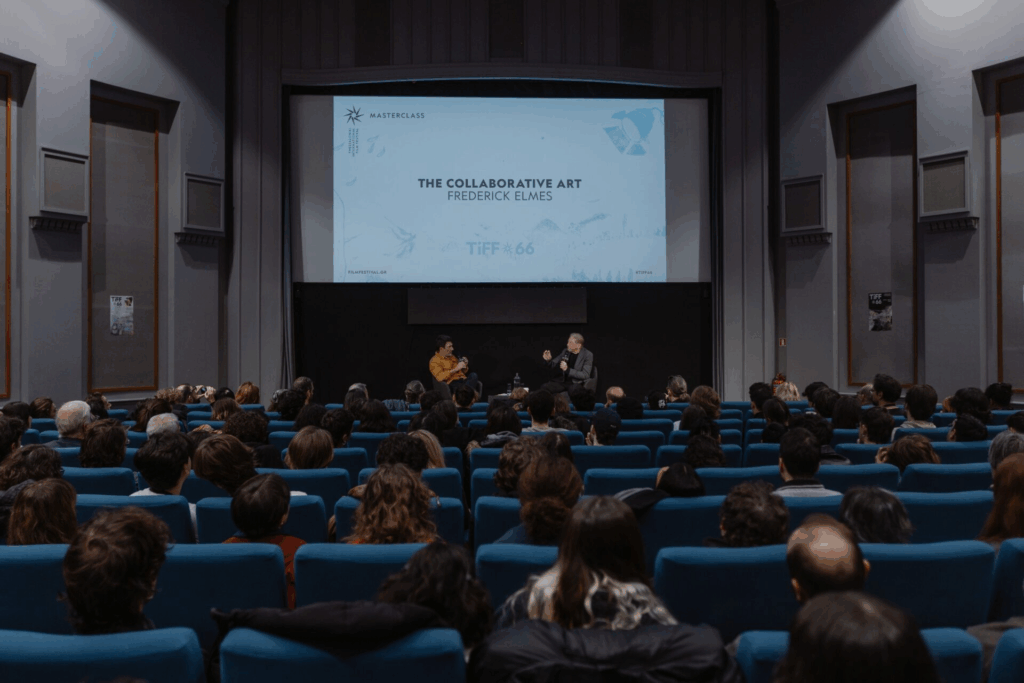
Among the honorees of the 66th Thessaloniki International Film Festival was Frederick Elmes, a cinematographer who, over the decades, has worked alongside some of the legends of cinema. elculture had the opportunity and truly the pleasure and honor to speak with him and listen to stories that very few people alive could tell. After all, there can’t be many who worked on David Lynch’s Eraserhead and John Cassavetes’ A Woman Under the Influence at the same time. But let’s not say more. Let’s give him the floor.
I see you have your camera with you.
Yes, I need it. I need to keep taking photographs. It keeps me grounded and connected to the world around me. I began as a photographer that’s what I studied in Rochester and I thought I would make a living through illustration or journalism. But it turned out to be very difficult to survive financially as a photographer in the U.S. At the same time, I found filmmaking so much more interesting. So I made a few short films and then realized that in school I needed to study cinematography, so I followed that path. My roots are still in creating a photographic image and working with the light that exists in the world. I photograph what I see as a way of remembering it. It helps my memory. Years later, I can return to an old photograph and say, “Yes look how interesting the light is here.” I try to bring that light with me, to hold onto it somehow, not let it disappear. And maybe I can imitate it or re-create it, so it finds its place in a scene in a film so it becomes part of the storytelling.
I read that all of this began when your father gave you a camera as a gift.
Yes, yes, that was before high school.
He gave it to you without knowing how much it would affect you?
I think so. It was encouragement, really. He himself wasn’t anything special as a photographer just a passionate amateur, taking family pictures. He had a nice camera, a German camera he’d found somewhere in Germany after the war.
So what do you think makes a great photographer?
I think first it’s the ability to observe, and then, beyond that, the ability to imagine what could happen in the image. I’ve always been drawn to the photographs of Robert Frank. I love his perspective on Americans. His book The Americans is so important to me. Many of his photographs open a door into a world where something is happening a story unfolding but he only gives me part of it. I have to supply the rest. For example, there’s a photograph he took, probably in London in the early ’60s. A rainy, cobblestone street, the back of a hearse with the door open, and a small boy running away on the sidewalk. It always felt like a fragment of a story. I have to imagine why he’s running. That imaginative leap has stayed with me.
So you prefer photographing people rather than landscapes?
I do both. People are harder. When you photograph someone, you have to build a relationship they have to give you permission. And I’m a fairly introverted person, so approaching someone can be difficult for me. On a film set, though, it’s different. My job is to support the director and to visually express the character’s story. So as a cinematographer, I have to build trust with the actor because it’s their face on the screen. If they trust me, they’ll let me in closer with the camera, and that can give the film more power.
You worked with giants. Let’s start with Cassavetes.
Yes, I was very lucky. I was a camera operator on Opening Night and The Killing of a Chinese Bookie. I was there. I saw John direct Gena. It opened my eyes to what cinema could be. I had grown up with Faces and Shadows. And I had met him in film school in New York. I screened Husbands, and afterward Cassavetes, Peter Falk, and Ben Gazzara came on stage to talk about the film. So I already felt this connection and later I got to work with him. He liked working with young people who didn’t yet know exactly what they were doing. He hated anything too polished. He wanted the rawness. The nervous energy you see in his films was present on set cigarettes, coffee, intensity. But he always left room for actors to express themselves.
And then David Lynch. You worked with him from the beginning.
From Eraserhead, yes. It took years. We worked mostly at night. David and I bonded. It was a small crew, very intimate. The black-and-white world was his idea. Shooting in sunny Los Angeles meant waiting for clouds for every exterior scene that was difficult.
Could you tell at the time that he would become David Lynch?
No, but I could see his charisma and vision. He didn’t tell me what to do, but he always looked through the camera and knew whether the light was right. For Eraserhead, darker was always the direction.
And later Blue Velvet?
Yes, by then we had real production resources. But during Eraserhead, Cassavetes approached me with A Woman Under the Influence, so I had to leave for a while. David understood. So in those same years, I was moving between Cassavetes’ raw energy and Lynch’s precision two entirely different worlds.
You also worked with Charlie Kaufman on Synecdoche, New York.
Yes. The script itself demanded that the visual world keep expanding as the protagonist’s imagination grew. Each new space had to be larger, stranger. We had limited resources for visual effects, but we found ways. It’s a big film physically and emotionally and it was overwhelming at times for Charlie. But he’s extraordinary.
And Philip Seymour Hoffman?
He was wonderful. We built trust essential when photographing an actor. I was lucky to work with him again later. Losing him was a great loss.
Your long collaboration with Jim Jarmusch also seems rooted in trust.
Yes. We worked together on Night on Earth, which was far more difficult technically than expected. But that shared experience bonded us. Jim seeks simplicity. He doesn’t want the camera to comment only to observe.
Finally: when you look back, do you feel you left your mark?
I can’t judge that. What I feel is gratitude. I’ve worked with extraordinary people. Every film is a new beginning. Every time, we start from zero discovering how to tell the story together.