 PEPI NIKOLOPOULOU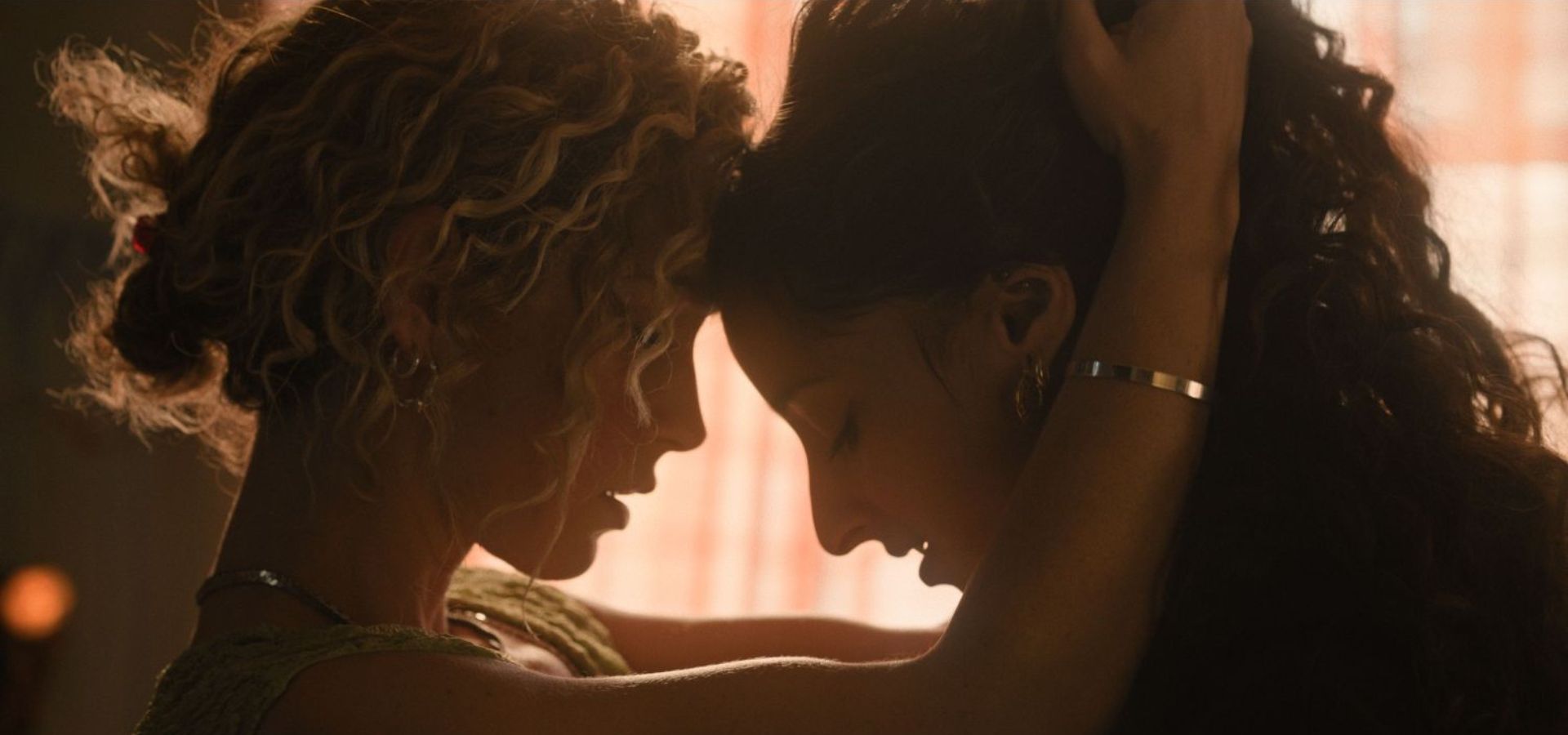
Just before the world premiere of Maya & Samar, we spoke with director Anita Doron and lead actor Amanda Babaei Vieira about the film and the atmosphere of the Thessaloniki International Film Festival
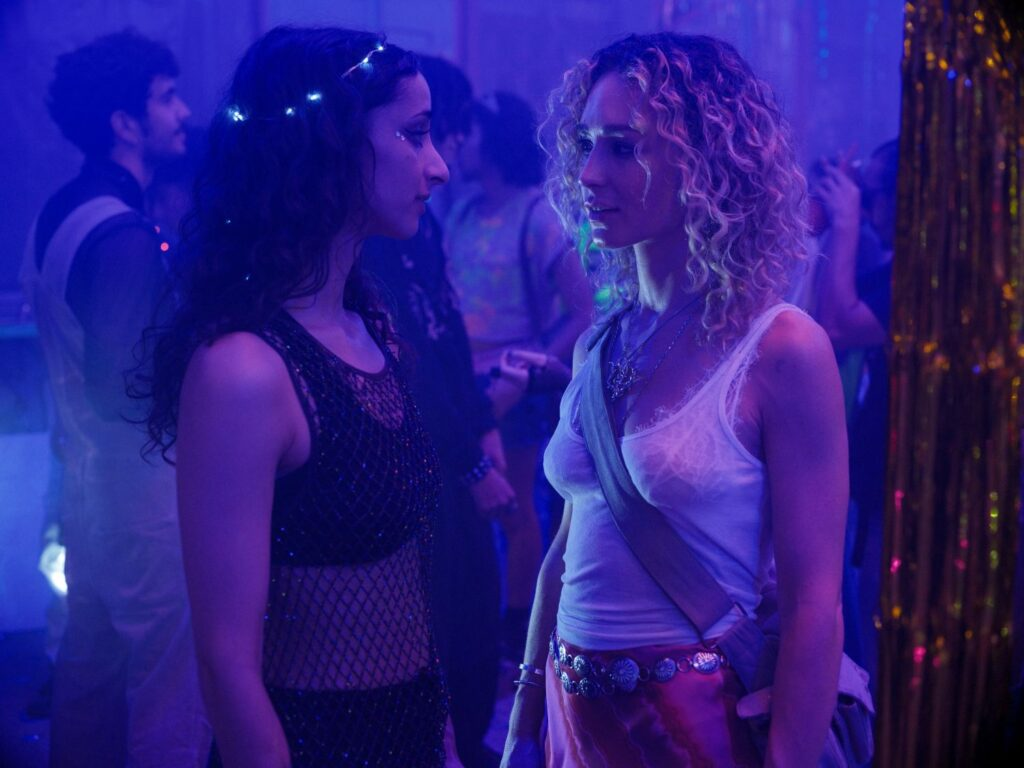
Maya & Samar tells the story of two strangers whose brief but intense encounter unsettles the boundaries of culture, desire, and survival.
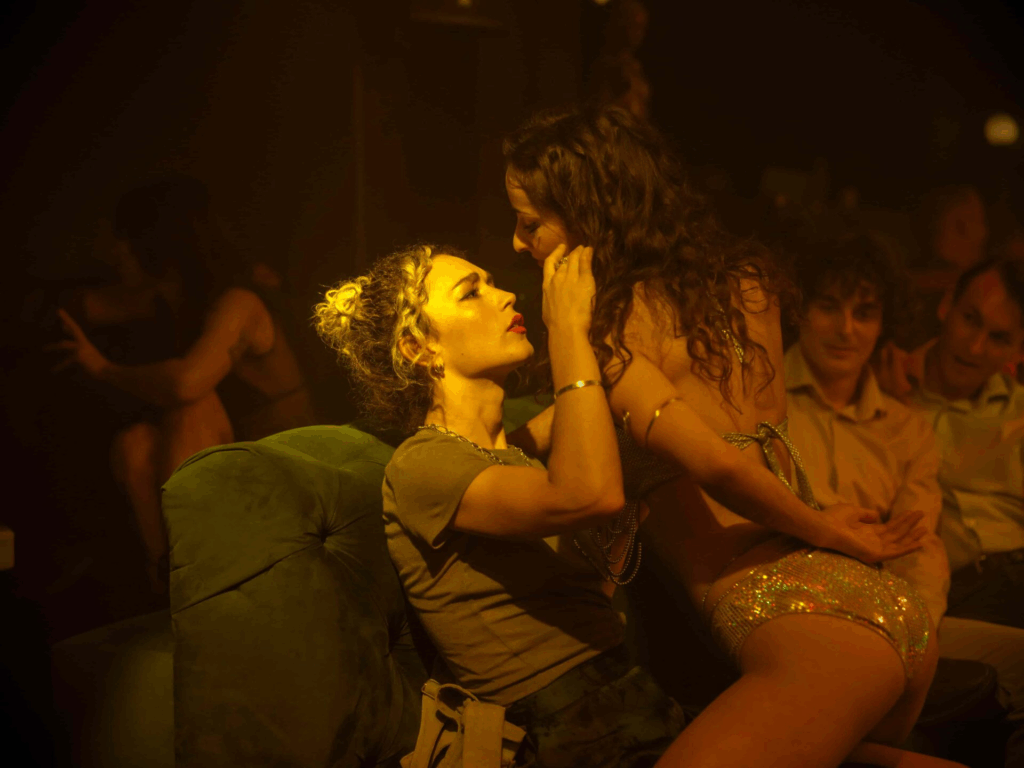
Maya, a rising journalist spending her holidays in Athens, meets Samar, a queer woman from Afghanistan living without papers and working as a dancer in clubs in order to survive. Their relationship becomes a dense field of confrontation: between looking and witnessing, between the need to be loved and the need to live freely.
On the day of the world premiere of the film at the Thessaloniki International Film Festival, I had the pleasure of speaking over Zoom with the director, Anita Doron, and the young actor Amanda Babaei Vieira, who plays Samar.
The film was shot in just two weeks, which is an extremely tight schedule for such an emotionally demanding story. How did you manage to capture so much intensity and feeling in so little time?
Anita Doron: It was two weeks of shooting and around two weeks of preparation. Extremely fast almost unbelievable, considering the complexity and volume of the scenes. Thankfully, we had an incredible team and a wonderful cast; it really was a small miracle. Time was the hardest part. Ideally, we would have liked to work more meticulously, to “carve” into the details. But there’s something magical that happens when you work inside that level of pressure, when adrenaline leads you. You know that every day you must do the impossible. It was mostly demanding for the actors, for Amanda and Nicolette, who had to live through so many emotional states in such a compressed timeline truly a heroic journey.
And if you like, that relates to Athens. For us, internationally, this city feels like a crossroads between East and West, a bridge of cultures that mirrors the encounter between the two protagonists.
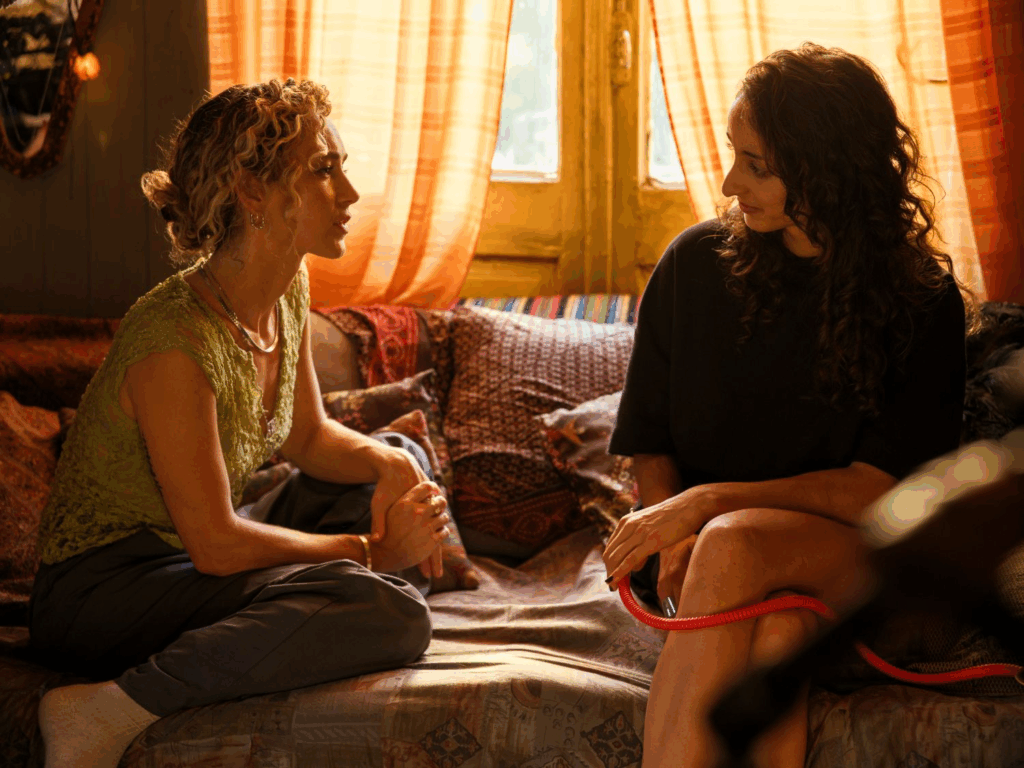
Athens appears in the film as a living organism, a place where worlds meet and collide.
What did you discover in the city, and why did you feel that this story could only be told here?
Anita Doron: Athens is a crucial meeting point, a place where different worlds genuinely interact. As Amanda said, when you’re in Athens or Thessaloniki, you feel how alive the city is. People are out in the streets, generations mix, everything is intertwined in a wonderfully real way. I don’t think there is another place quite like it on this level.
I love this city. There could not have been another place for this story. Only here can a woman who comes from a privileged background be humbled – in the best sense – by experiencing someone else’s life, like Samar’s, beyond assumptions and certainties. Only in Athens could that feel so believable and multi-layered.
Amanda Babaei Vieira: I think Athens occupies a very interesting geopolitical position, especially within Europe. Because, you know, “Fortress Europe,” as we call it, is something I find shameful. And you can see it clearly at the European borders, everywhere. In Greece this is visible, present. The same is true in Germany, where I live.
So for me, it was very important that this story is told here, in a place so close to the sea. Because the sea holds so much grief and so much joy at the same time. And that is exactly the point.
How did the idea for the film come about? Was it personal, observational, or rooted in a deeper exploration of identity?
Anita Doron: The script was written by Canadian screenwriter Tamara Faith Berger, who did not have personal experience with this world. But I deeply believe that we must tell each other’s stories. To engage, to narrate even when we have not lived these experiences ourselves. For me, that is the highest form of empathy. We cannot say, “This is your story, only you can tell it.” We must be inside each other’s stories.
When I read the script, I was moved. Afghanistan has always held meaning for me, and the idea of speaking about love, sexuality, and joy within this context, honestly and realistically, was something that thrilled me.
Once we started, Amanda and Nicolette were extraordinarily committed. We met with refugees, conducted research, tried to understand this world without assumptions, with respect and precision. We came to Greece a year before filming and met Afghan women living here, five of them. Their stories moved me deeply. I still keep in touch with them.
Amanda, how did you prepare for the role of Samar, a woman with such a layered identity and heavy lived experience?
Amanda Babaei Vieira: For me, the journey started very early. I had to learn the Afghan accent, which led me to study the country’s entire history. I began working with a vocal coach about seven months before filming, and alongside that, I was reading, meeting people, listening to their experiences.
It was essential for me to approach the role with the utmost respect, not relying on stereotypes, but really trying to understand the nuances of Samar’s world. So yes, I would say I was preparing for about seven months before we started shooting, difficult, but deeply meaningful work.
The camera feels like a silent witness between the two women – observing without intruding.
How did you build that visual language?
Anita Doron: Thank you for noticing that it’s very important to me. In this film, the performances come first. And we were lucky to work with our cinematographer, Christina Moumouri, who is extraordinary. Because of her documentary experience and the fact that she operates the camera herself, she completely understands the idea of setting a space and then letting life unfold within it.
The camera doesn’t ask the actors to perform for it, it lets them live. We simply observe. And like in life, everything is a bit messy, unpredictable, alive. Christina films with her heart, not her head. She feels the scene. The camera doesn’t present something it bears witness. A presence that is there but invisible.
Was there a moment during filming that challenged you more than others?
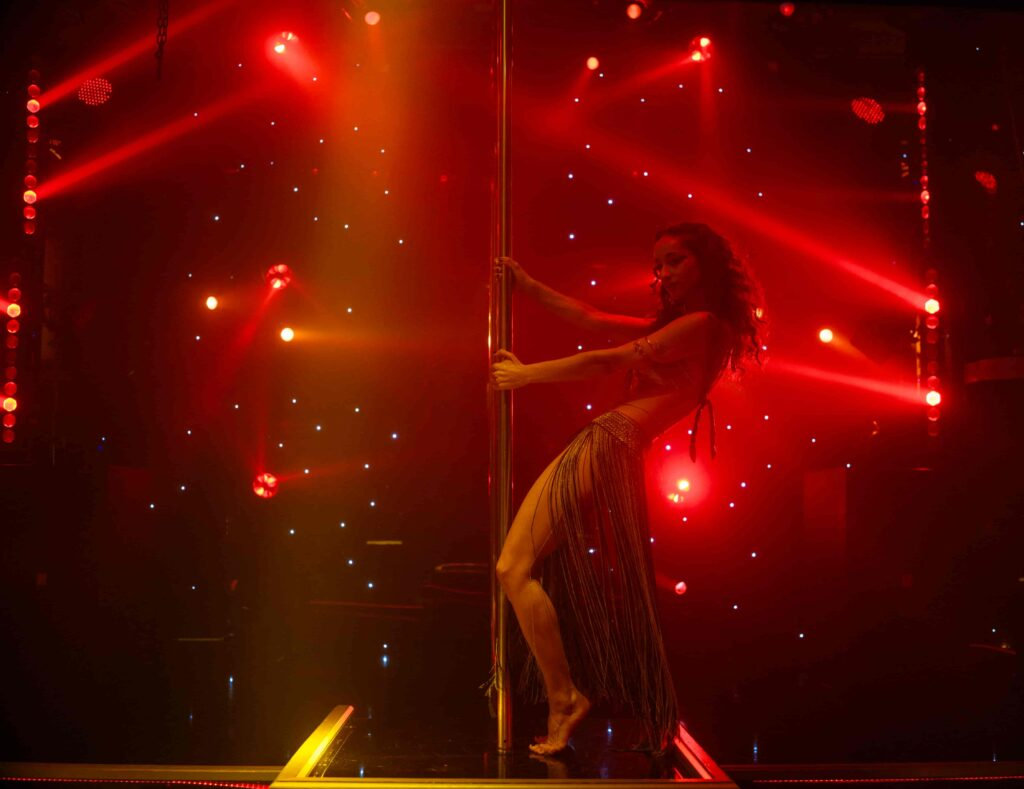
Amanda Babaei Vieira: I think the whole process was a challenge because it was so compressed like being inside a whirlwind. Emotions were always high. But (laughs) maybe the strip club scenes were a particular challenge! Especially the pole dance scene which people told me looked effortless, but for me it was a completely new experience. I trained with incredible strippers in Hamburg; their energy and strength were inspiring. And the funny part is: the pole was not planned. We discovered it right before shooting — so I just improvised. And yes, at some point… I licked it! (laughs)
Anita Doron: And that moment became one of my favorites — so bold, so liberating. Almost a clear “f*** you” to expectations.
The film inevitably engages with Europe’s migration reality. How political did you want Maya & Samar to be?
Anita Doron: I didn’t set out to make a political film; I wanted to tell a human story. I care about Maya and Samar that’s what drove me. But of course, the political dimension is there. How could it not be, when you look honestly at lives shaped by precarity and struggle? Still, as a creator, I must begin with the person, not the theme. I let the story speak its own truth.
Amanda Babaei Vieira: Yesterday I read a line that said: “To exist is to resist.” And I thought yes. Some existences are themselves acts of resistance.
The film received an NC-17 rating. Do you think this might shape how audiences approach it?
Anita Doron: I trust audiences. If they sit and watch the film, they will feel it for themselves. The rating raises questions and I do wonder about what lies behind such decisions, especially when it comes to queer narratives.
What do you hope audiences will carry with them when they leave the theater?
Anita Doron: I hope that those who are generous enough to come will allow themselves to disconnect from their own life for an hour and a half, and to truly meet Maya and Samar. To know another life, another person. And perhaps, afterward, to feel a little less alone a little more connected.
What will you take with you from Greece and from the festival?
Anita Doron: I loved the atmosphere of the festival. It feels like a festival for people who truly love cinema without pretension, without hierarchy. Just: “Here is the film. Let’s experience it together.” That’s beautiful.
Greece was the first Western country I ever encountered. I grew up in Ukraine, and as a child, Greece was my first window into the West. I love returning and seeing how alive, colorful, and beautifully chaotic it remains.
Amanda Babaei Vieira: I will keep forever the phrase: “iyamas ki batsoi makriamas (cheers, may the cops stay away)” (laughs)
The film is a co-production of Serendipity Point Films, January Media, Distant Horizon, and Filmiki Productions.