 KATERINA PARRI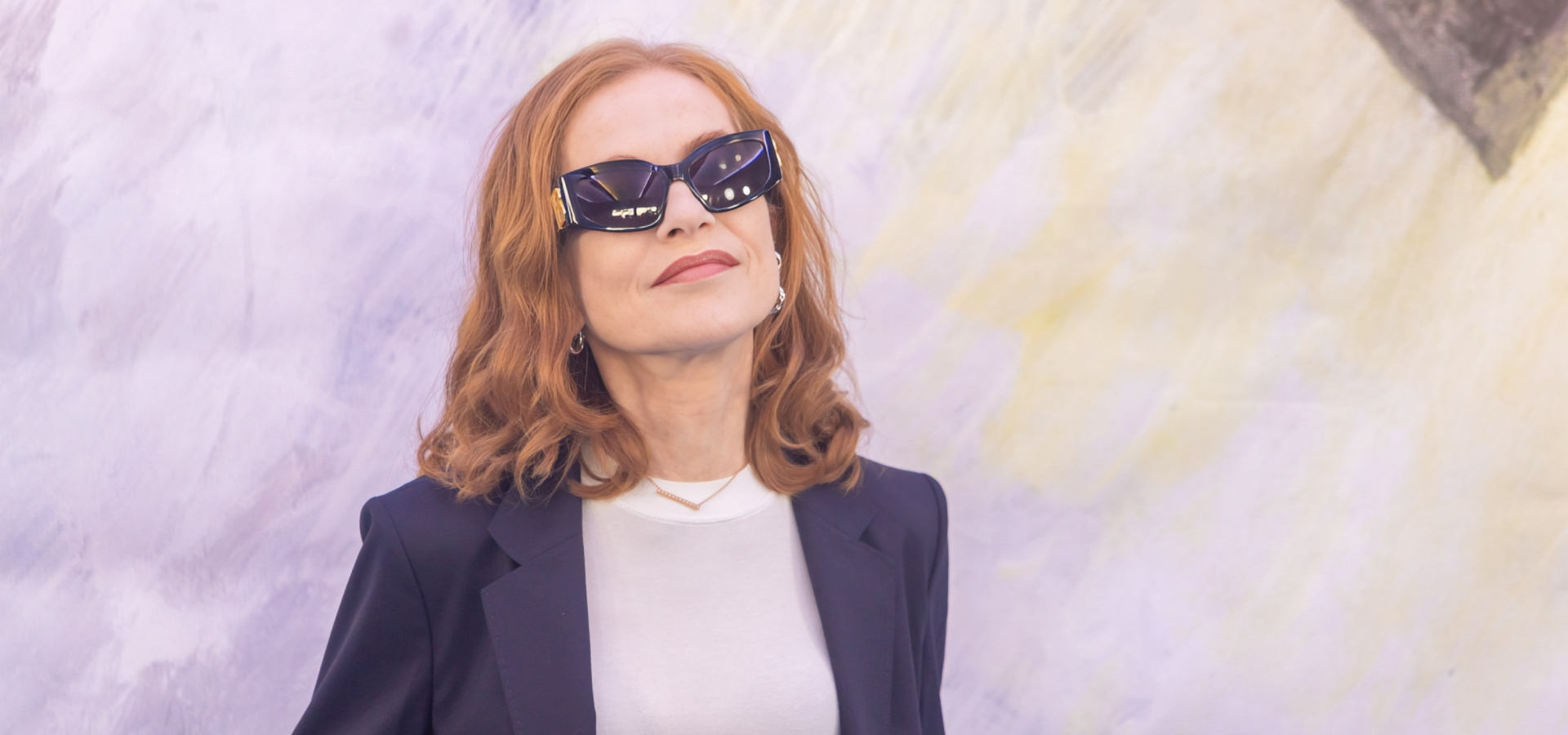
All the highlights from Isabelle Huppert’s press conference at the Thessaloniki International Film Festival, where she was this year’s Guest of Honor
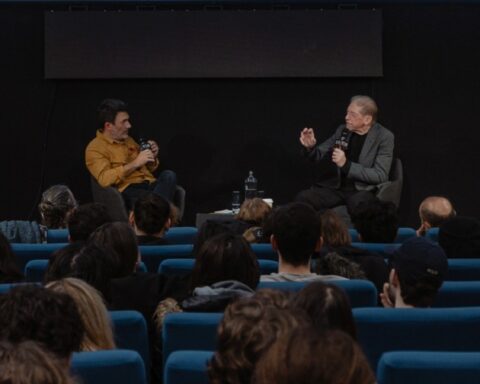
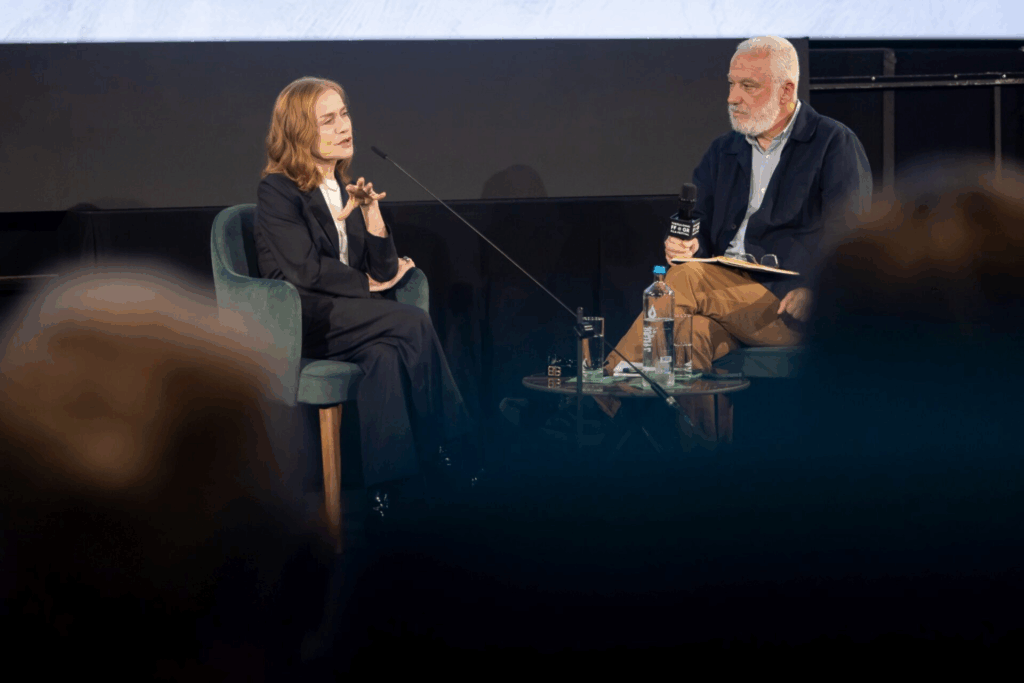
Isabelle Huppert, this year’s Guest of Honor at the Thessaloniki International Film Festival, gave a press conference on Monday, November 3, at the John Cassavetes Hall.
George Krassakopoulos, Head of Programming and moderator of the event, warmly welcomed the acclaimed French star. Referring to her latest film, screened as part of the festival’s tribute, he said:
“This isn’t your first time in Thessaloniki. Your films have always been an integral part of our festival. You’re a truly dedicated actress and we’re grateful for your presence. Your most recent film, The Richest Woman in the World (2025) by Thierry Klifa, is part of our program. I wonder after so many films, do you feel richer?”
Huppert replied: “The films I’ve made make me feel fulfilled. They also make me feel very privileged for all the opportunities I’ve had to embody these roles and work with such great directors.”
On curating her own tribute
Huppert was actively involved in curating the festival’s retrospective of her work. Asked about her selection process, she noted: “It wasn’t entirely a conscious decision. Perhaps I could have chosen other films, but I think this selection offers a good overview, featuring many international directors.”
Speaking about the oldest film in the tribute, Michael Cimino’s legendary Heaven’s Gate (1980), she shared: “Shooting that film was a truly fantastic experience, we spent seven months in Montana. It’s a movie famous for both its success and its failure. It was a huge box-office disaster, The New York Times called it ‘an unprecedented catastrophe,’ one that Cimino never really recovered from. I’ve often thought about that film during my career and realized it was truly an auteur’s film, deeply personal, with sharp political commentary for its time. Perhaps today it would be received differently.”
On failure and performance
Asked how she handles failure, Huppert said: “Of course it affects me. We don’t make films to stay locked in a room, we want people to see them. Acceptance is part of the nature of cinema. But I’m just an actress in the film; I can’t carry the whole weight of failure on my shoulders. I don’t feel personally responsible for it.”
When asked what she retains from each role, she replied: “People often ask this question, but they don’t realize that filmmaking is about the present and the present is instantly forgotten. The moment you deliver a performance, it’s already in the past.”
On complex roles and blurred morality
Responding to a question about the demanding characters she often plays, she said:
“I don’t think my roles are demanding. The characters I portray are complex, sometimes contradictory, but that doesn’t make them unlikable. Maybe cinema once had clear boundaries between good and evil, but today those borders are blurred.”
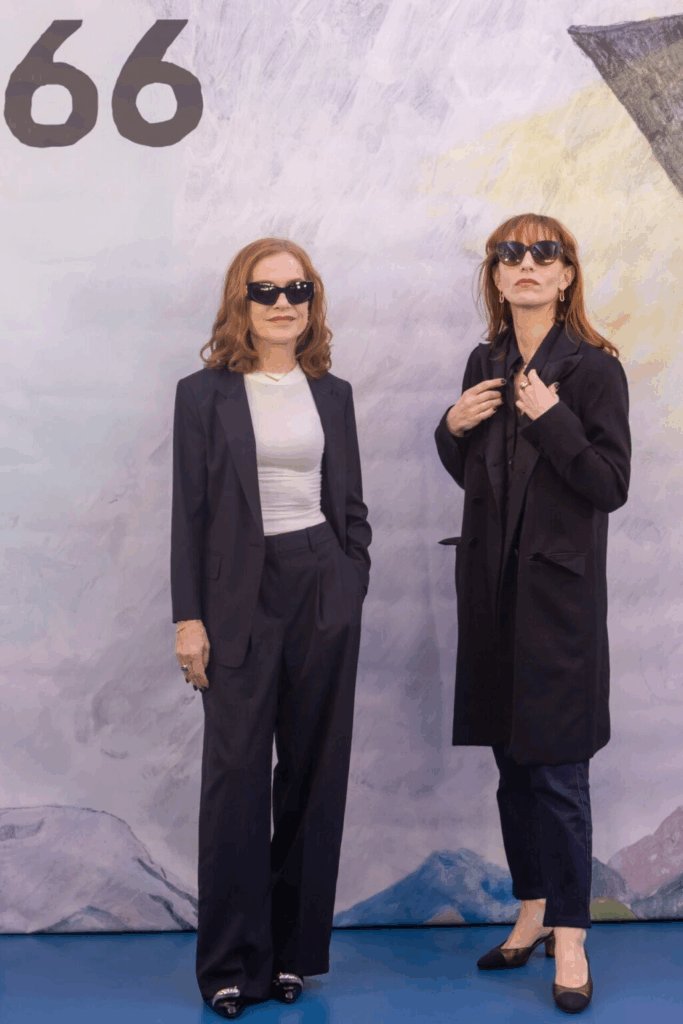
She also spoke fondly of working with her daughter, Lolita Chammah, in Copacabana (2010) by Marc Fitoussi: “It was a wonderful collaboration. My daughter is here with me because she loves Thessaloniki as much as I do. Copacabana is a sharp comedy that cleverly subverts the mother–daughter dynamic and comments on the generational gap.”

On working abroad
Discussing her collaboration with Hal Hartley on Amateur (1994), she said:
“It’s a fantastic film by a very talented director, it combines the spiritual depth of the Bible with the lightness of a cartoon.”
She continued: “I don’t think I’ve taken many risks in my career, but I have often stepped outside my comfort zone. That’s what cinema means to me. I’ve always loved working abroad. The first time I truly felt like an actress was in The Heiresses (1980) by Hungarian director Márta Mészáros. I also made several films in Asia with Hong Sang-soo and Brillante Mendoza. Shooting abroad is always a wonderful experience, you become part of an unknown landscape. It’s extraordinary to become the embodiment of a director’s gaze in their own country.”
On trust and creative partnership
She recalled her role as the philosophy professor in Mia Hansen-Løve’s Things to Come (2016):
“It was never difficult for me to play such characters. That particular film was full of hope. The real challenge in filmmaking is working with someone you don’t understand or trust. Trust, that’s the key word in the actor–director relationship.”
On women in cinema
Asked about female representation in contemporary cinema, Huppert remarked: “I see things much as I did at the start of my career. I’ve always been lucky, I’ve always sought and found roles where women are central, not hidden behind a man but at the forefront. Today there are more women directors and creators than ever before. Compared to the past, things have certainly improved but we can do even better.”
On Hitchcock, Greek theatre, and the future
Asked which director she wishes she had worked with, she immediately named Alfred Hitchcock especially his Vertigo (1958). Regarding a possible collaboration with Greek artists, particularly in theatre, she said she has some ideas, “but it’s still too early to share them.”
On cinema’s evolution
Commenting on the international scope of her career, she said: “I don’t see any real difference. I approach the unknown with the same curiosity as at the beginning. What has changed is how films are consumed. There are many ways to watch them now but the best way, and the one that must endure, is on the big screen. Any other experience is lesser.”
She identified The Piano Teacher (2001) by Michael Haneke and Elle (2016) by Paul Verhoeven as turning points in her career: “The funny thing is that sometimes the films you least expect become the biggest successes. That’s proof that movies travel through the minds of people in countless different ways.”
On Gaza and the unknown
When asked whether there is enough mobilization within the film community regarding Gaza, she replied:
“There is never enough mobilization but there is always too much suffering in the world.”
Finally, when asked if there is still anything she looks forward to after such a luminous career, she concluded: “There isn’t something specific I’m waiting for. I’m always seeking the unknown. My career has truly been a dive into the unknown that’s what I seek, and, usually, what I find.”