 KATERINA PARRI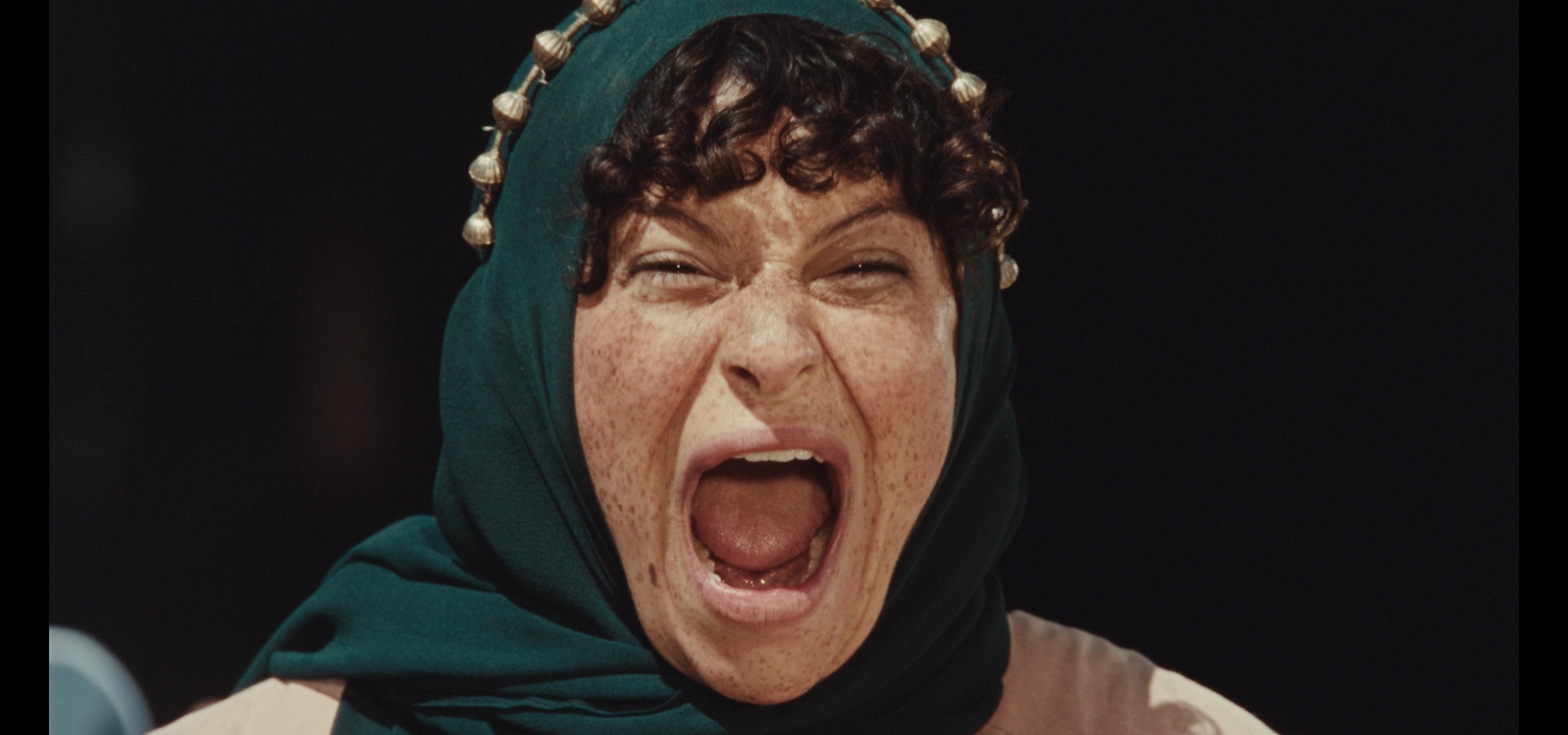
One of the most significant discoveries in the history of storytelling – and of cinema, which has gifted us some of the most famous works of art and elevated masterpieces of the seventh art – is brought into focus by the 66th Thessaloniki International Film Festival, taking place this year from October 30 to November 9.
This year’s edition presents a tribute to the Plot Twist, approaching this precious narrative device from a subversive perspective. Under the title “Plot Twist, Beyond Sixth Sense”, the festival chooses to go beyond the obvious and widely celebrated cinematic twists, turning instead to rare and lesser-known films produced between 1976 and 2025. Among the selected films are two Greek titles: Kinetta by Yorgos Lanthimos and The Photograph by Nikos Papatakis. The selection was curated by guest curator Myriam Ben Salah, art curator and director of The Renaissance Society at The University of Chicago, who will also curate the French Pavilion at the upcoming Venice Biennale in May 2026.
A dialogue with the Thessaloniki Biennale of Contemporary Art
The theme of the Plot Twist as reversal also emerges organically from the dialogue between the Festival and the central theme of the 9th Thessaloniki Biennale of Contemporary Art, “Everything Must Change. TBC.9”, curated by independent curator and art historian Nadia Argyropoulou. The artistic expression of this dialogue takes shape in the exhibition “Plot Twist (the science fiction change)”, a prologue to Biennale 9, realized under the care of Nadia Argyropoulou and the Festival’s Artistic Director, Orestis Andreadakis.
“As its structure and film selection suggest, this tribute takes us to the very heart of the ‘reversal of expectation’ (as Plot Twist could be translated into Greek), moving beyond the limits of simple surprise and urging us to recognize that appearances often deceive us,” notes Orestis Andreadakis. “The common thread running through the selected films reveals that behind the idea of the Plot Twist lies not clever reversals or narrative mechanics, but rupture – what happens when cinema disrupts our viewing habits. These films remind us that stories are never innocent. On the contrary, they are built upon omissions and silences, upon the power of narrative and of concealment. They don’t merely entertain us with twists; they involve us in the illusions we are willing to accept.”
As Myriam Ben Salah remarks:
“Too often, we confuse the idea of the Plot Twist with spectacle: the sudden reversal, the catchy trick that leaves the audience breathless. But what if true reversal has nothing to do with surprise, and everything to do with recognition? With that awkward moment when what was right beside us all along finally comes into the light. As the British-Palestinian writer Isabella Hammad suggests, the power of recognition lies not in revelation, but in the delayed alignment between our perception and the truth. And it becomes tragic not because it shocks us, but because it arrives when it is already too late.”
Exploring the ramifications of the Plot Twist in fields that go beyond cinema itself, she adds:
“In some parts of the world, the Plot Twist is not just a narrative device but a condition of life: repetition masquerading as change, catastrophe staged as revelation, truth appearing only once — too late to alter the final outcome. The films in this tribute walk along these paths. They remind us that stories are never neutral, that every fiction carries consequences, and that recognition, when it finally occurs, does not equate to resolution but to a moral demand.”
The exhibition, titled “Plot Twist (the science fiction change)”, will open on Friday, October 31, at the MOMus–Experimental Center for the Arts and will run until November 16. This exhibition marks the opening act of the 9th Thessaloniki Biennale of Contemporary Art, which will culminate between May and July 2026.
The exhibition begins with the installation of the triptych Urthworks (Slow Action [2010], Urth [2016], Look Then Below [2019]) by British artist Ben Rivers. In parallel, the Festival’s official program will feature, in collaboration with the Athens Avant-Garde Film Festival, Rivers’ latest film Mare’s Nest—awarded at the Locarno Film Festival-based on Don DeLillo’s one-act play The Word for Snow. Both the exhibition’s opening and the screening of Mare’s Nest will take place in the presence of Ben Rivers. The exhibition also expands through the new work by the group Errands, U.F.O. lost in HEAVEN (2025) – The Journey of a Forgotten Future, as well as iconic films by pioneering Greek director Kostas Sfikas.
Nadia Argyropoulou notes:
“The notion of upheaval, as it lurks in science fiction as a premonition, openness, and possibility- and as presented in this exhibition, a prologue to Biennale 9- is perceived as revolutionary foresight and a catalyst for change. It is not an escape but a necessity, a tuning into a world of many worlds, a tangible imagination, a radical futurism, as it remakes time (the entanglements of the already with the not-yet) through the thread of structural understanding of unfreedom and the militantly joyful subversion of its dead ends.”
At the same time, the Festival’s established bilingual special thematic publication is entirely dedicated to the Plot Twist, featuring essays and analyses by film theorists, sociologists, and journalists. Contributors include Myriam Ben Salah, Nadia Argyropoulou, screenwriter and author Nikos Panagiotopoulos, the Festival’s Artistic Director Orestis Andreadakis, and the Festival’s publishing coordinator Gelly Mademli. The edition will also feature seminal texts revolving around the idea of the Plot Twist.

On the films of the tribute
In Atropia (2025), Sundance-awarded filmmaker Hailey Gates transforms a film set into an artificial war zone used to train American soldiers just before being deployed to the inferno of Iraq. The romance between Fayruz, the star of the “cast,” and a veteran playing a rebel jeopardizes not only her ambitions but the entire project: a comic love story born from the heart of American absurdity.
Bouchra (2025), the imaginative debut of Orian Barki and Meriem Bennani (who gifted us the addictive 2 Lizards series during the pandemic), blends 3D animation with documentary style to build an irresistible hybrid narrative. Here, cinema mirrors the complex relationship between two anthropomorphic coyotes: a queer filmmaker working in New York and her cardiologist mother living in Casablanca. A production of Fondazione Prada, it just had its world premiere at the Toronto Film Festival.
In the short film Genealogy of Violence (2024) by Mohamed Bourouissa, a boy and a girl of Arab descent undergo a gratuitous and exhaustive ID check by two policemen. Through elaborate camerawork and visual effects, the film excavates the subterranean, timeless, and recurring trajectories of violence and discrimination. A spirit’s escape from a landscape of totalitarianism, crafted by a multifaceted, award-winning visual artist.
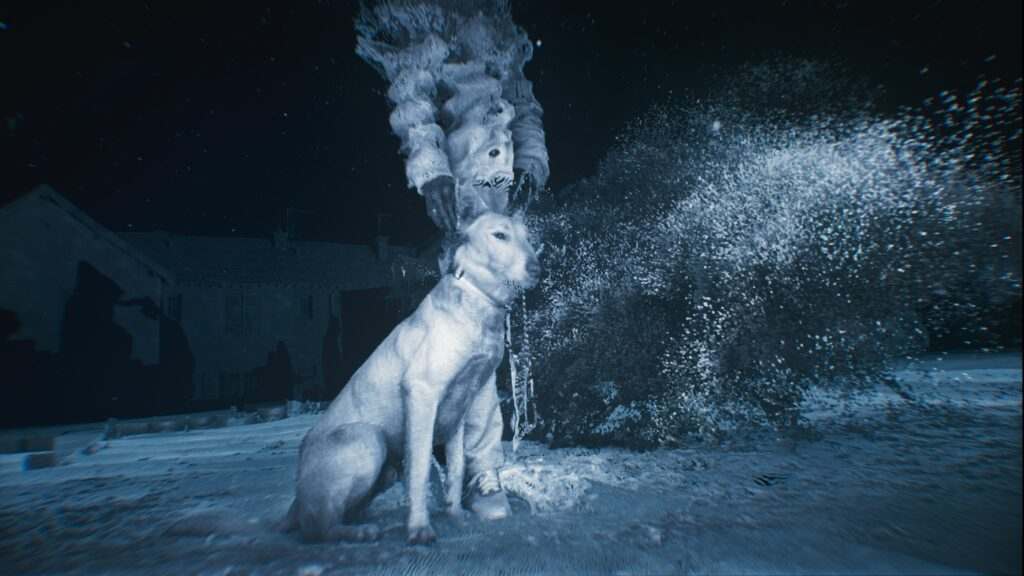
In They Are the Dogs (2013) by Hicham Lasri, a TV crew follows a recently released prisoner at close range. Through a modern Odyssey in the bustling streets of Casablanca and the turbulent Moroccan society, the film captures the eternal conflict between lived memory and misleading media documentation, probing the gap that separates rebellion from oppression.
In the tender yet painful The Time That Remains (2009) by Elia Suleiman, the diary notes of the director’s father are intricately interwoven with the collective and timeless drama of the Palestinian people. Cinematic and historical time fold into and merge with one another, plumbing the depths of an unhealed wound, transforming what remains into memory, reminder, and hope — an indirect homage to the cinema of Jacques Tati.
The enigmatic short film Kempinski (2007) by Neil Beloufa presents human figures emerging from the deep night to tell stories arriving from a future remembered and traveling from a past yet to come. A strange mixture of science fiction, pseudo-documentary, and ancestral Malian traditions, it dismantles every narrative certainty we hold.
The documentary VHS – Cahloucha (2006) by Nejib Belkadhi introduces us to a self-made director and actor from Tunisia who relentlessly produces amateur B-movies with participants drawn from the poorest social and educational backgrounds – films that nevertheless enjoy rapturous acclaim. Through this inverted mirror of proper aesthetics, we embark on a fascinating journey into the very heart of cinema’s magic.
In Kinetta (2005), Yorgos Lanthimos’ directorial debut, the entire world seems to have sunk into an out-of-season, non-functioning condition. A policeman, a photographer, and a cleaning lady, in a deserted and inactive resort, videotape reenactments of various local crimes. The eternal unreliability of the image and the blurred nature of reality coalesce in an idiosyncratic treatise on the very notion of representation.

In Goodbye, Dragon Inn (2003) by virtuoso Tsai Ming-liang, cinematic storytelling, moving images, and the ritual of the darkened theater are transformed into a land of ghosts, eternal return, unfulfilled desire, and ruptured time – reminding us that cinema travels beyond what the eye sees and the mind grasps. An essential film for the 21st century, celebrating the unique “spirit of place” of cinema and the power of collective viewing, now more endangered than ever.
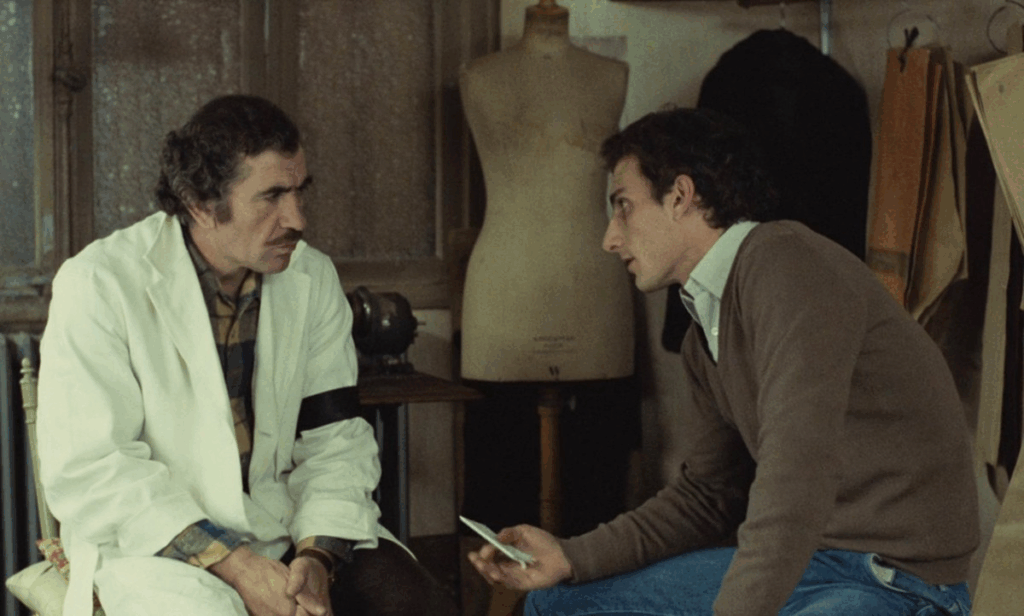
The Spousals of God (1998) – the concluding part of João César Monteiro’s trilogy in which he plays João de Deus – treads familiar ground of merciless sarcasm against religious and social hypocrisy. After receiving a heaven-sent suitcase of money from a “messenger of God,” the clochard protagonist instantly becomes a magnate, yet remains enslaved to his morbid desires.
The unforgettable Close-Up (1990) by Abbas Kiarostami – the film that put the great auteur on the map – takes as its starting point an outrageous case of cinematic impersonation involving Iranian director Mohsen Makhmalbaf. From there, it spins a mesmerizing meditation on the cosmogonic qualities of deceptive cinematic truth, at times abolishing every unwritten law of drab reality. A hybrid unfolding across prisons, courtrooms, crowded streets, crammed buses, and domestic interiors, it reveals the spectral — yet vibrantly alive — essence of life and the human condition itself.
In The Photograph (1986) by Nikos Papatakis, the device of a simple photograph functions as a hallucinatory reflection of a fabricated reality, evoking the open wounds of contemporary Greek society: from the trauma of migratory displacement to the grim political landscape and the confused identity of a nation in transition. At the same time, it weaves a multilayered allegory on truth and the deception of images — a monumental parable on cinema itself.
Shot in Cali, Colombia, in the style of a pseudo-documentary, The Vampires of Poverty (1978) by Carlos Mayolo and Luis Ospina denounces the photogenic beautification of poverty by Western culture. With vitriolic black humor as its sharpest weapon, it delivers a scathing indictment of artistic opportunism that exploits human suffering and pseudo-sensitivity as a springboard for profit and recognition.
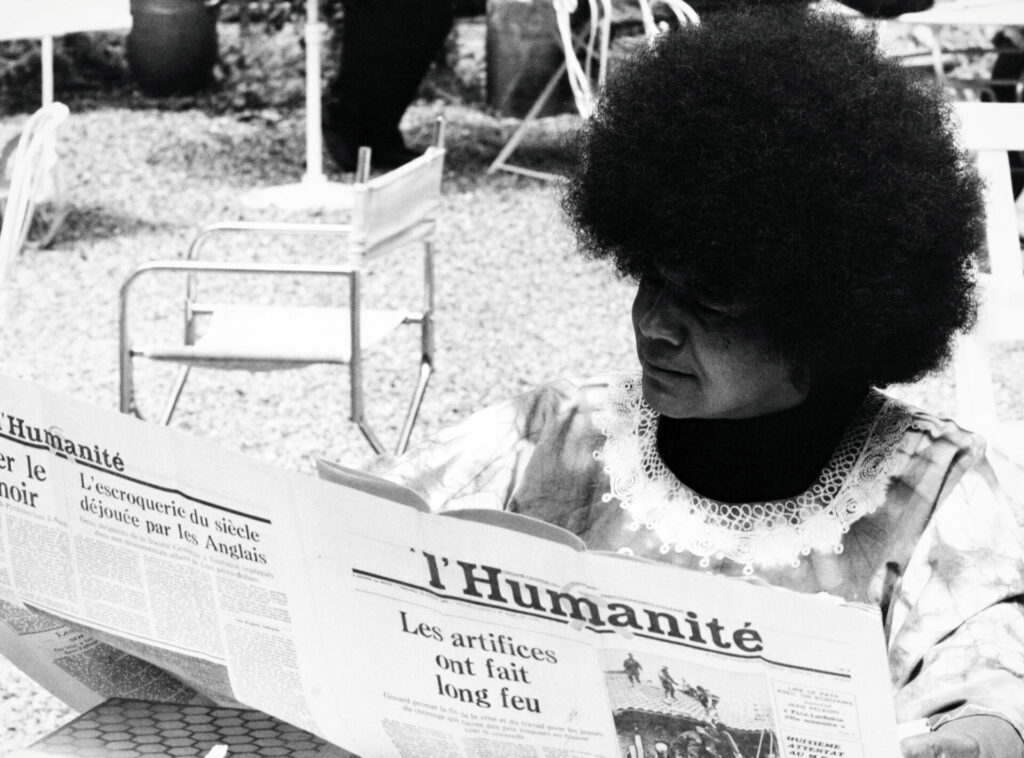
In the short And the Dogs Were Quiet (1976), Sarah Maldoror (1929–2020) – poet, activist, feminist, and high priestess of Pan-Africanism, anti-colonialism, and Third Cinema – adapts the eponymous play by Aimé Césaire, one of the most important creators of Creole literature. Transforming the Musée de l’Homme in Paris into a profoundly allegorical stage, a dramatic dialogue dissects both the wound and the vulgarity of colonialism, as well as the mechanisms that ensured its historical silencing and justification.