
 SOFIA TRIANTOY
By Sofia Triantou
Long before they found their way into the pages of books, herbs had already secured their place in everyday life, at the table, and in the rituals of hospitality.
In ancient Greece, herbs were not merely objects of medicinal knowledge. They formed part of daily nutrition, wine production, hospitality, and social life. Long before they were recorded in books and botanical treatises, aromatic plants were already present in people’s kitchens and on their tables.
Ancient sources mention the cultivation and consumption of vegetables and aromatic plants such as lettuce, cabbage, peas, beans, vetch, leeks, onions, parsley, and thyme. These plants were part of the everyday diet and were consumed in soups, salads, or as side dishes.
Bread also held an important place at the table, serving as a staple food. Figs, grapes, olives, and cheese frequently appeared in daily meals, while olive oil was used in place of butter. Wine was the most common beverage and was stored in clay vessels sealed with resin to ensure better preservation.
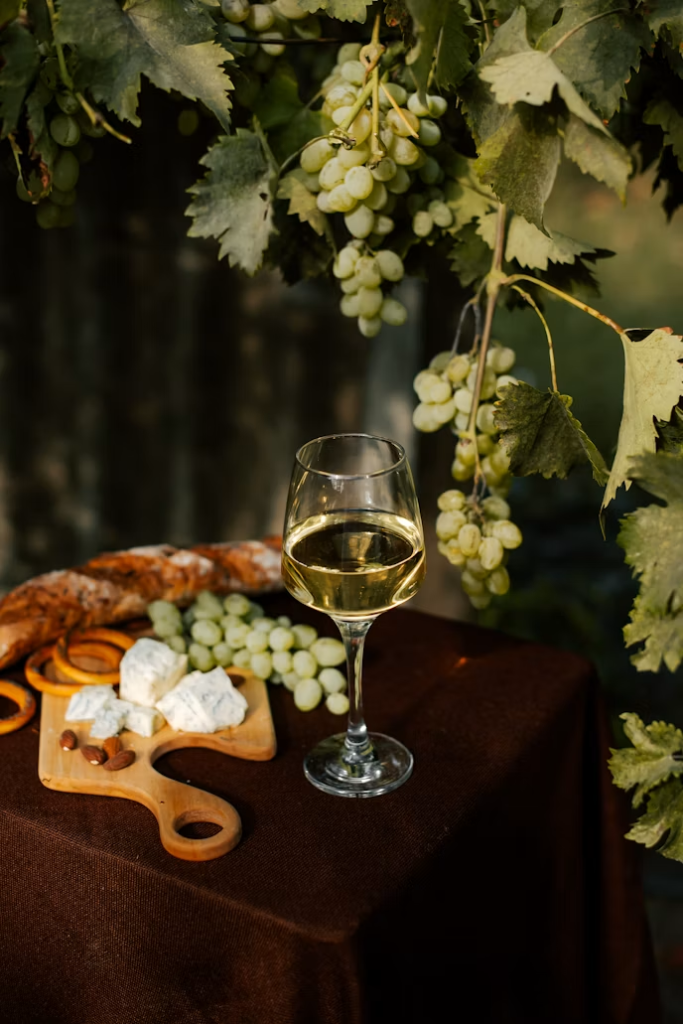
Wine, however, was not consumed in the way it is today. Before being served, it was mixed with water in a large vessel known as a krater. Ancient references preserved in the writings of Theophrastus describe the addition of honey, resin, aromatic herbs, and spices, revealing the active role that plants played in shaping the flavour and aroma of wine.
Even more interesting is the fact that meals were not simply a means of satisfying everyday needs. For the ancient Greeks, dining was an essential part of social life. Once hunger and thirst had been addressed, music, singing, poetry, and conversation would follow. Gatherings around the table were an integral part of daily life, creating opportunities for communication and the exchange of ideas.
Within this context, the institution of hospitality developed, becoming one of the most important values of ancient Greek society. Offering food and drink to a stranger was considered a host’s duty, while the guest was expected to show equal respect in return. Hospitality occupied such a significant place in Greek culture that Zeus himself was worshipped as Zeus Xenios, protector of strangers and hospitality. Travellers and visitors were welcomed and cared for even before being asked their names or origins.
After the meal, a symposium often followed, a social gathering devoted to wine, conversation, music, and poetry. Descriptions of ancient symposia reveal that plants were present not only in food and wine. Participants frequently wore garlands made of flowers and plant materials, demonstrating how closely everyday life was connected to the world of plants and fragrances.
The table was not merely a place for consuming food. It was a space for gathering, communication, and hospitality. Herbs, wine, and the gifts of the land all played a role in this shared experience that brought people together.
Over time, the importance of plants in everyday life led to the recording of botanical knowledge by the great civilizations of antiquity. Yet long before they appeared in written texts, herbs had already earned their place in daily life, at the table, in hospitality, and in social interactions.
Although lifestyles have changed dramatically from antiquity to the present day, hospitality remains one of the most valued traditions of Greek society. In an age when daily life moves ever faster and human relationships are often constrained by time, concerns, and distance, the act of opening one’s home, sharing a meal, and welcoming a guest remains deeply meaningful.
Perhaps this is why Greek hospitality continues to impress visitors from around the world. The words “welcome,” the offering of a meal, a cup of coffee, a spoon sweet, or a traditional mastic ypovrychio are far more than gestures of courtesy. They are acts that transcend politeness. And while much changes over time, hospitality endures as one of the most human and timeless values of the Greek tradition.

Welcome your guests with a walnut spoon sweet, a glass of Chios mandarin liqueur, a refreshing pitcher of water infused with mint leaves, and above all, a warm smile because:
“Of all the things that wisdom provides for a happy life, the greatest by far is the acquisition of friendship.”
– Epicurus