 elc team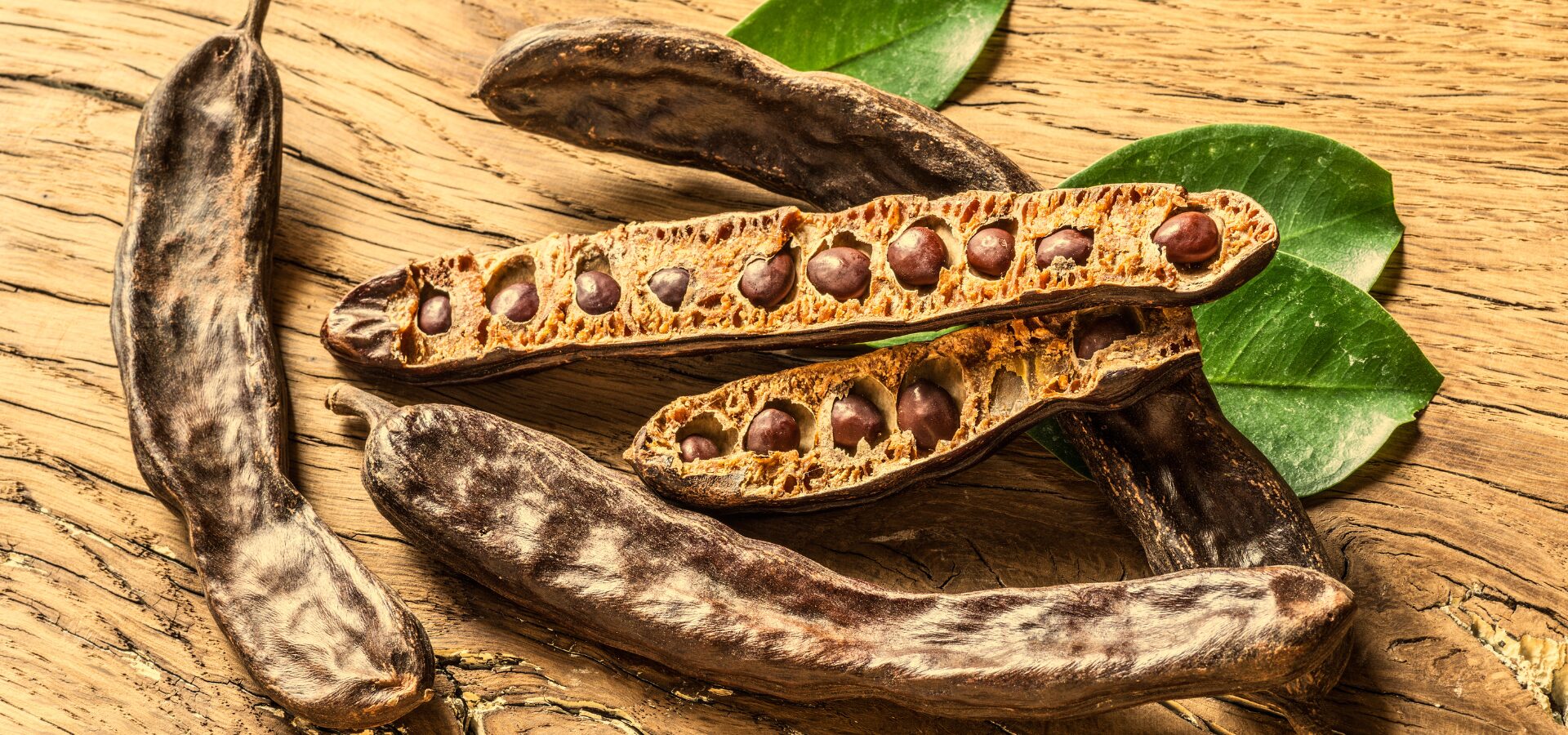
By Sofia Triantou
A fruit deeply connected to Mediterranean land and culinary memory, truly deserving a place once again in our everyday lives.
The carob, this emblematic pod hanging proudly from these magnificent trees, was once considered food of necessity, food for survival. Today, it stands as a precious element of Mediterranean tradition.
The fruit of the carob tree (Ceratonia siliqua), known today as carob, was connected for centuries to the daily life of people in Crete, Cyprus, Rhodes, and throughout the Eastern Mediterranean. Today, it is making a dynamic return to contemporary kitchens, no longer as “food for the poor,” but as a Mediterranean treasure rich in history, flavour, and nutritional value.
The carob tree is one of the most resilient trees of the Mediterranean. It withstands drought, requires very little water, and can thrive even in the poorest soils. For this reason, it is now considered a particularly important crop in the context of climate change and sustainable agriculture.
In Crete, the carob tree played a vital role in survival. During the German occupation, carob helped many families cope with famine. From its pods, people produced carob flour, carob syrup, bread, rusks, and beverages. This tradition is considered so significant that the Agri-food Tradition of Carob in Crete has been inscribed in the National Inventory of Intangible Cultural Heritage of Greece.
In earlier times, villagers would boil carobs for hours to produce carob syrup, a natural dark syrup with flavours reminiscent of caramel and cocoa. Others dried the pods and ground them into flour, which was mixed with wheat for bread or used in sweets and biscuits.
In several regions of the Mediterranean, carob was also used as animal feed, while its seeds served as a unit of weight for precious stones and gold, which is where the word “carat” originates. However, for many years it became associated with hardship and poverty. Perhaps for this reason, after the war it was largely abandoned. Yet in recent years, it has returned once again to gastronomy and modern nutrition. Today, it is used in baking, confectionery, plant-based drinks, cereal bars, rusks, ice cream, and even gourmet recipes. Carob flour is considered an excellent alternative to cocoa, while carob syrup is used as a natural sweetener in dressings, desserts, and smoothies.
Nutritionally, carob is particularly interesting. It is a natural sweetener, rich in dietary fibre, and contains minerals such as calcium, potassium, and magnesium. Unlike cocoa, it contains no caffeine or theobromine, making it gentler for many people. In addition, it contains antioxidant compounds and represents a characteristic example of the traditional Mediterranean diet, based on simple, local, and resilient foods.
Its flavour is quite distinctive. Some people love it immediately, while others only come to appreciate it once they discover its nutritional value. The taste is warm and earthy, with notes of caramel and mild chocolate. It pairs beautifully with orange, honey, walnuts, almonds, and olive oil, ingredients that instantly evoke the Mediterranean kitchen.
Although many traditional ingredients return from time to time as trends, carob is far more than a passing fashion. It is a fruit deeply connected to Mediterranean soil and our culinary memory, truly deserving a renewed place in our everyday lives.
Today, we can use it in many different ways. Carob flour can become a natural beverage reminiscent of chocolate but without caffeine, with a gentler, earthier flavour. Many people enjoy it simply boiled with water or plant-based milk, a little honey, and cinnamon.
Carob rusks can also be used in a beautiful traditional dakos salad with xinomyzithra or soft myzithra cheese, tomato, extra virgin olive oil, and a little fresh thyme. The thyme balances the natural sweetness of the carob perfectly and enhances the Mediterranean character of the dish.
Carob flour also works wonderfully in cakes, cookies, and breads, adding deep flavour and natural sweetness. In recent years, many chefs have also used it in ice creams, creams, handmade chocolates, and even savoury sauces.
Carob, Chocolate & Orange Cake
A fragrant, deeply Mediterranean cake, where the flavour of carob blends beautifully with dark chocolate and fresh orange.
Ingredients
• 250 g all-purpose flour
• 80 g carob flour
• 120 g brown sugar
• 1 tsp cinnamon
• 1 pinch ground clove
• 1 sachet baking powder
• 120 ml olive oil or mild vegetable oil
• 250 ml fresh orange juice
• Zest of 1 large unwaxed orange
• 2 eggs
• 80 g dark chocolate, finely chopped
• 2 tbsp carob syrup
• 1 handful walnuts or almonds, roughly chopped
• 1 pinch sea salt
Method
Preheat the oven to 175°C.
In a bowl, mix together the flour, carob flour, cinnamon, clove, baking powder, and salt.
In a second bowl, whisk the eggs with the sugar. Add the olive oil, orange juice, zest, and carob syrup.
Combine the dry and wet ingredients and stir gently.
Add the chocolate and nuts.
Bake in a buttered cake tin for approximately 45–50 minutes.
Allow to cool and, if desired, drizzle with a little warm carob syrup before serving.
Enjoy!