 KATERINA PARRI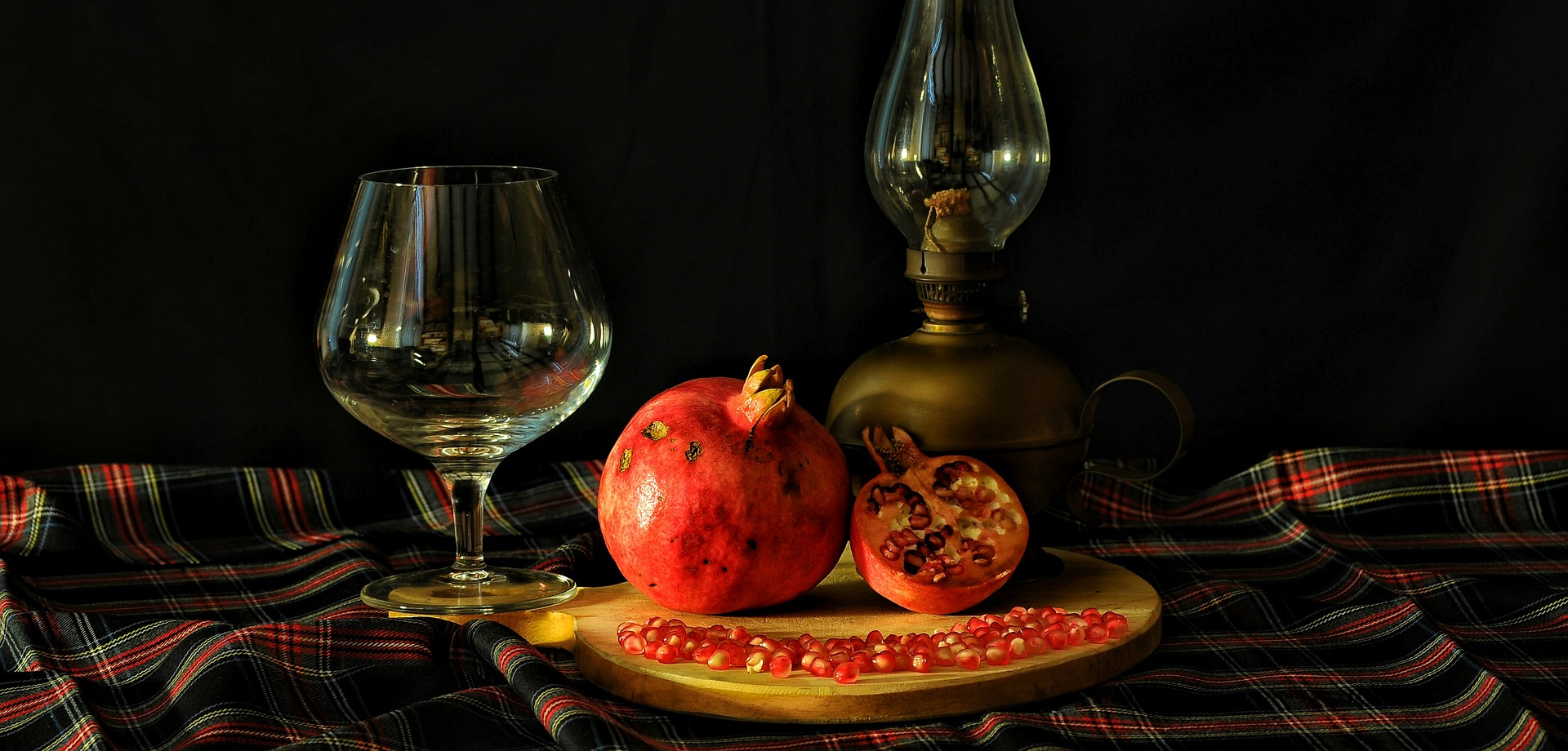
By Sofia Triantou
The “chosen one” who breaks it wishes that the juicy pomegranate pieces, ruby-like in colour, will fill the home with as much health and happiness as its countless seeds
A beautiful Greek custom begins with the pomegranate. It is no coincidence that traditional homes, fruit crates at local greengrocers, and food shops of all kinds are decorated with these wonderful fruits at this time of year.
The pomegranate has been a symbol of fertility, rebirth, and prosperity for thousands of years even in Greek mythology. It is a custom that dates back to ancient Greece.
For this reason, when the clock strikes twelve on New Year’s Eve, all the lights are turned off and the whole family steps outside the threshold of the house, symbolically leaving the old year behind. The person chosen to enter first breaks the pomegranate at the doorstep, and its beautiful red seeds scatter across the entrance. It is always broken with the right hand, and we always step inside with the right foot.
My grandmother always used to tell me, “Break the pomegranate loudly,” so that its seeds would scatter everywhere. Then the house would have as much luck as the number of seeds… And the chosen one who breaks it wishes that the juicy pieces, like little rubies, will fill the home with health and happiness, as plentiful as the pomegranate’s seeds. We would always look to see who the pomegranate juice splashed on, because that person was believed to be the lucky one of the year.
Of course, like all Greek customs, the way it is practiced and its symbolism vary from place to place. I’m sharing my own story—an old tradition I still love. Even if I don’t know whether it truly brings good luck, I do know that it welcomes the new year with loud laughter!
Some have argued that the pomegranate was the “apple” of the biblical Garden of Eden. It is also referred to as the “fruit of paradise,” a testament to the esteem in which it has been held across many cultures. In contrast, the ancient Greeks called it “the fruit of the dead,” believing it nourished the inhabitants of Hades.
It is easy to imagine how the abundance of its seeds strengthened its association with fertility. Perhaps this comes from the Greek myth in which Persephone must spend six months in the underworld after Hades forces her to eat six pomegranate seeds yet her return is celebrated with the arrival of spring.
The pomegranate tree was also connected to the Eleusinian Mysteries, as priests wore wreaths made from pomegranate branches during the rituals. The fruit’s unique flavours sweetness often combined with acidity—make it easy to love for many people.
Priceless to early desert travellers as an easily transported, well-protected source of water, the pomegranate remains invaluable even today not only for its beautiful shape and bright red seeds, but also as one of the elixirs of youth, used both as juice and as an ingredient in cosmetic products.
The pomegranate is rich in sugars and vitamins A, B, and C, as well as minerals such as phosphorus, potassium, sodium, and iron. It also contains more antioxidants than red wine or green tea.
I wish you the good fortune of all its seeds, a rosy year like its deep red colour, and joys as many as all its seeds combined.