 PEPI NIKOLOPOULOU
A curated selection of must-read cinema books, from director archives to cult film universes perfect gifts for film lovers and collectors seeking deeper stories behind iconic movies.
We all have that one friend who seems to know everything about cinema or perhaps you are that friend. Still, even the most devoted cinephile knows there’s no such thing as “enough.” There are always more behind-the-scenes photographs to uncover, more script rewrites to trace, more costume details to admire, more storyboards to decode, and, of course, more quotes. Always more quotes.
This week’s curated book selection is made for those who love cinema not only as an art form, but as a process: the obsessions, the collaborations, the hidden labor behind iconic frames. From meticulously kept archives to playful reimaginings of legendary film worlds, these titles make ideal gifts for film lovers and irresistible additions to any personal library.
And since no celebration of cinema is complete without words that linger long after the screen fades to black, we close each stop with a legendary quote from the films of five master directors. A small reminder that great cinema lives on, page by page, frame by frame, line by line.
[1]
Stanley Kubrick’s The Shining
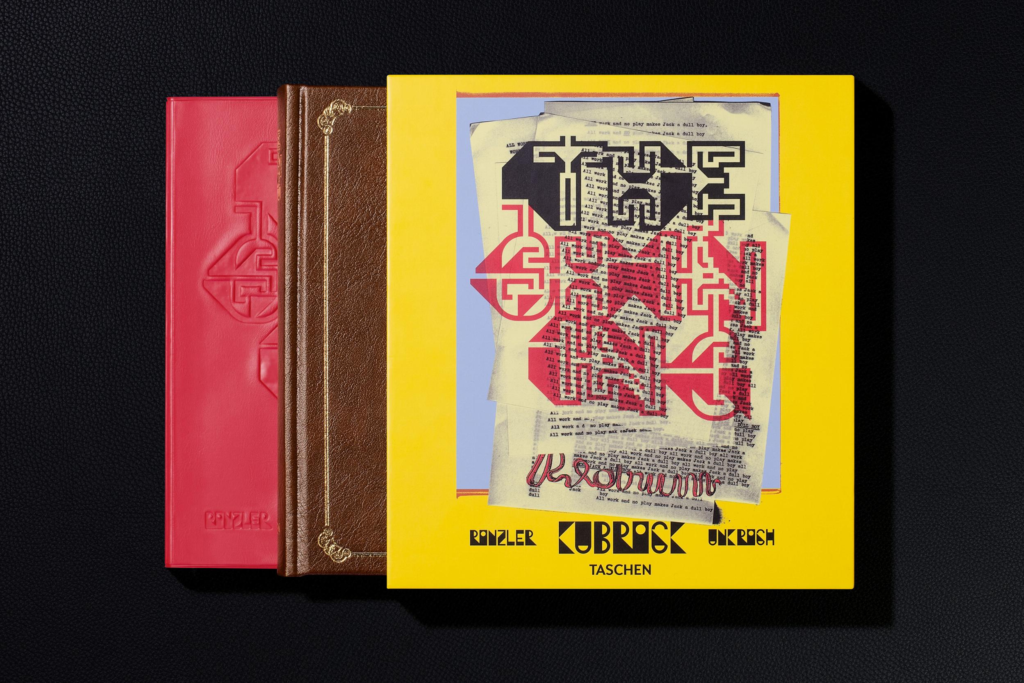
The Shining stands as one of cinema’s most unsettling achievements, proving that true horror can emerge from atmosphere, isolation, and the everyday rather than explicit violence. Adapted by Stanley Kubrick from the 1977 novel by Stephen King, the film redefined the horror genre through its psychological intensity and meticulous visual language.
Stanley Kubrick’s The Shining is a definitive, two-volume behind-the-scenes exploration of the 1980 cult classic, combining an in-depth study of Kubrick’s creative process with a detailed account of the film’s production. Drawing on hundreds of hours of exclusive interviews with cast and crew, it reveals Kubrick’s obsessive script rewrites, his groundbreaking use of the Steadicam, the technical ingenuity behind iconic moments such as the blood elevator, and the demanding number of takes that defined his working method.
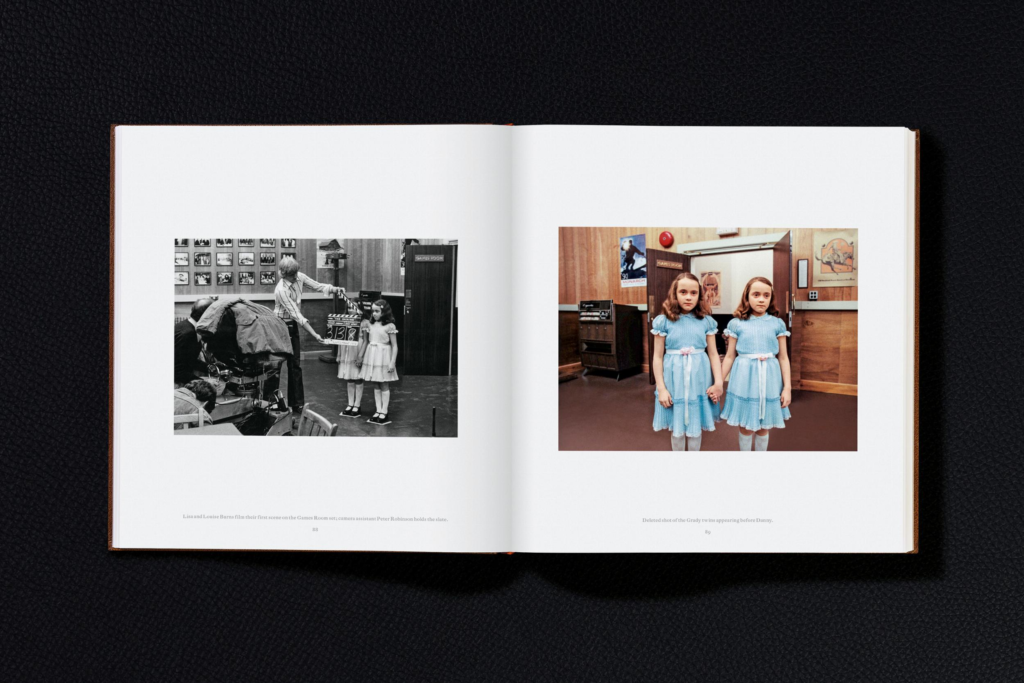
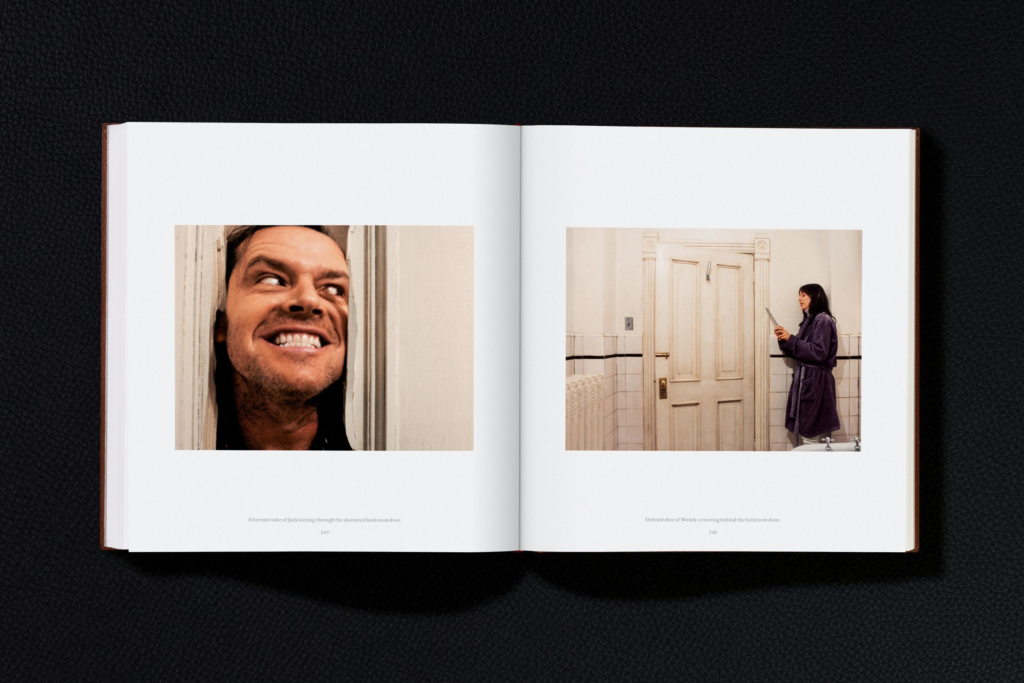
Conceived and edited by Academy Award–winning filmmaker Lee Unkrich, with text by J. W. Rinzler and a foreword by Steven Spielberg, the collection also features extensive archival material. Designed by M/M Paris, it includes rare documents, correspondence, conceptual artwork, deleted scenes, and hundreds of previously unseen production photographs, making it the most comprehensive compendium ever created on The Shining.
Author J. W. Rinzler (Author), Lee Unkrich (Editor), M/M (Designer) Publisher Taschen Pages: 1396
[2]
Wes Anderson: The Archives
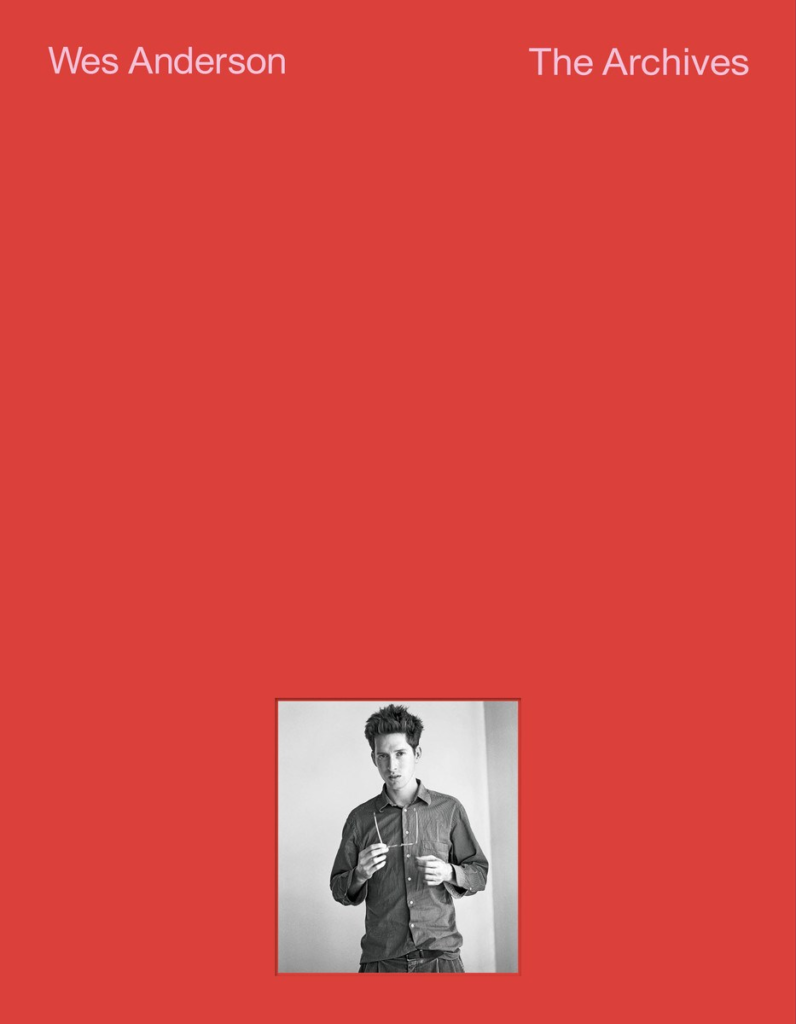
Wes Anderson: The Archives is a richly layered journey into the creative universe of one of contemporary cinema’s most distinctive filmmakers. More than a chronological record, the book treats the archive as a living time machine, one that moves through ideas, processes, and the evolving art of storytelling across paper and film.
Drawing from Anderson’s meticulously kept personal archive, the volume spans over three decades of filmmaking and brings together notebooks, sketches, paintings, Polaroids, props, puppets, sets, and costumes from his films. These materials reveal how worlds are patiently built, revised, and refined, offering rare insight into Anderson’s visual thinking and narrative precision.
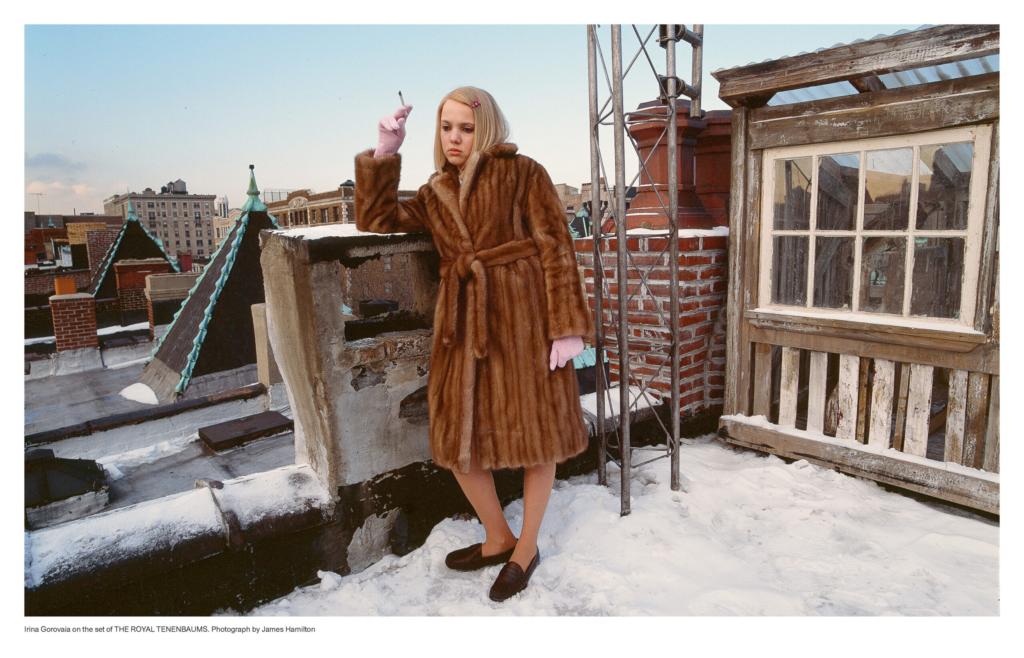
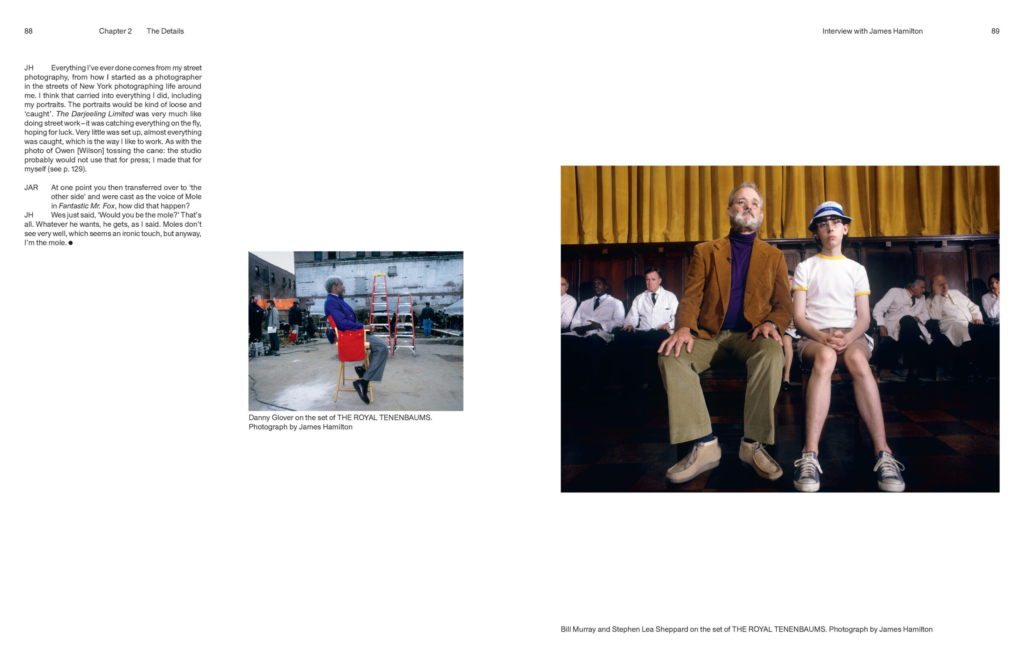
The archive is further animated by reflections from long-time collaborators, including actors Owen Wilson, Jason Schwartzman, Scarlett Johansson and Tilda Swinton, composer Alexandre Desplat, musician Seu Jorge, and music supervisor Randall Poster, each illuminating a different facet of Anderson’s collaborative method.
Central to the book is an extensive interview with Anderson himself, in which he reflects on his films, influences, and working process. Produced in close collaboration with the filmmaker, the publication accompanies the first major retrospective of his work, curated by La Cinémathèque française and the Design Museum, and stands as the most intimate and authoritative portrait of his cinematic imagination to date.
Author Matthieu Orlean, Johanna Agerman Ross, Lucia Savi | Publisher The Design Museum
[3]
Tarantino Town: His Movies and the Works That Inspired Them
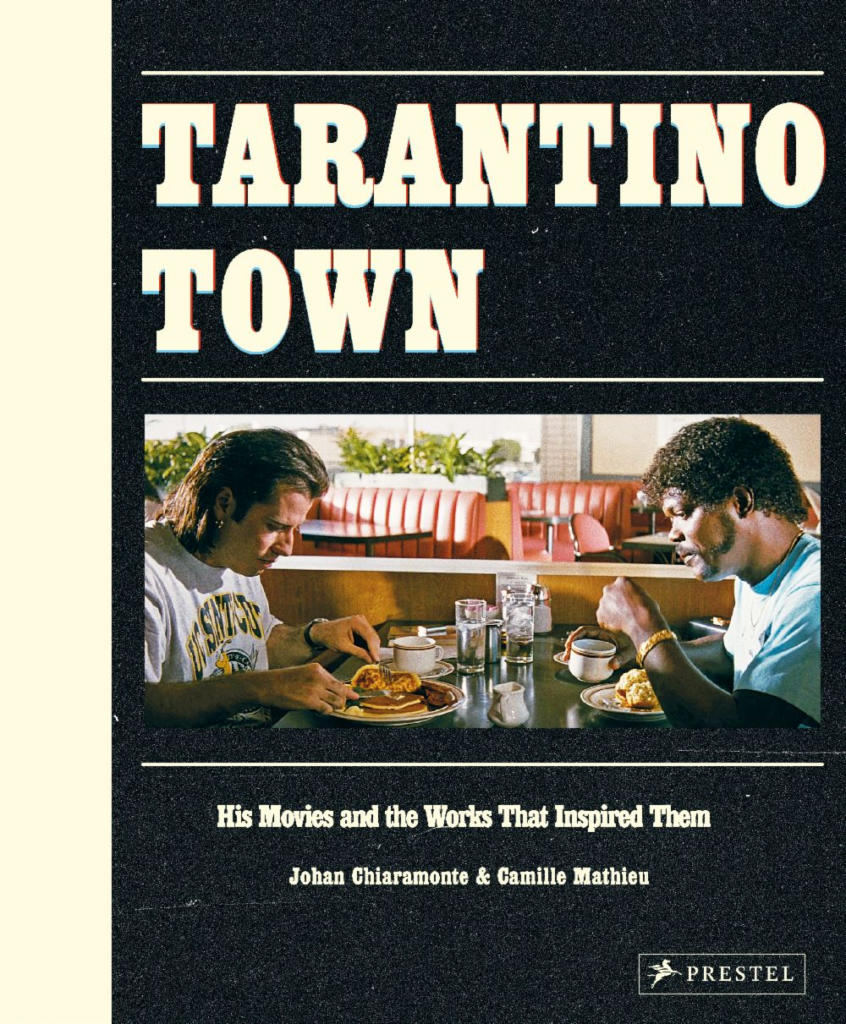
Tarantino Town is a wildly imaginative tribute to the cinematic universe of Quentin Tarantino, reimagined as a fully immersive town where every street, storefront, and soundtrack pulses with his unmistakable style. Part pop-culture map, part visual essay, the book invites readers to wander through a world built from grit, irony, nostalgia, and cinephile obsession.
Each stop in this fictional town unlocks an iconic moment from Tarantino’s films: wardrobes inspired by Reservoir Dogs and Kill Bill, diners echoing with the spirit of pulp fiction and American pop mythology, bookstores that mix hard-boiled crime with unexpected poetic detours, and movie theaters screening cult classics alongside Tarantino’s own cinematic references. The experience is playful and layered, encouraging readers to spot visual jokes, hidden references, and clever Easter eggs at every turn.
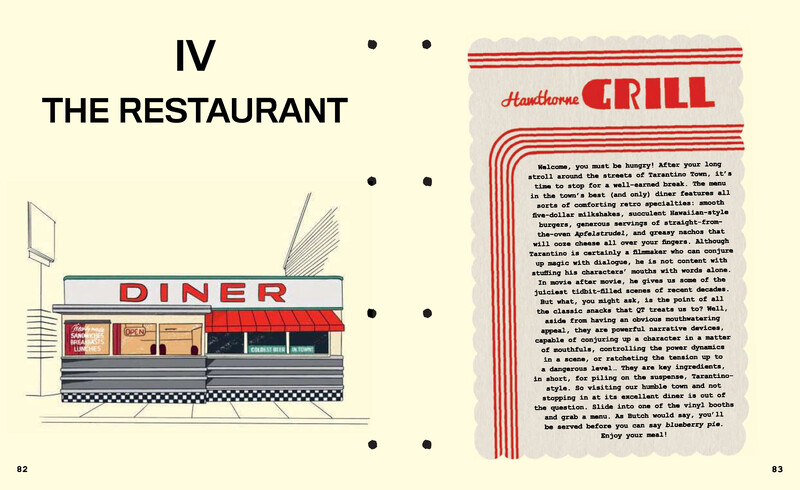
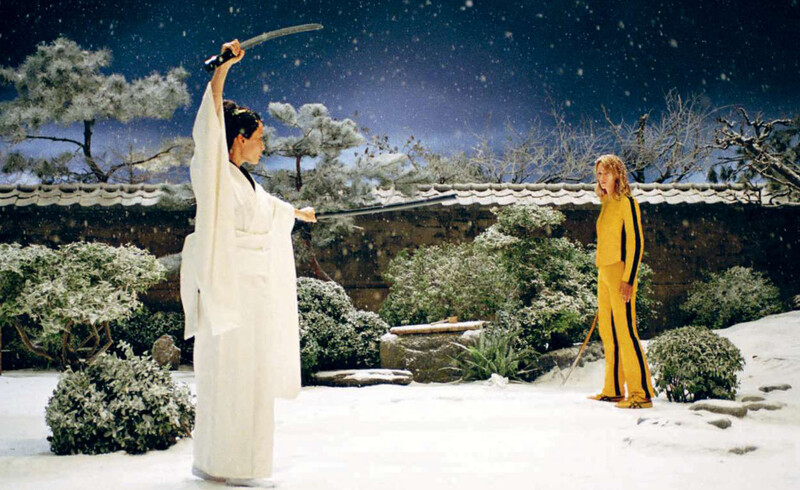
Richly illustrated and accompanied by witty, accessible essays, Tarantino Town explores the costumes, characters, music, and scenes that have shaped one of cinema’s most recognizable voices. It celebrates Tarantino not just as a filmmaker, but as a master curator of cultural memory.
More than a book, Tarantino Town is an invitation to step inside a living movie set, an exuberant, irreverent playground for film lovers, pop-culture enthusiasts, and anyone drawn to the strange brilliance of Tarantino’s world.
Author Johan Chiaramonte, Camille Mathieu | Publisher Prestel
[4]
David Cronenberg: Clinical Trials

This book offers a bold, dreamlike exploration of the cinematic universe of David Cronenberg, a filmmaker whose work has consistently challenged boundaries between high art and horror, the visceral and the intellectual, the mainstream and the radical. Long embraced by cult audiences, Cronenberg’s films are revisited here not as isolated works, but as part of a shifting psychological and aesthetic continuum.
Focusing on both the familiar and the unsettling aspects of landmark films such as Videodrome, The Fly, Naked Lunch, and Crash, the book resists a linear critical narrative. Instead, it is structured around Jungian-inspired chapters that mirror stages of individuation and therapy, underscoring the idea that identity, meaning, and reality itself are in constant flux. Themes, images, and obsessions recur, loop, and collide, revealing Cronenberg’s cinema as an ever-evolving psychic landscape.
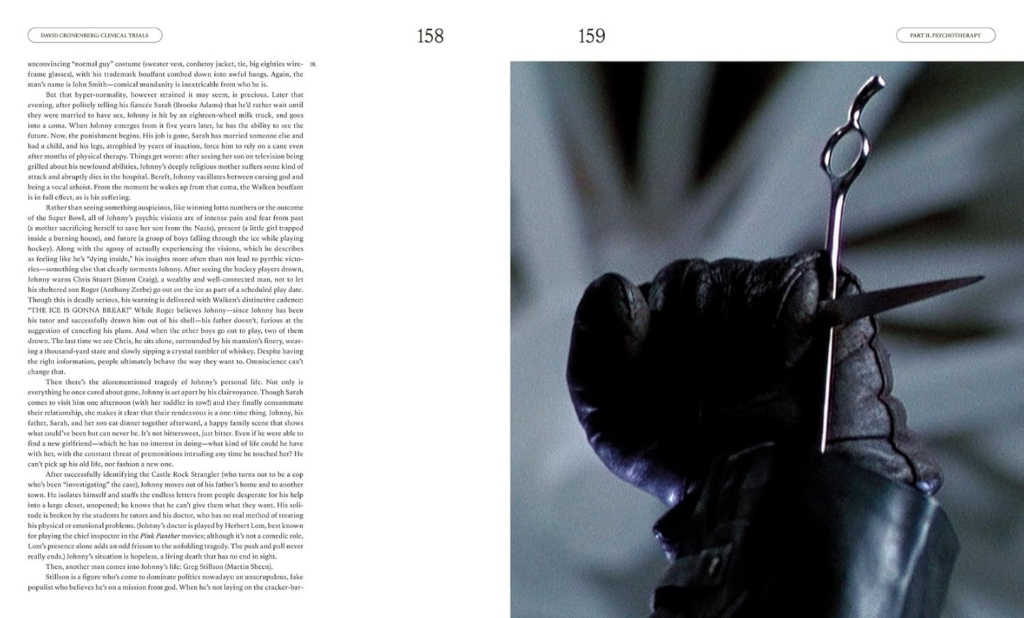
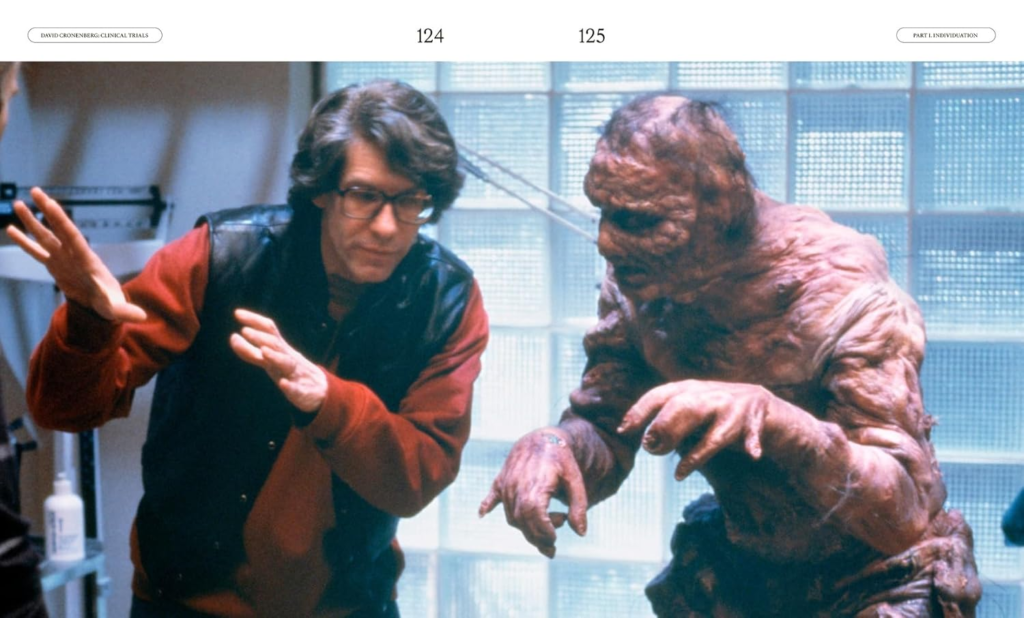
Rather than a conventional filmmaker monograph, the volume unfolds as an immersive, almost hallucinatory journey into what it means to be “Cronenbergian” where bodies mutate, technology infiltrates flesh, and desire destabilizes form. A foreword by Oscar-nominated actor Viggo Mortensen sets the tone, while interviews with key collaborators, including composer Howard Shore, production designer Carol Spier, cinematographer Peter Suschitzky, and producer and playwright/screenwriter Jeremy Thomas offer intimate insights into the creative processes behind the films.
Written by Violet Lucca and illustrated by Little White Lies, this book is an oneiric, intellectually rigorous meditation on cinema, psychology, and transformation—inviting readers not to understand Cronenberg, but to experience him.
Author Violet Lucca (Author), Little White Lies (Illustrator) | Publisher Abrams
[5]
Yorgos Lanthimos: Dear God, the Parthenon is still broken

Dear God, the Parthenon is still broken is a photographic vignette by Yorgos Lanthimos that exists in parallel to cinema rather than in service of it. Although created on the set of Poor Things in Budapest, the book unfolds as an autonomous world, detached from fixed time, geography, or narrative certainty.
Shifting fluidly between black and white and colour, the photographs evoke the sensation of a waking dream suspended between past and present. The meticulously constructed late-19th-century cities of London, Lisbon, Marseille, and a cruise ship-rebuilt in Budapest for the film-form the visual terrain. Within these imagined environments, characters move through spaces that are at once immersive and exposed: scaffolding, lighting rigs, screens, and crew appear at the edges of the frame. By deliberately widening the composition, Lanthimos reveals the artifice itself, fabricating a story within a story and allowing reality and fiction to coexist.
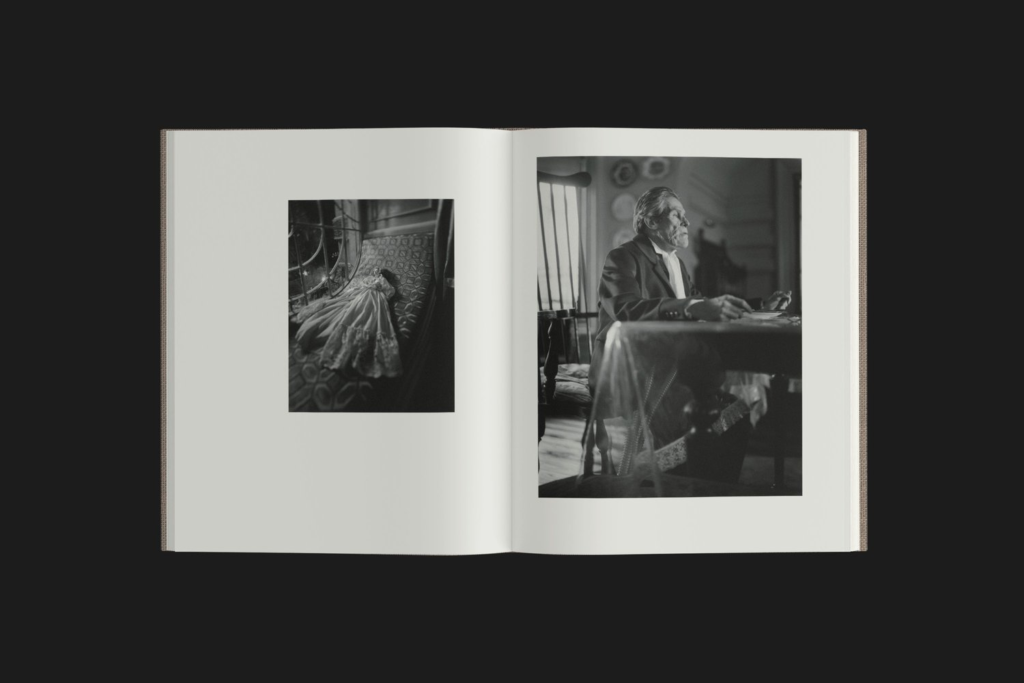
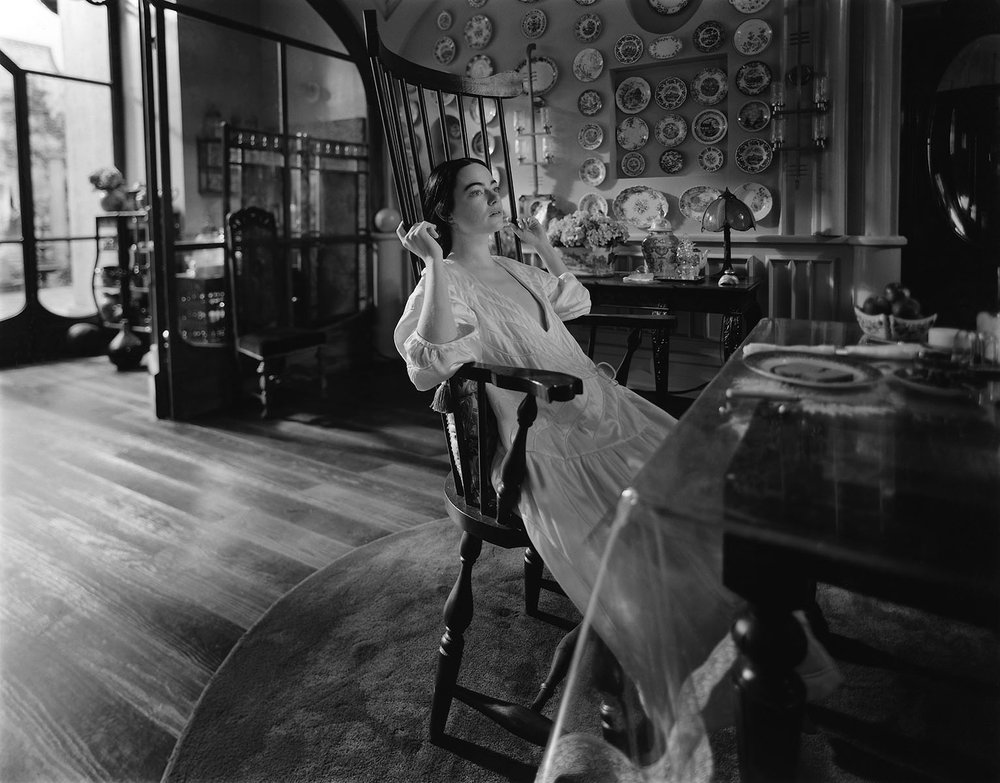
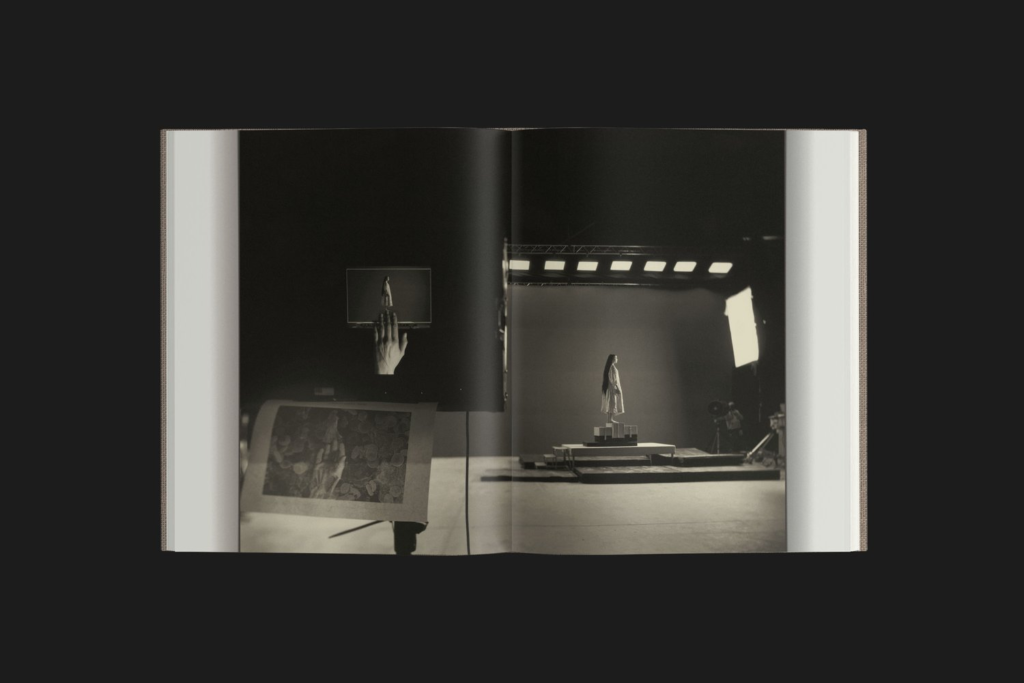
This layered approach is echoed in the book’s physical design, which incorporates foldouts that uncover the mechanics of the sets and their inhabitants, inviting the reader to “open a book within a book.” In contrast to the frenetic pace of filmmaking, Lanthimos embraced the stillness of large-format photography, committing to each composition without alteration until the exposure was complete. The result is an exercise in patience, tonality, and light, an almost meditative counterpoint to cinema.
Central to the project is Lanthimos’s close collaboration with Emma Stone, who portrays Bella Baxter in the film and received an Academy Award for the role. After filming days ended, the two developed colour and black-and-white negatives together in a makeshift bathroom darkroom. This intimate, alchemical process became a creative refuge beyond the constraints of the film transforming the act of photography into a shared space of experimentation, focus, and quiet discovery.
Author Yorgos Lanthimos| Publisher VOID
All featured titles are available in English at Hyper Hyppo.
Info
HYPER HYPO
Voreou 10, 10551 Athens
Monday to Friday: 11:00–20:00
Saturday: 11:00–18:00
(+30) 211 735 9628