 elc team
By Sofia Triantou
From wild weed to seasonal delicacy, nettle tells a story of tradition, taste, and springtime cooking in Mediterranean cuisine. Through blanching or cooking, the stinging hairs are neutralised, transforming the plant into a gentle wild green that pairs beautifully with pies, trahanas and herb soups
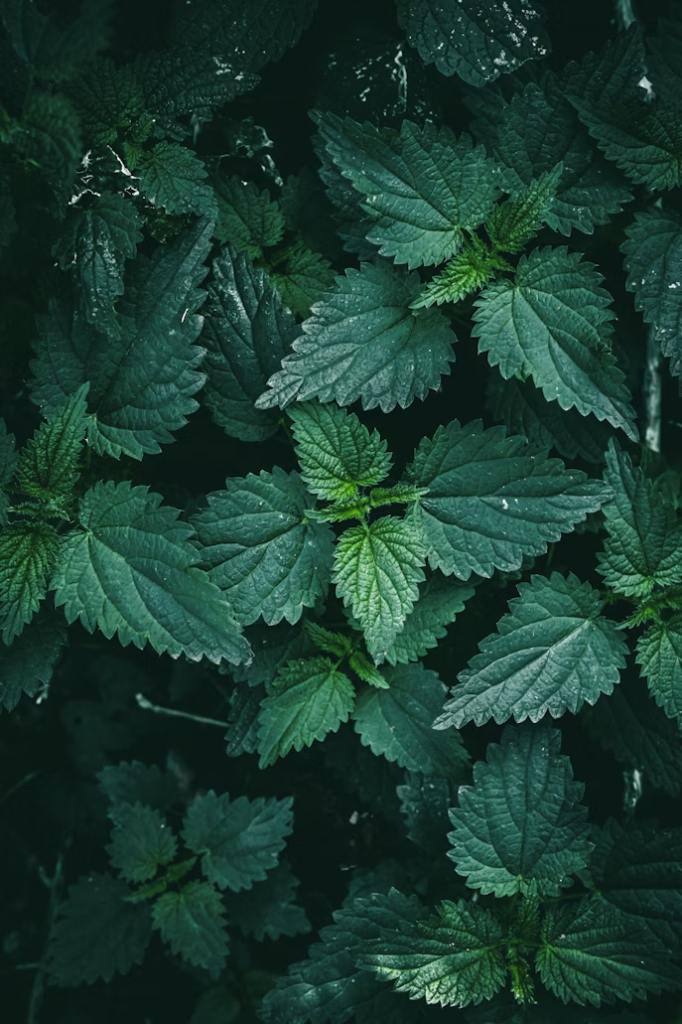
Nettle (Urtica dioica L. / Urtica urens L.) is one of those plants that seem to carry two faces. On the one hand, an irritating weed along roadsides and fields. On the other, one of the most valuable wild edible greens of Mediterranean tradition. A familiar springtime sight are the bunches of nettles laid out at open-air markets. I often stop in front of them, breathing in their scent reminiscent of a freshly baked seasonal pie, an aroma that gently announces the arrival of spring.
Its prime season on the plate is early spring, when the leaves are tender and before flowering begins. This is when nettle offers its finest flavour. Its collection as a spring green is also documented in contemporary ethnobotanical studies on Mediterranean wild herbs, where its young shoots are described as a classic seasonal food.
Its historical journey, however, is not only culinary. Nettle belongs to the plants that have been passed down through generations both as nourishment and as botanical knowledge. This explains its consistent appearance in ancient, medieval and modern European texts. In times when medicinal practice was built upon observation and experience, nettle became an object of study for important physicians and botanists. This continuity alone forms a remarkable cultural legacy.
In the 1st century AD, Pedanius Dioscorides, one of the most influential authors of Western botanical and pharmaceutical tradition included nettle in his work De Materia Medica. His text, which shaped medicinal knowledge for centuries, served as a bridge between ancient empirical plant use and later European pharmacopoeias.
Centuries later, in the 12th century, Hildegard von Bingen, one of the most important figures of medieval monastic medicine, also referenced nettle in her work Physica. There, she did not merely record it as a plant of note, but as a practical element of everyday life. She recommended it cooked as a food that supports digestion and the body’s internal balance, while also mentioning external applications within traditional healing practices.
Its presence in one of the foundational texts of medieval medicine shows that nettle did not fade through time but remained an active part of daily life.
Today, nettle is still primarily used according to tradition, associated with gentle bodily support, especially for the urinary system and the joints.
Yet beyond the herbal shelf, nettle is first and foremost food. It is one of the wild greens gathered in spring and cooked in Mediterranean households for generations. Its use is not accidental; it forms part of a daily practice that connects season, land and the traditional table. Knowing when and how to harvest and prepare these wild plants is an element of local food identity, passed from person to person.
And here nettle offers a clear practical advantage: through blanching or cooking, its stinging hairs are neutralised, transforming the plant into a friendly wild green that blends perfectly into pies, trahanas dishes and vegetable soups. This transition from “wild” to nourishment is perhaps its most distinctive cultural feature.
Enjoy it in a traditional nettle pie
Nettle pie is among the most characteristic dishes of mountain communities. Traditional recipe records note that it is made with tender nettle tops and remains a living culinary practice to this day.
Ingredients
• 500 g tender nettle tops (leaves and soft tips only)
• 2 bunches spring onions
• dill and fennel
• olive oil, salt, pepper
• a little fresh mizithra cheese (optional)
• traditional pastry sheets
Instructions
Lightly blanch the nettles, drain well and finely chop. Mix with the onions and herbs, season with salt and pepper, and bind with olive oil. Fill the pastry, lightly score the top and bake until golden.