 elc team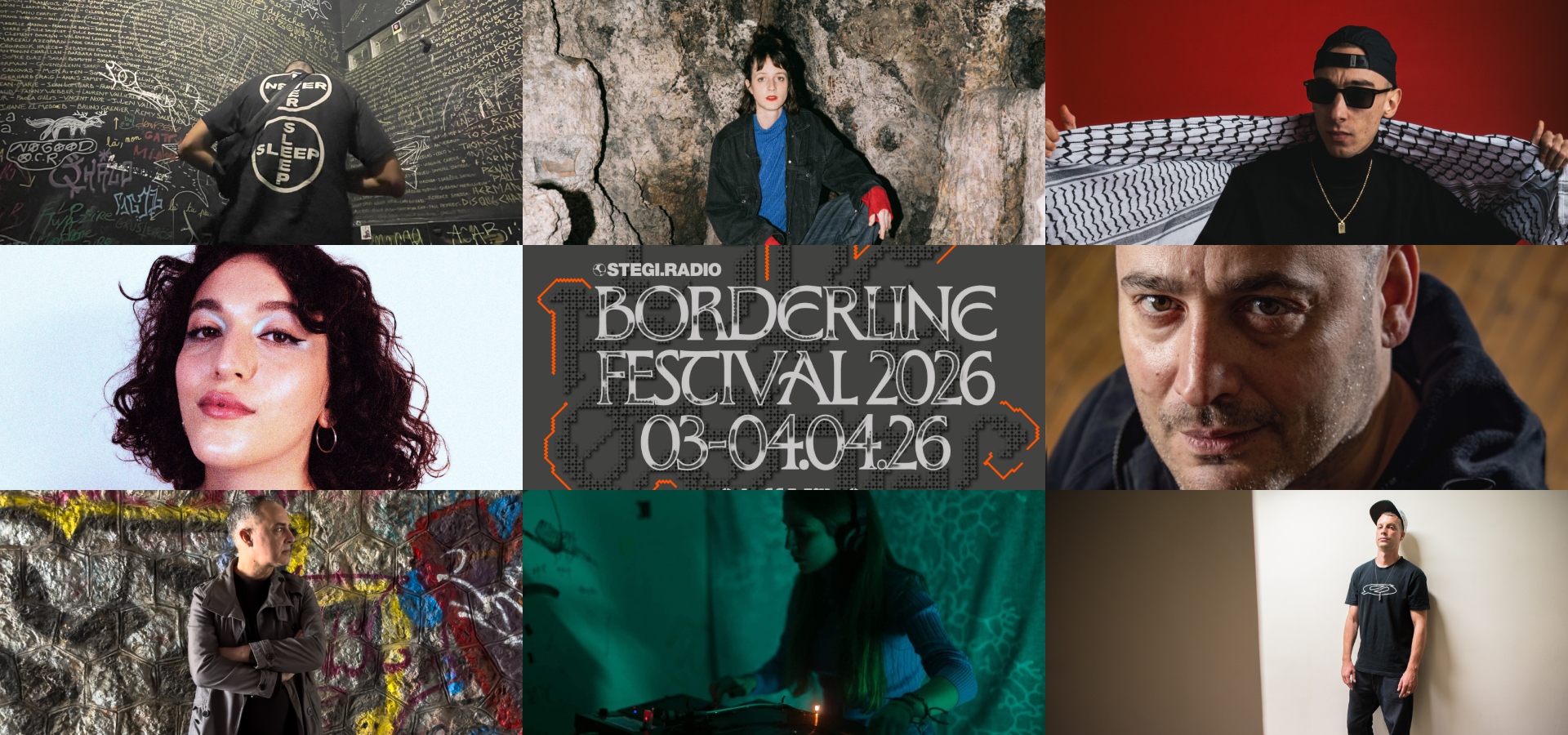
By Stelios Parris
Black Athena, Poor J’Darr, mint++, pink.wav, DJ NOT I, IO, Chris OD, Sofia Stergiou answer the questions of a retired raver
It used to be an industrial space, a plastics factory that has now been transformed into one of the most vibrant hubs of contemporary artistic creation. It is the same venue in the Rentis area that hosted Juergen Teller’s photography exhibition and will host the exhibition Ongoing by Tilda Swinton in May. There are nights when you don’t simply go to listen to music. You go to stand next to it, to watch it being born, to feel it changing shape in front of you. That’s how I imagine these two nights of Borderline Festival 2026 will be, on April 3 and 4 at Onassis Ready.
“Borderline Festival 2026,” as stated in the curatorial team’s note, “imagines the trajectory of experimental and electronic music from the late 20th century to today as an ocean of sound, a vast fluid mass where past, present, and future are intertwined, where heritage coexists with the cutting edge of innovation. Bringing together artists from different eras, scenes, and genres, Borderline invites the audience to dive into this ocean and discover the ever-pulsing force of the names that shaped electronic music as we know it, alongside the contemporary avant-garde—the spearhead of what experimental music has to offer today.”
This deep dive worked last year. I heard sounds, I danced, I met people. I moved from the Ground Floor to the Basement. Then outside for a quick conversation and back in again to dance. There’s a constant flow of people from one stage to another, indoor and outdoor spaces to chill, and always someone from the Onassis staff ready to help with anything you might need. It’s an immersion into this ocean of sound that starts at 20:00 and ends at 03:00.

The first day of Borderline presents a mix of club, post-punk and indie rock, pioneering electronic music and psychedelic sounds. The big name of the day is Ben UFO, a guarantee for an explosive DJ set that will make us sweat on the dancefloor. The second day unfolds as a kaleidoscope of the past and future of electronic music. Two stages full of intensity, rhythm, and explosive performances. Jeff Mills, the headline act of the day, a master DJ who will transport us to other galaxies.
There are many names participating in Borderline Festival 2026, but I chose to focus on the Greek DJs. I wanted them to answer a few questions I have as a retired raver who still goes out to electronic music parties. I wanted us to get to know Black Athena, Poor J’Darr, mint++, pink.wav, DJ NOT I, IO, Chris OD, Sofia Stergiou through their answers, not just through their DJ sets. Their responses are, in my opinion, very compelling. Reading them, I felt proud of our Greek scene, as they revealed both groundedness and sharp perspectives.
Is God still a DJ? Do you enjoy making people dance, or having them pull out their phones to capture you?
Black Athena
“Music definitely has something metaphysical about it. It’s no coincidence, after all, that it plays a central ritual role in so many religions. Rave itself is a ritual; it has drama, intensity, passion, and it carries an element of catharsis. You have to surrender to it, without distractions, in order to truly feel it. Mobile phones, therefore, are a distraction that doesn’t belong in this setting at all… So it’s better to put them aside for a few hours.”
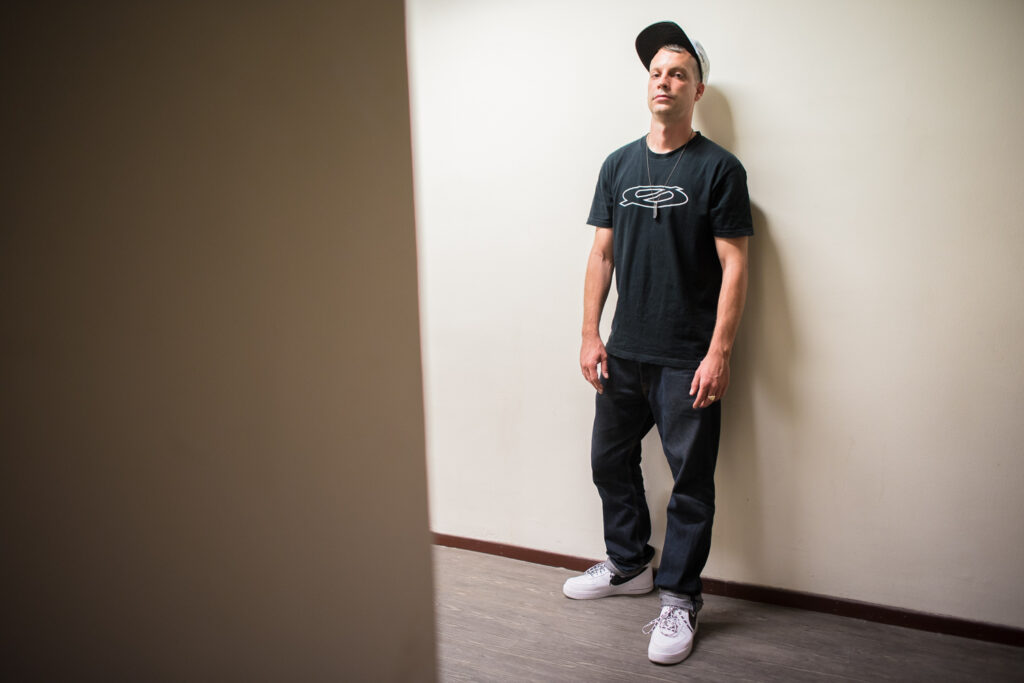
Poor J’Darr
“For me, the DJ is not a god, and never was-the music has always been the god! The DJ is simply the medium that connects people with the god, which is music. Of course, I enjoy making people dance and reach a state of ecstasy. The result of that is them capturing me on their phones. I like it because it affirms my taste, my musical vision, and my abilities, not because it makes me feel important or cool.”

mint++
“I think God is God, DJs are DJs, dancers will always be dancers, and phones, as long as they exist, will keep recording. Both detachment and immersion are always welcome, as is thoughtful use. This all comes from various music scenes where the audience has willingly turned itself into a giant Christmas ornament much like people used to do with lighters during romantic ballads.”
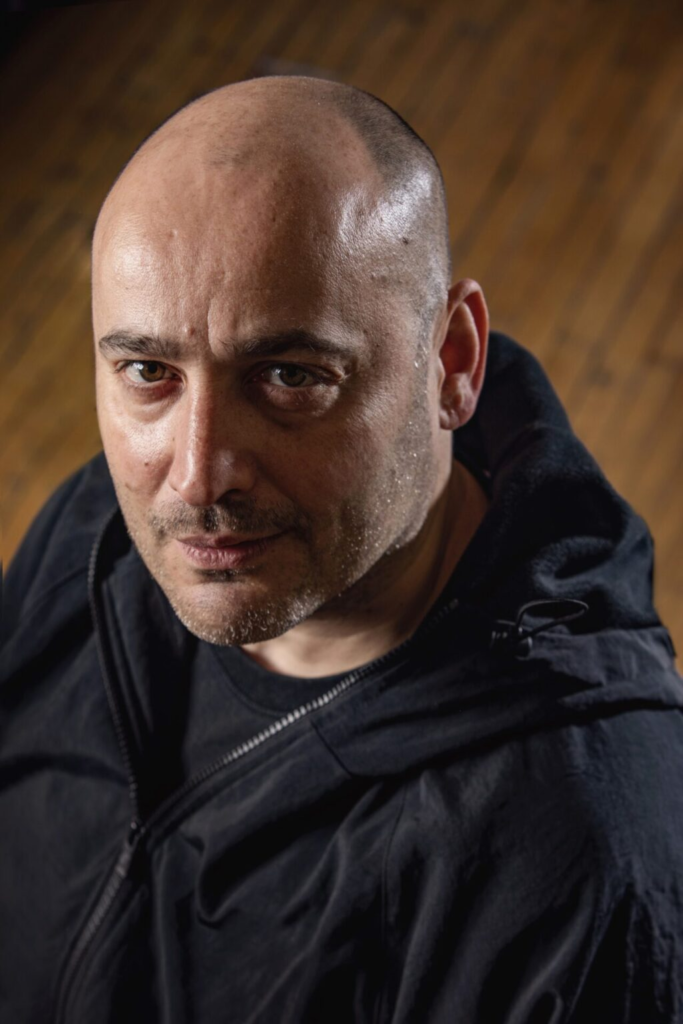
pink.wav
“God is definitely not a DJ. In parts of rave culture, the dancefloor doesn’t even look at the DJ, but at the ecosystem. Personally, I don’t care so much about being watched by the audience as I do about connecting with them through the music I share. For me, there is no better feeling than seeing people on the dancefloor move as one-and that’s something no image or video can ever fully capture.”

DJ NOT I
“I’ll answer with this phrase by Michel Foucault from The Archaeology of Knowledge: ‘You may have killed God with everything you’ve said, but don’t imagine that, with all you say, you will ever create a man who will live longer than he did.’”
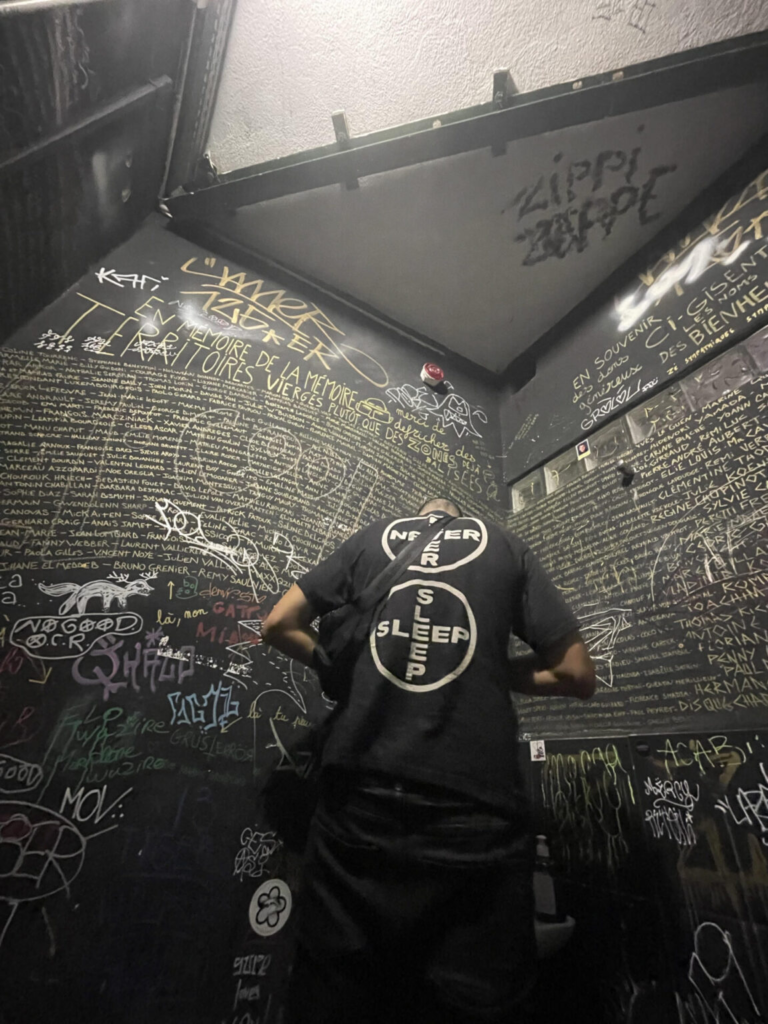
IO
“I think that today the DJ is still very much at the center, and will remain so for a long time because of social media and the importance we place on their ‘image.’ Image has now become a creative layer within this music scene, and a way to strengthen a DJ’s vision. Personally, though, even if I recognize and appreciate this creative aspect in some DJs and enjoy its experimentation, I prefer the focus to be on dancing, music, and the audience’s sensory experience.”

Chris OD
“I enjoy creating, through music, a shared space where people can coexist, connect, and live in the moment. For that to happen, the relationship between the audience and the DJ must be equal and reciprocal, not a hierarchy where one ‘guides’ and the other simply records moments on their phone.”
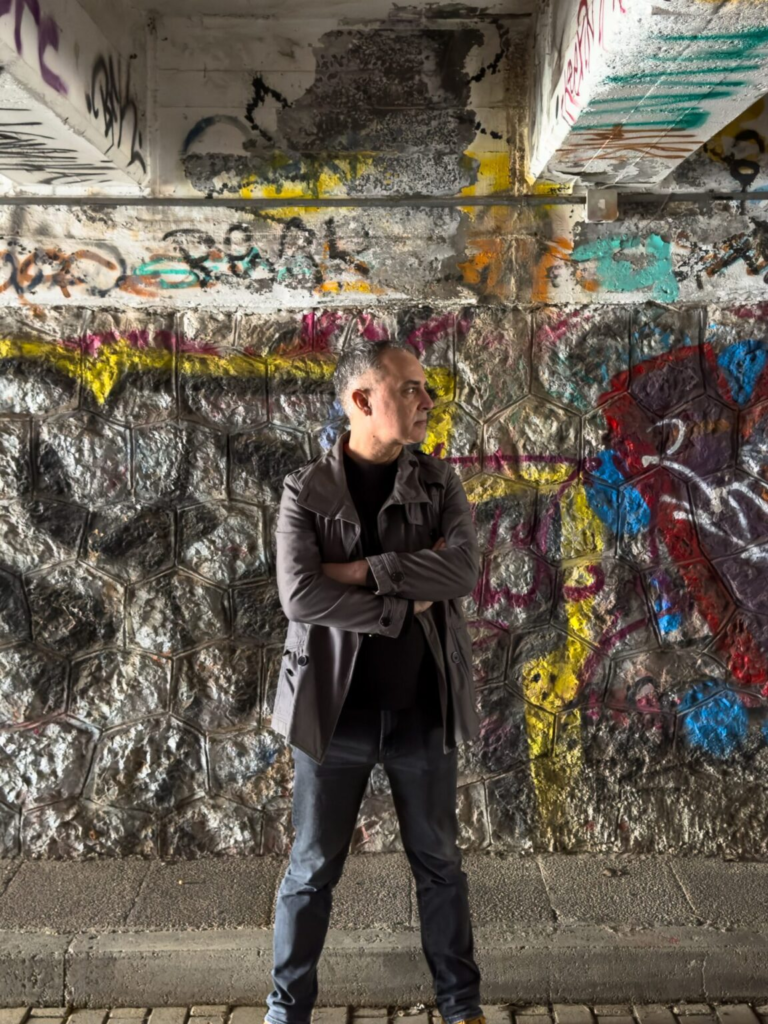
Sofia Stergiou
“I don’t think God is a DJ anymore, if he ever was… If there’s something keeping us there today, it’s the algorithm and it only cares about keeping you there, not whether you’re actually having a good time. The dancefloor has changed, not radically, but subtly. From a space of losing control, it has become a space of social witnessing. Let me explain: you don’t just go to dance, but to prove you were there and here’s the evidence. I’m not interested in being ‘captured.’ That’s a form of soft ownership. Maybe I’m just closer to the idea that what truly matters cannot be easily recorded.”
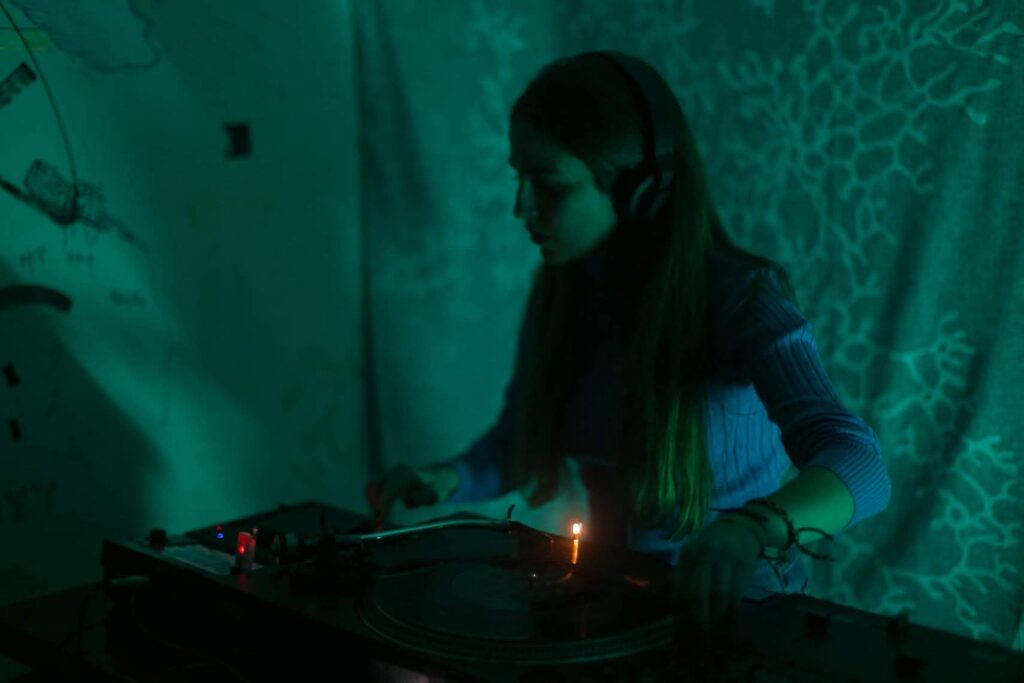
Greek electronic scene: Tell me one myth and one reality.
Black Athena
“The myths of the Greek electronic scene? Lena Platonos, Vangelis, Stereo Nova. The reality comes when the party ends and the lights come and it can be harsh. How is the legacy these myths leave behind preserved? Is it preserved at all, or does it fade with time? The value of art is timeless, beyond trends, unlike a product with an expiration date meant to sustain consumer cycles. How can this legacy be preserved? I have a good idea, anyone truly interested knows how to find me to discuss it.”
Poor J’Darr
“A huge myth is that the Greek electronic scene either doesn’t exist or is just a poor imitation of the European-mainly techno-scene, implying a lack of authenticity and personality among the people here. The reality is that Greece has a rich and distinct electronic heritage. Even if the underground scene isn’t that large, it spans many genres, from ambient experimental to synthwave and darkwave to bass and leftfield sounds, and more. The scene has never been a simple copy of what’s happening abroad; on the contrary, it has developed its own character, shaped by Mediterranean culture, the urban landscape of clubs, free rave parties, and its music producers. It’s full of talented individuals, but the lack of infrastructure and stable state funding makes it difficult for artists to live off their work and gain international recognition.”
mint++
“The Greek scene has produced some serious phenomena both in production and mixing, and that’s a reality. The myth is that we have the infrastructure, the education of politeness, and that we were liberated in 1821.”
pink.wav
“‘Events and artists from abroad are always superior to local ones.’ There’s a tendency to romanticize what happens beyond our borders. In reality, while our scene has room for improvement and there are several shortcomings, the level is quite high-especially in DJing. Often, guest artists come from abroad and locals stand out by giving their best. Also, considering the conditions-limited budgets, lack of venues, etc. we’re not doing that badly.”
DJ NOT I
“One myth is that there is a unified electronic scene in Greece. There are many scenes, most of them quite small, with huge differences in interests and levels of dedication. The reality is that many DJs in Greece, with very little recognition, are not only on par with bigger names, but often overshadow guests-even at events where they perform together.”
IO
“I feel too new in this field to answer that.”
Chris OD
“Myth: The Greek electronic scene lags behind the major European ones. Reality: Such comparisons don’t help anyone. The Greek scene has immense expressive richness, small communities that support one another, creators with strong identities, and DJs and producers whose work travels much further than we usually realize. The deeper you look beyond the mainstream, the more self-sufficient and unique it reveals itself to be.”
Sofia Stergiou
“The myth is that ‘the scene is rising.’ This phrase comes back every few years-slightly more optimistic, slightly naïve, always willing to believe itself. The difference today is that there is more visibility, not necessarily more substance. What exists lives on smaller, quieter scales: instinct, judgment, an inner compass and aesthetic-and that, in my opinion, was never missing. What’s missing is the ease for something to exist without constantly looking outward and seeking validation.”
What, in your opinion, makes Borderline stand out from other electronic music festivals?
Black Athena
“I think it’s the curation—it has a very distinct identity and character. It combines the past with the future, the classic with the contemporary, the local with the global.”
Poor J’Darr
“The combination of the experimental element and club culture is the most important reason. Also, the fact that there are major bookings like Jeff Mills, Ben UFO, aya w/MFO, which bring together large audiences. As a result, people get to discover local acts they might not have known otherwise and recognize their talent. Finally, the festival takes place in a beautiful venue with carefully designed sound and aesthetics.”
mint++
“Going back to the first question as well, Borderline is a music celebration, not a New Year’s Eve party. The love for music, the professional production, and the sheer amount of work each year attract the right audience.”
pink.wav
“Borderline highlights the different facets of electronic music in a way that makes sense today, aiming to expose its audience to them. ‘Genres’ and categorization in 2026 don’t really make much sense anymore, so the curation here is more experience-based than genre-based. Also, the balance between local and international artists is very important for the scene and puts Athens on the map in a different way.”
DJ NOT I
“I would say that one of Borderline’s strongest assets is the very conscious balance between international names-which are a strong asset on their own-and the representation of the local scene.”
IO
“It brings a wide audience into contact with experimental music and gives local artists the opportunity to share the stage with globally renowned acts. The full-bodied sound and creative lighting also help the audience immerse themselves more deeply in the experience.”
Chris OD
“It goes beyond what most people define as ‘electronic music,’ without imitating the uniformity we see in most festival lineups, both in Greece and abroad. Borderline follows a pluralistic and open approach to programming, connecting the past and present of electronic-and not only-music through unexpected encounters, hybrid performances, and bold sounds.”
Sofia Stergiou
“In a landscape where most festivals align with the logic of experience-as-product, ready for easy consumption, Borderline insists on attention, uncertainty, and a more second-level interpretation of sound. There’s an almost exhibition-like logic: music becomes an object of focus, which requires, in my opinion, respect for the listener-not the passerby, but the one who has come almost reverently to stand before sound, to test it, maybe even endure it. It’s not a festival that takes you by the hand, and this refusal to become ‘easy to consume’ is something I find particularly interesting.”
What made you get involved with electronic music?
Black Athena
“Two back-to-back nights by François Kevorkian at Plastic People in London in the early 2000s. The night’s mission statement compared dub, as a musical tendency, to cubism in painting. Soul, Progressive Rock, Disco, Chicago House, Detroit Techno, and Reggae all through the prism of dub.”
Poor J’Darr
“I grew up in an artistic household where my main musical influence was my father, who is a DJ. So from a very young age, I was constantly in clubs and bars watching him play. Many times, I would fall asleep in my crib next to him at the booth. I also studied classical music from a young age until quite recently.
Still, I only slowly got into electronic music later, around 17–18. At the time, I played electric guitar in jazz/funk/soul/blues cover bands, usually with middle-aged or older musicians.
I wanted to create my own music but couldn’t find people my age with the same drive or influences. By chance, I met some people in my neighborhood square who were deeply into the UK Bass sound, and their friends were hip-hop producers and rappers. Through them, I discovered the magic of playing and creating electronic music. The decision was immediate–why depend on bands where no one shares your needs, when you can express yourself independently through electronic music?
After years of keeping this pursuit personal, a release on a UK label that happened almost by accident, along with my first big public DJ gig that went really well, made me decide to take it more seriously. Shortly after, I quit my job and fully committed to my music.”
mint++
“I heard Josh Wink at 14, on vacation in Chania, during the Papathemeilis era when everyone was criticizing him. His whole attitude convinced me–and I voted rave.”
pink.wav
“Music was always something I carried with me, literally and metaphorically. It was a refuge and a source of inspiration growing up, but I hadn’t considered DJing as a possibility until some close friends encouraged me and I experienced my first parties in Thessaloniki.
I started by curating music at home during the second lockdown. I first experimented with a tiny controller, mainly playing hip-hop and R&B. I had actually dismissed electronic music for years until I found a sound that resonated with me and realized how vast it could be.
I was lucky to connect with people who were also playing or starting out at the same time, and we formed a small community, throwing our first parties together–and the rest is history. It felt like being in the right place at the right time.”
DJ NOT I
“With DJing in general, I’d say it started with my childhood urge to make my parents listen to the records I loved—and how receptive they were to it. As for electronic/techno specifically, I can’t quite remember. Maybe it was the first time I heard Perc’s remix of Two Different Ways by Factory Floor in 2013. Something like that.”
IO
“As a child, I mainly played jazz, but gradually I wanted to experiment with more electronic tools. In reality, though, I entered this scene thanks to the trust of my friends, who taught me a lot and, above all, helped me believe in it. It may sound cheesy, but it’s true.”
Chris OD
“Electronic music is just one of the many genres I play as a selector, taking up the space and time it deserves in my sets depending on the context. My engagement with it didn’t come from a specific trigger but as a natural evolution of my passion for discovering new sounds–something this genre offers in abundance.
What I love about electronic music in my sets is its flexibility as an expressive tool and its ability to allow the audience to interpret it freely. For the record, my first consistent exposure to the world of electronic music came in the early ’90s through releases by Warp Records–a label that raised generations of electronic listeners.”
Sofia Stergiou
“What drew me in is that electronic music, in its purest form, creates a space that pretends—and sometimes manages—to be horizontal. In this world, usual hierarchies loosen. Not entirely, but enough that they stop being the main currency. I wouldn’t call it a utopia exactly, but a temporary version of how we could be. That’s what kept me–it’s a way of testing how you relate to others.”
A DJ set you will never forget…
Black Athena
“My set with Negro Tou Moria at a squat in Kassel, Germany, on the sidelines of documenta 14. One big speaker, a Mac with only iTunes, and 500 people ready to have a great time! The party started around 1:30 after the live show and ended around 5 in the morning–with rumors that some attendees, caught in the frenzy, had gone outside and started smashing buses!”
Poor J’Darr
“My first gig in England, in Manchester. It was also my first time on a plane and abroad, which made it even more intense. To this day, it’s probably the happiest day of my life.
It happened during a very difficult period for me, toward the end of the COVID era (February 2022), when I was just working every day and struggling with depression. After that successful event, I realized immediately that this is what I want to do–write and play music and let it take me around the world. Shortly after returning, I quit my job and committed fully to music.”
mint++
“‘Kavlona’ in 2023–an outdoor party under a beautiful tree. It’s a shame we don’t have similar initiatives anymore (like Endorphin in the past). With such summers, hiding in cities under AC drains just to cool down feels like a waste.”
pink.wav
“There are many sets I won’t forget, but Christmas 2024 stands out. I was playing at the annual Matter Christmas party and decided to arrive early to check my USBs because I had a bad feeling. I was right—three USB sticks, none working. I made a 2.5-hour round trip home and rebuilt my playlists on my laptop in the metro. Totally worth it!”
DJ NOT I
“Recently, I played for the anniversary of the ‘Iliaktida’ Association, which supports people with Down syndrome and their families. It was probably the sweetest experience I’ve ever had as a DJ—and definitely a gig I never imagined I’d play.”
IO
“New Year’s house DJ sets are the funniest because chaos unfolds. People coming and going, some fully prepared to experience it, others just arriving from family dinners, some staying until sunrise… I love this context, especially one I experienced two years ago. Most importantly, I knew I was in a safe environment, with people I love who also take care of one another. Beach sets are also among my favorites–where the audience is free to dance, rest, wander…”
Chris OD
“I have beautiful memories from participating in the first Matter In The Park event—an all-day gathering on a wonderful spring day in 2024 at Pedion tou Areos, which I had the pleasure of opening with an ambient set among friends, family, and a diverse group of music lovers.”
Sofia Stergiou
“It was at a party where everyone was playing vinyl, so I decided to do the same. I brought records but planned to supplement with a USB since I didn’t have enough for a two-hour set.
I get there-and realize the CDJs simply… don’t work. So I’m left with eight records and two hours ahead of me. At that point, you stop thinking about ideal builds and start thinking more fundamentally—how to sustain something with limited material.
I started playing both sides, slowing down BPMs, checking if the crowd had rotated enough to replay tracks, stretching pieces longer than usual. Somehow, it worked. It definitely wasn’t a set I’d showcase, but it taught me that the more options we have, the easier it is to hide behind them.”