 elc team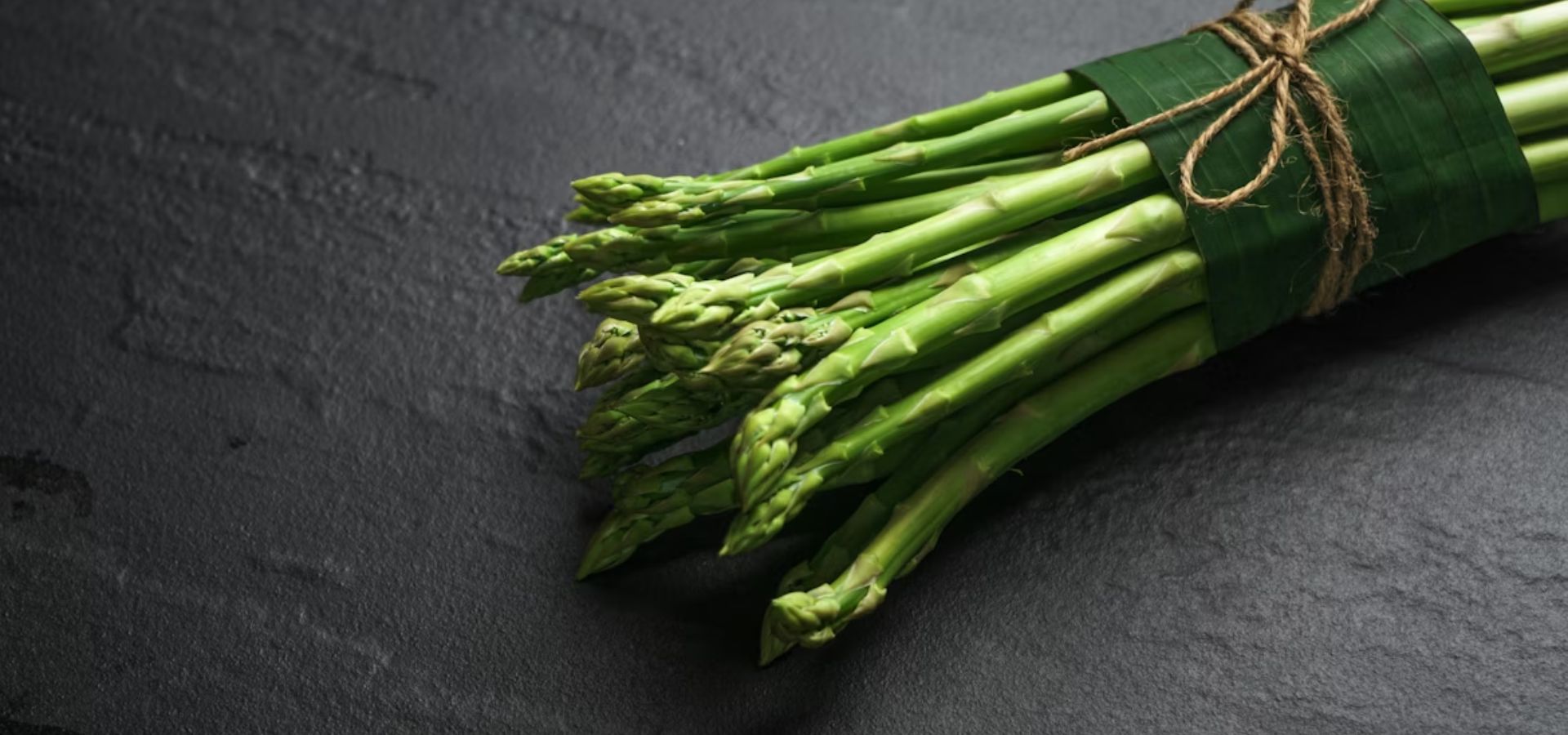
By Sofia Triantou
Its presence in Greek tradition goes beyond the table; it is intertwined with myth, observations of nature, and a knowledge passed down through the years.
Asparagus, one of the most characteristic and beloved plants of spring, has accompanied humankind from antiquity to the present day, not only as food but also as an element of culture. Its presence in Greek tradition goes beyond the table; it is intertwined with myths, observations of nature, and a body of knowledge passed down through the years.
According to an ancient myth, Perigoune, pursued by Theseus, asked the gods to save her. She was then transformed into a tender shoot of wild asparagus, which became entangled in a thorny bush. From that moment on, the plant was associated with the goddess Aphrodite, while in certain regions of Greece its branches were used in wedding customs. This narrative reveals the symbolic value of the plant, as well as the close relationship between humans and nature.
The importance of asparagus is also recorded by ancient writers. Theophrastus and Dioscorides considered it a noteworthy plant, documenting its properties and uses. In his work De Materia Medica, Dioscorides refers to its use as a diuretic beneficial to the body, while Theophrastus describes its morphology and mode of growth.
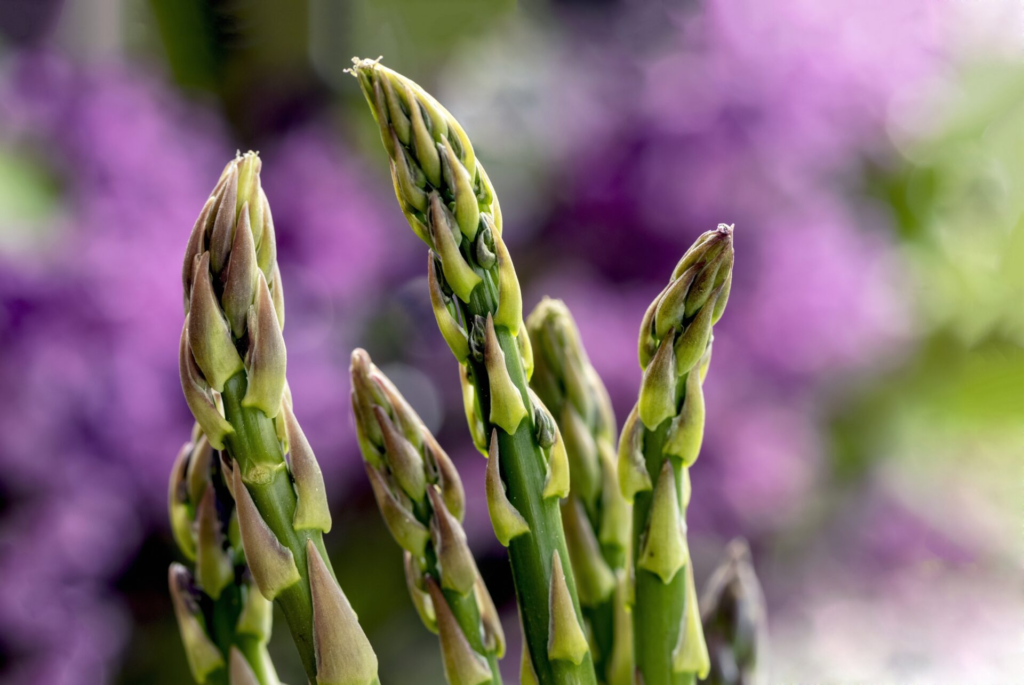
Already in antiquity, an interesting question arises: wild or cultivated? Sources show a clear preference for wild asparagus, which was considered both more flavorful and more nutritious.
Athenaeus, in Deipnosophistae, refers to different types of asparagus, distinguishing those that grow in marshy soils from those found in mountainous regions. He also notes that the best specimens do not come from seeds but grow naturally, reinforcing the value attributed to wild vegetation.
The presence of asparagus continues through the centuries. The French traveler Pierre Belon, who visited Crete in the 16th century, noted that cultivated asparagus was rare, while wild varieties grew everywhere. Similarly, the English traveler Robert Pashley describes a meal of eggs and wild asparagus, observing that locals were well acquainted with their use, even if their flavor differed from that of other European varieties.
In the Roman world, asparagus held a special place. Pliny classified it among the finest vegetables, while Apicius included asparagus recipes in his work, demonstrating its role in refined gastronomy. Its cultivation became more systematic, though appreciation for wild varieties never disappeared, a fact that still holds true today.
During the Middle Ages, the consumption of asparagus declined but did not vanish. The plant continued to be cultivated and re-emerged strongly in Western Europe, particularly through the royal tables of the Renaissance. This trajectory highlights its enduring value as a food of high nutritional quality and, one might say, refined taste.
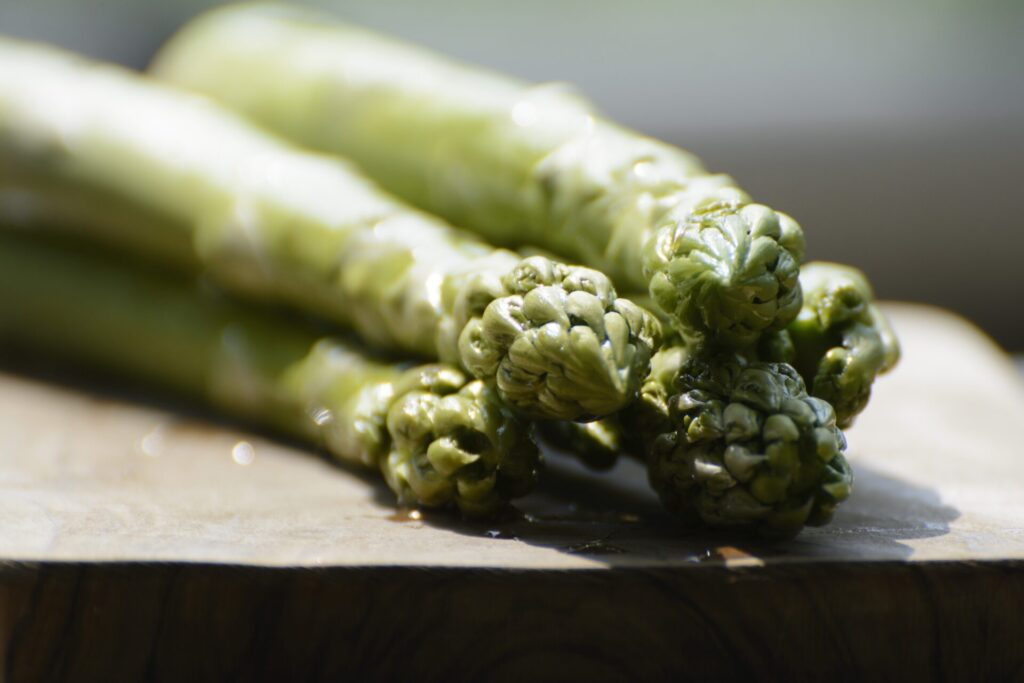
The nutritional significance of asparagus is already noted in earlier texts, which mention its beneficial effects on the body and digestive system. Today, the scientific community confirms that it is a source of vitamins and minerals, such as magnesium and phosphorus, and that it contains asparagine, a substance important for cellular metabolism (USDA, European Food Safety Authority).
In the Greek landscape, wild asparagus is mainly found in uncultivated areas, near rivers and streams, and at the roots of olive trees. Its seasonality is distinctive: from late March to April, and in mountainous regions it can be gathered even into May. Its presence marks the arrival of spring.
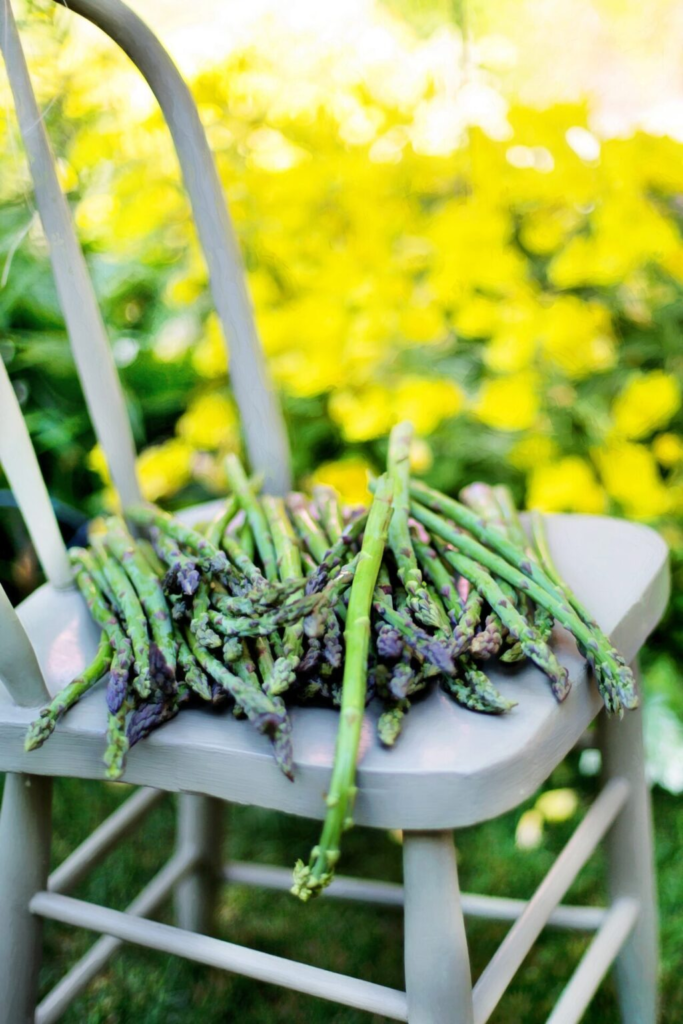
Cultivated asparagus comes in white, green, and purple varieties. White asparagus is milder and more fleshy, green has a stronger flavor and a crisp texture, while purple is considered rarer and more delicate. Preparing asparagus requires care, as the tough lower part must be removed, and cooking time should remain short so that both flavor and nutrients are preserved.
Despite the evolution of cuisine, asparagus retains its character as a seasonal and refined plant for food lovers. Its value lies not only in its taste or nutritional qualities, but also in how it brings together myth, observation of nature, and the culinary experience.
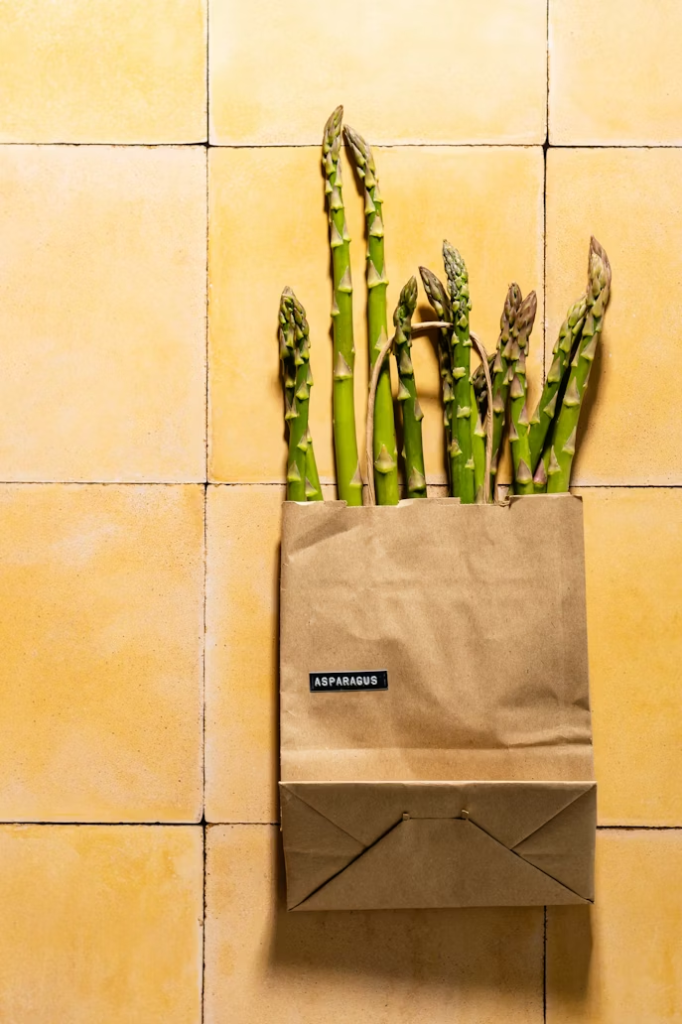

…and a recipe
Omelette with wild asparagus and lemon zest
Ingredients
1 bunch of wild asparagus
4 eggs
2 tbsp olive oil
a little fresh spring onion
lemon zest
freshly ground pepper
Method
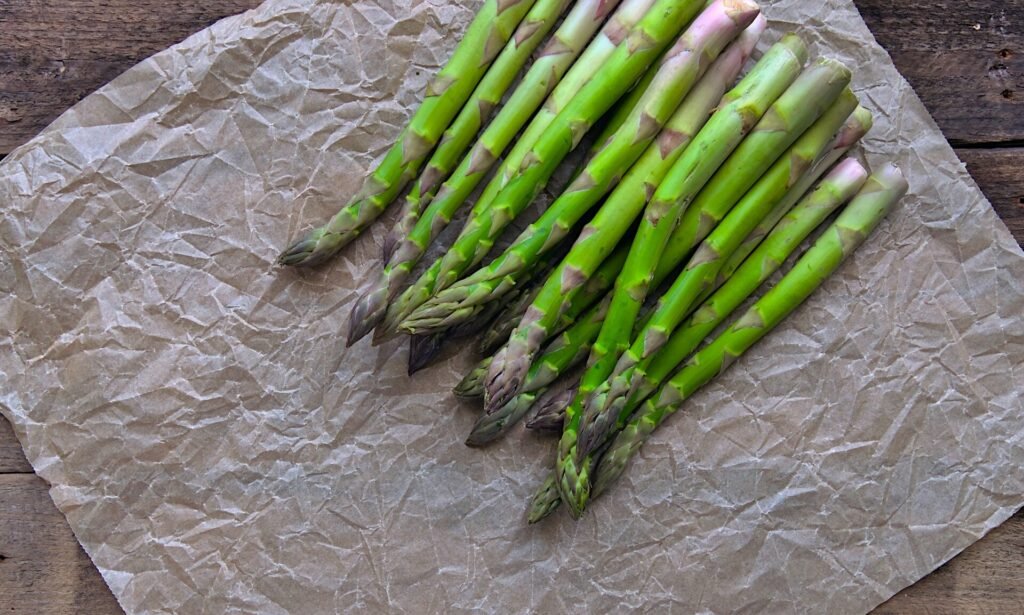
Clean the asparagus by removing the tough lower ends and cut into small pieces.
Place them in a shallow pot or deep pan with a small amount of water and let them soften gently, without boiling vigorously.
Once the liquid has evaporated, add the olive oil and the spring onion and cook for a few minutes until softened and slightly sweet.
Beat the eggs and pour them in, stirring gently over low heat to create a soft, moist omelette, not dry.
Remove from heat and add a little lemon zest and freshly ground pepper.
Serve warm. Enjoy!