 PEPI NIKOLOPOULOU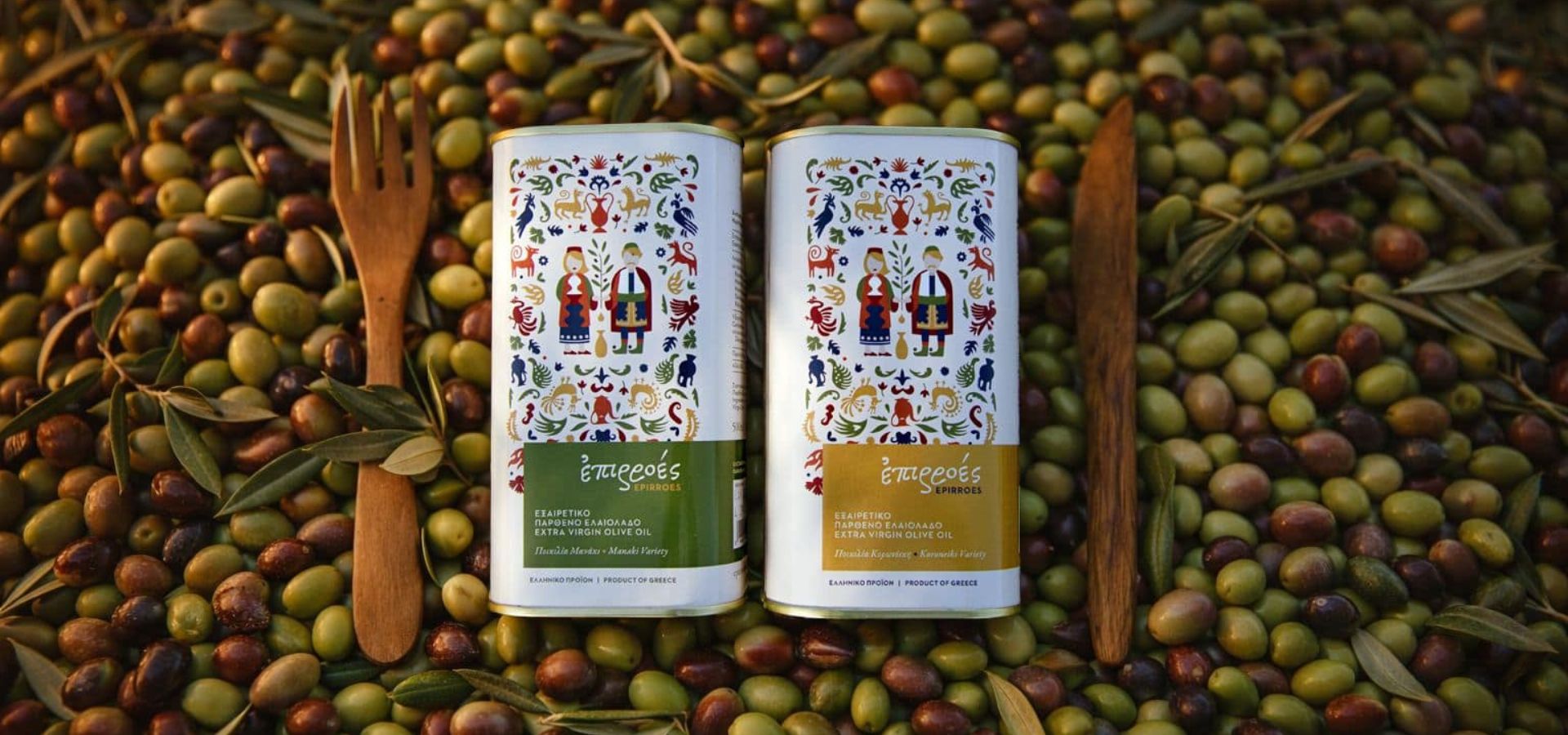
From family groves in Messinia and Arcadia to a contemporary brand with a strong visual identity, Natasa Anagnostopoulou and Manos Efstathiou redefine the relationship with land, time and quality.
Greek olive oil has nourished generations. It stands as one of the fundamental elements of our culinary culture, closely tied not only to food, but to everyday life and our way of living.
Perhaps for this reason, for many years we paid little attention to its packaging. Olive oil was simply there, in a metal container, tucked away in a corner of our grandparents’ home. That is how we remember it.
Gradually, this image began to change. Olive oil took on new forms, more refined, with a clear visual identity. Within this context, “Epirroes” stands out from the very first moment, not only for its packaging, but for the way it seeks to connect tradition with a contemporary perspective.
A conscious choice by its creators, Natasa Anagnostopoulou and Manos Efstathiou, to translate tradition into a modern visual language.
Because behind this image lies a story that begins much earlier, beneath the olive trees.
Two places, one shared root
“Epirroes” is born from the meeting point of three places: Messinia, Arcadia and, as a lived reference, Naxos. This is where family roots were shaped, where a relationship with the land was cultivated and passed down from generation to generation.
In Faraklada, in the region of Trifylia, Natasa’s family olive groves date back to the late 19th century, with the Koroneiki variety as a constant point of reference. In Kandila, in Arcadia, Manos’ family has been cultivating the land since the 1950s, with the Manaki variety developing its own distinct character through the mountainous terroir.
The coming together of these two places proved defining: two different stories that met and moved in a shared direction. A deeply personal story.
Memory and perseverance
Among Natasa’s most vivid childhood memories are those formed under the olive trees.
Her grandmother, Polyxeni. Manos’ grandmother, Ifigeneia. Two women deeply connected to the land, who may not have had formal schooling, yet understood precisely the rhythm and needs of cultivation.
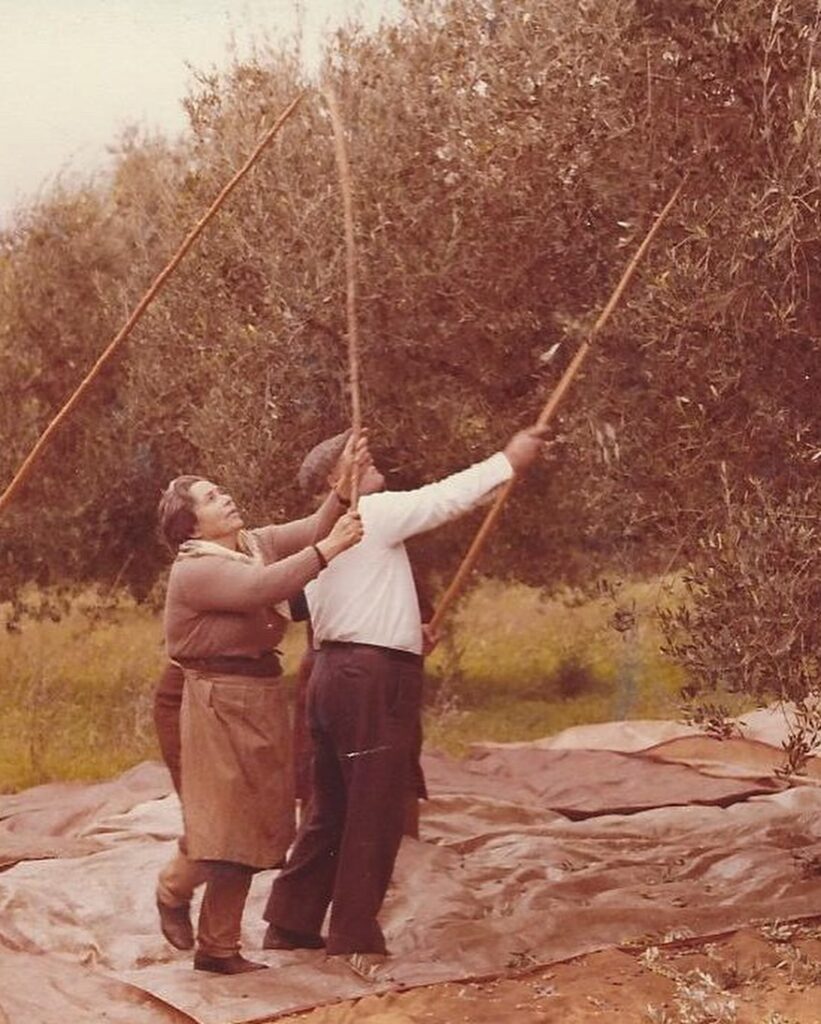
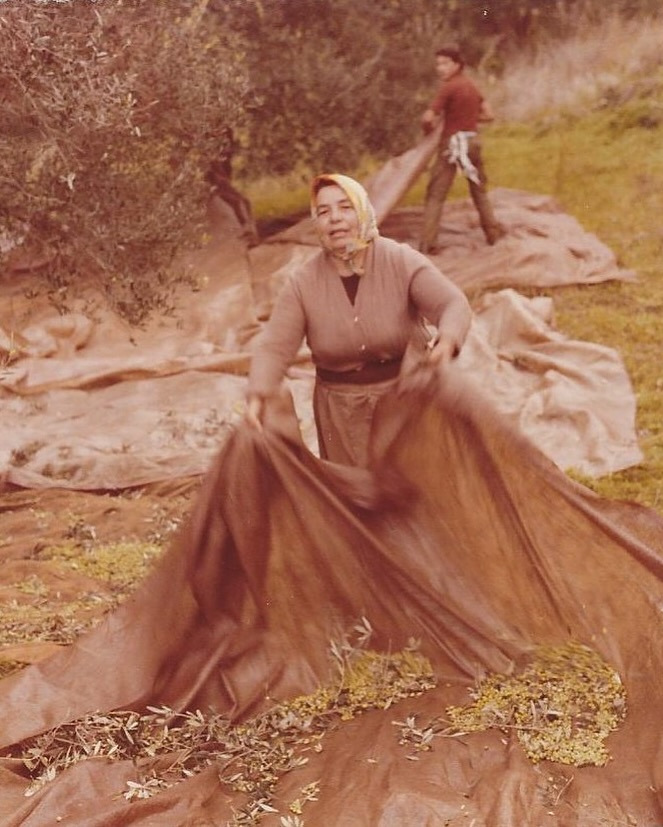
Polyxeni, as she recalls, had arrived at these fields with her dowry, transported by cart. This is where she lived and worked, with a persistence that today feels almost unimaginable.
The image is clear: people beneath the olive trees from sunrise to sunset, with wooden sticks and sacks, long before mechanical tools. A kind of work that was physical, demanding and constant.
“I remember their persistence. Their love and care for what they did.”
This image of effort, endurance and dedication is something she recognises today in her own journey with Manos. And it is exactly what they hope to pass on to their children.
Tradition as a contemporary identity
The name “Epirroes” itself is not accidental. It derives from the ancient Greek word epirroi, originally describing the flow or influx of liquid, a concept that connects to the Latin root influere, from which the modern word influence is derived.
Over time, its meaning evolved from a literal flow to a more abstract one: the idea of influence, the force one element exerts over another.
In the case of “Epirroes” olive oil, the word carries family heritage, a relationship with the land and the perseverance of previous generations.
The family’s roots in the Cyclades, and particularly in Naxos, brought forward an entire visual language: textiles, patterns, symmetry and references to traditional garments. At the same time, old embroidery and folklore books belonging to Natasa’s mother became a key point of reference.
“I gathered a stack of books and said: I want to create something that speaks of Greek tradition, of Greekness.”
The brief given to the designer was precise: tradition, poetry, pattern, balance. In collaboration with Leandros Katsouris, this idea was translated into a visual identity that, as conceived from the beginning, remained unchanged in its final production.
Between the city and the land
Natasa and Manos’ daily life moves between Athens and their olive groves. Cultivation follows the natural cycle of the olive tree and depends largely on environmental conditions.
The trees are dry-farmed. They are not irrigated. The weather determines everything.
“You can’t plan. You wait for the signs.”
Harvesting is carried out using modern methods, while the philosophy remains rooted in tradition. Cold extraction takes place within 24 hours of harvest, ensuring that the oil’s aromatic and nutritional qualities remain intact. Storage in stainless steel nitrogen tanks safeguards stability and preserves quality until bottling.
At the same time, new varieties have already been planted in Arcadia, with the aim of developing blends that will further highlight the region’s potential.
A different life choice
For Natasa, “Epirroes” is, above all, a personal turning point.
With studies and a professional background in marketing and communication, in publishing and multinational environments, her daily life had long been intense and demanding. Until the moment came to reconsider what truly matters.
“I wanted to invest more in quality than in quantity.”
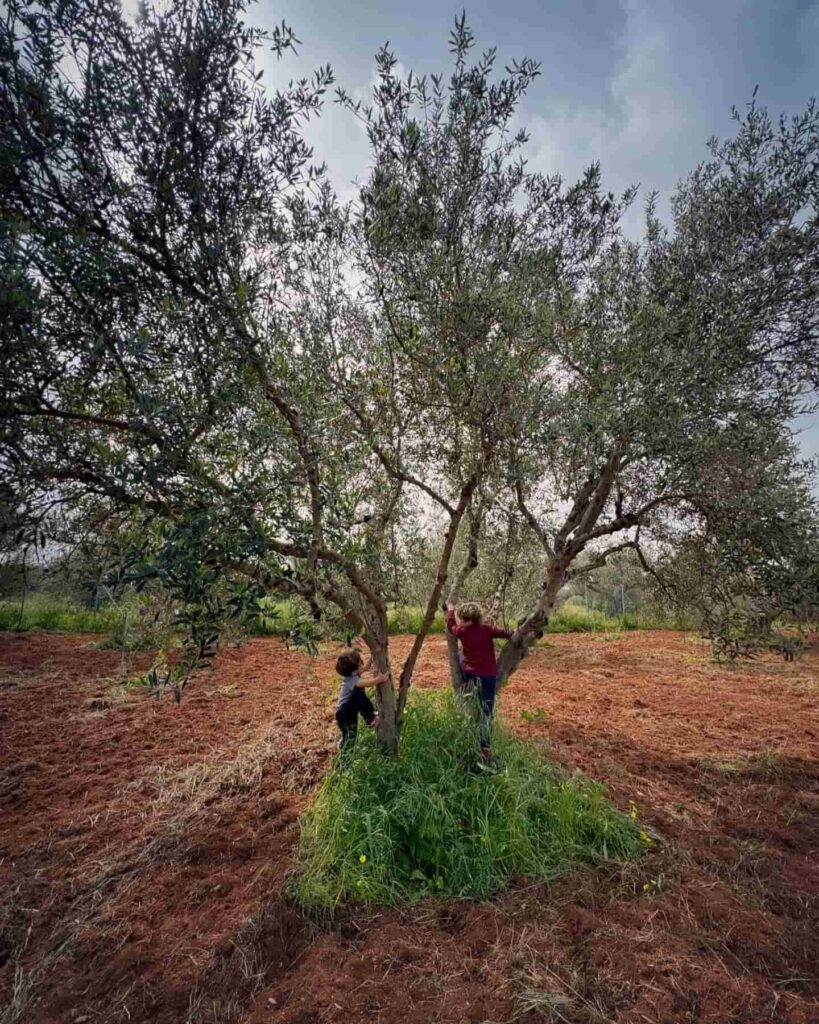
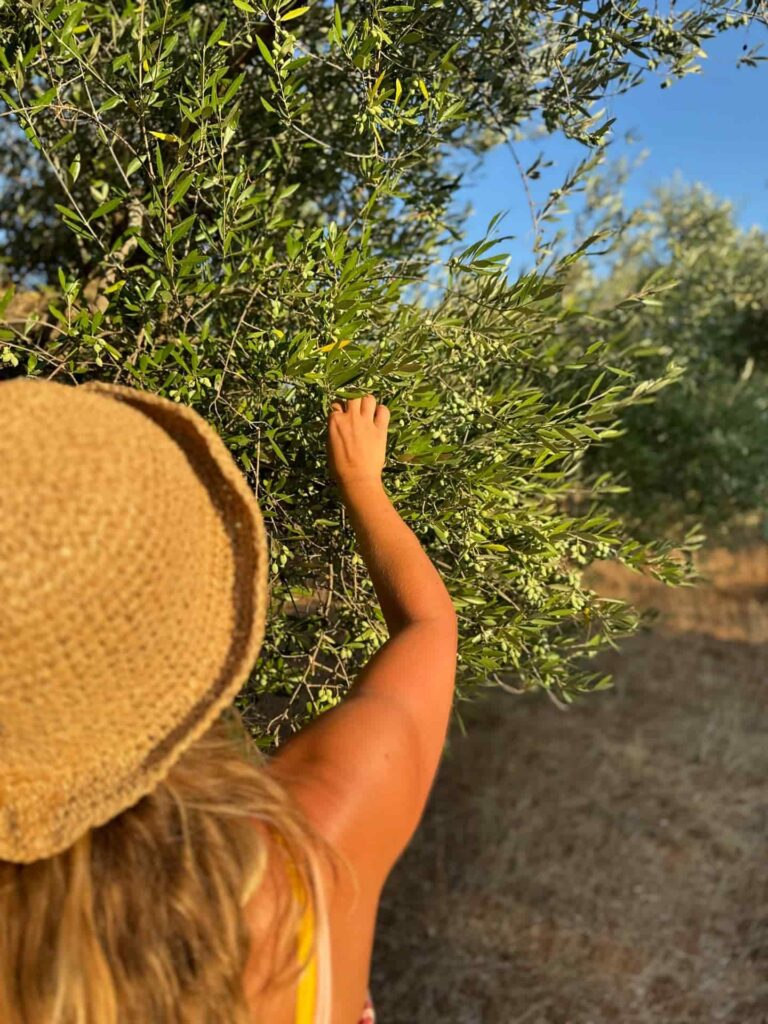
Working with the land became a way to slow down, but also to reconnect with something deeper. Every other weekend, the journey to the groves becomes part of a new family rhythm. Harvesting, pruning and caring for the trees are not simply stages of production, but shared experiences.
Their children actively take part in the process. They observe, touch and learn.
As she explains, the intention was never to create something purely business-driven, but something that would include them all.
“We want them to see how what we have on our table is created. To come closer to nature and our traditions.”
In a world that moves ever faster, these returns to the land function as a counterbalance. A way to regain rhythm, to listen and to observe.
And in this way, as she describes it, the family “gathers under the olive trees, for the olive trees.”

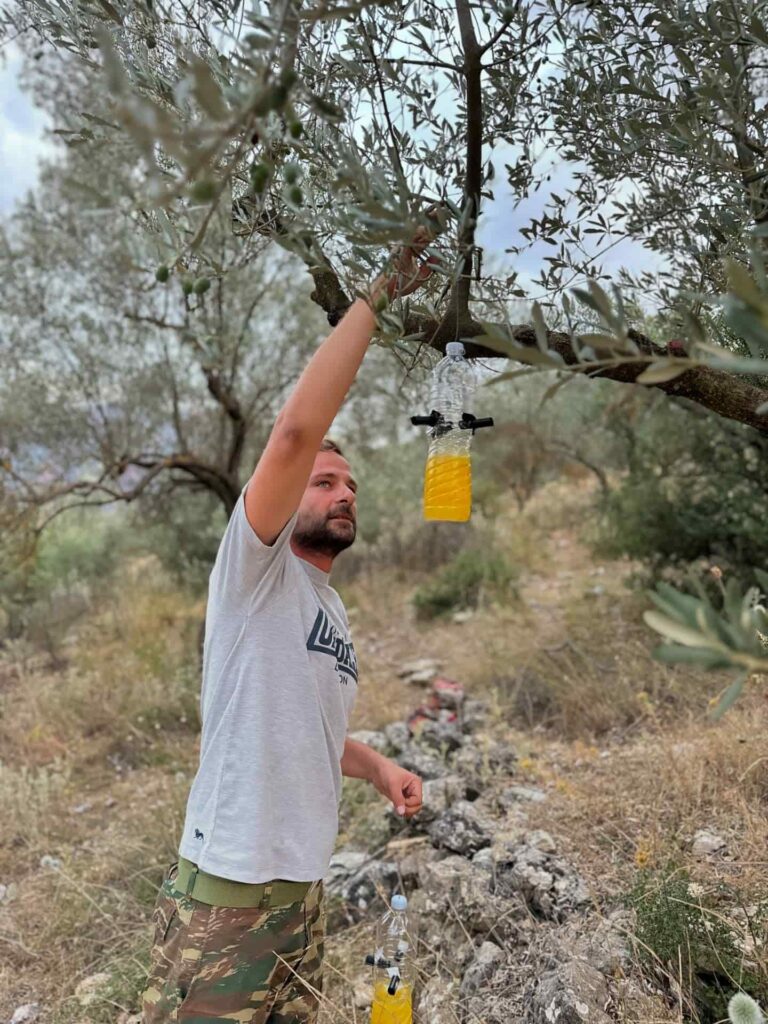
The moment of reward
The culmination of each year comes at the olive mill. This is where months of care, waiting and uncertainty are condensed into a single moment. There are no appointments. You wait your turn. Hours pass in quiet anticipation until the moment the fruit becomes something tangible.
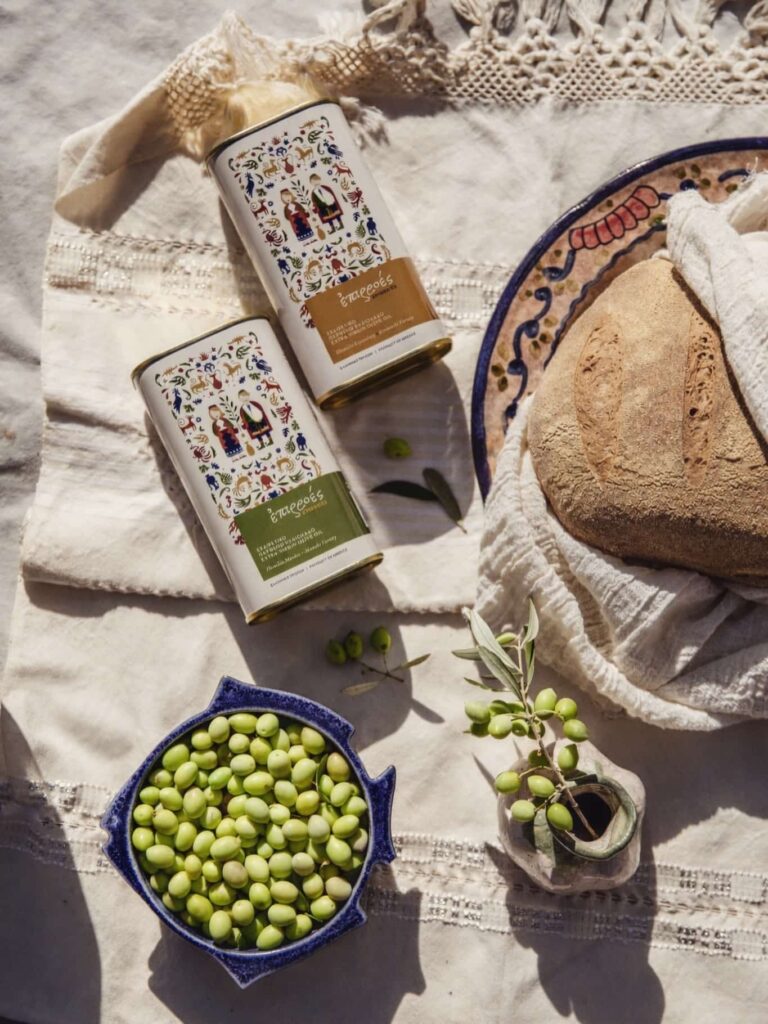
And then, the oil flows. Warm, almost alive. The first tasting is simple and honest: bread with fresh olive oil. The first measurements offer an indication of quality, acidity and how the season has unfolded.
It is a collective moment, almost ritualistic. A sense of relief, but also of joy.
“It’s the moment when you know it was worth it.”
Within this small, everyday scene lies the full intensity of the journey. The anticipation, the effort, the anxiety over the outcome. And ultimately, the confirmation that the relationship with the land, however demanding, gives something meaningful in return.
The olive oil profile
“Epirroes” is built around two main varieties, each expressing a distinct flavour profile.
Koroneiki is characterised by a rich fruity aroma, with notes of freshly cut grass, green apple and artichoke, alongside a balanced bitterness and peppery finish, making it highly versatile.
Manaki, softer and more aromatic, offers a pleasant sweetness with notes of tomato, apple and banana, ideal for salads, fish and lighter dishes.
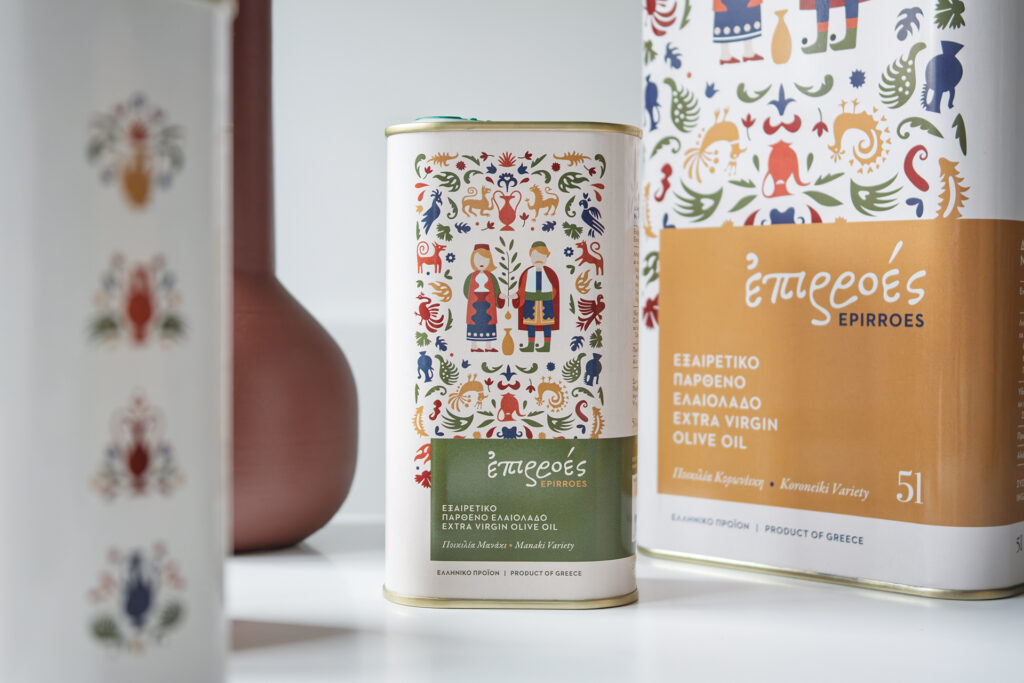
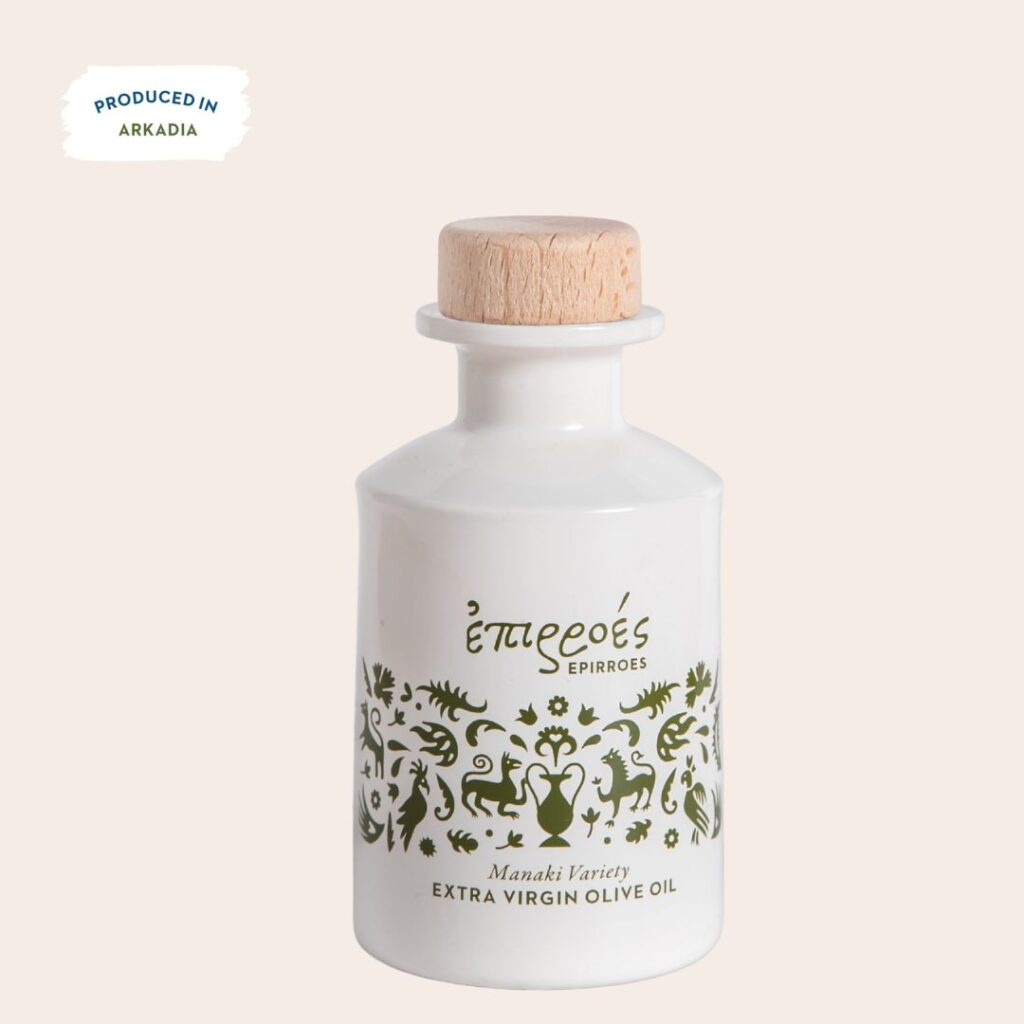
A special highlight is the limited-production high phenolic Koroneiki, with an exceptionally high concentration of polyphenols (1,551 mg/kg), significantly exceeding international standards. Its intense bitterness and peppery finish reflect its high nutritional value and strong antioxidant properties.

Info
Brand:
Epirroes – Extra Virgin Olive Oil
Origin:
Messinia & Arcadia, Greece
Where to find it:
Available through selected delicatessens, restaurants and specialty food stores across Greece, including islands and major cities.
Online:
You can explore the full product range via their official website: Epirroes e-shop
Also available at:
Selected premium food retailers and online platforms such as specialty olive oil shops
Contact:
[email protected]
Social:
Instagram: @epirroes_