 KATERINA PARRI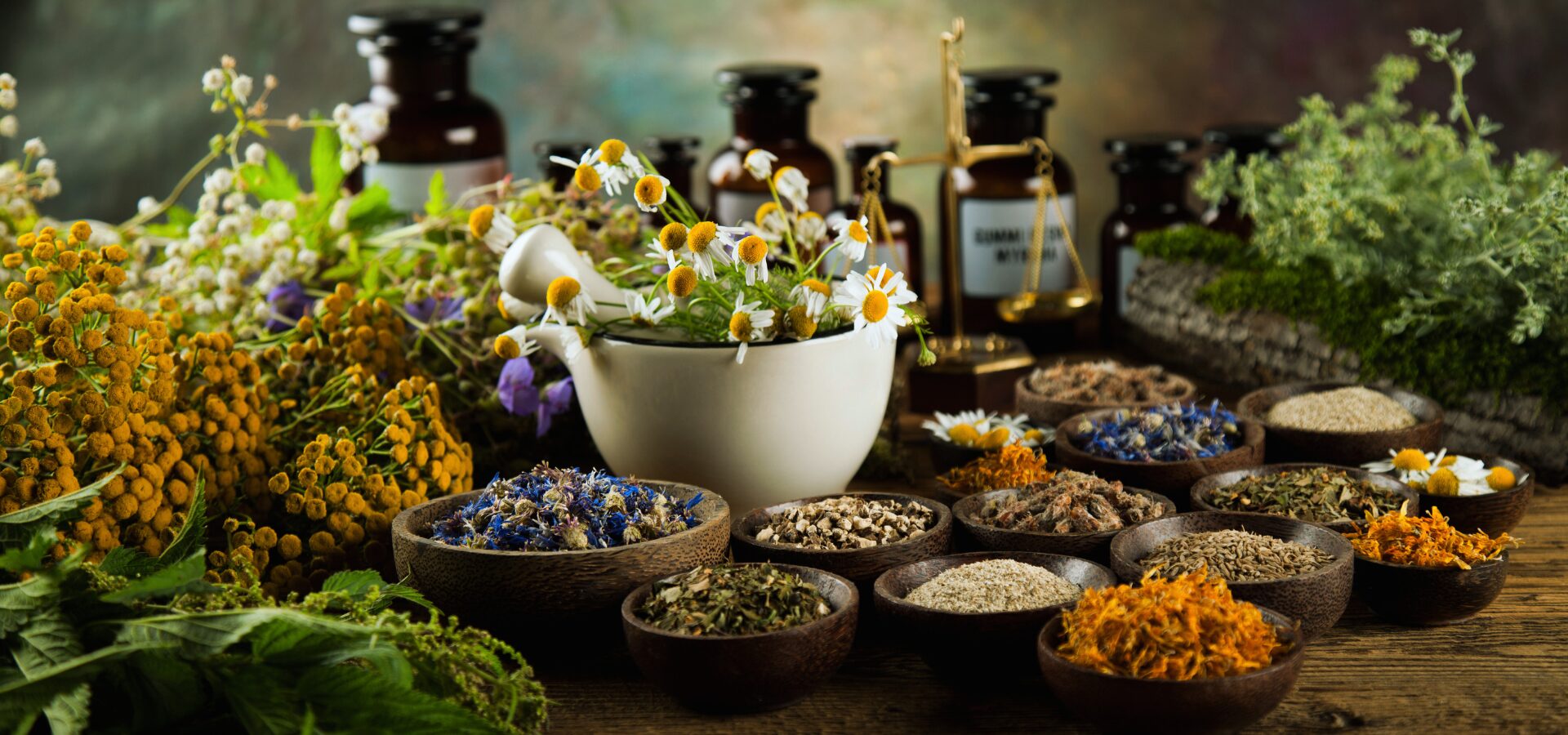
By Sofia Triantou
The home, after all, functioned as a kind of small laboratory without ever being called one. A place where herbs were not products; they were raw material. And care was not a lifestyle trend, but a necessity.
For thirty whole years, I have wandered through books of botany and around this world we call herbs. Over time, I came to realize that what truly held the greatest interest was not only the references, classifications, or properties, but the stories of people. The narratives of locals.
I have been fortunate to travel, to speak with kind grandmothers in the countryside, and to listen to their secrets. Their desire to pass on old practices and the way they once lived in relationship with nature is not simply touching it is precious for the way we live today.
There was a time when knowledge did not need paper to be considered real. In the villages of Greece, before daily life revolved around pharmacies, clinics, and protocols, there existed another order of things: the order of experience. And within this experience, women held a role that often remains outside the “great” historical narratives. Paradoxical, one might say.
In records of Greek folk medicine where ethnobotany meets social memory it is noted that in rural areas, alongside practical healers, there were the village midwife and the so-called “old women” or “bábes.” Women who held knowledge, practice, and authority not because they possessed titles, but because they had experience, results, and above all inspired trust. Their knowledge was transmitted orally: from mouth to mouth, from hand to hand.
This “orally” is the key. Unwritten knowledge is no less valuable. It is knowledge that lives within relationships, within family ties, neighborhoods, and everyday life. It is not taught through manuals. It is learned through participation, often out of necessity rather than choice.
The women of the countryside did not speak of active ingredients. They spoke of the body, of endurance, of time. And when the moment of great responsibility arrived-childbirth-the role of the midwife took on particular social weight. She was not merely a practical presence, but a figure of trust at one of the most critical moments in a woman’s life.
Texts examining the survival of older practices in folk tradition record that the birthing stool, the so-called obstetric seat, known already from ancient descriptions, continued to be used by midwives well into the 20th century. At the same time, the existence of such objects is documented today through museum collections. This is material culture: tools, objects, and ways of doing things, an entire system of everyday practices.
Yet the knowledge of these women was not limited only to the use of plants or to specific life moments. As recorded in historical and folkloric studies, folk medicine combined bodily care practices with practices of speech and belief. Blessings, the removal of the evil eye, and incantations formed part of a broader system of addressing illness, where the physical and the emotional were not separated.
According to historical research published in the journal Medical History, many empirical healers both men and women, kept handwritten “giatrosófia,” collections of remedies and advice passed down through generations that strengthened their standing within the community. In many cases, however, this knowledge was never written down at all, remaining tied to specific individuals and their reputations.
Similarly, in collections of oral testimonies from Crete, and particularly from Chania, domestic care practices passed from grandmother to granddaughter are recorded: poultices, gargles, combinations of food ingredients and herbs. These were not “treatments” in today’s sense, but acts of everyday care, deeply embedded in daily life. The women who practiced them did not present them as knowledge to be showcased they used them because they had been tested over time and through collective experience.
The home, after all, functioned as a kind of small laboratory, without ever being called one. A place where herbs were not products; they were raw material. And care was not a trend of the era, but a necessity. Academic references to folk medicine emphasize that for centuries it was not only a way of confronting hardship, but also a fundamental component of culture, especially in periods of limited organization and scarce resources.
The memory of these women does not always survive through names. It survives through phrases: “come, let me show you,” “don’t overdo it.” And this is one of the most valuable cultural imprints, the concept of time. Herbal knowledge in the countryside was never independent of the seasons, the climate, what was available and what was lacking.
That is why, when we speak of tradition today, we often lose something essential. Tradition was not nostalgia. It was a way of life. Before the dominance of chemical medicines, herbs formed a critical mass of daily care. They were not used to return to the past, but because people needed to live.
And then, gradually, this changed. Urbanization, modern medicine, the transformation of the family, the move from neighborhood life to apartment living did not only erase practices, they erased the way knowledge was passed on. When knowledge no longer travels around the table, in the fields, through the companionship of women, it loses its natural channel.
At the same time, however, something else is happening: this knowledge is beginning to be recorded. Not only as memory, but as a field of research. Contemporary ethnobotanical studies in Greek regions rely on interviews and documentation of local names, preparation methods, and uses, attempting to capture what still survives. Indicatively, in a study on the islands of the North Aegean, two hundred people participated, one hundred women and one hundred men with repeated interviews among those who possessed relevant knowledge, so that this local memory could be recorded more accurately.
Perhaps this is the most fitting way to speak about these women: not to romanticize them or turn them into myth, but to recognize that they were carriers of a knowledge written into everyday life. They did not leave behind books; they left behind a way and that way remains alive.