 KATERINA PARRI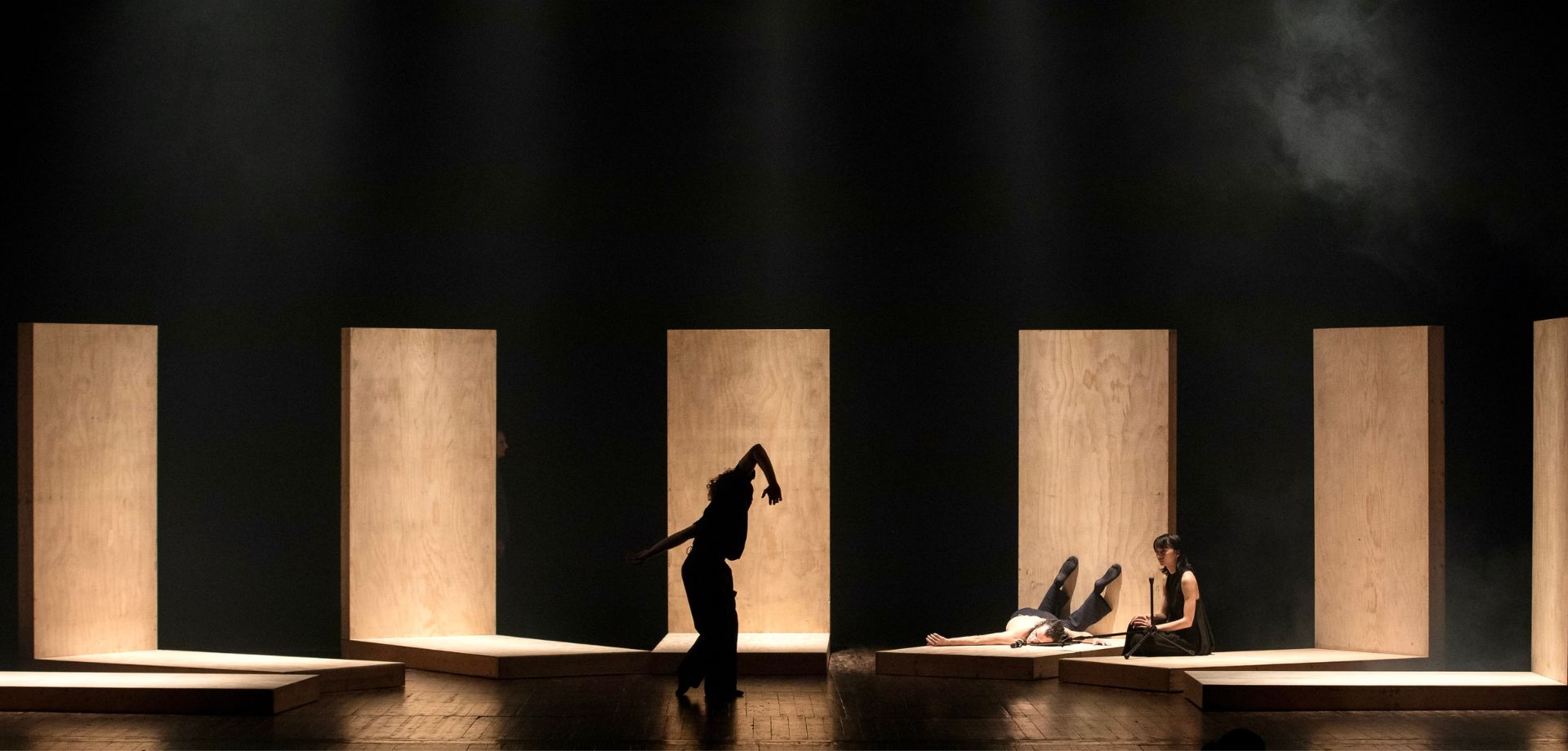
From opera to radical reimaginings of ancient tragedy, the Epidaurus 2026 programme weaves theatre, dance and music into a powerful reflection on humanity, war and hope.
With today’s announcement, the Athens Epidaurus Festival presents the first edition of the series:
Ancient Theatre of Epidaurus, Artistic Programme – Part 1: Summer 2026
Since the complete programme at the Ancient Theatre will unfold fully across three successive editions (2026 / 2027 / 2028) – which together form an entirety – we now have the opportunity to encounter its first version.
Each edition stands on its own as an independent unit, while at the same time being redefined through the sequence, interaction and completeness of the others.
At the Ancient Theatre of Epidaurus, contemporary dramaturgies and new, multi-layered approaches to Ancient Drama are presented, aiming to revitalize it through encounters with other performing forms and arts, reinforcing its timeless essence in today’s turbulent present and its dynamic presence on the international stage.
In Epidaurus, a meeting ground, audiences will encounter distinctive interpretations by Greek and international artists, in both well-known and rarely staged works. Different fields of the performing arts — such as theatre, dance and opera – intertwine in this year’s programme, highlighting the enduring value and vitality of ancient dramaturgy.
This year’s Epidaurus programme also includes and will be accompanied by additional activities, which we will be delighted to present at a later time. – Michail Marmarinos
OPERA
NEW PRODUCTION
20 June
Greek National Opera
Medea
by Luigi Cherubini
The Greek National Opera revives Luigi Cherubini’s Medea at the Ancient Theatre of Epidaurus for a single performance on 20 June 2026, sixty-five years after the legendary 1961 production starring Maria Callas in the title role, directed by Alexis Minotis, with sets and costumes by Yannis Tsarouchis and choreography by Maria Hors.
As part of its thematic focus for the 2025/26 artistic season, which explores “the opera of the future through the womb of the past,” the Greek National Opera chooses to revive the 1961 Medea using today’s materials. Drawing from Minotis’ directing notes, Tsarouchis’ designs and the rich photographic archive preserved from Callas’ legendary Epidaurus performances, the production attempts a reconstruction of the staging as originally envisioned by these iconic artists who shaped Greek culture.

Following the closure of the Odeon of Herodes Atticus for restoration works, the Greek National Opera continues the great tradition of summer opera productions – this time at the Ancient Theatre of Epidaurus – almost seven decades after its last opera presentation there and for the first time in the 21st century.
After enriching the Historical Archive of the GNO with new collections, photographic archives and rare documents, restoring many of Tsarouchis’ costumes, and collaborating with MIET/ELIA and the Minotis–Paxinou Archive, Artistic Director Giorgos Koumentakis has assembled a new creative team – Panagis Pagoulatos (direction), Lili Pezanou (sets), Tota Pritsa (costumes) and Christos Tziogkas (lighting) — who reconstruct the production through extensive research, offering today’s audience a rare opportunity to experience a landmark of Greek cultural heritage.
The title role is performed by the acclaimed Italian dramatic soprano Anna Pirozzi, alongside Jean-François Borras as Jason, Tassis Christogiannopoulos as Creon, Alisa Kolosova as Neris and Danae Kontora as Glauce.
Historic production of 1961
Direction: Alexis Minotis • Sets & Costumes: Yannis Tsarouchis • Choreography: Maria Hors
Reconstruction team:
Artistic Director: Giorgos Koumentakis • Music Director: TBA • Director: Panagis Pagoulatos • Sets: Lili Pezanou • Costumes: Tota Pritsa • Lighting: Christos Tziogkas • Chorus Director: Agathangelos Georgakatos
With soloists, orchestra and chorus of the Greek National Opera
Performance donor: Stavros Niarchos Foundation
THEATRE
PREMIERE
3 & 4 July
Christos Theodoridis
The Persians
by Aeschylus
Oh, once how great
and sweet our life truly was.
On this night – a night deep as a thousand years – somewhere in the world, twenty-five people await news of a certain catastrophe. Everyone’s fears are confirmed. Suspended between overwhelming grief and an act of resistance that seems impossible, they feel helpless and adrift. On this night, six people can do nothing but weep.
With the announcement of the devastating defeat at Salamis as its narrative starting point, the central axis of the story is mourning – uncompromising, constant, repetitive – for those who were lost, and for the happy past that has vanished.
In his first appearance at the Argolid theatre, this young director from Thessaloniki confronts Aeschylus’ tragedy. Written in 472 BC, it is the oldest surviving complete work of ancient Greek drama and, at the same time, the earliest transformation of historical events into theatre. Christos Theodoridis engages with the profoundly anti-war work The Persians, continuing the artistic trajectory he has shaped in recent years through politically charged and strikingly contemporary works (To You Who Are Listening / Loula Anagnostaki, Who Killed My Father / Édouard Louis, Conference on Iran / Ivan Vyrypaev, among others).
Departing from the mythical narrative that usually dominates tragedy, Aeschylus here composes the only example of “documentary theatre” found within the body of ancient Greek tragedy.
A direct witness and soldier of the Athenians at the Battle of Salamis (480 BC), Aeschylus creates a groundbreaking form of theatrical “war reportage” just eight years later. History steps onto the stage for the first time.
At the heart of this artistic endeavour lie humanity and loss. The names for which the Chorus persistently questions the messenger are not only Persian, but the names of people who were lost – and continue to be lost – every minute today. Twenty-five actors, remaining constantly on stage, form a Chorus-as-protagonist which, through speech, movement and music alone, expresses the collective trauma of a numbed society.
Translation: Panagiotis Moullas
Direction: Christos Theodoridis
Dramaturgy: Izabella Konstantinidou, Christos Theodoridis
Costumes: Angelos Mentis
Lighting: Tasos Palaioroutas
Music: The Boy
Choreography – Movement: Xenia Themeli
Production: Marossoulis Productions
Co-production: Athens Epidaurus Festival
PREMIERE
17 & 18 July
National Theatre
Dimitris Karantzas
Alcestis
by Euripides
A contemporary parable with a strong political charge. A hybrid work. A constant suspension between life and death, playfulness and nightmare, crushing tragedy and unexpected comedy. At the Ancient Theatre of Epidaurus, the National Theatre presents Euripides’ Alcestis, directed by Dimitris Karantzas.
Admetus will be saved from death only if someone else agrees to die in his place. Alcestis, his wife, offers herself as the exchange. Her sacrifice unfolds publicly, before the eyes of the citizens, as a preordained killing – an act that today is inevitably read as femicide, legitimised by the social and political order.
Alcestis is the only surviving work of ancient tragedy that brings not only Death but also Resurrection onto the stage. Yet the question remains open: what does a return to life mean when the sacrifice has already taken place? What does Alcestis’ deafening silence signify? And what is the cost of salvation when it is built upon the self-sacrifice of the weakest?
Karantzas orchestrates Alcestis as a theatrical experiment, where music, sound, movement and shifts in theatrical style coexist organically, creating a fluid, liminal and constantly transforming world. With an outstanding team of performers and creators, the production becomes a stage argument that does not simply retell the myth but raises urgent questions about power, gender, sacrifice and society’s responsibility in the face of the heroine’s – and not only her – death.

Translation – Direction: Dimitris Karantzas
Dramaturgy consultant: Gelly Kalambaka
Set design: Konstantinos Skourletis
Costumes: Ioanna Tsami
Music: Panagiotis Manouilidis
Movement: Tasos Karahalios
Lighting: Eliza Alexandropoulou
Cast (alphabetically):
Konstantinos Avarikiotis (Pheres), Dimitra Vlagkopoulou (Maid), Giorgos Zygouris (Heracles), Iro Bezou (Alcestis), Giannis Niarros (Admetus), Kostas Nikouli (Apollo), Aineias Tsamatis (Servant), Theodora Tzimou (Death)
The Chorus will be announced soon.
The National Theatre is funded by the Ministry of Culture.
PREMIERE
24 & 25 July
Nikos Karathanos
Peace (Irni)
A visit to Aristophanes
Who will live this summer,
and who tomorrow?
Not even time itself knows –
let alone the Epidaurian star.
Once again, nations fall
to the ground.
Hear my sweet melody
from the edge of this pit
filled with bodies.
Make a wish for Peace,
Miss Sunlight,
for every war of mine
is myself against myself –
a civil war.
Peace (Irini) is the celebration of a vanished rural world, a comic, irresistible argument, a popular festivity built from the very smoke of war, a glowing shadow play within horror.
Nikos Karathanos, Phoebus Delivorias and Angelos Triantafyllou are the principal accomplices in a new production, a new adaptation, a response to madness with madness.
Aristophanes’ original comedy was first performed at the Great Dionysia in 421 BC, where it won second prize. It was written at a critical historical moment, shortly before the Peace of Nicias, as an expression of hope for the end of hostilities – a hope that emerged after the deaths of the war-driven generals Cleon of Athens and Brasidas of Sparta at the Battle of Amphipolis.
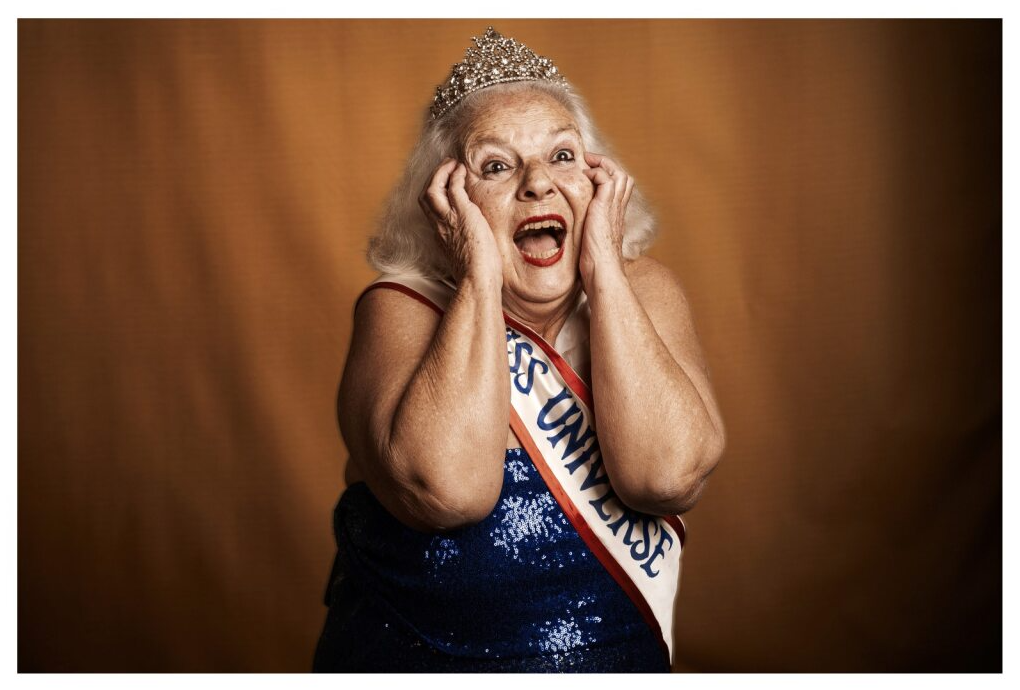
The comedy reflects the intense social exhaustion caused by the Peloponnesian War and, with lyrical eloquence and Aristophanic satire, addresses the absurd obsession with war and its devastating consequences on everyday life, work and human happiness. Aristophanes contrasts the violence and profit of war profiteers with the fertility, love and collective prosperity brought by peace.
Despite its seemingly utopian resolution, the play is far from naïve, as it acknowledges the resistance, vested interests and inertia that obstruct the restoration of peace.
Peace holds a pivotal place in Aristophanes’ oeuvre as the most conciliatory and optimistic of his political comedies. Though deeply rooted in its historical moment, it remains timeless in illuminating a recurring mechanism: wars prolonged at the expense of the many and for the benefit of the few. The persistence of the ordinary person in claiming peace – even against the logic of power – renders the play strikingly relevant in today’s world, where invasions, violence, threats, insecurity and cynicism continue to be presented as inevitable realities.
Adaptation – Original text – Songs: Phoebus Delivorias
Direction – Concept: Nikos Karathanos
Co-direction: Angelos Triantafyllou
Dramaturgy collaborator: Eri Kyrgia
Set design: Eva Manidaki
Costumes: Angelos Mentis
Music: Phoebus Delivorias, Angelos Triantafyllou
Songs – Lyrics: Phoebus Delivorias
Lighting: Eliza Alexandropoulou
Movement: Amalia Bennett
Ancient text consultant: Giannis Asteris
Cast:
Galini Chatzipaschali, Thanasis Alevras, Panos Papadopoulos, Giannis Kotsifas, Ioanna Mavrea, Vaso Kavalieratou, Phoebus Delivorias, Nikos Karathanos, Angelos Triantafyllou, Yilmaz Housmen, Alkis Bakogiannis, Konstantinos Kontogeorgopoulos, Konstantinos Zografos, Vasilis Papadopoulos, Giannis Sampsalakis, Spyros Bosgas, Antonis Christou
Featuring: Andreas Polyzogopoulos (trumpet soloist) and other musicians
Production: Technichoros Theatre Productions
Co-production: Athens Epidaurus Festival
PREMIERE
31 July & 1 August
National Theatre
Eleni Efthymiou
The Trojan Women
by Euripides
The great tragedian’s profoundly human-centred and deeply anti-war masterpiece comes to life through a cast of twenty-two performers – among them members of the En Dynamei Ensemble – of all ages, with and without disabilities, accompanied by live music on stage. At the Ancient Theatre of Epidaurus, the National Theatre presents Euripides’ The Trojan Women, directed by Eleni Efthymiou, in a production about the timeless horror of war and loss as collective memory – and above all about the female body as a universal symbol of human tragedy.
In Euripides’ Trojan Women, women’s bodies were not always in captivity. Although part of a deeply patriarchal society, they were – by the standards of their time – free: they had choices, dreams, and the possibility of a dignified life. As the end of an era approaches – of a life once glorious and at times merely bearable, of their very own History – the Trojan women speak of the horror of war through the filter of the (female) body, which senses that it will be objectified and dehumanised.
In Eleni Efthymiou’s staging, the Trojan women are not only the beautiful, healthy bodies of the privileged royal women awaiting their final selection. Their bodies merge with other bodies – children, disabled, elderly – who even before the war had no control over their own lives and who are usually denied the privilege of storytelling. Bodies that the system conspicuously ignores, that power chooses how to manage or eliminate. In this sense, war is “just”: it always levels abundance, scarcity and nothingness alike.
And if all these skins, souls, gazes, wombs and memories can be seen symbolically as the eternally oppressed of this world, can these subjects reclaim the right to choose? How? By screaming hatred? By mourning or laughing within chaos and deadlock? Is there a way for the heroines to reappropriate their bodies?
Translation: Yannis Tsarouchis • Adaptation – Direction: Eleni Efthymiou
Dramaturgy consultant: Sofia Eftychiadou
Set design: Evangelia Kirkiné • Costumes: Angelos Mentis
Music: Lefteris Veniadis • Lighting: Zoi Molyvda-Fameli
Sound design: Sofia Kamagianni • Music coaching: Melina Paionidou
Cast (alphabetically):
Giorgos Karamichos (Menelaus), Argyris Xafis (Talthybius), Evi Saoulidou (Andromache), Nancy Sideri (Cassandra), Vasiliki Troufakou (Helen), Lydia Fotopoulou (Hecuba)
Chorus: Myriam Artzanidou, Maria Dachlythra, Eleni Dimopoulou, Nikos Kyparissis, Eirini Kourouvani, Loxandra Loukas, Lygeri Mitropoulou, Theano Papavasileiou, Katerina Papandreou, Niki Petetala, Chrysa Toumanidou
Astyanax (child role): Michalis Mitsis
The National Theatre is funded by the Ministry of Culture.
Performance sponsor: Alpha Bank
DANCE / THEATRE
FIRST APPEARANCE IN GREECE
7 & 8 August
Alan Lucien Øyen
Antigone
Inspired by Sophocles
A new, radical interpretation of Antigone – a performance that brings together the poetry of movement with the poetry of text and spoken word.
Created by Alan Lucien Øyen, one of Norway’s most restless contemporary choreographers, writers and directors. On stage is the interdisciplinary performing arts company winter guests, which he founded twenty years ago and which brings together dancers, actors, writers and designers. Joining them are leading dancer-collaborators of Pina Bausch’s Tanztheater Wuppertal, with Øyen being the first choreographer invited to create a new, complete work for the company following the death of its founder.
As Øyen himself notes, “our Antigone is not simply a stage presentation of Sophocles’ text, but a bold reinterpretation of his timeless tragedy, through the bodily poetry of Tanztheater, in dialogue with spoken word and contemporary dance.”
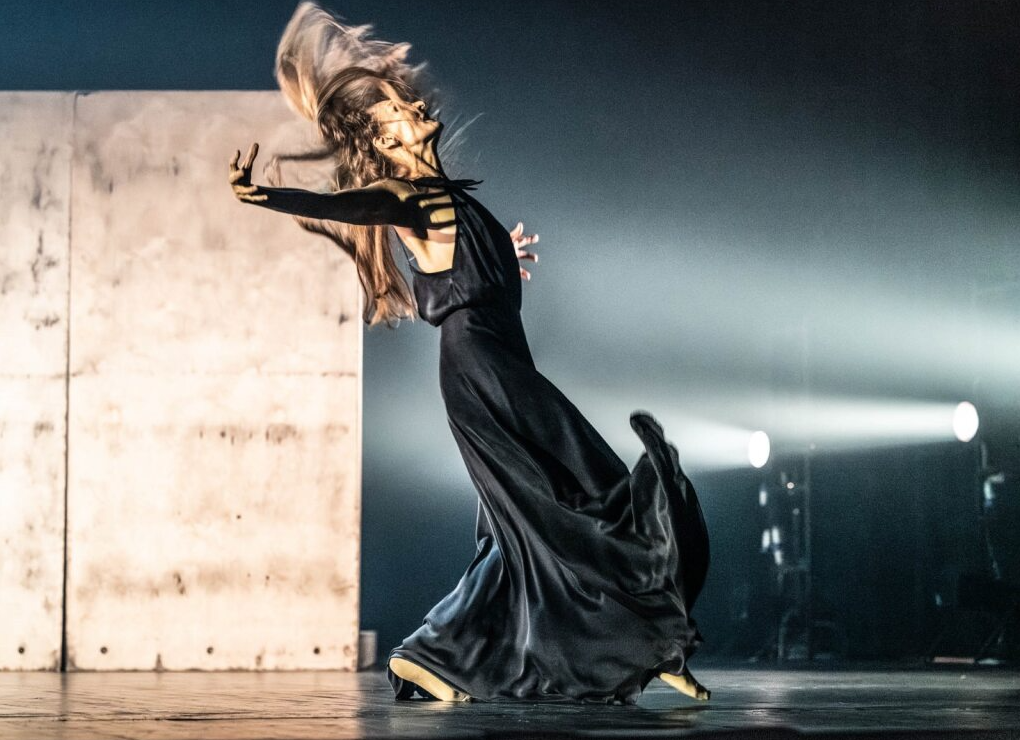
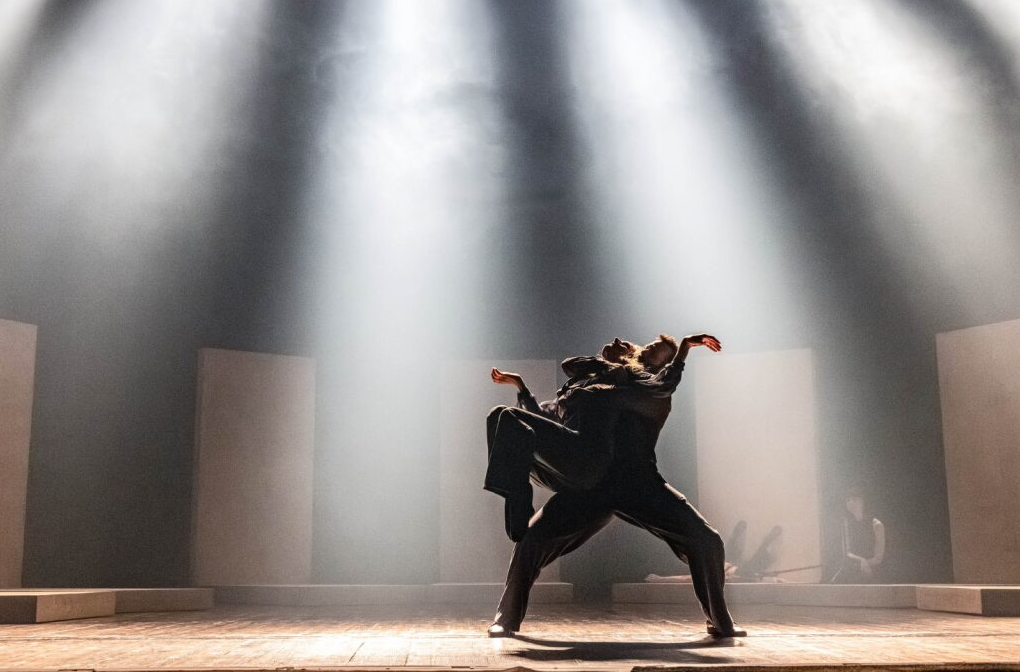
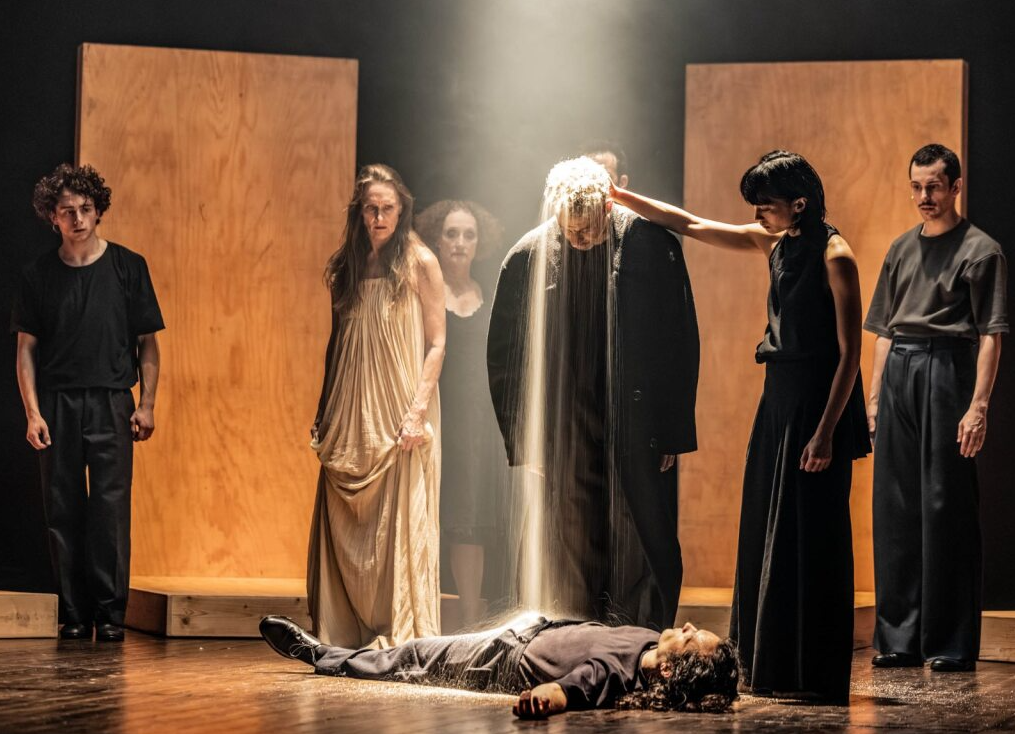
More than a retelling, it is a rediscovery of the play’s ideas through movement, language and lived situations. The performance sheds light on profound human expression, confronting the unresolved dilemmas at the heart of the work: duty, dignity, morality and the complexity of power.
In an era where error is branded as evil and what is right is dismissed as moralising, where does God stand within all this chaos? Human dignity and humility are at stake in a struggle for respect for human laws.
Through howling winds and the cries of birds, through desperate mourning and violent tyranny, the scenes hurl their meaning back at our contemporary dilemmas. Demanding and gripping, political without didacticism and lyrical without ornament, Antigone poses the urgent question: what does it mean to act when law and justice do not align?
Direction – Choreography: Alan Lucien Øyen
Artistic collaborators: Andrew Wale, Daniel Proietto
Performers: Enoch Grubb, Douglas Letheren, Pascal Marty, Antonin Monié, Nazareth Panadero, Héléna Pikon, Julie Shanahan, Fernando Suels Mendoza, Meng-Ke Wu
Set design: Åsmund Færavaag
Costumes: Stine Sjøgren
Lighting: Martin Flack
Sound: Gunnar Innvær, Mathias Grønsdal
Video: Mathias Grønsdal
Photography: Mats Bäcker
Technical direction: Chris Sanders
Stage management: Daniel Hones
Wardrobe: Anna Lena Dresia
Production: winter guests
Co-productions: Fondazione Teatro di Roma, The Norwegian Opera and Ballet, Centro Servizi Culturali Santa Chiara
Production execution: Essar Gabriel
Production managers: Ornella Salloum, Syv mil / Tora De Zwart Rørholt, Ingrid Saltvik Faanes (for winter guests)
With the support of: Arts Council Norway, City of Bergen
Rehearsal space courtesy of: Pina Bausch Zentrum
21 & 22 August
State Theatre of Northern Greece
Asterios Peltekis
Lysistrata
by Aristophanes
Lysistrata is not merely a comedy about war and love. It insists on being a deeply political, human-centred work that focuses on the moment when a society, exhausted by decay, urgently seeks a new way of organising itself.
The State Theatre of Northern Greece presents a contemporary stage interpretation of Aristophanes’ comedy which, through laughter, addresses us with a genuinely lyrical “comic” seriousness about the entropy into which a society often falls.
Entropy, both as a physical and philosophical concept, denotes the gradual breakdown of order, the dissipation of energy, and the inability of a system to self-regulate.
In Lysistrata, the city-state is in prolonged decline: war has become an end in itself, politics has been detached from human experience, and the body has been exiled from public discourse.
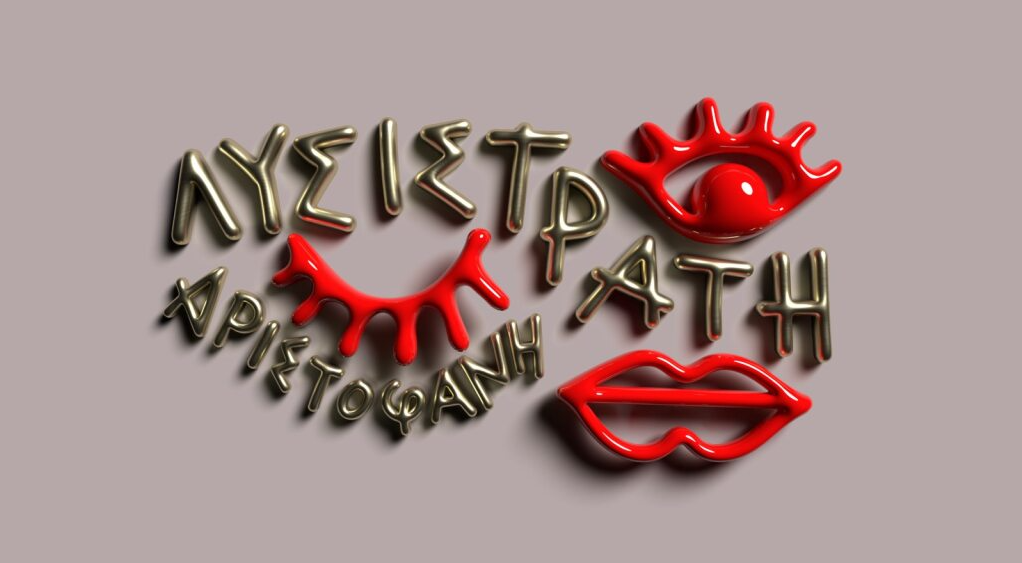
The archetypal heroine does not propose a reform, nor does she introduce a new institution. Lysistrata brings forth something radically different: the reappearance of the body, desire, care and collective responsibility as political action. Sexual abstinence does not function as punishment, but as an “interruption of entropy” -a temporary freezing of the system, allowing for its restart.
At the core of Asterios Peltekis’ directorial approach lies precisely this gesture, achieved not through violence or coercion, but through the conscious refusal to participate in a vicious cycle. The women do not merely occupy the Acropolis; they “occupy” time itself, the flow of events, the very logic of inevitable destruction. Comedy here does not serve as release, but as a mechanism of revelation.
Aristophanes reminds us that every society which loses contact with the body and with joy inevitably leads to violence, and that renewal does not begin “from above,” from power, but from the collective instinct for survival – from the moment when someone dares to say: “enough.”
At the Ancient Theatre of Epidaurus, where the community has gathered for centuries to confront its limits, this Lysistrata aspires to return not as a monument of ancient dramaturgy or a memory of the ancient world, but as a living political event. A reminder that even in the deepest decay, renewal is possible – as long as we dare to imagine existence, and above all coexistence, differently. Like in a dream.
Translation: Konstantinos Bouras • Direction – Dramaturgy: Asterios Peltekis
Cast: Elisavet Konstantinidou, Alexandra Palaiologou, Krateros Katsoulis, Panagiotis Petrakis, Nikos Georgakis, among others
The State Theatre of Northern Greece is funded by the Ministry of Culture.
28 & 29 August
Cyprus Theatre Organisation
Thomas Moschopoulos
Ion
by Euripides
It is one of the most enigmatic works of ancient drama. Ion is not a “pure” tragedy: it moves on the threshold between the tragic and the comic, myth and realism, mysticism and scepticism, placing at its core the question of identity and belonging. It is a play that seems to speak directly to contemporary experience, in an era where everything is constantly questioned and renegotiated.
The action unfolds at the sacred oracle of Apollo in Delphi -a space that functions as a threshold between the visible and the invisible, the public and the private. There, the young Ion grows up without a name and without knowledge of his origins. He struggles to piece together an identity from fragments, while the audience already knows the truth. Through contradictions, refractions and misunderstandings, the blurred, almost invisible past crystallises into a tangible present, and a longing for meaning emerges from the void.

The production, presented by the Cyprus Theatre Organisation and directed by Thomas Moschopoulos, seeks to highlight the playful and ambiguous spirit of the work, transforming the stage into a multifaceted space of reflection where images of truth and falsehood overlap, reveal and conceal one another, while the question of identity remains open, fluid and deeply unsettling.
Direction – Translation – Dramaturgy: Thomas Moschopoulos
Cast and creative team: To be announced