 Maria Mirachtsi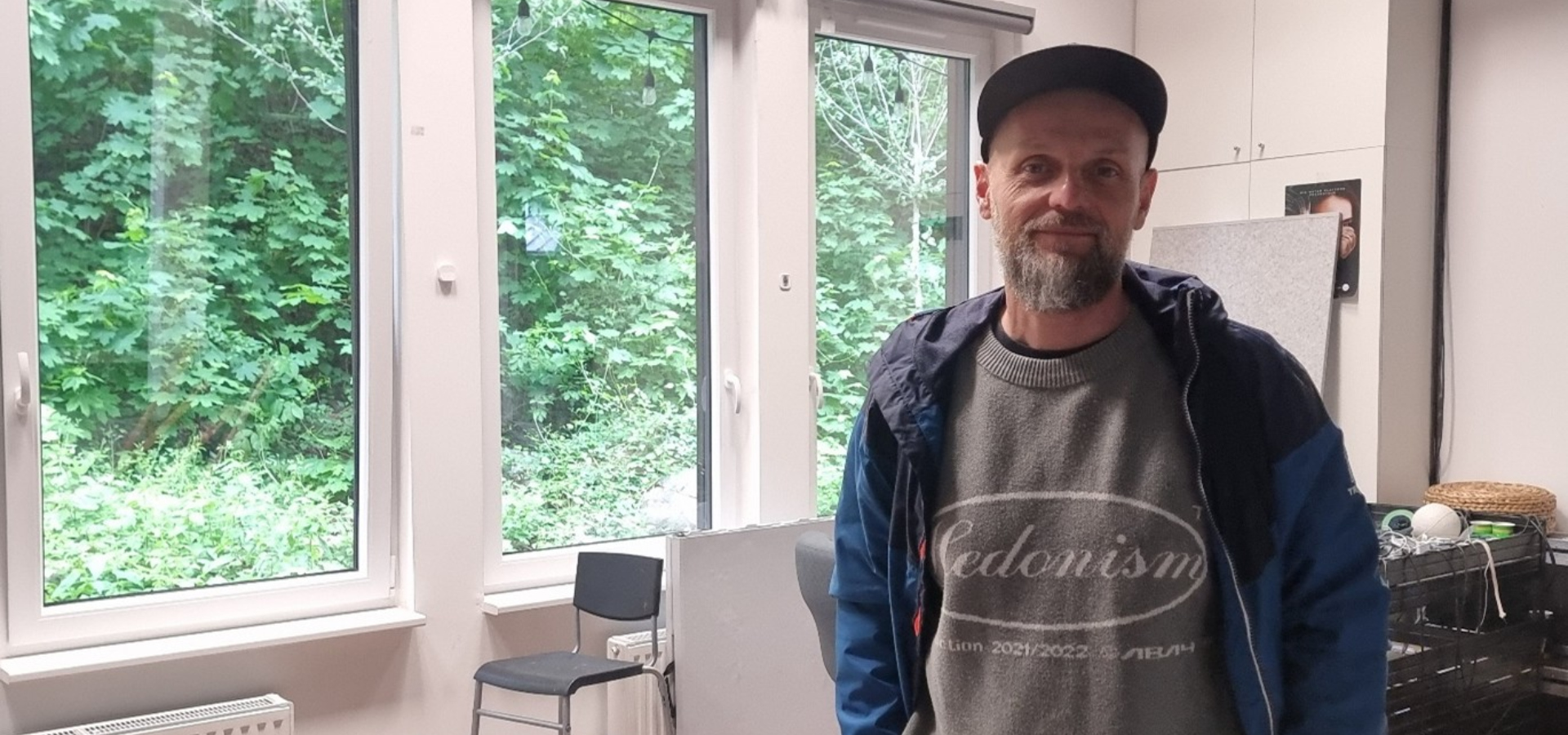
Photos: Maria Mirachtsi
“My plays are about the meaning of life—not in the sense that they offer answers, but in the sense that they ask the questions.”
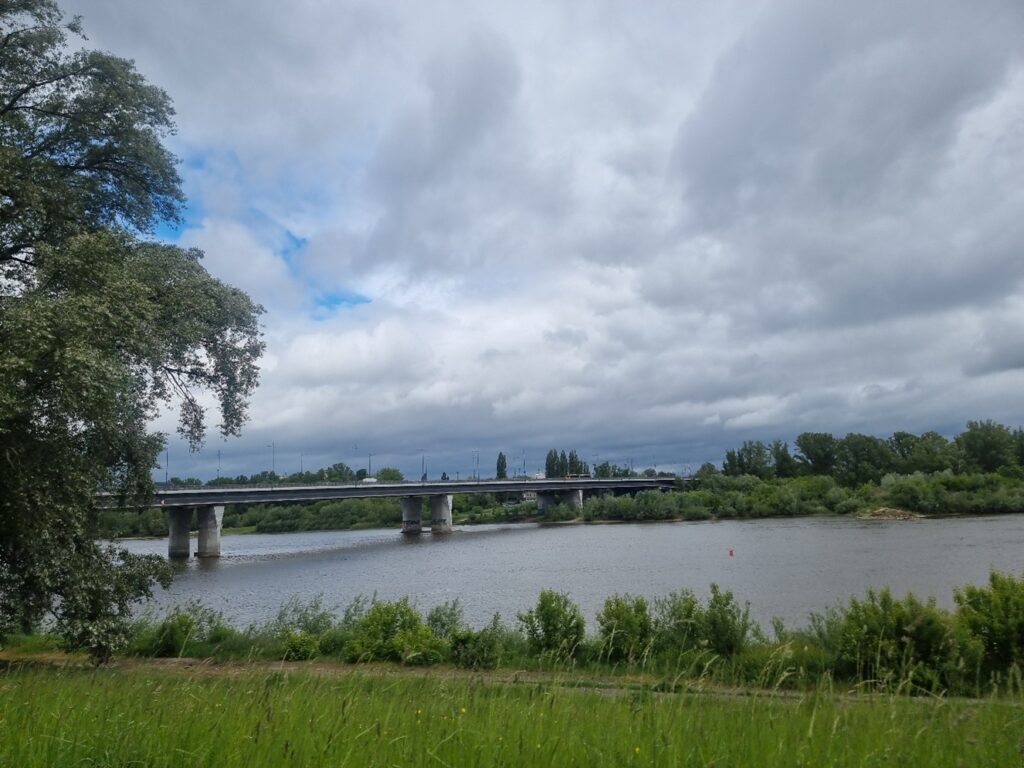
I’m standing in front of puddles filled with muddy water. To my right is the Vistula River, and to my left, a forest. The taxi driver just left, clearly irritated. We couldn’t understand each other- he spoke in Polish, I in English—and we couldn’t agree on where exactly he should drop me off. While it’s raining, and I don’t know which direction to go, I start questioning the idea of a spontaneous interview with Ivan Vyrypaev.
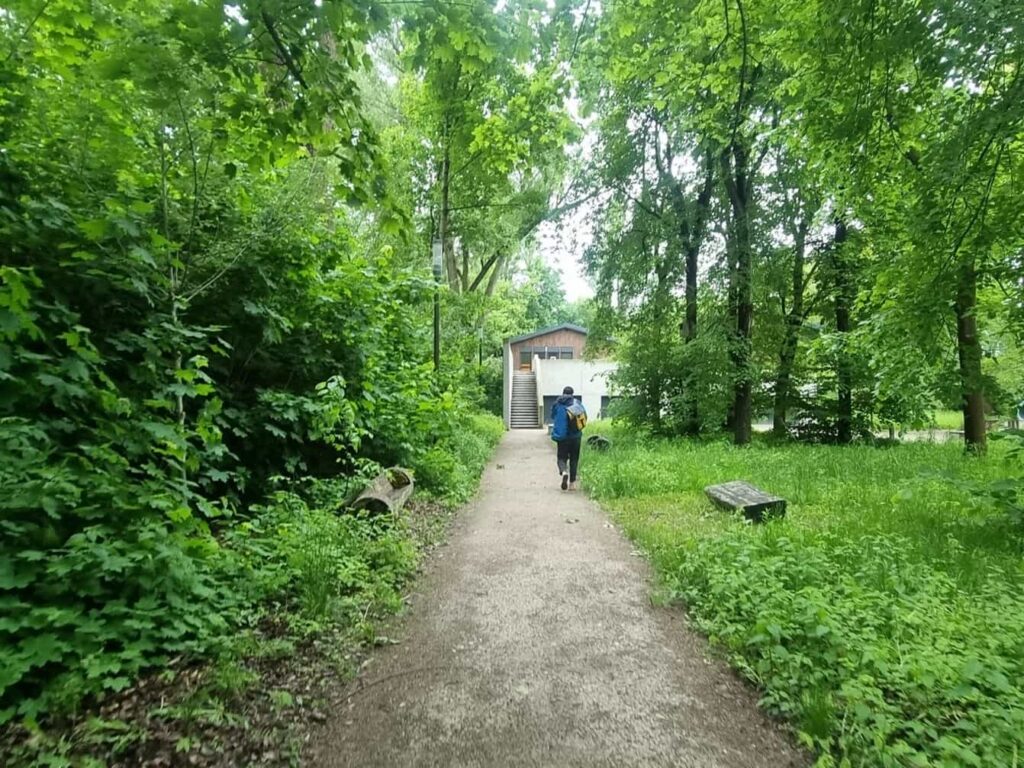
His assistant picks up the phone, asking me to stay put since someone will come to get me. I notice some signs of life nearby; the wooden kiosk seems to be a café. A few minutes later, a youthful figure approaches, wearing a blue hoodie. Someone from Vyrypaev’s team is here. When he’s finally in front of me, I recognize his light blue eyes. He reaches out to introduce himself and apologizes for not speaking English well. It is Ivan himself who has come to guide me into the Teal House.
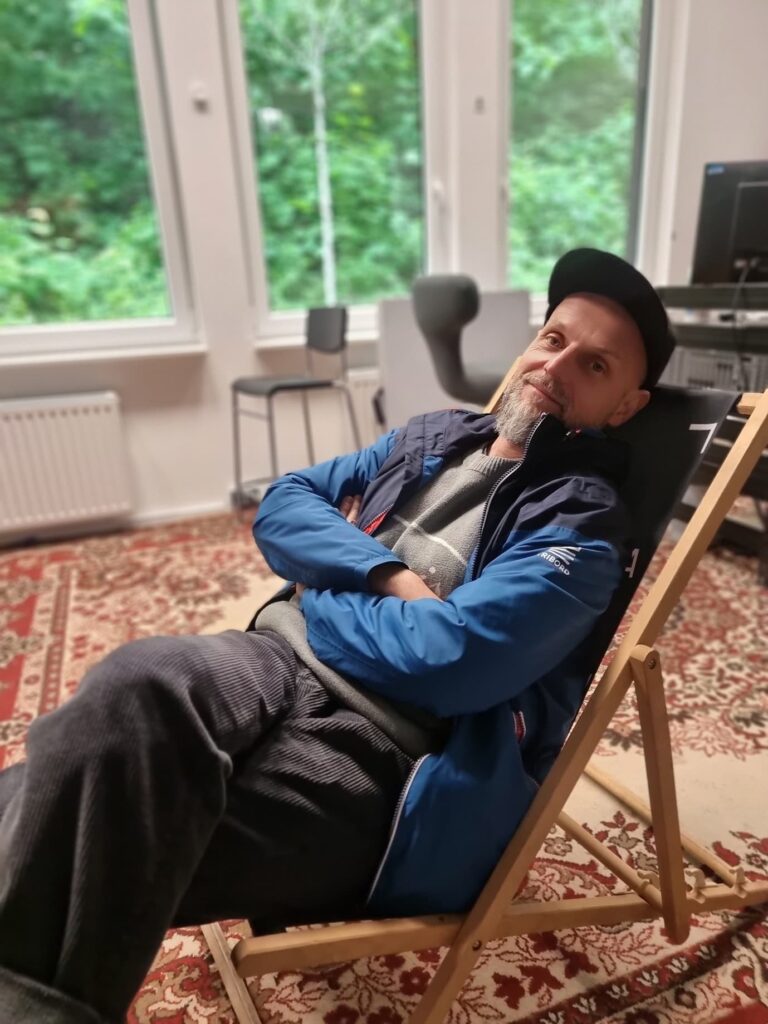
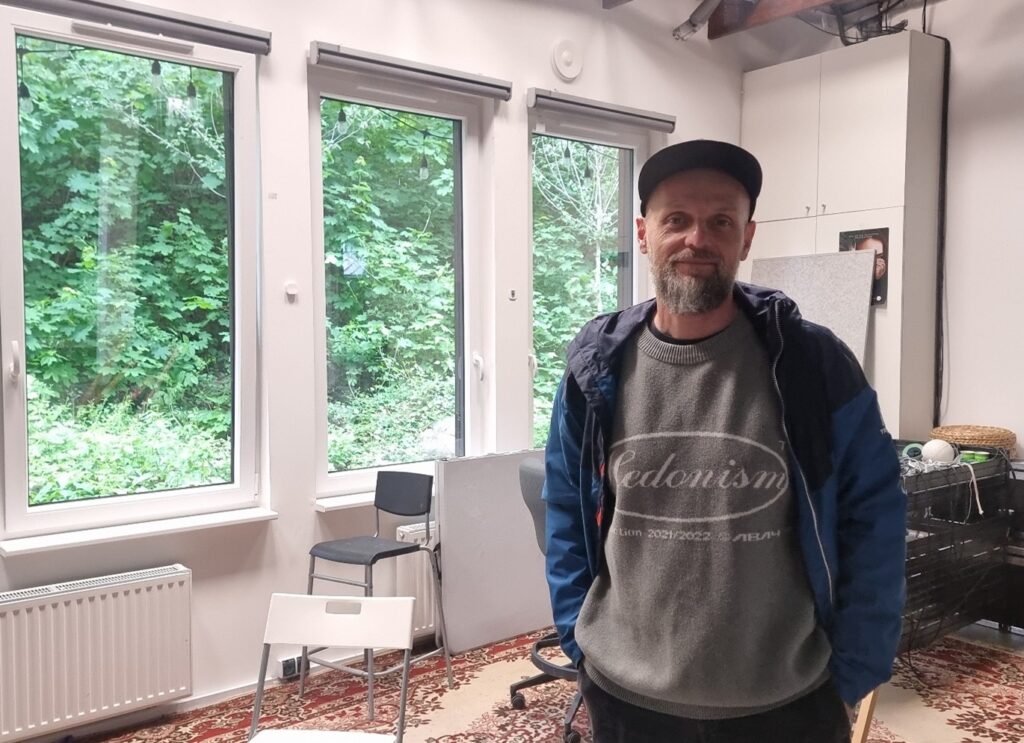
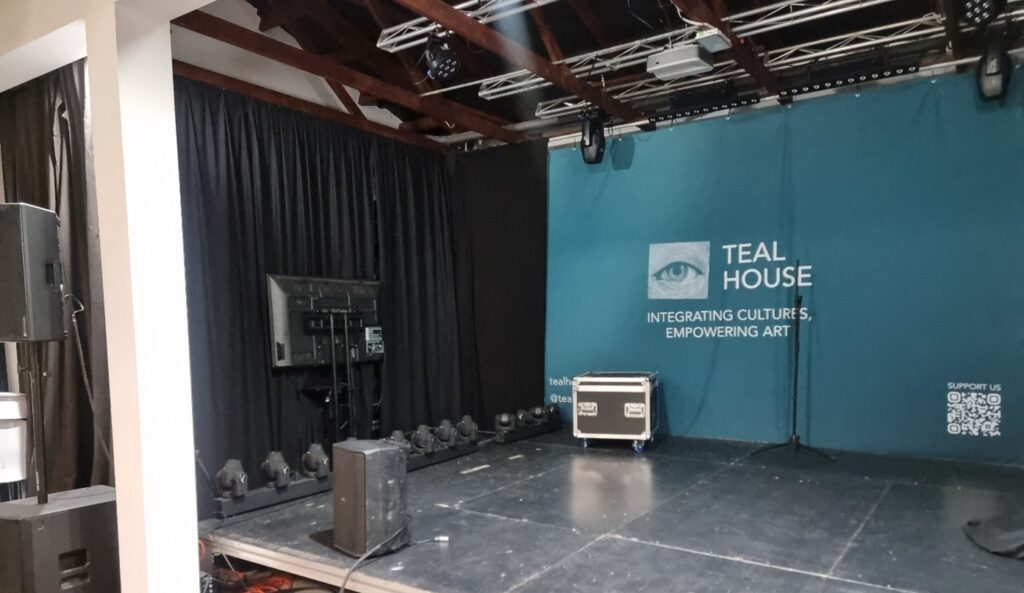
The Teal House is a cultural centre founded in Warsaw in 2022 by Vyrypaev and Polish actress Karolina Gruszka, aiming to help displaced artists find a new artistic homeland. It is an open space that hosts art workshops, rehearsals, and performances.
The first thing I ask him after we sit inside the relatively chilly studio is: what does “Teal” mean? “Turquoise,” he replies. He adds that the idea of so-called “Teal Organizations,” which function through self-management and without hierarchies, is based on the philosophy of American thinker Ken Wilber, who sees humanity as a single organism. According to this idea, human consciousness follows a spiral trajectory, each stage does not invalidate the previous one but includes and evolves it. These stages are represented by colours, each symbolizing a different mode of thought and existence. Teal is one of the most advanced stages of this spiral growth, carrying elements such as a holistic worldview, collective intelligence, and profound compassion.
“Everything we do in life is a form of communication,” he tells me. “And this kind of communication evolves from lower to higher levels. War and violence—those are bad forms of communication, but they are communication nonetheless. There is also a kind of communication that is about understanding the other, mutual aid, and compassion. That is what we cultivate at Teal House.”
How do you help displaced artists integrate into their new environment? What kind of actions do you take?
We do various things. First and foremost, we give them space. It’s very difficult to find rehearsal space in a country you don’t know, and of course, it’s expensive. We offer them space—either free or at very low cost. We have a studio with all kinds of technical equipment. The space is limited, of course, but anyone who wants to use it can. We also apply for open calls and grants and help artists participate in such initiatives. In this way, indirectly, we give them the opportunity to work. At the same time, we try to attract people from the local Polish community so they can integrate into it.
In 2014, Vyrypaev left Russia due to his open opposition to the Putin regime, his sentencing to 7.5 years in prison, and the banning of his works in the country. After eleven years of living in Poland, I ask him whether he still feels like an exiled artist or if Poland has now become home.
I’ve been working in Europe for a long time, so in a way, I’ve gotten used to living here. I’ve become European. I speak fluent Polish and have Polish citizenship. I have Polish students and collaborators. And people here really like me. They treat me well. Still, I feel like a foreigner. There’s a very strong mental gap. For example, every time I visit Greece, I feel much more at home. That’s because my mental model is based on Greek culture. But I think it’s very important to always seek a system of communication and not lock ourselves into our identities.
Regarding his Russian identity, he explains: “Each year, I feel more and more Russian -I realize that – because I carry the tradition of the Russian literary school inside me. I studied theatre directing under legendary Russian teachers, and my plays were staged in all major theatres across Russia, in many different cities. I believe I am a Russian national playwright, and that’s my tragedy. I will never be there again. I will never work there again. So no matter how well I do in Europe, I remain, unfortunately, a Russian playwright.”
Given the recent success of his plays Oxygen and the Iranian Conference in Athens, I begin asking how he feels about this – only for him to jump in: “Let me tell you one thing about the Iranian Conference, and please publish it. I’ve received many offers to stage this play -even this week, I think I got five. Everyone wants to do it. But when I wrote this play in 2017, the circumstances were completely different. I recently re-read it and I want to ask everyone to stop staging it. Back then, my main concern was the need to understand the mentality of other people and other nationalities before trying to change it. Today, however, this play sounds like it echoes the kind of rhetoric Putin uses. Of course, the play is more complex than that. It’s also about love and other themes. But I feel deeply guilty about how I treat the Iranian people in that work. At the same time, people there are truly suffering. Fundamental human rights are being violated. That’s why I think I either need to rewrite the play or withdraw it for now.”

He also tells me he’s preparing to come to Thessaloniki this September, where Mahamaya Electronic Devices will premiere. Auditions have already started. He adds that he’s looking forward to seeing Terzopoulos’ production, whom he considers one of the greatest masters of the craft.
Is there a difference between types of art? I ask him, somewhat provocatively. “Of course there is. The goal of art is to amaze, to give pleasure. It can be a dance, a poem, a play, or even a thought. And it’s created to be enjoyed by someone. For example, I’m 50 years old, and for many years now, I haven’t felt the need to tell the world anything. I just want to create something beautiful for others to enjoy. Spiritual art has a similar effect to yoga. It exerts a kind of energetic influence on the audience. It’s like participating in a ritual. It’s not just a mental experience—your whole being connects with what’s happening. That’s the kind of theatre I try to create. But it also needs to be directed the right way. And that’s my problem, because there are very few people who can stage it as it’s meant to be. That’s why it often remains at the level of ordinary art.”
He emphasizes that the term “spiritual” may sound too Christian for what he means. “In reality, we’re talking about art that helps you evolve. Art that lets you look within. This kind of art shows us what limits us, and in doing so, it sets us free. It’s like going to a psychologist or a therapist.”
He gets up to pour me some water, and after forty-five minutes in the studio, the May chill still bites. Our conversation turns more personal. Reflecting on his journey, he tells me: ‘’In the beginning, I wrote to defy this world, to rebel, to express myself. Oxygen belongs to that period. Later, I moved into a phase where I believed I was conveying some kind of wisdom, that I had something to teach people. That I needed to say something. Now, I’ve come to the conclusion that life has no meaning at all. Neither thoughts, nor ideas, nor anything else matter. So we just do what we do. I see myself as a person who’s good at writing plays, so I just write them. I’d really like to stop. But for now, I don’t think I can.”
What do your plays primarily speak about? “My plays are about the meaning of life—not in the sense that they offer answers, but in the sense that they ask the questions.”
While preparing for this interview, I watched the video explaining the mission of the Teal House. It says that artists will find the answer to the question: “Who are they really?” So when I close the interview with that question, he smiles and replies playfully:
“I think I am cosmic energy manifesting in the form of a Homo sapiens located in Europe. Half of my genetic background is Russian, and the other half Jewish. I live in Poland and write plays.”
* Ivan Vyrypaev’s new play, Mahamaya Electronic Devices, is set to premiere in Thessaloniki on September 19.