 Pepi Nikolopoulou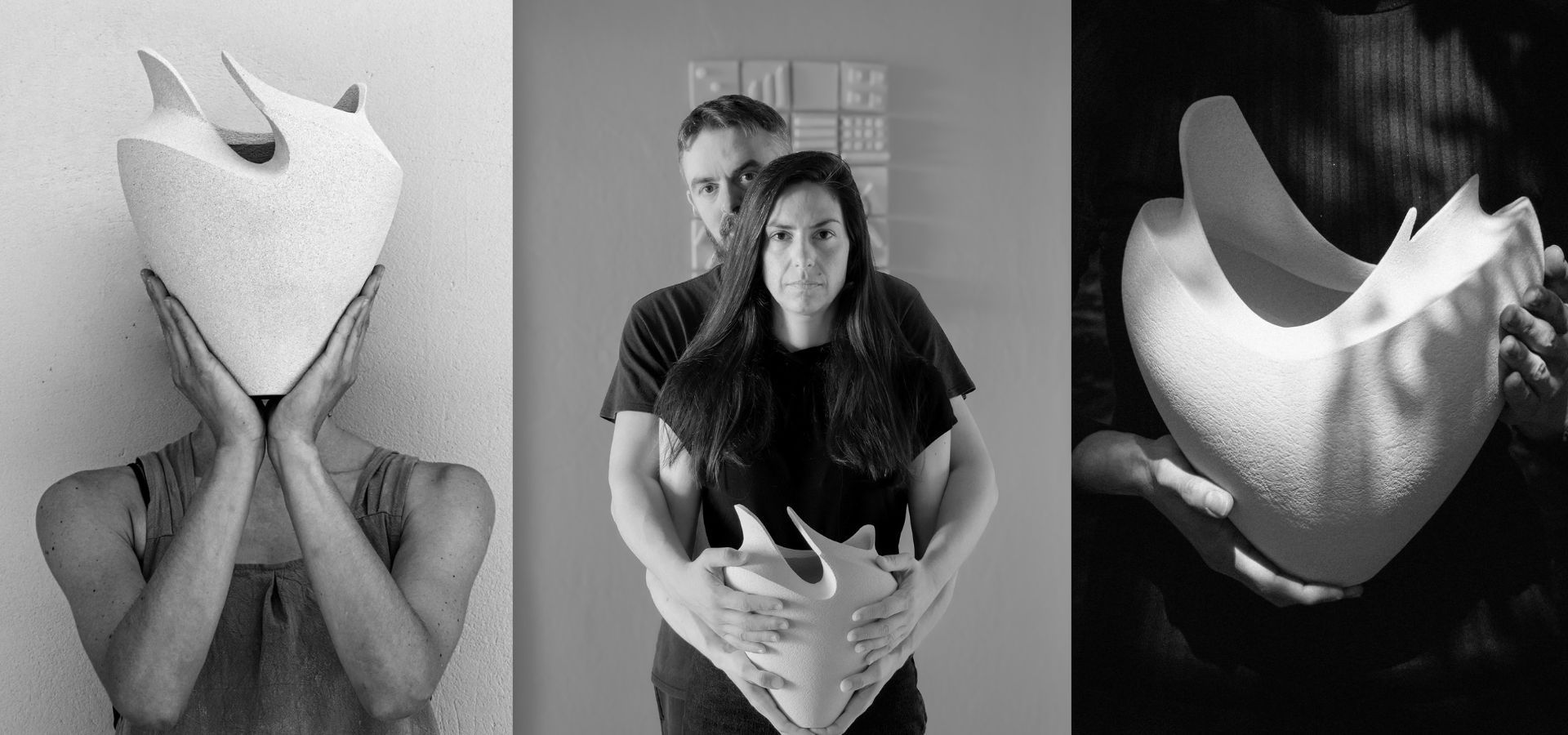
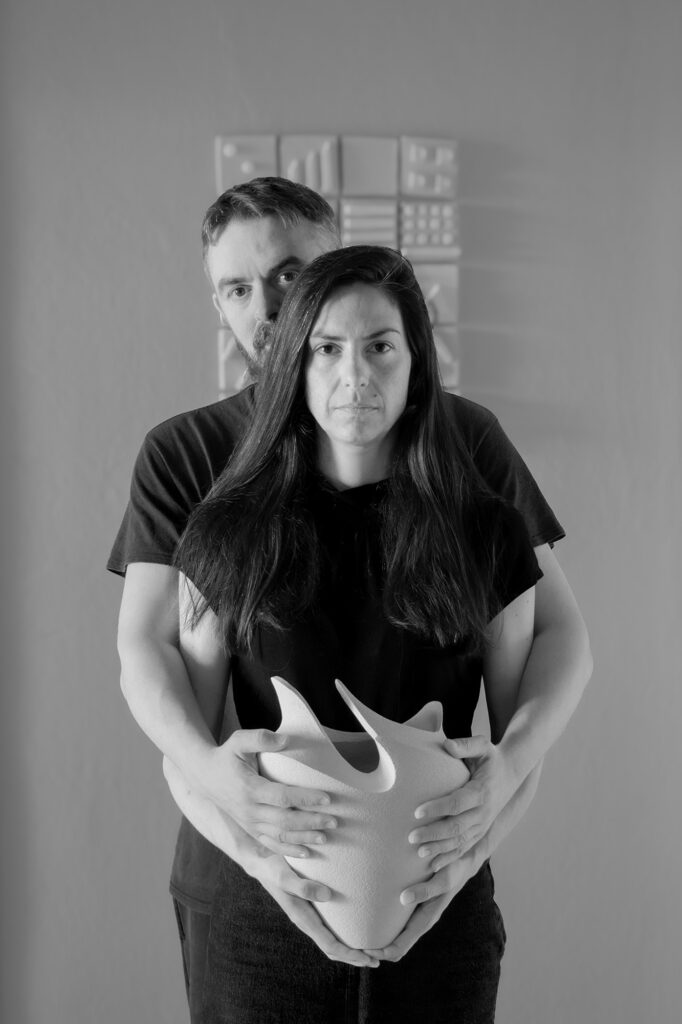
Chous Ceramics studio is run by Despina and Giorgos, a couple who are passionate about bringing the beauty of hand-built ceramics to art enthusiasts worldwide
Despina Chroni and Giorgos Zitis left Sparta at eighteen to study in Athens, each stepping into a different world. She chose Industrial Management and Technology at the University of Piraeus; he pursued Graphic Design and later contemporary digital arts at the Athens School of Fine Arts. For years, their lives moved along parallel trajectories: targets, professionalism, design, digital imagery.
In 2006, Despina returned to Sparta and worked at a bank for fifteen years, in a demanding environment defined by pressure and a strictly professional mindset.
Creativity, however, was never absent. Although she never formally studied art, she consistently sought outlets: artistic sewing, photography, small handcrafted escapes that acted as a counterbalance to a rigid professional framework. The seed was already there.
The decisive turning point came in 2022, after the birth of their child. The need for redefinition was deep and existential. It was not merely a career change but a search for meaning. Clay – a material that had long attracted her whenever she stood before handmade objects – became the catalyst.
Together, with their baby in their arms, they traveled to Athens for their first ceramics lessons. They attended seminars, experimented on their own, worked from home, while simultaneously preparing the space that would become their studio in Sparta. In the summer of 2023, CHOUS Ceramics officially opened its doors.
What does CHOUS mean?
The name CHOUS is rooted in ancient Greek. It derives from the noun χοῦς (khoûs) and the verb χέω (kheo), meaning “to pour.” In antiquity, a chous was a rounded form of the oinochoe (οἰνοχόη) – a wine jug with a characteristic trefoil mouth.
During the Athenian festival of Anthesteria, a three-day celebration honoring Dionysus and marking the arrival of spring and the new vintage of wine, the second day was known as the Choës – the day of libations. The vessels used for these ritual pourings carried the same name.
Beyond its functional meaning, chous also signifies earth: soil, pressed ground, clay, dust. The word carries a deeply material and existential resonance, echoing the biblical phrase from Genesis 3:19:
“Χοῦς εἶ καί εἰς χοῦν ἀπελεύσει” – For dust you are, and to dust you shall return.
For Despina and Giorgos, the name is not merely historical reference. It anchors their practice in the elemental – in the act of pouring, shaping, and returning to earth. A word that contains vessel, ritual, soil, and impermanence becomes the quiet foundation of their work.
Minimalism with Tension
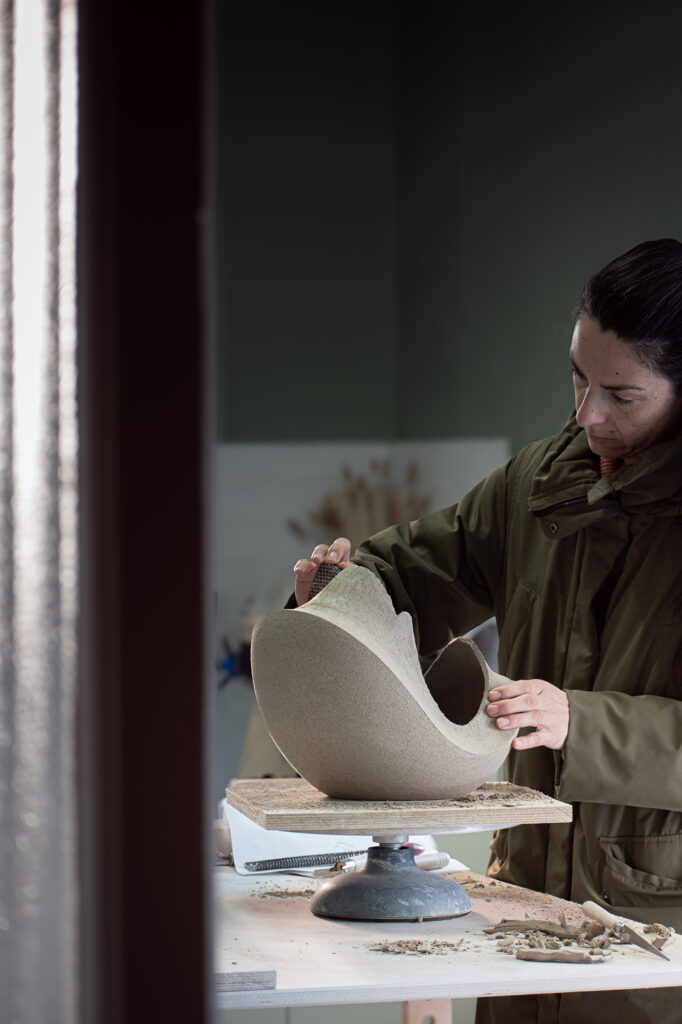
From the very beginning, there was a clear intention of identity. The phrase “Lakonizein esti philosophin” – to speak concisely is to philosophize – became their informal aesthetic principle. Restraint with inner tension.
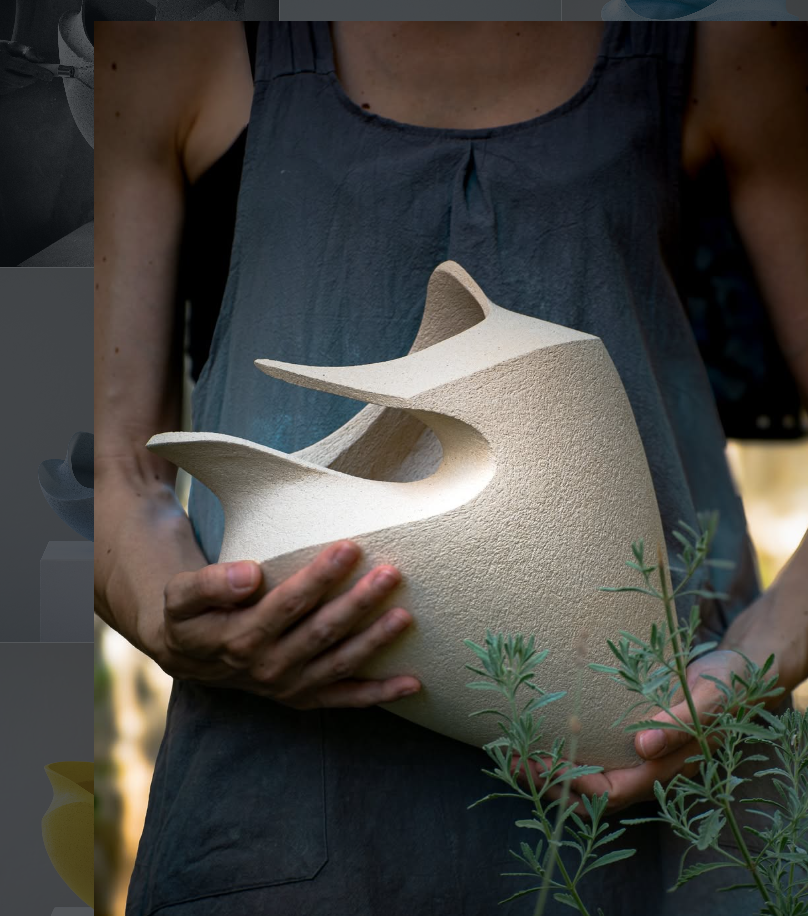
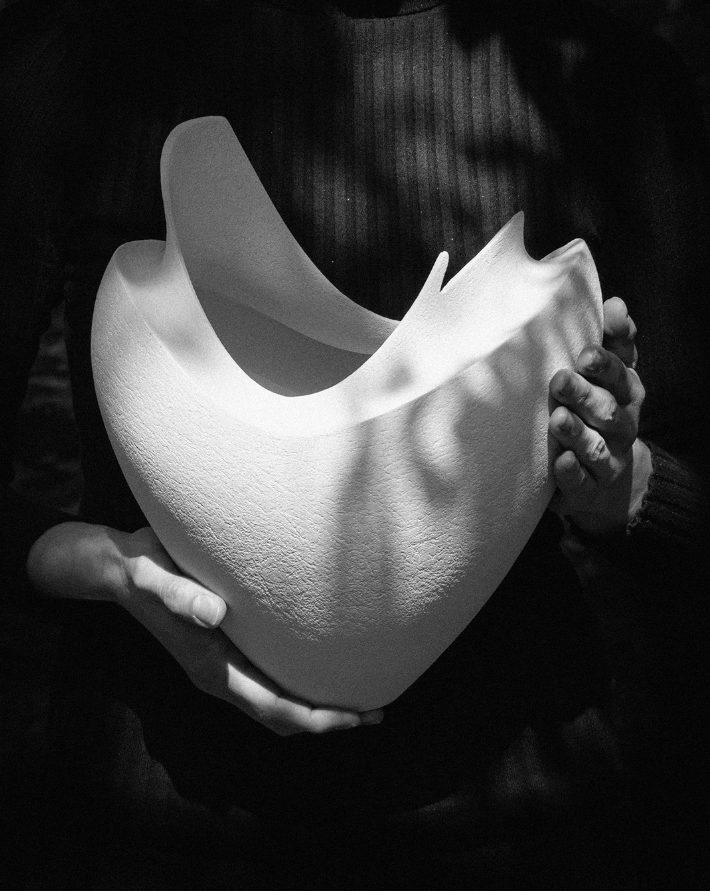
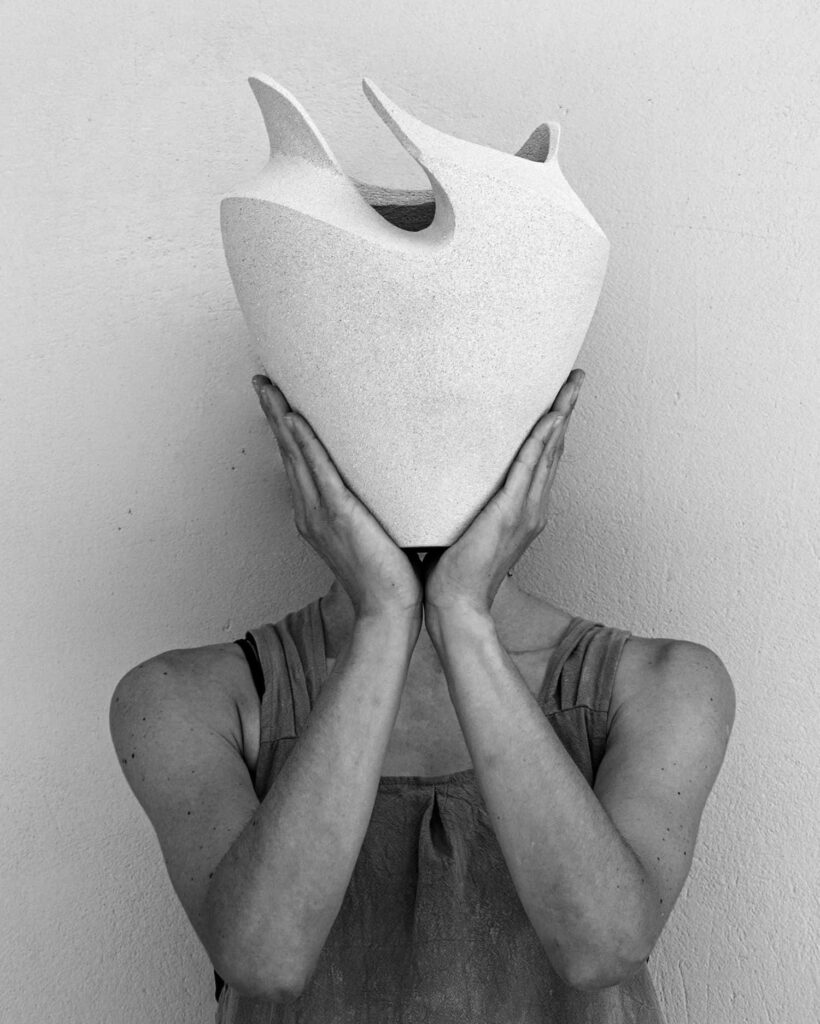
Their objects, although reminiscent of vases or bowls, function primarily as sculptural forms. They are not created to hold flowers; they stand autonomously as decorative works that converse with light and space. Balance is a central obsession: sharp protrusions and pointed edges are not merely aesthetic gestures but structural elements that determine stability. Each piece carries a name rooted in Greece — inspired by its language, its light, its land, and its myths.
The process begins with sketches, while light enters as a fundamental co-creator. A piece changes dramatically when rotated; shadows redraw the form. Each angle reveals a different sculpture.
The sealed earth
A defining element of their identity lies in color. They use the ancient Mediterranean technique of terra sigillata – “sealed earth.” It is an exceptionally refined clay to which natural oxides and pigments are added. The final tones are never entirely predictable: firing temperatures dramatically alter the result. Some colors intensify, others burn, others shift in hue.

The process demands experimentation and patience. Color is not decorative but part of the sculpture’s internal tension. Luminous, earthy surfaces seem to emerge from within, as if something is being born. Many of their recent works resemble shells or protective structures, forms that appear to carry an inner life.
Ceramics as an extension of life
In recent years, ceramics has experienced a revival. For Despina and Giorgos, the process carries a therapeutic dimension, not because it is always relaxing, but because it teaches coexistence with uncertainty.
Many things can go wrong. A piece may crack or alter in the kiln. The waiting period before opening the kiln is a moment of tension. Each object feels almost like a living organism. Yet failure does not negate the effort; it trains patience.
At their studio, ceramic classes for adults take place almost daily. The local community has particularly embraced this aspect. In a city with limited artistic options, the workshop functions as a meeting point. While the familiarity with sculptural ceramics as a fine art form is still at an early stage, the response to the classes has been strong.
The studio is housed in an old building with a garden, where a mosaic artist also works. An informal, small collective of clay and stone.
From Sparta to the World
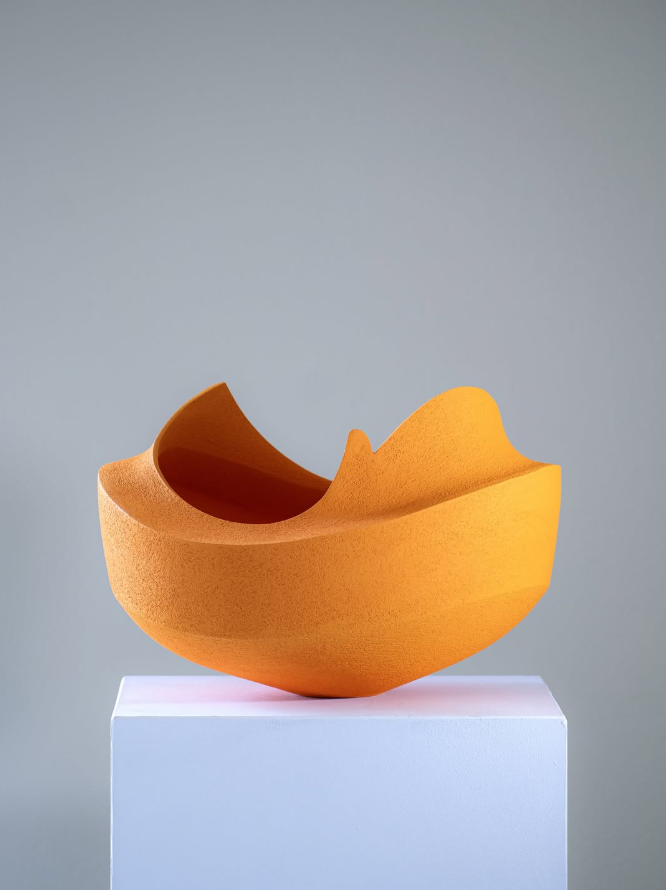
Their journey has not remained within local boundaries. In 2024, they participated in the exhibition 1000 Vases in Paris. In 2025, they were selected for the Viaggio Attraverso la Ceramica competition at Palazzo Punzi on the Amalfi Coast, while their work Phoenix entered the permanent collection of the Municipality, in the forthcoming Museum of Contemporary Ceramics – an honorary recognition in a place with deep ceramic tradition.
In the myth, the Phoenix consumes itself in fire at the end of its life, only to rise again from its ashes, young and whole. In CHOUS’ interpretation, the form becomes a meditation on endurance and transformation. Undulating curves and receding depths create a dramatic rhythm, echoing the ebb and flow of human struggle, while sharp ascending apexes – reminiscent of wings – convey the fierce will to rise again. Handcrafted using the coiling technique and finished in a vibrant, fiery orange terra sigillata slip, the piece captures light across its upward movement, intensifying the sense of emergence. The blaze of color becomes symbolic: from darkness, renewal.
The same year, they were chosen among 678 submissions to participate in the 1st International Ceramic Sculpture Triennale in Warsaw, exhibiting alongside 52 artists at the Academy of Fine Arts. There, they felt their work clearly belonged within the field of sculptural ceramics.


Their works travel to London, while they continue submitting to international exhibitions. Through clay and international presence, the name of Sparta re-enters the present. Many abroad are unaware that contemporary Sparta exists. CHOUS becomes, unintentionally, a small cultural statement: the city does not belong solely to antiquity. Their outward gaze is their way of reintroducing their hometown to the world.
Life in Contemporary Sparta
Life in Sparta carries contradictions. Short distances, time, proximity to nature. Mount Taygetus stands nearby; the sea is less than an hour away. Daily life is not lost in traffic. There is space for family and creation.
If asked to suggest a route through Sparta, Despina and Giorgos would not speak of tourist highlights but of experiences.
The journey, they say, should begin with ancient Sparta. The ancient theatre – one of the largest of antiquity – is currently undergoing restoration, reminding visitors that Sparta was not only a military power but also a place of culture, music, and theatre. A walk through the archaeological site, with Mount Taygetus in view, reveals another dimension of the city: land, light, the protecting goddess, the landscape embracing history.
From there, the path leads to the mountain. Taygetus is a daily presence. Hiking its trails, the clarity of the horizon line, the silence of the landscape are part of their lives. Contact with nature functions as a balancing force – much like their work: tension and calm together.
Sparta also has its flavors. Among their favorite stops are Rizes, with its contemporary approach to Greek cuisine, and Tsipouradiko 50, a space with a courtyard and history, where Giorgos has created a distinctive mural that often becomes a backdrop for visitors’ photographs.
For them, Sparta is not only their beloved birthplace but a city that deserves to be reintroduced as a living meeting point of nature, history, and contemporary creation.