 KATERINA PARRI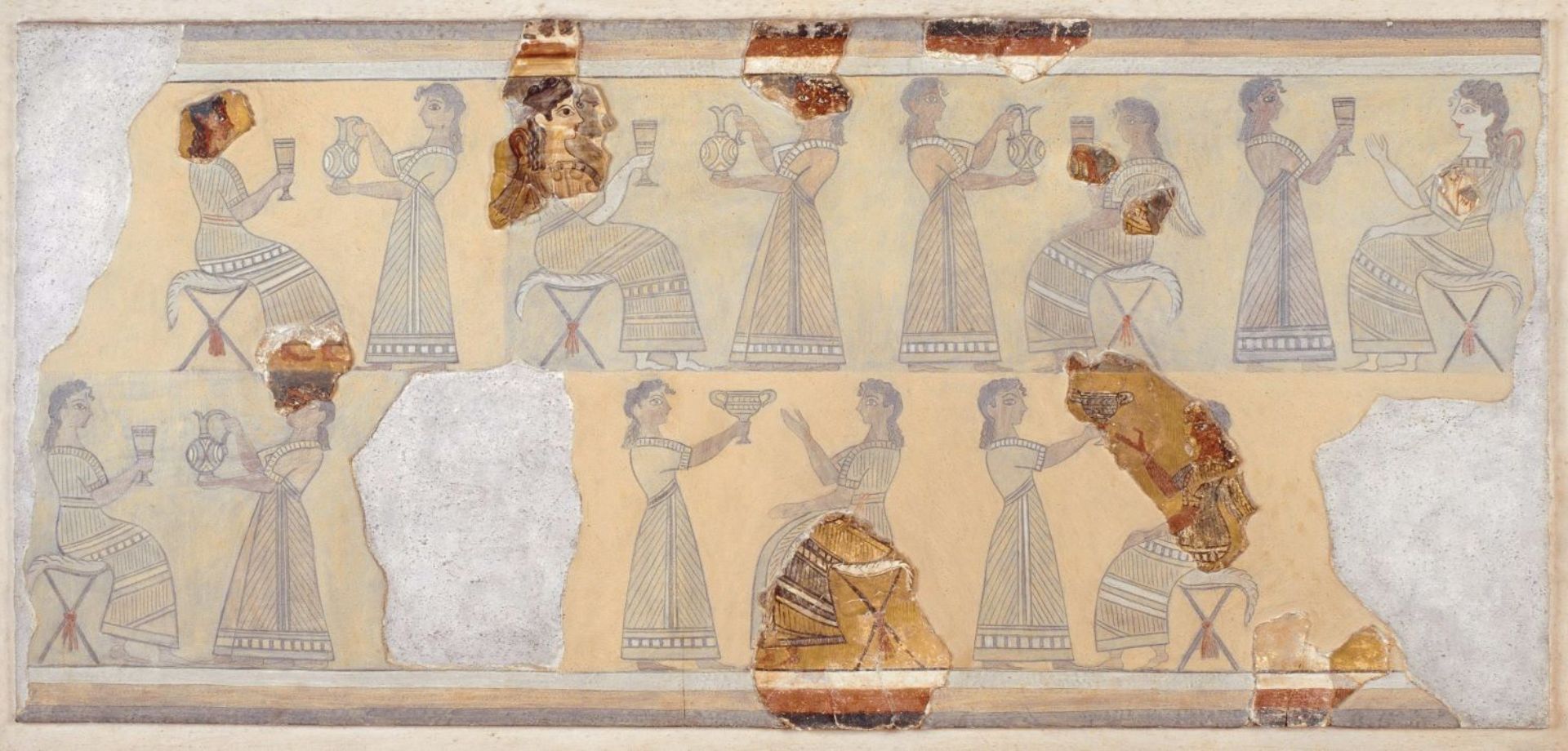
The exhibits in the Wine Routes of the Heraklion Archaeological Museum exhibition include a jug with a high neck and a grooved spout that has come down to us from the 3rd millennium BC; four small models of wine-presses found in vaulted tomb B at Apesokari, Mesara; a large krater with the high base, which can be interpreted as a vessel for mixing and consuming wine in large quantities and could thus bear witness to luxurious symposia and banquets held in the palace at Phaistos; a stirrup jar, a popular type of vessel for transporting wine during the Neopalatial period; and many other impressive artefacts connected to vine cultivation, the making, storage and transportation of wine, and the symbolism of the vine and of wine from prehistory into Roman times.
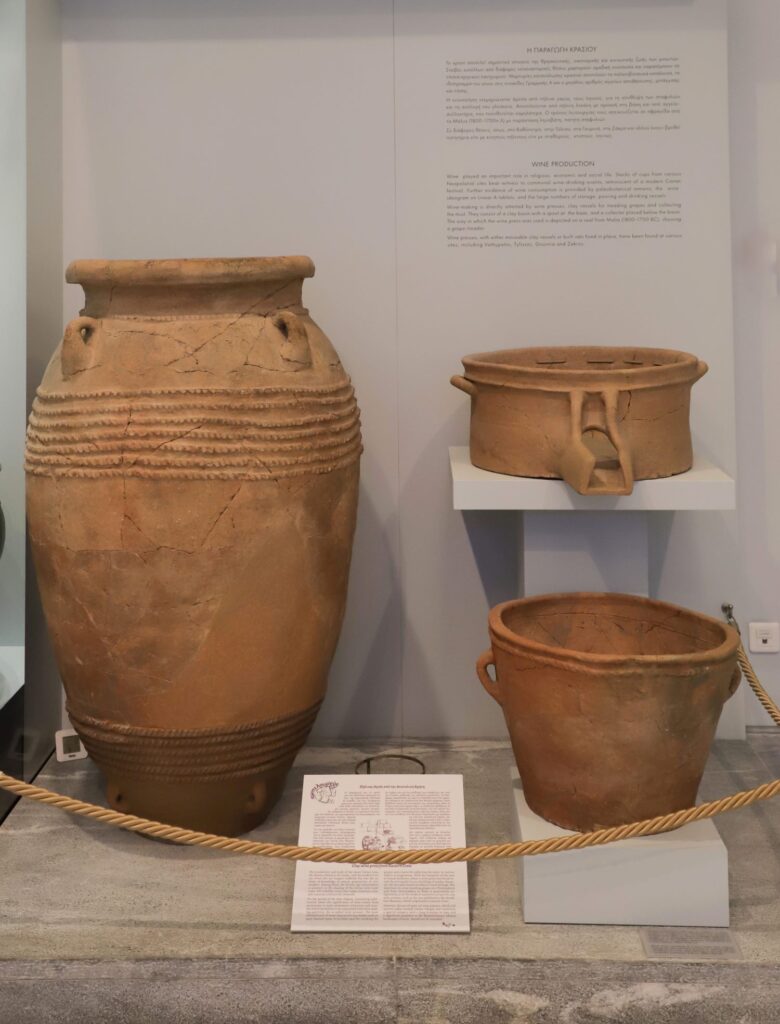
It is a new tour which only began in September 2023, when the museum was included as a new stop on the Council of Europe’s “Iter Vitis” [Routes of Wine] Cultural Route. The joint action sheds light on how the vine has shaped a common identity among the peoples of the Mediterranean.
From the Mediterranean to Crete
Why is it so important to have such a path inside the Museum of Crete? As the general director, Stella Chrysoulakis explains: “The history and archeology of Crete are one entity. We watch the eras go by on the island, and in every new population, in every new way of life, in every discovery, from the Stone Age onwards, there is a common component, which is the land of Crete, with its fundamental characteristics that have to do with the production of goods, mainly bread, wine and oil, the nutritional “holy triad” of the Mediterranean. The museum must follow what really happened here, which is like a “umbilical cord” between the land of Crete and the people who inhabited it.
This umbilical cord has three components, one of which is wine and these are its paths. Paths on the land of Crete with all these wonderful vineyards, well-kept today, the fine wineries and all the care given by the passionate winemakers of Crete and in much the same way, the path of the museum which connects sites that have been excavated or identified related to the vineyards, the cultivation, use and drinking of wine. Essentially, what the earth cannot create or tell us about wine on its own – the superstructure, the symbolism, the ideological burden, the market value in each society-, that has to be told by the museum”.
In Crete—which is where the Mediterranean diet originated, by the way—there is archaeological evidence from Knossos from as early as 5000 BC which points to the relationship that already existed between Cretans and the vine. However, the islanders would not embark on systematic viticulture until the early Bronze Age (3100–2700 BC). Archaeological finds, pictorial representations, and historical sources document the history of viticulture and its place in Crete’s agricultural economy and trading relations; to see them up close, all you have to do is visit the Heraklion Archaeological Museum.

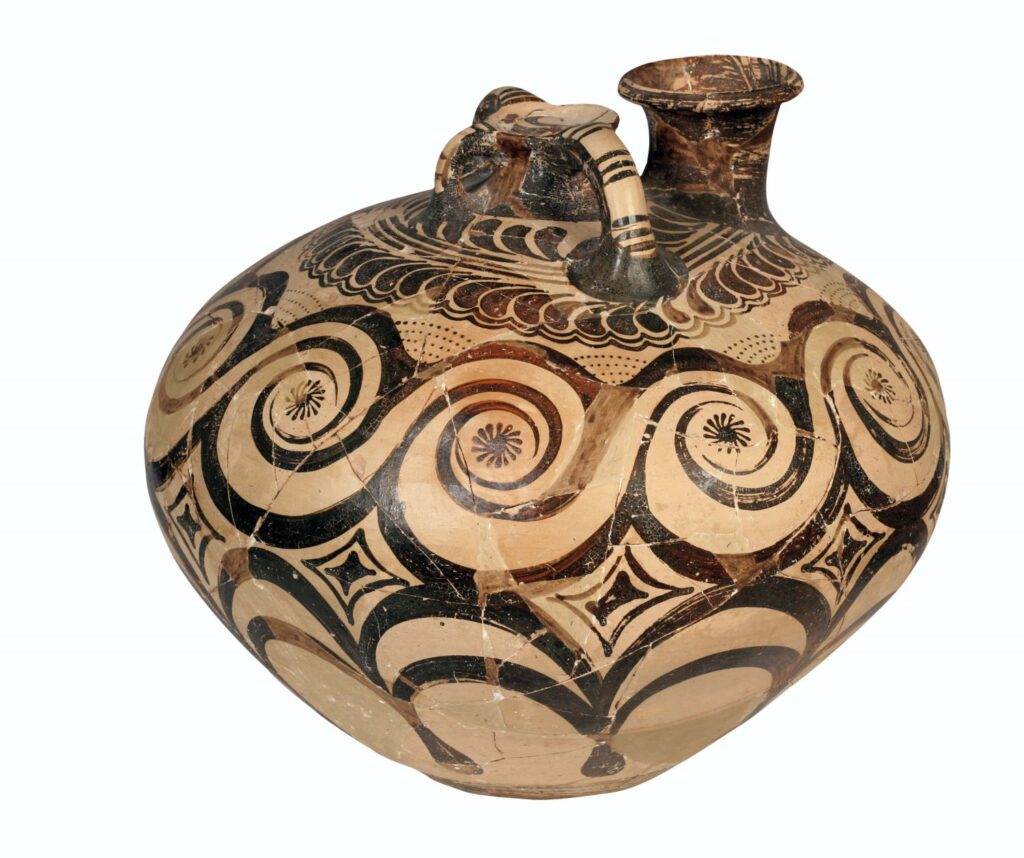
Enjoy a tour and focus, amidst the multitude of outstanding exhibits, on those that narrate the fascinating history of wine, as it was experienced in formal aspects of the island’s social life, in the mystic context of worship, and in everyday moments of toil and repose.
The grape and the magical transformation of its juice continue to accompany our joy, soothe our sorrow, and nourish the bonds that animate and unite us today, just as they did then.
Info
Heraklion Archaeological Museum
Xanthoudidi & Hatzidakis 1, Heraklion 712 02 | Tel. +30 281 027 9000
https://www.heraklionmuseum.gr/en/visit-us/
The thematic route is available to Museum visitors with special signage on the display cases containing the relevant exhibits; QR codes link to the Museum’s website for additional information.