 elc team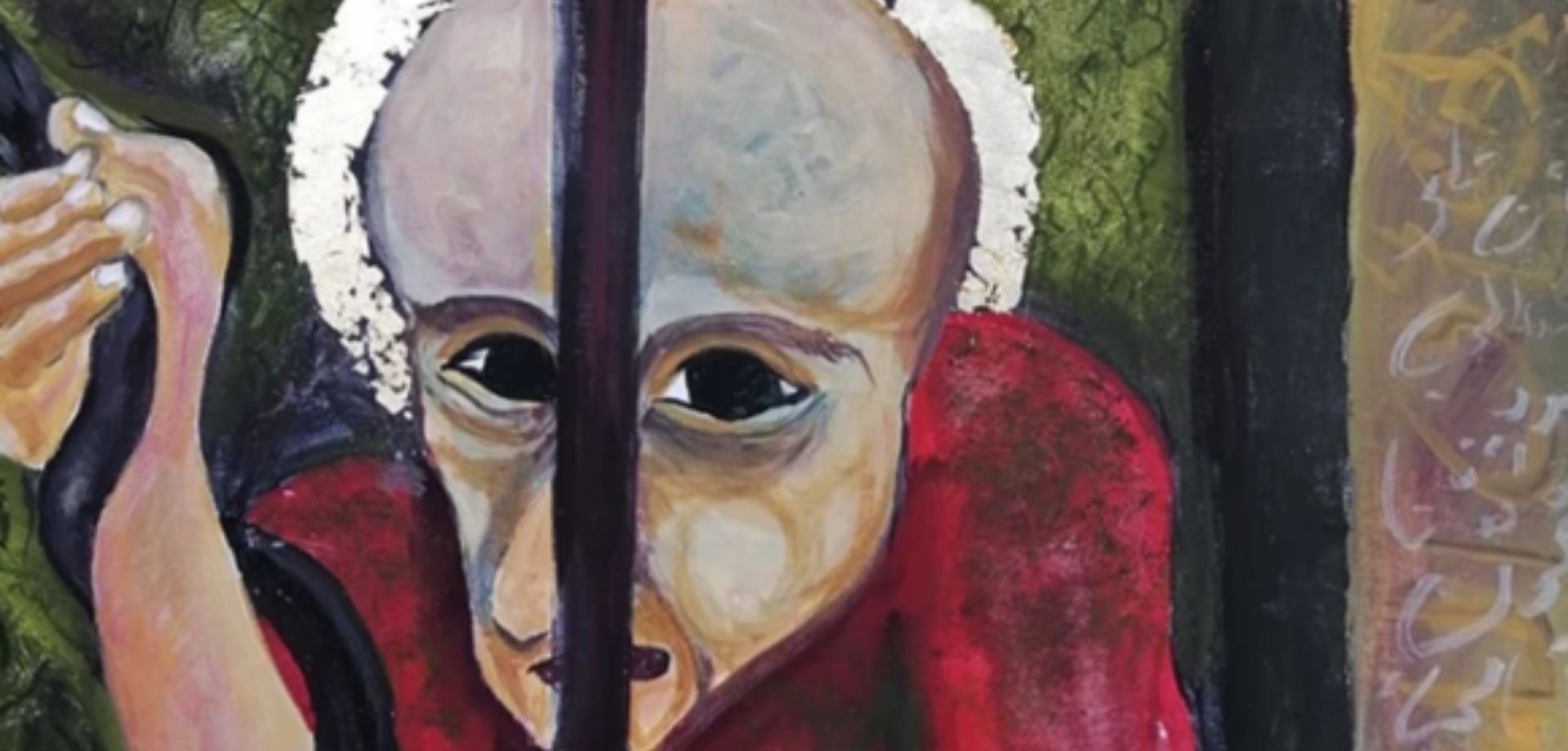
Eros, the child of Poros and Pena, was in ancient times the guarantor of the continuity of species and the internal cohesion of the cosmos. Later on, love was the subject of writers, philosophers and artists, and one of the most discussed topics, which is no coincidence, since love is one of the foundations of human existence. Artists, always one step ahead of the analyst, capture with great precision the fact that love never comes alone, but is always accompanied by suffering, which can be expressed in various ways, such as agonising anticipation, dependence, jealousy, pity, and so on. This is the basis of the exhibition “Painful loves” presented by the artist S. Kastro Dakdouk at Antisocial from 5 February.
Why painful loves? Painful loves, as Bosquin-Caroz tells us, “allude to the dramatic or even tragic dimension of love or love affairs. The word ‘painful’ carries a note of exaggeration, suggesting that the limits of what is bearable have been exceeded”.
This title, borrowed from the forthcoming psychoanalytical conference of the New Lacanian School, is the name of the current exhibition by Castro, who through his works offers us his own perspective on love. “Love, whether true or false, always hurts,” says the artist. We could even say that, for him, pain is the basis of love. His works are full of sadness that comes from the “deprivation” present in both true and false love. For Castro, false love hurts because “it is the result of ignorance and wrong behaviour”. But true love also “causes pain in the soul because it contains deep emotion and passion”. The artist himself points out that “we never manage to experience love in its entirety, we are always thirsty because we never experience love in its entirety” – and this causes the lover’s suffering.
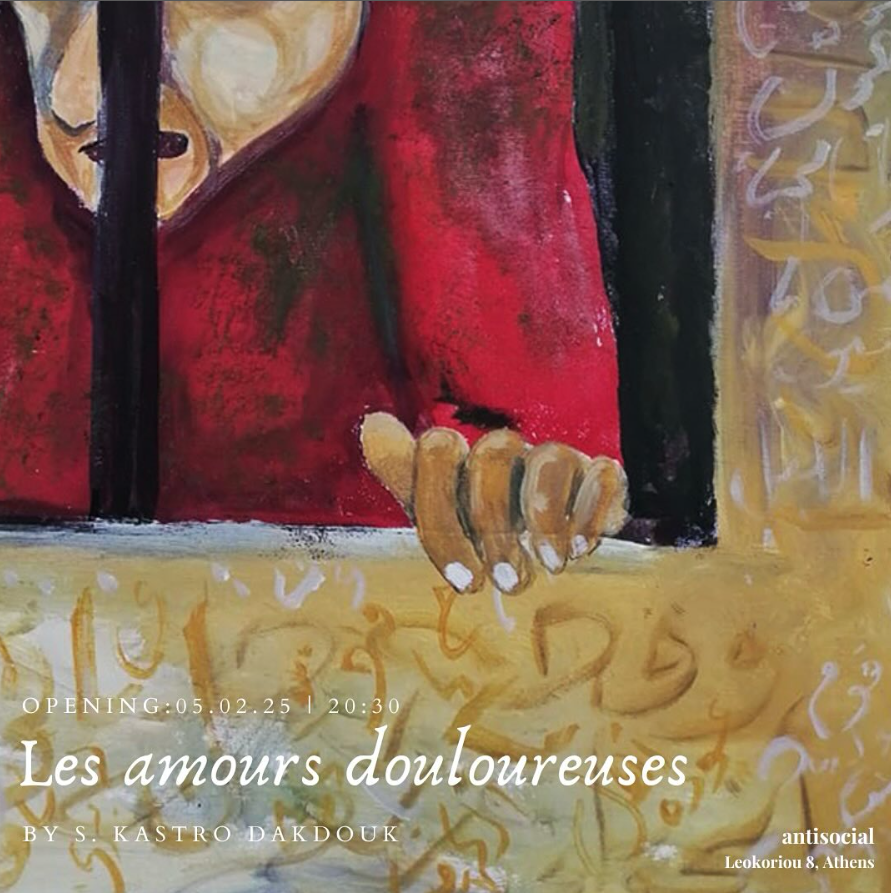
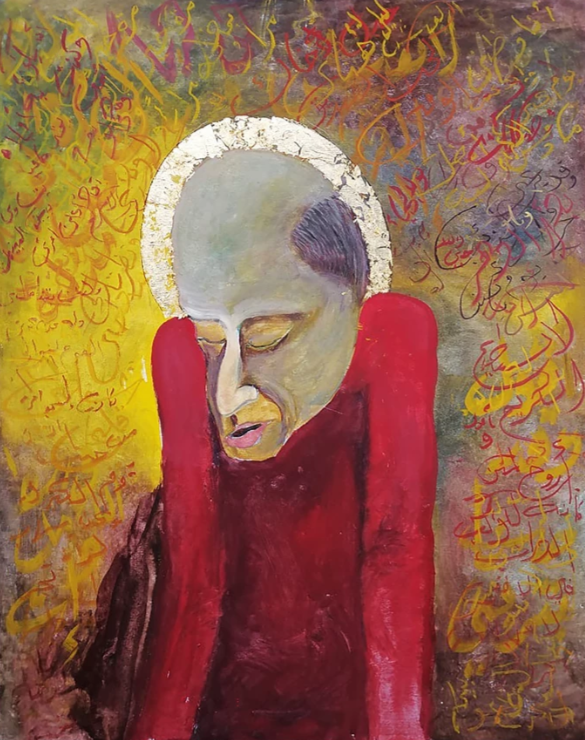
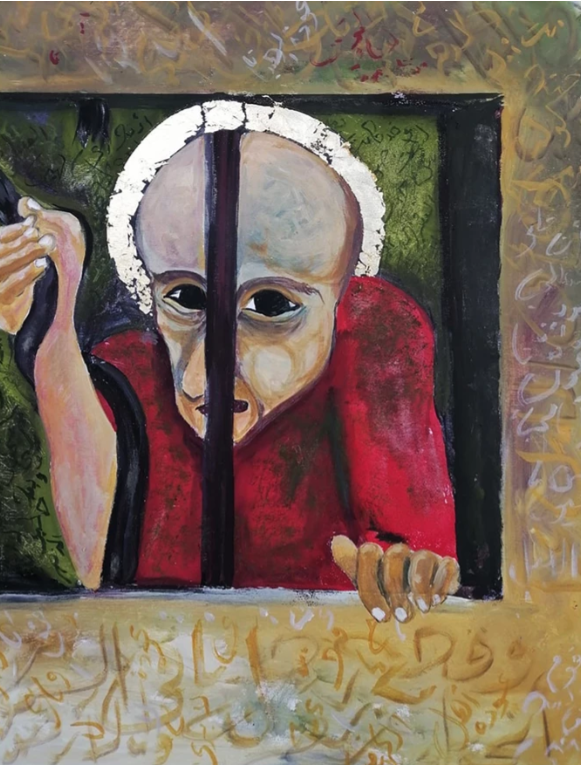
Castro chose to work in the technique of hagiography, using wood, egg tempera and gold leaf. The choice of this technique is by no means accidental. First of all, it has to do with his personal history: after spending a year and a half in Gavdos, in a monastic state, he decided to paint a series of his own saints. This series began in 1999 and was completed in 2003 when, due to his imprisonment, the only material available to him for his work was coffee. It is therefore a personal retrospective. Another reason for Castro’s choice of materials and techniques is his desire to give his protagonists the characteristics of saints, on the one hand to convey the sense of serenity that follows suffering, and on the other to evoke in the viewer the respect that is due to a saint. Finally, we could say that the technique of hagiography also serves a symbolic purpose. Could there be a better way to speak of painful loves than through the representation of a saint, someone who, because of his love – for God – was driven to utter suffering and finally to death?
Castro, influenced by a trip to Syria after 37 years, decided that his heroes should be ordinary people. 6 Bosquin-Caroz, “Presentation of the Theme of the 2025 NLS Congress”, op. cit., p. 1 His saints are real or imaginary persons to whom a symbolic character is attributed.
The artist paints his own saints, who are none other than the afflicted, the wronged and the rebellious, persons to whom his love is addressed and for whom he himself is pained to see their suffering. Some of the saints who appear in his works are Saint Eros, Saint Justice, Saint Helen the Sorrowful, Saint Prisoner, Saint Mother the Refugee, Saint Children. All of them are depicted with a halo, which refers to light, the symbol of knowledge according to the Pythagoreans. Indeed, for him, it is often knowledge that canonises someone. The only exception is the self-portrait of the artist, who is depicted without a halo, surrounded by a woman. This choice perhaps highlights the human dimension of himself, who, as he describes it, considers love to be “one of the most basic human elements, reminding us that we are human”. He even mentions that “when he falls in love, he feels more human”.
S. Kastro Dakdouk (b. 1969) is an artist and activist from Tartous, Syria. He began his studies at the Damascus School of Fine Arts, but did not complete them. In 1989 he travelled to Greece and stayed in Crete, where he lived for 17 years. In 2006 he moved to Athens, where he still lives and works. As a visual artist, he gives special importance to the socio-political character of a work, which is strongly reflected in his works and caricatures. As an activist, he makes practical contributions to actions and projects related to refugees and war. Castro is also a co-founder of the Villages of Solidarity. He has held solo exhibitions (18) in Athens, Crete, Mani, Corfu, Thessaloniki, Brussels, Bremen and San Francisco, including his latest exhibition entitled “Life after death” at the Youth Centre of the Municipality of Halandri (2024), while he has participated in 4 collective exhibitions in Athens and Chania.