For nearly a month, the Tellogleio Foundation of Fine Arts, Aristotle University of Thessaloniki, will once again leave its home base. Just like two summers ago, Tellogleio is heading to the Cyclades, joining forces with the Municipal Art Gallery of Mykonos “Maria Iglessi” to present the temporary exhibition:
“Nicholas Egon: A Personal Portrait of Greece”
The exhibition features 29 paintings and drawings by Nicholas Egon (1921–2017), spanning from 1948 to the later years of his life. These works were donated to the Tellogleio Foundation by Stamatia Komninou and Nikolaos Alexandros Komninos. The exhibition is curated for Tellogleio by Dr. Miguel Fernandez Belmonte, art historian.
Nicholas Egon was a cultured, cosmopolitan, multilingual, and well-travelled philhellene. He first encountered Greece in 1949, at a time when the country was still reeling from the recent traumas of World War II and the civil war. During his stay, he portrayed women, refugees, partisans, and orphaned children. From the early 1950s onward, he also launched a highly successful career as a portraitist among Europe’s high society.
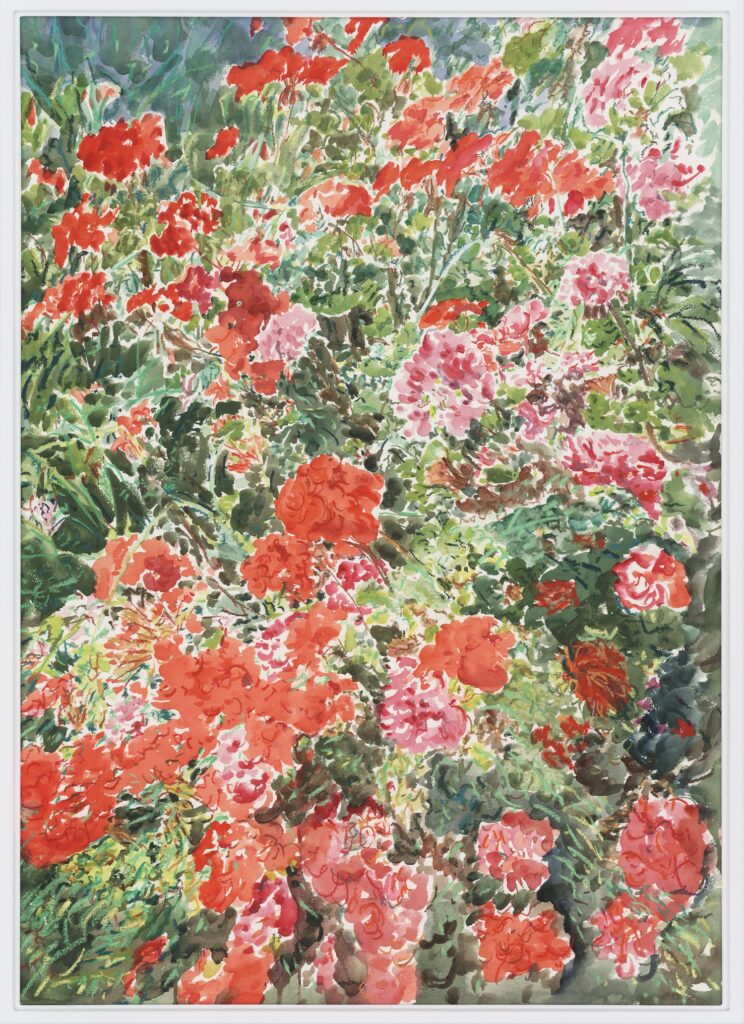
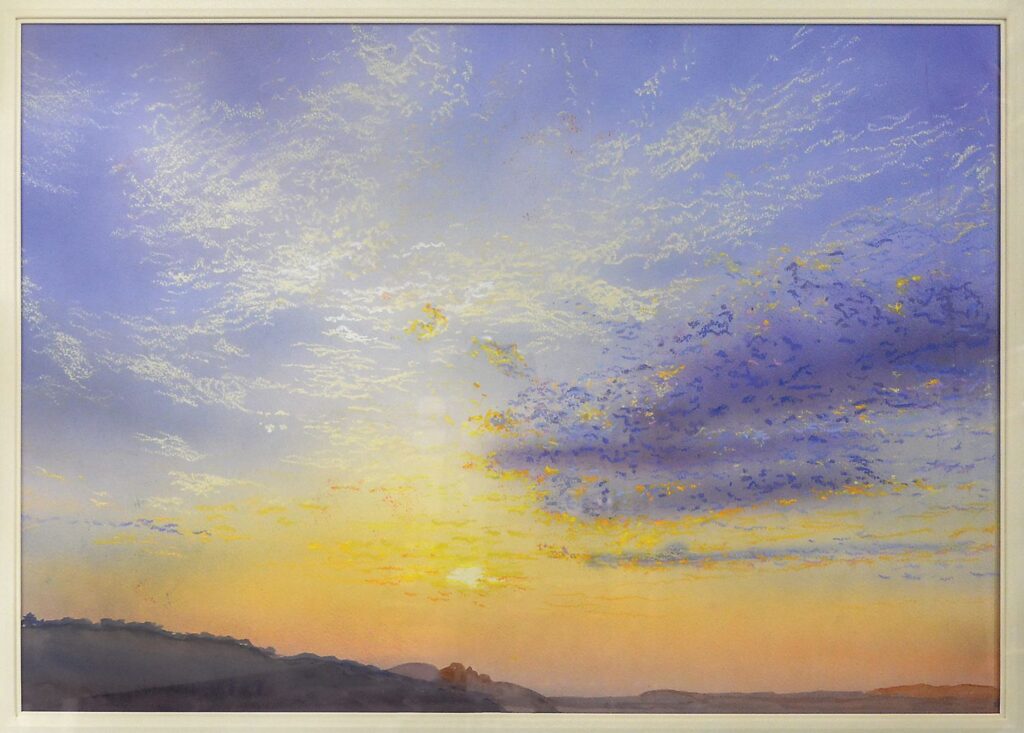
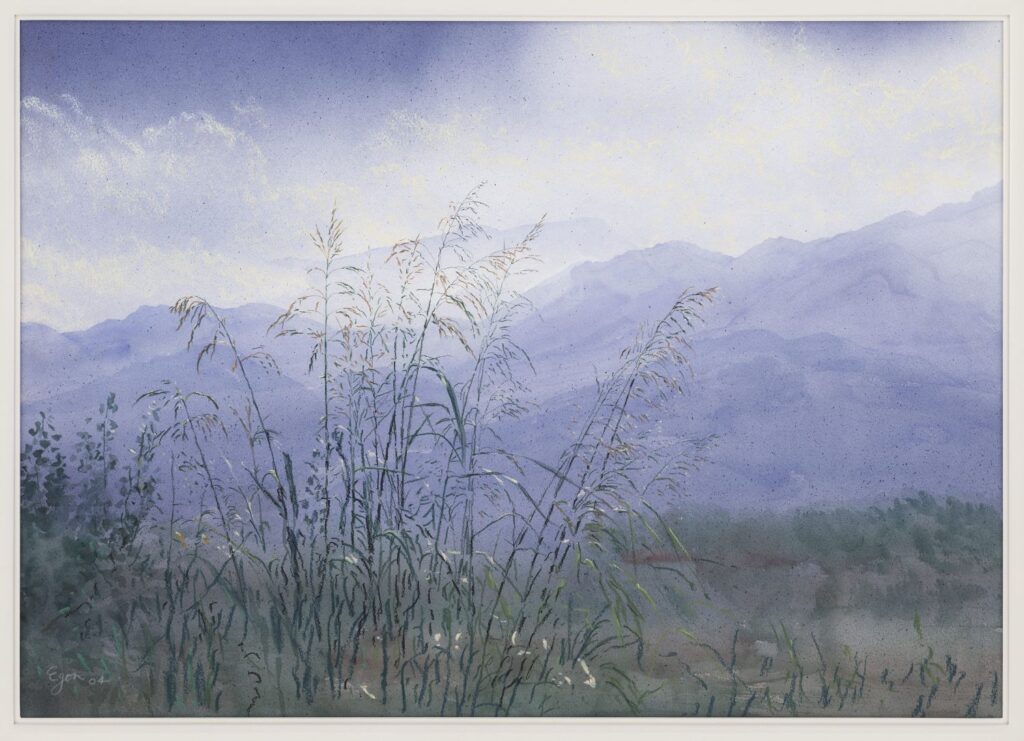
Alongside portraiture, the other major pillar of Egon’s work is landscape painting. Throughout his travels and extended stays in Egypt, Nigeria, Morocco, Jordan, Saudi Arabia, Sicily, and—most notably—Greece (from 1978 onward), he created vivid depictions of landscapes and archaeological sites. His Greek landscapes stand out for their diversity in location, light, time of day, and season. His knowledge of the country was further enriched through conversations with prominent historians, intellectuals, and archaeologists.
As Dr. Miguel Fernandez Belmonte, the exhibition’s curator, notes: “Nicholas Egon’s art is defined by compositional harmony and technical mastery across a variety of media—oil, pastel, watercolor, charcoal, red chalk, and conte. One can immediately recognize the dynamic balance of color in his landscapes, the distinctive treatment of line in his portraits, and, above all, his rare ability to convey both the personality of his subjects and the particular vibration and music of each place.”
Nicholas Egon: A Life Between Portrait and Landscape
Nicholas Egon (1921–2017) was a remarkable artist, not only for the breadth of his work but also for the singular path of his life. Born into an aristocratic family in Brno, Czechoslovakia, Egon chose to follow his own dreams from an early age, leaving home at sixteen. After a brief stay in Cannes, he moved to London, where he created film posters while attending classes at Birkbeck College, University of London. In 1940, he joined the Czech Army as a war artist, and following the war, he worked at the Royal Air Force College of Fine Arts in Cairo. Upon returning to London, he joined the architectural practice of Ernö Goldfinger, taught at Sir John Cass College (1946–1950), and lectured at the National Gallery. During this time, he also participated in group exhibitions alongside artists such as Roberto Matta and Henry Moore and entered into dialogue with key figures of surrealism, including Roland Penrose, Jack Brunius, and E.L.T. Mesens.
Egon first visited Greece in 1949, where he painted portraits of King Paul I, Queen Frederica, and other members of the royal family. These works reveal both a refined technical mastery and a nuanced psychological insight. His portraits of the time often feature softened contours and carefully modulated shading, creating a subtle interplay between formal structure and emotional expression. That same year, Egon was exposed to the raw aftermath of the German Occupation and the Greek Civil War. He witnessed firsthand the battles of Vitsi and Grammos and received a commission from King Paul to create a triptych on the theme of post-war Greece. He completed only the central panel—”Hunger in Athens”—a haunting portrayal that would mark the beginning of his deep artistic engagement with the Greek landscape.
During his time in Greece, Egon portrayed women, refugees, partisans, and orphaned children. Working in ink, hematite, watercolor, and pastel, he developed a highly expressive line, balancing spontaneity with emotional depth. The individuals he depicted were not anonymous; he often knew them by name and recorded their identities. Their varied expressions and gazes give voice to a turbulent era with compassion and clarity. In 1950, two exhibitions in London showcased his Greek works, with proceeds benefiting Greek refugees—an early sign of his lifelong commitment to capturing the dignity and humanity of his subjects.
Portraits of a Land: Nicholas Egon and the Spirit of Greece
Alongside his early achievements, Nicholas Egon continued to build a distinguished career as a portraitist of European high society. Among his later commissions, the royal portraits of King Hussein and Queen Noor of Jordan in the 1980s stand out, along with other members of the Jordanian royal family. Equally vital to his artistic legacy is Egon’s profound engagement with landscape painting. Throughout his extensive travels in Egypt, Nigeria, Morocco, Jordan, Saudi Arabia, Sicily, and—most enduringly—Greece (from 1978 onward), he captured views of natural settings and archaeological sites with a sensitivity that reflected both deep observation and cultural awareness.
In Greece, his connection to the land was not only visual but intellectual. Through close dialogue with prominent historians, archaeologists, and scholars—such as Monty Woodhouse, Nicholas Hammond, Sir Steven Runciman, Nannó Marinátos, Spyros Iakovidis, and Yiannis and Efi Sakkellaraki—Egon deepened his understanding of the country’s historical and cultural landscape.
In 1980, his personal bond with Greece was further solidified through his marriage to Matrona (Matti) Xyla, daughter of the distinguished maritime law expert and shipowner Michael Markos Xylas. His ties to the country expanded beyond the personal: in 1989, Egon was elected Chairman of Patrons of the Centre for Hellenic Studies at King’s College London, and in 1990, he played a pivotal role in founding the annual Runciman Lecture, which remains a cornerstone of modern Hellenic scholarship.
Egon’s Greek landscapes are layered with memory, history, and reverence. Ancient ruins are never presented as isolated artifacts; rather, they emerge in seamless dialogue with their natural surroundings, forming a quiet unity with the earth. Contemporary intrusions are consistently excluded, a choice that reflects the artist’s desire to let the timelessness of the landscape speak.
As he himself wrote: “The first time I fully realized the beauty of the Greek landscape was in the spring of 1978, when I was enchanted by the profusion of wildflowers, the silvery light of the olive trees, the joy of almond blossom, the fierce pink of Judas trees, the many greens of the pine forests, the many blues and greens of the sea.”
In this nature, war and human struggle fade into silence—yet Egon does not erase his own presence entirely. In the painting Gorgopotamos I, the easel, subtly embedded into the landscape, acts as a kind of indirect self-portrait, a gentle affirmation of the artist as witness. His choice of subject was never nostalgic escapism nor a romanticized ideal of lost harmony. Rather, it reflected an artist’s humble admiration for Greece’s extraordinary natural beauty. Olive trees, plane trees, almond blossoms, wild thistle, vetch, mallows, and poppies take center stage in his paintings—plants that indirectly introduce the scale of human presence through the intimacy of his gaze.
Egon’s landscapes resist easy categorization. They are neither majestic nor picturesque, neither heroic nor decorative. Instead, they offer something quieter and more intimate: a sustained act of looking. Most were created in watercolor and pastel on handmade paper—a technique as unforgiving as it is luminous, requiring immediacy and precision. The works span a wide geography—from Lake Kastoria and Mount Olympus to Lesbos, Chios, Salamis, Mycenae, and Sparta—and reflect changing times of day, seasons, and atmospheric conditions.
Through them, Egon doesn’t just record a view—he invites us to feel the breath of the place.
All artworks on the catalog, donated by the Matrona Egon–Xyla family in her memory.
Info
“Nicholas Egon: A Personal Portrait of Greece”
Opening: Tuesday, July 1st, 2025, at 8:30 p.m.
Venue: Municipal Art Gallery of Mykonos “Maria Iglessi,” 33M Matogianni Street
Ulrich Rasche, shortly before the final descent into the Argolic theatre, speaks to elc: “The power of tragedy lies in its openness: it does not teach – it exposes.”
Next Story
Skiathos: Where Papadiamantis meets the sea and tradition lives in the light
 KATERINA PARRI