 PEPI NIKOLOPOULOU
In a place that seems to have been born from the pages of a book, Skiathos invites you to surrender – to the scent of pine, the rhythm of the sea, the silence of hillside chapels, and the words of Papadiamantis, still whispered in the courtyards. It is a land of contrasts: cosmopolitan yet deeply traditional, densely forested yet drenched in light, vibrant yet serene. A place that carries its past not as a relic, but as breath.
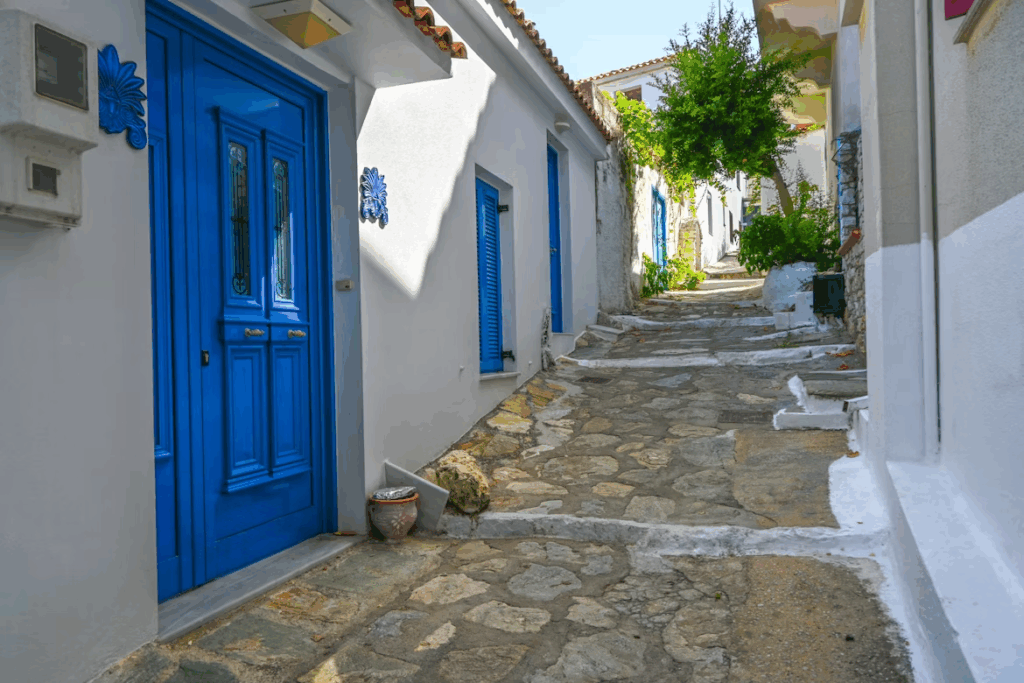
Wandering through the town (Chora), the cobbled paths lead almost instinctively to the house-museum of Alexandros Papadiamantis. Within its humble walls, the spirit of one of the most essential figures in Greek literature still lingers. Just opposite, the Church of the Three Hierarchs stands modest and still – as if his chanting voice could still be heard in the quiet hours.
Alexandros Papadiamantis: The Writer Who Carved the World with Words
He lived simply, almost invisibly, and yet his work hovers over modern Greek letters like a silent veil. Alexandros Papadiamantis, born in Skiathos in 1851, never sought fame or recognition. He led a solitary and often difficult life, marked by poverty but also by unwavering devotion to literature.
In the six decades of his life, the “humble saint of Greek letters,” as later generations called him, wrote over 180 short stories, three novels, three novellas, and dozens of articles and essays. Constantine Cavafy once referred to him as “the summit of summits.” Self-taught in foreign languages, Papadiamantis studied English, French, and Italian in order to engage with literary giants such as Dostoevsky and Dante in their original tongues. His translation of Crime and Punishment is considered exemplary.
He died in 1911, having spent his final years back on the island that had shaped him. He never lived to see a single one of his books published in standalone form. A moving moment of posthumous recognition came in 1933, when four hundred French intellectuals traveled to Skiathos and joined Greek writers and admirers in a series of speeches held before his bust. That year marked the beginning of his works being translated into French – the first step toward his recognition as a writer of global significance.

In the Footsteps of Papadiamantis: A Journey Through Places and Words
Papadiamantis House-Museum
In the heart of Chora stands the modest home where he was born and spent his early years. Today, it is a small but deeply moving museum that preserves his presence.
Bourtzi
The pine-covered peninsula at the harbor where his monument now stands. Papadiamantis often sat here, gazing out to sea—a place of reflection and inspiration.
The Cave of the Fonissa
The sea cave associated with his tragic heroine, Frangoyannou. Accessible by boat along the island’s northern coast, this haunting spot echoes with both natural power and literary memory.
The Kastro (Castle)
Once the medieval capital of the island, the Kastro crowns a rugged peninsula in the far north. Its ruins, chapels, and wild beauty compose a landscape that is as mystical as it is historically resonant.
Church of the Three Hierarchs
Where Papadiamantis used to chant during his time on the island—always soft-voiced, always discreet. The church remains much as it was, gazing out at the sea with quiet dignity.
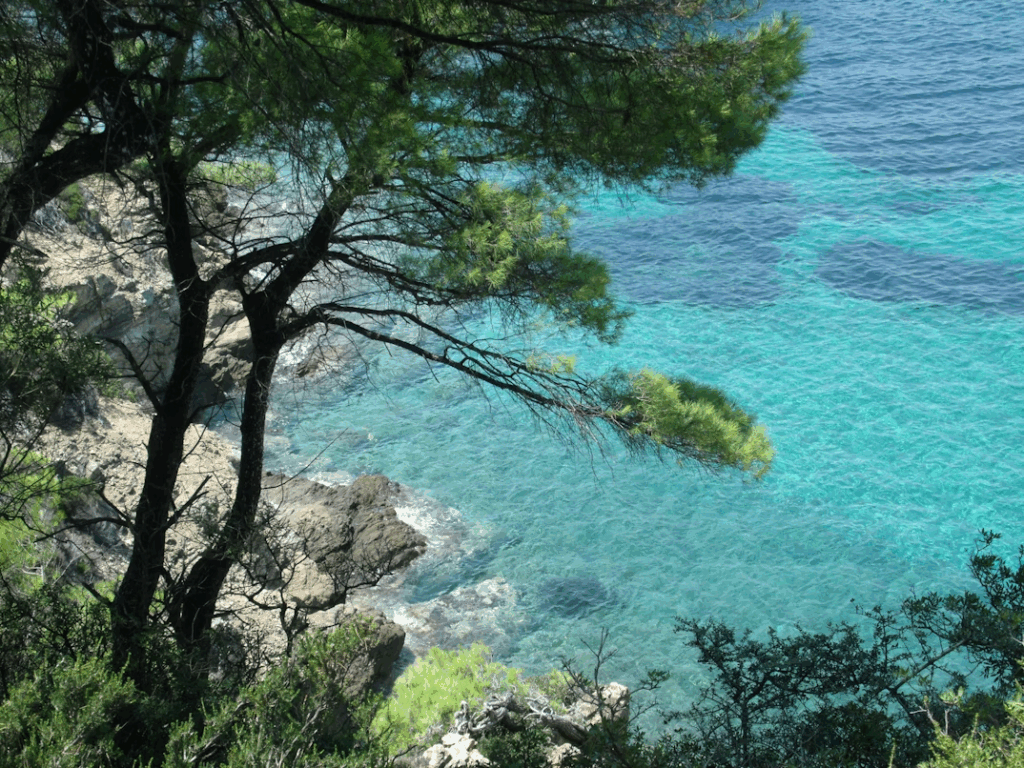
But beyond the shadow of the writer, Skiathos continues to tell stories in its own voice. As you wander its paths, you might come across women making “fouskítes” with honey, just as their grandmothers did; fishermen who measure their days not by calendar but by weather; or tavernas nestled among the pines, where octopus grills slowly over coals and goat simmers gently with lemon and garlic mash.
The local cuisine—modest yet generous—feels like it belongs in the same world as Papadiamantis’ stories: a world where nothing shouts, yet everything speaks with depth. A salad of wild capers and sun-warmed tomatoes, an almond sweet scented with rosewater, a sip of wine at dusk—these are not just flavors, but fragments of everyday poetry.
Skiathos speaks the language of both nature and narrative. And those who truly listen leave the island richer—not just in images, but in something deeper. As if they carried with them a small fragment of that eternal summer that always returns.