 PEPI NIKOLOPOULOU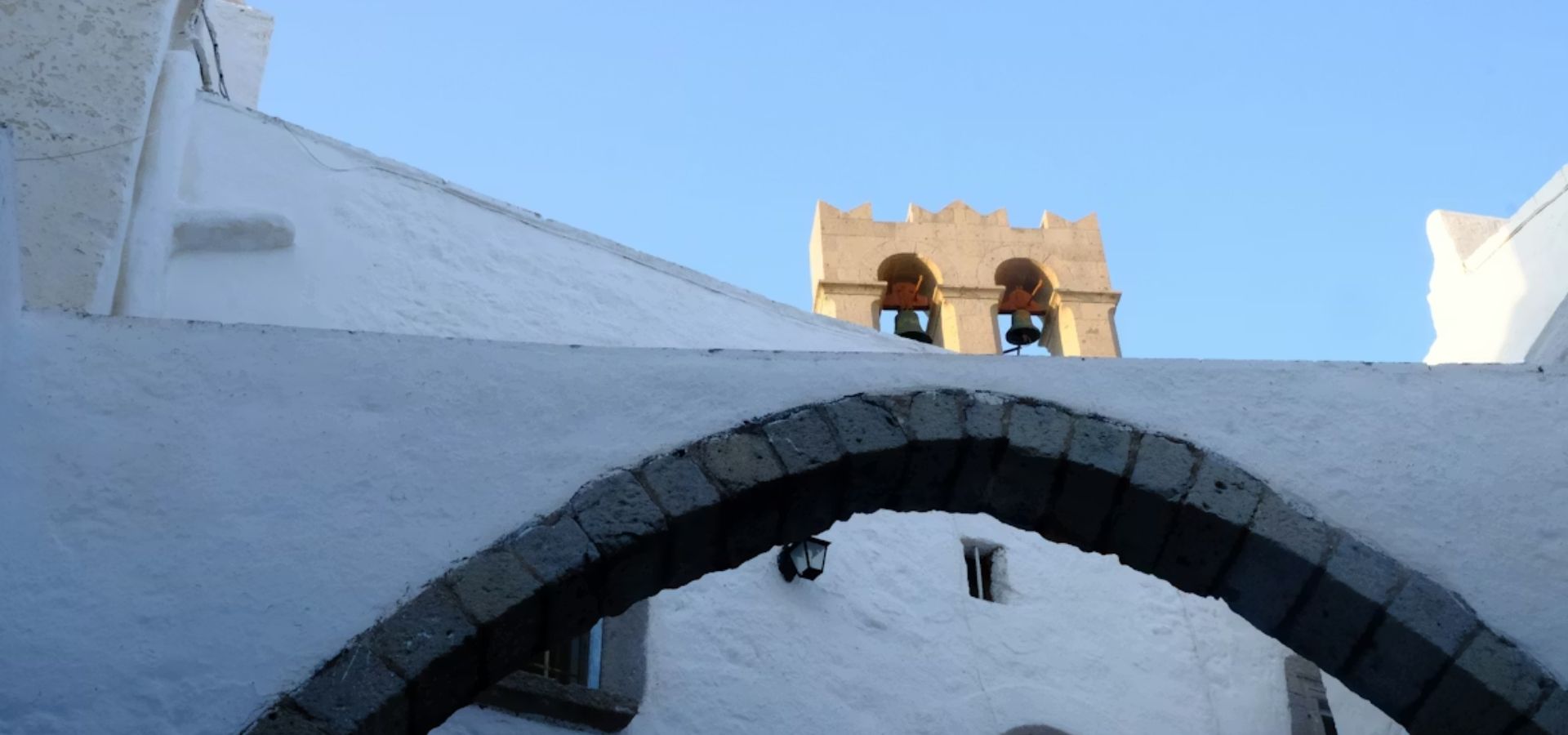
Explore some of Greece’s most distinctive Good Friday traditions, from Corfu to Hydra, where the Epitaphios becomes a powerful cultural experience
I still remember Easter in Corfu as a child. A Good Friday night in a northern village, candles lit, the Epitaphios moving slowly through the dark in a procession that felt almost otherworldly.
Years later, I found the same quiet intensity again in Megalo Papigo. Different landscape, different people, yet the same sense of stillness. The same shared silence.
This is perhaps what defines Good Friday in Greece. Not one tradition, but many versions of the same feeling, carried across places, shaped by each landscape, yet somehow familiar wherever you are.
Good Friday in Greece is one of the most atmospheric moments of Easter.
Across the country, the Epitaphios-the symbolic bier of Christ-is carried through streets, villages, and coastlines. Yet no two places experience it in the same way.
Corfu: A City in Mourning and Music
In Corfu, the Epitaphios is inseparable from sound. Good Friday feels almost cinematic.
Processions move through the old town accompanied by philharmonic bands, their slow marches echoing through narrow streets and across balconies.
Even as a child, it felt like something larger than a ritual. A city moving together, held by rhythm and repetition. Balconies, narrow alleys, and squares fill with people following the rhythm. All the churches of the town take part in the Epitaphios procession, each one moving in a specific order, creating a continuous flow through the city. Choirs, schools, scouts, and local groups join in, turning the procession into a collective act that unfolds across streets and squares.

Voices and music intertwine.
Church choirs, along with the Metropolitan choir and the Municipal Choir, chant the Engomia in a slow, meditative rhythm. At the same time, the island’s renowned philharmonic bands accompany the processions with funeral marches and classical adaptations.
And yet, beyond the town, in smaller villages, everything softens. The light is dimmer, the pace slower. The experience turns inward.
Hydra: A Blessing at the Edge of the Sea
On Hydra, Good Friday carries a deeply emotional weight, shaped by one of the island’s most distinctive traditions.
The Epitaphios procession takes place in the evening, in the quiet neighborhood of Kaminia. It moves through narrow streets before gradually making its way toward the sea. There, the ritual shifts.
The bearers step into the water, lowering the Epitaphios until its base touches the surface. A simple gesture, yet one that transforms the moment, symbolizing the blessing of the waters.

What follows is a prayer for sailors. For safe journeys, for calm seas, for a return home.
The tradition dates back to 1923, when it was first practiced by the sponge divers of Kaminia, whose long and uncertain voyages shaped the life of the island. Today, it continues unchanged, carrying with it the memory of departure and the hope of return.
Patmos: Ritual, Light, and Devotion
On Patmos, Good Friday unfolds as a sequence of deeply rooted rituals, where atmosphere and devotion become almost inseparable.
The day begins with visitors and locals making their way up to the Monastery of Saint John, to witness the reenactment of the Deposition. Inside, Byzantine icons, the soft scent of incense, and the slow chanting of “O Gliky Mou Ear” create a space that feels suspended in time.
Later, in Chora, the wooden Epitaphios, draped in embroidered velvet, becomes the focal point of quiet devotion. People approach, one by one, to pay their respects before the procession begins.
When it does, it moves through the narrow stone alleys, carried on the shoulders of those who have made a vow. The priest chants, the crowd follows, candles lit, each step part of a shared, unspoken rhythm.

At the port of Skala, the atmosphere shifts again. Processions from different parishes meet near the water, accompanied by flares and the sound of ship sirens, small and large vessels joining the ritual in their own way.
There is a moment, often in the village squares, when the hymn “Ton Ilion Krypsanta” is performed with a distinct local intensity. It carries through the crowd with a force that is both collective and deeply personal.
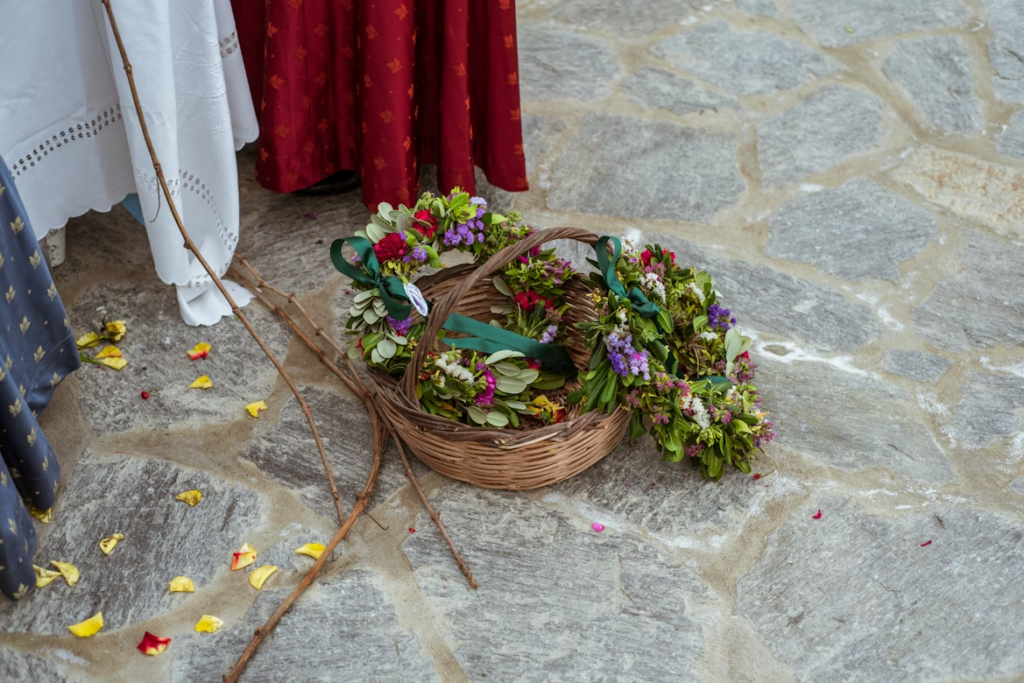
On the island, it is believed that the flowers and candles of the Epitaphios hold protective power. Sailors, in particular, keep them close, lighting them at sea in moments of uncertainty.
Athens: Good Friday quietly reshapes the city.
Behind its usual rhythm, a more intimate atmosphere emerges. Small churches, hidden courtyards, and neighborhood streets become the setting for dozens of Epitaphios processions, each with its own pace and character.
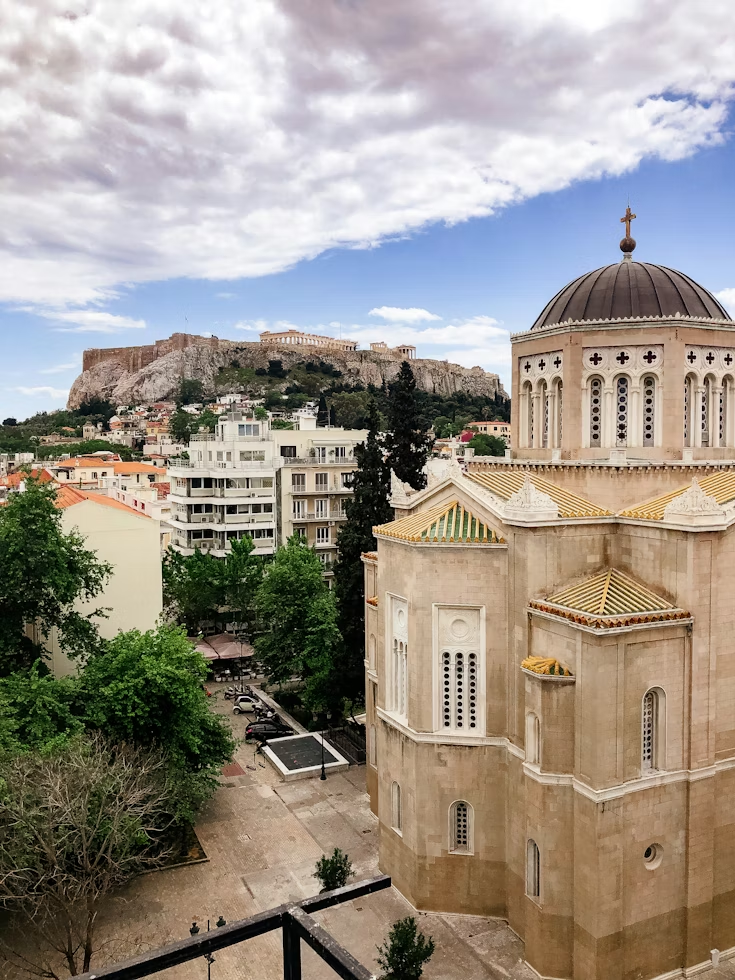
In areas like Plaka, processions move through narrow, stone-paved alleys, often crossing paths and creating a sense of layered movement. Near Thissio, they unfold under the presence of the Acropolis of Athens, where the city’s history frames the ritual in an almost cinematic way. Tucked away next to the Maximos Mansion, the small church of Agios Nikolaos Ragavas Church offers one of the most unexpected settings.

Here, the procession passes through the political heart of the city, creating a quiet contrast between state power and spiritual reflection.
At Agios Dimitrios Loumbardiaris, near Thissio, the procession unfolds beneath the illuminated Acropolis of Athens. The setting adds a quiet grandeur, where history and ritual seem to overlap. Nearby, churches like Agia Marina Thiseio offer a similar balance of atmosphere and view.
Elsewhere, the experience shifts. For those drawn to a more formal and collective experience, the Metropolitan Cathedral of Athens gathers large crowds each year. On Lycabettus Hill, at Church of Saint George Lycabettus, the Epitaphios is accompanied by a panoramic view of the city. Equally distinctive is the experience at Kaisariani Monastery, where the procession takes place within a green, almost secluded landscape.
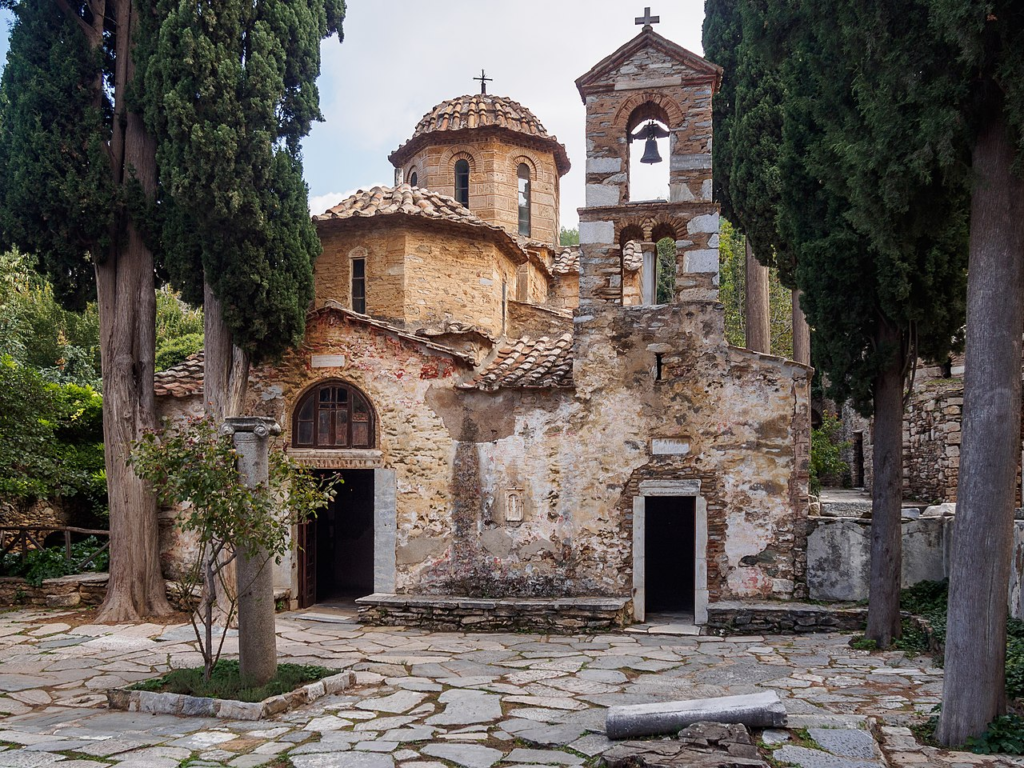
For a more coastal setting, the church of Agios Georgios Kavouri offers a procession by the sea, overlooking the Saronic Gulf.
Further away from the center, monasteries such as Monastery of Pantokratoros Tao or those near Oropos provide a quieter, more contemplative experience closer to nature, and further from the city’s pace.
There is no single way to experience the Epitaphios in Athens. Only fragments of the same ritual, unfolding across the city.