 KATERINA PARRI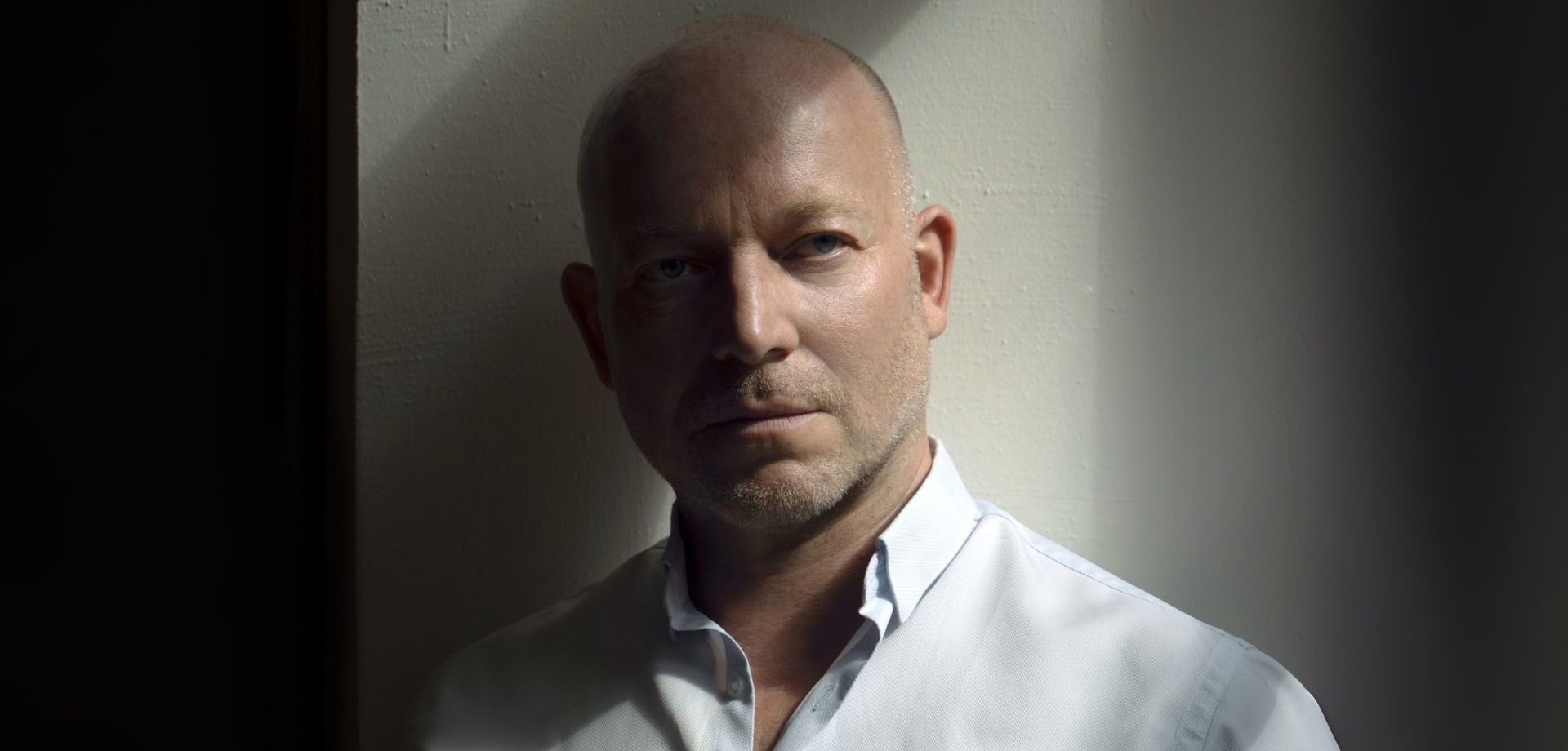
By Eleni Koutsilaiou
Ulrich Rasche on Sophocles’ Antigone: “I don’t believe my reading is radical. In fact, it follows Sophocles with great precision. The play is not a tale of heroes. It is a dialectic.”
On the occasion of the world premiere of Antigone by Sophocles, produced by the National Theatre of Greece and opening this year’s Athens Epidaurus Festival at the ancient theatre of Epidaurus, we spoke with its director, Ulrich Rasche, just moments before his final descent into the Argolic sanctuary.
Sharp-minded and profound, methodical and a significant scholar of Ancient Drama, Rasche creates works of austere form, striking precision, and relentless rhythm. With monumental rotating motorized platforms, hypnotic lighting landscapes, harmoniously integrated musical structures, and rigorously trained actors, his productions form a fusion of rhythm, motion, language, and thought. He articulates a distinctive, robust, multi-layered scenic dialect that surprises and challenges the audience, inviting them into a demanding but extraordinary theatrical experience.
His penetrating gaze into the ideological framework of the text – a text that is inextricably linked to the collective emotional memory of Greek audiences – multiplies our already heightened anticipation for this production. We warmly thank him for his generosity in responding to our questions, just before the premiere at the Ancient Theatre of Epidaurus.
You have long engaged deeply with ancient Greek tragedy. What draws you to this genre?
What fascinates me about Greek tragedy is its capacity to confront fundamental contradictions without resolving them. It doesn’t offer characters to identify with, but positions that challenge us. These figures are not psychological portraits, but embodiments of conflicting orders – moral, religious, political.
I’m also drawn to the form: its ritual dimension, the compression of time and space, the interplay of movement, rhythm and text. Tragedy is a space of confrontation. Not only between figures, but between audience and event. A space that demands presence – and doesn’t offer comfort.
The Chorus is a fundamental element of ancient Greek drama. In many contemporary productions, it forms the structural core. Your approach to the Chorus is dynamic. How do you plan to stage the Chorus of Antigone? What does it represent in your production?
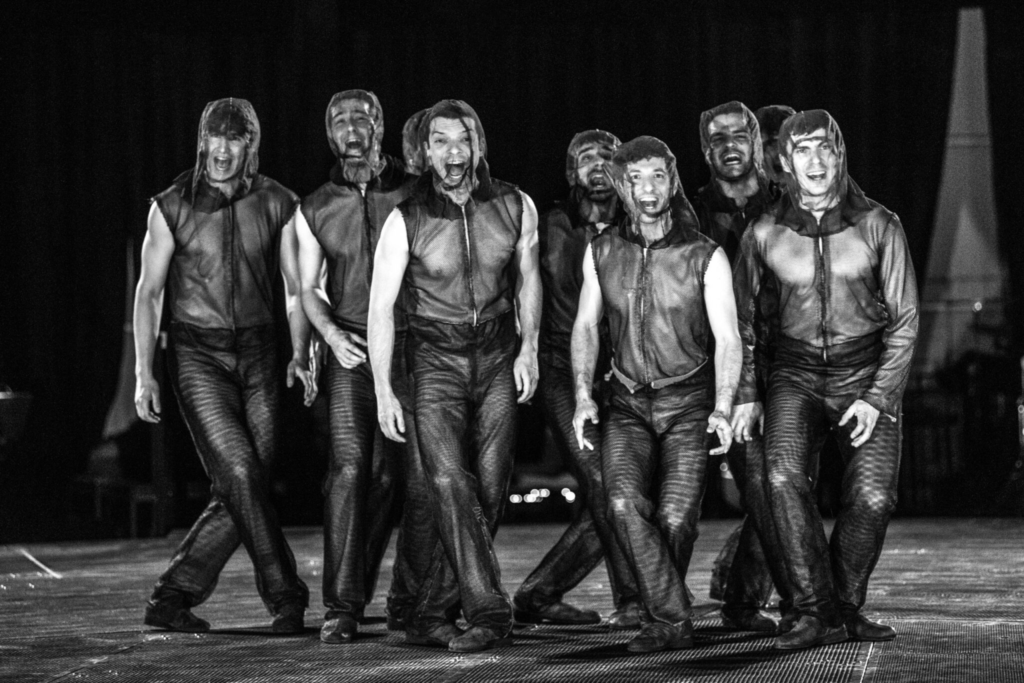
For me, the Chorus is not a harmonious collective voice. It is a chamber of resonance – for what cannot be resolved, yet cannot be ignored. It does not reconcile conflict, but makes its consequences visible.
In this production, the Chorus reflects a process of change. At first, it supports Creon’s order, but gradually withdraws – until, by the end, it stands beside those who have been excluded. On stage, this evolution is rendered through precise formal structures: circular movements, repetition, physical intensity. The Chorus does not represent “the people.” It becomes a structure in motion – mirroring both a society and its rupture.
In your director’s note, you write that we often forget Creon’s duty as king is to protect the state and its laws. This is a provocative statement. Can you elaborate and connect it to your interpretation of Antigone?
I don’t claim Kreon stands for democracy. But I do believe it’s worth reassessing Antigone in relation to him. Not to defend an authoritarian figure, but to understand how much the notion of the common good has been sidelined in favor of individual autonomy. Kreon fails not because he is evil – but because he is overwhelmed by responsibility. He wants to protect the city, maintain order. His mistake lies in denying mourning, ignoring the emotional and moral needs of the people.
Antigone, on the other hand, insists on the dignity of the individual, on grief and resistance. She speaks for those who are denied recognition. Neither is purely right – but both are trapped in positions that can’t coexist. Rather than choosing sides, I am interested in the gap between them.
Greek tragedy was born of direct democracy. Rather than dictating what justice is, it stages a debate between opposing viewpoints. Antigone is often flattened in public education: she is sanctified, Creon demonized. Can this perception be overturned for a Greek audience? What do you expect from us?
I don’t believe my reading is radical. It actually follows Sophocles quite precisely. The play is not a hero’s tale. It is a dialectic. The strength of tragedy lies in its openness: it doesn’t teach – it exposes. In my view, Antigone’s gesture is noble, but also absolute. And Kreon’s position is not evil, but tragically rigid.
I hope Greek audiences will enter into this space of contradiction. That they will not look for affirmation, but for friction. Because that’s where theatre becomes political: not by confirming what we already believe, but by making us question the categories we rely on.
You are working with Greek actors performing in their native language. What has this experience been like for you? What is the dynamic in the rehearsal process?
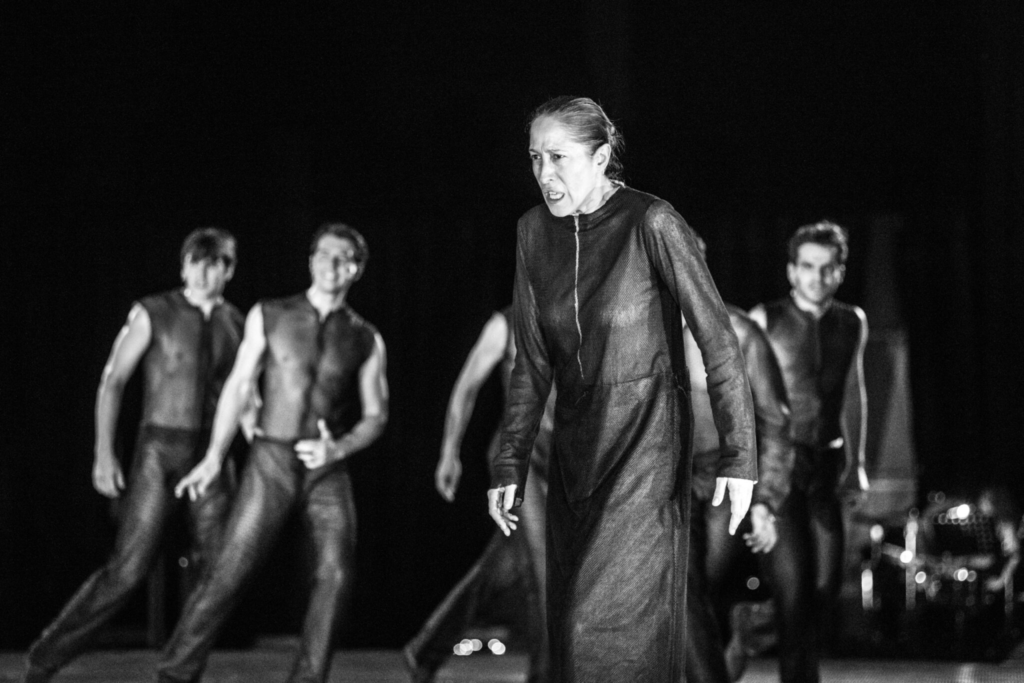
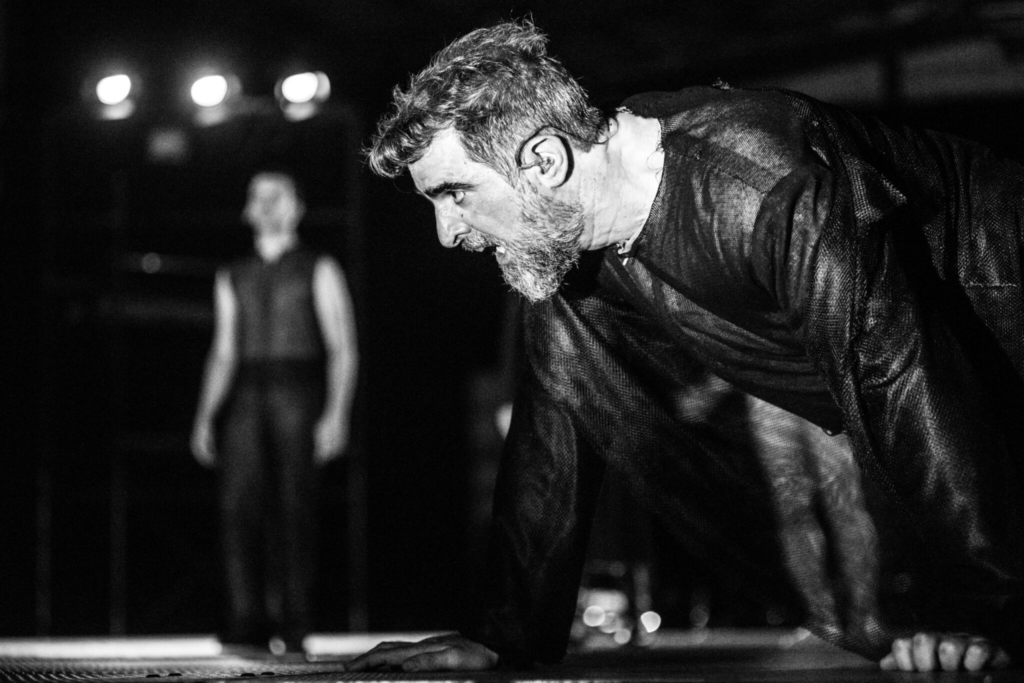
It’s a rich, challenging process – one that requires trust and precision. I don’t speak Greek, but I work with a word-for-word translation and closely with the dramaturgs and actors. The energy in rehearsals is extraordinary. I sense a strong awareness among the actors of what it means to perform this text here, in this language, in this place.
We don’t rehearse for psychological expression – we rehearse for form: for rhythm, space, energy. The language becomes music, structure, resistance. The body becomes an instrument. The aim is not realism – it is clarity, necessity, transformation.
Human civilization is at a turning point. What does staging Antigone mean in our culturally and politically extreme present? What do you see as the role of art today?
We live in a time of massive uncertainty. Violence, disinformation, social fragmentation – all these shape our lives. And we no longer trust the institutions that once gave orientation. I don’t believe art can heal this. But it can make it visible.
Antigone shows what happens when worldviews collide – when no shared order remains. It stages the limits of reconciliation. That’s what makes it so urgent. My theatre doesn’t offer solutions. It exposes fault lines. It demands that we bear witness – and resist the simplification of reality into sides, slogans, systems.
Art, for me, must be a space of confrontation. A space where contradictions are not explained away, but endured.
Info
Ancient Theatre of Epidaurus
Friday 27 – Sunday 29 June
Start time: 21:00
To avoid inconvenience, audience members are kindly requested to arrive 60 minutes prior to the start of each performance.
Ticket prices:
Entry: €5 – €55