 KATERINA PARRI
By Sofia Triantou
A journey through the traditional breakfasts of the Cyclades – from barley paximadi and thyme honey to froutalia, louza, and kopanisti. A mosaic of local flavors and stories that capture the essence of island life, simplicity, and timeless taste.
Beautiful images from a window overlooking the Aegean. Each season has its own charm in the Cyclades, yet I always look forward to the morning tastings in every place – where breakfast is never just a simple hotel buffet, but a small celebration of flavors and people.
I set the table with the local delicacies I’ve gathered from village groceries. First and foremost, the paximadi – the “dipyrítis” bread of old, double-baked so it could last for weeks. For centuries, it was the islanders’ staple food, especially the barley version. Today we simply call it paximadi, but its roots go back to the ancient “dipyrá” and to Roman–Byzantine times, which is why it still naturally holds its place at the start of every island table. Beside it, I place a cup of sage tea and a small jar of thyme honey. The paximadi softens with a little water; I top it with honey or local cheese – or both – and it becomes a magical bite.
In Naxos, xinomyzithra, a fresh, creamy, slightly tangy cheese often made from the same day’s milk, is eaten plain, in pies, or atop paximadi with honey.
In Andros and Tinos, you might also find froutalia on the breakfast table – the iconic thick omelet with potatoes, local sausage, and glina (pork fat). It wasn’t an everyday breakfast for the old generations, but on festive days or when strength was needed, froutalia made its appearance, warm and fragrant, sliced like a pie.
In Syros, where the refined spirit of Ermoupoli still lingers, breakfast becomes a small voyage: omelets and meze, frisoures, dekoto, strapatsades, breads and aniseed rusks. Each dish recalls something of the homes of refugees and merchants who brought their flavors to the island.
And of course, I never forget the cured meats of the Aegean. Louza, the “prosciutto” of the Cyclades, made from salted and spiced pork fillet – sliced paper-thin, perfect with eggs or bread. The Mykonian version, cleaner in seasoning, is a reference point, yet the same tradition extends with variations to Tinos and Syros.
In Mykonos, the cheese chapter unfolds even further. Kopanisti, spicy and fermented, a PDO-recognized product, is the quintessential spread that often accompanies breakfast with tomato or fig. Next to it, tyrovolia, a fresh and mild cheese – the “precursor” of kopanisti in its early stage of ripening – is beloved in pies or simply on bread. None of these flavors are a tourist invention; they are the natural continuation of a domestic cheesemaking tradition that still thrives across the islands.
In Naxos, the world of cheese is like an entire library – from the well-known Naxos Graviera PDO to the local Arseniko, a hard cheese of striking depth and maturity that evolves in flavor as it ages. None of these belong exclusively to breakfast, yet in an island household, a piece of cheese in the morning is almost a given – especially when there’s fresh milk and work waiting in the fields. It’s often the very first taste I seek upon arriving on the island.

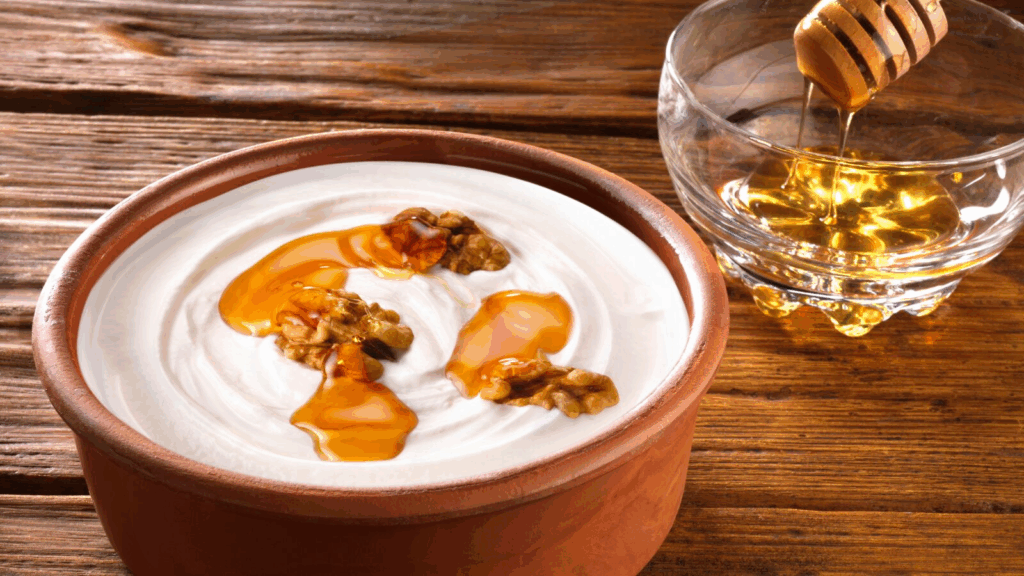
As time passes, the table becomes a mosaic: paximadi with honey or cheese, olives, a slice of louza, a bit of creamy cow’s yogurt (famous in Naxos), and seasonal fruit. The luxury of simplicity.
And yet, the Cycladic morning ritual did not remain confined to the home. Since 2010, the “Greek Breakfast” initiative has brought together local products in hotels and guesthouses, creating a modern showcase of tradition for visitors – an inspired idea that gave new life to old flavors. And there’s one sweet trace of memory that pairs perfectly with the first sip of coffee: the loukoumi of Syros. Though it didn’t originate here, it took deep root when refugees from Chios brought their craft to the island in the 19th century, after the massacres of 1822. Since then, it has become a symbol of Syros – a small piece of sugar carrying with it the history of exile, meticulous craftsmanship, and the scent of mastic.
If someone were to ask, “What is the traditional breakfast of the Cyclades?”, the answer would be simple: there isn’t just one – it’s an entire world.
On one side stands simplicity: paximadi, cheese, honey, olives, and herbs – shaped by the rhythms of agrarian and island life. On the other, the richer dishes: hearty omelets like froutalia, cured meats such as louza, and an ever-changing array of cheeses that appear depending on the season, celebration, or journey. In daily life, breakfast shifts with nature itself – spring brings artichokes and fava beans that sneak even into the froutalia; summer adds tomatoes and figs beside kopanisti; autumn brings grapes and raki; winter offers a tougher paximadi and an older cheese. The flavor transforms with the season. Just a few bites are enough to know the place.
And when the table is cleared, what lingers is the feeling that you’ve tasted a piece of the island’s history: the bread that endures, the cheese born from the first milk of the day, the omelet that sustained the farmer or fisherman until noon. Small stories of everyday life that, together, form the flavor of the Cyclades.