 KATERINA PARRI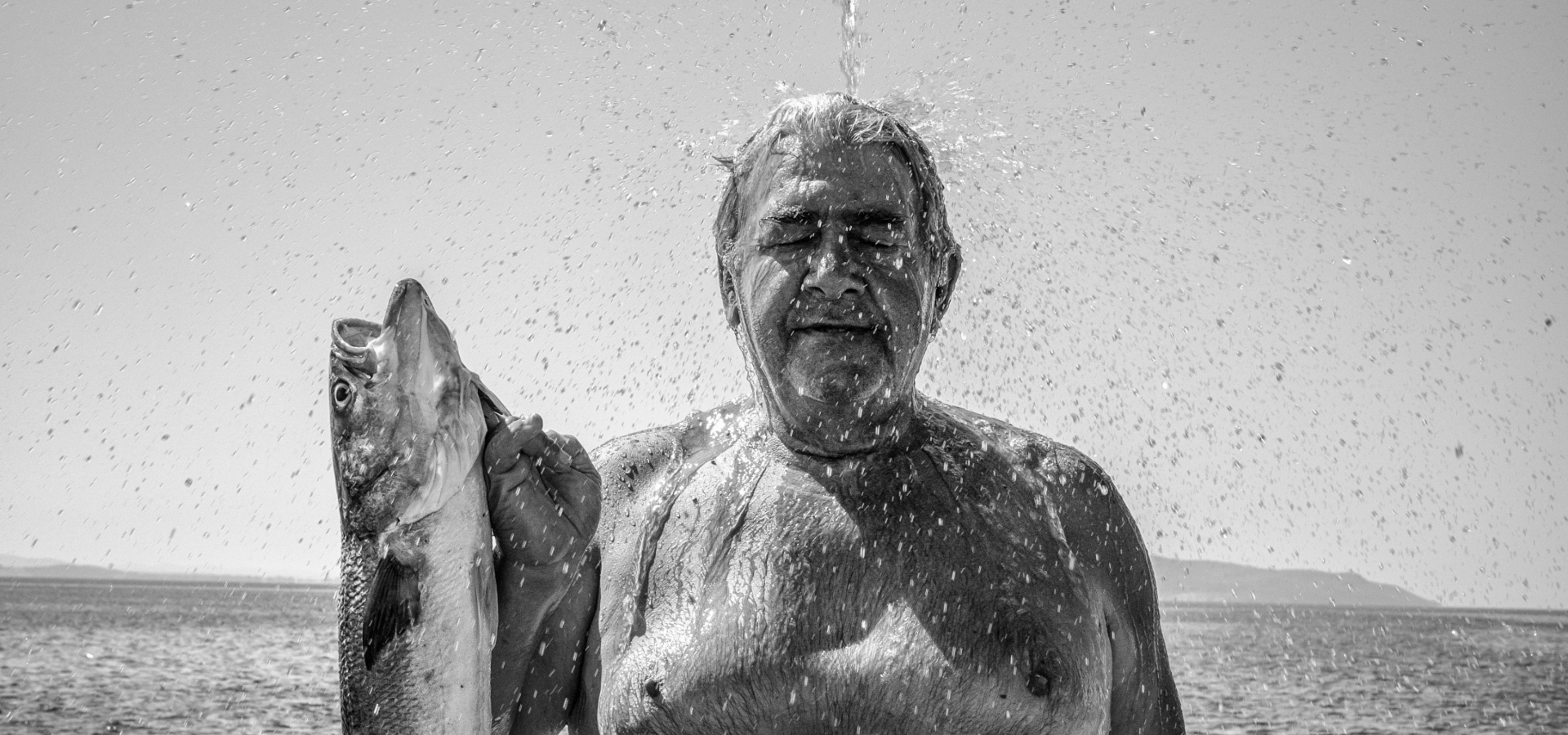
By Stelios Parris
“In the cracks of statues, in the memory of stone, in the waters of the Messolonghi lagoon, I see the imprint of the eternal.”
He is one of those Greeks abroad who have distinguished themselves. His home and base are in France, yet his great love remains Greece – and especially Messolonghi. For me, Nikos Aliagas is not only an artist of spectacle, but an artist of vision. Through his lens, the photographer Nikos Aliagas captures moments with a gaze deeply rooted in the human element – in that which makes each of us unique, whether it’s a portrait or a fragment of the body, such as the hands. Even his landscapes reveal scale, intensity, and an unresolved hidden riddle. And his words are always meaningful: he thinks before he speaks, takes a breath, and often responds poetically.
That’s why I asked him to share some of his personal reflections, accompanied by a selection of his own photographs. He kindly agreed, allowing us to get to know Nikos Aliagas, the photographer, a little better:
“In the shadow theatre of my existence, I strive to recognize the mystery of time through the photographic lens. In the frame, the perception of time is not linear; each moment carries the form of a palimpsest, where fragments of memory and hidden possibilities coexist in harmony. Every image is an interpretation, a place and a time of one’s own. I do not feel that I trap time; I borrow it for a while, attuning myself to an inner, vertical, and subjective dimension, seeking that Greek god our ancestors called Kairos.


Photography acknowledges a moment. Before I consciously perceive the possibility of an image, I experience it inwardly, in the negative of my mind. Within every fleeting thing resides a form of eternity – in the reflection of water, in the shadow slipping unsuspectingly across stone, in the expression of a face. Light is not merely what reveals; it is what transfigures – giving shape to shadow, weight to the moment – the incorruptible witness of passing.
In the encounter with another, I discover the sacred. It is not confined to dogmas or rituals, but born in the unexpected: in a glance that escapes, in an involuntary gesture, in a silence that becomes acceptance. The sacred arises at the very instant when there is no turning back. I do not seize it, nor possess it – I recognize it when it is offered to me. The invisible does not hide; it waits for the gaze that is ready to receive it. And so photography becomes a revelation, in the original sense of the word: the unthreading of the veil from the illusion of possession.
In the cracks of statues, in the memory of stone, in the waters of the Messolonghi lagoon, I see the imprint of the eternal. In the face of an old man who keeps silent, in the movement of an olive tree that resists, in the flicker of a shadow that endures. The sacred dwells in the smallest things, in the seemingly insignificant that conceals the infinite. And there I realize that what I am seeking is nothing more than a sense of humanity – that fragile flame that connects us to one another.
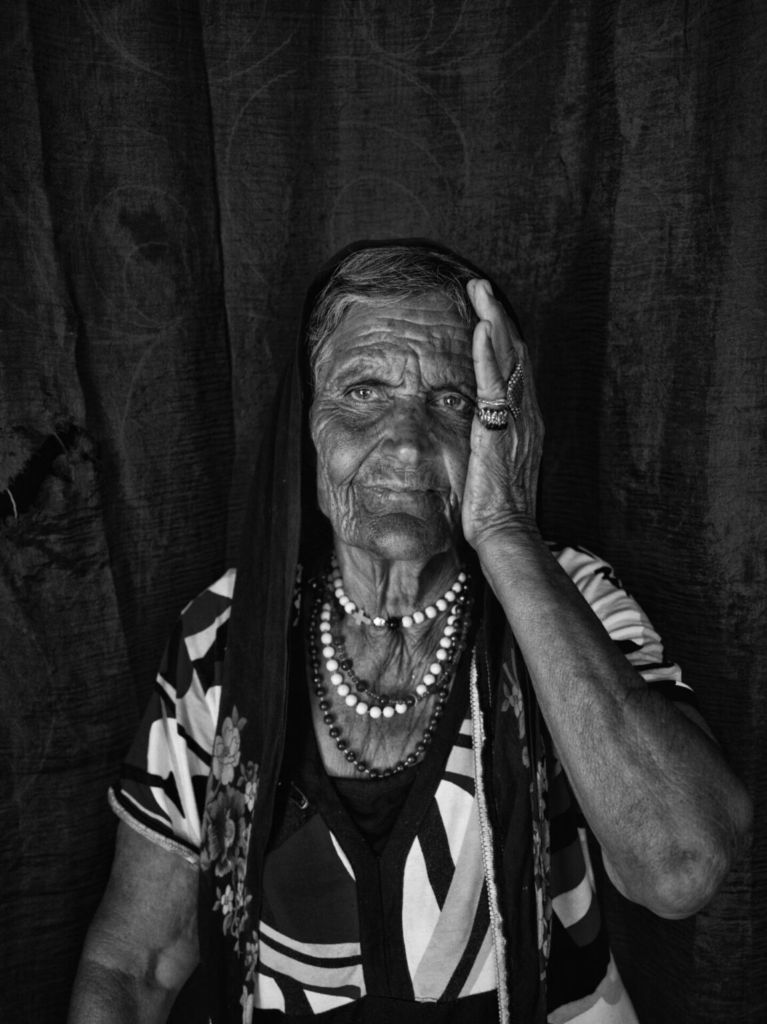
When time leaves its traces upon the flesh, wrinkles become maps. The skin turns into parchment and whispers indelible memories. A face still bears the reflections of childhood, and the hands speak more clearly than the eyes: they carry the story of labor, care, prayer, tenderness. In the carved skin of a hand, I sense a human life without the need for words. No social mask can suffice before the hand; there, the truth is revealed.
Every portrait is a silent dialogue. I do not take a photograph – it is granted to me. In the gaze, I do not seek expression but silent truth – the smallest fracture of listening. The photographer is not a hunter, nor a collector, but a companion. And photography is not an act of seizure; it is an act of recognition.



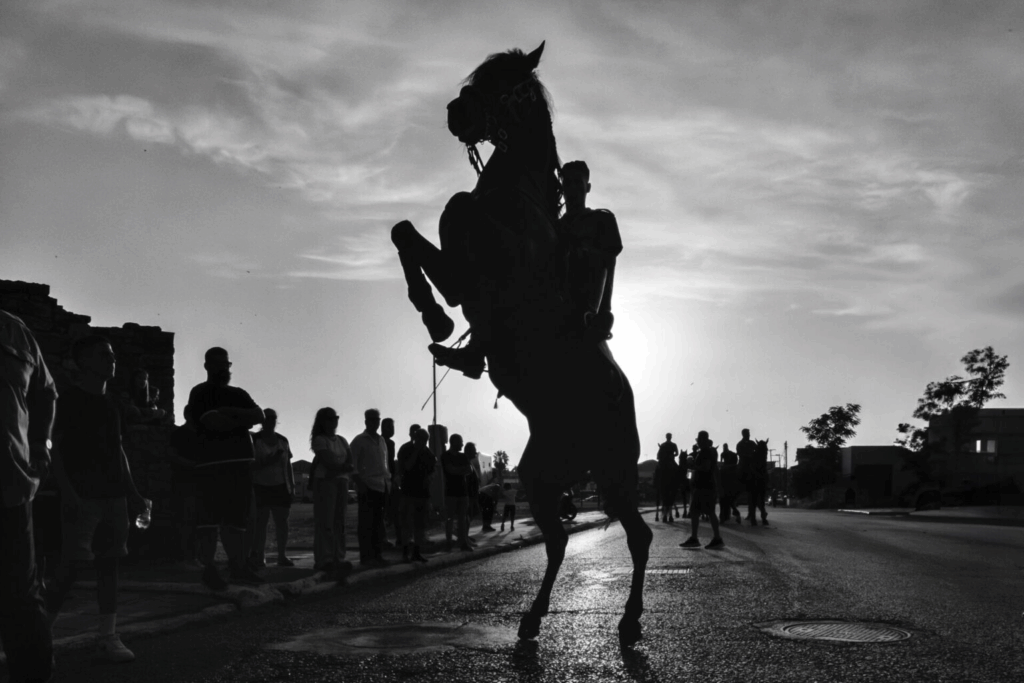

I do not seek the ‘perfect’ image, but connection with the mystery of existence. Photographs accompany me like discreet companions; they do not fill the void, but shape its contours. I do not speak of superficial beauty, but of the clarity born within decay. The crack escapes; brightness and erosion become transparency. In what seems futile, an existential intensity is hidden – one that transcends us.
What remains from an image is not always what I sought at first, but what escaped me — that which reveals itself years later, like a secret waiting to be unveiled. I have traveled to distant places to find truth in the eyes of others, but it took a lifetime to understand that I was seeking my own inner voice. The cloak of Nostos cannot be shed so easily. The seasons may change, yet the idea of return lingers in every sigh. Photography, perhaps, has allowed me, time and again, to return to the child within me — the one who never realized that time had passed.
My most beautiful photographs were never stored on memory cards – I imagined them. I saw them in the gaze of a passerby, perceived them in the split second of a random encounter. And they stay with me as testimony that once, I was present – among people or within absence – trying to capture the secret music of the world.
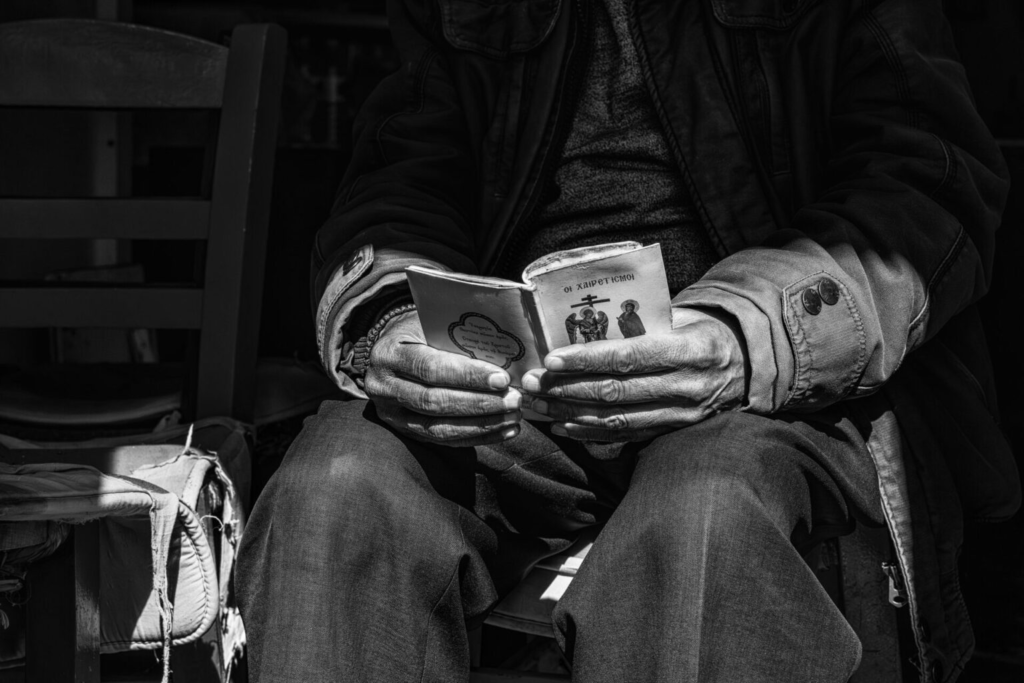
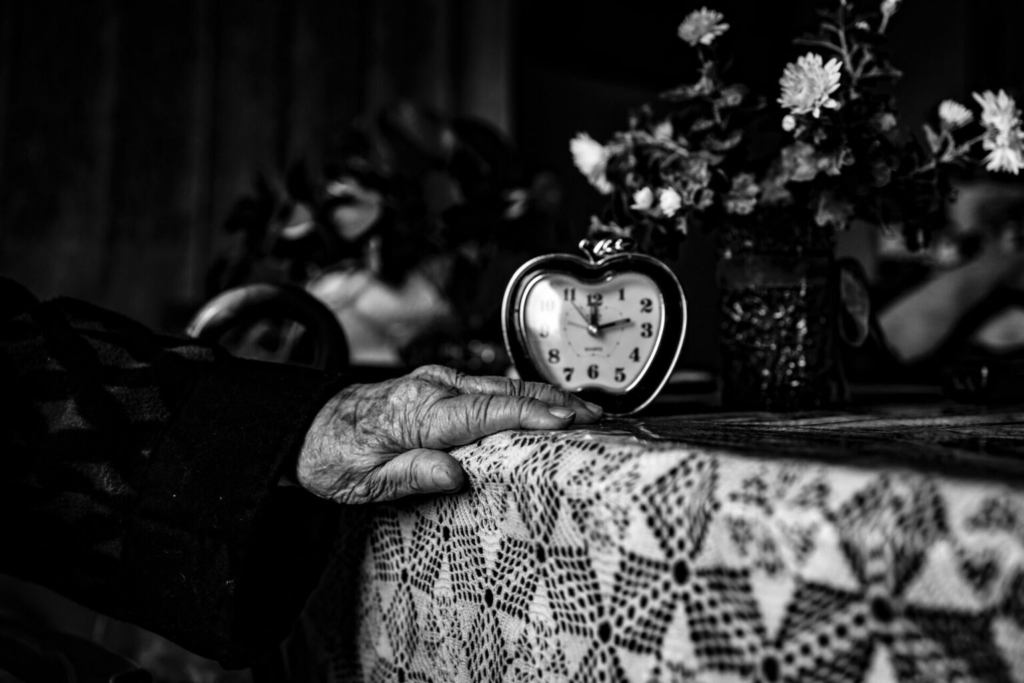


I photograph to breathe differently, to endure time, to receive without possessing. I do not strive to accumulate images, but to learn, every day, to recognize what surpasses me. Photography is an offering, not ownership; gratitude, not proof. The moment that is given to me does not belong to me; I return it as it was received.
I keep walking, looking, extending the lens as one extends a hand. I search within chaos for a spark, a correspondence. And if I persist, it is not to store moments, but to let light pass through our darkness for as long as a breath lasts – to remind us that we are not alone in our tragic passage, but light and shadow meeting, for one breath, eternally.”