 Pepi Nikolopoulou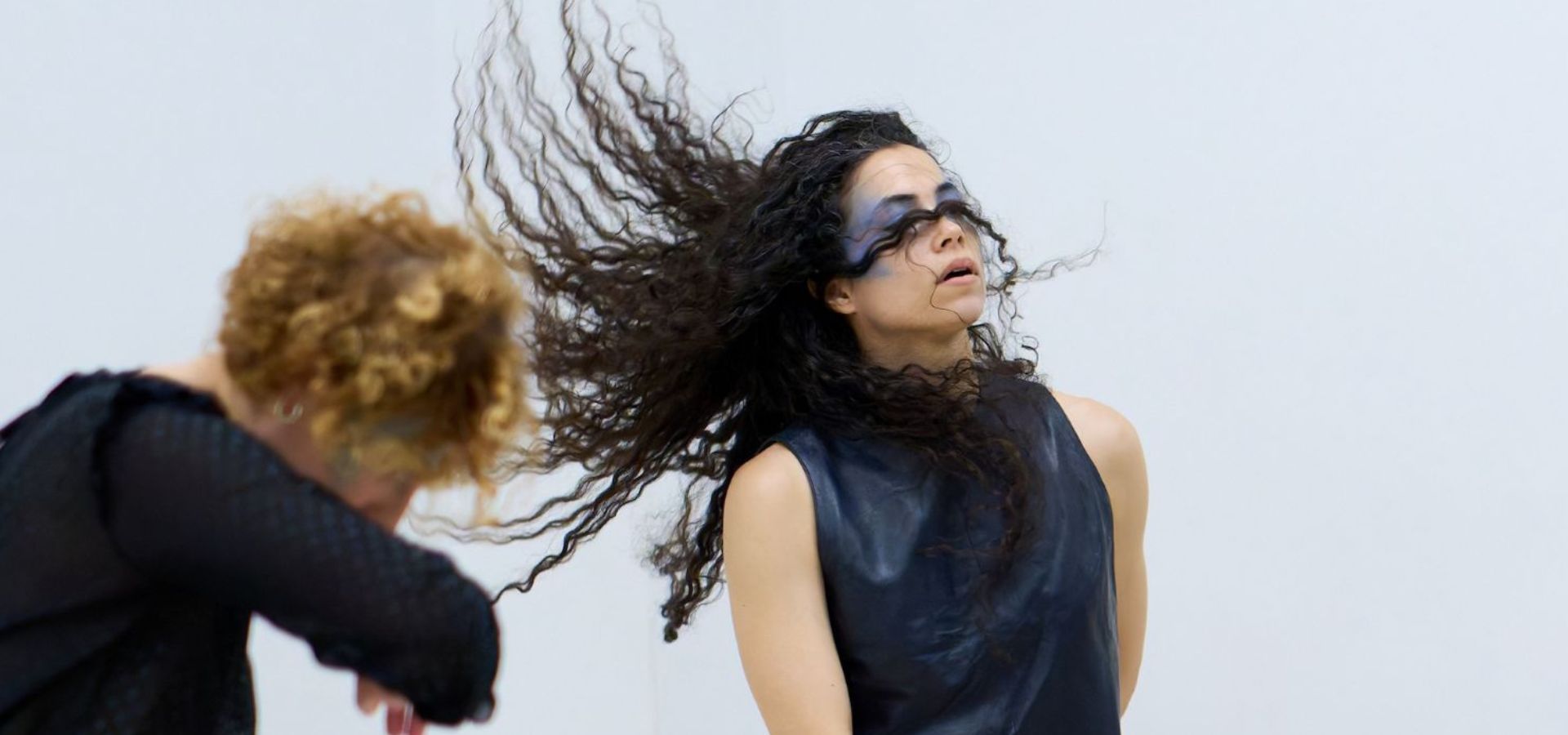
Choreographer Mariella Nestora discusses Amnesiac – Memory for the Future, The Clash, punk as political practice, and the power of collectivity in contemporary dance
Fifty years after the birth of British punk, Mariella Nestora returns to its origins not to revive an era, but to search within it for questions that remain unresolved. In YELP danceco.’s new work, Amnesiac – Memory for the Future, The Clash, the band often described as “the political conscience of punk,” become the starting point for a choreographic inquiry into collectivity, political action, and our ability to imagine the future differently.
The performance approaches punk as a field of possibilities that continues to resonate with the present. Through dance, live music, and live video, it undertakes an “excavation among the ghosts of punk,” searching for what was forgotten or left unfinished: forms of collective action, political imagination, and social participation that seem more relevant today than ever. As the choreographer suggests, if our era is defined by the feeling that there are no alternatives, then perhaps it is worth returning to moments in history when the future still appeared open.
In our conversation, Mariella Nestora speaks about the relationship between punk and dance, the influence of Mark Fisher on her thinking, collectivity as both an artistic and political condition, and the importance of risk, doubt, and reinvention within the creative process. Because, as the title of the performance reminds us, memory is not only about the past. It is also about the future that has yet to be written.
The relationship between punk and dance is not an obvious one. How did the desire arise to translate the energy and political consciousness of The Clash into a choreographic work?
The relationship between dance and punk has its own history. From Karole Armitage in New York, a former dancer with Merce Cunningham, and her work Punk Ballerina, to Michael Clark in Britain and I Am Curious, Orange (1988), and even the punk dances themselves, such as pogoing and slamming, punk has left its mark on choreographic thinking.
In Amnesiac – Memory for the Future, however, we are not interested in reproducing that history, nor in studying punk dances themselves. What interests us is punk’s potential.
In the age of individualism we live in, the need for collectivity remains constant. Over the past years, a central concern of my artistic research has been the search for different possibilities of coexistence. Can dance offer practices and conditions that cultivate or invent new ways of being together?
This is why we choose to return to the origins of punk, to England in 1976. It was a period of profound social and political transformation, and it was within this context that The Clash emerged, a band widely regarded as “the political conscience of punk.” In the years that followed, Britain moved towards Thatcherism and the consolidation of neoliberalism, while unemployment, social inequality, rising nationalism, and violence shaped the political landscape. Characteristic of their position is a statement they made in NME in 1976: “We are anti-fascist, we are anti-violence, we are anti-racist and we’re pro-creative.”
Through their music, lyrics, and public stance, The Clash encouraged action and critical thought, giving voice to a generation searching for alternatives in the face of the belief that “there is no alternative.”
They moved beyond the logic of No Future and turned their gaze toward the idea that The Future Is Unwritten.
In Amnesiac – Memory for the Future, we are not attempting to “translate” The Clash. What interests us is what we can draw from them today. Not out of nostalgia, but as an opportunity to rethink how collectivity is formed, experienced, and ultimately comes to an end.
In the work, you speak of an “excavation among the ghosts of punk.” What do you feel has been forgotten from that era and remains urgently relevant today?
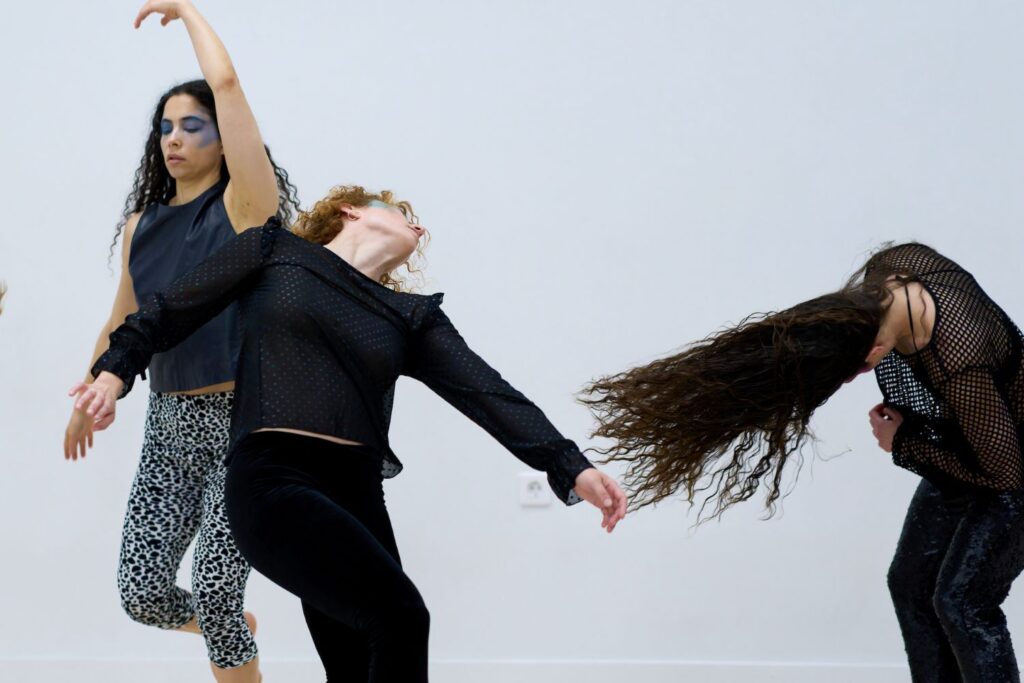
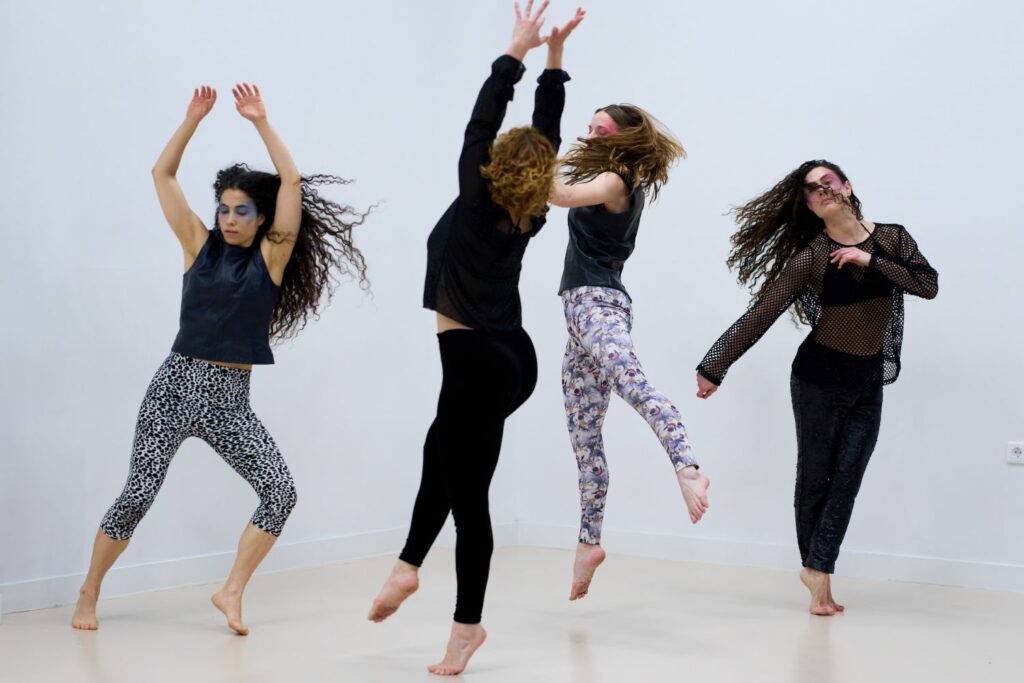
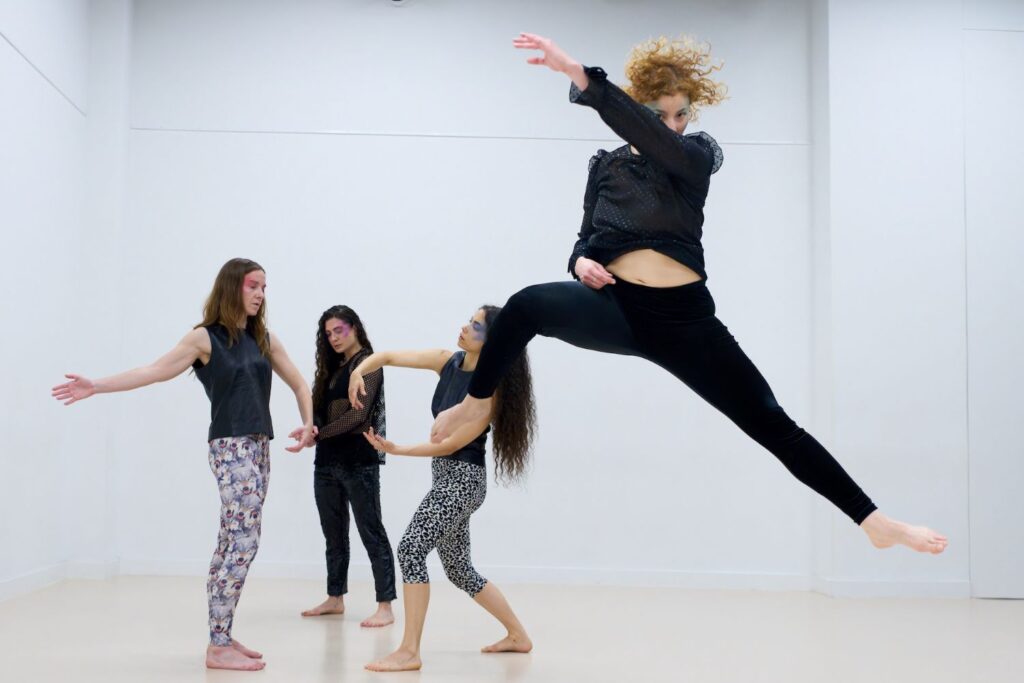
In the creative process of the performance, we approach punk through different paths: revisitation, appropriation, and transformation. We explore punk dances, raw energy, risk, freedom, and different perspectives, those of The Clash as well as those of their audience. As we activate these processes, we find ourselves dancing among the ghosts of punk.
In many ways, this aligns with Mark Fisher’s concept of Hauntology, according to which the present is haunted by recycled pasts and lost futures. Yet our intention is neither to produce nostalgia nor to recreate the past. We are interested in the possibilities that punk still contains.
In this sense, punk becomes the element we introduce into the overall mechanism of the performance, into the dialogue between dance, Thalia Ioannidou’s live music, and Erato Tzavara’s live video. Through this encounter, we attempt something none of us has lived through, trying to imagine something we do not yet know: a different way of thinking about the future.
If, as Fisher argues, we are culturally, politically, and economically stuck, it is because our ability to imagine alternatives and different worlds has deteriorated. If the present is not the best possible world, then our inability to imagine something better becomes a form of political exhaustion.
What, then, do we need to remember and what do we need to forget in order to imagine once again a future that is not predetermined? Perhaps that is where punk’s most valuable legacy still resides.
The Clash were more than just a band; they embodied a political and social stance. Are you interested in punk primarily as an aesthetic, an ideology, or a way of being?
What interests us in punk is less its confrontational aesthetic and more its philosophy. Although it is often misunderstood, we believe punk deserves to be studied as a political act, a form of resistance and disobedience, a way of existing in the world.
For us, The Clash represent a particularly compelling example of that stance. They spoke about the urgent need for political struggle, critiqued racism, militarism, and capitalism, and conveyed a spirit of resistance, dissent, and activism. Yet they moved beyond merely documenting problems. Gradually, albeit cautiously, they began to sketch the possibility of an alternative. Throughout their career, they continued to evolve and experiment, both musically and politically, helping shape the political consciousness of their own generation and those that followed.
As Chuck D of Public Enemy famously said: “They taught us to fight for what really matters and to do it as loud as hell.” The influence of The Clash demonstrates how music can serve as a vital bridge: it can mobilise audiences, communicate ideas, and inspire action. Can the art of dance develop a similar kind of power?
Punk championed authenticity, resistance, and freedom of expression. It was concerned with power, visibility, and refusal. Above all, however, it was driven by a sense of urgency. It was a call to care about something, to fight for something, and not to wait for permission to live, create, or resist.
At the same time, it was rooted in the autonomy of DIY (Do It Yourself). Anyone could create without waiting for approval from institutions or experts. Punk transformed the ways music could be produced, bodies could appear, and voices that had previously been marginalised could be heard.
Today, in an era when even resistance is quickly absorbed and turned into content, I wonder whether a contemporary form of punk would speak less about Do It Yourself and more about Do It Together. About collaboration, the sharing of knowledge, and the creation of community.
Perhaps a contemporary punk would reject constant optimisation, prediction, and the pressure to turn everything into content. Perhaps it would emerge as a fragile yet active form of collectivity. For me, dance is one such condition.
There is a phrase in the performance text that says: “You try again, you do not repeat.” Do you believe reinvention is a political act today?
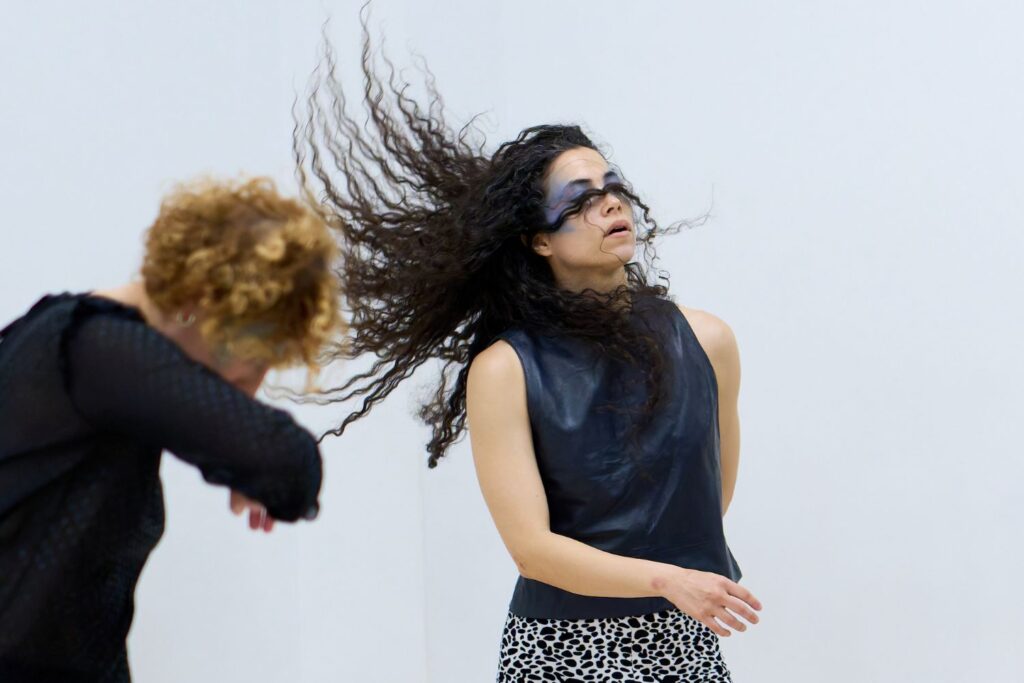
I am thinking of dance as a possibility for political action, of movements that emerge and disappear, of persistence as a form of resistance to disillusionment, of “again” not as repetition but as invention, each time anew. I will answer through the words of André Lepecki:
“We do not know, at least not yet, how to move politically,” writes Hannah Arendt. This “not yet” never ends, as if we were waiting for the day when we will finally know the correct answer or the proper way to act politically. Political action depends on the need to continually remind ourselves that whatever it manages to bring into the world will always remain temporary and incomplete. That is why we must begin again, persist, and respond over and over to the urgent challenge posed by this endless ‘not yet’. Not yet. Again and again.*
— André Lepecki
Beyond the musical reference, were there images, archives, or personal memories from the punk era that served as inspiration during the creative process?
We worked with photographs of The Clash through a range of different processes: appropriation, inhabitation, activation, and transformation.
We selected two main categories of images. On the one hand, documentary photographs from live performances, images that capture, to varying degrees, the band’s explosive stage presence and its relationship with the audience. On the other, what we might call “market images”: album covers, press photographs, and promotional material that reveal something about the way The Clash themselves shaped or managed their public image, as well as the way that image was selected, circulated, and ultimately consumed.
Punk carries a raw physicality, an unpolished energy. How is that translated into movement in the bodies of the dancers?
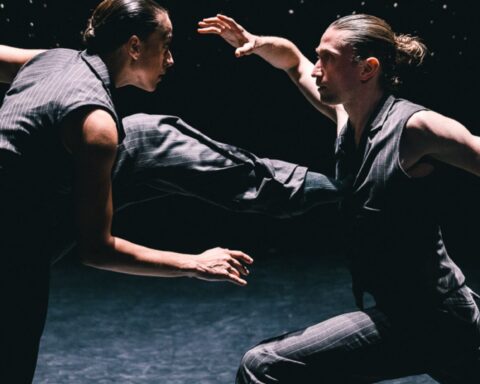
In the performance, collective dancing is the primary condition. Without rejecting our knowledge and tools, we allow even the rawest, most unrefined movements to emerge. The ones that are born through the feedback loop of energy, music, and our relationship with other bodies.
Are we still here? Have our bodies forgotten how to revolt?
Mark Fisher describes our era as a society on the verge of digital abstraction, where everything is transformed into image and information. Within this condition, dance can function as a form of resistance to digital mediation, as an insistence on presence and physical coexistence.
We are particularly interested in improvisation as a form of embodied autonomy in action. A process in which the individual and the group co-create space and time, where bodies test their own laws of movement against discipline and surveillance. We wonder whether new forms of relationship and collectivity can emerge through this process.
At the same time, the punk dance of collision interests us as a metaphor for social conflict and as a potential form of collective liberation from apathy and inertia. Can the loss of bodily control within collective movement remind us that there is still a form of life that has not been fully disciplined? Can “failed” movements operate as a critique of the logic of constant productivity and optimisation?
Punk created ruptures by rejecting virtuosity and privileging presence over skill. It exposed vulnerability, anger, and refusal. It did not ask for permission to appear. It appeared.
In this sense, punk was profoundly choreographic. Not metaphorically, but literally. It reorganised bodies in space. Crowds moved differently, occupied space differently, and generated new forms of collective rhythm.
Perhaps this is why dance remains, for us, an ephemeral yet meaningful form of community. A space where one can experiment, however temporarily, with different ways of being together.
Are there moments of doubt or fear during the creative process? How do you deal with them?
Yes, always.
When it happens to me, I try to remain calm and not transmit it to the group. I go home, reread the first pages I wrote for the work, and keep reading, searching for something I may have missed, something that might open the door we need at that particular moment.
When doubt comes from the performers, there is not much I can do about it. I do believe, however, that doubt is a fundamental part of this work. One needs to be able to dive into what one is doing, even without certainty.
If it is fear, then I can help more practically through rehearsal, discussion, or, if necessary, by making adjustments. I do not want the body to suffer, and the feeling of safety within the group is extremely important.
At the same time, though, you have to take risks. If you do not take risks, how can you avoid stagnation?
What continues to move you most deeply about dance after so many years of creating?
The moving body. The collective negotiations that emerge through improvisation. The immersion of performers in what they are studying. Embodied perception and thought, and the way they sometimes seem to move between bodies.
I am moved when I experience a performance physically and when it continues to activate my thinking for days after it has ended.
Was there a teacher, artist, or work that fundamentally shaped you as a choreographer?
A defining characteristic of my work is a commitment to research and experimentation. For each project, I develop different practices and tools that enter into dialogue with my studies in fields such as philosophy, performance theory, and the natural sciences, depending on the subject matter of the work.
This approach does not produce a singular artistic “signature” or a fixed choreographic language. In any case, I am not interested in imprinting a personal identity. I believe that creation is, in many ways, always collective, and in my work collaboration and co-creation are the most important elements.
Artistic research is rarely confined to a single performance. It usually extends across multiple works, and looking back at my trajectory, I can identify different periods. There was a time when I was concerned with the relationship between choreography and philosophy, particularly twentieth-century Western philosophy. Later, I turned towards the relationship between choreography and the environment, engaging with fields such as New Materialism, the Ontological Turn, and Posthumanism. In the current phase of my work, I return to the past, posing political and social questions about the role of the artist and art in different historical moments, as in no matter how quiet, appropriations, and Amnesiac – Memory for the Future.
For me, change is a goal. It stems both from a desire for growth and from curiosity, from the wish to turn towards what I do not yet know and study it.
Of course, as a person, I always carry my own aesthetic sensibility with me, however much I try to resist habit and familiarity, however much I seek to move beyond my comfort zone.
I have certainly been influenced, in ways I cannot always identify precisely, by choreographers whose work I deeply admire. These influences also change over time. Among them are Pina Bausch, Alain Platel, William Forsythe, Jonathan Burrows, Xavier Le Roy, Michael Klien, Mårten Spångberg, Marlene Monteiro Freitas, and Katerina Andreou.
Has dance taught you anything about life beyond the stage?
Movement is life, and life is movement. We could think of life itself as a dance in which we participate.
Perhaps, however, the most valuable thing dance has taught me is that it gives us access to a different mode of perception and thought, one that passes through the body and operates alongside it. And this embodied knowledge opens up multiple possibilities for how we might exist in the world.
Info
Amnesiac – Memory for the Future
YELP danceco.
Dates: 10–14 June 2026
Time: 21:00
Venue: FIAT
114 Andrea Syngrou Avenue, Koukaki, Athens