 KATERINA PARRI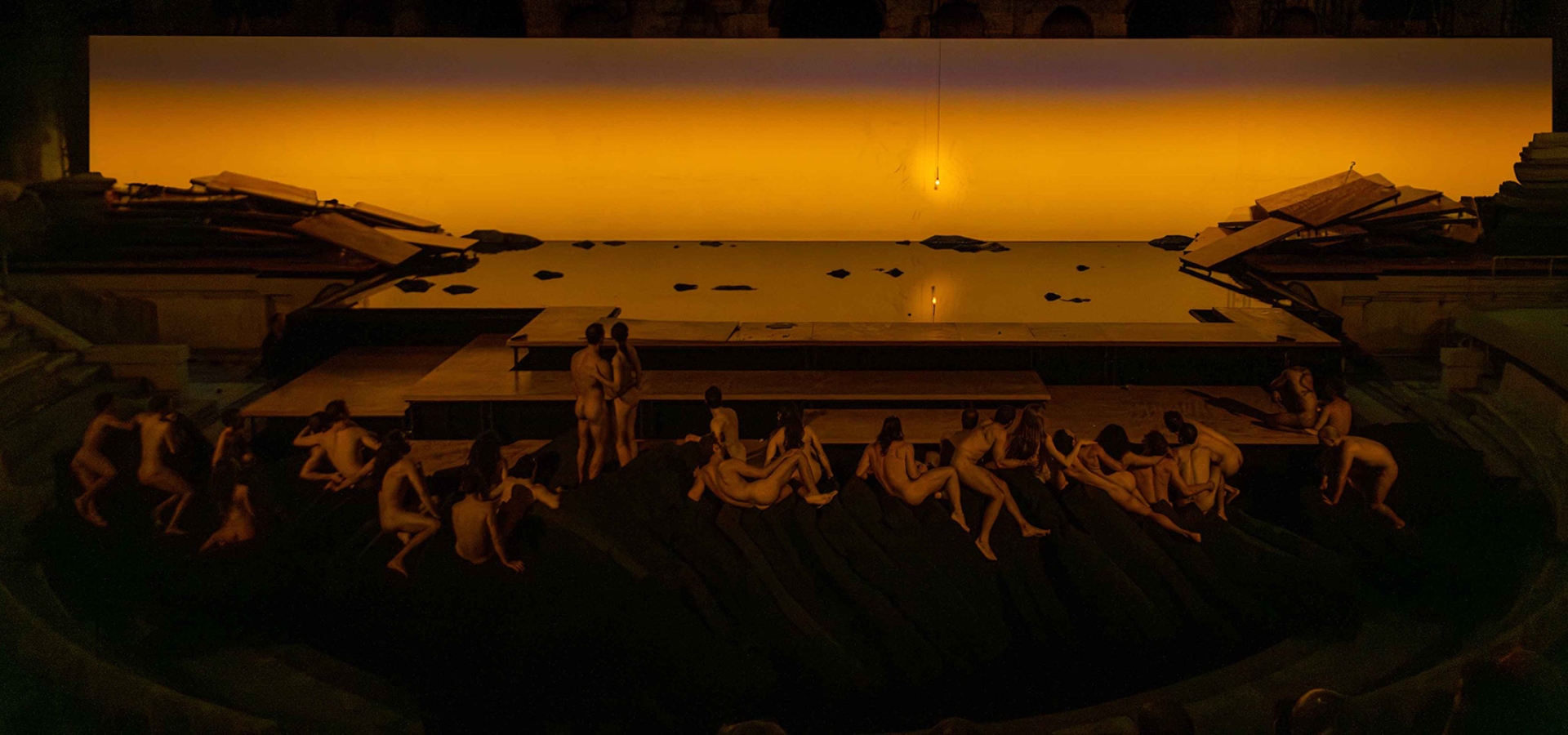
By Katerina Parri
“…I am conducting a personal excavation and calling upon my children – fragments of other bodies – to collaborate and recreate my world. Perhaps by putting them together, I can understand them better…”
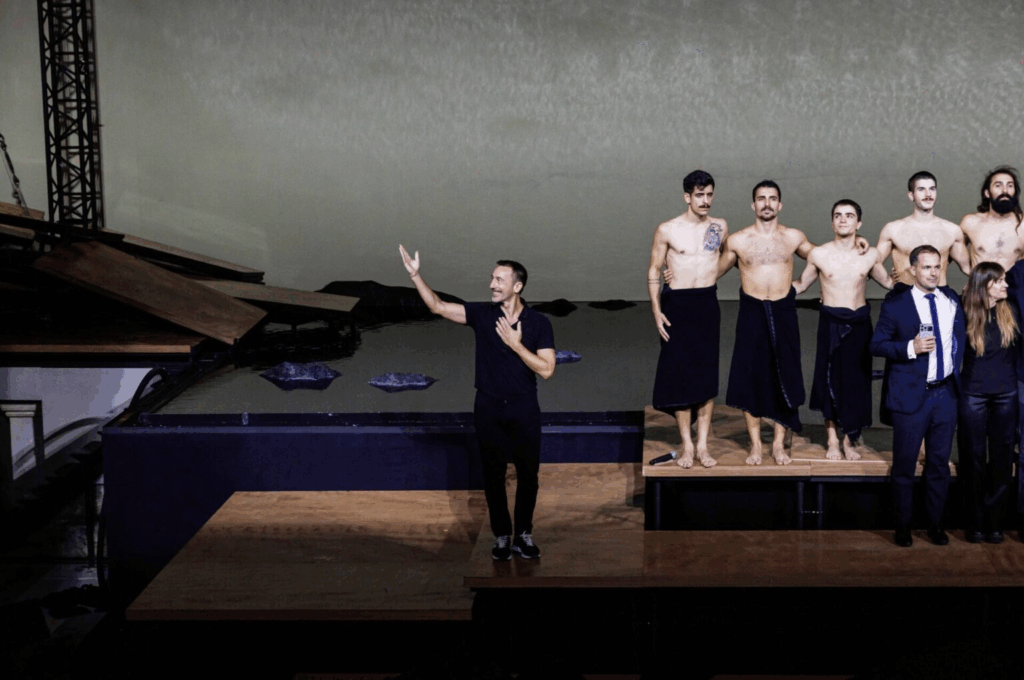
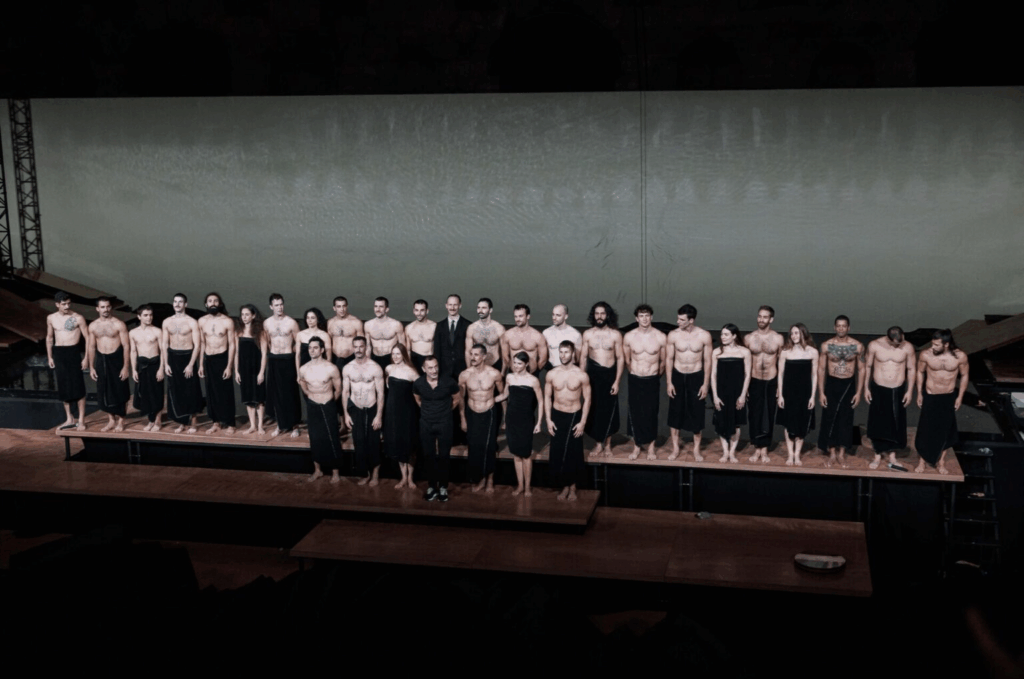
On Friday, October 3, as we made our way up to the Odeon of Herodes Atticus, it was to experience Dimitris Papaioannou’s new creation, This That Keeps On – a personal archaeology. The evening had a clear purpose and starting point: it was a unique fundraising event, with all proceeds dedicated exclusively to the creation of the new Museum of Cycladic Art. The work was commissioned by the Museum itself, marking the beginning of its 40th-anniversary celebrations and launching its own journey of “Transformation.” Within this framework, this special collaboration with Dimitris Papaioannou’s work took shape – a work in which something truly unprecedented occurs.
In This That Keeps On – a personal archaeology, Papaioannou composes a new piece by excavating images and bodies from his four decades of creative work. As he mentions in his conversation with the Museum of Cycladic Art’s Panagiotis Iosif – part of a limited 176-page collector’s edition – this commission gave him the opportunity to do something he had always wished for: to gather together his theatrical inventions – whether visualized concepts or physical discoveries – and allow them to inhabit the same house.
It represents his first excavation into his own creative archaeology, with all his “children” coexisting to form something new, born from this act of searching. It helps him move toward the next transformation – as though some deeper understanding is emerging. In his own words:
“…I am conducting a personal excavation and calling upon my children – fragments of other bodies – to collaborate and recreate my world. Perhaps by putting them together, I can understand them better… It’s a question that has preoccupied me deeply in recent years. Excavating my archive and redefining elements of my past has taken on a major role in my life.”


The Herodion filled to capacity – and that, in itself, was worth noting. Among the audience were many young faces, since the Museum of Cycladic Art and Dimitris Papaioannou had offered 2,000 free tickets to students of public schools of theatre, dance, film, and fine arts, as well as to students with disabilities studying dance. Because this was, after all, a fundraising event, this particular audience stood out – their presence felt both significant and deeply symbolic on this unique night.
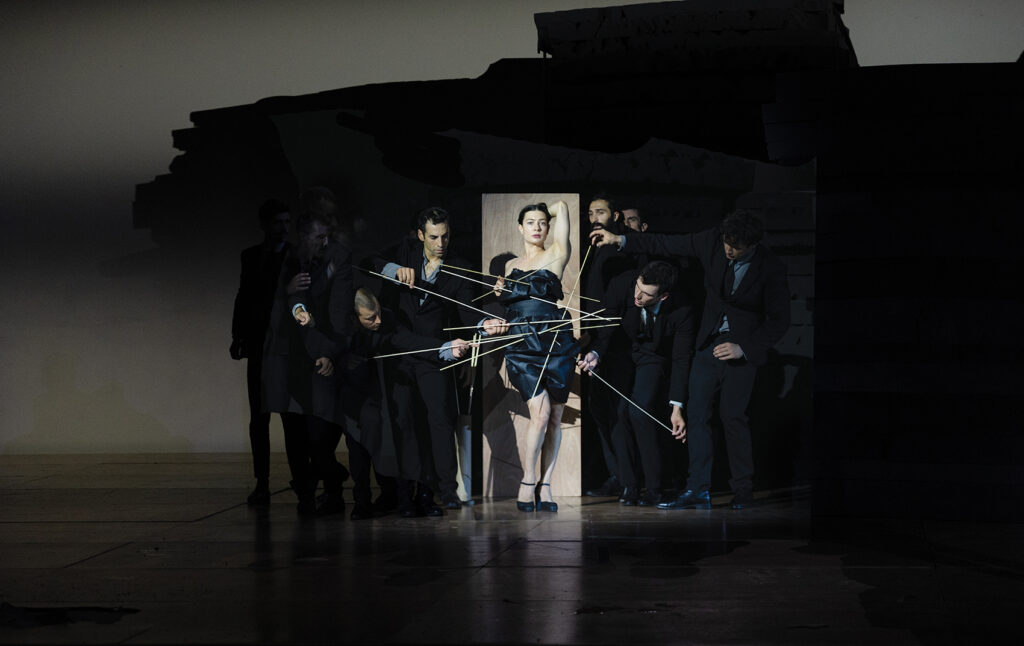
The performance began, and with it, Papaioannou’s “metamorphoses” unfolded before us. Thirty dancers and actors – or as he calls them, “the sacred toil of bodies” – moved across the stage in a succession of images that pierced through you. Beings that compelled you to decode their forms: Where are the legs of this body? How do two bodies merge into one? Familiar references from works that have marked his artistic journey appeared like fragments from his personal archaeology. From time to time, you could hear soft whispers in the audience – “Ah, I’ve seen this before…” – as if some were playing a beautiful game, tracing elements they recognized, or perhaps, more instinctively, letting the images awaken an intimate sense of déjà vu.


The beginning: a clothed body stands before us, striking the wooden floor until it splinters. From that act of violence, another body – naked – emerges, and the two intertwine: the modern mind and the primal nature. The unearthing – civilization uncovering the archetype. Then, a figure reminiscent of a caryatid balances a tray of stemmed glasses upon her head. Papaioannou’s hybrid creatures fill the stage; his chimeras move toward the abyss, performing poetic images that play out before our eyes. “The landscape is the human being,” and the human carries the dry stone wall that is being built upon him. “He is a Sisyphus holding his fragments together,” Papaioannou writes in the accompanying publication.
Dozens of black stacked mattresses form the landscape – volcanic, reminiscent of Cycladic rocks. Sometimes it recedes into the background, other times it moves forward, carried by bodies that merge with it. Notes of the bouzouki, the shepherd’s bell, and “Beautiful Love, I’ve roamed your paradise” intertwine with the sounds of small black balls spilling from the body’s core, scattering across the stage, rolling over the marble of the Herodion – their echo resonating throughout the theatre.

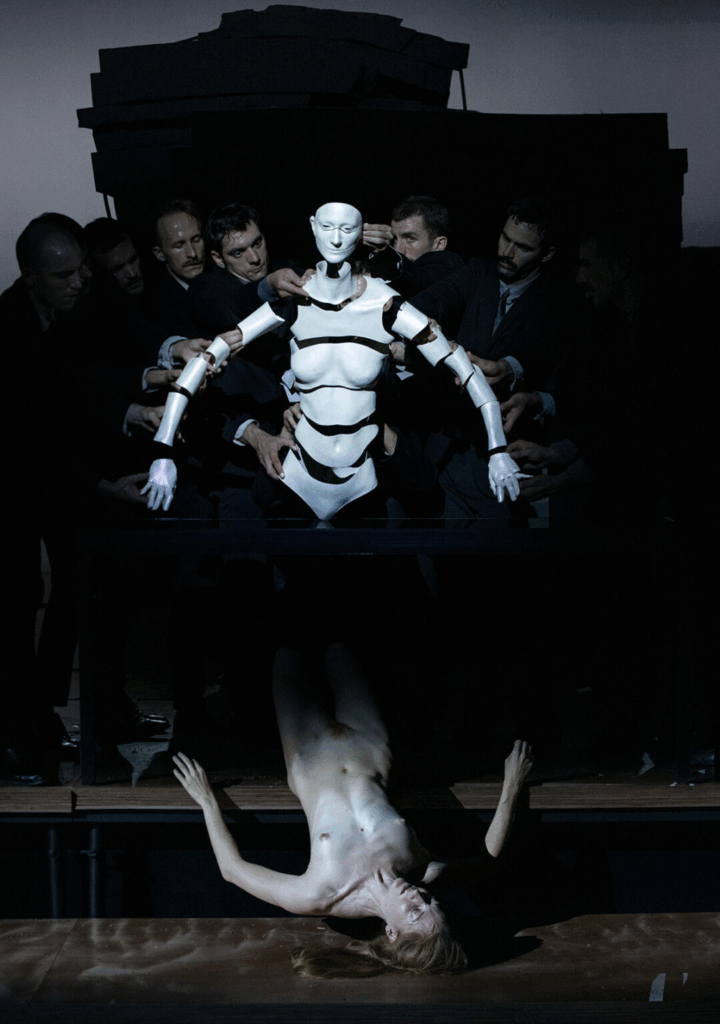
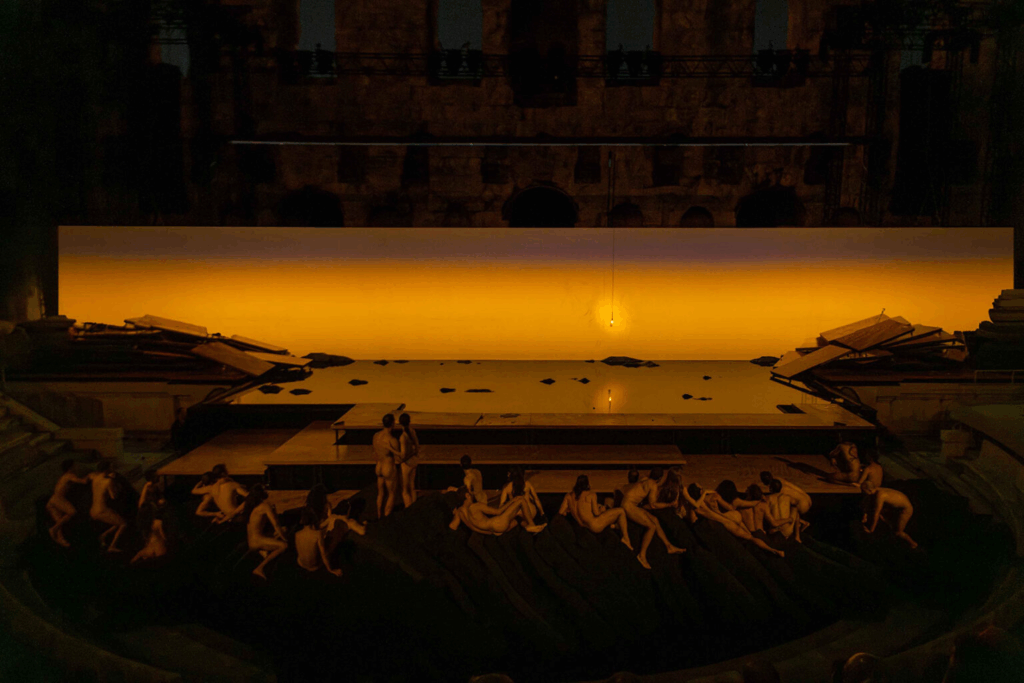
In the end, everything became water. The stage revealed an aquatic world – the place where everything begins and returns. Where image turns into poetry, and beneath the Roman arches you face an unshakable landscape that awakens every fiber of your being – as only Papaioannou can evoke. The finale unfolded as a hymn to summer, to the Cyclades he so deeply loves.
“It is, for me, a homeland – an imagined homeland. This landscape. The Cyclades are like fragments of broken stone floating upon a flat sea,” shares Dimitris Papaioannou in the publication.
Everything became us – as if we were sitting on those very rocks, the black mattresses transformed into cliffs, the bodies resting upon them like figures sculpted by wind and sun. Sea on the horizon. Freedom. The bohemian life that lingers there. A hymn to summer and to the Cyclades – without realizing how, after all this creation, you have arrived here: at the Cycladic summer, gazing at the horizon, living something you have lived before – and yet, not quite the same. So familiar, and at the same time, otherworldly.