 PEPI NIKOLOPOULOU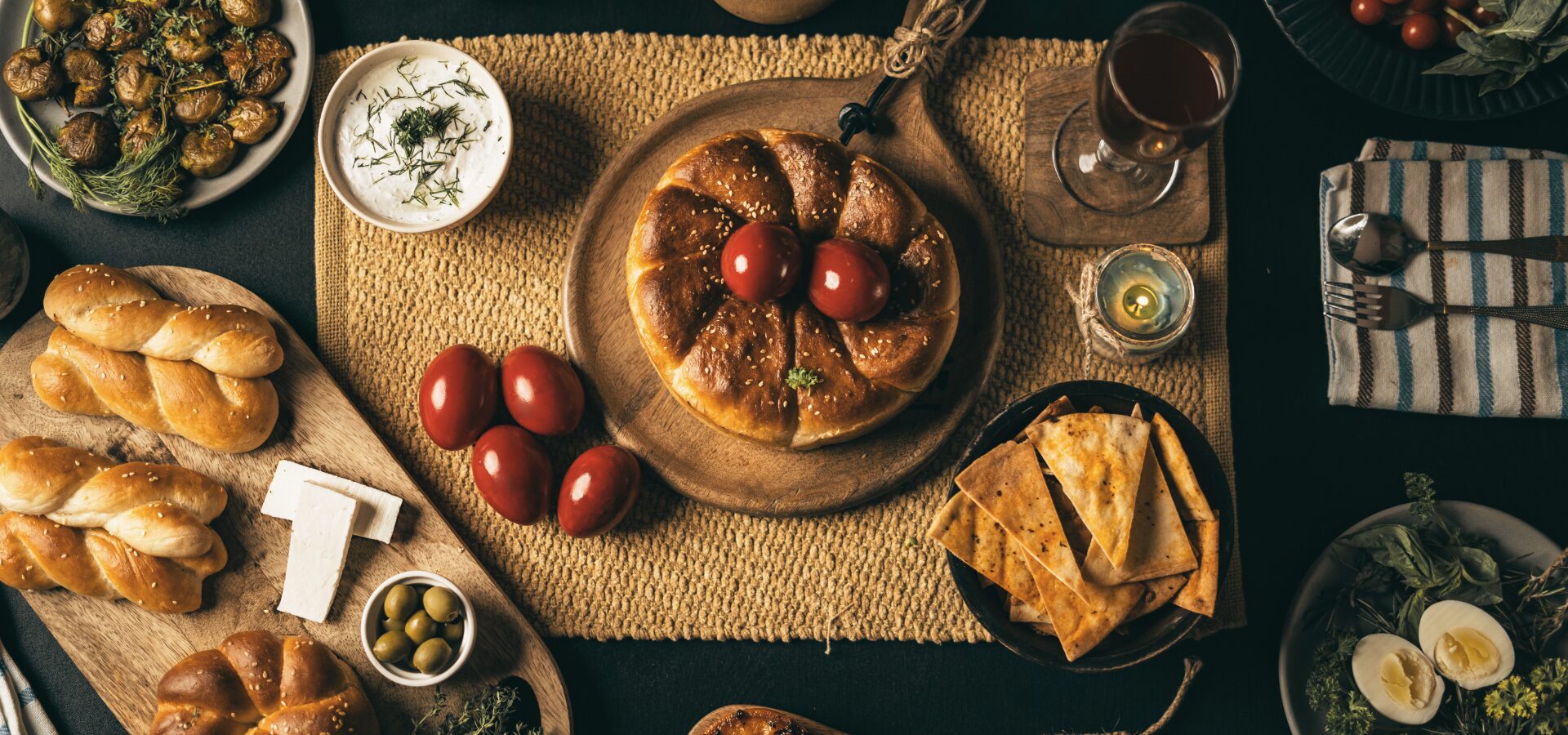
By Sofia Triantou
From the resurrection magiritsa to the traditional Sunday roast, from handmade festive pies to tsoureki, Greek tradition reveals how each place carries its own aromatic signature
These are the days when homes fill with aromas that awaken memories from years past. And yet, Easter in Greece does not smell the same everywhere. From the magiritsa of the Resurrection night to the traditional Sunday roast, from handmade festive pies to tsoureki, Greek tradition shows that each region has its own aromatic imprint. What unites almost every place, however, is the traditional Easter table, where spices and fresh spring herbs take center stage: spring onions, seasonal greens, and the refined aromas that shape sweet flavors.
The most emblematic beginning of this aromatic world is magiritsa. Its recorded traditional form, across most of Greece, is based on offal, dried and fresh onions, lettuces, and above all dill, perhaps the most iconic herb of the Resurrection table. Magiritsa varies from place to place, and in some regions it is enriched with additional greens and herbs. Traditional recipes maintain the combination of lettuce, dill, onions, and lemon or egg-lemon sauce (avgolemono). This soup, as many call it, marks the transition from fasting to meat, a transition not defined by heavy sauces, but by fresh, green aromas. Dill, parsley, mint, fennel, and spring onions function not only as flavors, but as symbols of the season. Easter always falls in the heart of spring, and Greek traditional cooking reflects this through its ingredients.

In meat dishes, local traditions reveal a recurring palette of herbs: oregano, thyme, rosemary, fennel or fennel seeds, often accompanied by garlic and lemon. This aromatic combination perfectly suits Easter food and appears again and again in Greek recipes, whether baked, stewed, or used in fillings.
In Northern Greece, we already encounter a first variation. In Halkidiki, “psima” is a tray-baked Easter dish with rice, spring onions, and herbs, while in Evros, kourbani appears as a festive dish with distinct local character.
On the island of Lemnos, the well-known “kaspakino” is cooked with herbs, spring onions, fennel, tomato, raisins, rice, and local kalathaki cheese. Here, Easter aromas are not only herbal, but also include the interplay between raisins, fennel, and cheese.
In the Cyclades and across the South Aegean, dishes are often baked stuffed in wood-fired ovens, combining rice, meat, and seasonal herbs. The fillings are enriched with spring onions, mint, dill, and rosemary. On Astypalaia, “lambrianos” is a characteristic festive dish with rice, spices, and aromatics. In Naxos, the filling of the traditional patouda is based on seasonal wild greens, while in Sifnos, mastelo relies on a few but distinctive aromas: red wine, dill, and the scent imparted by vine twigs over which the food is slowly roasted. Pure deliciousness.
Crete, as always, preserves its deep connection between Easter food and the fresh herbs of spring. Seasonal dishes are slowly cooked with abundant fennel, onion, and finished with lemon. In the Chania-style Easter meat pie, the filling is bound with sour mizithra, sweet mizithra, staka, and above all mint, which forms the core aromatic element of the pie.
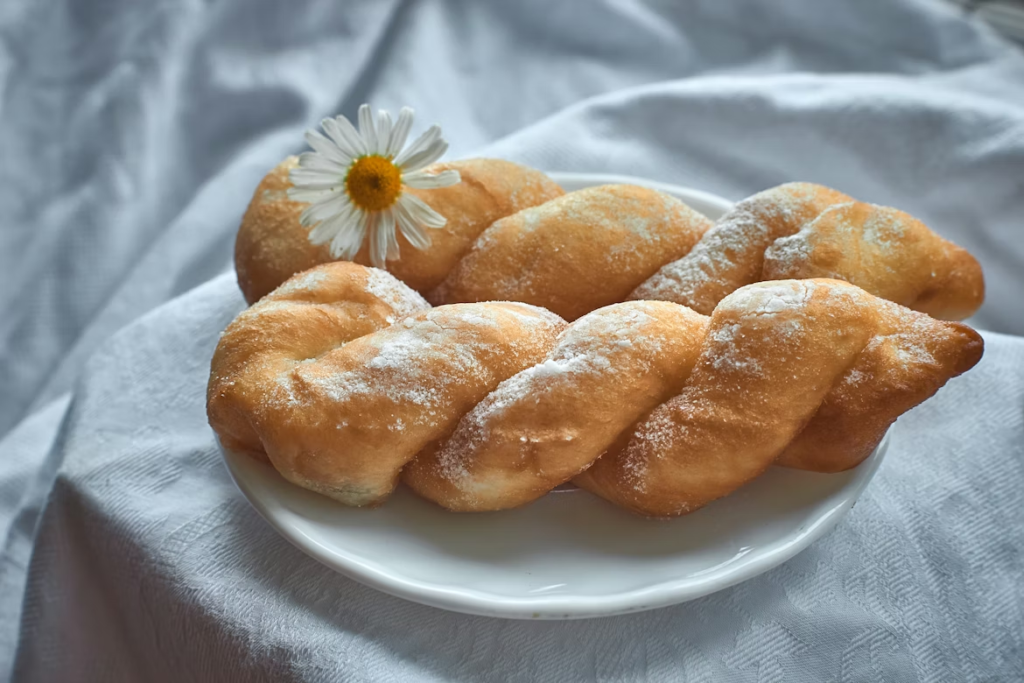
In the Ionian Islands, tradition reveals a more complex aromatic profile, influenced by Venetian presence. Kefalonian meat pie is made with a mix of meats, wine, and aromatics often combined with tomato and orange, while in Corfu, pastitsio dolce stands out as a festive dish with a more layered, almost urban aromatic logic. Here, aroma extends beyond familiar countryside herbs, gaining depth through combinations such as cinnamon, clove, and nutmeg.
In Epirus, by contrast, Easter aromas are expressed mainly through pies and wild greens. Deeply rooted in the land, the local cuisine highlights spring foraged plants such as dock, cow parsley, chervil, and nettles, gathered during this season and used in pies and dishes. In the “trimma” of the Zagori villages, a second-day Easter dish, these greens are combined with fresh herbs such as parsley and mint.
In the Dodecanese, and especially in Rhodes, “lambriotis”, a baked kid with cracked wheat, reflects a different approach. Aromas are restrained, limited to essentials such as bay leaf and garlic, while flavor emerges primarily from slow cooking in a wood-fired oven. A striking image: traditional ovens smoking, with guests gathered in courtyards, waiting in anticipation.

If we move from savory to sweet, tsoureki is the most characteristic aroma of Greek Easter tradition. Unlike savory dishes dominated by fresh herbs, sweets are defined by spices. Mastic, originating from Chios and cultivated exclusively in the mastic villages, is the most emblematic example. It is not just an aroma, but an element of identity. In tsoureki dough, it offers a clean, almost cool fragrance, deeply tied to Easter memory.
Alongside it, mahlepi, the aromatic kernel of wild cherry, is widely used in Macedonia, Thrace, and many parts of mainland Greece. Its aroma is warmer, with almond-like notes, providing structure and depth to the dough.
Cardamom, more common in Northern Greece and in Asia Minor-influenced traditions, adds a spicier, more exotic dimension, while in many regions the blend is completed with orange or lemon zest, bringing freshness and balance.
Similar aromas appear in Easter cookies, where mastic and mahlepi are used more subtly, often alongside vanilla or citrus. Here, the fragrance is softer, more everyday, yet still connected to the celebration.
This is why I always look forward to Greek Easter: for the extraordinary scents that fill kitchens and courtyards. Sometimes rooted in the freshness of spring herbs, sometimes in the simplicity of fire and oven, and sometimes in the warmth of spices, these are the elements that bring us together.