 Deana Kartsagouli
Easter is the most sacred holiday of the Orthodox Church, a deeply rooted cultural and religious experience, passed down from generation to generation and observed in any place in the world where hellenism is alive and flourishing.
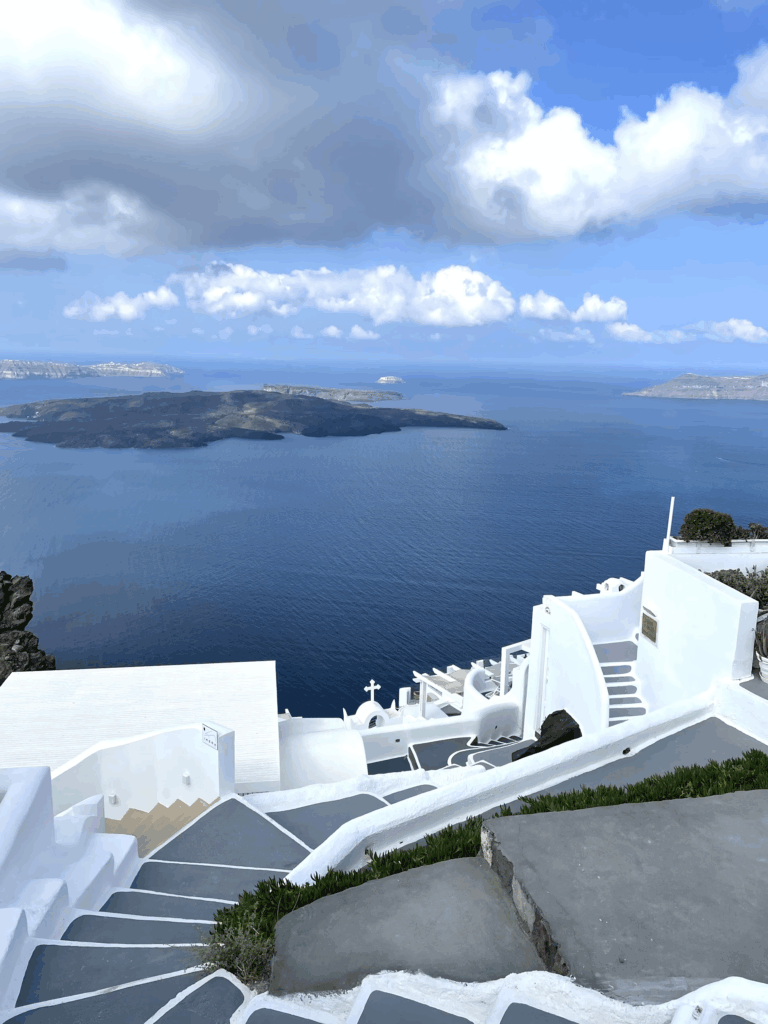
For many, Easter is the smell of freshly baked koulourakia in the kitchen, the whitewashed courtyards on the Greek islands, the days of Lent that cleanse the body and the soul. It is a time to honor those who have passed and then joyously at midnight on Holy Saturday, when Christ rises from the dead, to celebrate eternal life.
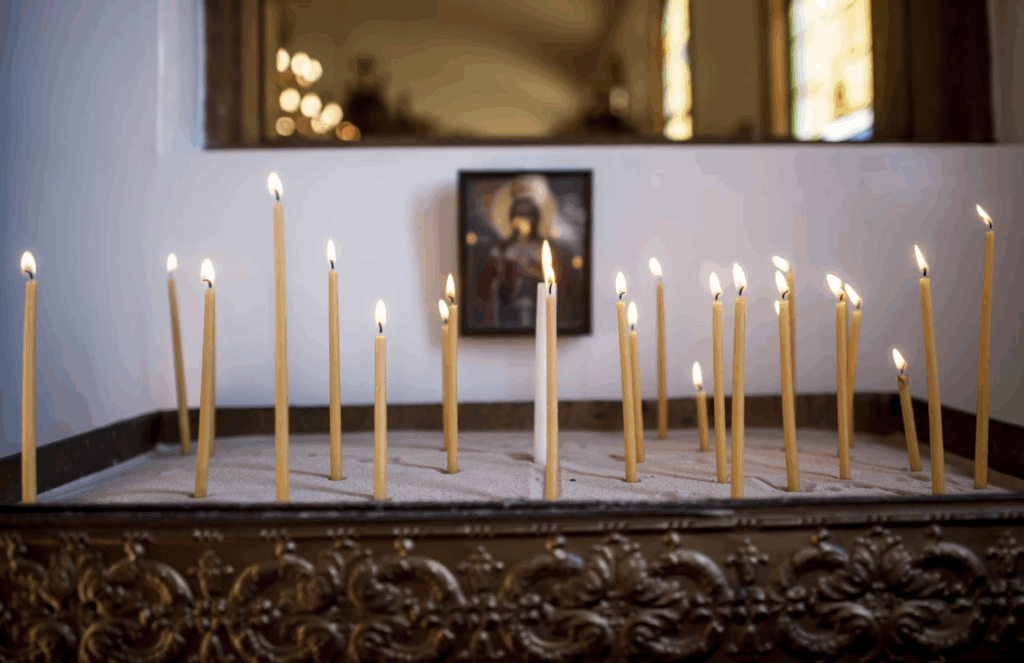
Symbolism is a very strong factor during Easter whether it is the “Efhelaio” on Holy Wednesday, where the priest blesses making the shape of the cross on our face and hands or the sharing of the sacred light that is passed along, candle to candle, starting from the priest to everyone who is present in the church. And they in turn will pass it along to everyone at home. Customs and traditions that belong to almost every Greek, no matter where the live, in a village, an island, or a city.
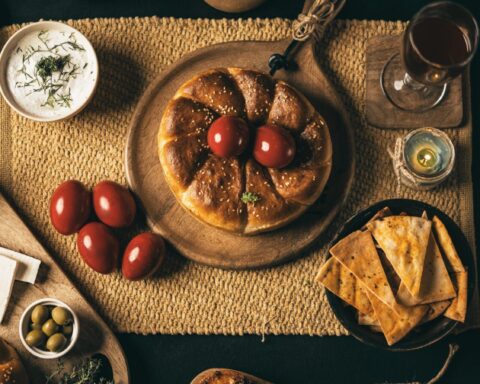
On Holy Thursday, the koulourakia are baked. Sweet, buttery cookies, usually shaped into twists or braids, often scented with vanilla or orange. They’re made in large batches to be shared with guests, neighbors, and family members who pass by during the holy days. Also, they are gifted to loved ones. Alongside the cookies, another Easter staple rises: the tsoureki, a soft, slightly sweet braided bread, flavored with a spice called mahlepi and decorated with a single red egg in the center. It’s a symbol of rebirth, and its braided shape represents unity and continuity.
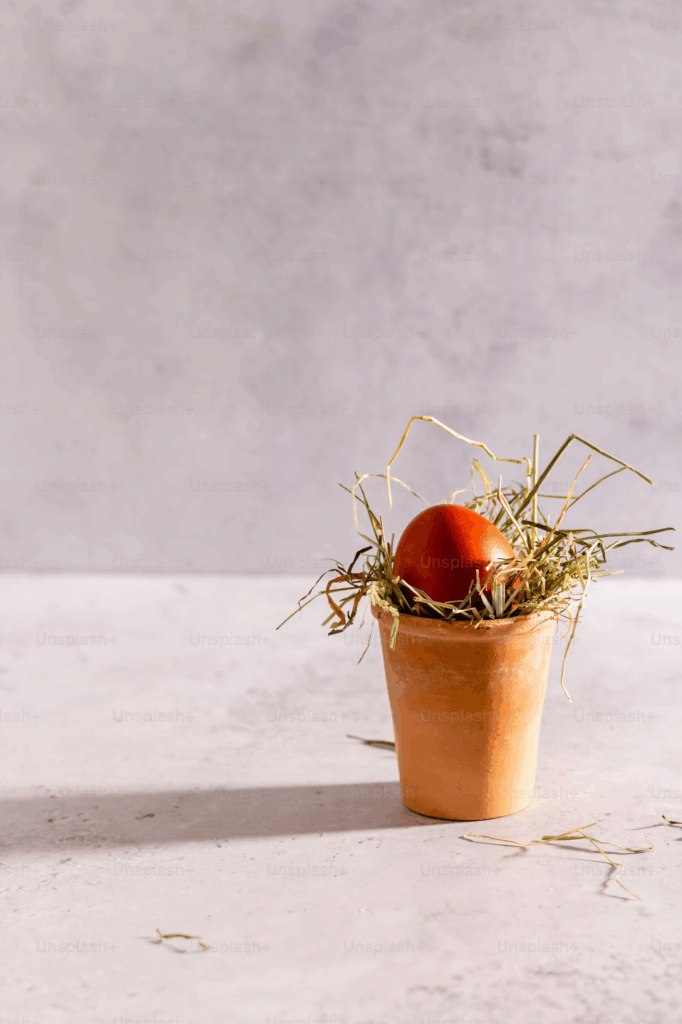
Red eggs are another beloved tradition prepared on Holy Thursday. They are dyed a deep red color, symbolizing the blood of Christ. On Easter night and throughout the rest of the week, people play a game of “tsougrisma” (egg cracking battle) where two people tap their eggs against each other, one saying “Christ is Risen!” and the other replying “Truly He is Risen!” Whosever egg remains uncracked is said to have good luck.
Then there’s the Easter candle, or labada. It is traditionally gifted by the godparent to their godchild, and it’s more than just a candle. It’s often tall and beautifully decorated with ribbons, toys or small crosses, and it’s lit at midnight on Holy Saturday to receive the Holy Flame, the light of the Resurrection. For many children, receiving their labada is one of the most joyful parts of the holiday.
On Good Friday evening, communities gather in silence to follow the Epitaphios, a symbolic bier of Christ covered in flowers. It is carried through the streets in a slow procession, accompanied by candlelight, hymns, and reflection. Streets are quiet, lights are dimmed, and the atmosphere is one of reverence and mourning.
Then comes the climax of the week: the Resurrection service, held late on Saturday night. Just before midnight people arrive dressed in their best clothes, holding their unlit “labades”. At the stroke of midnight, the priest announces “Christ is Risen,” the church bells ring, and the flame of the Resurrection is passed from candle to candle until the entire crowd holds a lit “lambada”. Fireworks might burst in the sky, people embrace, exchange greetings and go home to eat the “mageiritsa”, the special soup prepared with lettuce and lamb’s pluck (the rest of the lamb will be eaten the following day after it is cooked over a pit fire).
Besides these common traditions there are others followed in different parts of Greece and vary slightly from village to village. Here are some that are more well known.
Corfu – Warding off evil with “botides”

Without a doubt the most famous Easter is the one celebrated in Corfu. Every year thousands of people flock to the beautiful and iconic “Aston and Spianada” square at the center of the island’s capital to witness the smashing of the “botides”. On Holy Saturday morning, after the First Resurrection, huge clay pots called “botides” are thrown from balconies to shatter on the streets below. The sound is explosive, the crowd cheers, and the air fills with a mix of tradition, symbolism, and celebration. At the same time, marching bands fill the air with joyful music. Evil is cast out, and something new begins.
Leonidio – Paper Lanterns Carrying Wishes
In the mountain town of Leonidio, Easter night is unforgettable. As soon as the priest says “Christ is Risen,” hundreds of handmade paper lanterns float into the night sky. It’s a breathtaking moment as if the hopes of a whole town rise together in a quiet, glowing flight.
Chios – The Rocket War
One of the most visually striking and widely televised Easter customs in Greece is the rocket war of Chios. The village of Vrontados, Holy Saturday nigh, becomes the setting for a fiery tradition that dates back to the Ottoman era and is essentially a mock battle between two local parishes: Agios Markos and Panagia Erithiani. Thousands of homemade rockets are fired simultaneously by teams from each church, aiming for the dome or bell tower of the rival church. The goal is to score as many “hits” as possible – although, in truth, it’s less about winning and more about the spectacular show.
Hydra – Epitaphios on water
In Hydra, the sea becomes a sacred space. On Good Friday, the Epitaphios is carried into the water by local men, honoring the island’s deep connection to the sea and its people.
Kalamata – Historic “Saitopolemos”
In Kalamata, Easter Sunday “explodes” with the saitopolemos, a historic ritual involving homemade fire tubes that fill the sky with noise and light. It’s loud, bold, and deeply rooted in the memory of the Greek War of Independence, evoking the courage of a people who never stopped fighting.
Monemvasia – The Burning of Judas
On Good Friday, the Epitaphios winds its way through the stone-paved alleys of the old town inside the Medieval Castle of Monemvasia. Hymns echo and candlelight reflects on the walls, creating a sacred atmosphere. But on Easter Sunday afternoon, the tone shifts. In the courtyard of the church of Christ Elkomenos, a large effigy of Judas Iscariot is burned. Stuffed with straw, wood, and firecrackers, it goes up in flames as locals gather around. The explosion and fire symbolize justice, cleansing, and the final victory over betrayal and darkness.
Santorini – Fire and Sound for the Epitaphios
In the village of Pyrgos, the Good Friday procession is accompanied by thousands of tiny tin lanterns lighting up the narrow alleys. The flickering lights, the metallic sounds from the young men striking iron, and the scent of incense make for a beautiful experience of mourning and renewal.
Folegandros – Offerings from Every House
On Easter Sunday in Folegandros, the icon of the Virgin Mary is carried from house to house. Each door is open and every home offers sweets and raki as a moment of shared blessing.
Syros – Two religions as one
On the island of Syros, Orthodox and Catholic communities celebrate Easter together regardless of the calendar. On Good Friday, their Epitaphioi processions meet in the heart of Ermoupolis, and together they sing, pray, and walk side by side. It’s a quiet but powerful reminder that faith can unite more than it divides.
Nafpaktos – Fire by the Sea
As night falls in Nafpaktos, the Epitaphioi from different churches converge at the Venetian harbor, where torches and hundreds of candles light up the scene. A flaming cross rises at the entrance to the port, creating a striking backdrop as locals and visitors alike pay their respects in near silence. The tradition, dating back to the 1950s, was started by local fishermen and has grown into a deeply moving community event.
Kythnos – The Easter Swing
On the island of Kythnos, the most charming tradition takes place on Easter Monday, when villagers gather in the main square for the “Kounia tis Lambris” – the Easter Swing. A large wooden swing is decorated and set up in the square, and young men and women, dressed in traditional clothing, take turns swinging. According to local belief, if a couple swings together, it symbolizes a public promise of marriage. The event ends with music, dancing, and local treats.
Zakynthos – The “Gloria”
On Zakynthos, on Holy Saturday at dawn, during what locals call the “Gloria”, as the priest announces the First Resurrection, the church fills with sound: furniture is shaken, pots are smashed, and even fireworks echo in the air. The noise symbolizes the earthquake described in the Gospels at the moment of Resurrection. It is a loud and joyful declaration that life has conquered death.
Serres – The Adonia Custom
In Serres, a unique tradition known as “Adonia” takes place on Good Friday, particularly in the neighborhood of Agios Ioannis Theologos. As the Epitaphios passes by, every household sets up a small table outside their door. On it, they place a censer with incense, a decorated icon of the Crucified Christ, and a bowl filled with lentils or barley. All offerings that recall the ancient symbolism of Adonis, whose early death represented youth lost too soon.