
 Deana Kartsagouli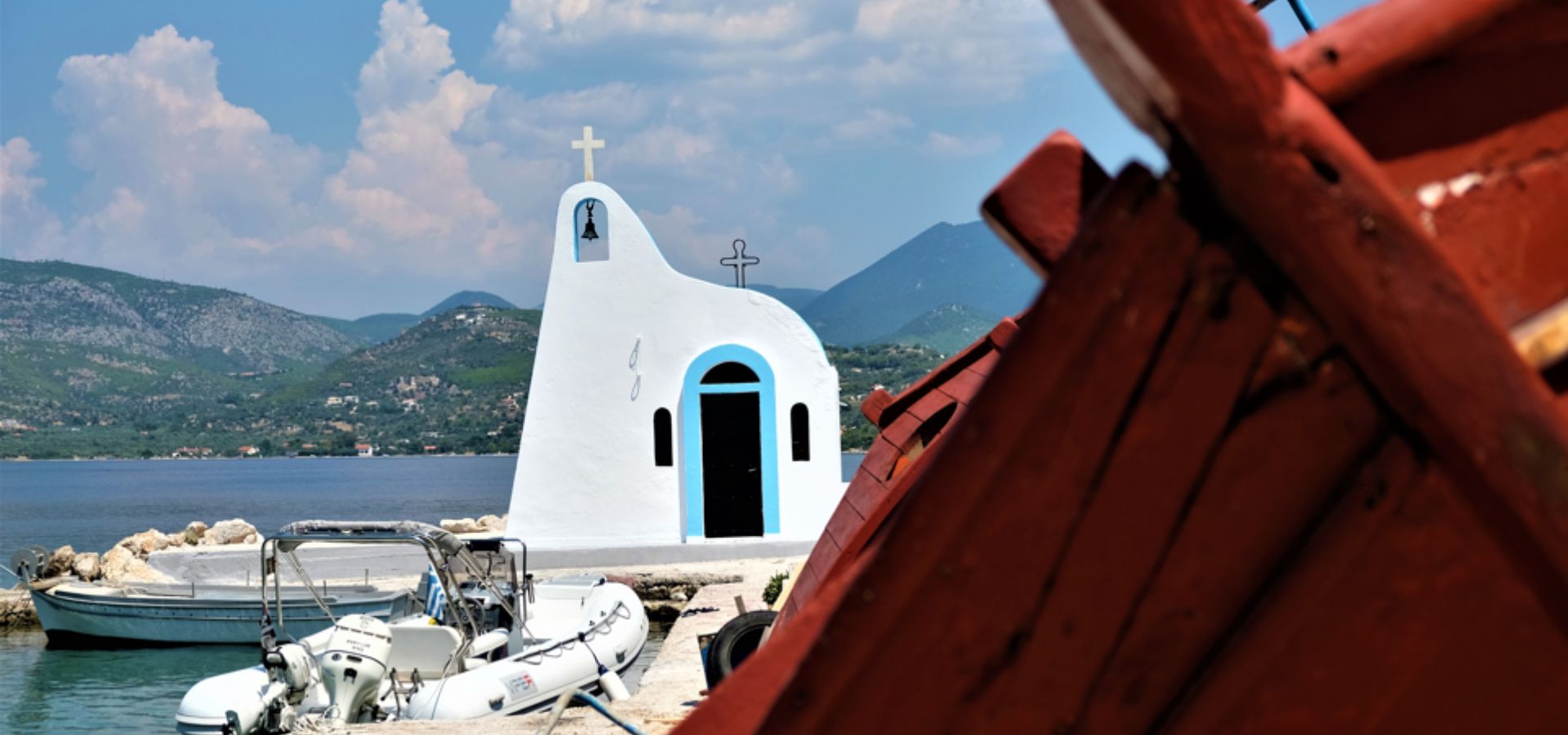
It is a difficult year for those of us who like to travel any chance they get. The uncertainty of a war that can escalate at any time, as well as mounting gas prices has put a limit towards any ambitious plans for far away and exotic destinations.
However, we can enjoy something closer to home. Places that are less than a 3-hour drive away form Athens, or a quick boat ride from Piraeus. Sometimes overlooked exactly because of their proximity to our every day life, they offer a much needed beautiful escape and a chance to unwind and recharge.
From the high-altitude traditions of Vytina in the heart of Arcadia, to the storied coastal forest of Xylokastro, and the cinematic, two-island allure of Poros, these are places where the modern world feels distant, but the journey remains easy.
Vytina – An oasis on Mount Mainalo
Imagine sitting inside your living room, looking out the window and seeing just pine and fir trees as far as the eyes can see. That is Vytina, 1,033m high on Mount Mainalo, just a little over a 2-hour drive away from Athens. Picturesque and traditional, at the same time there is an openness to it, mainly because of its big square bustling with life. A kind of place that is ideal for every type of traveller: families with small children, couples in love, friends that like hiking and trail blazing or just long walks in nature.
Being the biggest village of Gortynia, the rugged mountainous region within Arcadia, it is a great base from which to venture to near villages of extreme beauty, like Stemnitsa, Dimitsana, Lagkadia, Magouliana and of course, Limbovisi, where you can visit the home of Theodoros Kolokotronis, the greatest hero of the Greek Revolution -let’s not forget that Arcadia was the epicenter of the Greek revolution.


Of course, you can always just remain in Vytina. The first thing you’ll do-because everyone does it-is walk down the “Path of Love” (Odos Agapis). Don’t let the cheesy name fool you. You will rarely see just couples holding hands. It’s just a really beautiful, narrow road lined with trees. Back in the day, it was where local kids would go to meet up away from the prying eyes of their parents. Now, it’s just a great place to walk and feel the temperature drop a few degrees. It’s quiet, green, and smells like damp earth and leaves. Also, a good place for a stroll enjoying nature all around you is the small forest (dasaki), which is well preserved, has a playground and is a good place for picnics.
During Easter, the village gets a bit more intense, but in a good way. The Church of Agios Tryphon in the main square is the heart of it all. On Good Friday, watching the Epitaph procession wind through the narrow stone alleys while everyone holds flickering candles is one of those moments that actually gives you chills, even if you’re not the religious type.

If you need to stretch your legs, you don’t have to go far. You can head toward the Mainalo Ski Center, not necessarily to ski, but just for the drive through the fir forest. Or, if you want something a bit more rugged, drive over to the Monastery of Panagia Kernitsa. It’s the oldest in Arcadia, built right into a cliffside. It’s got a heavy, powerful energy to it, and the nuns there are welcoming.
When it comes to eating, Vytina is all about mountain cooking. “Klimataria” is a classic taverna at the beginning of the “Path of Love”, where you can taste traditional meals like slow-cooked lamb, rooster in red sauce, and those thick, handmade local noodles called hilopites. If you want something a little more central, close to the village square, “Kokkina Pitharia” is a great choice as well. They take the local ingredients but refine them just enough.

Of course, you can’t leave without hitting the local shops for Vytina honey. It’s the only honey in Greece with a Protected Designation of Origin, and it’s famous for its light, pearly color and the fact that it never crystallizes. It’s like a souvenir of the forest itself. Also, get cheese, especially feta and the local dry pasta which are “hilopites” and “trachanas”, they are superb.
The best way to “do” Vytina is to not do much at all. Grab a seat at one of the cafes in the square, order a coffee and a galaktoboureko (watch out for those bees), and just take everything in.
Xylokastro – The place where Greek tourism began
If you’re looking to get out of Athens for Easter but don’t want to spend five hours in a car or deal with the ferry chaos, Xylokastro is where you want to go. Just an hour and half drive from Athens, long before the modern concept of mass tourism took hold in Greece, this town was officially designated as a premier summer retreat for international dignitaries as early as 1919.
The undisputed heart and soul of the town is Pefkias. An ancient, seaside pine forest that stretches for 2 kilometers right along the pebbled coastline. This is where the town’s life happens. You’ll see old friends debating politics on benches, kids learning to ride bikes, and travelers just standing still, trying to soak in the air.
Designated as a protected area of European significance, the forest is a botanical treasure trove where over eighty species of plants thrive in the brackish soil, including ancient cedars, Phoenician junipers, and wild myrtles. The trails winding through the trees are perfect for those who seek to combine a morning hike with a swim, ending at the iconic Pavilion, a structure that once served as the Greek National Tourism Organization’s kiosk and remains a nostalgic landmark of the forest.
Beyond its natural beauty, Xylokastro is a town defined by its architectural and spiritual landmarks. In the central square stands the Cathedral of Agios Vlasios, a magnificent structure completed in 1910. Its towering octagonal dome and intricate marble screen was crafted by the renowned sculptor Nikolaos Perantinos. On the southwestern edge of town, the Church of Agios Gerasimos of Notaras dates back at least to the early 17th century.
As for the food, because the town has hosted international travelers for decades, its taverns and restaurants have developed a level of consistency and quality that is rare for a seasonal destination. For those seeking the classic Greek seaside experience, Patouras is a great choice. Here, the seafood is grilled simply to highlight the freshness of the catch, served alongside local wild greens and crisp white wines. Similarly, spots like Navarino have built a loyal following.
For those who prefer the rugged flavors of the mainland, the town’s grill houses and rotisseries offer a different kind of expertise. After the Lenten fast, these spots become the heart of the community, serving slow-roasted meats that benefit from the region’s high-quality livestock. For a more traditional vibe, the local kafeneio inside the forest square offers the classic Greek ritual of ouzo and small plates (meze).
Poros -Two islands in one
Poros is ideal for when you want that island feeling without the drama of a three-hour ferry ride or the frantic pace of a place like Mykonos. It’s not an island, it’s actually two. On the one hand you have Sphaeria, the volcanic rock where the town is piled up amphitheatrically, and Kalavria, the massive, forested wilderness that keeps the island grounded. Connecting them is a tiny canal.

There is a quick boat ride from Piraeus just 55 minutes long and for those who want to drive there, it will take you approximately 21/2 hours by car.
The town is full of all white houses and terracotta tiles climbing up the hill. The first thing you’ll notice is the Clock Tower. It’s the highest point in town, a bit of a climb, but you do it for the view. Sitting up there at sunset, watching the little boats (the varkades) shuttle people back and forth across the strait, is the best way to just sit and do nothing.
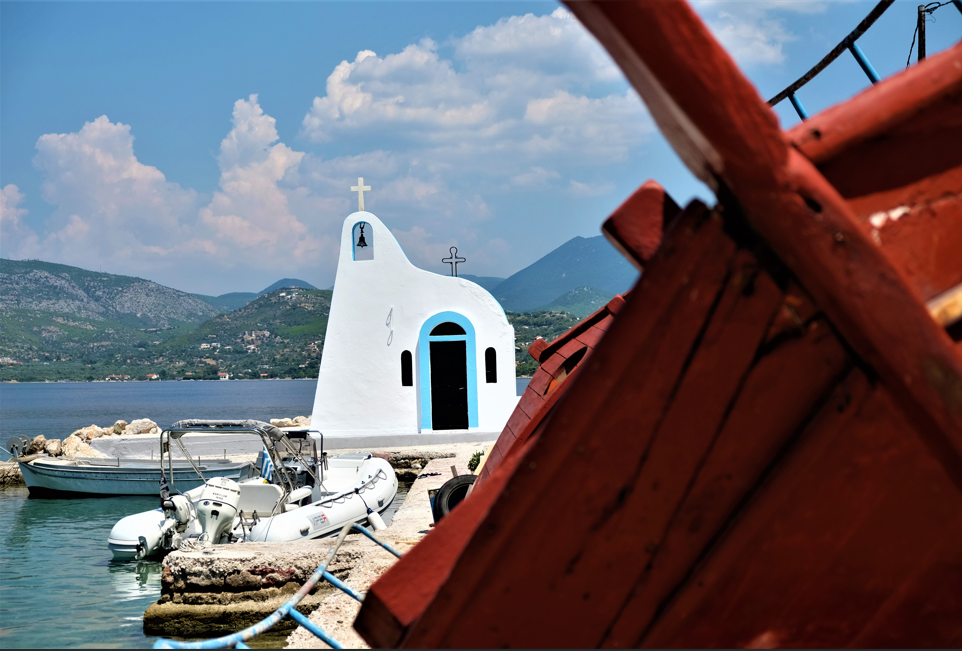
And you can’t talk about Poros without mentioning Daskalio. It’s that tiny, postcard-perfect islet in the middle of the bay with a single white chapel that is heart-shaped.
For Easter, Poros has a vibe that’s hard to beat because it’s so intimate. On Good Friday, the Epitaphs from the different parishes all meet at the central square by the sea. Seeing the processions converge by the water with the reflection of hundreds of candles in the harbor is something you don’t forget easily.
If you want to get away from the harbor, head into the pines to the Monastery of Zoodochos Pigi, 4 kilometers away from the city center. Even if you aren’t there for the service, the walk up takes you through some of the best scenery on the island. From there, take a drive or a long hike to the Temple of Poseidon, built in 520 B.C. It sits on a plateau overlooking the open sea, and you can practically feel the ancient history of the place.
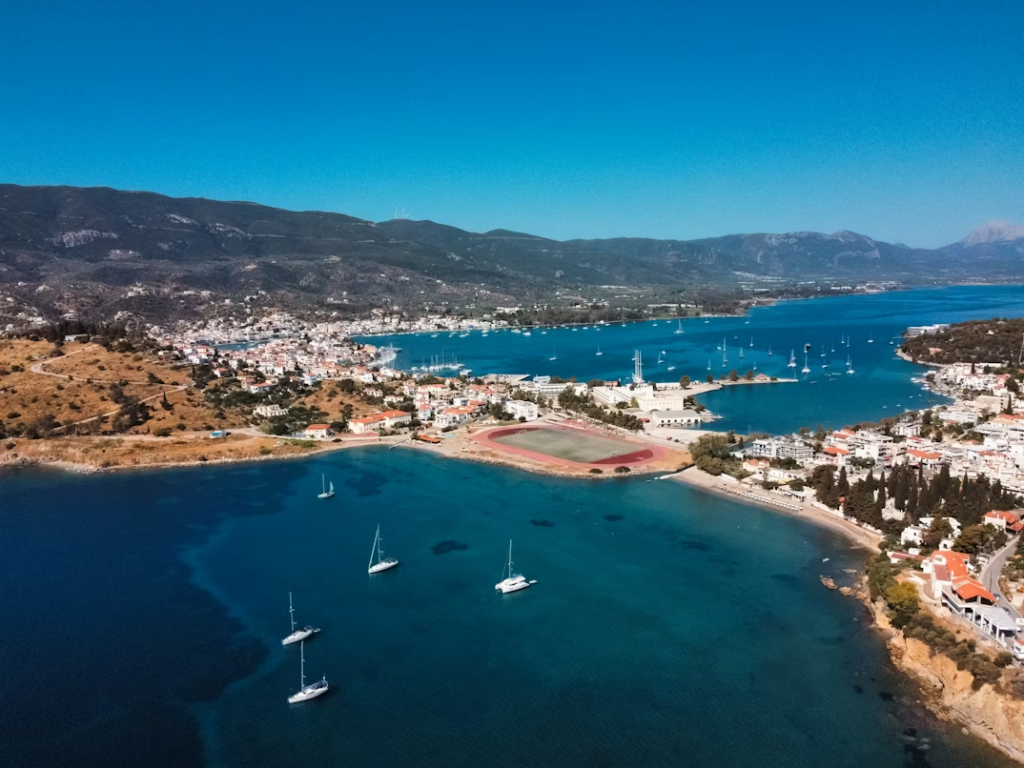
The beaches here are intimate and the most famous is Love Bay. Head to the Russian Naval Base, a spot where you can swim in shadows cast by 19th-century stone ruins. It’s a reminder that Poros has seen empires come and go, yet it remains stubbornly itself.
When you’re hungry, skip the places that look like they’re trying too hard and head to Apagio. It’s right on the waterfront, and they do traditional Greek food with a bit of a twist. Aspros Gatos, on the water, is also a great choice, that opened in 1909 and it offers a breath-taking view of the port.

For something more old-school and tucked into the backstreets, Platanos is great for grilled meats and that classic taverna feel.