 elc team
The artistic programme of the Odeon of Herodes Atticus has been announced.
When Emperor Hadrian ascended to the throne in 117 AD, a young, stammering student of rhetoric appeared at his camp on the Danube to greet him. That seventeen-year-old boy would go on to become not only one of the greatest orators and wealthiest men of his time, but also a generous benefactor of artistic and public works.
His first precious gift to the city of Athens was the complete reconstruction of the Panathenaic Stadium, completed in 143 AD. Later, among many significant projects across various Greek cities, in 161 AD he offered Athens a roofed theatre – an Odeon – with a capacity of 5,000 spectators, built on the southern slope of the Acropolis hill. That boy was Herodes Atticus.
It is said that the roof of the theatre was made of cedar wood.
Today, the Herodeion – the Roman Odeon – is considered one of the most emblematic ancient odeons in the world. In June 2026, a month of particular symbolism, thanks to a thoughtful gesture that transforms a temporary constraint into a creative opportunity, the Odeon of Herodes Atticus will open its gates for just one month before closing for several years. During this time, an essential and inspired programme of restoration, rehabilitation, and enhancement will prepare it to enter the next century of its symbolic and cultural significance.
For this one special June, the venue will host a wide range of artistic events as Farewell Celebrations. One could say that every performance presented this year on the stage of the Herodeion – each unique night, each kind of “tribute” – will form a distinct act of farewell.
Until we meet again. M.M
CLASSICAL MUSIC
– FIRST APPEARANCE IN GREECE –
June 3
Víkingur Ólafsson
Works by Johann Sebastian Bach, Ludwig van Beethoven, Franz Schubert
The Icelandic pianist Víkingur Ólafsson is undoubtedly a rare phenomenon of our time. Now in his early forties, his performances have lost none of the youthful enthusiasm, radical spirit, and deep intellectuality that have defined him since he burst onto the international music scene fifteen to twenty years ago. One of the most acclaimed artists of his generation, and an exclusive recording artist with Deutsche Grammophon, Ólafsson is above all a visionary musician. His artistic choices stand out for their originality and the subversive perspective with which he approaches well-known landmark works of the piano repertoire.
His recordings enjoy widespread global appeal, surpassing one billion streams and earning numerous awards, including the recent Grammy Award for Best Classical Solo Performance (for Bach’s Goldberg Variations, 2025), the BBC Music Magazine Award for Best Album, and-twice-the Opus Klassik Award for Solo Recording of the Year.

In his highly anticipated debut in Greece, Ólafsson presents works by Bach, Beethoven, and Schubert, constructing a programme titled Opus 109, echoing his latest album released in November 2025. The title naturally refers to Beethoven’s Piano Sonata No. 30 in E major, Op. 109, which the artist places alongside (or even in dialogue with) other works by Beethoven and Schubert, without, of course, omitting his beloved Bach. As he himself notes, the two nineteenth-century composers confront the giant of the eighteenth century “as every great composer must.”
The unifying thread of the programme is the key of E (major and minor). Within this tonal field, Ólafsson employs synaesthesia as a creative tool to explore a wide spectrum of rich and vivid shades of green.
The programme itself clearly reflects the artist’s way of thinking. As he argues, one need only look to the past to understand what is missing from many contemporary concert programmes, which often leave the listener with the feeling of “flipping through a library catalogue.” In nineteenth-century recital programmes, he observes, one senses a true liberation: they are striking, imbued with improvisatory spirit, and full of unexpected elements. It is precisely this modern perspective on classical masterpieces that establishes Víkingur Ólafsson as a major artist of the twenty-first century.
Programme
Johann Sebastian Bach
Prelude in E major, BWV 854
Ludwig van Beethoven
Piano Sonata No. 27 in E minor, Op. 90
Johann Sebastian Bach
Partita No. 6 in E minor, BWV 830
Franz Schubert
Sonata in E minor, D 566
Ludwig van Beethoven
Piano Sonata No. 30 in E major, Op. 109
Concert sponsor: Piraeus Bank
MUSIC
SCREENING
June 4
The Avex Ensemble
Blade Runner
Live
“I’ve seen things you people wouldn’t believe.
All those moments will be lost in time, like tears in rain.”
When two people meet for the first time and exchange references to explore whether common ground exists between them, the mention of Blade Runner dissolves any distance and becomes a tender code of understanding. Nearly half a century after its release, this futuristic noir-filled with darkness, rain, neon lights, and shadows slipping at the edge of vision-retains a prominent place in the history of cinema and, above all, in the hearts of lovers of the future everywhere.
It is the film that restored science fiction and established it as a respected genre of storytelling, bringing it back from the (self-imposed) exile it had entered as a form addressed to “the select few.” It is also the soundtrack that brought electronic music into every home: the moving synth “cathedrals” of Vangelis have permanently haunted the cinematic imagination and the emerging genre of electronica, setting the standard against which every original score would be measured thereafter.
Legend has it that there was never a single definitive version of the film, but seven different incarnations. Like an ironic echo of the theme of replication that runs through the film, Vangelis’ music remains singular and unshaken-like a film within the film. It functions not merely as accompaniment, but as a pulse beside and within the image, a precious dramaturgical guide to every emotion articulated within Ridley Scott’s dystopian vision of the future. In iconic pieces such as Love Theme and Runner’s Blues, the melody emerges like an inner monologue, colouring the most fragile aspects of a world suspended between the human and the mechanical.
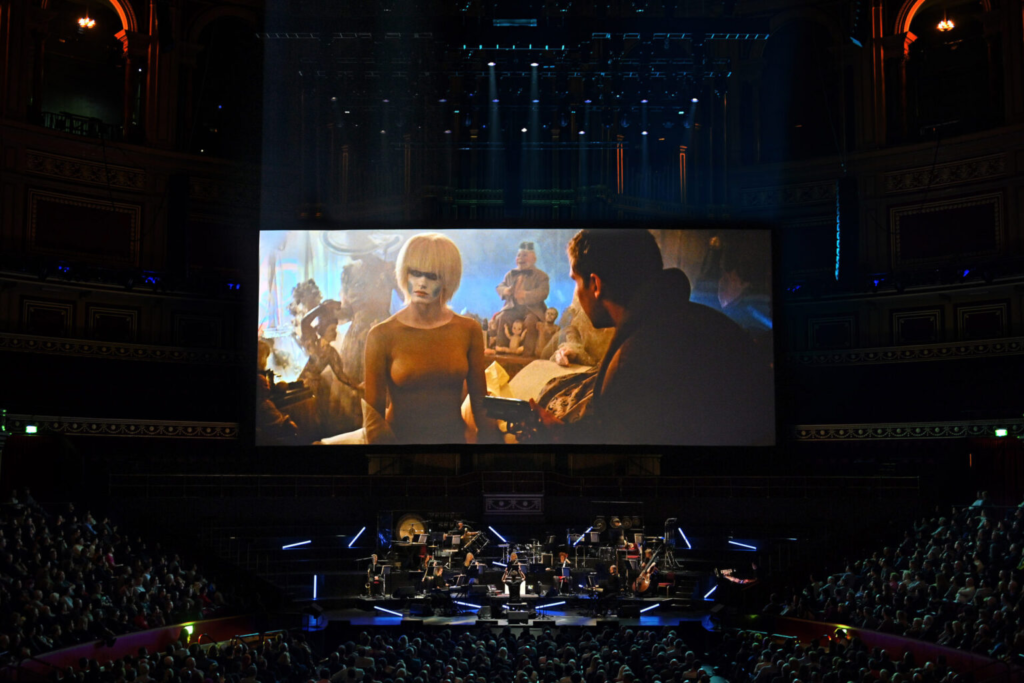
On June 4, beneath the Acropolis rock, the Final Cut of this historic film will be screened on a monumental HD screen, while its iconic score is performed live by the eleven-member The Avex Ensemble, in perfect synchronisation with the film. It is a moment of initiation: a fragment of the future comes alive within the shell of an ancient theatre, just before it closes for restoration works.
The film that for decades foreshadowed a world where technology and human existence are so intertwined as to become indistinguishable is no longer merely relevant; it has fully converged with reality. Today’s “replicants” demand autonomy and recognition, humanity questions its own nature and limits, and reflects on the future of consciousness in a world where machines have developed intelligence.
On June 4, a gateway to the unknown will open on the stage of the Herodeion. Will we be brave enough to step through?
Original score by Vangelis
MUSIC
June 5 & 6
Stavros Xarchakos
In the Present
“At eighty-seven years old, I realise more than ever that life exists only in the present, as the song says. And what is the present in music? It is the music that endures through time, the music that is born before us, the music that passes from one generation to the next. I must also confess that, for the first time, I was-unintentionally-inconsistent with you. Last September, at the Herodeion, I told you we would meet again in three years. The Athens Epidaurus Festival and its director, Mr. Michail Marmarinos, proved me wrong-and I thank them.”
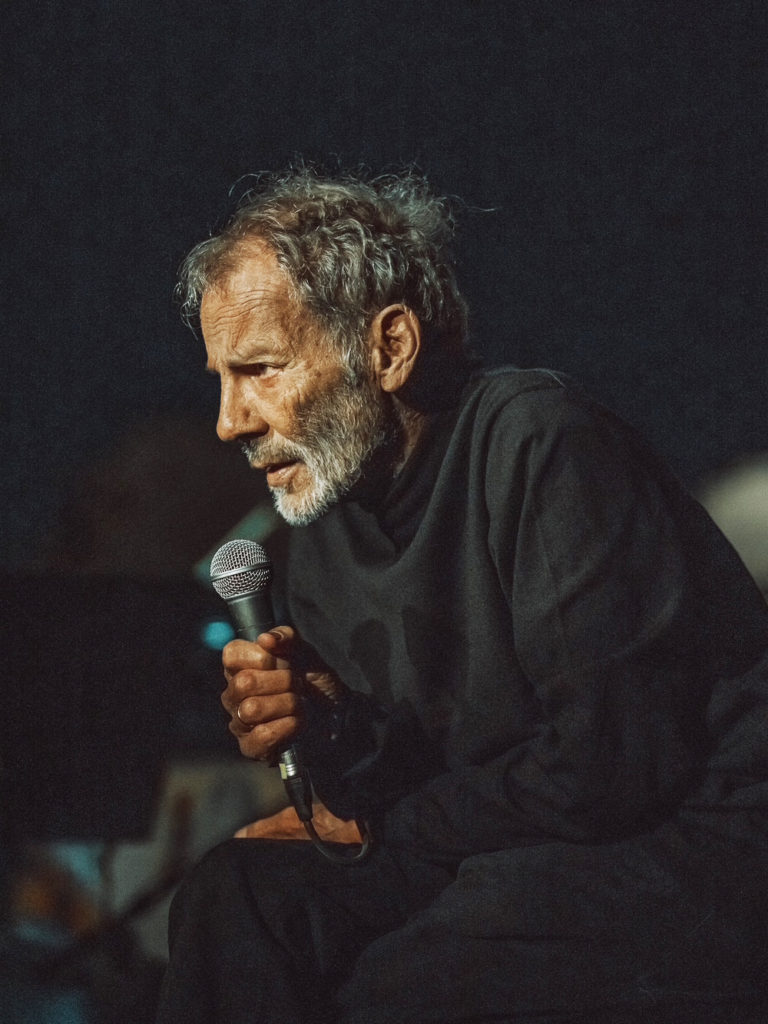
From The Great Troupe to Rembetiko, from his studies in Paris with Nadia Boulanger to the Juilliard School in New York under the encouragement of Leonard Bernstein, Stavros Xarchakos’ journey has been unwavering and monumental-yet, above all, deeply attuned to the great adventure of modern Greek song, of which he remains one of its most authentic voices.
And yet, this legacy does not seem to weigh on him. His work in recent years reveals a creator surrendered to the present and its gentle turbulence. For this is the time in which the artist truly dwells: a present in expansion, capable of containing all others within it.
We might imagine Xarchakos’ evening at the Odeon of Herodes Atticus as a present in three acts:
First part: Two creators meet in the Present.
Together with Lina Nikolakopoulou, he converses and sings, accompanied by piano and a string quartet. He conducts. He comments. He remembers.
Second part: The recent musical present.
Iro Saia takes the stage to perform new songs written for her.
Third part: The enduring present.
Dimitris Basis joins the stage, and together they perform songs that have lived in our hearts and become tradition. Alongside them, the children of the Syros music school “En Chordais kai Organois”-many remembered from the spontaneous musical moment of June 2022 on the island, when the composer conducted them in a taverna and the video travelled everywhere. Today, those children have grown; some are already university students.
For Xarchakos, the presence of children in the concert symbolises a present that is also the future. On the stage of the Herodeion, generations meet, and the title of the concert finds its deepest meaning: the present of music is where memory, experience, and new creation become one.
Because whatever endures through time continues…
Musical direction: Stavros Xarchakos
Performers: Dimitris Basis, Iro Saia
Featuring: 10-member orchestra and students from the Syros school “En Chordais kai Organois”
“TRIBUTE”
MUSIC
June 9
Selected Epirus Ensemble – Vasilis Kostas
Epirus
Featuring Kostas Tzimas, Antonis Kyritsis and Petros Chalkias
“[…] They kneel and plead with the clarinet to play into their ears.
Bittersweet joy. The soul is nourished by sound.
Their steps are long, slow, and sorrowful.
There, dance has no steps-only footsteps upon the land […]”
Music from Epirus, Hellenic Parliament Foundation
The tribute Epirus unfolds as a musical encounter of memory and continuity, dedicated to the profound tradition of Epirotic music and its unwavering journey through time. At the heart of the performance lies the legacy of Petroloukas Chalkias, serving as a point of reference for how the music of Epirus is transmitted, evolves, and is revitalised through successive generations.
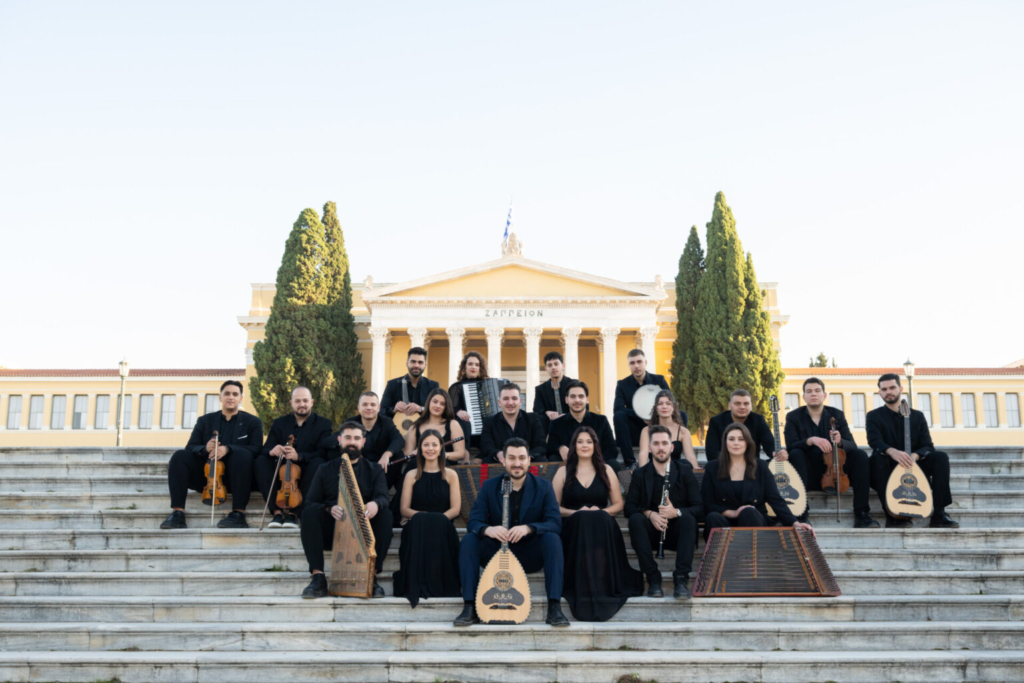
Under the artistic direction of laouto player, lecturer at Hellenic College Holy Cross, and Grammy-nominated artist Vasilis Kostas-whose decade-long apprenticeship and collaboration with Petroloukas Chalkias shaped a valuable core of knowledge and aesthetic sensibility-this material finds new expression through the Selected Epirus Ensemble, the production’s principal orchestra.
The twenty-member ensemble of young musicians from across Greece, based in Ioannina, brings to the stage a creative dialogue between authentic interpretations of traditional melodies and new orchestral approaches. While preserving the distinctive character of the Epirotic idiom, the performance offers a contemporary artistic perspective on the region’s rich musical heritage.
Joining as guest artists are Kostas Tzimas (vocals), Antonis Kyritsis (vocals), and Petros Chalkias (clarinet)-figures deeply connected to the Epirotic tradition-appearing in selected pieces and reinforcing the intergenerational nature of the tribute.
The coexistence of musicians from different generations creates a space where memory functions as a living experience rather than mere representation. The concert approaches Epirotic music as a fluid artistic language, one that continues to evolve through collective practice and personal expression.
The Selected Epirus Ensemble operates under the auspices and support of the Holy Metropolis of Ioannina and the charitable organisation “Apostoli” of the Holy Archdiocese of Athens.
Artistic Direction: Vasilis Kostas
Selected Epirus Ensemble: Emilia Chalkia (vocals), Konstantina Karampa (vocals), Dimitris Lalezas (vocals), Konstantinos Sakaridis (clarinet), Anna Maria Sinopidou (kaval), Melina Bitzidou (santouri), Giorgos Venetis (santouri), Eleni Efthymiou (santouri), Myrofora Theodoridou (santouri), Giorgos Theodoridis (laouto), Apostolos Poupalos (laouto), Stefanos Paterakis (laouto), Christos Danas (violin), Christos Poulios (violin), Giannis Deligiannis (violin), Akis Papaemmanouil (violin), Konstantinos Brachopoulos (violin), Evangelia Moukanou (accordion), Thodoris Efaplomatas (percussion)
Guests: Kostas Tzimas (vocals), Antonis Kyritsis (vocals), Petros Chalkias (clarinet)
Featuring: Panagiotis Aivazidis (kanonaki)
Sound Design: Giorgos Kariotis, Vangelis Iakovidis
Lighting Design: Giorgos Charalambous
Production: Solar Productions Athens
“TRIBUTE”
MUSIC
– YEAR OF HATZIDAKIS –
June 10
Athens State Orchestra – Loukas Karytinos
Manos H. in America – Part I
The 1960s were a decade of rapid transformation: a world in flux, young people passionately seeking new visions and meanings in life and art–culminating in May ’68–while Greece, in particular, was grappling with its own political and social upheavals that led to the 1967 coup.
Manos Hadjidakis stood at a moment of maturity and recognition. He had already won the Academy Award (1961) for Never on Sunday and, more importantly, had succeeded in speaking directly to the soul of the Greek–and international–audience, blending the classical with the popular in a way that felt unprecedentedly natural, profound, and sincere.
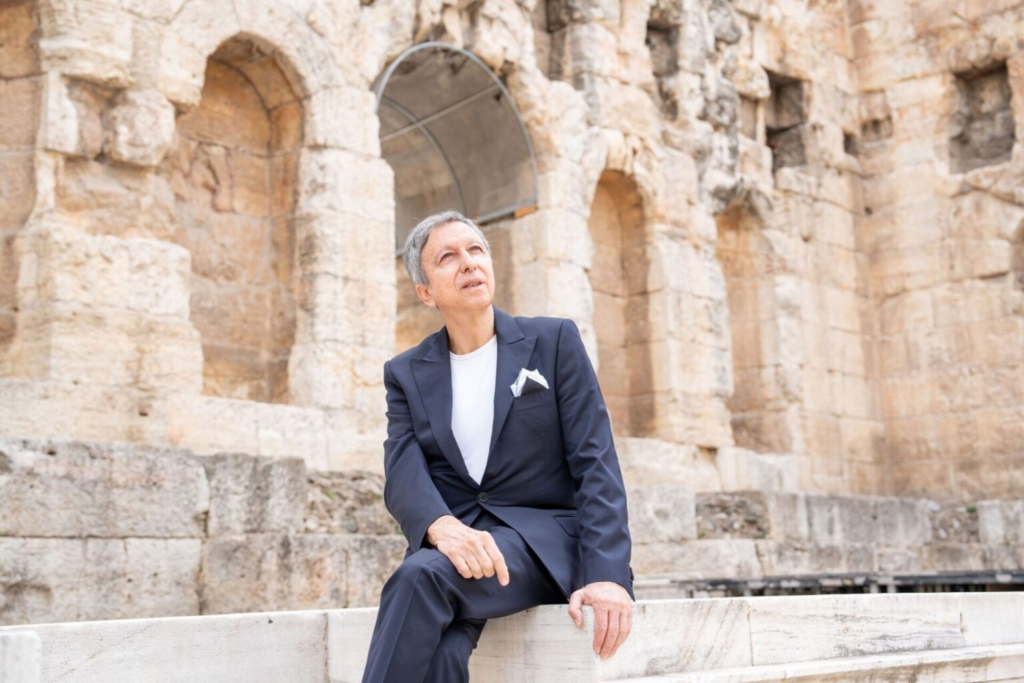
He then spread his wings towards the United States, where he lived for several years–consciously distancing himself from a dark Greek reality, yet also removed from the roots of his own sonic, visual, and human landscape.
In America, “dancing with his shadow,” he experienced the universality of Greek music in a different way and discovered new dimensions of his deeply rooted sensibilities. It was there that he composed the remarkable The Smile of the Mona Lisa (1965), a pivotal work for the artistic explorations of the era and for modern Greek music as a whole.
Three years later (1968), he wrote the score for the western film Blue by Canadian director Silvio Narizzano. Despite the film’s lack of success, Hadjidakis’ music stood out and, through its intrinsic value, has endured independently as one of the most refined pages of his orchestral output.
The Athens State Orchestra, under the direction of its artistic director Loukas Karytinos, returns this year to these two major scores by Hadjidakis, marking the centenary of his birth.
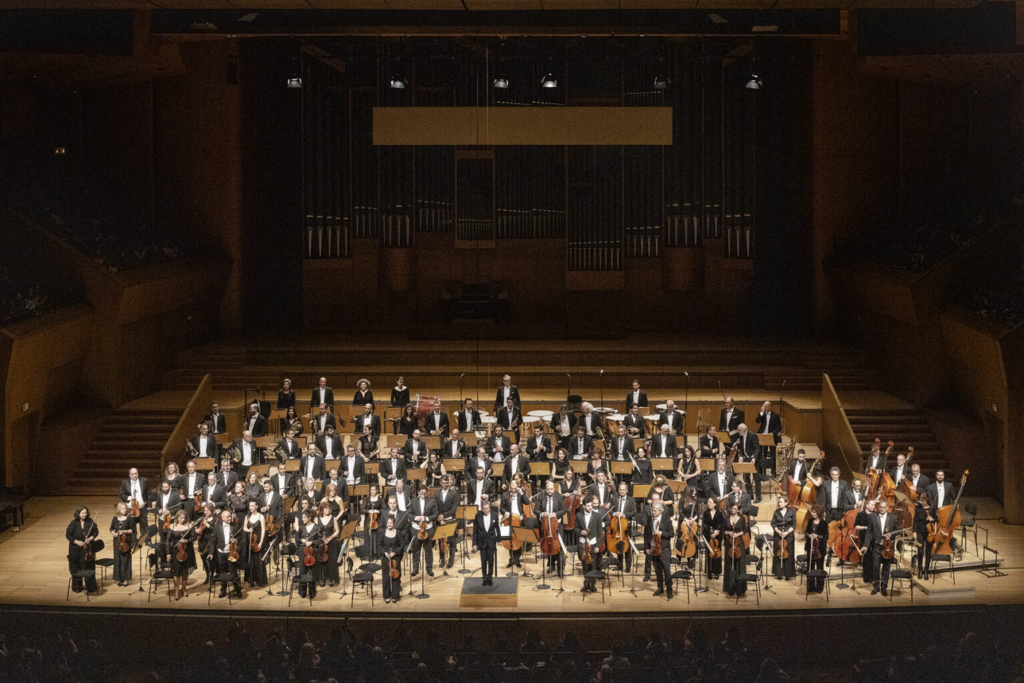
Musical direction: Loukas Karytinos
Soloist: Giorgos Tosikian (guitar)
MUSIC
THEATRE
June 12 & 13
Stamatis Kraounakis
Lysistrata
A riotously funny opera
Can anything new still be said about Lysistrata after all these years? Why does it return so insistently to stages around the world? What meaning remains inexhaustible within the heroine’s brilliant audacity?
When Aristophanes wrote the play in 411 BC, he was not making a subtle comment on Athens during the Peloponnesian War. Rather, he was acutely attuned to the political tremors within the city walls, where the Assembly had weakened and oligarchic forces were resurfacing. With the covert weapons of art–those that reveal without pointing fingers—he addressed the root of suffering: the obsession with power and domination, a hollow command that drives society toward destruction.
And what is the antidote? A resounding slap to this tragic masculinity. When Aristophanes shifts the woman from the domain of the oikos (home) to that of the demos (public life), he is not merely employing a theatrical device, but enacting a seismic political transformation. The heroine not only calls upon the women of Athens–and even those from rival cities–to stage a “sex strike,” but unleashes a torrent of femininity that sweeps away established certainties, proposing a solution others hastily dismiss as utopian and therefore unworkable. Any resemblance to present-day reality is purely coincidental.
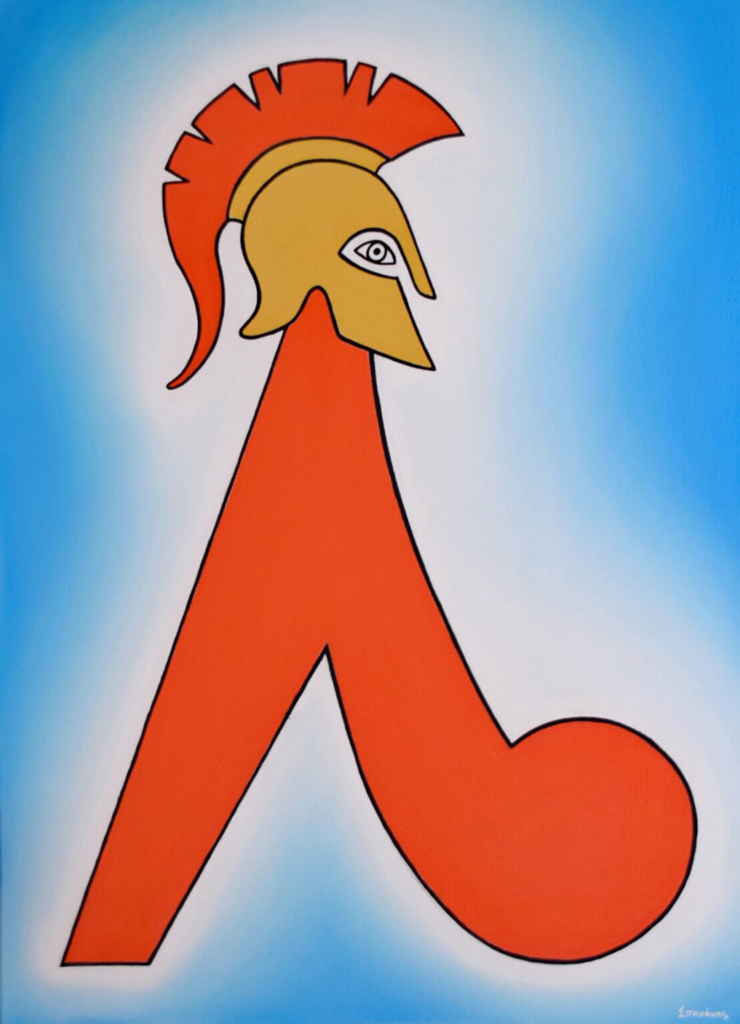
It is therefore a particularly fortunate moment to encounter this adaptation by Stamatis Kraounakis, which invites us to wonder what may emerge from the meeting of Aristophanes’ sparkling wit with Kraounakis’ unrestrained musical imagination. The composer creates a polyphonic operetta where music and text coexist on equal terms, all tuned to the relentless satire of the ancient poet. At times lyrical, at times popular, at times a biting cabaret, the music becomes the driving force of the action, while the sung text enhances this Aristophanic experience, opening subtle connections to the present and amplifying the theatricality of the performance.
At the same time, the internationally acclaimed scenographer Takis dresses the production in a thoroughly contemporary aesthetic that resonates with the historical context of the play, resulting in an irresistible visual spectacle. On stage, thirty distinguished performers and musicians come together, with a standout appearance by Dimitra Galani in the role of the goddess Athena.
In the play, the women seize the Acropolis–home of the public treasury–to paralyse the men’s war machine. For two nights, their powerful theatrical presence will hover above us, allowing this exuberant river to flow once more under Kraounakis’ direction, flooding the tiers of the Herodeion and sweeping away, once again, the certainties of the world.
Music – Text – Direction: Stamatis Kraounakis
Libretto collaborators: Lina Nikolakopoulou, Giorgos Chatzidakis, Lakis Lazopoulos
Assistant Director: Marilena Moschou
Set & Costume Design: Takis
Choreography: Thodoris Panas
Lighting Design: Stella Kaltsou
Dramaturgical Consultant: Evanthia Stivanaki
Featuring (selected):
Lena Ouzounidou (Lysistrata), Kostas Bougiotis, Sofia Kounia, Elena Kafourou, Penny Xenaki, Georgia Amorgiannitou, Argyro Kaparou, Venetia Manaveli, Giorgos Stivanakis, Konstantinos Tsonopoulos, Stella Krouska, Christoforos Stampoglis, Christos Gerontidis, Kostas Venetsanos, Sakis Karathanasis, Theologos Papanikolaou, Spyros Pinkeridis, Dimitra Galani, Marilena Moschou, Maria Papadopoulou
Musicians on stage: Dimitrios Andreadis (piano, musical direction, orchestration), Dimitris Kiklis (keyboards), Giorgos Tamiolakis (cello, euphonium), Lambros Papanikolaou (double bass), Theologos Papanikolaou (violin), Kosmas Kokolis (guitar, bouzouki), Nikos Katsikis (mandolin, Spanish laouto, bouzouki)
Production: Athens Epidaurus Festival / GR Entertainment
“TRIBUTE”
MUSIC
June 15
Estonian Philharmonic Chamber Choir – Tallinn Chamber Orchestra – Tõnu Kaljuste
Works by Arvo Pärt
“I could compare my music to white light, which contains all colours.
Only a prism can divide the colours and make them appear.
This prism could be the spirit of the listener.”
A.P.
Arvo Pärt is everywhere. His works have been performed almost more than those of any other composer in the first quarter of this century. The sonic world he conceived, a crystalline, almost monastic music that carries the touch of snow and comes closer than any other to silence, has long since left the inner landscapes of the composer’s imagination and is now recognised as one of the most evocative musical corpora of the past hundred years, cherished alike by devotees of classical music and followers of pop culture.
It is impossible not to speak of the moment of Pärt’s transformation, since it stands as a model of artistic rebirth, inner quest, and musical reinvention. In the mid-twentieth century, feeling trapped between the dominant yet rigid currents of the avant-garde, such as serialism, aleatoric music, collage, and neoclassicism, Pärt withdrew from composition and chose silence, searching for another musical language, one of ascetic essence and transparent truth. He devoted himself to an intensive study of Gregorian chant, Orthodox liturgical music, and the early polyphony of the Renaissance. In 1972, he converted to the Russian Orthodox Church, and his faith has since guided his mission: the revelation of a spiritual beauty that seeks expression through the aesthetic path. The personal compositional system he developed under the name tintinnabuli enabled him to touch this scattered music of the higher spheres through a lucid technique that harnesses the power of the smallest musical trace, the unadorned sound of a resonating note, in its highest degree.

In a celebration of the life and work of the Estonian composer, the Herodeion evening presents emblematic works from his vocal music, both solo and choral. The demanding task of performing them is undertaken by the Estonian Philharmonic Chamber Choir and the Tallinn Chamber Orchestra under the baton of Tõnu Kaljuste. Longtime collaborators of Pärt, they have played a decisive role in the dissemination and interpretive understanding of his musical universe. Their presence on the stage of the Herodeion promises an evening service of genuine emotion, a wholehearted expression of gratitude toward a great hierophant who once summarised the power of music with the following words: “Since it is possible to kill with a sound, it is also possible to heal with a sound.”
Musical direction: Tõnu Kaljuste
Performed by: Maria Listra
Arvo Pärt (b. 1935)
Für Lennart in memoriam (2006)
L’abbé Agathon (2004, arr. 2008)
Soprano: Maria Listra
Stabat Mater (1985, arr. 2008)
Soprano: Maria Listra
Countertenor: Danila Frantou
Tenor: Toomas Tohert
Magnificat (1989)
Soprano: tba
Te Deum (1985, rev. 2007)
Soprano: tba
Tenor: tba
Concert sponsor: Piraeus Bank
“TRIBUTE”
MUSIC
YEAR OF HATZIDAKIS
June 17
Giorgos-Emmanouil Lazaridis – Raining Pleasure
Manos H. in America – Part II
If we look at the cover of Reflections by Manos Hadjidakis and the New York Rock and Roll Ensemble, another band faintly appears in the water before the original quintet: it is Raining Pleasure, who, thirty-four years after the release of the celebrated album, became the reflection of the group that unexpectedly entered the orbit of Planet Hadjidakis, offering their own interpretation of the music of Reflections and, with it, yet another glimmer of the composer’s genius.
Hadjidakis’s stay in New York between 1966 and 1972 left behind legendary anecdotal fragments: encounters with important musical figures of the time, such as Grace Slick of Jefferson Airplane, and a personal plunge into the psychedelic mythology of the era and the unprecedented music being made then by young people holding in their hands the materials of another world. After all, who could forget the composer’s brilliant aside in which he called Lena Platonos “a female Syd Barrett”?
And yet Hadjidakis could never absorb all these gifts in an unprocessed way, however much he was impressed by the “exquisite noise” of groups such as the Rolling Stones. For the great burner in the composer’s mind was always the Greek Song, accompanied by the subtlety of the classical repertoire. Still, within him smouldered the need to do something with, and alongside, this extraordinary musical rebirth. He found that possibility in the New York Rock and Roll Ensemble. At its core were three students from Juilliard, armed with uncompromising classical training and virtuosity on numerous instruments, among them the late Michael Kamen, later collaborator of David Bowie, Pink Floyd, Metallica, and others. The meeting of their fertile electricity with the early baroque touches of Hadjidakis, as already heard in the pivotal The Smile of the Mona Lisa, breathed life into one of the most distinctive albums of that era, uniting progressive rock with the deeply popular quality of the composer’s writing. With exemplary orchestration and performance, the album was granted the passport of universality, achieving a difficult balance: sounding at once Greek and universal.
Fast forward: in a studio outside Cologne in 2004, Raining Pleasure completed the recording of the album, with the contribution of saxophonist David Lynch and Elli Paspala on the closing track “Noble Dame”. A band with innate melodic sensitivity and a European musical education, Raining Pleasure recognised their kinship with the worlds of Reflections through its English lyrics and rock energy, and delivered a peerless reinterpretation that elevated their domestic discography while opening new paths of recognition abroad through live presentations of Reflections in various locations.
This unique alignment of stars will be experienced this summer. And if we look carefully at the stage of the Herodeion when Raining Pleasure unfold the gossamer world of Reflections, perhaps we may notice a reflection forming before the orchestra or in the sky above, an electric ensemble beneath the baton of a magician-composer: the New York Rock and Roll Ensemble and the eternal Manos Hadjidakis.

The evening will open with the presentation of another work from Hadjidakis’s American years. Born in London in the summer of 1969 and recorded in New York in December 1971, Rhythmology gathers six pairs of pieces for solo piano that reveal a profound and eclectic engagement with the archetype of the rebetiko song. Whereas in earlier works the composer had included direct arrangements, Rhythmology refers to rebetiko while remaining an original conception.
In the album notes, he writes: “From the beginning I wanted to play seriously, with single rhythms and with hasapika among them that depended on constellations. And above all, to remember again very old ways, the Orthodox ones, of the bouzouki and the rebetiko songs. I think I was now in a position to hear them without emotional excess, from afar, more technically and with all their deep erotic-religious content.” Dedicated to George Seferis, “a living Seferis who continues to live among us”, this utterly idiosyncratic work of the Hadjidakis discography will be performed by pianist Giorgos-Emmanouil Lazaridis.
With thirty-five years of uninterrupted presence on the international music scene as soloist, composer, and pedagogue, Giorgos-Emmanouil Lazaridis has devoted precious artistic work to the interpretation and elaboration of the Hadjidakis idiom, work that stands worthily alongside his overall international career and his recognition as one of the most formidable contemporary performers. His presence on the evening of June 17 is expected to confirm once again that his performances stand “above comparison” (BBC Music Magazine, Adrian Jack) and are “so distinctive that they retain their uniqueness even when one thinks of great performances by Argerich, Horowitz, Brendel, Zimerman” (Gramophone).
MUSIC
June 18
Einstürzende Neubauten
Ode to the Avant-Garde
Those who ascend to the ancient theatre on this June evening will find themselves before a historic paradox: a demolition crew of musical conventions disguised as a band will have taken over the stage of the Herodeion, transforming it into an exquisite industrial playground.
We are speaking, of course, of Einstürzende Neubauten, literally “Collapsing New Buildings”. Among the most important biological processes that keep a species alive and guarantee its renewal and continuation is the ability to incorporate foreign DNA, even when it is potentially hostile. In a way that reflects this biological wisdom, the German ensemble has crossed half a century of musical history while continuing to sound the same precisely because it sounds like nothing else. While winking at fleeting sonic avant-gardes, their hearing remains steadily tuned to a sound that comes from within.
And what is that sound? Its founding act lies in a West Berlin that no longer exists, however hard we search for it: a city defined by images such as reconstruction, factories, squats, abandoned buildings, metal, concrete, the Wall. Within this landscape, a blazing youth searched for answers in the writing of ruins and the hieroglyphics of sound: how to make art out of the material of your city. From the ashes of these visions was born a musical guerrilla warfare: Einstürzende Neubauten.

Experimental yet absolutely disciplined, EN stubbornly refused to follow inherited modes of composition and performance and returned to a sacred zero, knowing that in order to conquer pure music one must readjust one’s entire intellectual toolbox.
In their case, the term “sonic arsenal” is no journalistic euphemism: custom-built constructions, air compressors, plastic and metal pipes, jerrycans, steel plates, sheet metal, objets trouvés, even a jet engine, all form part of their musical equipment. With these materials they tirelessly shape sleepless industrial chants that range from haunting nocturnal sonatas to noise rhapsodies and steel symphonies.
The days when concert organisers hesitated to invite them, fearing the damage they often left behind in buildings, belong to the past. Their presence at the Herodeion preserves equal measures of poetry and irony: veterans in the farewell to iconic structures, one recalls their saga before the demolition of the former East German Parliament, the Newly Built Ruins will stand within the skeleton of the Attic ruin and lull it with their metallic tones, accompanying it into its temporary slumber before restoration works begin.
A black box recording the history of Europe, a mural from the future that no one can yet decode, a living organism that violates consciousness and plants the seed of unrest. On June 18, now that their musical language has crystallised so ideally with Rampen (2024), we are invited to a concert in order to encounter, in body and soul, a formation that every person who calls themselves a lover of art ought to witness at least once in their lifetime. The consequences may be transformative and may open you once again to the awe of sound. After all, where else will you hear a jet engine sing?
MUSIC
June 19
Lena Platonos – Maria Farantouri
Moirai
Nature and its humble creatures, the friendship of girls, love and war, death and life, the balance between the two sexes. The unknown world of the women poets of antiquity comes into the light in a performance drawing its materials from the book by Thanos Tsaknaki Fragments of the Silent, with music by Lena Platonos and interpretation by Maria Farantouri. Sappho, foremost among them and the “mother” of all, together with Corinna, Telesilla, Anyte, Praxilla, Moiro, Nossis, Diophile, Erinna, the women who cast off the evil eye, and other poetesses of the ancient Greek world, silent figures whose names alone survive, appear in the lyrical and tender fragments of the performance like a song both of today and forever, as indeed they deserve.
In this special work, created specifically for this year’s Athens Epidaurus Festival and the selected performances at the Herodeion, Lena Platonos and Thanos Tsaknaki retrieve from oblivion the Platonic idea of the soul’s immortality and poetically recompose it through Moirai, the composer’s new work, which will be presented to the public for the first time and performed by internationally acclaimed flute soloist Stathis Karapanos. The texts are narrated by Maria Farantouri.
The singular Lena Platonos, as a natural kin spirit to these ancient figures, becomes through her music the vehicle that carries the poetesses powerfully into the present and secures for them a life in the future, now sung, giving the works a contemporary tone through her electronic palette. At the same time, she highlights the tradition of the ancient Greek musical scale while also incorporating elements of folk song. No more fitting interpreter of these works could be imagined than the timeless, and for that reason enduring, voice of Maria Farantouri.

The performance concludes with a visit to Platonos’s boundary-defining work Sabotage, released in 1981 and foundational to the electronic sound in Greece. Three striking songs from the album, “One Thousand and One Nights”, “Sabotage”, and “In the Constellation of the Penguin”, will be presented as transcriptions for flute, performed by Stathis Karapanos.

Composition – Narration (Fragments of the Silent) – Keyboards (in Moirai and Sabotage): Lena Platonos
Performance (Fragments of the Silent) – Narration (Moirai): Maria Farantouri
Orchestration: Lena Platonos, Stergios T. (Stergios Tsirliagkos)
Flute soloist (Moirai and Sabotage): Stathis Karapanos
Musicians: Stergios T. keyboards, programming, electronic percussion (Moirai), Michalis Porfyris cello, Giorgos Kontogiannis lyra, Vahan Galstian winds
Musical direction (Fragments of the Silent) – Keyboards: Michalis Papapetrou
Co-production: Athens Epidaurus Festival, Technotropon – Artway Cultural Productions
CLASSICAL MUSIC
June 21
ERT National Symphony Orchestra
World Music Day
On June 21, as every year, we celebrate World Music Day with the established concert of the ERT National Symphony Orchestra.
MUSIC
June 22
Lykke Li
Lykke Li does not simply write songs. She writes moments that find you when you least expect them, overturn your day, and transform your night. The unforgettable voice behind “I Follow Rivers” and songs such as “No Rest for the Wicked” and “I Never Learn” comes to Greece for the first time, meeting her many listeners at last and bringing to an end a long-standing concert longing.
With more than fifteen years of artistic trajectory, the award-winning Swedish singer, songwriter, model, and actress has built a world in which pop leaves behind the polished sheen of contemporary production and strips itself bare in order to touch a rawer and more instinctive form of expression. Time and again, she has chosen the flawed over the perfect, enclosing within her recordings tension, breath, imperfection, and spontaneity, all those elements that make an emotion feel dangerously vivid and true.
Balancing irresistibly between icy Scandinavian cool and a sincere, almost diaristic lyricism, her music turns into a fluid moodboard of emotions, drawing on indie pop, alternative, and an underlying cinematic songcraft. From the emotional weight of “I Never Learn” to the dark, sensual energy of so sad so sexy and the inward undercurrent of Eyeye, each Lykke Li song does not seek to impress so much as to quietly infiltrate the listener’s mind and fantasies, forging a deep and intimate connection.
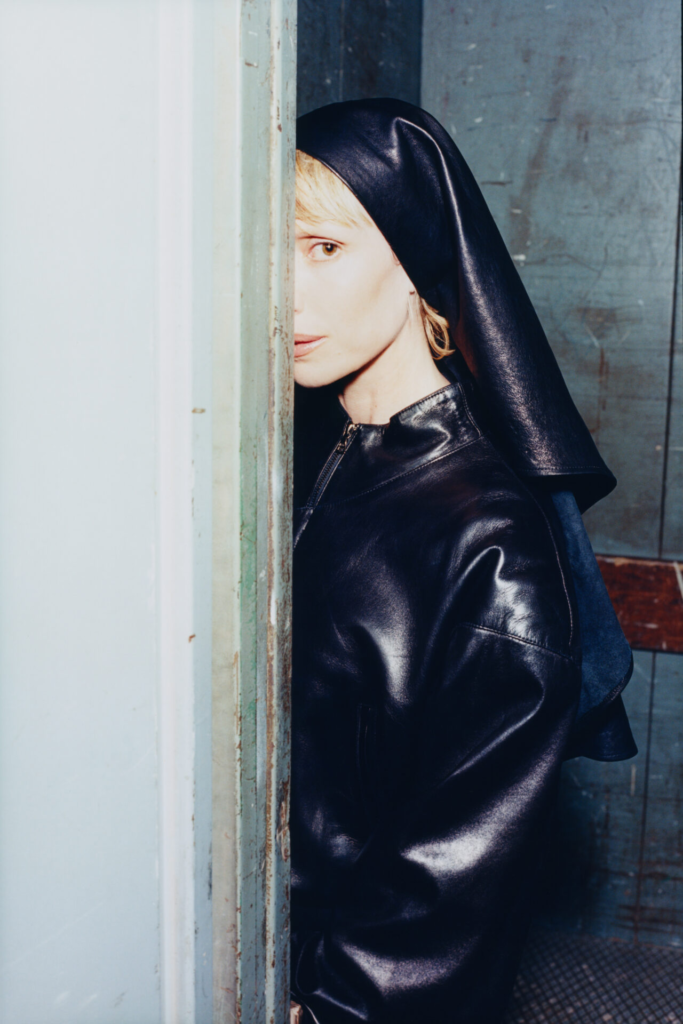
On June 22, the Odeon of Herodes Atticus becomes the perfect setting for this long-awaited encounter, a concert that will move through every shade of fragility and eruption. With new material on the horizon and a new album expected within 2026, Lykke Li continues to redefine what contemporary pop can mean, with irresistible style, instinct, and complete command of atmosphere.
THEATRE
100 YEARS OF THE ACADEMY OF ATHENS
June 25 & 26
Stathis Livathinos
Euripides
Hecuba
In the Shadow of the Republic
Euripides’ Hecuba, written in the first years of the Peloponnesian War, not only deals with the end of mythical Troy but also reflects the twilight of the Athenian polis as a structural unit of civic organisation. In the play, the invocation of rules and justice recurs insistently, indicative of a period in which neither truly functions. By contrast, Plato’s Republic, written in a period of cultural recovery, articulates a utopian conception of reconstruction, linking knowledge to political order. Though they belong to different genres and are distant in time, these works intersect at a common core of inquiry:
What are justice, truth, and education?
What are the limits of human morality?
At the centre of the direction stands Hecuba, once powerful and noble, as an emblematic figure of moral and political collapse. Broken by loss and exposed to historical violence, she confronts the disintegration of every stable point in her world. Queen, mother, captive, she bears upon her body the marks of war and human brutality and, within the erosion of every notion of justice, is gradually led into an extreme condition in which pain, revenge, morality, and justice simply become indistinguishable.

Against this devastation, the Platonic excerpts introduce a different field of reference. Justice, as an applied idea aimed at the harmonious coexistence of the whole, together with the search for truth beyond appearances and the limited perspective of the individual, forms a framework within which Hecuba is reinscribed, tracing the coordinates of a mental horizon from which Euripides’ characters have drifted away. The excerpts from the Republic thus expand the tragic landscape of Hecuba, where, aside from the dead, who are only the very young and the innocent, no one remains morally unscathed.
The axis of the stage treatment is the Myth of the Cave, Plato’s emblematic allegory of illusion, knowledge, and the possibility of awakening. The image of prisoners who take a world of shadows for reality establishes here a powerful theatrical condition. Within it, Hecuba is activated as a catalytic presence, while Stathis Livathinos’s penetrating directorial gaze transforms the meeting of tragedy and philosophy into a field of reflection and trial, where the limits of awareness, human measure, and responsibility are tested.
The production is presented in the framework of the celebration of the 100 years of the Academy of Athens (1926–2026).
Translation: Elsa Andrianou
Text composition: Elsa Andrianou, Stathis Livathinos
Direction – Dramaturgical treatment: Stathis Livathinos
Set and costume design: Eleni Manolopoulou
Original music: Thodoris Abazis
Lighting: Alekos Anastasiou
Assistant director: Ilektra Maggina
Cast (alphabetically): Antonis Giannakos, Giorgos Dambasis, Nikos Kardonis, Nestor Kopsidas, Anna Magkou, Lilly Meleme, Polyxeni Papakonstantinou, Erato Pissi, Theodosia Savvaki, Maria Savvidou, Virginia Tamparopoulou, Aris Trupakis
Musicians on stage: Iakovos Pavlopoulos percussion, Angelos Pappas electric guitar
Production execution: Polyplanity Productions
Production management: Yolanda Markopoulou, Vicky Strataki
Co-production: Athens Festival – LYKOFOS / Giorgos Lykiardopoulos
CLASSICAL MUSIC
June 29
Athens State Orchestra – Michał Nesterowicz
Gustav Mahler’s Eighth Symphony
Even by the standards of Gustav Mahler’s monumental symphonic output, the Eighth Symphony occupies a singular place. It marks an extreme point, not only for Mahler but for the Romantic symphony in general. The nickname “Symphony of a Thousand” did not come from the composer himself, but from impresario Emil Gutmann, who used it for publicity before the premiere of the work.
Today it may seem excessive, but it is estimated that 858 singers and 171 instrumentalists took part in that concert. Yet the essence lies neither in the duration, Mahler’s Third Symphony lasts longer, nor in the number of performers, the Second Symphony also requires similarly vast forces. The unique grandeur of the Eighth lies in its affirmative tone, since it is the only symphony by this genius composer that contains no trace of irony, doubt, or inner struggle.

On the contrary, it unfolds a proud and solid rhetoric, bearing messages of major spirituality with unwavering inner and musical confidence. Its premiere on 12 September 1910 in Munich, conducted by the composer himself, was the greatest success of Mahler’s life, just seven months before his death.
Mahler himself recognised in the Eighth his greatest compositional achievement, while the great German writer Thomas Mann captured the essence of this colossal symphonic work by saying that it “expresses the art of our time in its deepest and most sacred form”. Naturally, purely practical reasons make a performance of the Eighth an uncommon artistic event, and therefore one of special value.
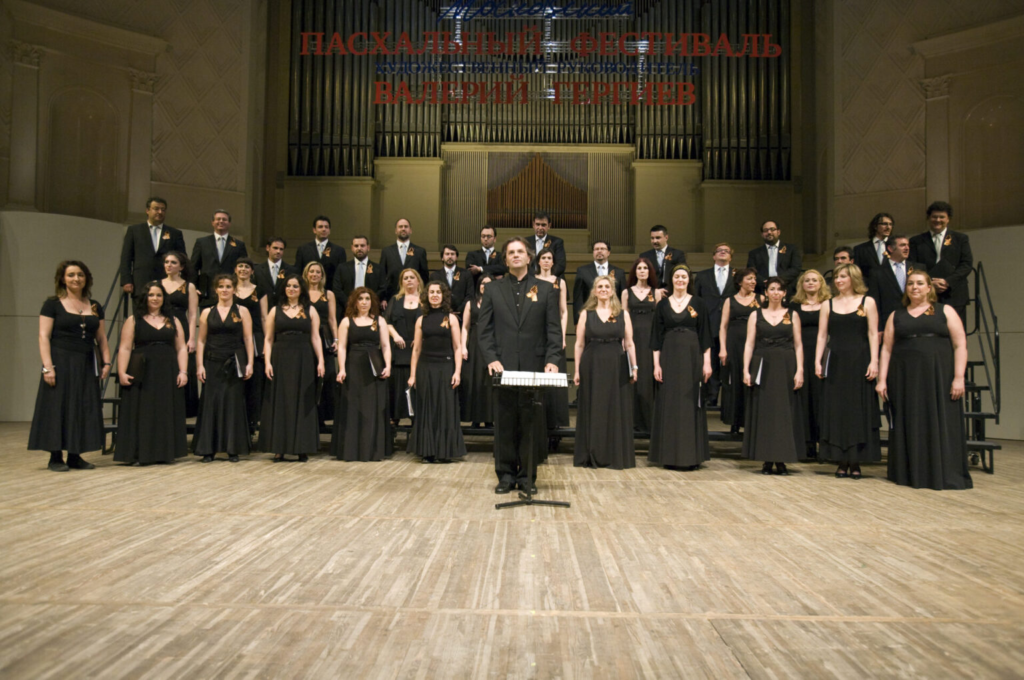
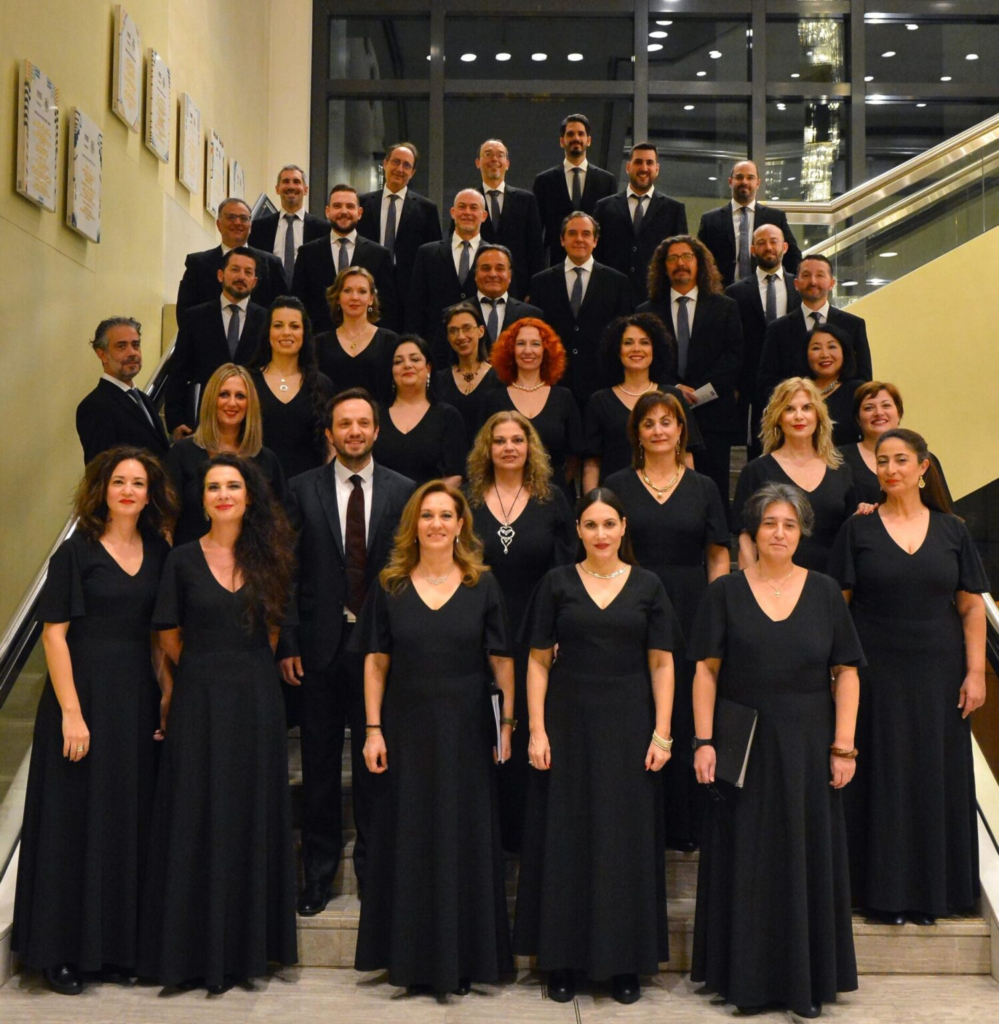
The internationally renowned Polish conductor Michał Nesterowicz leads the Athens State Orchestra, a host of distinguished lyric singers, and extensive choral forces, offering the Festival audience one of the rare opportunities to experience this epic masterpiece live.
Gustav Mahler (1860–1911)
Symphony No. 8 in E-flat major (“Symphony of a Thousand”)
Part I
Hymnus: Veni, Creator Spiritus
Hymn: Come, Creator Spirit
Part II
Schlussszene aus Goethes Faust
Final Scene from Goethe’s Faust
June 30
More will be announced soon.
Major sponsor: PPC