 PEPI NIKOLOPOULOU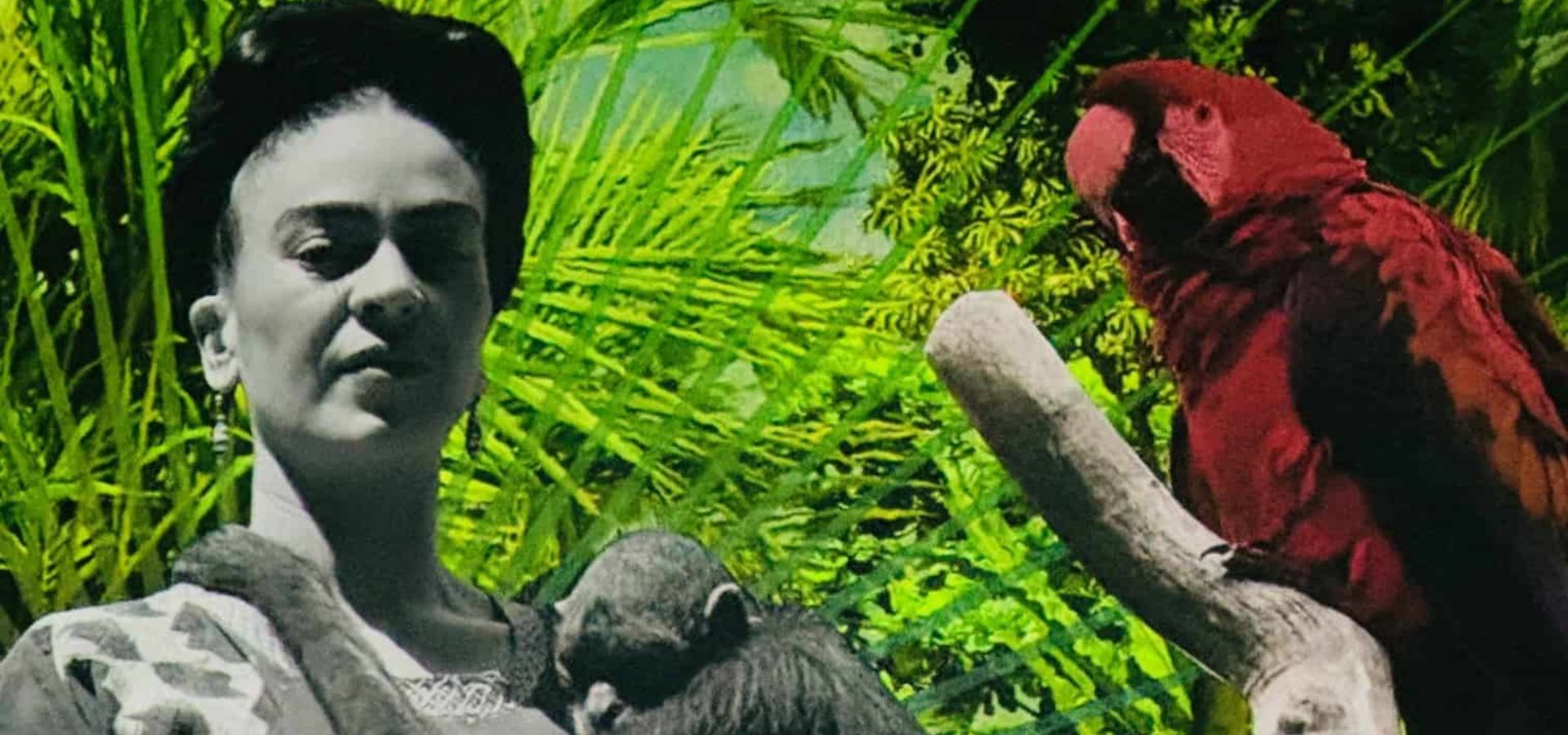
“I paint myself because I am the subject I know best,” she often said. Through this persistent return to the personal, Frida Kahlo managed to create a body of work that transcends the individual and becomes collective.
Her name now belongs to a global vocabulary of images and references. Her pain and trauma have been transformed into a shared source of inspiration, while her work, marked by deep emotional intensity, vivid colors, and a constant return to her own experience, has established her as a symbol. Frida Kahlo is perhaps one of the most reproduced artists in the world. Her self-portraits have become ubiquitous images, circulating everywhere, from museums to everyday objects.
This creates a challenge: How can you see again something you feel you already know?
The exhibition experience
The exhibition “Frida Kahlo: Beyond the Icon – The Immersive Experience”, presented at the Hellenic Cosmos Cultural Centre, attempts to answer this by focusing not only on her works but also on her life. Confronted with serious health issues and physical pain from a young age, she developed a body of work that draws directly from lived experience. At the same time, her stance toward society and politics, as well as the public image she consciously cultivated, contributed to shaping a personality that transcends the boundaries of her time.
Her life, therefore, holds immense interest and offers multiple opportunities to revisit and reinterpret her personal universe. She was an intensely “staged” personality: her body, her image, her pain all became part of a compelling and self-constructed world.
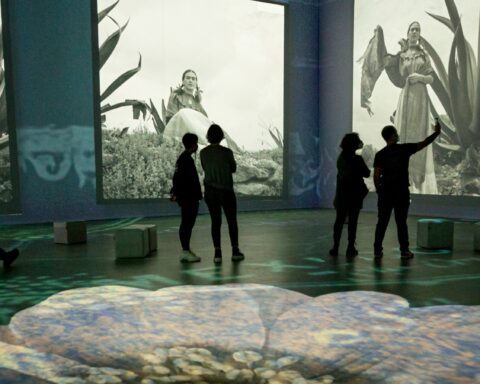
Upon entering the exhibition, visitors find themselves in a kind of antechamber to Frida Kahlo’s universe, one that constantly shifts and evolves, sustaining a sense of discovery. Following a contemporary museological approach, the exhibition moves beyond passive viewing, inviting active participation: you can paint, take photographs in a specially designed photo booth, or even experience your own AI-generated version of Frida. Large-scale projections, soundscapes, and narrative excerpts are used to translate this world into an immersive storytelling experience.
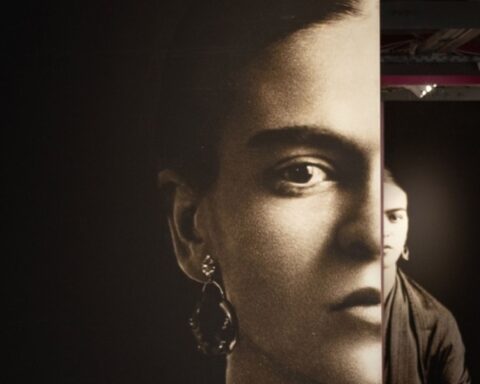
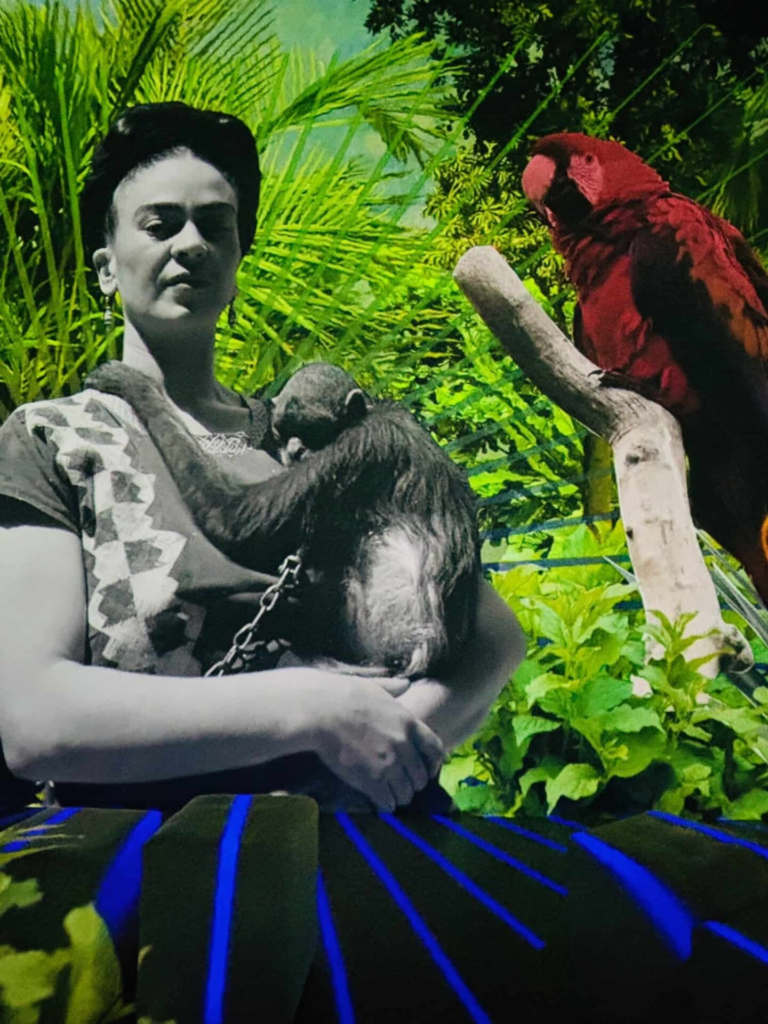
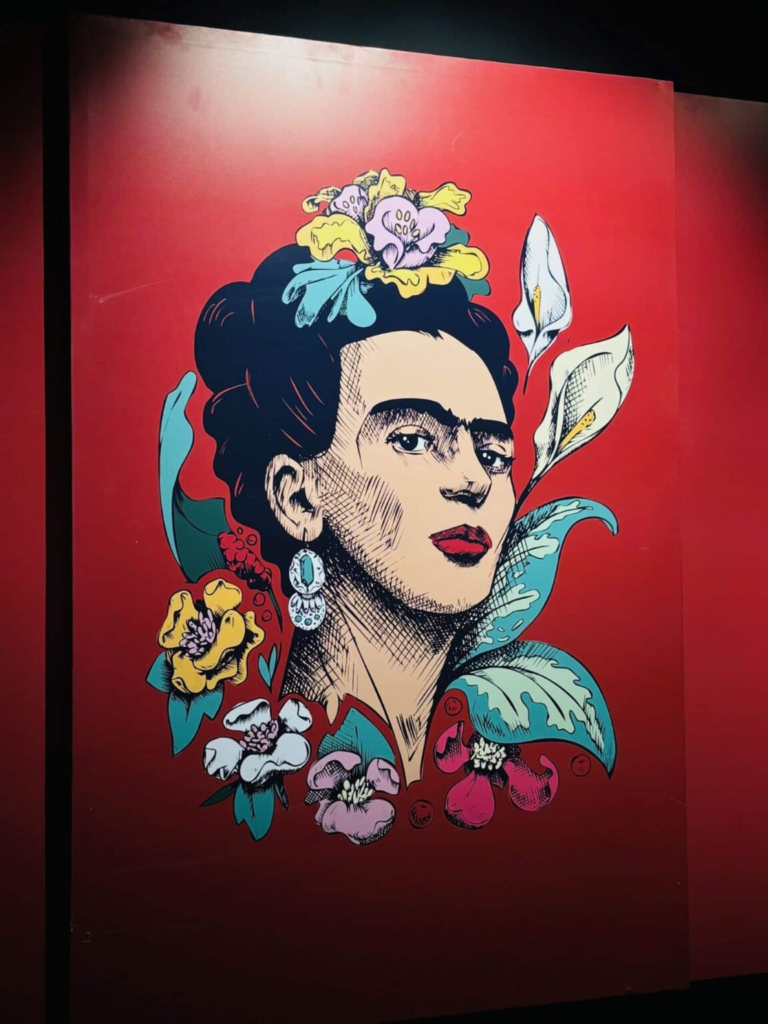
The visitor begins with the image that has come to dominate today: Frida as an icon. Her face, the flowers in her hair, her striking features have all become globally recognizable elements.


The Body and the Trauma
A pivotal moment in her life was the accident she suffered at the age of 18, when the bus she was traveling on collided with a tram. Her presence on that bus might have been avoided had she not gone back to retrieve the umbrella she had forgotten at school. The collision itself might have been avoided if the drivers had paid the attention required on the road.
Her spine was severely injured in three places. She sustained fractures to her leg, arm, pelvis, and shoulder. She was hospitalized and remained there for a month. Throughout her life, she relied on twenty-eight corsets to support her body: one made of steel, three of leather, and the rest of plaster. This trauma appears early in the exhibition through a distinct three-dimensional work titled The Moment.
The Moment captures that split second which transformed the life of Frida Kahlo, a moment that reveals just how fragile we are, both physically and emotionally. It is a complex digital piece, a short 3D animated film.
Her injuries were severe and multiple, affecting her spine, pelvis, and limbs. Dozens of surgeries followed, along with long periods of immobility. During her recovery, she began to paint, using a mirror placed above her bed. Painting gradually became a primary means of expression and a way to process her experience. Around 80% of Frida Kahlo’s body of work consists of self-portraits. She began depicting herself during her recovery after the accident, when painting, first as a pastime and later as a form of therapy, entered her life. Her mother bought her an easel adapted so she could paint while lying down and installed a mirror above her bed, allowing her to be both artist and model at once. Her self-portraits also became a means of constructing her own myth. In the first one she painted, in 1926, she wears a velvet dress and resembles a Renaissance muse.

A specially designed painting space allows visitors to create their own portrait of Frida, which is then projected onto a large wall, becoming part of a collective visual composition. This choice creates a direct connection to Kahlo’s own practice, as she repeatedly painted herself, transforming personal experience into an ongoing artistic exploration. Later, she would begin to portray herself in traditional Mexican dress, presenting herself as a woman of the countryside, rooted in the land and in ancient traditions, emphasizing physical features that made her unique, such as her unibrow.

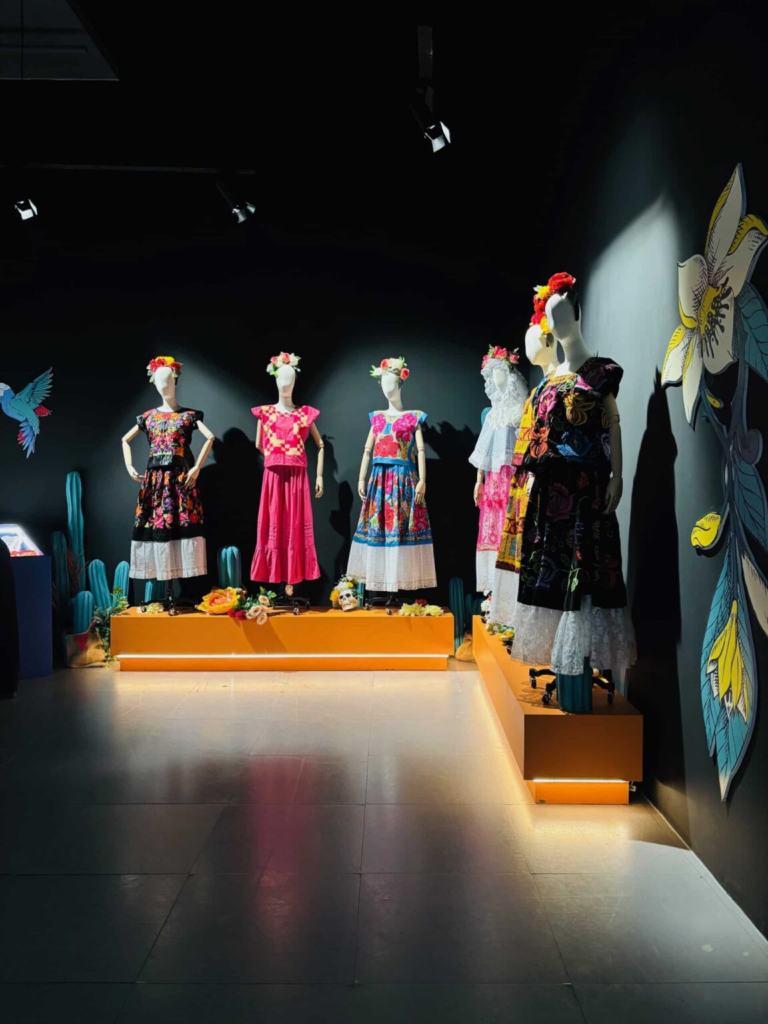
Towards the end of the exhibition, this reference takes on a tangible dimension, as traditional garments from the Oaxaca region are displayed, allowing visitors to observe them up close and understand their significance in shaping her image.
A return to her childhood sheds light on the environment in which she was formed. Her father, a photographer, had a significant influence on her aesthetic sensibility and her familiarity with images. From an early age, she faced health challenges such as polio, which affected both her body and her social integration. At the same time, she grew up during a period when the Mexican Revolution was profoundly shaping society, contributing to the development of her political consciousness.
The narrative then moves through her life via her travels. Born in 1907 in Coyoacán, Mexico, during a time of intense political change, Frida Kahlo became closely connected to the revolutionary spirit of the era. Her relationship with the muralist Diego Rivera brought her to the center of artistic and political life. Together they traveled to the United States and later to Europe, where Frida engaged with international artistic circles. Despite this recognition, she maintained a strong connection to her Mexican identity, evident both in her subject matter and in her visual language.
The section devoted to her passions focuses on her complex relationship with Diego Rivera, but also more broadly on the intersection of love, politics, and art in her life. Their marriage was marked by intense conflicts, infidelities, and reconciliations, while both remained actively involved in political movements, particularly within communist circles. Her personal life cannot be separated from her work; on the contrary, it directly fuels her painting, which often functions as a form of self-reference and documentation.
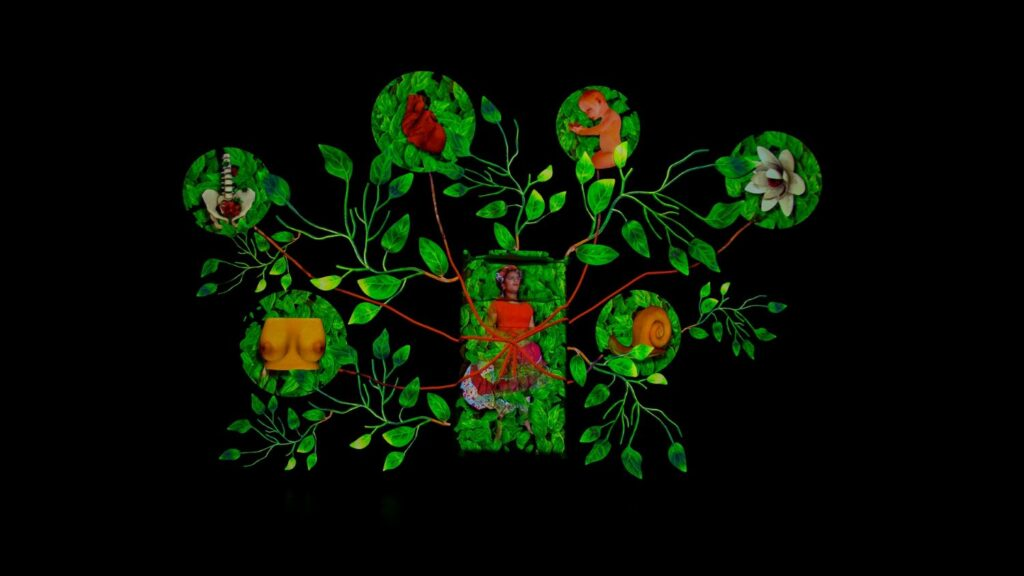
As the exhibition unfolds, emphasis is placed on the symbols that frequently appear in her work. Elements such as hearts, thorns, animals, plants, and anatomical references are closely tied to pain, physicality, and identity. Kahlo painted primarily self-portraits, through which she processed her experiences of illness, disability, and emotional intensity. Her visual language combines personal experience with elements of Mexican folk tradition.
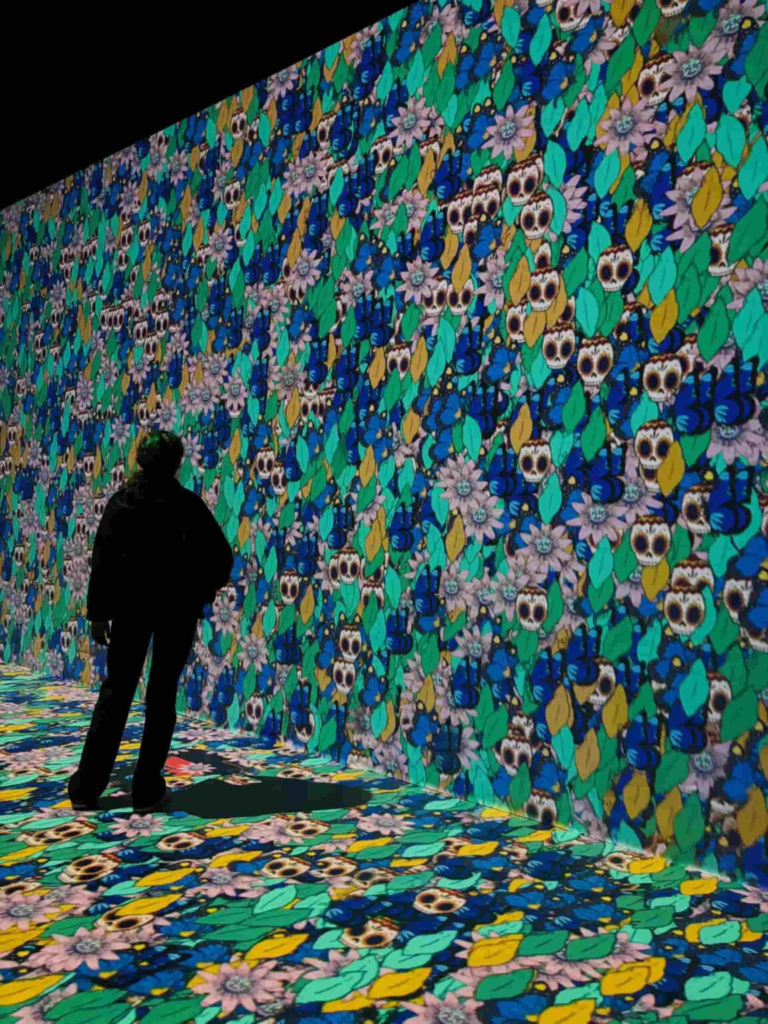
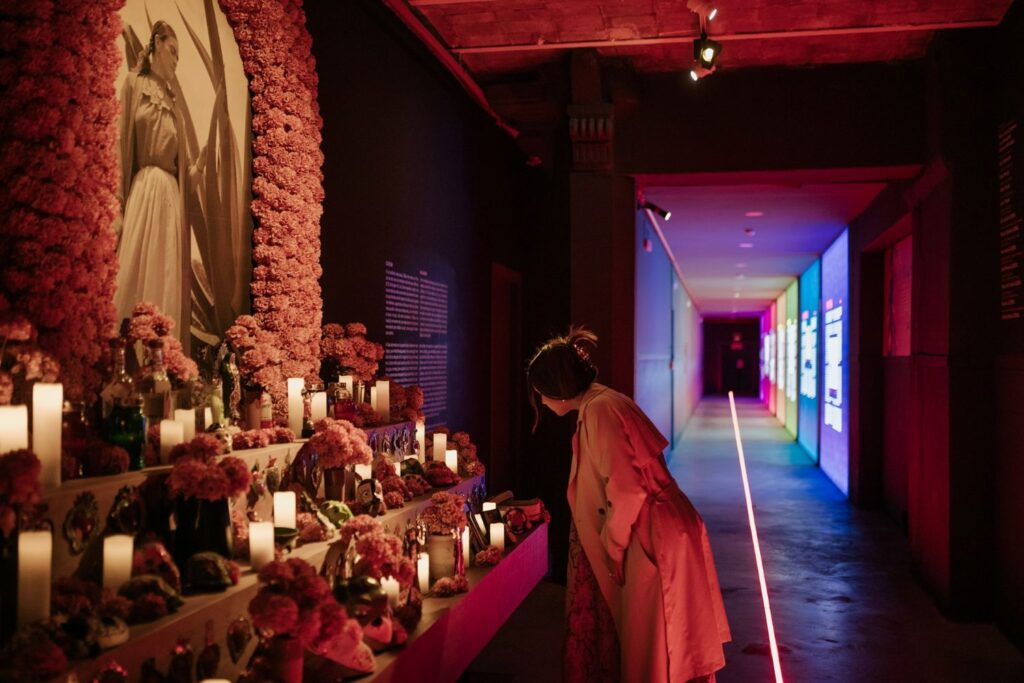
A particularly significant part of the exhibition is the reference to the Mexican perception of life and death through the concept of the ofrenda. This is the traditional altar created during the Day of the Dead, serving as a space for reconnecting with the deceased. In Kahlo’s work, death is part of an ongoing cycle. This worldview deeply influenced her artistic practice and explains the frequent presence of motifs related to decay and regeneration.

The section on motherhood highlights a less frequently discussed aspect of her life. Frida longed to have a child, but the severe injuries she suffered at a young age made this impossible. Miscarriages and painful medical procedures profoundly affected both her personal life and her work. This experience is transformed visually, while the notion of care expands beyond biological motherhood to include her relationships with people, students, and her wider environment.
An immersive narrative
All these elements come together in a unified experience through an immersive audiovisual environment, where images, garments, and symbols are projected on a large scale. Black-and-white photographs of her, details from her paintings, images from the Casa Azul, her trauma, her travels, her love, and her pain coexist and continuously shift, forming a dense visual narrative that unfolds the key aspects of her life and identity.


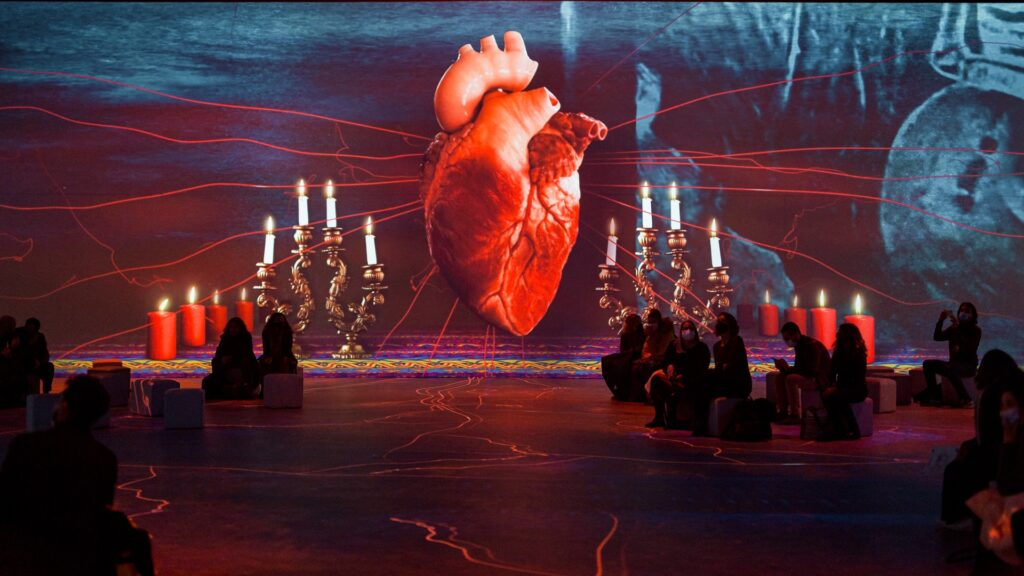
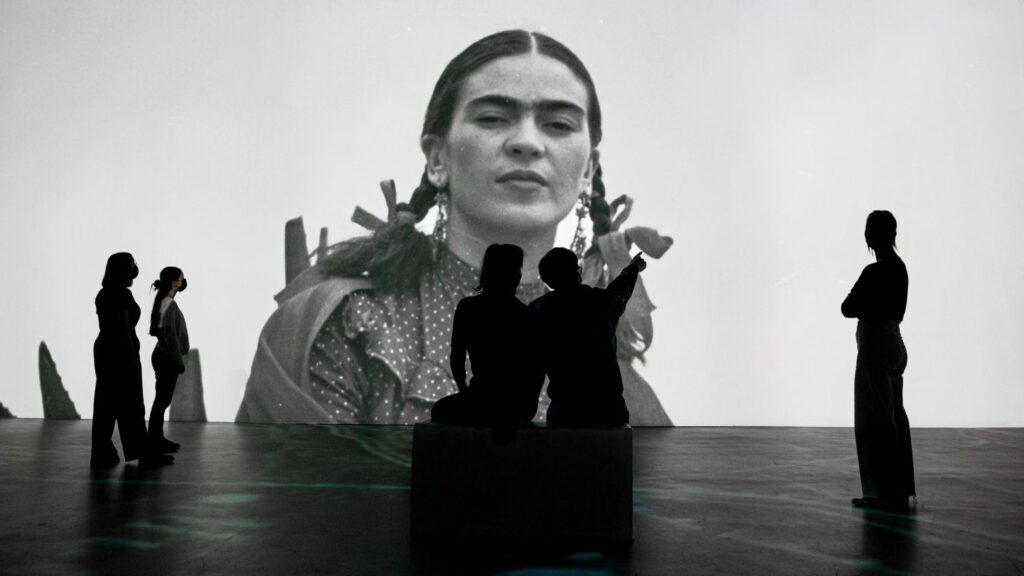
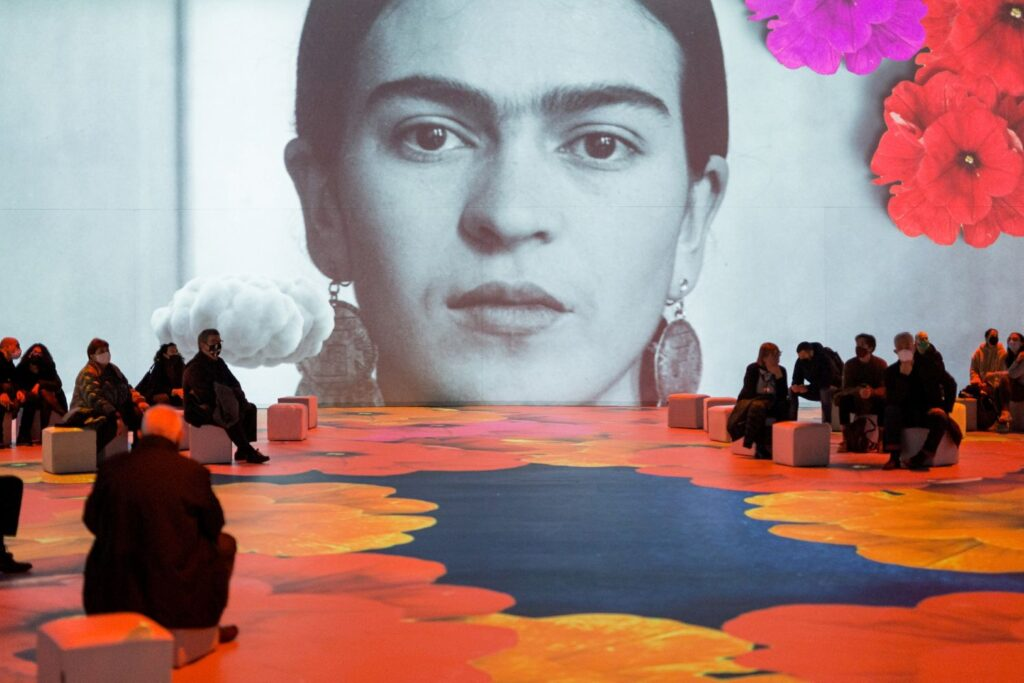
Music accompanies the narrative, while Frida Kahlo’s own voice can be heard reciting her texts, strengthening the connection to her personal experience. A highlight is the presence of the iconic song La Llorona by José Alfredo Jiménez, which permeates almost the entire visual storytelling.
The exhibition “Frida Kahlo: Beyond the Icon” attempts to create a different way of accessing the work and life of this mythic woman. Following a non-linear path, it invites you to move through her world as it unfolds before you in successive moments, luminous and dark, personal and defining. And it succeeds.