 MIRIAM PARASKEVOPOULOU
By Myriam Paraskevopoulou
Surrealism, jazz, saxophone, Engonopoulos and Cohen during a two-day recording session at Sierra Studios
Every encounter with Melina Paxinos, whether musical or in person, is for me a truly beautiful, light and jazz-infused experience. I first discovered her music in 2022 through her second studio album, Time. What immediately drew me to her sound and the way she chose to “speak” through her saxophone was its emotional depth, the natural cinematic flow of her compositions, and the gentle sweetness of a feminine energy.
I found these same elements in her next album, Amoroso, which draws inspiration from the surrealist movement, marking 100 years since the publication of Surrealism’s manifesto by André Breton in 1924. Amoroso captivated me with its distilled sense of romanticism. The compositions are classical and minimal, allowing the listener to experience love intensely within a cinematic framework, through a bold fusion of classical and jazz elements.
Having lived between Athens, Hamburg and Berlin from the age of nine, Melina Paxinos received a composition scholarship from the Yamaha Music School Hamburg, while from the age of ten she devoted herself to the saxophone and jazz. She studied in Berlin, specializing in music production, composition and orchestration. Her vision was to merge the sound of jazz with Greek musical tradition.
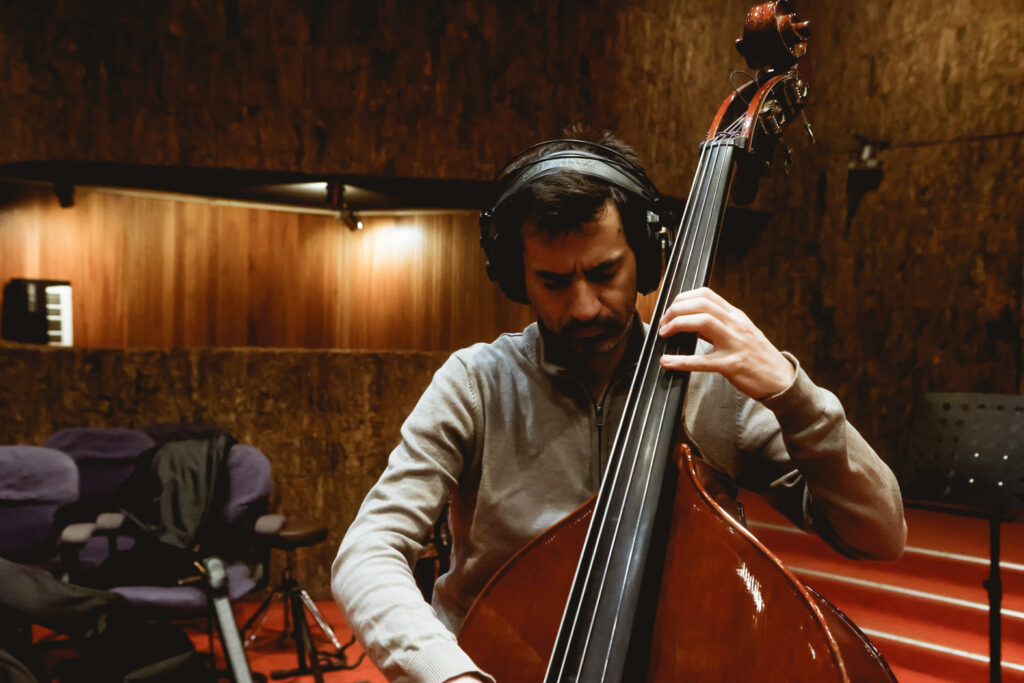
Last February, I had the chance to enjoy her live performance at the Goulandris Foundation Museum with her quartet (Yiannis Papadopoulos – piano, Kostas Patsiotis – double bass, Dimitris Klonis – drums). Alongside Amoroso, they also performed new compositions from her upcoming album Muses. The album retains all the elements of her previous work: cinematic soundscapes, compelling compositions, strong surrealist influences, a romantic atmosphere, a slightly more uptempo energy, beautifully executed lyrical passages, and an outstanding cover.
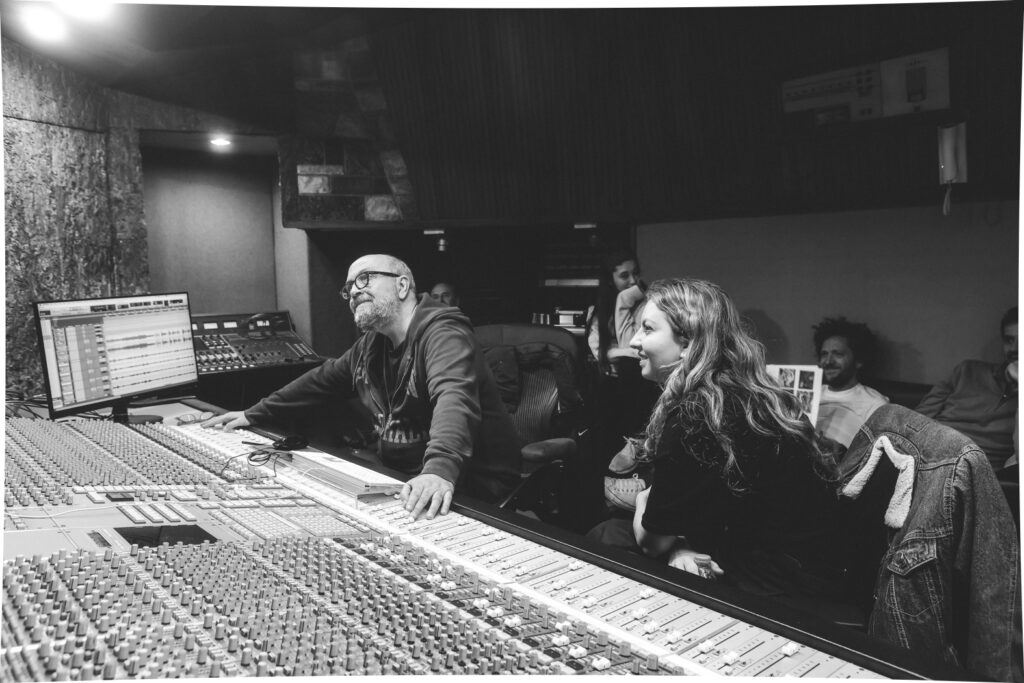
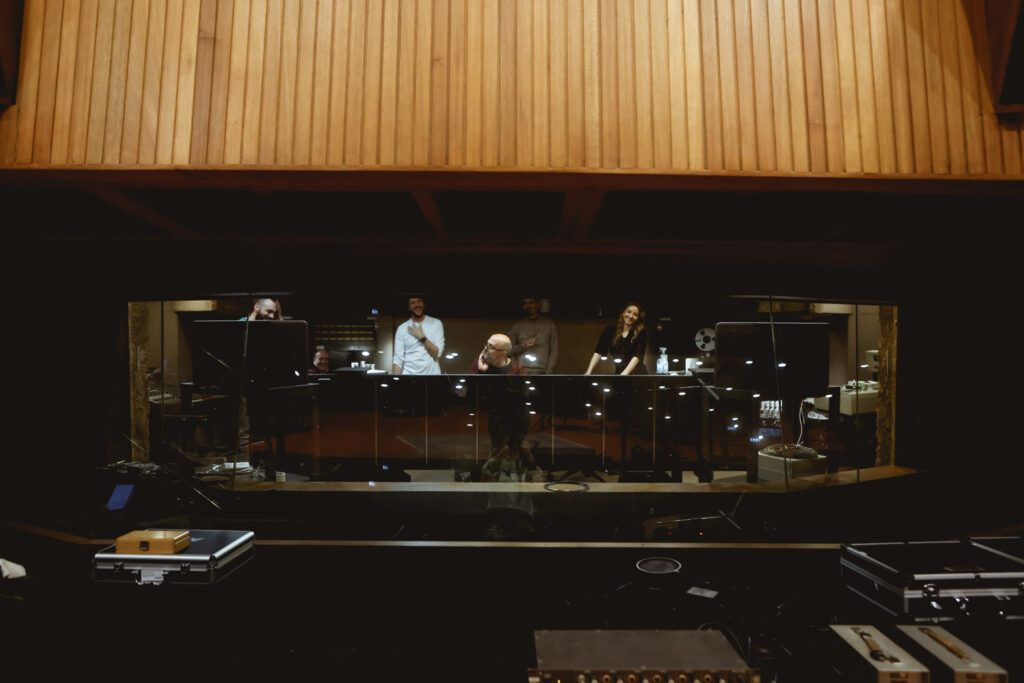
At the end of the performance, after congratulating such a perfectly synchronized and finely tuned band, I asked Melina when the new album would be released. She told me it would come out in mid-2026. So I seized the opportunity and visited her and her quartet at Sierra Studios for a brief conversation.

What fascinated you about surrealism and led you to incorporate it into your music? Both in your previous album Amoroso and in your upcoming Muses, which you are currently recording at Sierra Studios.
What fascinated me about surrealism is that it feels like an exercise, a kind of training for the imagination. Imagination is an essential state of mind. I feel that just as we train our bodies, we can also train our minds, and surrealism works exactly like that for me, as a constant cultivation of imagination. That is the gift it gave me.
At the same time, I deeply admire the elements that run through it and keep it so alive: a passion for life, humor, freedom, desire, imagination and the continuous reinvention of the self.
Favorite interwar heroine? Who would you invite to a dream soirée of dialogue?
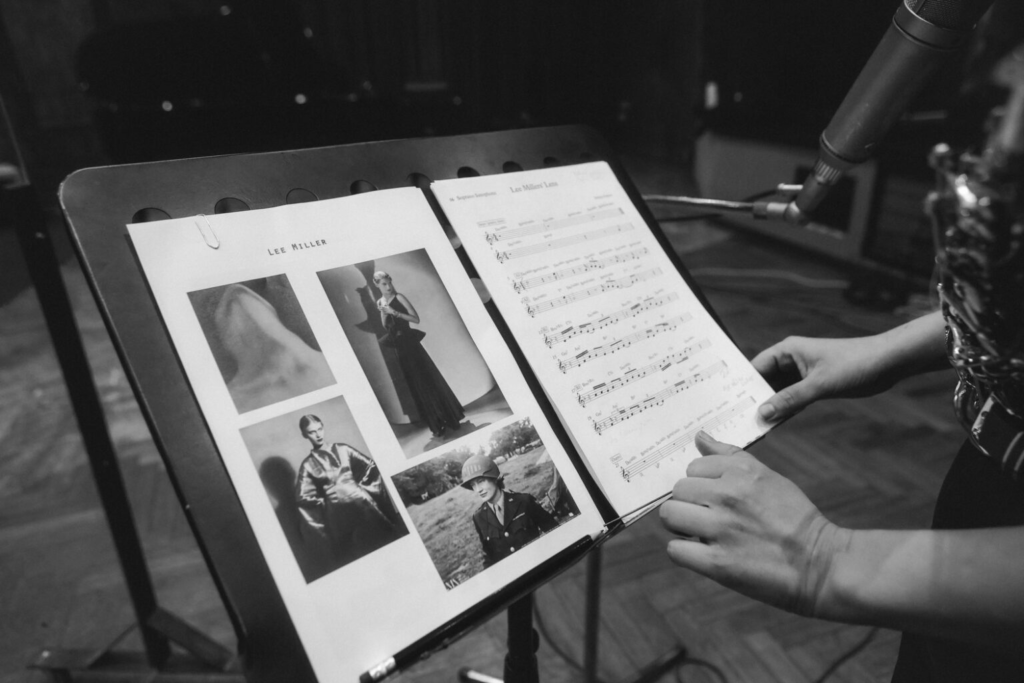
Some of the female figures I have already referenced in the album are Kiki de Montparnasse, Lee Miller and Tamara de Lempicka. Beyond them, I deeply admire personalities such as Matsie Hatzilazarou, Leonora Carrington, Remedios Varo, Dora Maar, Dorothea Tanning, Leonor Fini and Meret Oppenheim, women with powerful imaginations and distinct artistic voices, in a time that did not favor women’s visibility.
If I were to imagine a dream soirée, it would be fascinating to bring them together with figures like René Magritte, Man Ray, André Breton, Luis Buñuel, Andreas Embirikos and Nikos Engonopoulos, as a gathering where poetry, image and dream intertwine without limits.


Melina, do you paint?
No, but I enjoy painting the walls in my house, I find it very relaxing. My mother paints beautifully and, in fact, she used to run her own gallery in Hamburg some years ago. That’s probably where my own interest in the visual arts began.
How would you depict this studio in a surrealist way?
I love Sierra Studio very much, and even more the people who work here. The space has something magical, something that holds me and makes me not want to leave. It’s the place where what I imagine musically takes on acoustic form. I would describe it as an invisible embrace, filled with love and care.
I love your cover of Leonard Cohen’s “A Thousand Kisses Deep”! How did you connect it with the surrealist element?
First of all, I love the original by Leonard Cohen, the melody, the voice and the lyrics. What led me to reinterpret it was its powerful melody and that deeply nostalgic atmosphere it carries, a quiet acceptance of time, love and decay.
When I was in Hydra a few months ago, I remembered it again, and immediately had the image of playing it with my band.


Which paintings by Engonopoulos do you like to think about or refer to?
Idyllion, 1968
Couple, 1938
Orpheus, Hermes and Eurydice, 1949
You’ve drawn inspiration from multifaceted personalities. What do all these artists share, on a human level, with you as a person?
What connects me to them is the need for expression and freedom in art, the constant reinvention and the curiosity to combine disparate elements. There is also a sincerity and vulnerability in their work that touches me deeply.


Photos: © Ria Carajiaba