 elc team
Α performance for the first time at the archaeological site of Ancient Messene
Dedicated to the “magic” of the art of dance and its power to open new paths in times of instability and uncertainty, the 32nd Kalamata International Dance Festival will take place this year from 17 to 26 July, under the artistic direction, for the second year, of Tzeni Argyriou. The Festival opens with famed French choreographer Yoann Bourgeois and He Who Falls, while other headlining artists include Marlene Monteiro Freitas, one of the most daring voices in contemporary dance in an explosive solo, magician and visual artist Kalle Nio with choreographer Fernando Melo, Jefta van Dinther with a work inspired by the language of the Deaf, and up-and-coming French choreographer Leïla Ka, who has, among many other ventures, choreographed for Beyoncé and the César Awards Ceremony.
This year’s Festival closes with the Greek National Opera Ballet presenting the new work by Giorgos Koumendakis To Have Been So Close So Many Times, four chamber music pieces based on four poems by Constantine P. Cavafy, set to music in the style of amanes and performed live, choreographed by Patricia Apergi, Ilias Chatzigeorgiou and Eva Georgitsopoulou.
The 12 international artists invited to this year’s Festival – 5 of whom are coming to Greece for the first time – come from Finland, Brazil, France, Germany, Sweden, Cape Verde, Portugal, Slovenia, the Netherlands, Venezuela and Spain, whilst great emphasis is placed this year on Greek artists, with 12 Greek choreographers also hosted.
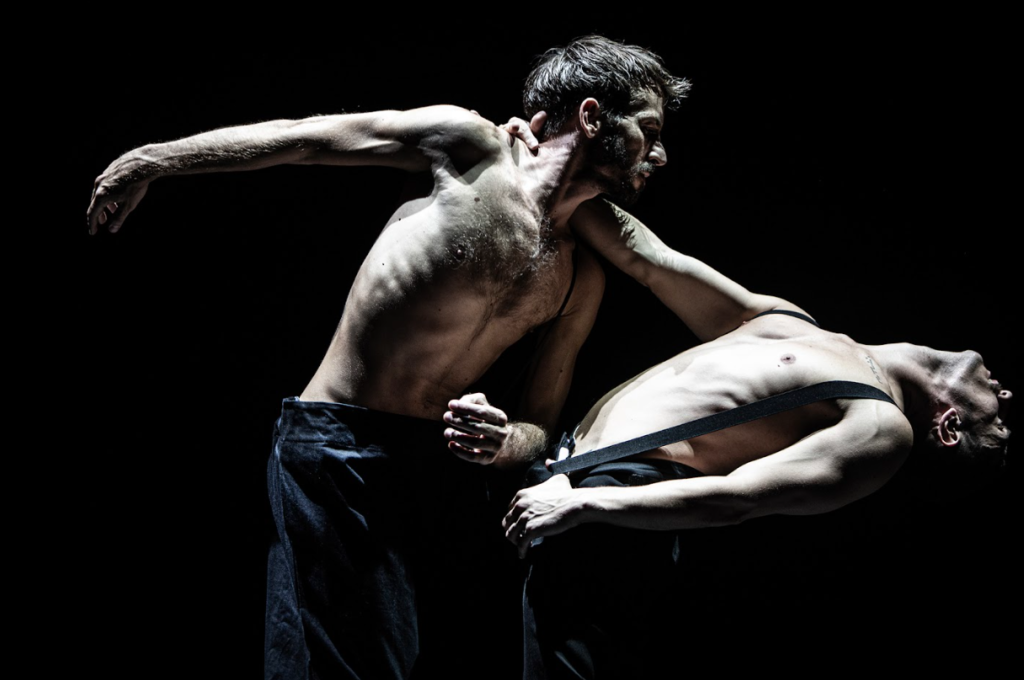

The 32nd Kalamata International Dance Festival places great emphasis on inclusion as well as new collaborations, such as the SYSTEMA – For the Greek Performing Arts partnership with the Athens Epidaurus Festival and the National Theatre of Greece to promote Greek artists abroad. It is also worth noting that, for the first time this year, the archaeological site of Ancient Messene is activated with a performance, in an evening that will conclude with the audience itself dancing, as part of the new Dancing with the Community section.
At the same time, the highly successful Dancing on Screen and Off-Stage Encounters sections from last year continue. Dance in the City returns with performances presented at the public spaces of Kalamata and Dance in Cities of the Peloponnese once again brings dance productions to 6 cities across the Peloponnese. The Festival continues for a second year to produce exhibitions on contemporary dance, presenting Zouzou Nikoloudi: Methodology as Practice, based on the archives of Zouzou Nikoloudi, one of the most important figures in contemporary Greek dance.
Finally, this year the Festival is announcing the creation of a new international artists in residency programme, to be implemented with the support of the J. F. Costopoulos Foundation. Through commissions and open calls, artists from Greece and abroad will be hosted in Kalamata to devote time to creative research, get to know the city and its residents, and develop proposals towards future collaborations and co-productions. This is a new Festival initiative that seeks to highlight the history of Greek dance and connect it with contemporary artistic practices.
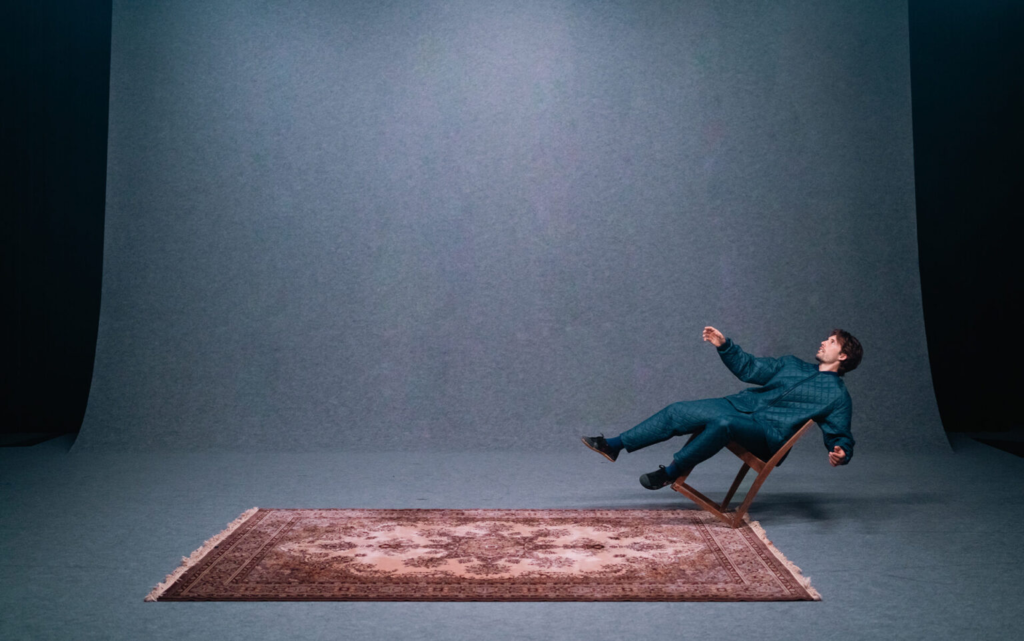
The Festival’s Artistic Director Tzeni Argyriou stated:
“At the heart of the 32nd Kalamata International Dance Festival lies dance as an expression of human instability and uncertainty. Bodies trying to maintain balance, bodies that fall, bodies that invent new languages, that don’t fit into their clothes, that resist stereotypes, bodies that continuously try to adapt. In this increasingly unstable world, art emerges as a pre-eminent space of transformation, almost a form of magic. The 32nd Festival presents performances that embrace this existential instability and create magical spaces, times and worlds, transcending realism. Performances that embody all this “magic” of the art of dance!I would like to warmly thank the Minister of Culture Ms Lina Mendoni, the Deputy Minister of Culture Mr Iasonas Fotilas, the Mayor of Kalamata Mr Thanasis Vasilopoulos, the Regional Governor of the Peloponnese Mr Dimitris Ptochos, the President of FARIS Mr Sotiris Kritsotakis and the members of the Board of Directors, all FARIS and Municipality of Kalamata executives, the Festival team and all our invaluable sponsors, for their trust, support and collaboration in the realisation of the 32nd Kalamata International Dance Festival. A great debt of thanks is also owed to the Festival’s longstanding partner organisations and foundations who have stood by us over the years, as well as to our more recent partners such as the Greek National Opera, the Athens Epidaurus Festival and the National Theatre of Greece, who are opening new horizons for us. Above all, I would like to thank the artists who offer invaluable material with which to dream of a better world, and the audience who honours the Festival with their presence year after year. We joyfully invite you to this year’s 32nd Kalamata International Dance Festival, to dance together and celebrate the magical power of dance to bring us closer and make us more human.”

THE CONCEPT OF THIS YEAR’S PROGRAMME
At the core of the 32nd Festival lies dance as an expression of human instability, uncertainty, endings and beginnings. Bodies trying to maintain balance, bodies that fall, bodies that invent new languages, that don’t fit into their clothes, that resist stereotypes, bodies that continuously try to adapt, that are called upon to become stronger, more capable, more resilient, bodies that, no matter how much they’ve been hurt before, have never stopped fighting their battles. In this increasingly unstable world, art emerges as a foremost space of transformation – almost a form of magic.
Just as magic creates worlds beyond the visible and activates the imaginary, so art attempts to open rifts in reality, proposing new ways of being, understanding and coexisting. Through this process, forms of communication are activated that do not necessarily rely on language, that transcend the given and create new common ground.
The 32nd Festival is composed of performances that embrace this existential instability and create magical spaces, times and worlds, transcending realism. Through the “magic” of art, fragility is transformed into a place of encounter and possibility – a space where uncertainty is not excluded, but becomes common ground, and our vulnerability becomes a condition for meaningful coexistence.

THE PROGRAMME IN BRIEF
The 32nd Kalamata International Dance Festival will take place from 17 to 26 July 2026 and includes a total of 17 choreographic works. Of the 24 artists in total who will present their work, 12 are from Greece and 12 from abroad. The international artists hosted at this year’s Festival come from Finland, Brazil, France, Germany, Sweden, Cape Verde, Portugal, Slovenia, the Netherlands, Venezuela and Spain, whilst 5 of them are presenting their work in Greece for the first time.
More than 700 artists responded to this year’s open call for proposals, held in autumn 2025. Half of the performances comprising this year’s programme were selected through this call, whilst the other half were invited.
This year’s programme reveals a polyphonic creative landscape, where artists of different generations, diverse geographical origins and heterogeneous choreographic approaches coexist. The works reflect different axes of research and different stages in their artistic journeys, composing a rich and dynamic tapestry of contemporary creation.
A total of 12 works will be presented at the Kalamata Dance Megaron, 4 on the Main Stage and 8 on the Alternative Stage. Public space also plays an important role – the encounter of dance with the urban landscape and its people. Performances activate different locations, bringing the pulse of the Festival into everyday life. This year’s design includes one evening at Ancient Messene, 4 dance performances in the city of Kalamata, and 6 dance evenings in cities across the Peloponnese. An integral part of the Festival is its parallel programme: a temporary exhibition, the Dancing on Screen and Off-Stage Encounters sections, as well as a rich educational programme with internationally acclaimed artists. This year, the concept of contemporary collective dance is also activated with the new section Dancing with the Community creating the conditions and inviting – indeed challenging – people to dance together.

The venues activated this year in Kalamata are: the two stages and foyer of the Dance Megaron, the Main Square, the Municipal Railway Park, the Kalamata Municipal Stadium and the “Tenta” Sports and Cultural Events Hall. As part of the Dance in Cities of the Peloponnese programme, implemented for the sixth consecutive year in collaboration with the Region of Peloponnese, performances are presented in different cities: Pylos, Corinth, Areopoli of Lakonia, Argos and Tripoli with the support of the municipalities of these cities and the Regional Union of Municipalities of Peloponnese (PEDP), as well as Ancient Olympia in co-organisation with the International Festival of Ancient Olympia. The Festival this year visits and brings to life the archaeological site of Ancient Messene, inaugurating a new collaboration with the Society of Messenian Archaeological Studies and the Municipality of Messene. At the same time, the Festival continues to travel toNavarino Agora with the support of thes Captain Vassilis and Carmen Constantakopoulos Foundation, while a new collaboration begins with the Piraeus Bank Group Cultural Foundation and the Open-Air Water Power Museum in Dimitsana. Through these collaborations, the pulse of the Festival now reaches across the entire Peloponnese.
This year’s programme opens on the Main Stage of the Kalamata Dance Megaron with the work He Who Falls by acclaimed French choreographer Yoann Bourgeois, presented on 17 and 18 July. A work that focuses on the concepts of instability and fragility, approaching them on both a realistic and a symbolic level. Using a constantly moving platform, the work triggers continuous displacements, where a single movement can activate reactions across an entire system. Instability, as a condition of the body and the world, permeates both dance and the political field. It is the moment when equilibrium is disturbed, when gravity is felt not as a given but as a condition of constant negotiation. The six figures function as a kind of microcosm of humanity, striving to maintain its balance on unstable ground. The performance is presented with the support of the French Institute of Greece.

The world of Yoann Bourgeois’ works is the result of a continuous creative process, which he describes as a search for the “unreachable suspension point”. Following collaborations with distinguished choreographers, Bourgeois created his own company in 2010, and from 2016 to 2022 served as Director of the CCN2 (Centre Chorégraphique National) in Grenoble Tempo by Kalle Nio & Fernando Melo (c) Kalle Nio – the first circus artist to lead one of France’s 19 Centres Chorégraphiques Nationaux.
On 18 and 19 July, on the Alternative Stage of the Dance Megaron, Jefta van Dinther makes his first appearance in Greece, introducing us to the duality of language as both an act of communication and a lived experience, with Mercury Rising. A work inspired by sign language that goes on to discover a new code of communication. Here the body becomes an “unstable field of discourse”, in the choreographer’s own words, a place where language is formulated anew. The work was created in collaboration with the dancers, two of whom are Deaf, while the third is a CODA (Child of Deaf Adults). It has been designed for both Deaf and hearing audiences. The performance is presented with the support of Nationales Performance Netz. On the occasion of the work, a discussion on inclusion in the performing arts will take place on 19 July as part of the Off-Stage Encounters section.
On 20 July, the Alternative Stage of the Dance Megaron will host IT’S THE END OF THE AMUSEMENT PHASE by Chara Kotsali, a dynamic choreographer of the younger generation, who composes an exhausting kinetic single-take, a dance marathon that traverses collective and personal history simultaneously. A work that transcends reality, breaks through the restraints of form and opens new avenues for dialogue. The piece, which has been selected by Aerowaves Twenty26 and is nominated for the 2027 Bloom Prize of Sadler’s Wells, is a production of Onassis Stegi and its tour is supported by the Foundation’s outreach programme.
On 20 July, on the Main Stage, the work Tempo is presented – an innovative collaboration between Finnish magician and visual artist Kalle Nio and Brazilian choreographer Fernando Melo, appearing in Greece for the first time. The performance approaches the sensation of time in a deeply poetic context, proposing a more open and fluid perception of temporality. Within this framework, inspired by the art of magic, the spectator is invited to attune to time differently, to experience it beyond its conventional parameters. Time and gravity are defied almost magically, creating a field of experience that transcends the familiar and the expected.
Kalle Nio is a Finnish director, visual artist and magician, known for his synthesis of theatre, experimental film, new circus forms and contemporary magic. His company, WHS, has appeared in more than 200 theatres in over 40 countries, earning international acclaim. Fernando Melo, born in Brazil, has developed a distinguished career in Europe, creating choreographies for leading companies such as GöteborgsOperans Danskompani, Skånes Dansteater and Ballet Hispanico of New York. His works often incorporate elements of magic and scenic illusion, enriching dance and opera productions, in collaborations with La Monnaie in Brussels and the Royal Danish Opera in Copenhagen, among others.
23 July is dedicated to two women choreographers and two dynamic works that place the body as a field of rebellion at their forefront:
Marlene Monteiro Freitas, one of the most daring and sought-after voices on the contemporary scene, presents on 23 and 24 July Guintche (Live Version) on the Alternative Stage. An explosive solo performed by herself – a kaleidoscope of sensations in which the body undergoes continuous metamorphosis. A relentless dialogue unfolds between the pelvis and the percussion, between gesture and rhythm. Transforming herself into a boxer, a witch and a dancer, Monteiro Freitas embodies multiple states simultaneously. Never stable, never unified, she becomes a form in constant transition – restless, contradictory and alive.
According to the choreographer, the word “guintche”, which comes from the Creole language of Cape Verde, can refer to a bird, a prostitute, an attitude, or even something indeterminate. In this semantic fluidity, the body manifests as one and manifold simultaneously, never stabilising, constantly escaping, re-arranging itself, becoming a battlefield – a place upon which changes and transformations are continuously enacted. The live version of Guintche with the accompaniment of musicians Henri “Cookie” Lesguillier and Simon Lacouture lends even greater depth and intensity to the hybrid world of Freitas, as the work unfolds as a ritual – intimate and yet universal.
Marlene Monteiro Freitas (b. 1979, Cape Verde) is a choreographer and performer whose work is characterised by exploration, hybrid experimentation and dynamism. She co-founded the dance group Compass in Cape Verde before studying at the Escola Superior de Dança and at the Calouste Gulbenkian Foundation in Lisbon, as well as at P.A.R.T.S. in Brussels. Freitas has received significant international recognition, including the Silver Lion at the Venice Biennale (2018), the Chanel Next Prize and the Evens Arts Prize (both in 2022). She was recently honoured with the title of Officer of the Order of Arts and Letters by the French Ministry of Culture. Alongside her artistic work, she co-curates the (un)common ground programme and is a member of the artistic council of the Volksbühne am Rosa-Luxemburg-Platz in Berlin.
Next on the Main Stage is Maldonne, the first ensemble creation by rising French choreographer Leïla Ka, in her first presentation in Greece. Leïla Ka has created choreographies for Beyoncé, the César Awards Ceremony, Zaho de Sagazan and the Chilean National Ballet. The performance casts a poetic and often ironic gaze on the roles and expectations imposed on women. Five dancers in constant motion and recomposition, each transition marked by a costume change, form a landscape of stories and identities. The women’s bodies rise up in rebellion, carrying the weight of their stories and challenging stereotypes and imposed roles. The dancers embody women in the act of hanging out laundry, gossiping, or during the experience of pregnancy.
The work became an international touring phenomenon, with more than 100 performances over three years, going from a packed Olympia in Paris to Colombia and the United States. The performance is presented with the support of the French Institute of Greece.
On 25 and 26 July on the Alternative Stage, five Greek choreographers present their work:
– Konstantinos Papanikolaou withA User’s Manual, a humorous solo piece that comments on the backstage process of a dance performance. Using his distinctive personal language, the choreographer leads us into the interior of a complicated process, bringing to the fore all the factors involved in staging a production. The performance is presented with the support of the Onassis Stegi Touring Programme.
– Antonis Vais with Lunar Seaga, an evocative work that constitutes an intensely personal aesthetic world. It refers to multiple themes – nature, migration, illusion – and generates constant associations. At the same time, it openly reveals its technical dimension: the bodies of the technicians remain visible to the audience, without disrupting the magic and distinctiveness of the scenic universe being created.
– Mary Rantou with Mountains by Garage21, performed by Evangelia Rantou. This is a deeply poetic work that seems to return to a primordial state, a primitive language, and opens a ritualistic dialogue with the very concept of time. The body becomes an archaeological site, a landscape of memory, oblivion and constant metamorphosis. The piece was presented for the first time at Biennale Teatro, as part of the 2025 Venice Biennale.
– Iris Karayan, with the work What are the bodies of our time?, creating a powerful duet that explores the titular question. The result is a reflection on who we are today and what we do for our future, how we dream of tomorrow in relation to now.
– Ioanna Portolou with Superstar. The high-intensity, high-energy work delves deeply into the ephemeral nature of spectacle and the instability of an entire era. When we say “now”, where exactly is it that we place ourselves? Is this “now” tied to a need for excess? What do we ultimately end up being?
The Festival closes on 25 and 26 July with the Greek National Opera Ballet presenting on the Main Stage of the Dance Megaron the new work by Giorgos Koumendakis To Have Been So Close So Many Times, four chamber music pieces based on four poems by Constantine P. Cavafy, set to music in the style of amanes and performed live, inviting the audience into an intimate and almost ceremonial experience. Three choreographers with a strong presence in contemporary dance – Patricia Apergi, Ilias Chatzgeorgiou, and Eva Georgitsopoulou – approach the material through distinct aesthetic and kinesiological languages. The choreographic approach, with references to the language of street dance, creates a fascinating counterpoint, adding new facets to the inherently Hellenic nature of the work and the idiom of the amanes through a modern kinesiological perspective.

DANCE AT ANCIENT MESSENE / DANCING WITH THE COMMUNITY
Wednesday 22 July is dedicated to the archaeological site of Ancient Messene, proposing a singular experience that connects the place with its history and brings the collective dimension of the space into the present. In the first part of the evening, the performance Amazigh in Situ by Filipe Lourenço is presented. The French dancer and choreographer, in his first appearance before a Greek audience, researches the Ahidous, a traditional dance from central Morocco that ranks among the most important forms of collective expression for communities of the Middle Atlas, accompanying festivities and ceremonies for centuries. Correspondingly, the Odeon of Messene, also known as the Ecclesiasterion, functioned in antiquity as a multi-purpose public gathering place, hosting theatrical and musical events as well as public assemblies of a political nature. In the second part, in the new Dancing with the Community section, the musician of the performance Amine Nouri will continue playing live music, inviting the audience to dance, share the space and encounter others through a common, collective experience. The evening at Ancient Messene is presented in co-organisation with the Society of Messenian Archaeological Studies and the Municipality of Messene, and with the support of the Teatroskop network.
DANCE IN THE CITY
As part of the Dance in the City section, on Saturday 18 July, at the Kalamata Main Square, the Greek National Opera’s Professional Dance School under the guidance of its Director of Studies Yorghos Matskaris, presents a contemporary dance diptych under the unified title Metamorphosis. World-renowned French dancer and choreographer Cyril Baldy reconstructs his creation With Love and All That – ACT II, which takes classical ballet as its starting point and explores the nature of dance by shaping new choreographic landscapes. Subsequently, internationally acclaimed Spanish choreographer Jesús Rubio Gamo signs the revival of an excerpt from his choreography Gran Bolero, which was awarded the Spanish MAX Prize for Best Dance Show in 2020. The tour and presentation of the performance is made possible by a grant from the Stavros Niarchos Foundation (SNF) to enhance the Greek National Opera’s artistic outreach.
On Sunday 19 July, the vibrant new generation of dancers from the Greek National School of Dance takes the stage with the work ONE BODY – KSOT 3rd year, under the artistic direction of Linda Kapetanea. The dancers will perform excerpts from contemporary works engaging with memory, nature and collective experience. The Festival presents the work of the Schools, recognising the educational importance of this initiative for the artistic development and professional path of young dancers, as they come into meaningful contact with the creative space, testing their abilities under real conditions and making their first steps in the art of dance.
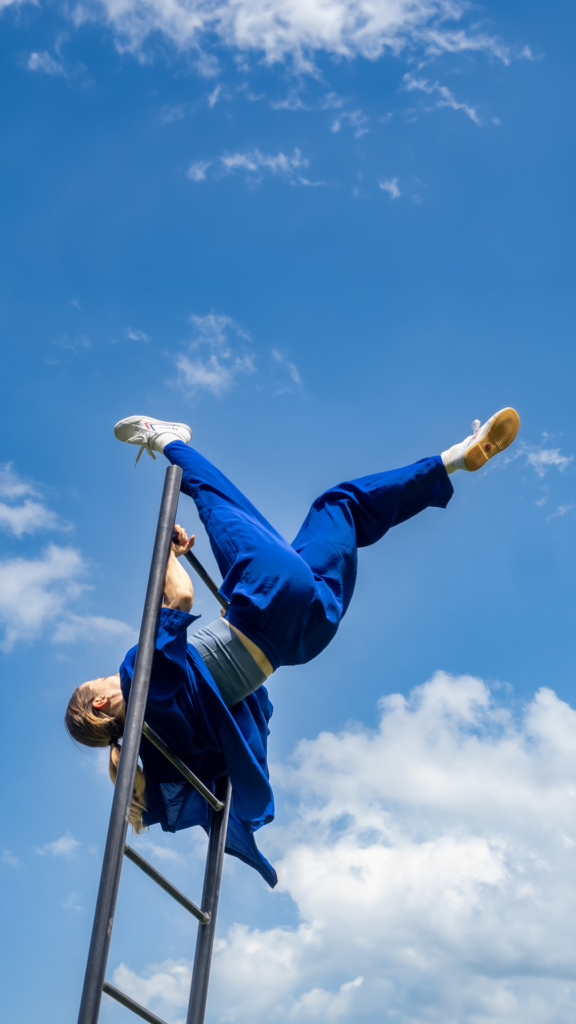
On Tuesday 21 July, at the Kalamata Main Square, the work Do Birds Dream of Flying?by Fabla Collective is presented, in their first appearance in Greece. A construction takes over the public space, transforming the surroundings into a field of movement, balance and play. If birds dream of flying, what does flight ultimately mean? Is it always the most elusive dream or a natural state of existence? And what do birds feel when they fly? This work by two Slovenian artists, recognised by the European platform Aerowaves, combines elements of circus, dance and physical theatre and engages directly with the mechanics and poetry of movement.
On Friday 24 July, the Dance in the City section concludes with the solo Mariposa by celebrated choreographer and dancer David Zambrano at the Kalamata Municipal Railway Park — an improvisational solo performance based on the method and practices he has developed and taught internationally for over 40 years. We will witness the magical process of improvisation in real time, as he composes a dynamic and unpredictable landscape onstage.

PARALLEL PROGRAMME
Exhibition: Zouzou Nikoloudi: Methodology as Practice
17–26 July
On 17 July, at the opening of the Festival, the temporary exhibition entitled Zouzou Nikoloudi: Methodology as Practice will be inaugurated at the Kalamata Dance Megaron. Dedicated to the work of Zouzou Nikoloudi, one of the most important figures in contemporary Greek dance, the exhibition is realised in collaboration with the Benaki Museum, curated by Erato Koutsoudaki-Gerolympou and produced by Delta Pi. “If all the people on earth danced, our world would be a better place,” Zouzou Nikoloudi writes in some of her notes. Regarding the creator’s legacy as an active field of knowledge and reflection, we approach her archive as a living place of study and inspiration for artists, students and the general public. The selected archive highlights her methodological tools and choreographic thinking. The initiative is part of the Kalamata International Dance Festival’s strategy to highlight the history of Greek dance and connect it to contemporary artistic practices. The exhibition’s academic consultant is Steriani Tsintziloni.
DANCING ON SCREEN
The Dancing on Screen section, launched last year to great success, is dedicated to the relationship between dance and the moving image, particularly film, addressing both familiar audiences and viewers experiencing contemporary dance for the first time. It is implemented in collaboration with Filmhouse / the New Cinema Club of Kalamata.
This year, throughout the Festival’s duration, two video works/installations will be screened at the Kalamata Dance Megaron: BARE by choreographer Vitoria Kotsalou and All She Likes is Popping Bubble Wrap by choreographer Ioanna Paraskevopoulou.
Throughout the Festival’s duration this year, two video works/installations will be broadcast at the Dance Megaron: BARE under by choreographer Vitoria Kotsalou, which explores life beneath the skin and beneath the water, tracing the boundaries between the intrauterine state and the sensation of emptiness, and All She Likes Is Popping Bubble Wrap by choreographer Ioanna Paraskevopoulou, produced byOnassis Stegi, which investigates the relationship between image, sound and body, and the possibility of exchanging information between two simultaneously projected images. The selection of this work was made within the framework of the collaboration with Miden video art.
On Tuesday 21 July, The Heart of the Bull, a documentary produced by Onassis Culture will be screened at the Main Stage of the Kalamata Dance Megaron, on the occasion of the performance Transverse Orientation by Dimitris Papaioannou. Director Eva Stefani follows the preparation and tour of the production across European stages, closely observing the leading creator and his collaborators in their effort to give the work shape and life. The central question running through the documentary is “why do we do what we do?”, highlighting art as a means of resistance to the futility of things and as a way of giving meaning to our very life.
On Friday 24 July, an unusual themed party curated by Vasilis Papaefstathiou at the Kalamata Dance Megaron, featuring a series of selected video-clips with intense kinetic language, invites people to be inspired, imitate movement or simply be swept along by the music and dance. This is yet another invitation from Dancing with the Community.
Screenings in the region
This year, the Dancing on Screen section expands geographically with a screening on Monday 20 July at the Eliopoulos Museum in Filiatra of the film The Cost of Living by DV8, presented within the framework of the Festival’s collaboration with the Constantakopoulos Foundation. Blending contemporary dance and theatre, the film delivers a dynamic and subversive exploration of identity, disability, and social expectations with both sensitivity and sharp humour.
OFF-STAGE ENCOUNTERS
The Off-Stage Encounters section, launched last year, includes talks, discussions, and gatherings that bring together the wider dance community and the public. This year, three off-stage encounters will take place at the Kalamata Dance Megaron:
On Sunday 19 July, a discussion dedicated to inclusion in the performing arts will focus on the relationship between dance and disability. Bringing together diverse artistic practices and lived experiences, the panel opens a dialogue around representation, working conditions and the possibilities of equal participation in dance, while connecting perspectives from Greece and Germany. The discussion is co-organised with the Goethe-Institut and coordinated by the cultural organisation Liminal.
On Monday 20 July, the Festival will host the presentation of Deborah Hay’s book Using the Sky: A Dance, translated by Myrto Katsiki and published by the Athens & Epidaurus Festival and Nefeli Publishing. Through diary entries and notes, the book traces the evolution of Hay’s choreographic practice from 2000 onwards and her ongoing exploration of ways to approach and redefine the experience of dance. It also includes three complete choreographic scores, offering insight into Hay’s sustained experimentation with language and its potential as a choreographic tool.
On Sunday 26 July, artists and curators will come together for a discussion entitled Unstable Ground in Contemporary Dance Practice. Where is the contemporary dance scene today? Why do we do what we do? What is the art of our time? What issues does contemporary dance dramaturgy choose to highlight? In what way is the current condition of cultural production recorded? What do artists expect from curators – and vice versa? Addressing these questions, the discussion seeks to open a shared space for exchange and dialogue between different voices and perspectives.
EDUCATIONAL ACTIVITIES
This year’s expanded educational programme will take place from 11 to 26 July 2026 and will include 3 professional seminars and 3 dance and movement workshops for the general public of all ages, aimed at participants with and without disabilities.
This year, the Festival invited leading dance teacher David Zambrano to conduct 3 different seminars for professional dancers: Passing Through, Improvisation on Stage and Flying Low – techniques he has developed and taught internationally for over 40 years.
As part of the public educational programme, the Kalamata Dance Megaron will host a dance workshop for primary school children and teenagers led by Artemis Lampiri and a movement workshop for adults aged 40 and above with Alexis Tsiamoglou. Finally, a dance workshop for participants with and without disabilities led by Irini Kourovani and Venetsiana Kalampaliki will take place at the “Tenta” Sports and Cultural Events Hall in collaboration with the Kalamata Centre for Physical and Medical Rehabilitation, as well as at the Eliopoulos Museum in Filiatra with the kind support of the Captain Vassilis and Carmen Constantakopoulos Foundation.
VISUAL IDENTITY OF THE 32ND KALAMATA INTERNATIONAL DANCE FESTIVAL
This year’s visual identity of the Kalamata Dance Festival, designed by the K2 team, draws inspiration from diversity and the movement of bodies. Figures in continuous flow, kinetic snapshots whose style is reminiscent of brushstroke painting or graffiti, compose a polyphonic, collective landscape. These are not clearly defined forms but abstract figures – shapes that could be anyone. Figures that seem to be searching for one another, as if wishing to meet and dance together, whilst retaining their individuality within a collective body. This year’s Festival identity was born from precisely this condition: the world created when different bodies, rhythms and expressions share the same space. In dance, every movement carries its own energy, its own trace, its own history. For the Kalamata International Dance Festival, dance is not only an art form – it is also a place of encounter.