 elc team
By Eleni Koutsilaiou
A labyrinthine, dynamic and polyphonic programme has been announced by Michail Marmarinos, one that remains fully consistent both with his broader artistic vision and with the questions raised by the fluid times we are living in.
History
Is under construction.
So are relations: among us, between arts and politics, with the times and the places we are acting in.
If we care, we act
(Inspired by the European Festivals Association)
“Where are we standing now?”
A complex, labyrinthine, dynamic, polyphonic, expansive and–at times–demanding programme in terms of its decoding was announced yesterday by Michail Marmarinos, inaugurating the new three-year period under his artistic direction. Yet, despite its complexity and breadth–perhaps even the sense of awe it may evoke—it maintains unbreakable ties, of almost mathematical precision, with the entirety of his conceptual framework for the coming three years, remaining fully consistent both with his broader artistic vision and with the questions posed by our fluid and uncertain times.
Marmarinos places the Festival’s historicity as the cornerstone of his cultural policy, approaching it not as a barrier but as a springboard toward the future. He invokes its vital connection to the recent history of Europe–the very context that gave rise to it–and insists on its kinship with other European festivals. This positioning was encapsulated in the following statement, projected in English on the large screen before us:
“History
is under construction.
So are relationships: among us, between arts and politics, with the times and the places in which we act.
If we care, we act.”
(Inspired by the European Festivals Association)
Seeking an implicit dialogue with Jacques Derrida on the notion of “history under construction,” he reminds us that European festivals–much like the Greek one–were born in the aftermath of World War II, as an attempt to heal the wounds it inflicted. They have preserved, intact, the belief that through art they herald the hope of a luminous and promising future. And it is here that he poses the question that pierces his cultural thinking like a burning, painful arrow: “Where are we standing now?” Where do we stand today, seventy years later?
Confronting head-on the severity and precarity of our times, this crucial and urgent question becomes the lens through which he seeks to explore the programme he has announced. It unfolds through a series of key objectives: extroversion, the emergence of a new generation of artists through outreach to less privileged regions and social groups, the reactivation of ancient Greek dramaturgy within a contemporary context, a strong emphasis on original Greek creation, international co-productions, and the offering of a platform to countries whose voices too rarely reach us.
Through a phonological rendering of the concepts Psyche, machine and system (Psyche–machina–systema), which appeared on the large screen, Michail Marmarinos attempts to initiate us into his vision of the operational mechanisms that he wishes to govern the Festival.
He defines machina as the sum of the Festival’s artistic, cultural, conceptual and political content, as well as its mode of operation, which he conceives as a process of co-functioning among all parts of this “body”: artistic creation and performative practice, audiences and reception. In this sense, he seeks to strengthen its joints, placing emphasis on the influx of new audience groups, but above all investing artistically in the emergence of a new generation of creators, with particular focus on directors who have recently graduated either from the Department of Theatre at the Aristotle University of Thessaloniki or from the directing school of the National Theatre. To support this intention, he introduces a new, autonomous section titled Gen 260, which we welcome with both enthusiasm and anticipation.
He defines systema as the sum of content that also emerges through institutional collaborations, offering us a first glimpse through the announcement of a partnership between the Athens Epidaurus Festival, the National Theatre of Greece and the Kalamata International Dance Festival. This collaboration will be presented in detail during the National Theatre’s programme presentation this May. From the limited information available, one can discern a weaving together of GRAPE—initiated under the artistic direction of Katerina Evangelatos—with the Showcase first presented in spring 2023 at the National Theatre under the artistic direction of Giannis Moschos. It is a promising collaboration that reinforces the effort toward extroversion, a long-standing and crucial demand for Greek artistic production as a whole.
The term Psyche (soul) describes the transmutation of the other two terms into a state of ultimate eudaimonia, into a defining shared “encounter” of all participants under the decisive prism of the artistic event.
Pireos 260 – 20th anniversary celebrations
Pireos 260 celebrates twenty years of operation and takes centre stage. Its extensive and prominent presence within the programme stands as a tribute to the origins of its activity.
Documentary

I would be particularly interested in watching the documentary by Ilias Giannakakis, which focuses on the tenure of Giorgos Loukos, titled “2005–2015: The Loukos Years.”
The filmmaker notes: “Today, I believe that the need for a film approaching the phenomenon of Giorgos Loukos in its entirety could not be more urgent. Not only as a tribute that is owed, but as a valuable trace.”
As stated in the programme:
Ilias Giannakakis creates and presents at the Athens Epidaurus Festival a documentary tribute to Giorgos Loukos, twenty years after he assumed his position in 2006 […] The director systematically documented the Artistic Director over the course of an entire year–from 2007 to 2008, during the early years of the Festival’s “explosion”–gathering rare material. Nearly twenty years later, he delivers a documentary that traces the imprint of that decade, enriched with new footage and additional archival material.
[…] “This is not a hagiographic film,” Giannakakis notes. “If we wish to approach in depth such an important figure and such a compelling era, we must do so by embracing contradictions, gaps and context. Otherwise, the human-centred approach is lost–one that must always include imperfection as an essential ingredient of what we call wonder.”
International Theatre
Multifaceted in both subject matter and artistic means, and demanding both in viewing and reception, the International Theatre selection stands out for its breadth and polyphony. It certainly requires an alert and active audience, rather than a passive one. I note here a few choices that struck me as particularly interesting:
“Schliemann III” by Heiner Goebbels

Chosen for its distinctive thematic focus and its perspective on the perception of History.
As the Festival notes:
“Schliemann III is an attempt to create different experiential spaces for the audience, allowing for a re-examination of our perception of History. The work is based on the reconstruction of a plan of Troy–with its nine discovered layers–as it emerges from the diary narrative of Heinrich Schliemann regarding the excavations carried out between 1871 and 1873. Voices, performers and musicians interact with a heterogeneous textual and musical material.”
“Sleeping Fires” by Kuro Tanino
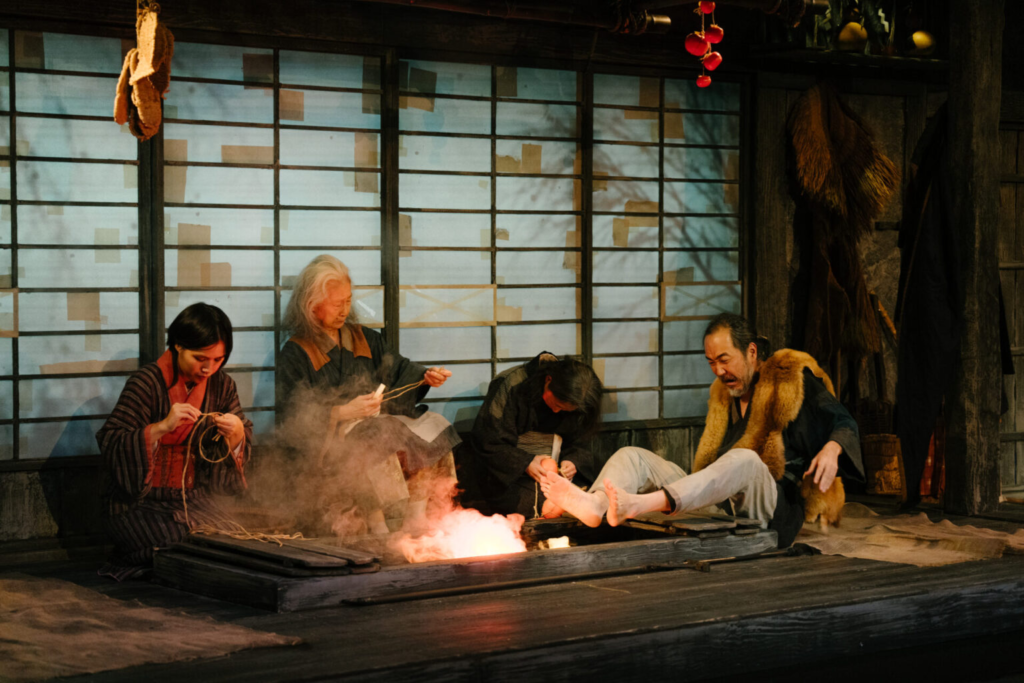
I select it for its powerful, harsh subject matter and the faint yet persistent message of solidarity that emerges through its idiosyncratic material.
A brief description from the Festival text reads:
“Iku, blind from birth, lives in the mountains with her partner, ‘reading’ bodies and emotions through the heightened sensitivity of her hands. The arrival of the young Sayo, an apprentice in the art of massage, disrupts the fragile balance of Iku’s life. A deep, unspoken bond develops between the two women, as the process of apprenticeship gradually becomes a field where trauma, repressed desires and unspoken anger come to light.”
“Seppuku. The Funeral of Mishima or the Pleasure of Dying” by Angélica Liddell
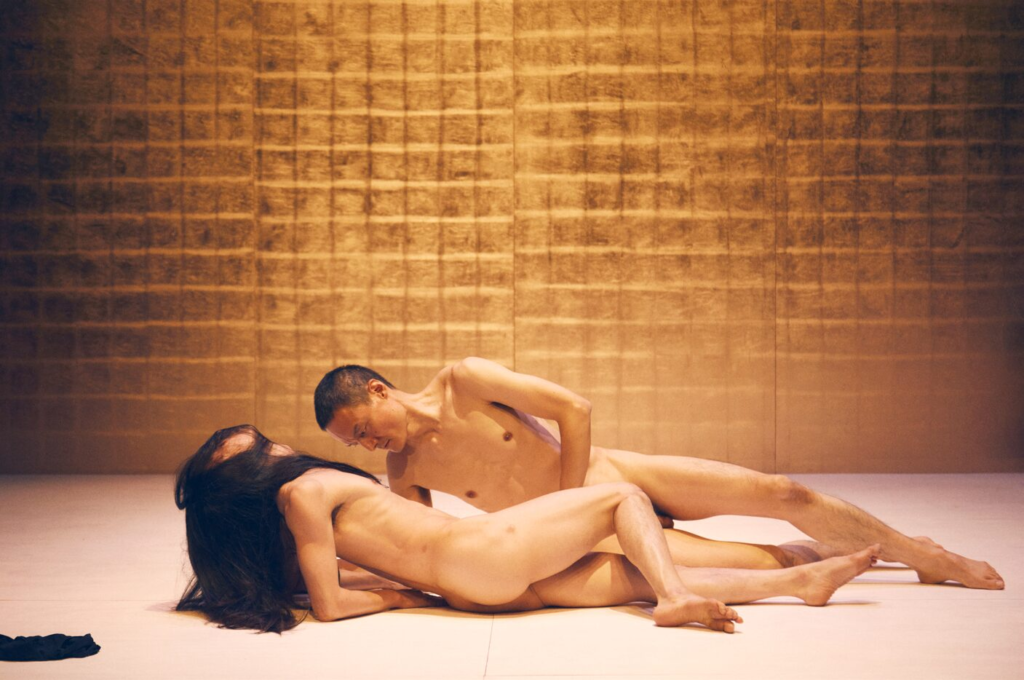
I am eagerly awaiting this work for its deeply moving subject, as I have long been drawn to the writings of Yukio Mishima and find myself profoundly stirred when cultures and generations intertwine.
A concise description from the Festival reads:
“In November 1970, following a failed symbolic uprising aimed at restoring imperial power in Japan, the Japanese writer Yukio Mishima (1925–1970) ended his life through seppuku (commonly known as harakiri), transforming his own body into his ‘final’ work. Drawing inspiration from the spiritual code of the samurai–at the core of which lies the imperative to ‘mentally die’ every morning in order not to fear death–Angélica Liddell, one of the most radical voices of the contemporary Spanish stage, presents seppuku as a meditation on freedom, discipline, beauty and limits.”
“Medea’s Children” by Milo Rau – NTGent
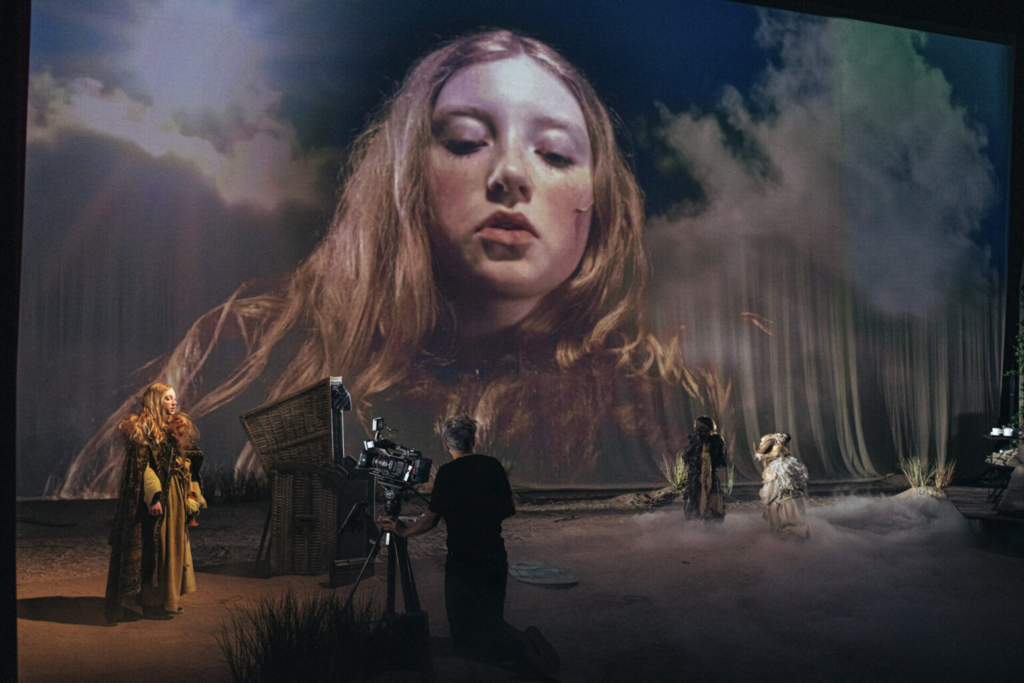
I follow with particular interest contemporary stage reworkings of ancient Greek myths, and when the creator is Milo Rau, my anticipation only intensifies. I therefore look forward to Medea’s Children, described as follows:
“The murder of five children by their mother in Belgium, along with her failed suicide attempt—elements interwoven with the story of Medea–form the backdrop of Milo Rau’s new work. A pioneer of documentary theatre in Europe, he returns to the Festival for the third time with Medea’s Children, a performance that engages with the core of Euripidean tragedy, not to revive it, but to test the limits of what can be seen and what can be endured.”
“The Annunciation of Cassandra” by Dimitris Dimitriadis
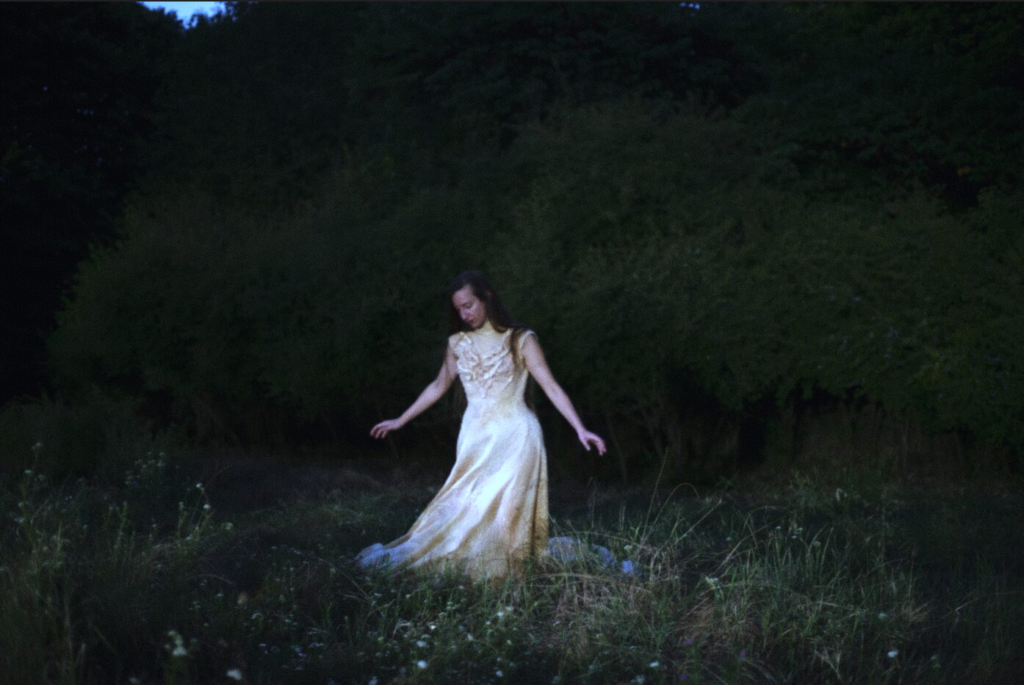
I would very much like to see The Annunciation of Cassandra, directed by Gemma Hansson Carbone, primarily because I am interested in her interpretive gaze on Dimitriadis’ work.
The Festival provides the following brief description:
“Following years of research on Dimitris Dimitriadis’ emblematic I Die as a Country, Gemma Hansson Carbone continues her creative dialogue with the author’s work, presenting this year The Annunciation of Cassandra. In it, the Italian-Swedish actress and director delves deeper into Dimitriadis’ universe–a writer who harnesses the power of words and voice as tools of invocation and awakening–embodying the text herself in a vocal and physical event where everything is transformed into a hymn.”
“Lee Miller in Hitler’s Bathtub – A Tragic Cantata” by Needcompany – Jan Lauwers – Maarten Seghers
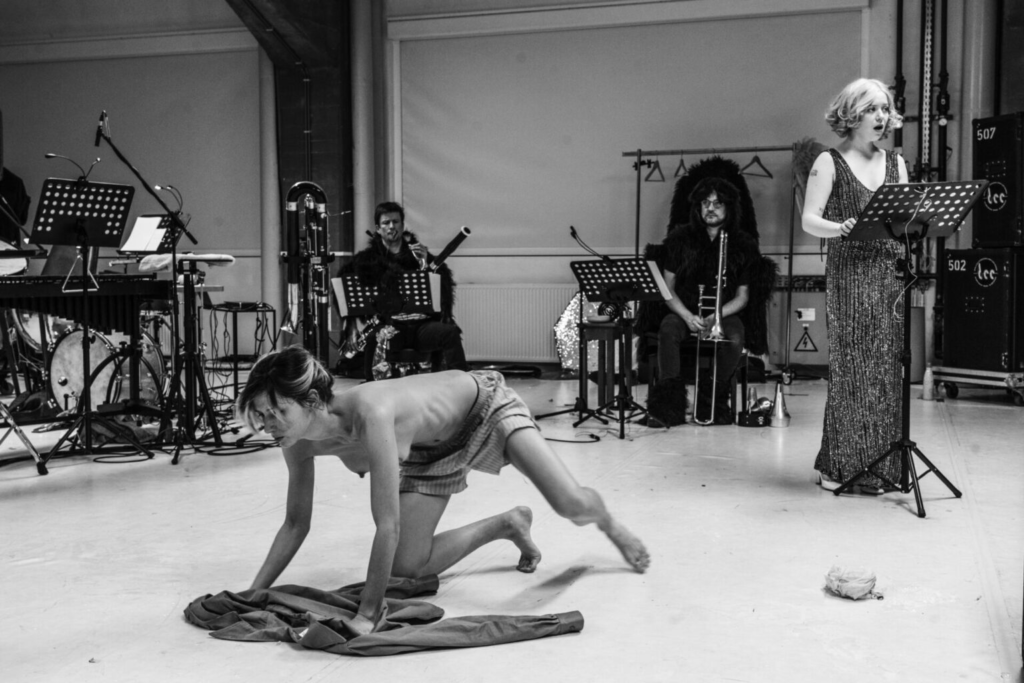
I am drawn to this work for its historical subject, for the horror and revulsion the central figure evokes in me, and for its directorial approach.
“It is terrible to remember.
But it is even more terrible to forget.
30 April 1945. The thirty-eight-year-old war photographer Lee Miller stands inside the bathroom of Adolf Hitler’s private residence in Munich. Her clothes still carry the smell of her visit to the Dachau concentration camp. She removes her uniform and muddy boots–deliberately soiling the floor–and steps into the ‘devil’s bathtub’ in an attempt to wash away the stench of annihilation. A colleague captures her in what would become one of the most iconic photographs of the twentieth century. On that very same day, Adolf Hitler commits suicide in Berlin.”
Greek Theatre
I must admit that I approach the overall selection of Greek theatre with a fair degree of skepticism. Some choices struck me as overly conventional, others as somewhat superficial. With the sincere hope of being proven wrong, I highlight those that I found more intriguing:
“GRAUTS” by Yannis Mavritsakis
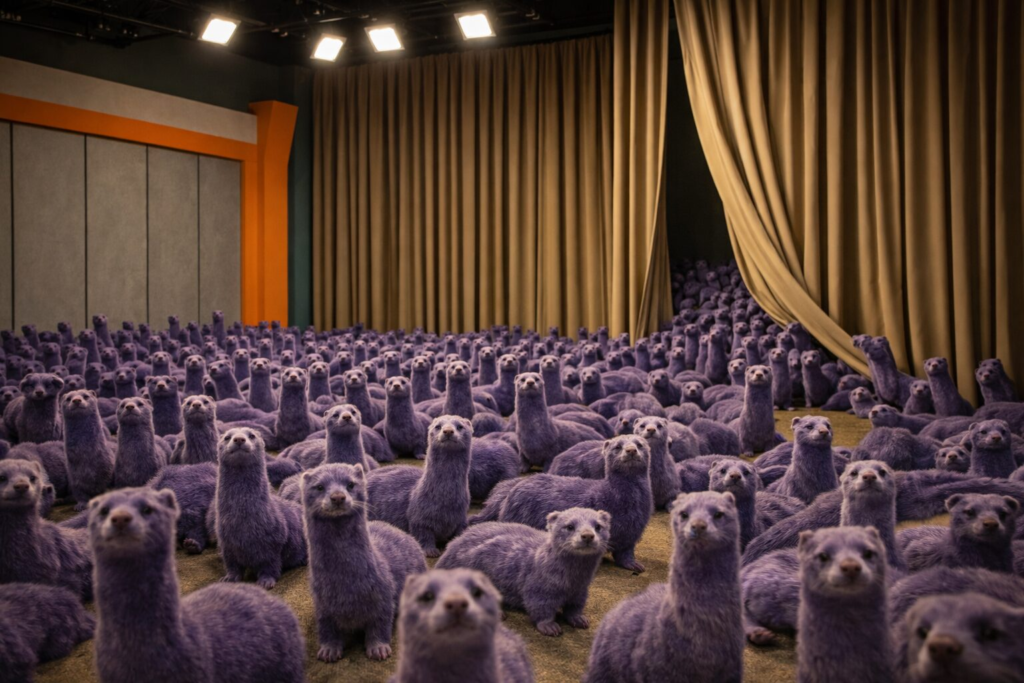
This year, The Bacchae provides fertile ground for artistic interpretation, both for Yavor Gardev and Lena Kitsopoulou. Beyond the Epidaurus staging, I am particularly interested in Yannis Mavritsakis’ distinct idiom, both as a writer and as a director.
As noted in the Festival text:
“The time and place of GRAUTS is the set of a television interview during the era of the Voyager interplanetary launches. In the aftermath of LSD experimentation, a staged talk show balances between documentary, hallucination and concert. In this new work, the theme of The Bacchae and the dialectical opposition between Pentheus and Dionysus returns in an oblique manner.”
“CARCOMA” by Alexia Paramytha
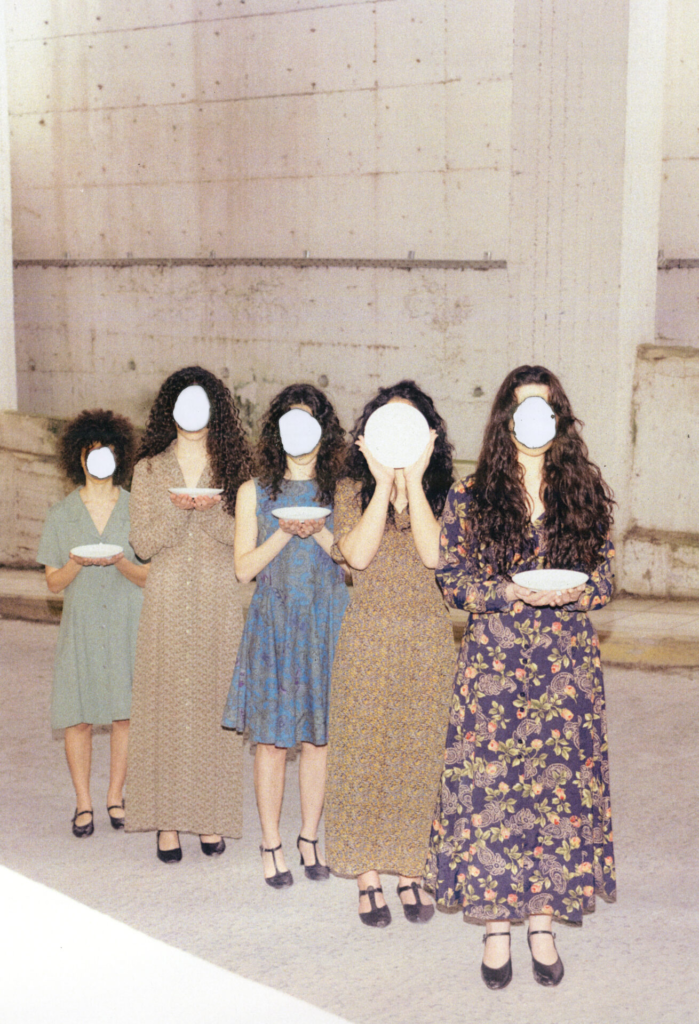
CARCOMA interests me primarily because it unfolds within the framework of the new autonomous artistic unit Gen 260. I am also deeply drawn to theatricalized literature. The performance is based on the novella Carcoma (Sarakí) by Layla Martínez, whose thematic world I find compelling.
A brief description:
“Two unnamed women–a grandmother and a granddaughter–live in isolation, as if fused with the walls surrounding them. When the disappearance of a child turns the gaze of the community and the intrusive attention of the media toward them, their confessions transform into a familial palimpsest of silence, male violence and class decay.”
“Omikrongiota” by Giannis Didaskalou
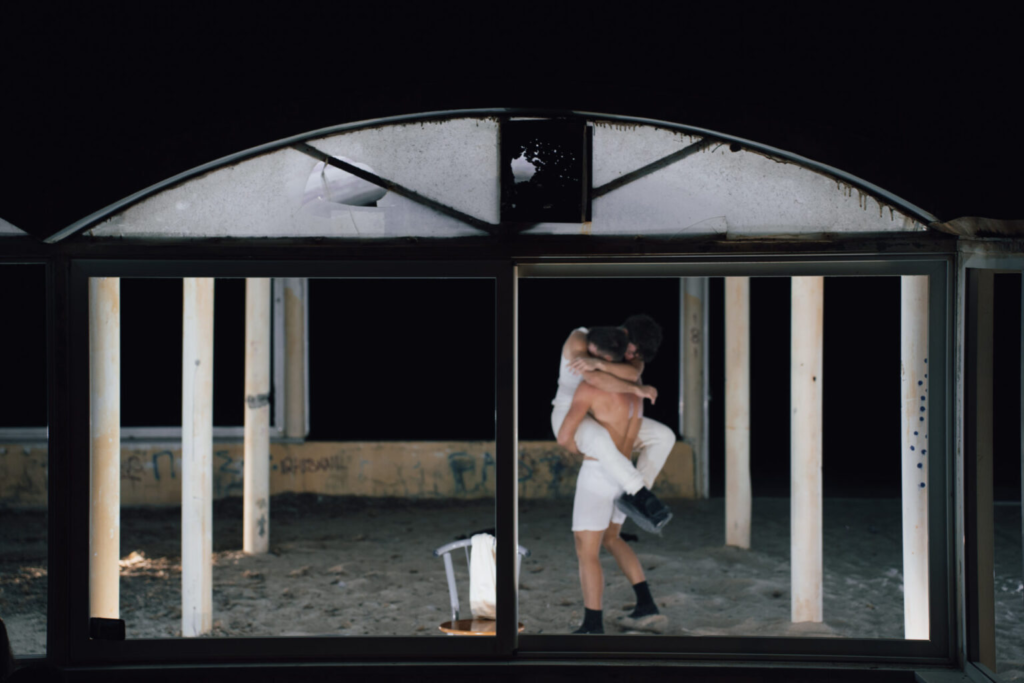
I choose this primarily because it belongs to the new Gen 260 section. I am particularly interested in engaging with the new generation of artists.
From the Festival presentation:
“In Omikrongiota, Giannis Didaskalou constructs a small, tender hymn to the ‘We’–and all our adjectives ending in ‘-oi’—finding in the theatre of the absurd the appropriate ground to express the deeply human awkwardness and anxiety born of loneliness. At the centre of the performance are two people bound in a close and enigmatic relationship, isolated within a world of their own.”
“The Murder of Isabella Molnar” directed by Stefania Goulioti
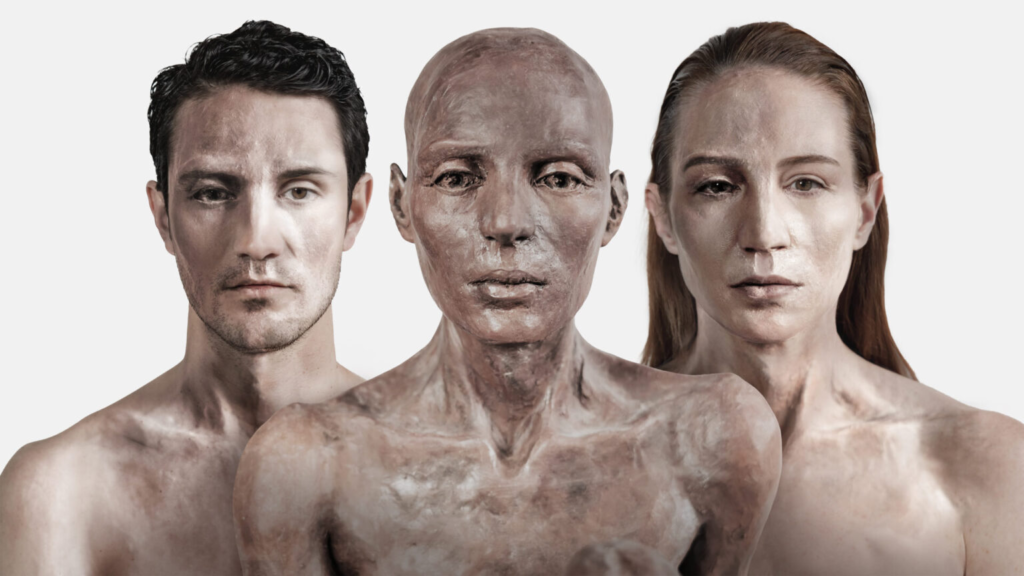
I eagerly anticipate The Murder of Isabella Molnar, directed by Stefania Goulioti and based on the short story by Dimitris Hatzis, as its text has long haunted me. I am also drawn to Goulioti’s explosive artistic intensity and the thoughtful dramaturgical involvement of Ektoras Lygizos.
As the Festival notes:
“The necessity of Art for the ‘orderly’ spectator, its connection to the irrational and chaotic world where all instincts find legitimacy, the question of the relationship between the artist and the work, as well as the very mystery of sculpture and its materials […] The sculptures–through the work of sculptor Ismini Tsofídou–are placed between the narrator and the figure of Isabella. They acquire breath and transform, revealing the delicate and often painful relationship between creator, creation and observer.”
“TEMPI – 57 Heartbeats & Electronics” by Orestis Karamanlis
Although it belongs to the C_Music NOW section and borders on performance, I include TEMPI – 57 Heartbeats & Electronics for its intelligent and tender interweaving of themes surrounding the tragic and unresolved Tempi train disaster, as well as for the involvement of the remarkable Angeliki Poulou in the performance curation.
As described by the Festival:
“In the work of composer Orestis Karamanlis, fifty-seven individuals are connected on stage (via cables), creating a soundscape composed of their heartbeats. Each is equipped with a contact microphone that captures their cardiac signals, which are then fed into a computer and processed through a programming language. The resulting soundscapes and musical structures, generated in real time, are shaped by the emotional states of the participants, forming an evolving sonic mass through the layering of heartbeats.”
“Ancestors” by Eva Stefani
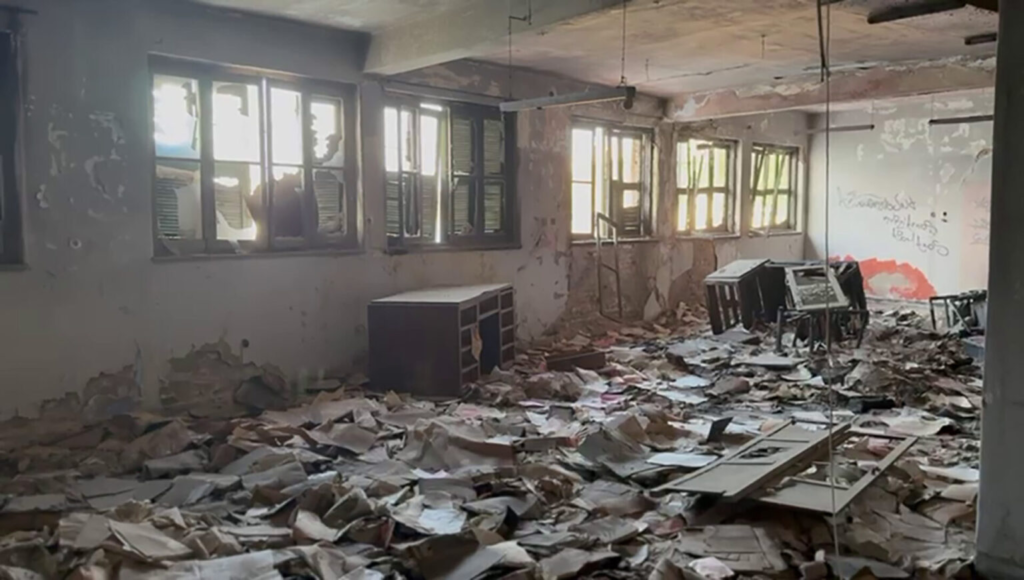
I would very much like to see Ancestors for its deep, tender gaze upon the human condition, for its simplicity and unpretentious editing, and for the emotional quality that defines the work of this distinguished filmmaker.
As described:
“Eva Stefani’s documentary forms an ark of fragments, composed of unfinished stories and seemingly unconnected moments filmed over a period of thirty years. A palimpsest of encounters with people of different nationalities, ages and social backgrounds, where the lives of unknown, solitary individuals intersect with conversations with creators and artists. This associative weaving of images and sounds–‘scraps’, as she calls them–composes a mosaic of present and memory, memory and present.”
Voices of the Arab World – Voices of Iran
I find this new section initiated by Michail Marmarinos deeply moving, primarily for the thinking that gave rise to it. The Western world often remains confined within its own self-referential frameworks, despite the powerful culture it has produced across time. There is a real need to interweave with artistic voices beyond the Western sphere. I was also struck by the way this section was articulated in relation to the participating countries–with profound respect for their theological, cultural and ethnological differences.
Three selections that stand out:
1. “The Child” by Nagmeh Samini, directed by Afsaneh Mahian
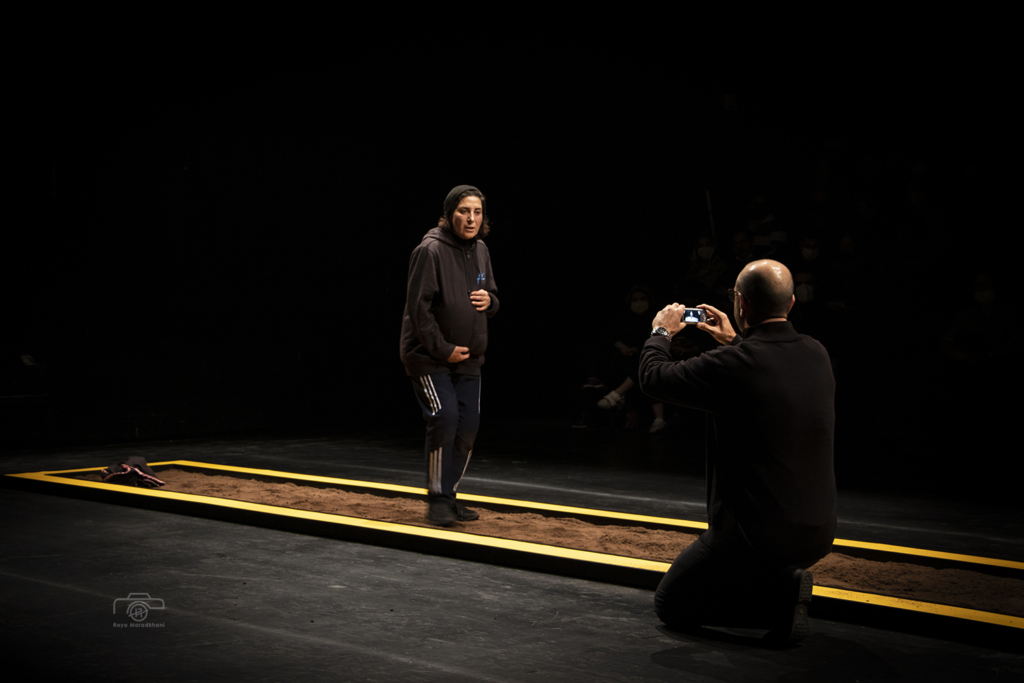
“Which bodies are deemed worthy, and which are rendered unwanted? On a coast in Western Europe, three women are arrested and taken in for interrogation and possible deportation. They come from Iraq, Afghanistan and Libya–all survivors of abuse. What binds them is not only their shared experience and journey to Europe, but also a newborn baby in their care.”
2. “Four Walls and a Roof” by Lina Majdalanie & Rabih Mroué
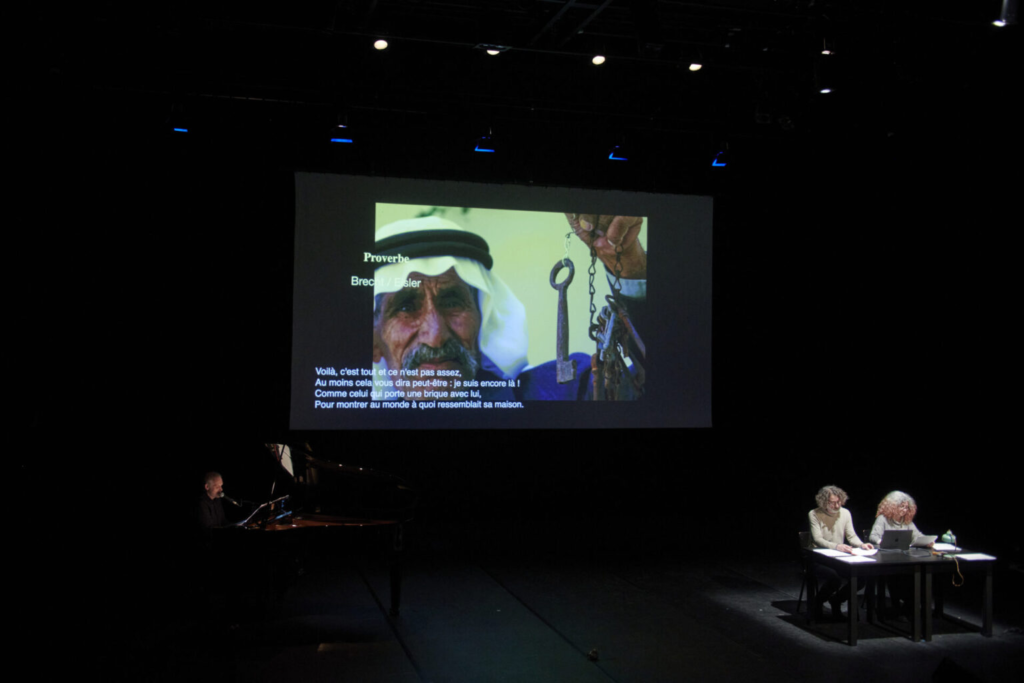
“Drawing from their own experience of displacement–having moved from Beirut to Berlin about a decade ago–and confronted with the global rise of the far right, the two artists address head-on what it means to live and work in exile. What do expectations of freedom of speech in a Western democracy look like when confronted with reality–censorship, propaganda, character assassination, and the reproduction of dominant governmental narratives? Ultimately, how free and open is the liberal democracy in which we live?”
Following the gripping Looking for a Missing Employee presented in 2024, Rabih Mroué—one of the leading figures of contemporary political and conceptual theatre—returns to Pireos 260, this time co-directing with his long-time collaborator Lina Majdalanie.
3. “A TRIAL” by Christiane Jatahy
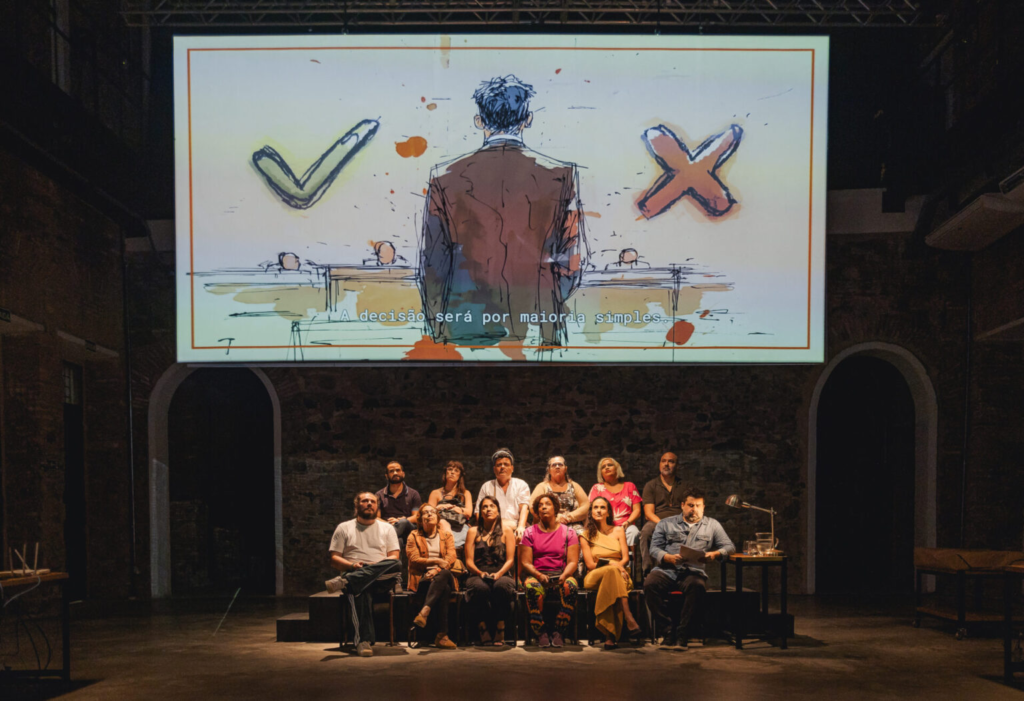
Based on Henrik Ibsen’s An Enemy of the People
“A TRIAL transforms Ibsen’s work into a contemporary, participatory ‘people’s court’, where truth is not merely revealed but put on trial. The starting point is the scandal that drives the plot of An Enemy of the People (1882). The Brazilian creator Christiane Jatahy, one of the most powerful voices on the contemporary international stage and recipient of the Golden Lion for Theatre at the Venice Biennale 2022, picks up the thread where Ibsen left off: Dr. Stockmann returns and asks for a second judgment–not acquittal, but the right to a neutral process that will assess his actions, choices and public stance. Was there, ultimately, an attempt to undermine democracy? Is he–or is he not–an ‘enemy of the people’?”
Lecture-performances: “Fireflies”
I am particularly looking forward to this cycle of “open presentations and discussions with a performative character,” curated by Dimitris Papanikolaou, Professor of Modern Greek and Cultural Studies at the University of Oxford.
What interests me is the perspective shaped through a counterpoint dialogue between the writings of Pier Paolo Pasolini and the “response” of Georges Didi-Huberman.
As the Festival notes, this year’s cycle, presented at Pireos 260, is titled Fireflies:
“Drawing inspiration from Pasolini’s well-known ‘Article on Fireflies’ and Didi-Huberman’s book Survival of the Fireflies, we think of fireflies as symbols of resilience and risk, of environmental responsibility and eco-critical reflection, but also as symbols of contact, movement and shifts in perspective.”
“Starry Sky – Starry Nights”
This new section excites me for its poetic quality, for its sense of nostalgia without slipping into the picturesque, and for its fresh approach to the notion and use of the archive.
As described by the Festival:
“Midnight screenings of the ephemerality of performative acts.
The new proposal of the Athens Epidaurus Festival, hosted at Space D of Pireos 260, is titled ‘Starry Sky – Starry Nights’. At midnight, within an industrial landscape, in the quiet of the Athenian summer, under an open roof, films are screened. In a place where ephemeral performances unfold, cinematic recordings meet the viewer in a city that slows down.”
The full programme announcement is forthcoming.
Autumn – Echoes
Allow me to remain somewhat skeptical about the extension of the Festival through mid-December. Its realization will ultimately prove the substance of this decision. At first glance, it seems to disrupt the enchantment of the ephemeral. We shall see…
From Little Epidaurus to the world
The programme of Little Epidaurus is particularly compelling. In fact, it feels more exciting to me than that of the Ancient Theatre of Epidaurus.
“TOURNE” by Euripides Laskaridis
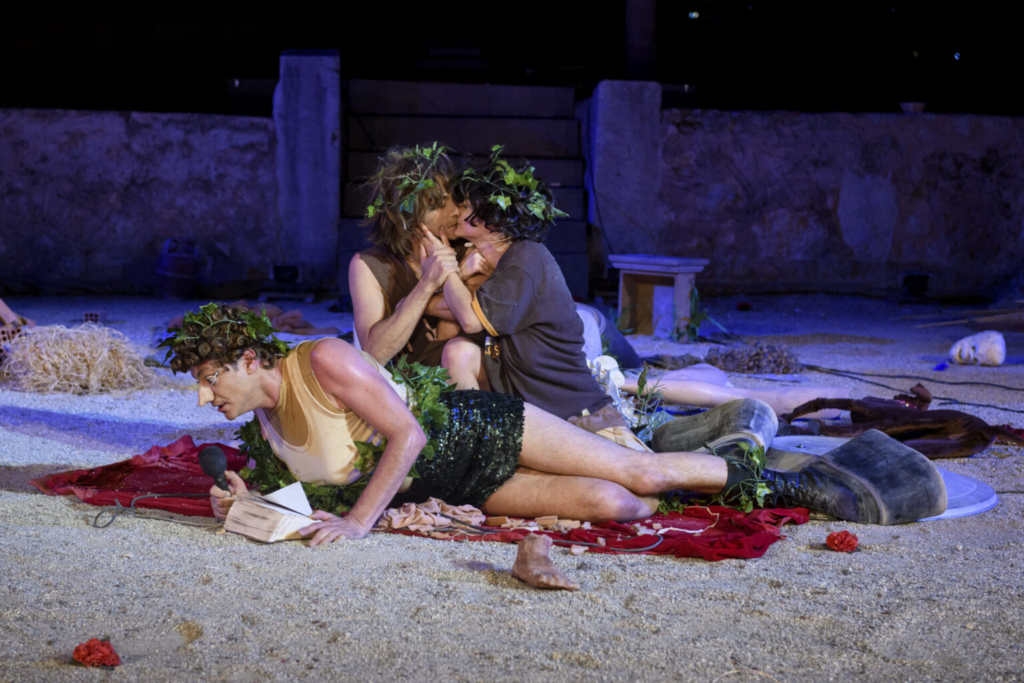
I choose the fascinating world of Euripides Laskaridis, this time under the title TOURNE.
As noted by the Festival:
“Euripides Laskaridis, a performer and creator working at the intersection of dance, theatre and visual arts, returns to Little Epidaurus with a work that brings to the surface unseen aspects of contemporary Greek identity, prompted by the magical adventure of theatre.”
“Mothers – A Song for Wartime” by Marta Górnicka
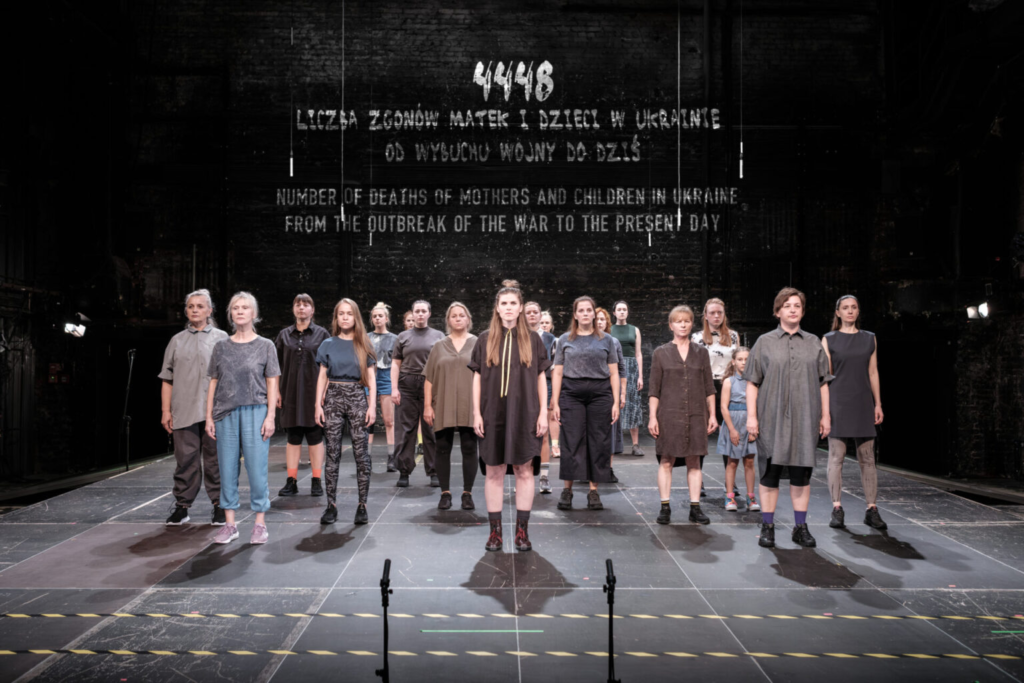
I would very much like to see this work for its harsh–and, unfortunately, deeply timely–subject matter, as well as for its stage approach.
“The language of war remains unchanged over time. Atrocities, the rape of women, the annihilation of civilians and the destruction of life return with urgency in today’s tense global reality. Within this harsh historical condition, Mothers – A Song for Wartime seeks whatever may remain of the voice when violence has ruptured even the possibility of speech.
On stage, twenty-one women from Ukraine, Belarus and Poland, aged 9 to 71, come together. A choir composed of mothers and daughters, survivors and witnesses of the devastation caused by armed conflict, becomes the bearer of diverse lived and political experiences. Among them are refugees from Mariupol, Kyiv, Irpin and Kharkiv.”
“I-ONE” by Ivan Vyrypaev, directed by Galin Stoev
I am particularly interested in this new play by Ivan Vyrypaev, directed by Galin Stoev. I find the encounter with figures from Medea deeply striking, as well as the triple performance by actresses from Australia, Poland and Greece.
From the Festival description:
“The new work by Ivan Vyrypaev is shaped through the directorial lens of Galin Stoev, a creator with profound knowledge of contemporary European theatre. Three actresses from different countries meet at the Little Theatre of Ancient Epidaurus for the world premiere of I-ONE. The leading role is shared by Antigone Duchêne from Australia, Sofia Kokkali from Greece and Karolina Zięba from Poland, forming from the outset a scenic encounter of diverse performative trajectories.
Drawing inspiration from the form and spirit of ancient tragedy, Medea returns as a new, contemporary tragedy for the 21st century. A staging that tests the limits of myth and confronts one of the most fragile materials of our species: technology, the notion of the self and identity.”
“Dance Does Not Pretend” – Temporary Exhibition
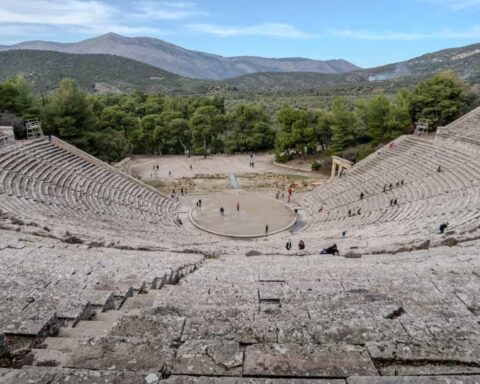
I find this year’s thematic focus on dance and the notion of choricity within the temporary exhibition–held in the exhibition space next to the Ancient Theatre–particularly compelling. The fact that it can be visited before or after the performances creates a unique experiential continuum.
“Snapshots of circular dances, sometimes in village squares, sometimes in the orchestra of the ancient theatre. Social groups in disguise celebrating Carnival, workers constructing stage sets for Epidaurus performances. Videos and photographs, archival recordings capturing the Chorus in performance, juxtaposed with contemporary artworks that reveal another, real and collective dimension of it.
Elders from Sousa, Pheres, Thebes or Athens. Women from Troy, maenads on Mount Cithaeron, companions of Creusa, sailors from Salamis and farmers. Groups of people–Choruses–arrive this year in the orchestra of Epidaurus, becoming the subject of the exhibition’s long table. A point of reading, discussion and confrontation with citizen groups, local associations and theatre collectives of the Municipality of Epidaurus. An exhibition as a hospitable structure, a space for dialogue. A condition—a living machine of the Chorus…”
Is art mediated?
The presentation of the Festival’s artistic programme itself unfolded as a kind of performative invitation to participate, conceived and orchestrated by the internationally renowned creator and current artistic director of the Athens Epidaurus Festival, Michail Marmarinos.
A vast U-shaped table was placed on stage. At its ends sat members of the Festival’s board and staff–close collaborators of the director. The many empty seats were intended for members of the press. Positioned on stage–an arrangement that created a certain unease–we found ourselves facing a transparent plexiglass podium, the very core of the announcements, yet also their first recipients.
Officials, artists and audience members were seated in the auditorium, behind us–out of sight, beyond direct communication.
The spatial arrangement was overtly symbolic. It disrupted the familiar sense of security journalists experience when seated among the audience. Being placed on stage kept us in a state of constant alertness. At the same time, it raised a series of essential questions–articulated with a certain tenderness, perhaps even a playful irony, characteristic of Marmarinos’ inventive mind.
What role are we–those positioned in between–called to play between those who create art and those who receive it? Why are we on stage?
If we are turned away from the artists–as our position at the table suggested–how can we truly understand the art they produce? If we are turned away from the audience, how can we communicate with them?
Within the extreme complexity of the mechanism that surrounds artistic production–from sender to receiver–are we an obstacle between art and its audience? Or an essential link? Redundant? Necessary? Mediators?
Ultimately, can the artistic event be mediated at all? And if so, does it arrive intact—or diminished?
Epilogue
“There is a place where phenomena occur,” Michail Marmarinos emphasized. “Where horizontal time meets vertical time.”
And he added:
“A place of sacred silence, of uncertain stillness, where silence and darkness are healing. Where a passage takes place–from the self before, to another self.”
With the hope that we may all meet there again. As we do every year. With a sense of sacred emotion and joy. In an attempt to transcend ourselves–and to encounter the Other.