 elc team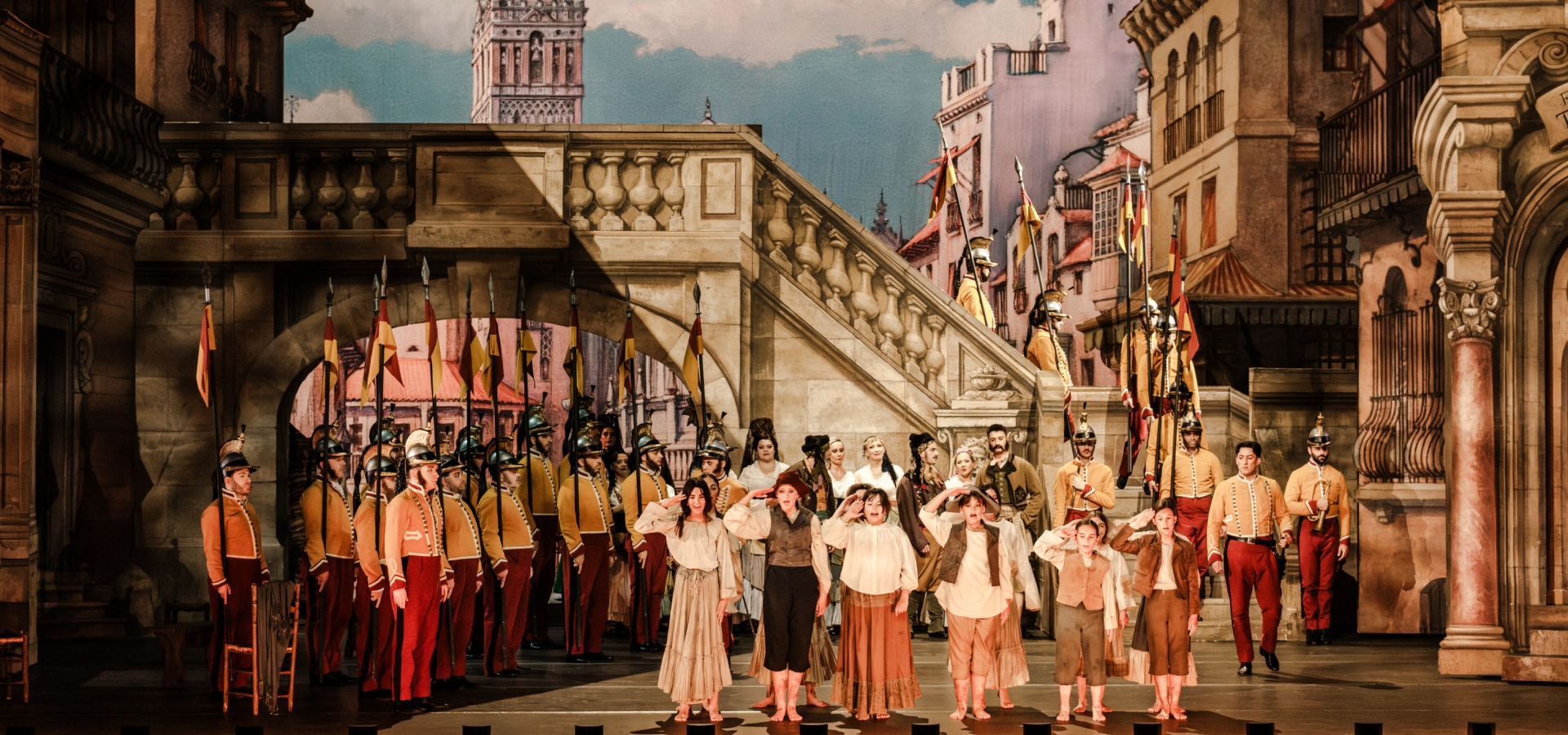
The Greek National Opera presents Carmen in a unique production that reconstructs the historic first staging of Georges Bizet’s masterpiece, originally performed in 1875 at the Opéra-Comique. For twelve performances, from April 30 to June 4, 2026, at the Stavros Niarchos Hall of the GNO at the Stavros Niarchos Foundation Cultural Center, the production is conducted by Konstantinos Terzakis and directed by Romain Gilbert, featuring internationally acclaimed opera stars. The title role will be performed by Gaëlle Arquez, Anita Rachvelishvili, and Marina Viotti.
Bizet’s Carmen stands as a landmark of the global operatic repertoire, marking a decisive break from the artistic conventions of its time and heralding opera’s transition toward the raw realism of verismo. The work premiered on March 3, 1875, at the Opéra-Comique in Paris and, despite its initially turbulent reception, went on to become one of the greatest international successes in the history of opera, redefining the relationship between musical language and dramaturgy. It is an existential drama driven by fatal passions and reflections of the social margins which, combined with its exploration of exotic soundscapes and folk melodies, compellingly elevates the heroine as a symbol of absolute freedom.
The story transports us to Seville in the 1830s, where the encounter between the defiant Gypsy Carmen and Corporal Don José sets off a destructive chain of events. When José, captivated by her allure, helps her escape, his downfall becomes inevitable. The arrival of the celebrated bullfighter Escamillo, who wins Carmen’s heart, along with the futile intervention of the loyal Micaëla, who tries to bring José back to his dying mother, drives his jealousy to the extreme. In the final confrontation outside the Seville arena, Carmen stubbornly refuses to renounce herself, choosing death over submission. As the crowd glorifies the triumphant Escamillo, she falls dead by José’s knife, sealing with her blood the timeless struggle of a woman against a social system that cannot control her.
It is a powerful story of passion and defiance which, through its uniquely inspired musical composition, lays bare the characters with striking intensity. The libretto by Meilhac and Halévy, based on the novella by Prosper Mérimée, narrates the pursuit of absolute freedom by a woman who refuses to submit to social conventions. Carmen does not merely recount a fatal romance; it illuminates enduring themes of self-determination, gender-based violence, and the conflict between the individual and patriarchal structures, turning music into a “mirror” that reflects society’s inner tensions and impasses.
Within the framework of the Greek National Opera’s 2025–26 thematic axis, “The opera of the future born from the womb of the past,” this production marks the first time in Greece that the original 1875 premiere at the Opéra-Comique in Paris is faithfully recreated. Through extensive study of original staging manuals, as well as costume and set designs from the historic premiere, the Palazzetto Bru Zane – Centre de musique romantique française has produced a remarkable reconstruction, preserving the striking sets and costumes personally overseen by Georges Bizet 151 years ago.
By reimagining that original 1875 production, this staging which has already enjoyed great success in Rouen, Versailles, Hong Kong, Hanoi, and Dallas, offers contemporary audiences the opportunity to rediscover the opera’s “first youth” and to reflect on how the past can be illuminated through contemporary artistic means.
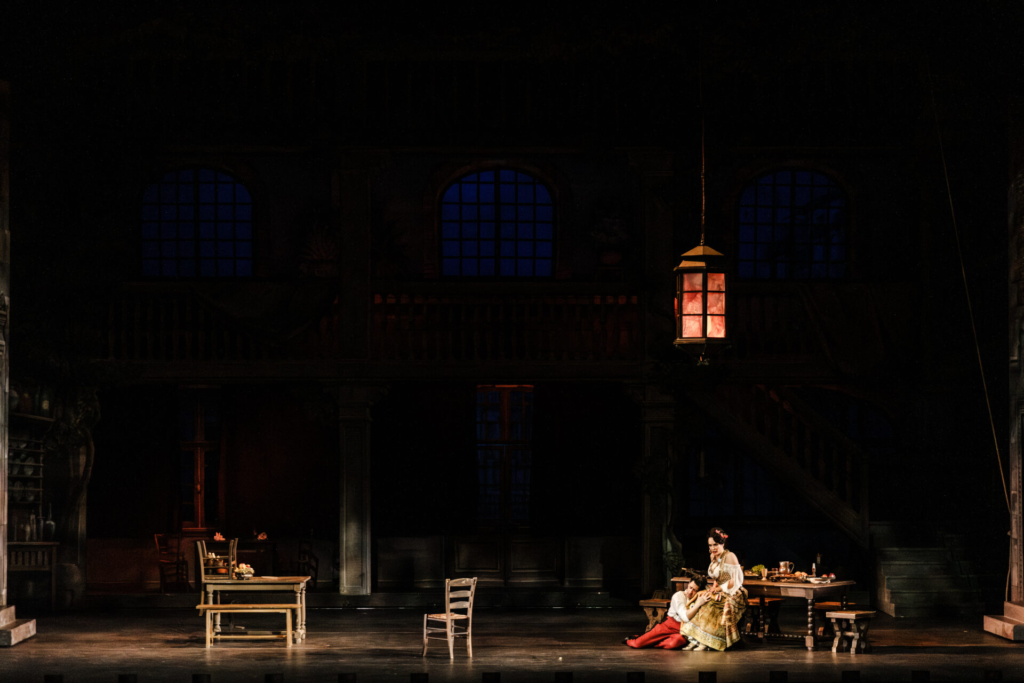
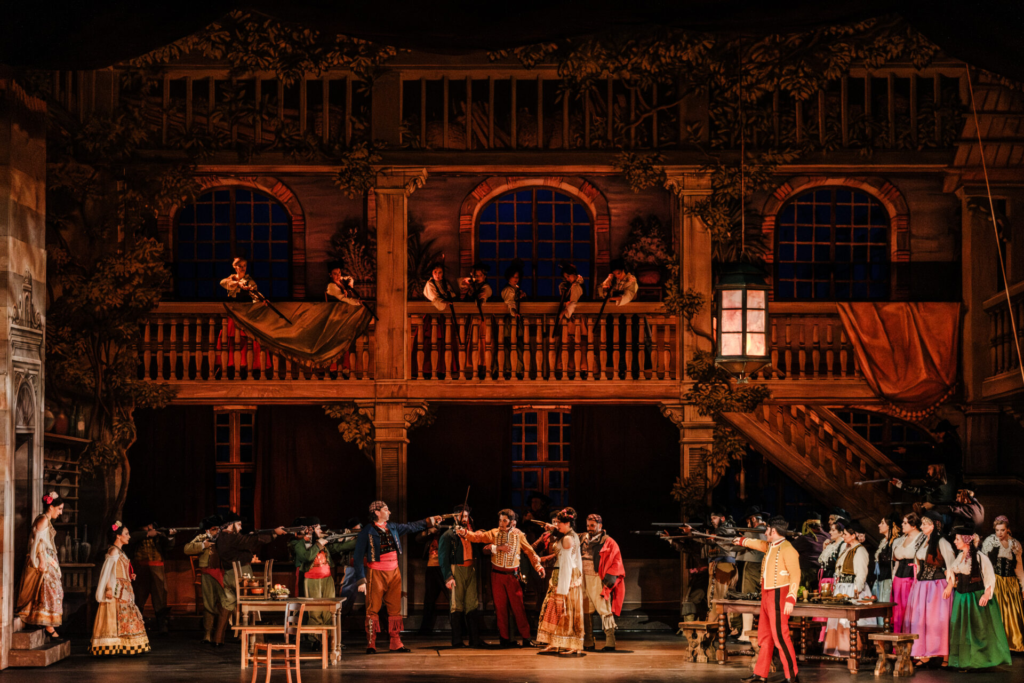
The production is directed by the distinguished French stage director of the younger generation Romain Gilbert, who in recent years has staged major works of the repertoire at leading opera houses, including those of Barcelona, Naples, Dallas, Bordeaux, Versailles, as well as the festivals of Aix-en-Provence and Baden-Baden, among others. The directorial challenge lies in creating within a framework that appears, at first glance, entirely predetermined by the surviving archival documentation of the original production. As Gilbert aptly notes, “that intoxicating thing: freedom!” is not negated but rather redefined and reframed through a deep understanding of the material. Stage direction manuals, set and costume designs, and historical sources function not as constraints but as a fertile framework “within which variety, creativity, imagination, and subtlety” can emerge.
Where the sources are exhaustively precisefor instance in relation to stage layout, choral movement, and the geometry of bodies-the direction follows them as faithfully as possible. Yet where “the source suddenly shifts from verbosity to essential silence,” a vital space for creation opens up, allowing for a dialogue between historical documentation and new artistic expression. In the expansive melodic passages, duets, and moments of inner tension, the focus shifts from compositional image-making to the micro-scale of human expression-gesture, gaze, and physical stance. The direction of the performers thus becomes central, demanding precision, persistence, and an almost painterly approach to the scenic tableau.
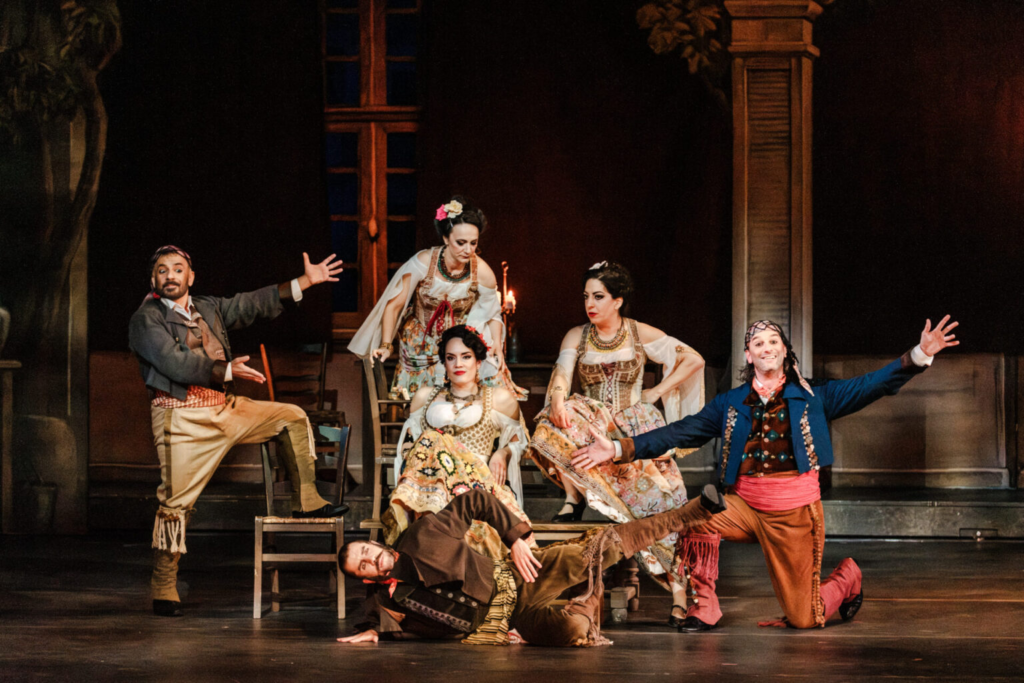
Through this process, a less recognized dimension of Romantic theatre emerges: its subtlety and discipline, often overshadowed by later interpretations. The contemporary director, equipped with this knowledge, does not merely reproduce the past but reactivates it, inscribing his own aesthetic signature. At this point, the dramaturgy of Carmen itself intersects with the act of staging, through the idea that “whoever wants to be free is free,” transforming reconstruction into a vivid, living experience of freedom.
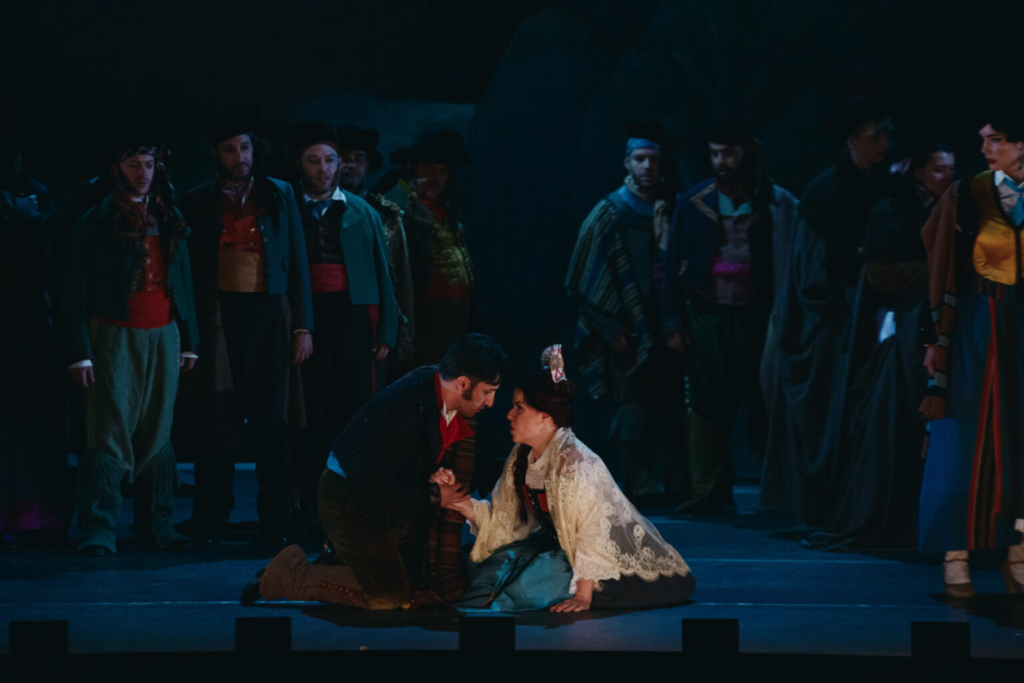
The set design by Antoine Fontaine-renowned for his work in creating operatic visual worlds-moves between historical documentation and creative reconstruction. In the absence of original scenic elements, the artist’s interpretative role becomes essential. Drawing from visual sources of the period, a theatrical world is reimagined through painted flats and perspectival depth, while contemporary lighting techniques seek to evoke the warm atmosphere of gaslight.
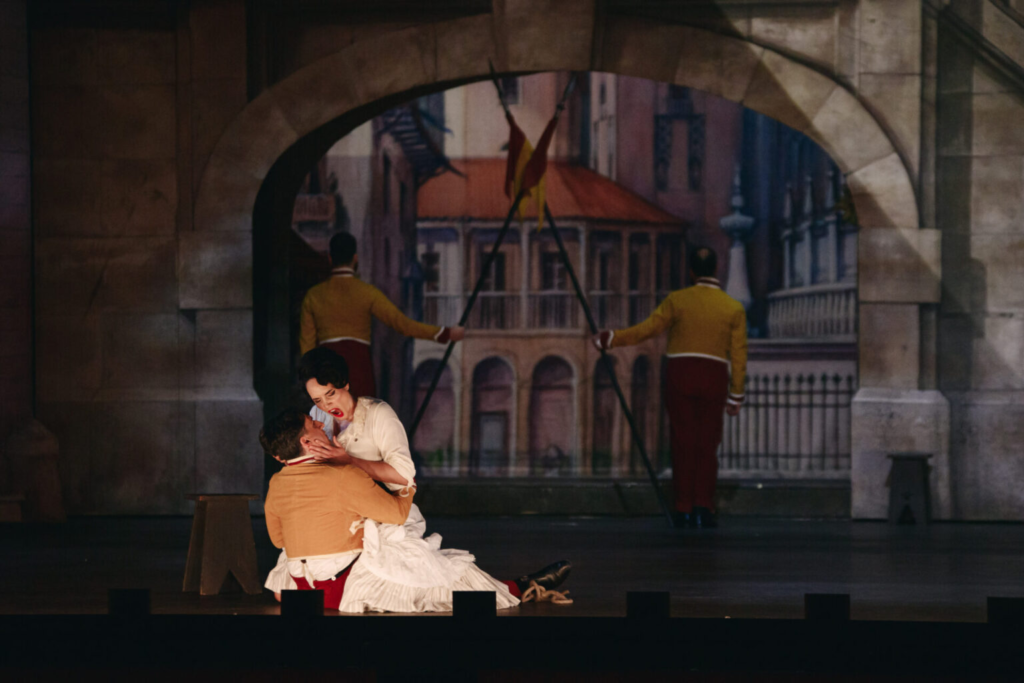
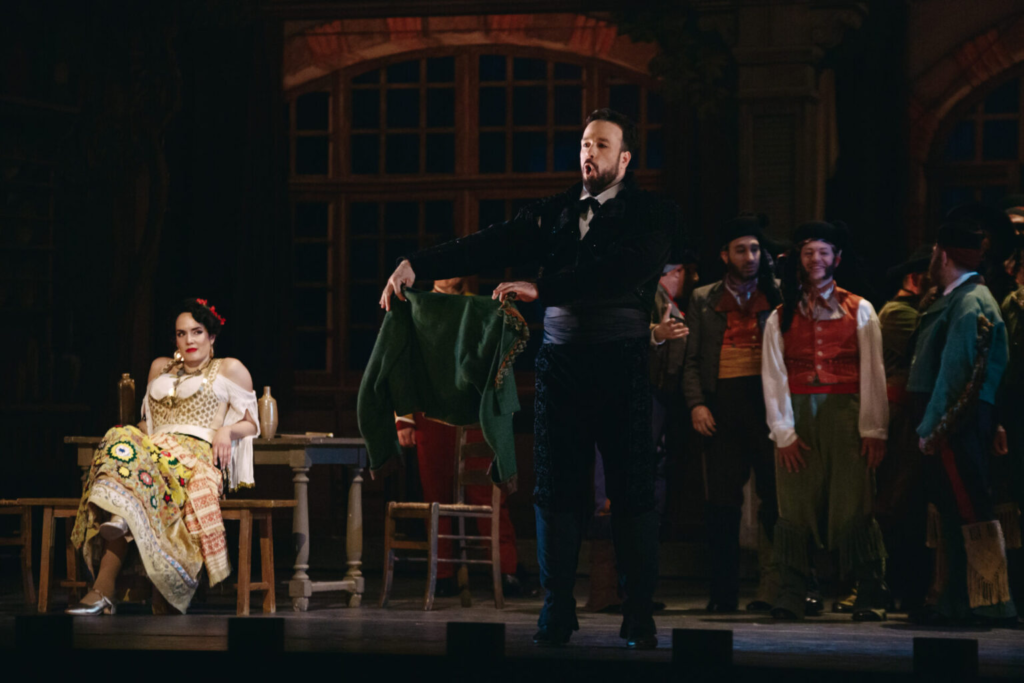
At the same time, the costume vision of the iconic fashion designer Christian Lacroix draws on iconographic sources of the era, employing rare materials and techniques to approach the aesthetic and spirit of 1875, while acknowledging the inevitable distance imposed by time. The reconstruction of the costumes is not treated as strict replication but as a sensitive “translation” of forms, textures, and colors, brought back to life on stage. The result aims to reveal the work’s original brilliance through a filter of theatricality and poetic atmosphere.
The creative team is further enriched by choreographer Vincent Chaillet, who shapes the movement of the principals, dancers, and Chorus, and lighting designer Hervé Gary, whose atmospheres contribute significantly to the production’s stage magic.
The Orchestra of the Greek National Opera is conducted by the rising maestro Konstantinos Terzakis, in his sixth collaboration with the company, following La Bohème, the concert presentation of Flora mirabilis, the ballets Coppélia and Carmen, and the International Opera Awards 2025 ceremony. The GNO Chorus has been prepared by Agathangelos Georgakatos, and the GNO Children’s Chorus by Konstantina Pitsiakou.

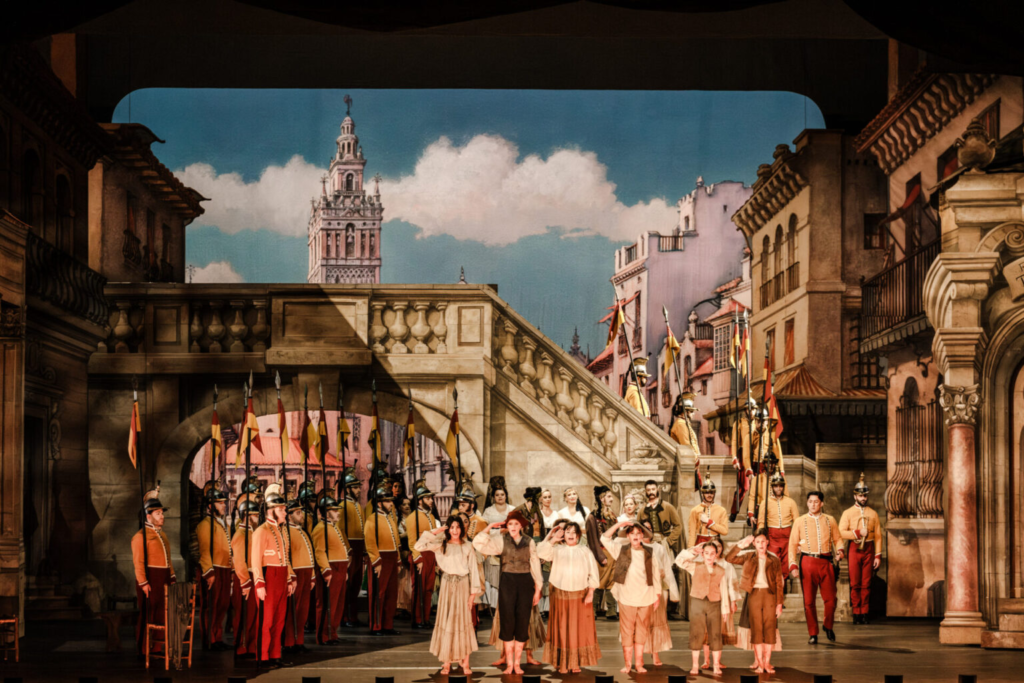
For Carmen, the Greek National Opera has assembled an internationally acclaimed cast, alongside distinguished Greek opera singers, underscoring its role as a global hub for operatic creation. The title role will be performed by Gaëlle Arquez, Anita Rachvelishvili, and Marina Viotti.
The celebrated French mezzo-soprano Gaëlle Arquez, who has already taken on the role of Carmen at some of Europe’s leading opera houses, including the Paris Opera, Frankfurt Opera, and the Royal Opera House in London, comes to the GNO for five special performances. She has also established an international reputation through landmark interpretations of mezzo repertoire roles, such as in Vivaldi’s Juditha Triumphans and Gluck’s Iphigénie en Tauride, confirming both her deep interpretative power and vocal versatility.
Following her unforgettable performance at the Odeon of Herodes Atticus in 2018, Anita Rachvelishvili returns to the role of Carmen. The mezzo-soprano has taken on some of the most demanding roles in the repertoire and, since her debut in the role at La Scala in Milan in 2009, has been regarded as one of the most iconic interpreters of Carmen worldwide.
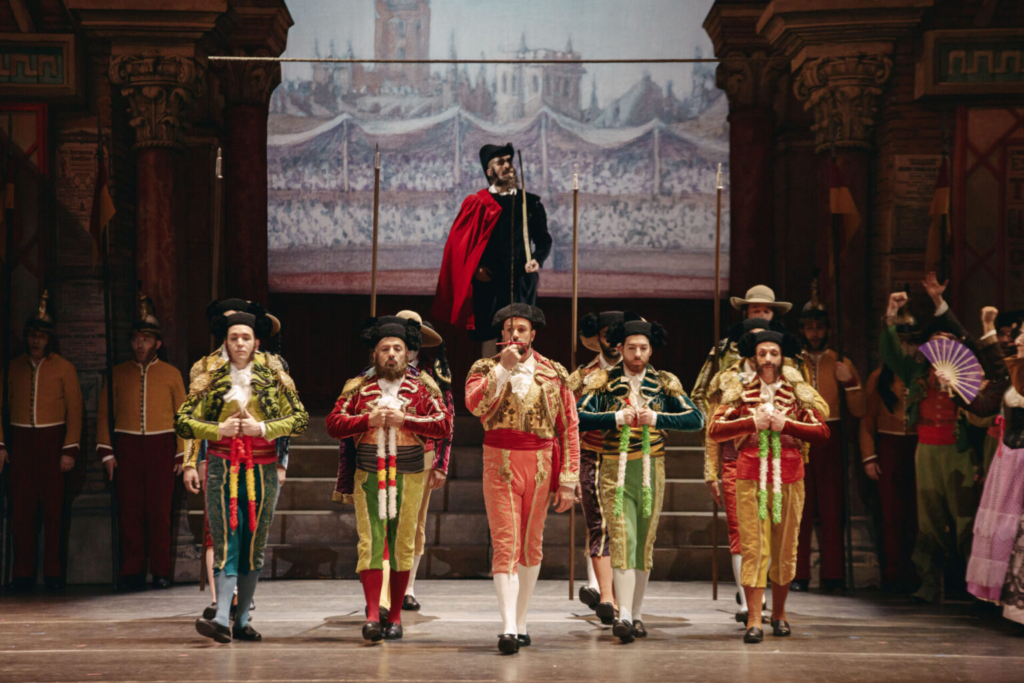
The Grammy Award-winning Franco-Swiss mezzo-soprano Marina Viotti makes her first appearance with the GNO, having impressed audiences at the opening ceremony of the Paris Olympic Games, where she performed Carmen as well as heavy metal music. She is known for her bold interpretative approach and her ability to bridge different musical genres, redefining the boundaries of operatic art. Her notable roles include Carmen, Rosina in Rossini’s The Barber of Seville, and Charlotte in Massenet’s Werther. In 2019, she received the “Best Young Singer” award at the International Opera Awards.
Charles Castronovo, renowned for his interpretations of the Italian and French repertoire, brings his warm, lyrical timbre and profound expressivity to the role of Don José, which he has performed at major opera houses around the world. He will share the role with tenor Andrea Carè, admired by Greek audiences for his recent appearance in Madama Butterfly at the Odeon of Herodes Atticus. Carè, known for his command of the dramatic Italian repertoire, has performed leading roles at venues such as the Metropolitan Opera in New York, La Scala in Milan, and the Royal Opera House in London.
The role of Escamillo will be performed by distinguished Greek artists: internationally acclaimed baritone Dionysis Sourbis, recently heard as Ford in Verdi’s Falstaff, bass Tasos Apostolou, one of the most significant voices of his generation, and the younger baritone Nikos Kotenidis.
Emphasizing the strength of the Greek artistic scene, the role of Micaëla will be shared by leading sopranos of the GNO: Vasiliki Karagianni, one of the foremost Greek sopranos of her generation with a strong international presence, who makes her debut in the role; the young soprano Marilena Striftombola; and Maria Mitsopoulou, who returns to one of the roles that have defined her career.
The cast is completed by a distinguished ensemble of Greek performers, both established and emerging: Giannis Selitsaniotis, Giorgos Papadimitriou, Giorgos Iatrou, Sotiris Triantis, Chrysa Maliamani, Matina Tsaroucha, Chrysanthi Spitadis, Diamanti Kritsotaki, Charis Andrianos, Marios Sarantidis, Giannis Kalyvas, and Andreas Karaoulis.
Credits
Co-production: Palazzetto Bru Zane – Centre de musique romantique française / Royal Opera of Versailles / Opéra de Normandie Rouen / Palazzetto Bru Zane – Centre de French Romantic Music
Production execution: Palazzetto Bru Zane – France
Set construction: Devineau Workshops and the workshops of Opéra de Normandie (Rouen)
Costume construction: Caraco Workshops and the workshops of Opéra de Normandie (Rouen)
Music edition: Choudens (revision: Palazzetto Bru Zane)
Historical documentation: Scientific and research team of Palazzetto Bru Zane
Musical direction: Konstantinos Terzakis
Direction: Romain Gilbert
Set design: Antoine Fontaine
Costumes: Christian Lacroix
Choreography: Vincent Chaillet
Lighting design: Hervé Gary
Chorus master: Agathangelos Georgakatos
Children’s chorus master: Konstantina Pitsiakou
Cast
Don José: Charles Castronovo (Apr 30 & May 3, 5) / Andrea Carè (May 2, 7, 14, 17, 20, 24, 26, 28 & June 4)
Escamillo: Dionysis Sourbis (Apr 30 & May 3, 5) / Tasos Apostolou (May 2, 17, 24, 26 & June 4) / Nikos Kotenidis (May 7, 14, 20, 28)
Zuniga: Giannis Selitsaniotis (Apr 30 & May 3, 5, 17, 24, 28) / Giorgos Papadimitriou (May 2, 7, 14, 20, 26 & June 4)
Morales: Giorgos Iatrou (Apr 30 & May 3, 5, 17, 24, 28) / Sotiris Triantis (May 2, 7, 14, 20, 26 & June 4)
Carmen: Gaëlle Arquez (Apr 30 & May 3, 5, 7, 14) / Anita Rachvelishvili (May 2, 17, 20, 24) / Marina Viotti (May 26, 28 & June 4)
Micaëla: Vasiliki Karagianni (Apr 30 & May 3, 24, 26, 28) / Marilena Striftombola (May 2, 5, 14, 17) / Maria Mitsopoulou (May 7, 20 & June 4)
Frasquita: Chrysa Maliamani (Apr 30 & May 3, 5, 17, 24, 28) / Matina Tsaroucha (May 2, 7, 14, 20, 26 & June 4)
Mercédès: Chrysanthi Spitadis (Apr 30 & May 3, 5, 14, 17, 28) / Diamanti Kritsotaki (May 2, 7, 20, 24, 26 & June 4)
Dancaire: Charis Andrianos (Apr 30 & May 3, 5, 17, 24, 28) / Marios Sarantidis (May 2, 7, 14, 20, 26 & June 4)
Remendado: Giannis Kalyvas (Apr 30 & May 3, 5, 17, 24, 28) / Andreas Karaoulis (May 2, 7, 14, 20, 26 & June 4)
With the Orchestra, Chorus and Children’s Chorus of the Greek National Opera
as part of its educational mission
Information
April 30; May 2, 3, 5, 7, 14, 17, 20, 24, 26, 28; & June 4, 2026
Start time: 19:00 (Sunday: 18:30)
Stavros Niarchos Hall, GNO – Stavros Niarchos Foundation Cultural Center
Tickets (limited availability): €15, €20, €35, €55, €60, €80*/70**, €100*/90**, €130*/120**
(*Category A / **Category B) | Student & children: €15 | Limited visibility: €10
Pre-sale: GNO Box Office, SNFCC (daily 09:00–21:00 | Tel: +30 2130885700 & ticketservices.gr)