 elc team
The 28th Thessaloniki Documentary Festival turns its attention to the exceptional creator Vouvoula Skoura, who through her work redefines our relationship with memory, history and time.
This year’s event will feature a total of 20 works by the director, who, drawing on materials and methods from different art forms, composes a multi-layered universe, where great History intersects with small, fragile human narratives. At the same time, the film Ethel Adnan: Exiled Words (2007) will be screened under accessibility conditions, with the support of Alpha Bank.
The Festival also presents a spotlight tribute to American multimedia artist Bill Morrison, one of the most radical creators working with archival imagery, who was nominated for the Academy Award for Best Documentary Short Film in 2025.
The spotlight, which includes six films, engages dynamically with this year’s major tribute to archives, foregrounding themes of decay and regeneration. Vouvoula Skoura and Bill Morrison will be present in Thessaloniki, where the Festival will honor them with the Golden Alexander Award, recognizing their profound and enduring contribution to cinema and contemporary culture.
Vouvoula Skoura
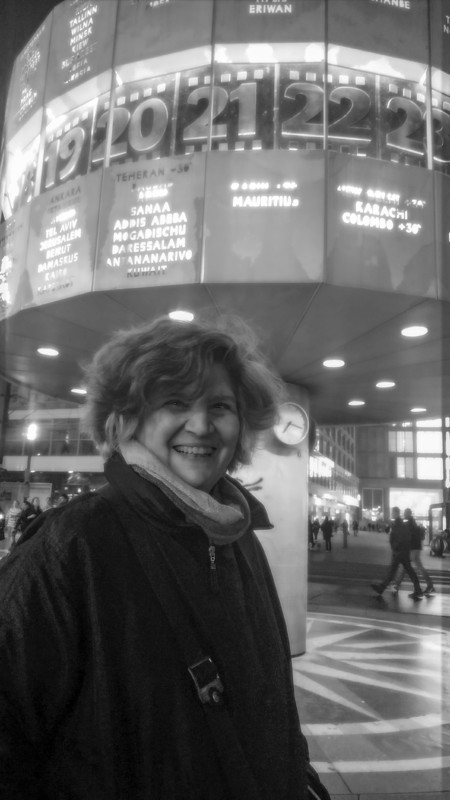
Vouvoula Skoura proposes a new dimension of experimental cinema that moves fluidly between the visual and graphic arts, exploring the boundaries of narrative and image. Her work does not follow linear structures, but thoughtfully renegotiates ideas, converses with the work of great creators and reminds us that universal human values remain the basis of life. Utilizing modern technology, she creates cinematic essays, films and video art, which sometimes focus on personalities such as Ethel Adnan, George Seferis, Odysseas Elytis, James Joyce and Melpo Axioti, sometimes bring to the fore issues such as migration, love and the sense of belonging.
The films Internal Migration and Slag of Light will be restored by the Digital Film Restoration Laboratory at the Greek Film Archive at the expense of the Thessaloniki Film Festival, as a continuation of the Festival’s effort to restore important films of Greek cinema within the context of the tributes it organizes.
Vouvoula Skoura was born in Thessaloniki. She studied Graphic Arts at the Athens Institute of Technology [ATI]. She lived and worked in London during the Greek dictatorship. She attended Art History courses [1970] and a Master’s degree in Computers for Video at Middlesex Polytechnic [1988]. For many years she has been involved in experimental mixed media video and photography. Her film works and the videos she has created have been presented at international festivals and universities, in more than fifty cities, while she has also collaborated with many artistic organizations both in Greece and abroad. Her films Internal Migration (1984) and Slag of Light (1989) were awarded at the Drama Short Film Festival. Her video Black Moon won First Prize at the Athens International Video Art Competition in 1998. The film Ethel Adnan: Exiled Words (2008) won the Greek Film Center Award at the 10th Thessaloniki Documentary Festival. With the trilogy The Theme of Exile: Ethel Adnan, James Joyce, Melpo Axioti , she was awarded overall for her work at the 11th Chania Film Festival. In 2009, the Greek Graphic Designers Union awarded her the Overall Contribution Award.
The films of the tribute
Internal Migration (1984) follows a woman’s journey through her childhood memories and descriptions of places and situations. In 1950, in a village in Macedonia, we see her at the age of 10; in 1956, in Thessaloniki, at the age of 16; and in 1960, her marriage in Athens marks a new phase in her life. Internal Migration is the director’s most autobiographical film, posing in a pioneering manner for its time the theme of the violent separation from the environment of a woman, whose movement from her place of birth to another place becomes the occasion for an internal journey through the times and spaces of memory. She is followed by the echoes of the civil war, rock and roll, the poets she loved; Karyotakis, Patrikios, Embeirikos, the books, the films.
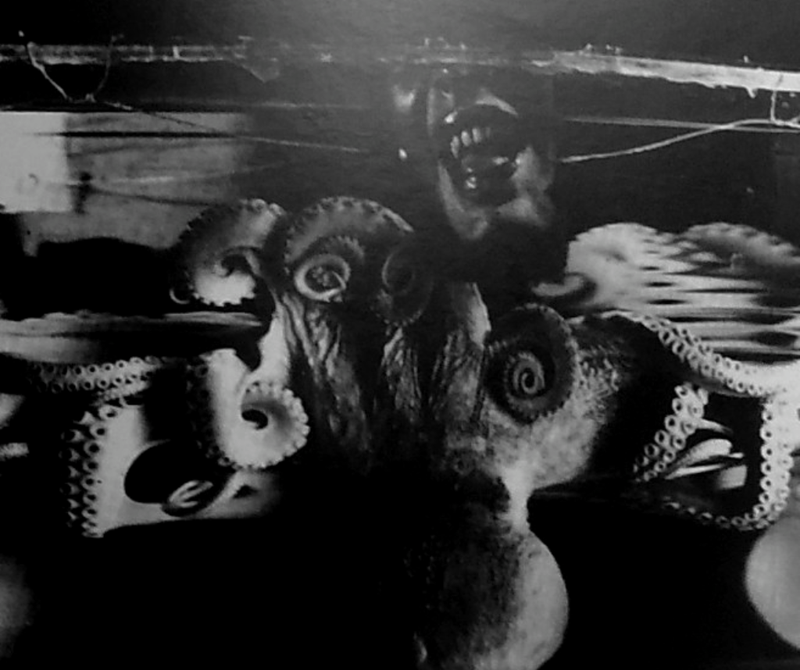
Slag of Light (1989) is a collage of computer-generated works that reproduce erotic designs from classical antiquity to contemporary photographs and live footage. Through different filming techniques, a special construction emerges, in which – despite the use of modern technology – its aesthetics do not prevail, but on the contrary a very personal perspective is emphasized. The film focuses on the diptych “Love-Death”, a familiar theme in the art world. Still lifes recall painters such as Morandi, Caravaggio or Lopez. The “acceptance” of ancient and contemporary heritage works simultaneously with its “rejection”, as it is subjugated through the destruction of materials and images.
The film duo George Seferis: Poet and Citizen. Double Journey – Place Time (2000) and George Seferis: Poet and Citizen. The Experience of Love + War and Deterioration (2000) presents a vast photographic material – like a great journey through the 20th century – with documents from the life of George Seferis, period documents from around the world and documents from the places to which the poet traveled. The short films about George Seferis and his poetry are part of a broader artistic project commissioned by the Ministry of Culture of Greece to celebrate the 100th anniversary of the birth of the poet and Nobel Prize winner in 2000.
In Philoctetes – The Wound (2000) the theme of violence transforms the physical face into something fluid, referring to Bacon’s portraits. Pain is ultimately altered. Death has become fixed, and the dead animals – although they continue to fly – belong to an image that is “frozen” and ultimately peaceful.
Through fragments of images, through cracks, love, anger, murder as an extreme act and Medea’s “exile”, predetermined. Memories of function, revenge, punishment. In Medea – No comment (2001) Love is Memory. And the absence of Jason – even as a black and white image – is precisely the admission of her great love. Music from Central Asia is her own memory, a past that also becomes the future. A return in a Mourning, without guilt.
The references to great Renaissance painters, to figures who defined the 20th century – Beckett, Man Ray, Buñuel, Eisenstein – to architectural models – Villa Adriana, Villa d’Este, Capitoline Hill, Vatican, EUR –, shape in the work Sibyls (2002), through the use of a double image, a set of “Sibylline discourse”. Unpredictable, internal, mystical and above all silent discourse that predicts the end of innocence (part one), of enigmatic and irrational love (part two), of death (part three), of despair (part four). And with the masses for centuries now being dissolved by the violence of power, which leads the individual to isolation or madness. And in the end, the voiceless, desperate song of the Sibyl, in the shadow of the fascist-era buildings, marking her return as a prediction.
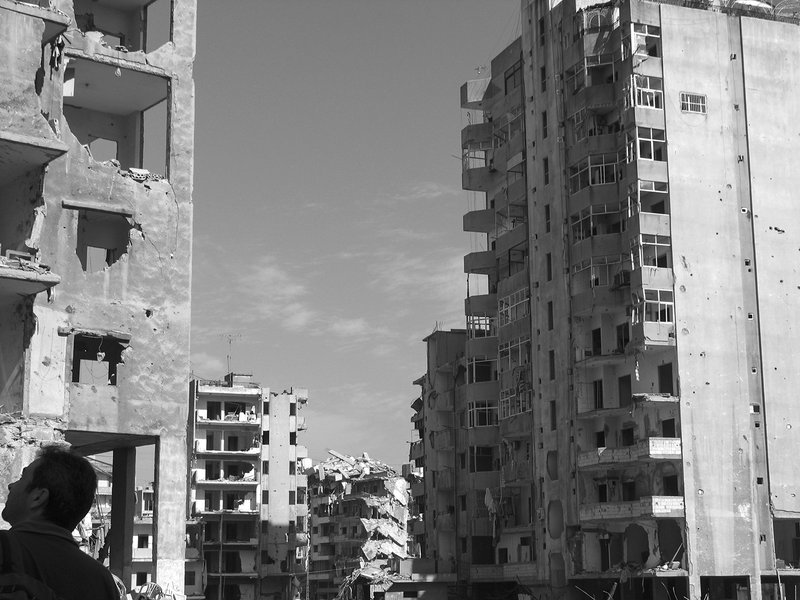
Ethel Adnan: Exiled Words (2007) traces a unique portrait of the poet and painter Ethel Adnan, through a multitude of visual fragments, highlighting languages, peoples and their identities. The film is based on Adnan’s correspondence with the history professor Fouaz Trambulsi, as well as on excerpts of her conversations with Vouvoula Skoura, as recorded in Paris and Skopelos. The film will be screened with audio description [AD: Audio Description] for the blind and visually impaired and with subtitles for the deaf and hard of hearing [SDH: Subtitles for the Deaf or hard of Hearing], with the support of Alpha Bank. At the same time, new unpublished material will be screened.
In Ethel Adnan: Indelible Colors (2026) we hear Ethel Adnan’s last words, as recorded by her close friend, the Lebanese historian and writer Fawaz Trambulsi, on colors, Nietzsche, and poetry. Twenty years after Ethel Adnan’s film Ethel Adnan: Exiled Words (2007), Vouvoula Skura returns to find Ethel Adnan’s lost voice in a Lebanon marked by ongoing historical rifts.
The film The Four Stages of Cruelty – For Antonin Artaud (2008) was shot 60 years after the death of the great Antonin Artaud, pioneer of the “Theater of Cruelty.” The author returns to his childhood to meet again with the ideas, addictions and people that influenced his creative work.
In Water on the Table – Homage to Odysseus Elytis (2010), Skoura interweaves love for Odysseus Elytis with fragmentary personal memories. As she herself states: “Personal experiences detached from their flow. A notebook of memories. Family photographs, texts that they abandoned and I kept. Heirlooms. Traveling to Aegina –first images, sea–, embracing En lefko . “She is the girl”, the poet says, “with a ladle in her hand”. Milta or the Archetype. She is “Milta”, the women of the Mediterranean, she is the “Milta” of the sea, memory, and poetry. Mainly of the poetry of speech but also of the image. So I was left to my memories, at home, in the book, on the street. Summer, heat, at the time when “The garden entered the sea”. “The time has come for me to offer them to you, like water on the table.”
The diptych In Memory (2012) and In Memory II (2012) is dedicated to the memory of Alexandros Grigoropoulos, the fifteen-year-old boy who was killed by a police officer in Athens in 2008.
Niki Marangou: Water Surfaces (2012) is a video installation for the poet Niki Marangou. Filmed on the “Green Line”. The discourse of her poems in an anarchic depiction. The images from Cyprus are spread out or trapped, repeated or not, in open or closed changing form, in changing colors. The Mediterranean as a woman, the poet reflects the flows of migration, human drift and displacement, while at the same time becoming the umbilical cord between memory and the freedom of travel.
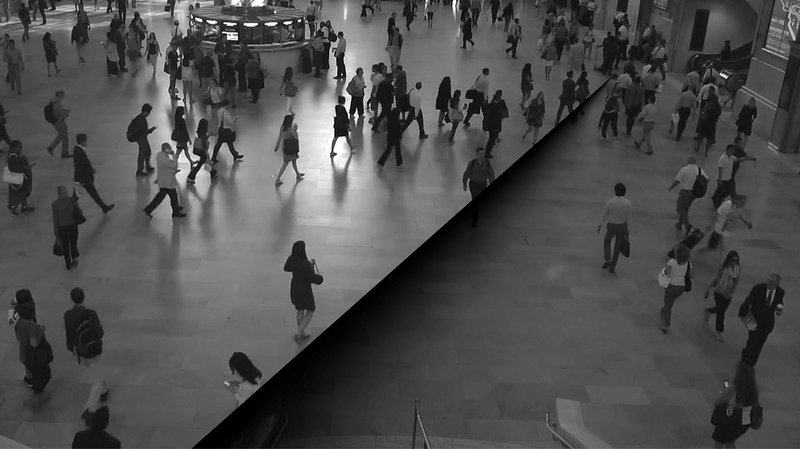
THE RED BANK. James Joyce: His Greek Notebooks (2013) is an essay and a journey into the leading iconoclast of the 20th century, James Joyce. The film is developed on the occasion of James Joyce’s Greek Notebooks. Its non-linear narrative is illustrated like a puzzle, and its filming took place in Trieste, where James Joyce lived, in London, New York and Athens. The film is dedicated to Manto Aravantinou.
In Nanos Valaoritis (2014) the poet Nanos Valaoritis speaks with the theater scholar Orsia Sofra about the years when Manto Aravantinou in Paris (1967-1974), self-exiled by the Junta of the Colonels, began her research on Joyce’s Greek.
The multilingual landscape, together with the continuous but recurring dark image of the sea, in the film Eveline 2020 (2020) is what depicts her psychic space. Suddenly the flow of the film is interrupted: Breaking news. Images and photographs of an Irish Navy ship named “Lé James Joyce”, which was rescuing refugees in the Mediterranean Sea, and at the same time a girl sings a modern song, inconsistent with the form and action of the film. Is this girl the Eveline of 2020 or not? We return to the third part of the film, and to the flow of the text of Joyce’s short story. A black ship, the ship of the journey that Eveline refused, or the ship that the migrants hope for?
In I Hear an Army (2022), narrative traces shape time following the rhythm of war, every war. Based on James Joyce’s I Hear an Army .
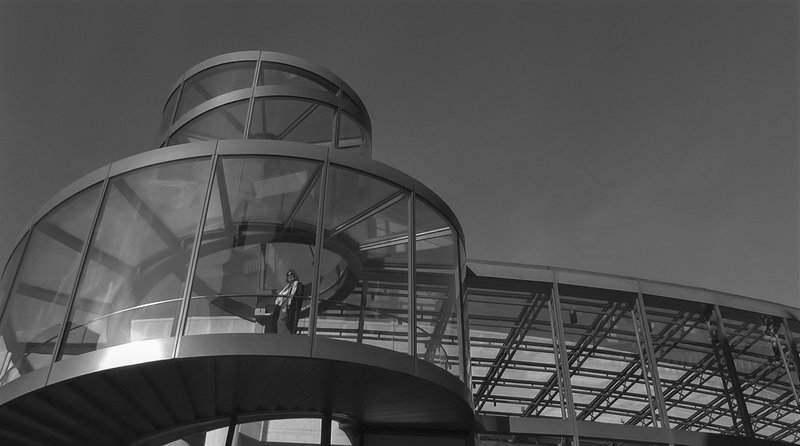
In Contrabando: Searching for Melpo (2023), we follow the life of Melpo Axioti, a novelist and poet of modern Greece. The labyrinth of her life unfolds through the analysis of psychiatrist Spilios Argyropoulos.
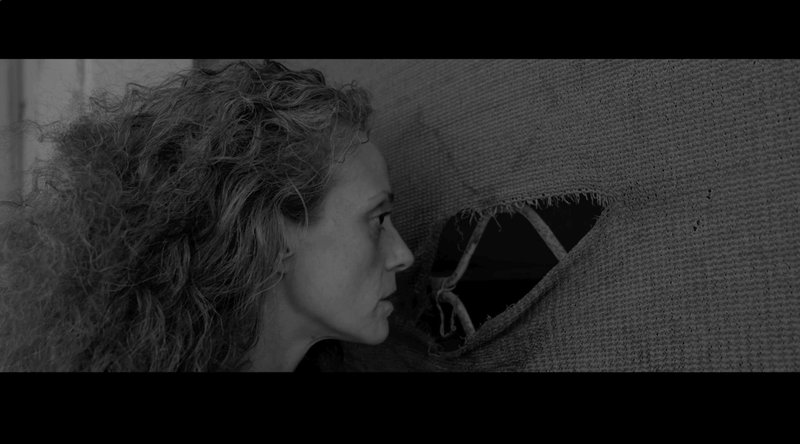
In the film UTOPIA. The Poetics of Borders: Berlin – Nicosia (2025), which will premiere at the Thessaloniki Documentary Festival, images become rhizomes, cultural deviations without beginning or end, a kind of metastasis that forms the unity of the Mediterranean. Through her verbal journeys in divided Nicosia, claiming the freedom of creativity, the poet Niki Marangou reflects the flows of migration, human wandering and displacement, but also the umbilical cord between memory and travel. The Beginning. With a single shot, images of Famagusta, while we listen to Niki Marangou’s text by Pyrros Theofanopoulos, while Niovi Charalambous’ gaze describes the dead city. Composing images and secret associations, that map the marks of people, as they travel following the paths of their memory. Words flow across divided lands and places of exile, longing to overcome divisions and borders. Victory in Cyprus, Victory in Berlin.
Bill Morrison
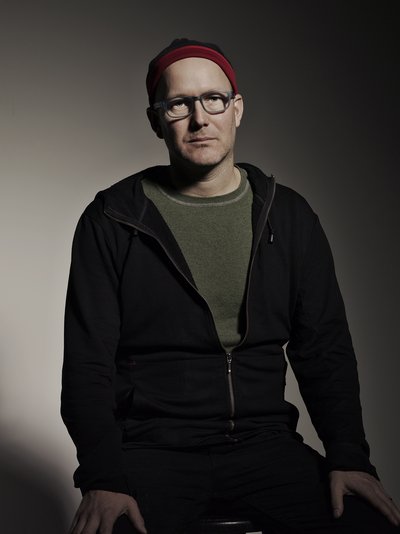
Bill Morrison, who has been described by the New York Times as “the poet par excellence of lost films,” uses the film’s distortions as a commentary on disappearing images, likening them to memories, ghosts, or ciphers. The American director will hold a masterclass in Thessaloniki, entitled Revealing the Hidden Frame , in which he will discuss his evolution as an artist and filmmaker, focusing specifically on the role that archival material has played in his artistic practice.
Spotlight films
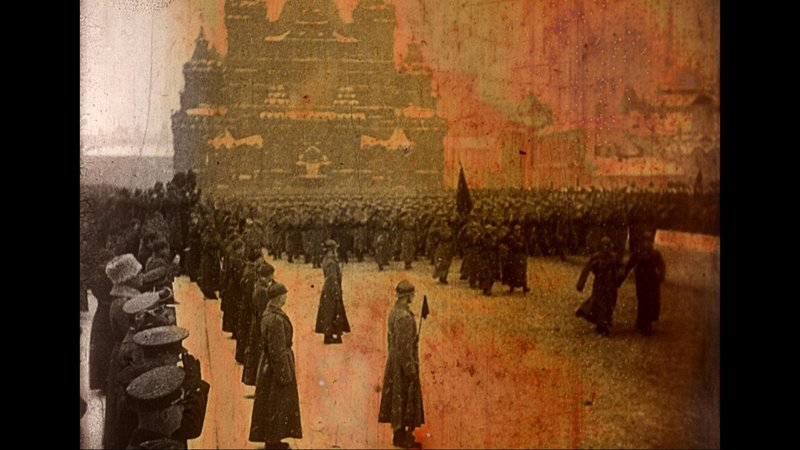
In The Village Detective: a song cycle (2021), Morrison uses archival material in an unexpected way. In the summer of 2016, a fishing boat off the coast of Iceland brought up an unexpected and paradoxical catch: four reels of 35mm film, which appeared to be of Soviet origin. Unlike the cinematic find in Dawson City: Frozen Time , it turned out to be no lost creation of major importance, but an unfinished copy of a popular comedy starring beloved Russian actor Mikhail Zharov. Did that mean it had no value? For Morrison, the exact opposite was true, as the deeply water-corroded copy, combined with the way it rose to the surface, was an apt analogy with the life of Zharov, who loved the role so much that he undertook to co-direct its sequel. With this story as a starting point, Morrison presents another reflection on the past of cinema, offering a journey into the depths of Soviet history and filmography, exemplarily accompanied by the wonderful musical background of Pulitzer and Grammy-winning composer David Lang.
In Dawson City: Frozen (2016), archival footage, rare silent films and film newsreels, interviews and historical photographs tell the strange, true story of a collection of more than 500 films from the 1910s-1920s that were lost for 50 years before being found buried in a swimming pool deep in the Yukon Territory of Canada. Bill Morrison creates a unique collage-fine-stitch from a fragile raw material, for an equally fragile reality that moves on thin ice.
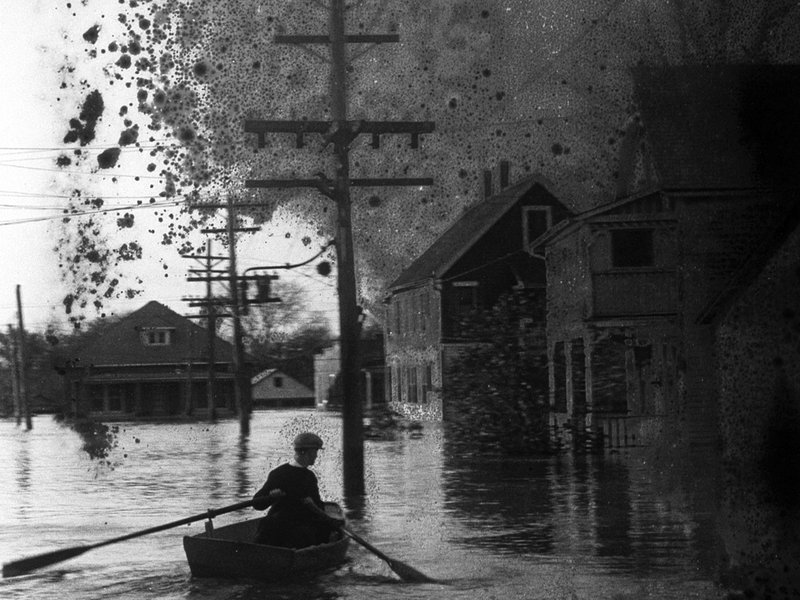
The Mississippi River flood of 1927 was the most devastating flood in United States history. That spring, the river overflowed its banks at 145 points, inundating 27,000 square miles of land, with water levels reaching up to 30 feet (9 m). One of the most brutal effects of the disaster was the mass exodus of displaced farmers. Musically, the “Great Migration” of blacks from the rural South to the cities of the North resulted in the electrification of Delta blues and its transformation into Chicago blues, rhythm and blues, and, ultimately, rock and roll. Using minimal text and the complete absence of dialogue, filmmaker Bill Morrison and composer/guitarist Bill Frizzell sculpt the documentary The Great Flood (2013) into a poignant portrait of a pivotal moment in American history, through silent images accompanied by a haunting, original soundscape.
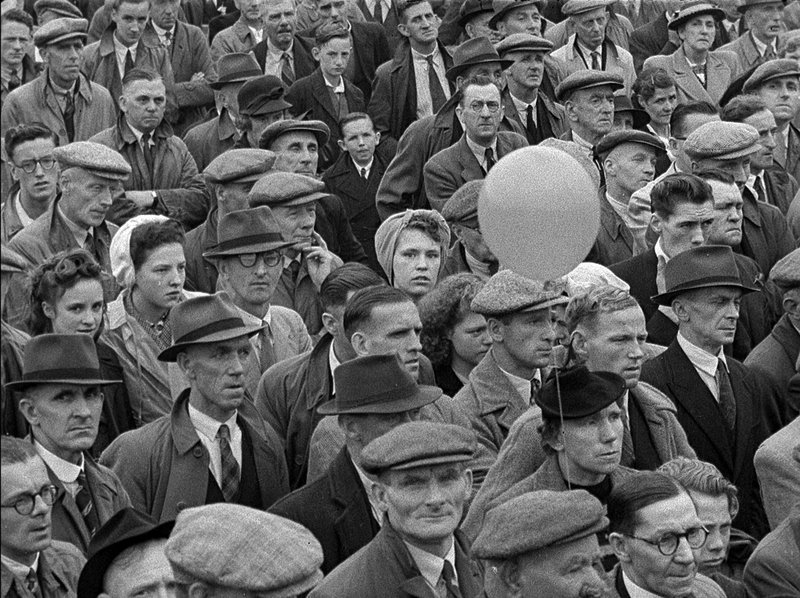
The Miners’ Hymns ( 2011 ) is a tribute to the history of coal mining in the north-east of England and marks Morrison’s first collaboration with the late Icelandic musician and composer Jóhann Jóhannsson. Using rare footage depicting the city of Durham and the region’s coal mines, the film highlights the social, cultural and political dimensions of a now-defunct manufacturing sector. Structured around a series of activities, including the hard work in the mines, the role of unions in the fight for workers’ rights, the annual Miners’ Gala and clashes with the police during the 1984 strike, the film gathers footage spanning 100 years.
Spark of Being (2010) is a retelling of Mary Shelley’s Frankenstein by filmmaker Bill Morrison, who retells the classic novel using found footage from archival and educational films. For the film, Morrison collaborated with composer and trumpeter Dave Douglas, who composed the music for his six-piece ensemble, Keystone. Without dialogue, narration, or other explanatory drama, Spark of Being is structured entirely around thirteen intertitles that preface each part of the film. As in the book, the story begins through the eyes of a captain exploring the polar seas who decides to take on board a mysterious passenger: a doctor, who tells the story of how he created a living creature with his own hands. The Creature then takes over the narrative, describing his wanderings and suffering, as well as his ultimately futile search for love – all through the use of worn and distressed archival material and footage from educational films. When the Creature comes face to face with his Creator, the plot of the original story is overturned.
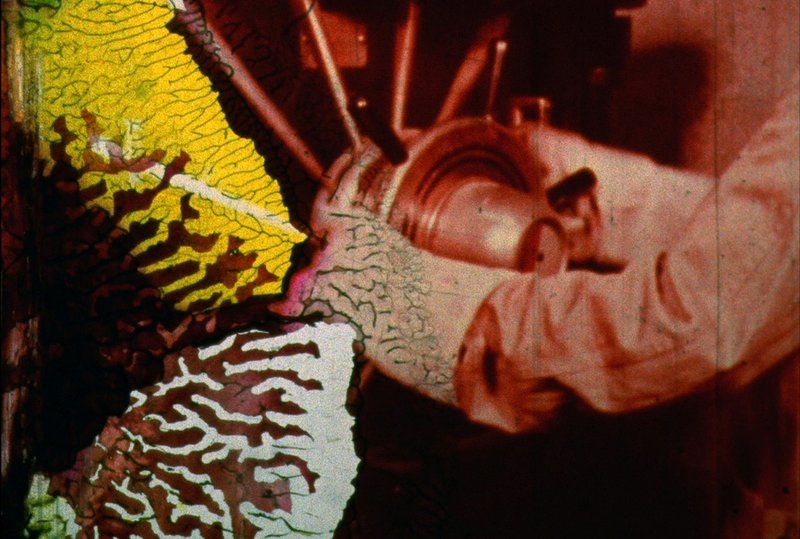
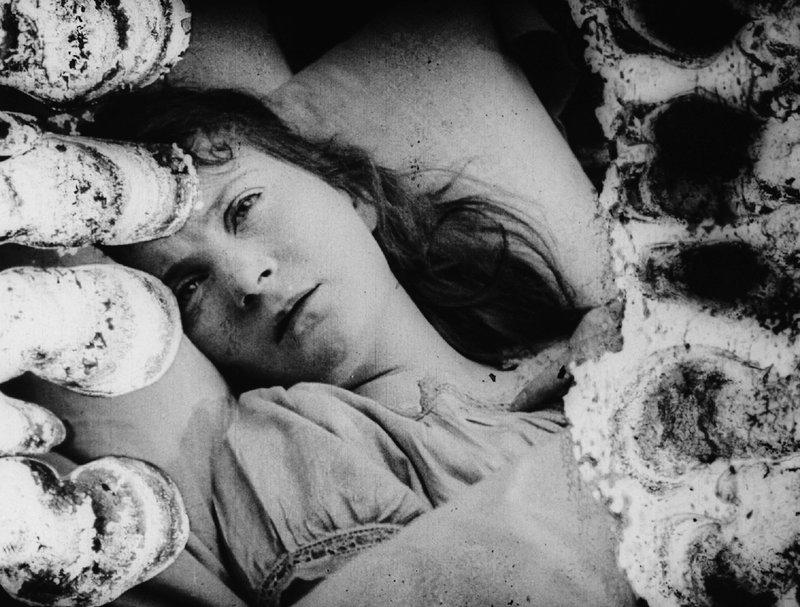
Decasia ( 2002 ) is the first film of the 21st century to earn a place in the Library of Congress, having been assessed by the National Film Registry as a flagship of American cinematic heritage, it is a spectral archive of unique aesthetics. A film archaeologist delivers a symphonic work, a rhythmic composition of film fragments in early or late stages of decomposition, where the signs of wear on the celluloid become elements of the narrative, encompassing the entire history of the cinematic experience and substituting the precision of its historiography with the ecstasy of the ephemeral. A work as circular as the dance of the dervish in the frame that opens and closes the film, as the reel that spins steadily in the projection machine, as experienced human time itself. The first “certified” modern masterpiece of the new millennium is built on the glorious, forgotten ruins of the past. It even convinced Kenneth Unger to call it the most imposing and terrifying spectacle he had ever seen, while documentarian Errol Morris admitted that it is the best film in history.
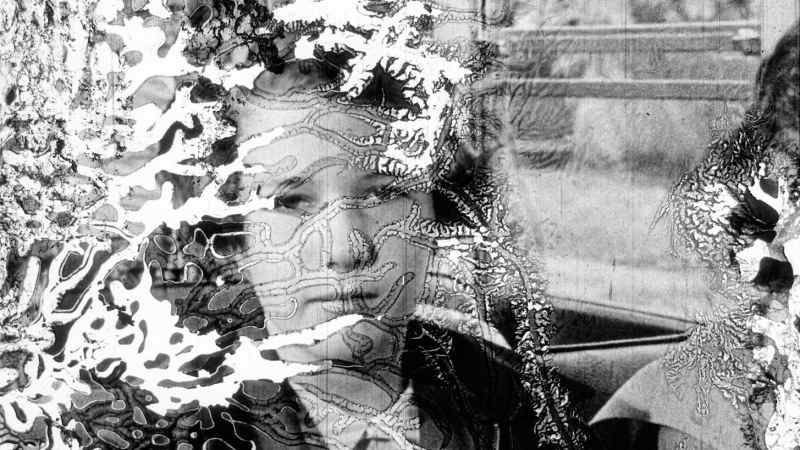
Bill Morrison has had his feature-length documentaries world premiered at the New York, Sundance, Telluride, and Venice film festivals. He has received fellowships from the Guggenheim Foundation, the Alpert Award, and the Foundation for Contemporary Arts, as well as production grants from Creative Capital, the National Endowment for the Arts, and Arté – La Lucarne. A retrospective of his work was held at the Museum of Modern Art in New York in 2014. Decasia (2002), an iconic found footage film, was the first 21st-century film to be inducted into the National Film Registry of the Library of Congress. The Great Flood (2013) was honored with the Smithsonian Ingenuity Award for its historical research. Dawson City: Frozen Time (2016) was included in over 100 critics’ lists of the best films of the year and was later recognized as one of the top films of the decade by the Associated Press, the Los Angeles Times, and Vanity Fair, among others. In 2021, Morrison became a member of the Academy of Motion Picture Arts and Sciences’ documentary division. Incident (2023) won the International Documentary Association Award for Best Short Film in 2023, the Cinema Eye Honors for Best Short Nonfiction in 2025, and was nominated for an Academy Award for Best Documentary Short in 2025.