 elc team
Inspired by the famous Oracle of Delphi, Sandison’s immersive new artwork incorporates visual historical references, combined with data from local geology, flora and fauna through the use of advanced technology
PCAI presents “The Garden of Pythia”, a new large-scale commission by artist Charles Sandison for the “pi” (World Centre for Circular Economy and Culture) in Delphi. The project will be inaugurated on 9 April at the Delphi Economic Forum in the presence of the artist.
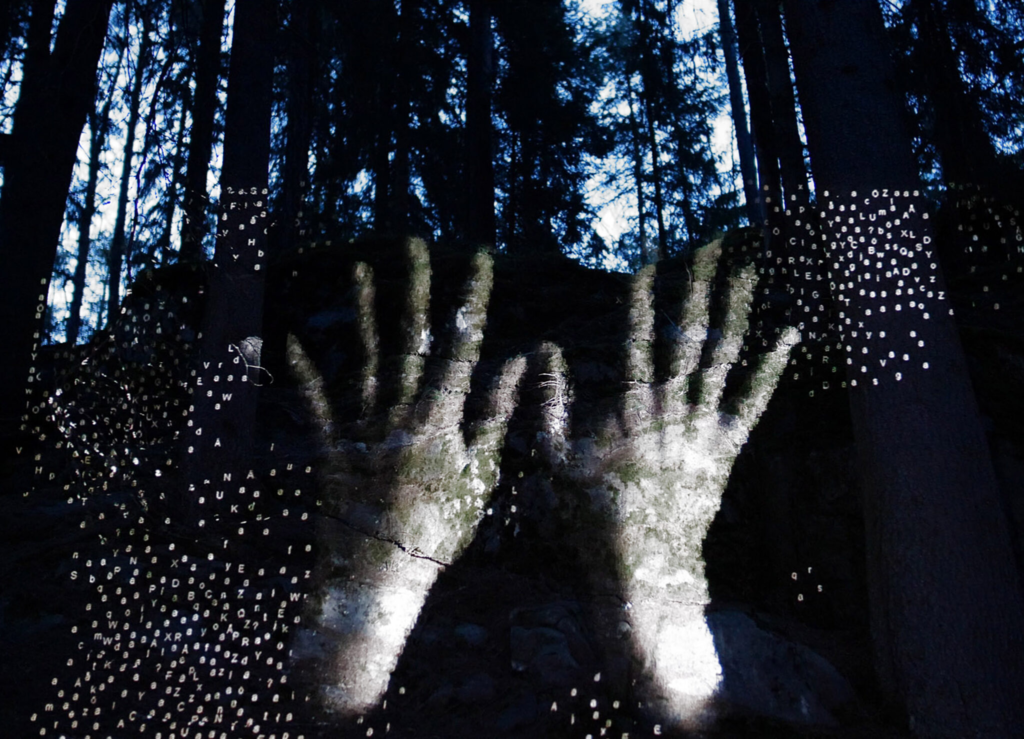
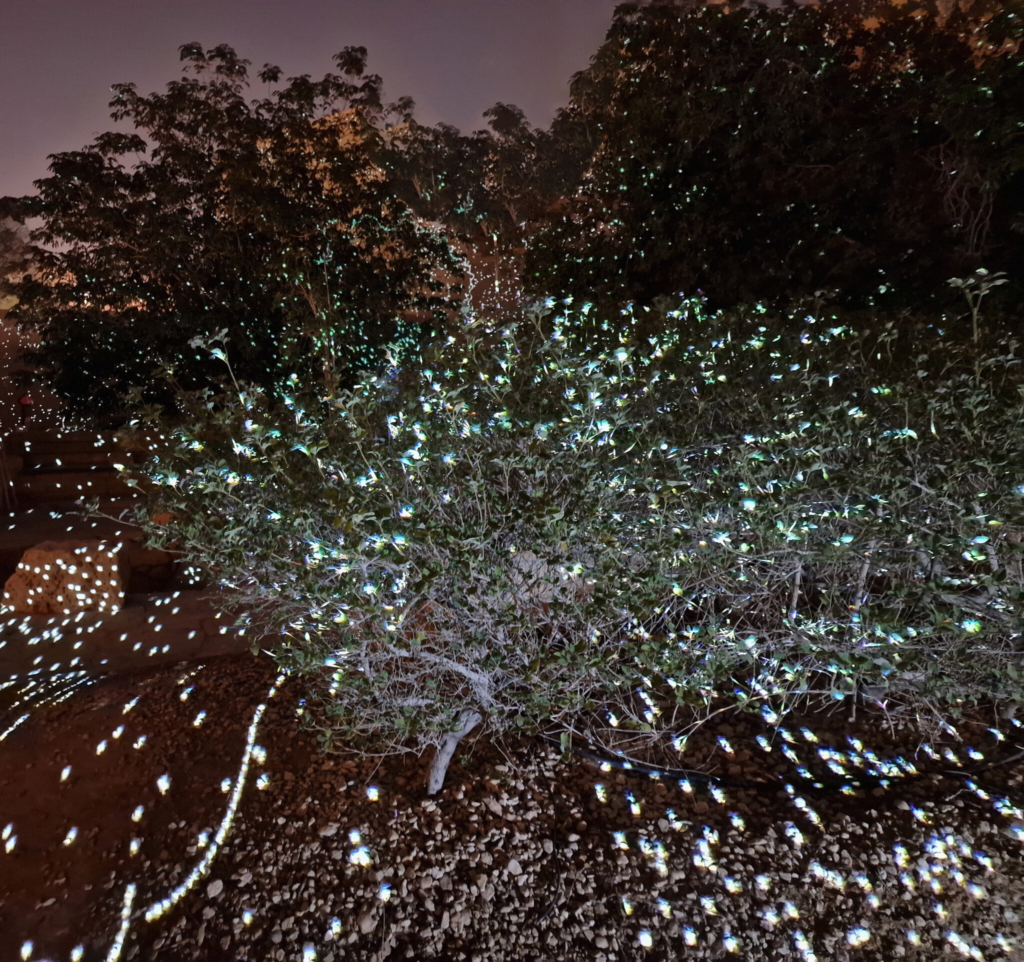
Inspired by the famous Oracle of Delphi, associated in ancient Greece with the figure of the Pythia, and in conversation with the ancient Temple of Apollo, Sandison’s immersive new artwork incorporates visual historical references combined with data on local geology, flora and fauna through the use of advanced technology. The projections interact with the garden environment, creating a harmonious blend of ancient history and modern technology. The installation offers viewers the opportunity to understand AI concepts and their historical context, highlighting the continuation of human research and the pursuit of knowledge.
The idea was born during the artist’s visit to the historic archaeological site, drawing a parallel between the concept of the oracle, where travellers sought prophetic predictions, and a model example of an organic, physical computing device. This unique landscape embodies a complex network of rituals whose portals, pathways and synchronisations seem to function like the motherboard of a computer system. For Sandison, the ancient Delphics were analogous to CERN, the most sophisticated system for interpreting and predicting goals and outcomes. They were a way of understanding the world more deeply, equivalent to modern developments in artificial intelligence.
Human history has been shaped by the process of asking questions. Language, symbols, numbers and information – all forms of technology, ancient and modern, focus on the continuation and perpetuation of information. Our first steps into the future of artificial intelligence make sense when seen through the lens of ancient and historical paths we have followed to date. Sandison’s work reveals this historical relationship and offers viewers the opportunity to understand some of the concepts of AI and its potential, while illuminating the overall development of this historical process. The work incorporates images of historical texts and excerpts from dolphin statues, monuments and inscriptions, together with information about the local flora, fauna and geology. Sandison’s ‘The Garden of Pythia’ is fitted with specially designed code and sensors that detect temperature and light levels, allowing the work to interact with the local environment and evolve over time.
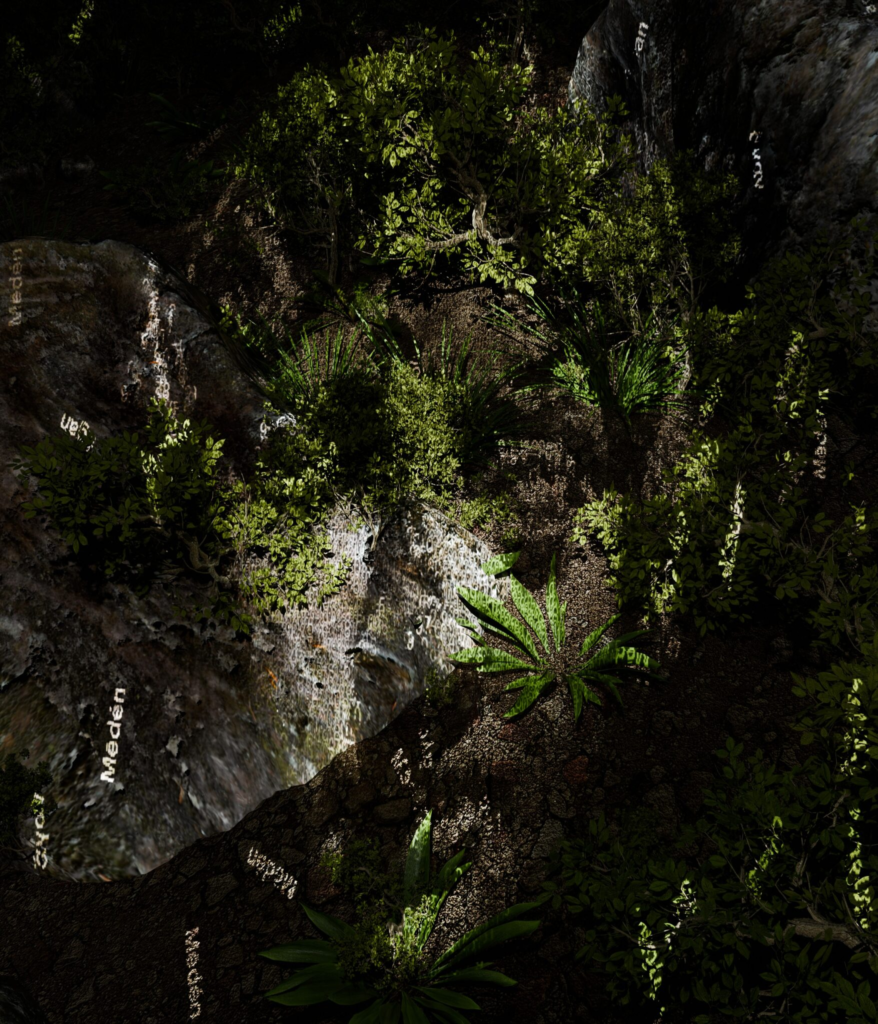
The artist, Charles Sandison, notes: “The Garden of Pythia is an imaginary place, partly on a mountainside in ancient Greece and partly in the matrix of my computer. Inspired by my visit to the Temple of Apollo, I have coded this visual AI project that combines memories of Pythia with the beautiful slopes of Mount Parnassus through productive data projections that evolve in response to their environment. I believe that visitors will see this work of art as a means of bridging the ancient and the modern, and will realise that the answers we seek from artificial intelligence are analogous to the corresponding quests of the ancient world of Pythia”.
Athanasios Polychronopoulos, CEO of Polygreen and founder of PCAI, said: “I am particularly excited about the organisation’s new commission from the renowned artist Charles Sandison. The new installation, designed specifically for the ‘pi’ (Global Centre for Circular Economy and Culture) site in Delphi, highlights the great history of Delphi, while being in line with Polygreen’s environmental concerns. The opening takes place in the context of the Delphi Economic Forum and marks our successful partnership with the institution and our mutual respect for art and the environment”.
Kika Kyriakakou, Artistic Director of PCAI, explains: “Sandison’s new work reflects PCAI’s environmental mission and our commitment to contemporary art in the most sophisticated way. We are particularly excited about this immersive new installation, which combines real-time computer-generated elements and represents Sandison’s sculptural approach to moving image and information technology, while reflecting his interest in conservation, human and non-human communication and cultural heritage”.
Α few words about Charles Sandison
Charles Sandison was born in Haltwhistle, Northumberland and brought up in Wick, Caithness. His interest in computing began at the age of 12 when he taught himself to write code on his computer. He studied at the Glasgow School of Art from 1987-1993 and continued to teach there shortly after graduating. He moved to Finland in 1995 and now lives permanently in Tampere. In the early 1990s Sandison participated in the Young British Artists group exhibitions Wonderful Life, Lisson Gallery, London (1993) and Institute of Cultural Anxiety: Works from the Collection Institute of Contemporary Arts, London (1994). During a five-year hiatus, Sandison moved from the UK to take up a position as Head of the Fine Arts Department at the Tampere School of Art and Media. He became more widely known after his 2001 exhibition at the Venice Biennale. In 2004 he was a visiting professor at Le Fresnoy in Lille. In 2010 he was awarded the Ars Fennica Prize by the President of Finland, Tarja Halonen. Much of the artist’s work involves computer-generated video projections, creating immersive data installations that place the viewer at the centre of a shifting universe of words, signs and characters.

Polygreen Culture & Art Initiative (PCAI) – “pi” Global Centre for Circular Economy and Culture (Former Pikioni Pavilion)
Founded by Athanasios Polychronopoulos, CEO of the environmental company Polygreen, PCAI is a cultural organisation that aims to raise environmental awareness through an annual programme of art commissions, contemporary art exhibitions, artist residencies, workshops and conferences. The PCAI Art Collection focuses on commissions and works of contemporary art and moving image, while providing artists with the means and resources to create artworks in dialogue with contemporary environmental, sociological and philosophical issues, allowing for complete freedom of expression and critical inquiry. Over the years, PCAI has collaborated with major institutions, biennials and cultural bodies, including the British Council, London’s Serpentine, the Venice Biennale, the Sao Paulo Biennial, the Sharjah Biennial and KW Berlin, and has received numerous awards for its cultural work and collaborations. Since 2021, the organisation has been an official nominator of the prestigious Earthshot Prize, established by The Royal Foundation of The Prince and Princess of Wales.
PCAI is a member of the International Association of Contemporary Art Collections (IACCCA) and Kika Kyriakakou, Artistic Director of PCAI, is an elected member of its Board of Directors. Recently renovated by PCAI, the Pikionis Pavilion, now “pi” (World Centre for Circular Economy and Culture), is a historical and architectural monument from the 1950s, located in the archaeological area of Delphi and designed by leading Greek architects Dimitris and Petros Pikionis. PCAI’s new cultural space, which aims to promote environmental awareness through contemporary art, has hosted major exhibitions and cultural activities in collaboration with international institutions and art collections.
About Polygreen
Polygreen is a group of companies providing integrated and innovative circular economy solutions worldwide. Polygreen is best known for its innovative environmental initiative Just Go Zero, which transformed the Greek island of Tilos into the world’s first zero-waste destination. Joining forces with Tadweer to create a powerful circular economy player in the Middle East, Polygreen’s next mission is to make Abu Dhabi the first Zero Waste Emirate. This partnership paves the way for the reduction of greenhouse gas emissions and the transition to sustainable development. As part of the group’s corporate social responsibility network, Polygreen established the art collection and cultural organisation PCAI in 2014 to commission works from artists, support major cultural institutions such as the Sharjah Biennial, and design and implement artist residency programmes in zero waste areas, such as the Tilos Artist Residency Programme.
Info
“The Garden of Pythia in Delphi”
Duration: 09/04 – 13/04
Opening: 9 April 2025 (by invitation only)
The exhibition will be open to the public from 13 April
Every Tuesday, Wednesday and Saturday after sunset (according to the seasonal schedule)
Address | Map: https://goo.gl/maps/4xhmefaS55xg3tyVA
Entrance: 10 euros
Information: pcai.gr, [email protected] and phone +30 2104060088
(Monday – Friday: 9:00 – 17:00)