 ZOE LYMPERIS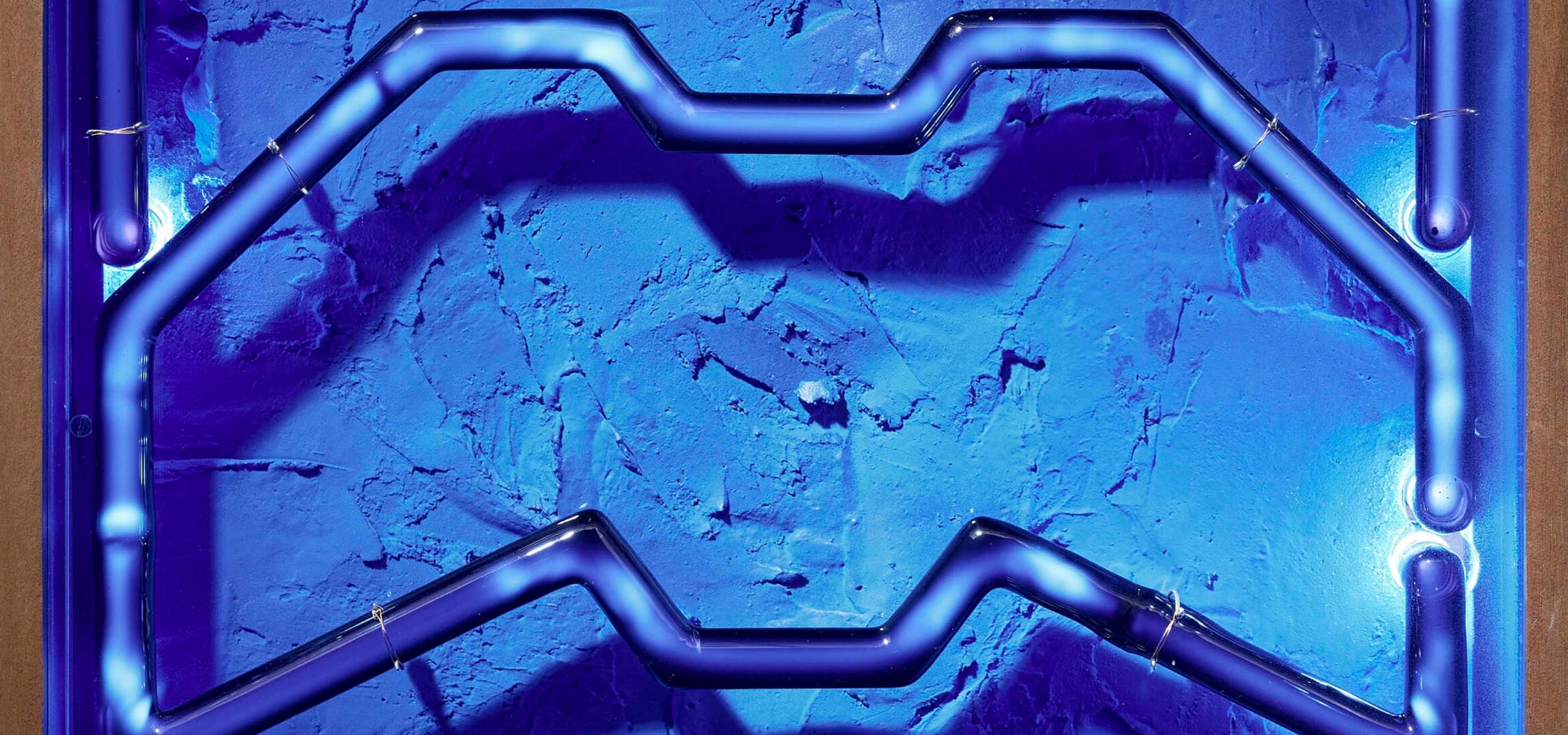
The B. & M. Theocharakis Foundation announces the exhibition “Stephen Antonakos: Postscript of Time and Space,” dedicated to the work of Greek-American artist Stephen Antonakos (1926–2013). Marking the centenary of his birth in Laconia, the exhibition presents an extensive reassessment of his rich artistic trajectory and influence, while mapping the artistic movements and sensibilities that shaped both his work and his legacy.
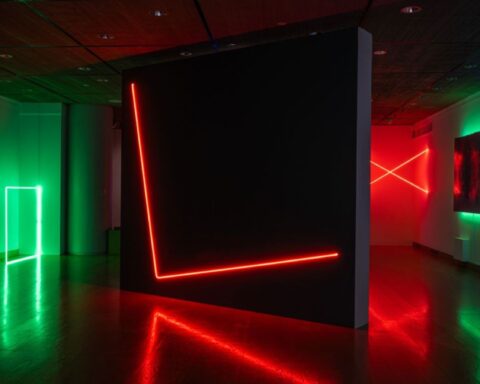
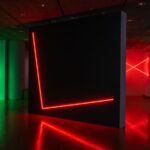
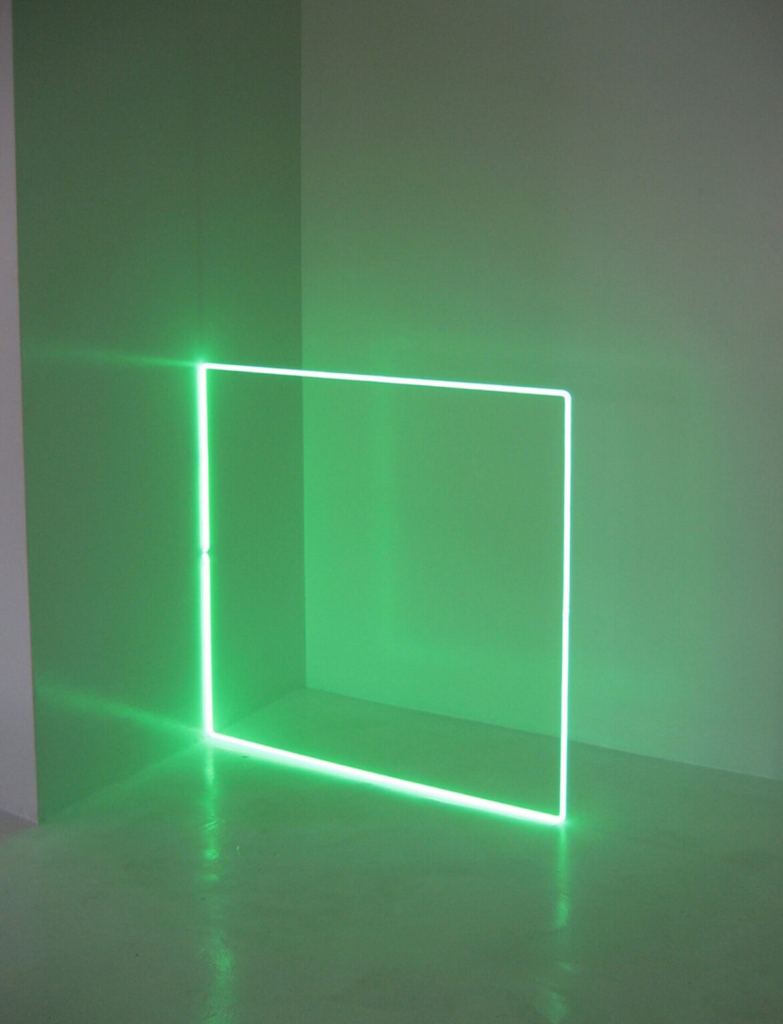
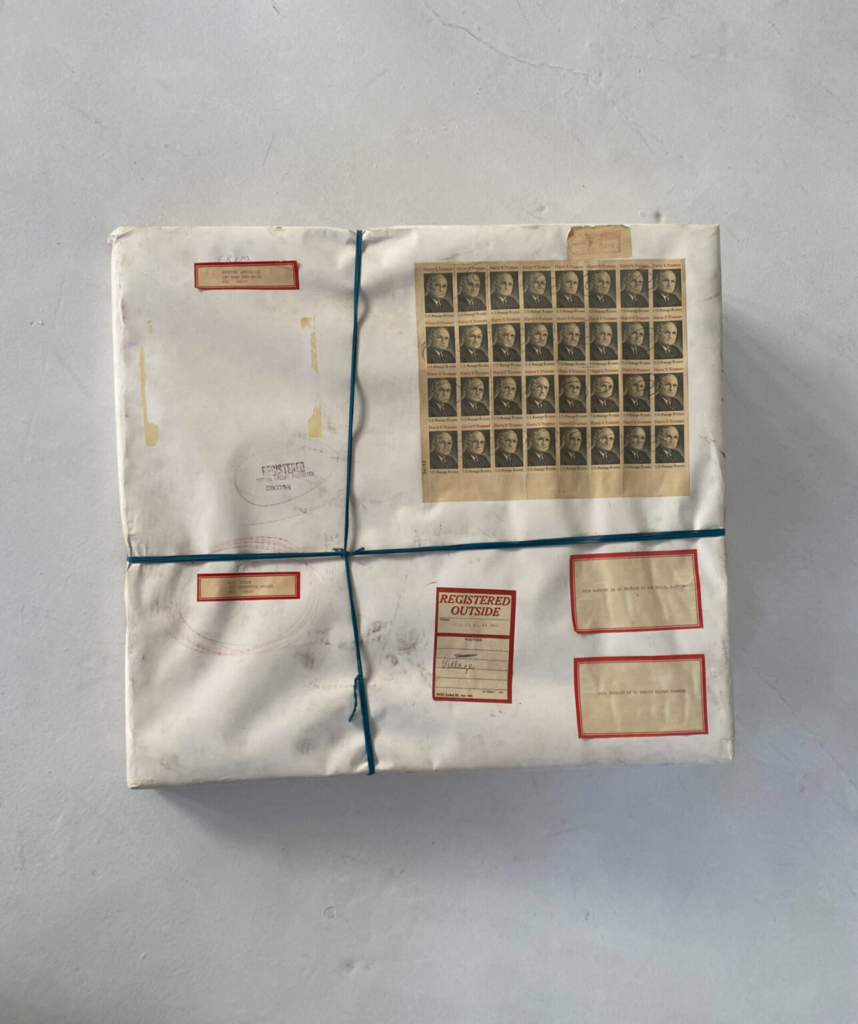
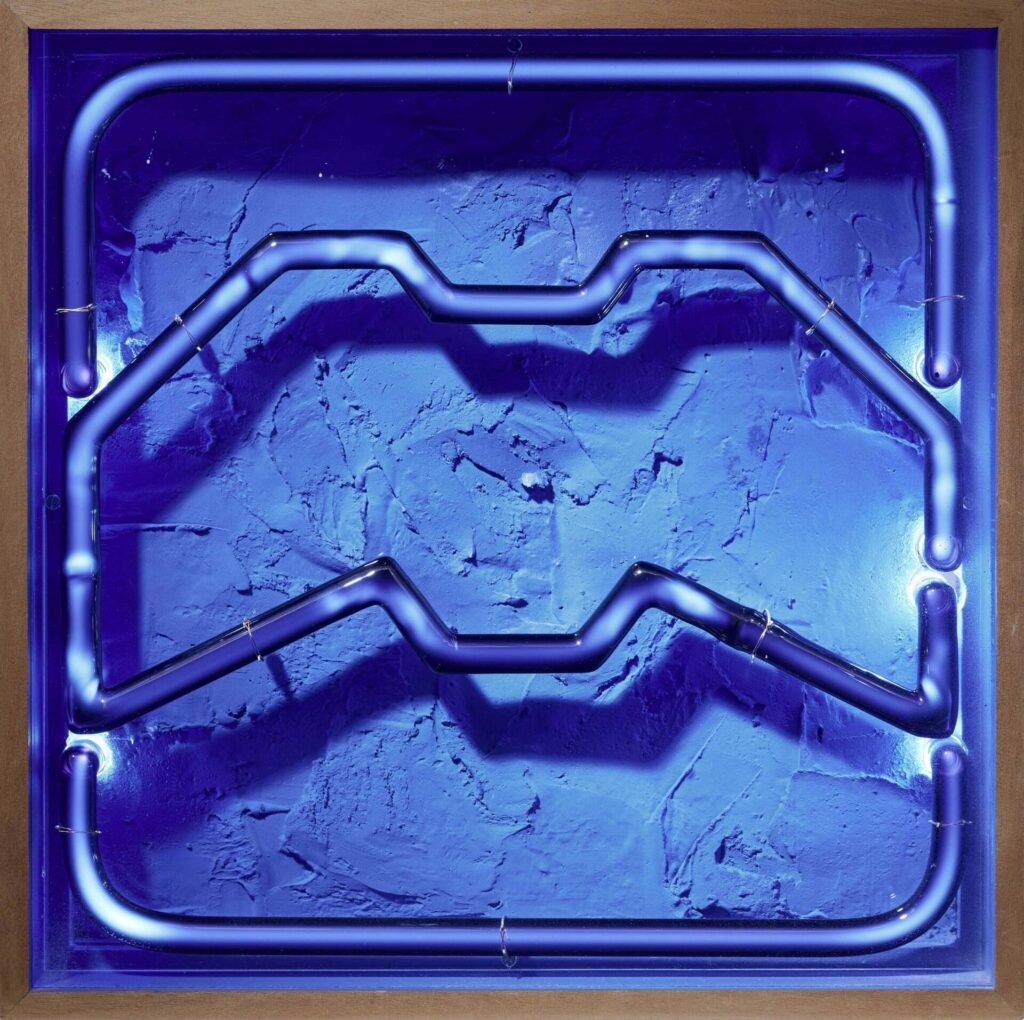
The exhibition traces the breadth of Antonakos’ vision across six decades of artistic production, highlighting the evolving language of color, form and luminous abstraction. Key bodies of work from the late 1950s through 2012 are presented, including the series Neon Panels (1980–2013), Direct Neons (1970s), Packages (1971–2006), Neon Walls (1977–2007), Alphavitos (1986–1990), Travel Collages (1987–2002), architectural models for Chapels (1992–2010) and Gold Works (2010–2013), as well as early sculptural works from the 1950s–1970s using fabric, cardboard and other everyday materials.
Alongside Antonakos’ work, the exhibition includes works by historically significant and contemporary artists, some of whom were his friends or shared aesthetic affinities with him. Together they intersect with his artistic trajectory, highlighting the enduring resonance of his ideas in the 21st century.

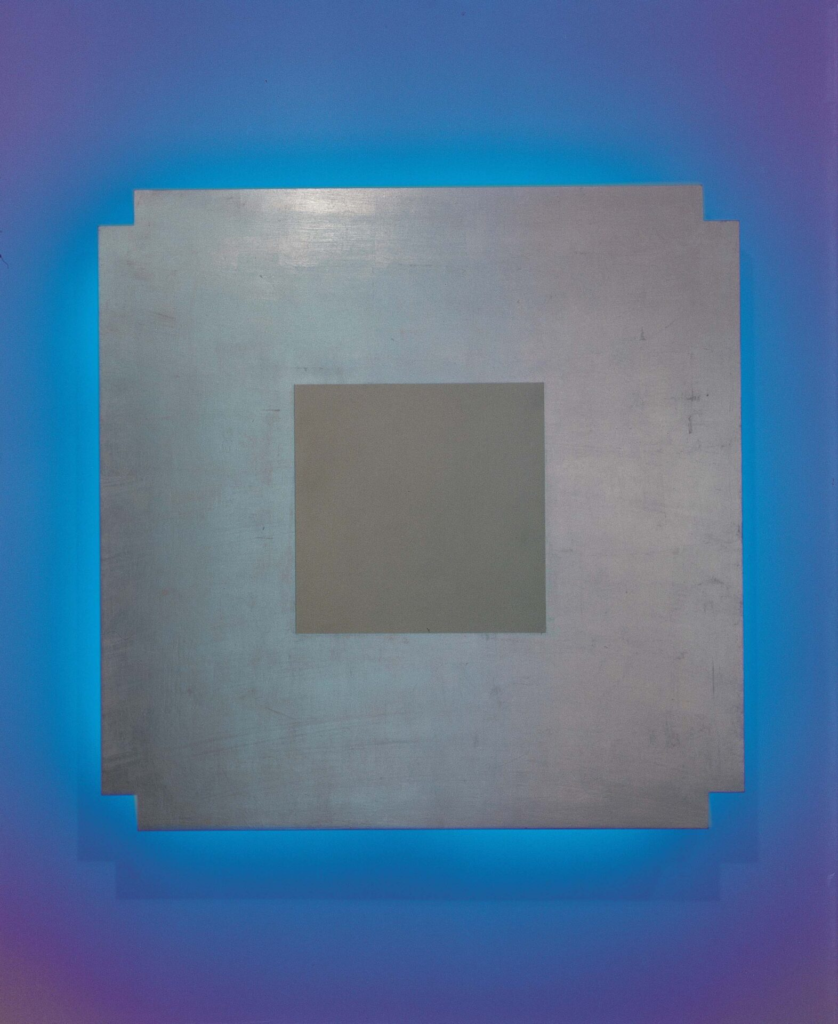
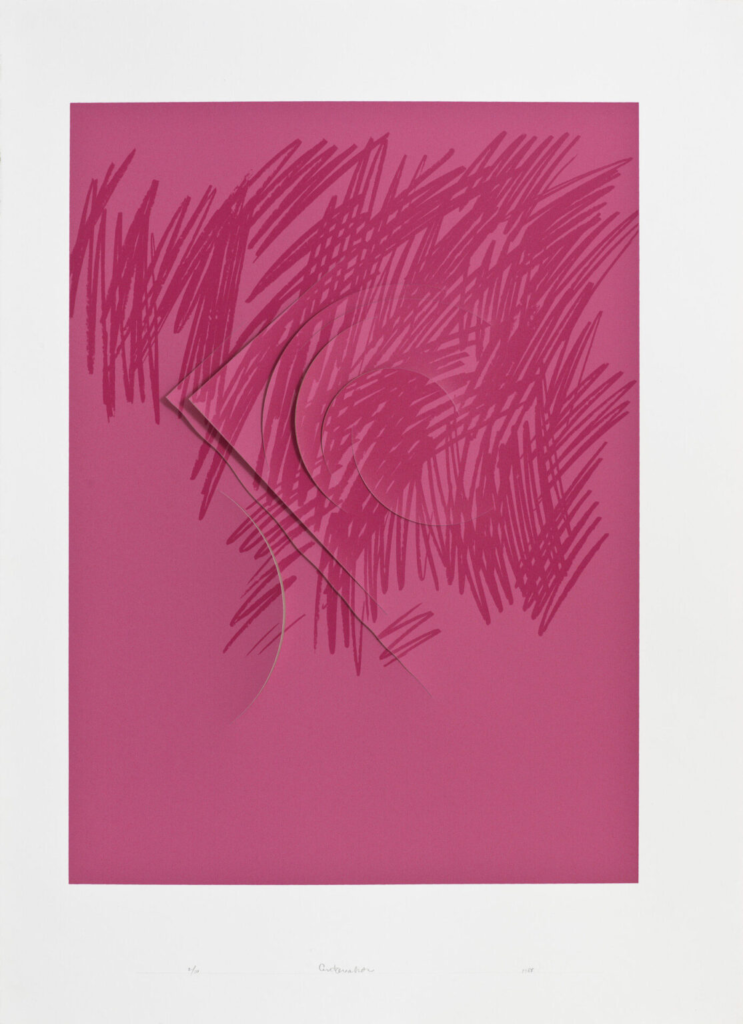
The exhibition features works by Francis Alÿs, Yiannis Bouteas, Christo, Chryssa, Ksenia Ender, Lucio Fontana, Ray Johnson, Kazimir Malevich, Gordon Matta-Clark, On Kawara, Judy Pfaff, Robert Ryman and Fred Sandback, placing Antonakos in dialogue with artists associated with Constructivism, Light and Space, Conceptual Art, Minimalism, and other forms of geometric exploration.
The exhibition title reflects the complexity of Antonakos’ Greek-American identity: in English “Vectors of Time and Space” and in Greek “Postscript of Time and Space.” The dual titles create a conceptual interplay between vectors and postscripts. A vector refers to a graphic representation that uses straight lines to define the outlines of forms, as well as a quantity possessing both direction and magnitude that determines the position of a point in space relative to another. The notion of the postscript evokes the transmissive force of time, condensed in many of the works in the exhibition, particularly within the context of a centennial tribute to the artist.
These dual terms capture two fundamental axes in Antonakos’ work: the precise, sharply defined language of geometric abstraction and the more expressive bodies of work that reflect the flow and passage of time.
The works presented in the exhibition are drawn from loans by numerous institutions and collections, including the Alpha Bank Art Collection, Stephen Antonakos Studio LLC, Electronic Arts Intermix (EAI) in New York, the Greenwich Collection, the Hellenic Diaspora Foundation Collection, the Ray Johnson Estate / ARS New York, MOMUS – Museum of Contemporary Art collections, the Gordon Matta-Clark Estate, the MOMUS – Museum of Modern Art – Costakis Collection, the Onassis Foundation Collection, the One Million Years Foundation, the Irini Panagopoulos Collection, the Fred Sandback Estate, the Judy Pfaff Archive and Cristin Tierney Gallery in New York, the Dimitris Passas Collection, the Yiannis Bouteas Archive, the CITRONNE Gallery, as well as other important private collections.
The exhibition is accompanied by a bilingual illustrated catalogue featuring artworks, archival material and texts by Marina Milios Theocharaki, Stelios Vasilakis, and curator Sara Reisman.
The exhibition is curated by Sara Reisman, curator, educator and writer.
About Stephen Antonakos
Beginning in the 1960s, Stephen Antonakos introduced new perceptual and formal dimensions to the medium of neon, presenting his work in hundreds of gallery and museum exhibitions, first in New York and subsequently around the world.
His use of simple, complete and incomplete geometric forms ranges from direct three-dimensional installations in interior spaces to paintings on canvas, the Neon Walls, the well-known back-lit Neon Panels with painted or gilded surfaces, as well as the Rooms and Chapels.
Throughout his career, Antonakos designed his works in relation to the site of their presentation, its scale, proportions and character, as well as to the space shared with the viewer. He described his art as “real things in real spaces,” seeking an experience free of references beyond the immediate visual and physical encounter.
Born in Greece in 1926 and raised in Brooklyn after emigrating to the United States at the age of four, Antonakos emerged as a central figure of postwar abstraction. His work has been presented in major international exhibitions including Documenta 6 (1977), and he represented Greece at the Venice Biennale in 1997.
Public commissions include significant works in New York, Atlanta, Milwaukee, Athens and Bari, among other cities. His works are held in collections worldwide, including the Metropolitan Museum of Art, MoMA, the Whitney Museum, the Guggenheim Museum and the National Gallery in Washington, as well as major institutions in Greece. He was a member of the National Academy of Design and received its Lifetime Achievement Award in 2011
Parallel Events
Concert
Thursday, March 19 | 18:00
Alvin Curran: Inner Cities
for solo piano, toy piano and MIDI keyboard
Daan Vanderwalle, piano
In dialogue with the exhibition, the Theocharakis Foundation presents a concert featuring extended excerpts from Inner Cities, the monumental cycle by American composer Alvin Curran (b. 1938).
Curran is known for his contribution to experimental and electroacoustic music. A member of the collective Musica Elettronica Viva (MEV) in the 1960s alongside Frederic Rzewski and Richard Teitelbaum, he developed a distinctive aesthetic combining improvisation, environmental sound, electronic media and elements drawn from everyday sonic experience.
The cycle Inner Cities (1993–2020) is an expansive work for solo piano written in multiple sections, exploring the sonic and expressive possibilities of the instrument through repetitive structures, lyrical gestures and moments of improvisational freedom.
The piece creates a sonic mapping of inner landscapes, where minimalist thinking, experimental writing and personal memory coexist, inviting the listener into a deep, almost meditative listening experience.
The concert lasts 4 hours and 40 minutes. The sound of the piano will extend beyond the amphitheatre into the exhibition spaces, allowing visitors to experience Inner Cities through a free spatial journey, from the intimacy of the concert hall to its counterpoint with the artworks.
If Antonakos shaped space through lines of light and geometric forms, Curran’s music shapes sound into inner pathways, creating an environment where time and space converge.
Round-Table Discussion
Friday, March 20 | 18:00
Alvin Curran and Daan Vanderwalle
with the concert curators Lorenda Ramou, Stavros Gasparatos and Michalis Paraskakis
Theocharakis Foundation Amphitheatre