 KATERINA PARRI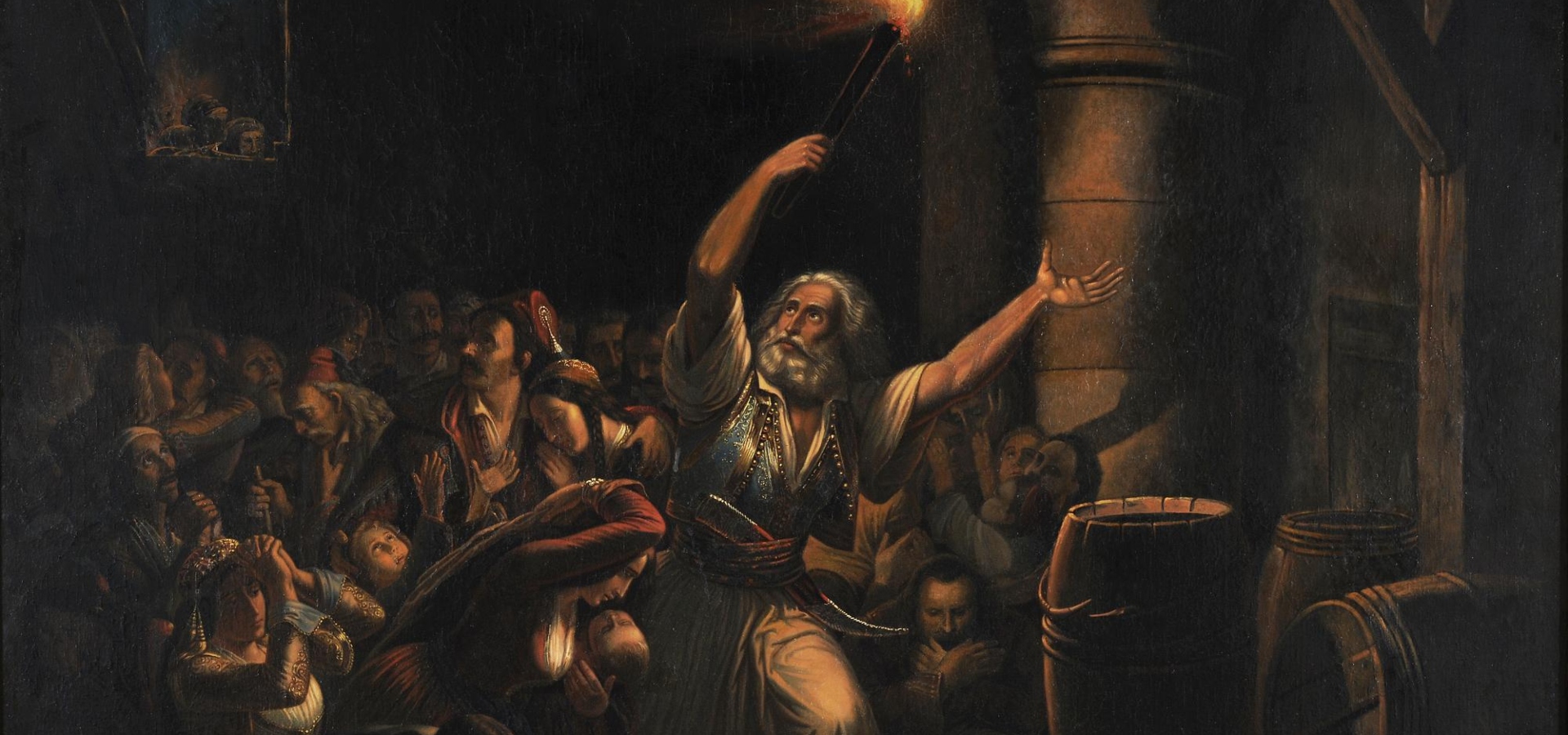
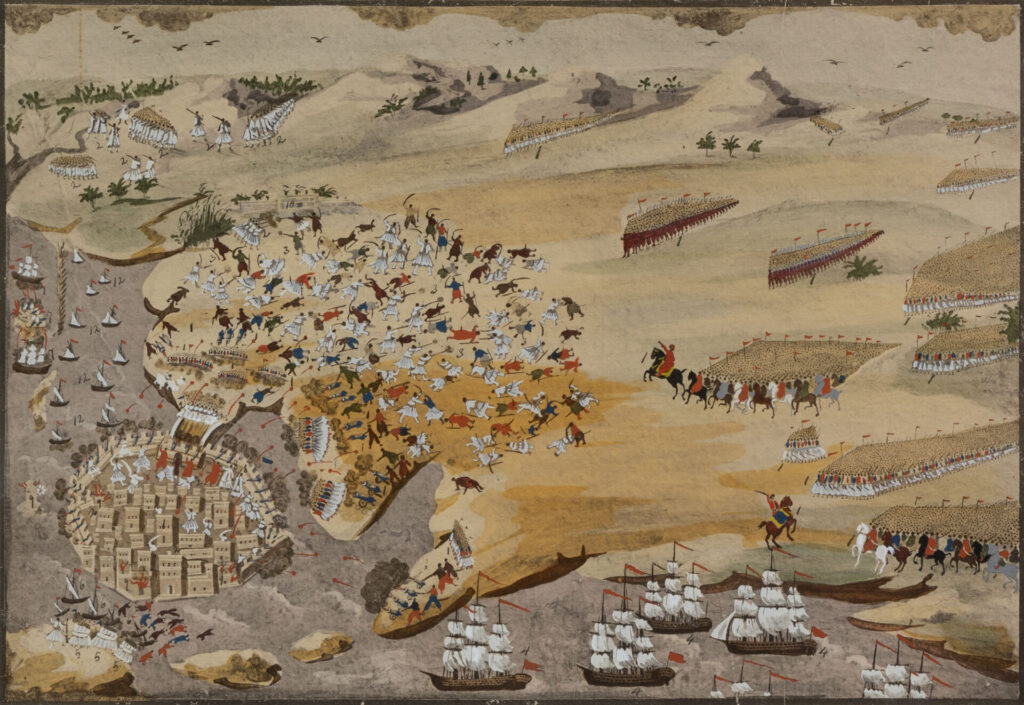
The National Historical Museum and the Region of Western Greece, on the occasion of the 200th anniversary of the Exodus of Messolonghi, are co-organizing in Messolonghi an exhibition titled “Exodus, 1826–2026.” The exhibition offers a concise presentation of the events of the Second Siege of Messolonghi, the impact they generated, and the influence they exerted on the formation of national collective memory.
The exhibition is curated by the museum’s curators Natasa Kastriti (Art Historian), Regina Katsimardou (Historian), and Ifigeneia Vogiatzis (Museologist). The opening will take place on 20 March 2026 at 18:00 at the Chrysogelos Mansion.
The exhibition unfolds on two different levels and is divided into two parts. The first part, dedicated to the historical events, is structured into three thematic sections: i) The Siege, ii) The Exodus, iii) Memory
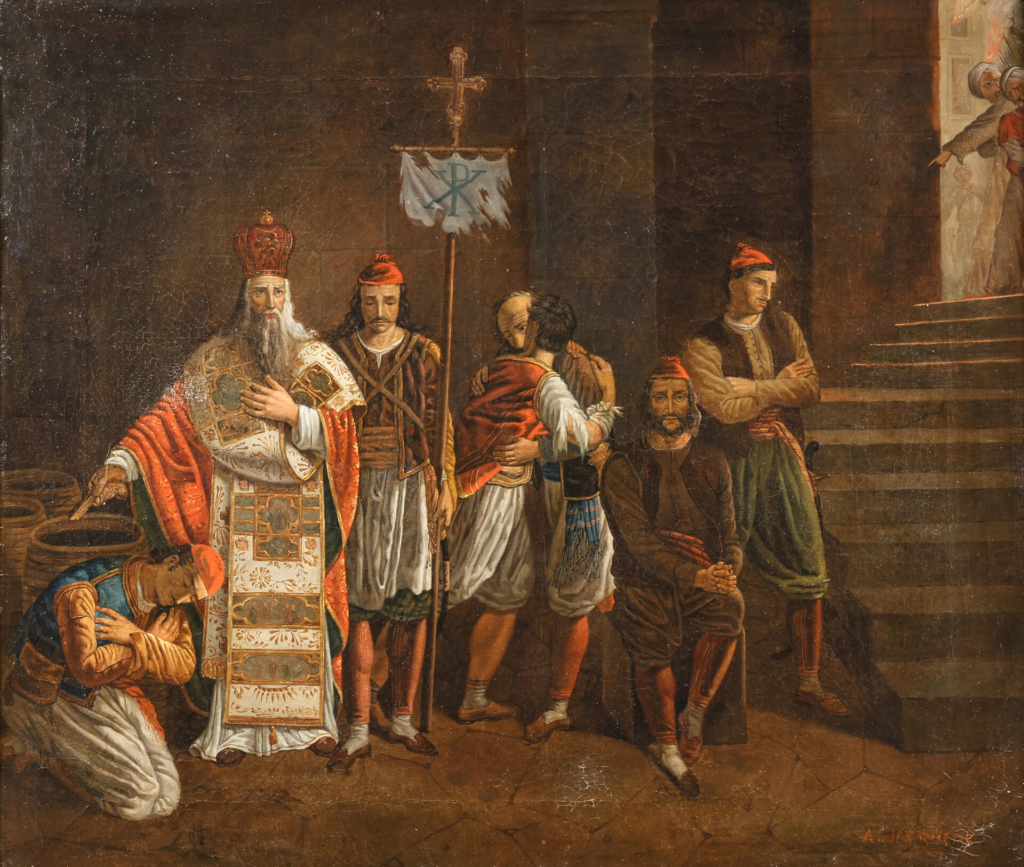
Collection of Michalis and Dimitra Varkarakis.
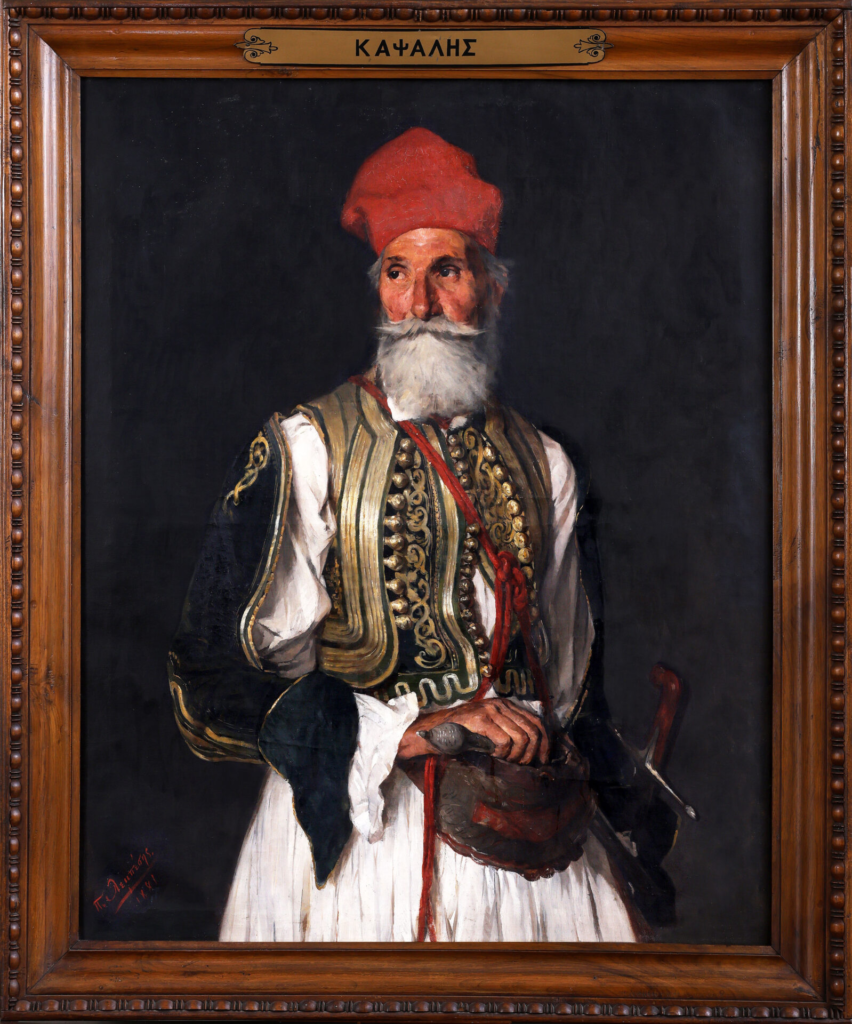
National Historical Museum
Unique relics, paintings and engravings, personal belongings and weapons, costumes, medals and decorations from the collections of the National Historical Museum, documents, newspapers and photographs from the Historical Documents Archive and the Photographic Archive of the Historical and Ethnological Society of Greece, will travel to Messolonghi-some of them for the first time. Among them are a section of the city’s printing press where the newspaper Ellinika Chronika was produced, the figurehead of the ship Aris, which led supply operations, letters from the archive of Kostas Botsaris that reveal the desperate course leading to the Exodus, the “Plan of the Garrison of Messolonghi” by engineer Michail Kokkinis, portraits of the fighters who took part in the Exodus, and lists of prisoners and fallen soldiers that visitors will be able to “leaf through” via an interactive flipping book. Also included are documents from the commemorations marking the 100th and 150th anniversaries of the Exodus.
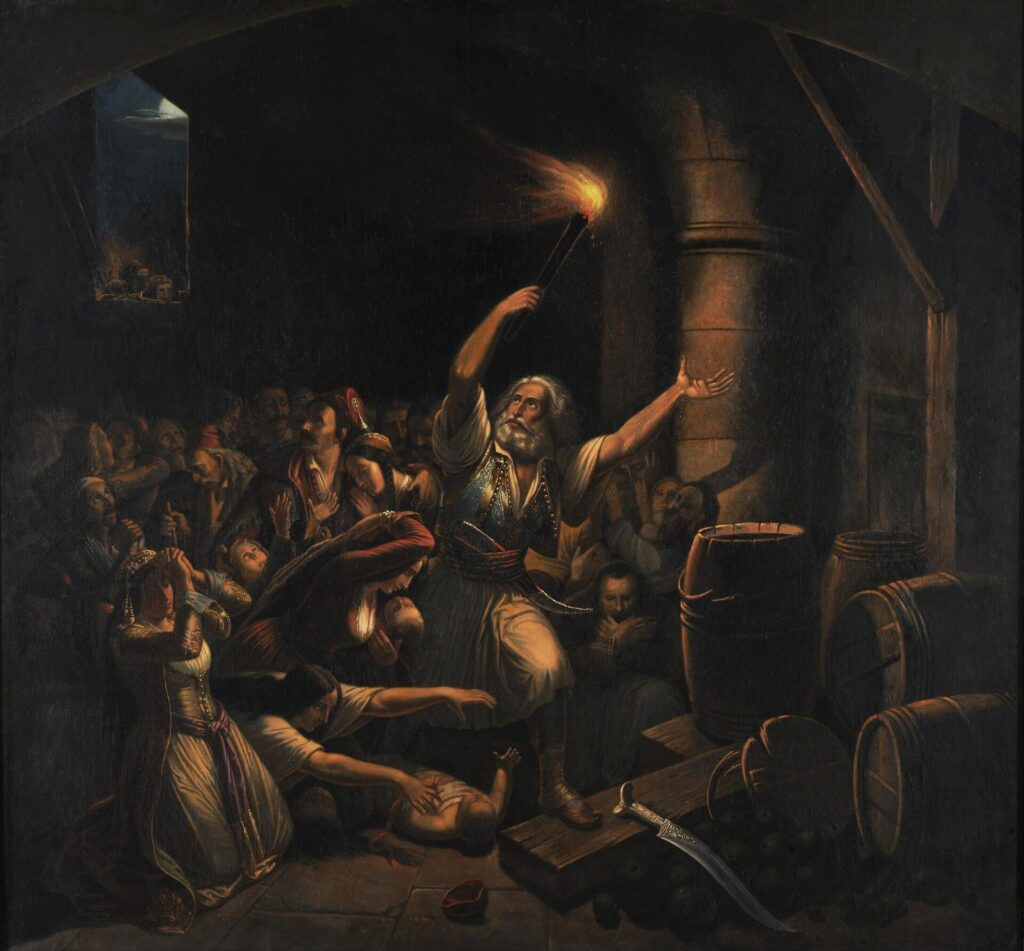
National Gallery – Alexandros Soutsos Museum
For the first time, the painting “The Sacrifice of Kapsalis” by Theodoros Vryzakis will travel to Messolonghi from the collection of the National Gallery – Alexandros Soutsos Museum. Two oil paintings from the collection of Michalis and Dimitra Varkarakis will also be presented: “The remaining members of the Messolonghi garrison set fire to the powder magazine” by A. Jaquème and “Scene from the Siege of Messolonghi” by Horace Vernet.
As a result of collaboration with the Centre for Environmental Education and Sustainability of Messolonghi, the exhibition also includes a thematic reference to the city’s saltworks. Four subsections under the general title “The Salt of the Struggle” form a unified narrative through animation, highlighting the connection between salt and the conditions of the siege.
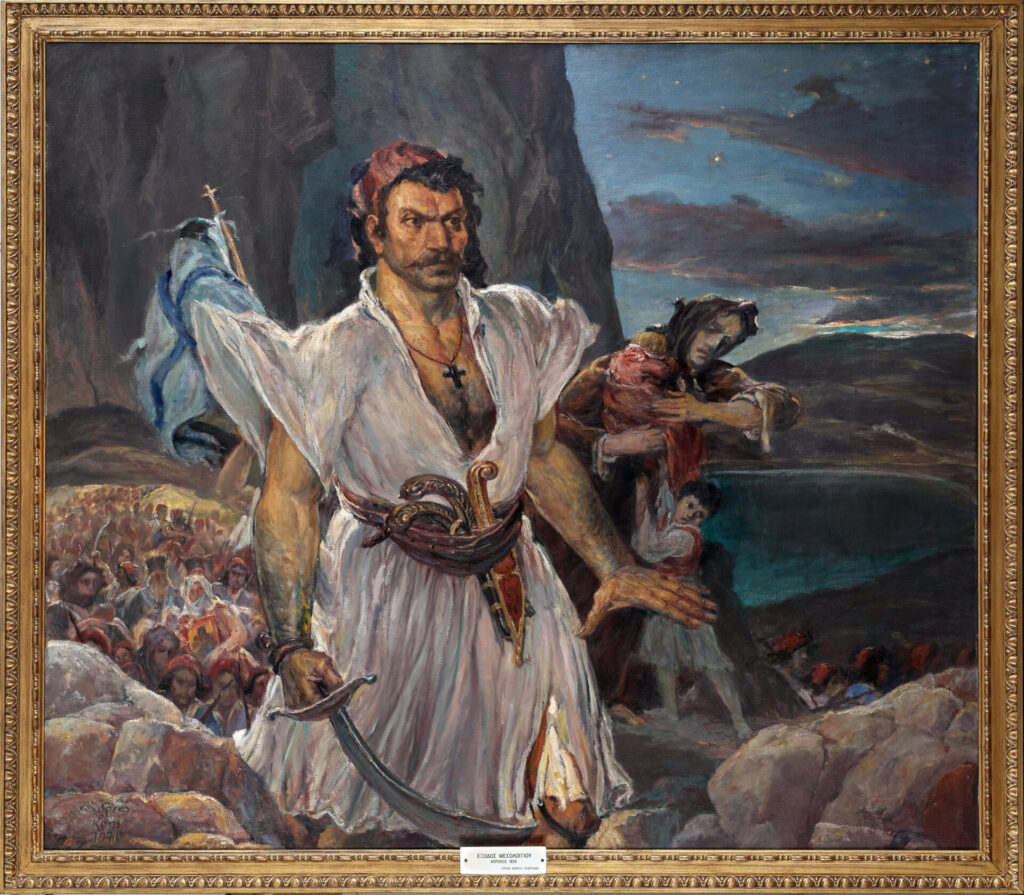
National Historical Museum
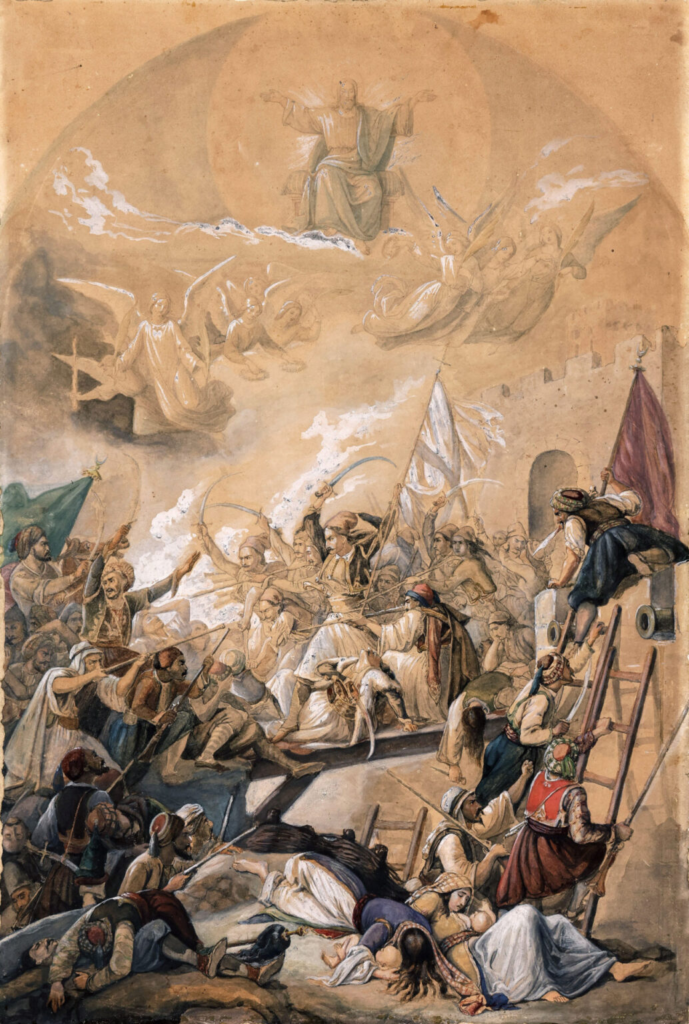
National Historical Museum
The second part of the exhibition presents representations of the Exodus in public history, through which the symbolism and interpretations of the event are explored in formats accessible to younger audiences. These include: figures of the fighters of the Exodus and shadow-theatre scenes by Thanasis Tzoitis, dioramas depicting “The Printing Press of Messolonghi,” “The Battle of Kleisova,” and “The Exodus of Messolonghi,” created with custom Playmobil figures by Angelos Giakoumatos and Vasiliki Fati, pages from the graphic novel 21: The Battle of the Square by Antonis Nikopoulos (Soloup), which includes an illustrated narrative based on the events as recorded in the memoirs of Nikolaos Kasomoulis. Relevant chapters from the book (Ikaros, 2021) will be accessible through an interactive flipping book.
For the Piraeus Bank, the collaboration with the Historical and Ethnological Society of Greece – National Historical Museum as the exclusive sponsor of the exhibition and the commemorative publication that accompanies it represents an initiative of particular importance. The exhibition highlights one of the most emblematic events of the Greek Revolution, which had a strong international impact on the struggle for the creation of the modern Greek state.
The bank’s participation forms part of its Corporate Responsibility program, which includes a wide range of cultural initiatives aimed at strengthening historical knowledge, collective memory, and the promotion of cultural heritage, connecting the past with the challenges of the present and the future.
National Historical Museum
Info
Duration: 20 March – 15 October 2026
Opening: 20 March 2026, 18:00
Venue: Chrysogelos Mansion
Address: Freiderikou Katasou & Michail Makri, Messolonghi