 elc team
The exhibition South by Southeast marks a defining moment in the evolution of the EMST collection and its direction. Drawing on recent acquisitions and donations, alongside existing works from the collection and selected loans, it highlights the museum’s new collecting policy initiated in 2021, which looks beyond inherited Western conventions, repositioning Greece within a broader cultural geography of the Mediterranean and Southeastern Europe – a region encompassing the Balkans, Turkey, the Middle East and North Africa. In doing so, it redefines Greece not as the periphery of Western Europe, but as a central hub of Southeastern Europe and the Middle or “Near” East, a region shaped and connected through networks of mobility, exchange, conflict, multilingualism and layered identities.
The exhibition brings together more than 100 works by 50 artists from over 20 countries. Its title is a deliberate play on Alfred Hitchcock’s North by Northwest, signalling a symbolic reorientation away from the long-standing attachment to Anglo-Saxon and Western European cultural models that characterized Greek modernity after independence. Instead, South by Southeast insists on a more complex and pluralistic mapping, one that acknowledges Greece’s strategic geographical position at the crossroads of continents, empires and belief systems, as well as its deep historical affinities with the region once known as the Levant.

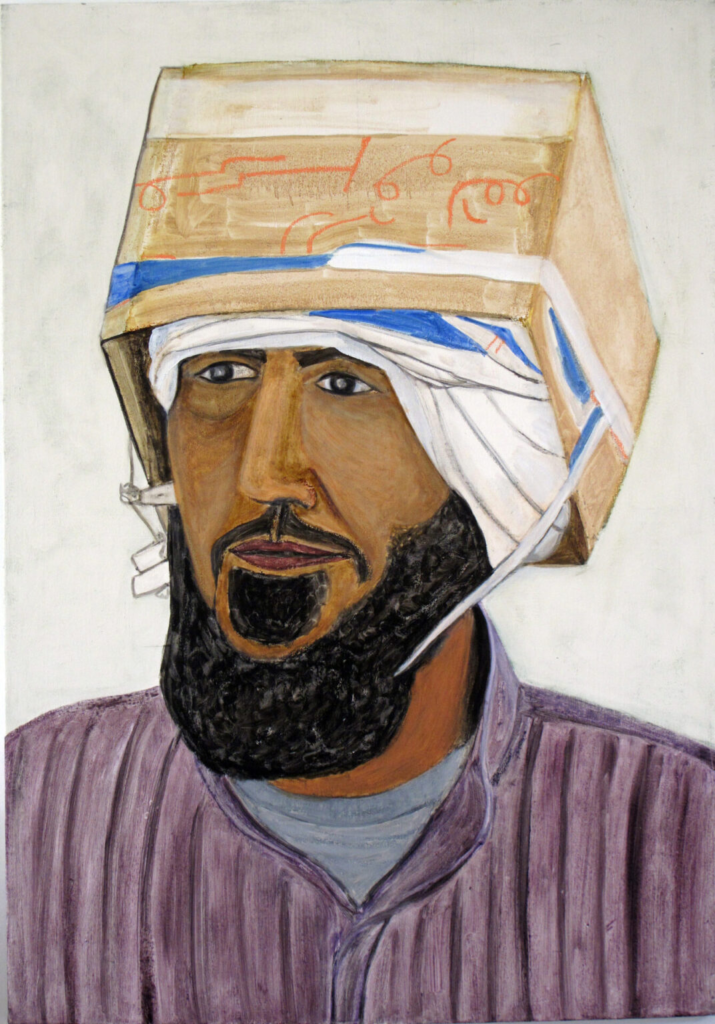

This shift reflects broader cultural and geopolitical tendencies, including what has recently been described as a contemporary “turn toward the East” in Greece, mirroring renewed political, economic and cultural relationships with neighbouring regions.

The broader region on which South by Southeast focuses is rich in narratives rooted in the multicultural, sociopolitical and historical dynamics of the Mediterranean, the Balkans and Southeastern Europe. It is a region shaped by imperial legacies, shifting borders, postcolonial struggles, wars and displacement, but also by enduring traditions of hospitality, trade, artistic circulation and intellectual/artistic exchange. The artworks presented here engage with these dynamics, tracing the ways in which history reverberates through the present, as well as how personal memory intersects with collective trauma and political reality.

Such an exhibition carries particular significance in contemporary Greece. In the aftermath of the economic crisis, amid intensifying migratory flows and the reconfiguration of Europe’s political landscape, questions of identity, belonging and cultural orientation have once again become urgent. Greece’s position as a frontline state in the so-called “refugee crisis” and as a bridge between Europe and its southern and eastern neighbours has exposed deep fractures within European solidarity, while simultaneously highlighting the country’s long-standing connection to the region’s histories of movement and displacement.
South by Southeast responds to these conditions by proposing a counter-narrative to inward-looking nationalism and Western exceptionalism, foregrounding shared histories, interconnected futures and a common cultural space shaped through circulation rather than exclusion and polarization. By bringing these perspectives into dialogue within the framework of a national museum, the exhibition articulates both a curatorial and institutional commitment to rethinking Greece’s cultural self-understanding. It proposes a shift away from an inherited Western gaze toward a more situated, relational perspective that acknowledges Greece’s embeddedness within a complex regional ecology. In doing so, the EMST recognizes the Mediterranean, Southeastern Europe and the broader Near East not as marginal zones of European modernity, but as fertile sites of artistic production, critical thought and cultural innovation. (KG)
Artists: Lawrence Abu Hamdan, Diana Al-Hadid, Monira Al Qadiri, Athanasios Argianas, Lynda Benglis, Kostis Velonis, Vangelis Vlahos, Irini Vourloumis, Apostolos Georgiou, Pier Paolo Calzolari, Chryssa, Navine G. Dossos, Irini Efstathiou, Lina Theodorou, Ivan Grubanov, Artan Hajrullahu, Mona Hatoum, Giorgos Ioannou, Emily Jacir, Sven Johne, Dionysis Kavallieratos, Konstantinos Kakanias, Valerios Kaloutsis, Bouchra Khalili, Panos Kokkinias, Yiannis Kounellis, Nate Lowman, Rabih Mroué, Eleni Mylona, Jennifer Nelson, Bia Davou, Gabriel Orozco, George Osodi, Adrian Paci, Malvina Panagiotidi, Maria Papadimitriou, Leda Papaconstantinou, Rena Papaspyrou, Antonis Pittas, Walid Raad, Thomias Radin, Michael Rakowitz, Șerban Savu, Nedko Solakov, Sphinxes, Thomas Struth, Kostas Tsoclis, Stelios Faitakis, Vangjush Vellahu, Akram Zaatari.
SPOTLIGHT
Yiorgos Lappas
Art always begins with the word “even if”
Curated by: Daphne Vitali
Floor 2
Opening: June 11, 2026
Marking ten years since the artist’s untimely death, and as part of the renewal of its collection, the EMST presents a SPOTLIGHT dedicated to Yiorgos Lappas (1950–2016), featuring works from the museum’s collection alongside selected loans. Lappas was one of the most important contemporary Greek artists, making a decisive contribution to sculpture and conceptual art in Greece.
Lappas radically redefined sculpture in Greece, helping shift it away from traditional representation toward more contemporary, conceptual and multilayered forms of expression.
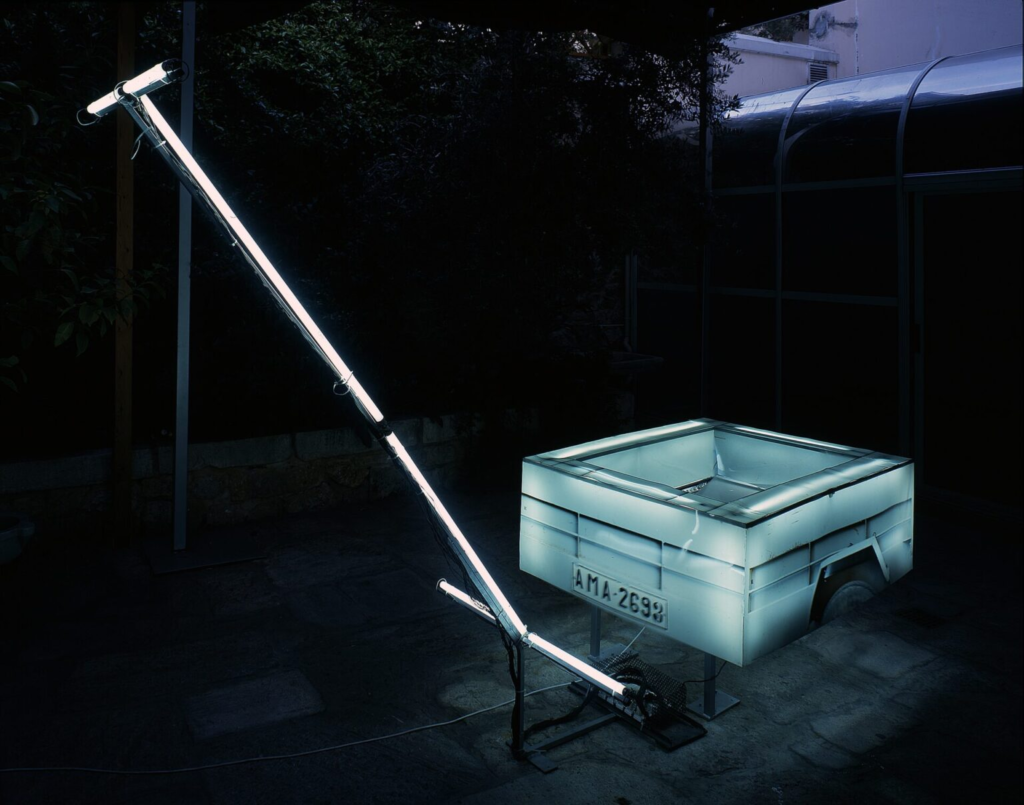
The work of Lappas is characterized by a continuous exploration of sculptural form as a three-dimensional drawing in space, by the dialogue between two-dimensional and three-dimensional form, and by the relationship between architectural and illusionistic space, through investigations and experiments involving sculpture, photography, movement, light and scale. Drawing on intercultural references ranging from ancient Egyptian art, ancient Greece and Mayan civilization to twentieth-century art history, contemporary iconography and key moments of recent political and social history, Lappas’s work unfolds through polarities such as the personal and the collective, the private and the public, the artwork and the viewer, the local and the global, East and West. At the same time, through his role as professor at the Athens School of Fine Arts, he profoundly influenced younger generations of artists. (DV)
The exhibition is presented within the framework of the EMST’s Spotlight programme, which aims to present artists from the museum’s collection in greater depth, offering audiences the opportunity to engage more closely with their work. As such, it provides an important overview of the breadth and significance of Lappas’s artistic research and practice.
Margarita Athanasiou
VOICES, 2025
June 11 – November 22
Coordination: Stamatis Schizakis
Screening Room, -1
Opening: June 11, 2026
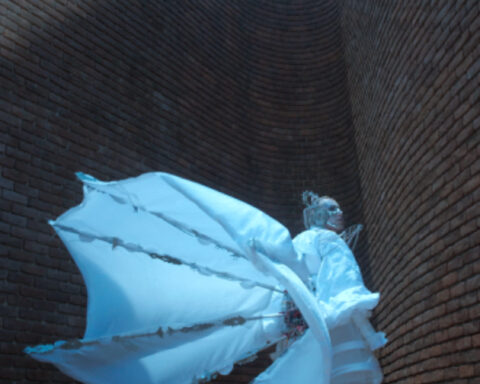
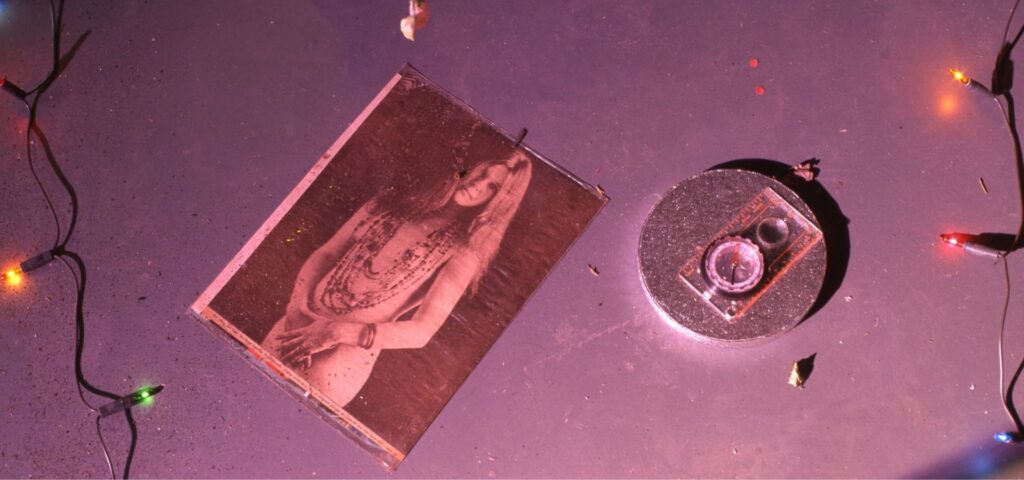
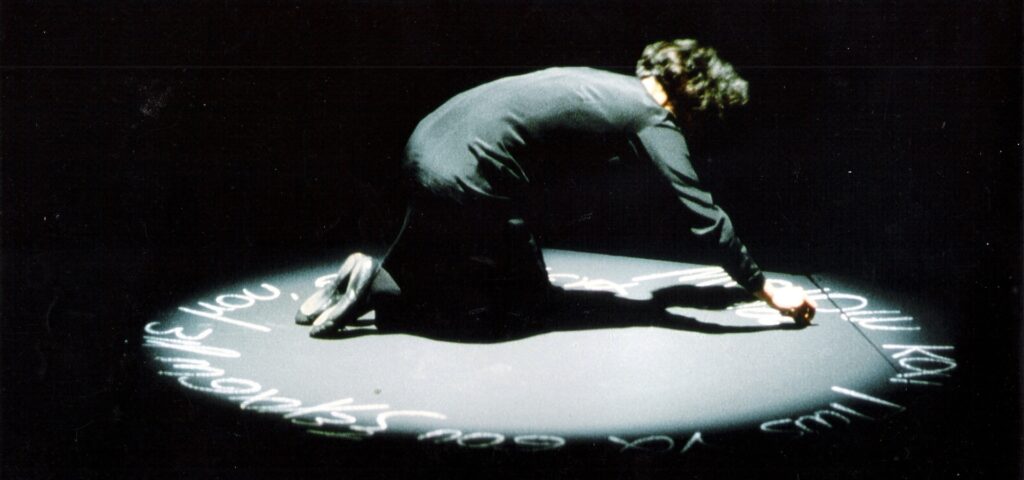
The EMST presents the triple video installation VOICES by Margarita Athanasiou, an essay in moving image that explores the history of spiritualist mediation practices, also known as channelling. Following the work’s premiere in 2025 at Künstlerhaus Bethanien, where Athanasiou participated in the artist residency programme funded by EMST, VOICES is now presented in Athens for the first time.
The video weaves together archival, found and original audiovisual material in order to trace the evolution of the New Age spiritualist movement, its symbiotic relationship with emerging technologies, and its role as a tool for personal and collective transformation.

VOICES is deeply autobiographical, drawing from the artist’s childhood experiences of communicating with her mother, while also incorporating interviews with her grandmother, who was herself an artist. In this sense, the work functions both as historical research – mapping a kind of spiritual family tree – and as a poetic reflection on what it means to “possess” a voice. The act of spiritual mediation becomes a metaphor for transcending individual boundaries; a form of outsourcing closely linked to gender. Within this framework, the female body is presented as the ultimate communication device.
The spring exhibitions (Logothetis–Christou–Kanangini), together with the exhibitions opening in June, form part of a broader strategy focused on the Mediterranean and Southeastern Europe as interconnected sites of historical intersection, tension and exchange. Together, these exhibitions lead toward the major group exhibition The Cosmopolitans, opening later this year, which explores the history and legacy of cosmopolitanism in the region once known as the Levant.
Collectively, the exhibitions function as a multilayered narrative centred on the Mediterranean and Southeastern Europe as places shaped by multiple and overlapping historical ties, tensions and exchanges.

Margarita Athanasiou, VOICES, 2025 (stills) – Video essay
Info
INFO BOX
Opening:
Thursday, June 11, 20:30 – 24:00
Admission to the opening is free.
EMST Opening Hours:
Tuesday, Wednesday, Friday, Saturday & Sunday: 11:00 – 19:00
Thursday: 11:00 – 22:00