 KATERINA PARRI
New exhibitions are coming to the Benaki Museum from September–October 2025
Discover the museum’s upcoming highlights while exploring the current exhibitions still on view and the travelling shows that bring the Benaki Museum’s collections to audiences across Greece.
“Juvenilia” – From early style to mature work
OPENING: 01/10/2025 | DURATION: 02/10/2025 – 11/01/2026
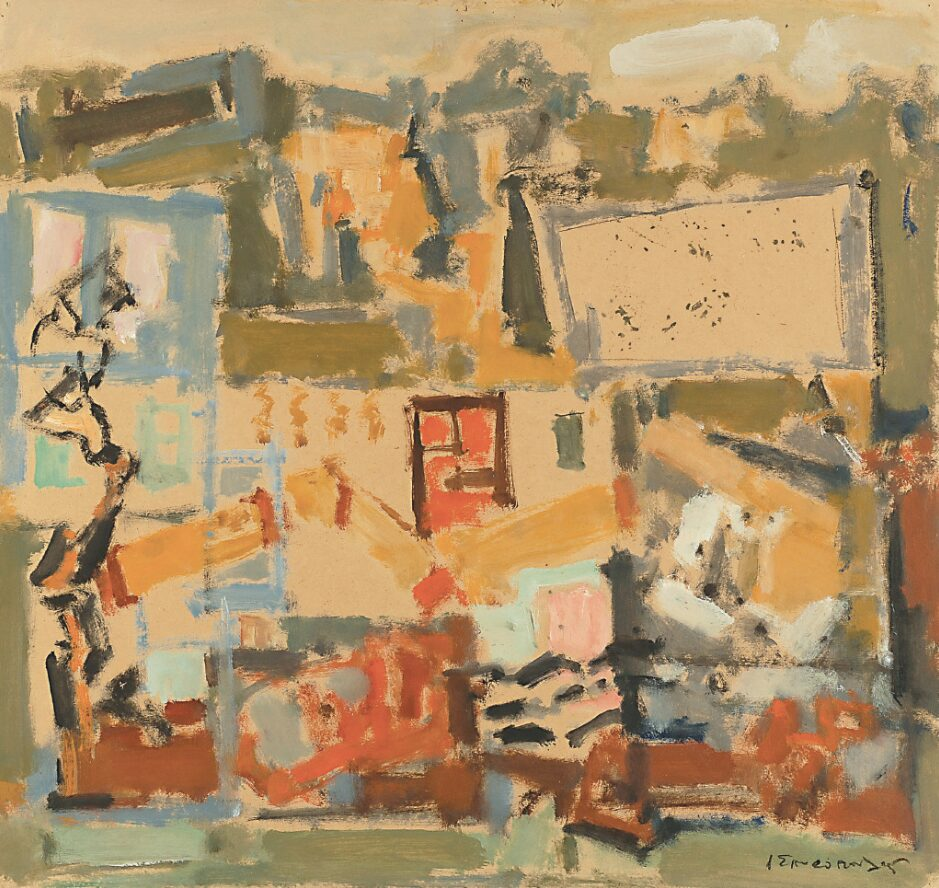
The exhibition “Juvenilia” explores, studies, and highlights the early ideas, motifs, and creative tendencies that emerged in the formative years of eleven major Greek artists – elements that would gradually crystallize into the mature artistic language for which they are celebrated today.
The artists presented are: Spyros Vassiliou, Nikos Hadjikyriakos-Ghika, Yannis Tsarouchis, Yannis Moralis, A. Tassos, Vasso Katraki, Jannis Spyropoulos, Alekos Kontopoulos, Dimitris Mytaras, Yannis Gaitis, and Chryssa Romanos.
The exhibition is the result of a collaboration between three institutions and their respective curators, who selected these eleven key figures of 20th-century Greek art based on their enduring significance in shaping the country’s modern artistic heritage. “Juvenilia” proposes a return to the beginnings of their creative journeys – to their first experiments and early explorations – in order to ask:
Which were the initial expressive elements that surfaced in their earliest works? And how did these seeds evolve into the distinctive, celebrated styles of their later artistic production?
To address these questions, the exhibition’s co-curators invited prominent art historians and theoreticians to research and contribute essays, each offering a distinct perspective on the early phases of these artists’ careers.

Pairings of Artists and Authors
- Spyros Vassiliou · Anny Malama
- Nikos Hadjikyriakos-Ghika · Evita Arapoglou & Ioanna Moraiti
- Yannis Tsarouchis · Anna Kafetsi
- Yannis Moralis · Evgenios D. Matthiopoulos
- A. Tassos · Yannis Bolis
- Vasso Katraki · Spyros Moschonas
- Jannis Spyropoulos · Olga Daniilopoulou
- Alekos Kontopoulos · Bia Papadopoulou
- Dimitris Mytaras · Areti Leopoulou
- Yannis Gaitis · Elena Hamalidi
- Chryssa Romanos · Polina Kosmadaki
Reconsidering the Early Works
The early works revealed in “Juvenilia” hold hidden treasures – often overlooked at the time of their creation, yet invaluable when revisited in the light of the artists’ mature output. The exhibition does not aim merely to return nostalgically to the “immature” beginnings of these creators. Instead, it proposes a fresh and, perhaps, alternative way of re-examining their entire body of work.


Through this lens, juvenilia become more than early experiments; they are essential keys to understanding the artistic evolution, conceptual frameworks, and aesthetic choices that defined the trajectory of modern Greek art.
The fully illustrated exhibition catalogue, published by the Bank of Greece, features an introductory essay by the co-curators, Charis Kanellopoulou, Irene Orati, and Constantinos Papachristou, alongside the commissioned essays of the participating art historians and theoreticians, offering new insights into the early and mature phases of each artist’s oeuvre.
Stories behind the HELLENIC NATIONAL COSTUMES Publication
OPENING: 14/10/2025 | DURATION: 15/10/2025 – 11/01/2026
The exhibition, a collaboration between the Benaki Museum and the Historical Archive of the National Bank of Greece, traces the meticulous, long-term preparation behind the Benaki Museum’s landmark publication, Hellenic National Costumes – a work that became a milestone in the study of Greek traditional dress.
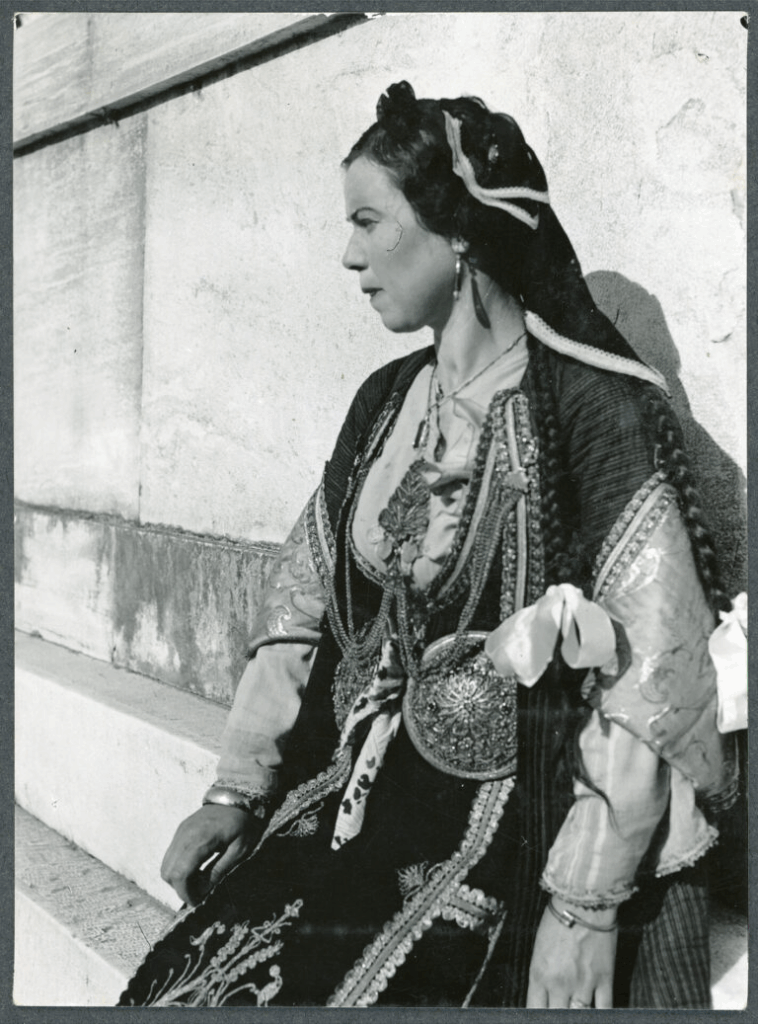
This ambitious project was a personal vision of Antonis Benakis, who oversaw the editing of the two-volume work (1948–1954) and handpicked its key contributors: the painter Nicolas Sperling, a Russian émigré whom Benakis first met in Egypt during the 1920s; the folklorist Angeliki Hatzimichali, already widely acclaimed since that same period; and the Aspiotis-ELKA Graphic Arts Industry of Corfu, which, with over three decades of expertise, was entrusted with the demanding task of producing the publication.
Work on the volumes began in 1930, a year before the Benaki Museum officially opened its doors to the public. Their preparation spanned much of the interwar period, reflecting not only the aesthetic values but also the ideological currents of the era – a time when Greek society was actively “rediscovering” its folk traditions and investing in the evolving concept of Greekness.

Drawing on rare archival materials from both institutions, the exhibition sheds light on the forces that shaped the creation of this seminal work:
- The growing interest of the interwar bourgeoisie in Greek folk art
- Antonis Benakis’s collecting strategy, with a particular focus on his costume collection
- The artistic vision and craftsmanship of Nicolas Sperling
- The multifaceted contribution of Angeliki Hatzimichali to folklore research
- The innovative printing techniques developed by Aspiotis-ELKA, which brought Sperling’s paintings to life
Through this dialogue between archives, the exhibition reveals how historical vision, artistic collaboration, and technological innovation converged to create a publication that remains a touchstone for the study of Greek costume to this day.
Dimitris Pikionis: An aesthetic topography
OPENING: 22/10/2025, at 20:00 | DURATION: 23/10/2025 – 25/01/2026
Dimitris Pikionis (1887–1968) stands as a seminal figure in 20th-century Greek culture. A close friend of painter Giorgio de Chirico, he initially studied painting and sculpture in Munich and later in Paris, where he encountered modern art, particularly the work of Paul Cézanne, Paul Klee, and the sculpture of Auguste Rodin. Upon returning to Greece, Pikionis rediscovered his vocation in architecture without ever abandoning painting. Around the same time, together with a group of fellow artists, he co-edited the influential magazine To Trito Mati (The Third Eye), which introduced the Greek public to the European avant-garde.
Although a contemporary of Le Corbusier and Mies van der Rohe, Pikionis pursued a different path: his architecture sought to weave together Greek tradition and modern abstraction, aiming for a synthesis that reflected an identity deeply rooted in place and culture.

The exhibition focuses on Pikionis’s celebrated landscape design for the approaches to the Acropolis of Athens. The intricate pavements, full of painterly references, are presented alongside architectural works and archival materials that illuminate his creative process. Borrowing the title from one of Pikionis’s own theoretical texts, the exhibition could be described as an “aesthetic topograph.”
The exhibition is divided into three sections: Painting and Thought, Architecture, and Model.
Section Painting and Thought
This section traces Pikionis’s artistic journey and highlights the influence of Paul Cézanne, Paul Klee, Giorgio de Chirico, and other modernist pioneers on his creative vision. Visitors will also find reproductions of selected pages from To Trito Mati and an original copy of the magazine, underscoring its role in shaping the discourse on Greek modernism.
Section Architecture
The second section is dedicated to Pikionis’s architectural practice. Through drawings, documents, and studies, it reveals his distinctive design methodology — one rooted in meticulous observation, the analysis of natural forms, and the integration of harmonious geometric patterns. The materials demonstrate how he gradually merged the principles of the modern movement with elements of Greek vernacular architecture, ultimately arriving at an approach where architecture itself becomes an extension of the landscape.
Section Model
At the heart of the exhibition, a scale model of the Acropolis area and Philopappou Hill offers an immersive overview of Pikionis’s landscape intervention, illustrating how his architectural and artistic sensibilities converge into a unified spatial experience.
Exhibitions Currently on View at the Benaki Museum
Discover the exhibitions currently on view at the Benaki Museum, where art, history, and culture converge. From landmark retrospectives to contemporary dialogues, each exhibition invites you to explore rare collections, innovative perspectives, and the stories that shape Greek and global heritage.
In a Bright Green Field
DURATION: 12/06/2025 – 13/09/2025
The exhibition features the work of twenty-nine young artists exploring possible futures where renewed relationships with the natural world might emerge and expansive approaches to community may flourish. Gathering artists working across a variety of mediums, this exhibition surveys some of the most exciting emerging practices in Athens, Nicosia, and across Europe.
It highlights a generation of artists who are particularly attentive to the local histories of Greece and Cyprus and the ways in which they are useful for thinking through larger global challenges. These artists register the dramatic changes to labor and landscape accelerated by technology, while working to highlight emergent forms of collectivity across both urban and rural life. Their works explore the poetics of infrastructure, pastoral science-fictions, urban animism, and generative collaborations that resonate far beyond the space of the museum. Ranging from lyrical painting and sculpture to experimental documentary film to communal performance, In a Bright Green Field looks at art practices that can serve as prototypes for myriad possible futures.
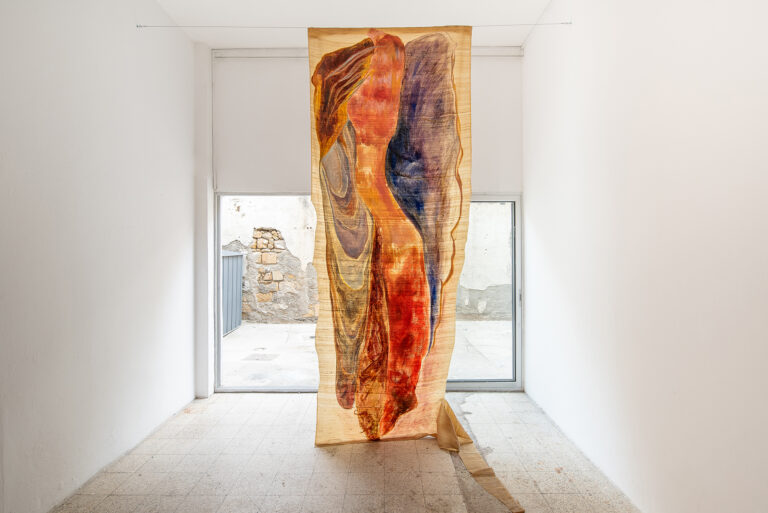
The exhibition will be accompanied by a fully illustrated catalogue published by the DESTE Foundation with new writing by Gary Carrion-Murayari, Athens-based curator and writer Danai Giannoglu, and Nicosia-based curator and writer Ioulita Tomazi.
Artist List:
Niki Analyti (b. 1994, Corfu, Greece) – Lives and works in Athens, Greece
Raissa Angeli (b. 1986, Nicosia, Cyprus) – Lives and works in Nicosia, Cyprus
Ileana Arnaoutou (b. 1994, Athens, Greece) – Live and work in Athens, Greece
Vera Chotzoglou (b. 1992, Athens, Greece) – Lives and works in Athens, Greece
Anna Housiada (b. 1990, Athens, Greece) – Lives and works in Athens, Greece
Danae Io (b. 1993, Athens, Greece) – Lives and works between Athens, Greece and Amsterdam, Netherlands
Byron Kalomamas (b. 1993, Athens, Greece) – Lives and works in London, England
Konstanza Kapsali (b. 1989, Thessaloniki, Greece) – Lives and works in Athens
Ismene King (b. 1993 Athens, Greece) – Lives and works in Athens, Greece
Kyriakos Kyriakides (b. 1996, Nicosia, Cyprus) – Lives and works in Nicosia, Cyprus
Latent Community (working since 2017 in Athens, Greece):
Ionian Bisai (b. 1992, Saranda, Albania) – Lives and works in Athens, Greece
Sotiris Tsiganos (b. 1992, Athens, Greece) – Lives and works in Athens, Greece
Ioanna Limniou (b. 1987, Alexandroupoli, Greece) – Lives and works in Athens, Greece
Maria Louizou (b. 1988, Athens, Greece) – Lives and works in Athens, Greece
Marietta Mavrokordatou (b. 1996, Nicosia, Cyprus) – Lives and works in London, United Kingdom
Polina Miliou (b. 1990, Athens, Greece) – Lives and works in Athens, Greece
Eleni Odysseos (b.1991, Famagusta, Cyprus) – Lives and works in Nicosia, Cyprus
Nefeli Papadimouli (b. 1988, Athens, Greece) – Lives and works in Paris, France
Theodoulos Polyviou (b. 1989, Nicosia, Cyprus) – Lives and works in Berlin, Germany
Sofia Rozaki (b. 1990, Athens, Greece) – Lives and works in Athens, Greece
Despina Sanida Crezia (b. 1998, Athens, Greece) – Lives and works in Athens, Greece
David Sampethai (b. 1989, Athens, Greece) – Lives and works in Athens, Greece
Marios Stamatis (b. 1986, Larissa, Greece) – Lives and works in Athens, Greece

The Post Collective (est. 2018 in Brussels, Belgium):
Mirra Markhaëva (b. 1992, Ivolginsk, Buryatia) – Lives and works in Brussels, Belgium
Elli Vassalou (b. 1983, Athens, Greece) – Lives and works in Brussels, Belgium
Theo Triantafyllidis (b. 1988, Athens, Greece) – Lives and works in Athens, Greece
Maria Toumazou (b. 1989, Nicosia, Cyprus) – Lives and works in Nicosia, Cyprus
Marina Xenofontos (b.1988, Limassol, Cyprus) – Lives and works in Athens, Greece
Damianos Zisimou (b. 1994, Nicosia, Cyprus) – Lives and works in Rotterdam, Netherlands
Erieta Attali: Delos | Land adrift
DURATION: 25/06 – 21/09/2025
This exhibition offers a singular visual exploration of Delos as both a geographically defined site and a metaphysically elusive space. Accompanied by texts by Barry Bergdoll, Georges Prevelakis, and Dimitris Philippidis.
Delos: Afloat invites viewers to engage with Delos not just as a destination, but as a passage -an island afloat between light and shadow, earth and sky, antiquity and eternity. Through her lens, Attali revives the island’s sacred aura, crafting a visual narrative that is at once archaeological, lyrical, and timeless.
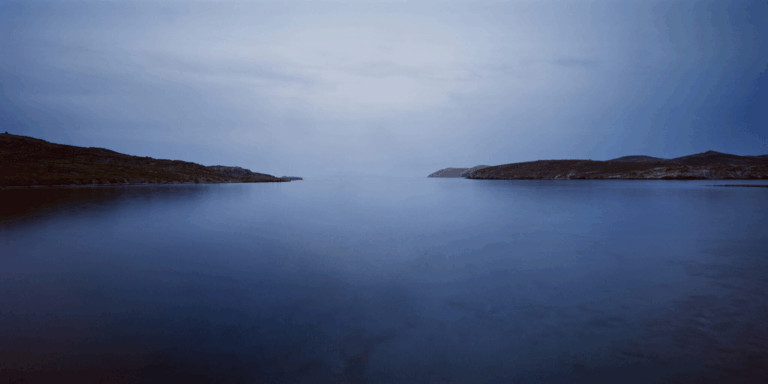
Curated by Erieta Attali and Lambros Papanikolaou, the exhibition features 25 large-scale prints by Erieta Attali, a 7-minute short film by Elisavet Tsouchtidi, and a cartographic work designed by architect Aris Kafantaris. The exhibition design is by architect Tasos Roidis.
Curated by: Erieta Attali, Lambros Papanikolaou
Architectural & Graphic Design: Tasos Roidis
Grand Tour
The exhibition also takes place at the Benaki Museum / Ghika Gallery
Extended: Until January 25, 2026
On the occasion of a new collaborative initiative between the British Embassy in Athens and the Benaki Museum, the UK Government Art Collection is delighted to lend seventeen works of art from the British Ambassador’s Residence. These works will be displayed on a long-term basis at both the Benaki Museum and the Ghika Gallery, where they will be thoughtfully integrated within the existing permanent displays.
This dialogue between collections invites visitors to experience new and unexpected encounters, highlighting the shared histories and the strong cultural and diplomatic ties between the UK and Greece.

Among the highlights is a portrait of Lord Byron by Thomas Phillips. Marking the bicentenary of the poet’s death in 2024, the presentation of this iconic work serves as a timely tribute to Byron’s enduring role as a Philhellene and his deep connection to Greece.
The display also features works by Joseph and Anton Schranz, offering a rare 19th-century visual record of the Greek islands, while paintings and watercolours by Nikos Hadjikyriakos-Ghika and John Craxton — exhibited in Ghika’s own modernist apartment — illuminate the lifelong friendship and mutual artistic influence between these two leading figures of the 20th century.
Founded over 120 years ago, the UK Government Art Collection is a unique cultural resource that promotes British art by placing works in UK Government buildings worldwide. With nearly 15,000 works spanning six centuries, the Collection is displayed in ministerial offices and diplomatic residences across almost every capital city. Continuing to evolve, it actively acquires new works that reflect the diversity of British society today and is committed to broadening public access through digital initiatives and international partnerships.
Travelling Exhibitions in Greece
Nelly’s: Santorini between the Wars
DURATION: 10/08/2025 – 20/10/2025 at Kastelana Photography Centre, Pyrgos, Santorini
In the summer of 1956, a devastating earthquake in the region of Amorgos struck the island of Santorini, causing the loss of dozens of lives and extensive damage to houses and infrastructure. Much of what we know today about the island’s pre-earthquake appearance is owed to the remarkable work of Elly Sougioultzoglou-Seraidari (1899–1998), better known as Nelly’s.
Nelly first visited Thera in the summer of 1928, at the invitation of her sister Maro Sougioultzoglou and Maro’s Santorinian husband, Spyridon A. Malaspina. Staying at the medieval settlement of Pyrgos, she explored the island, camera in hand, capturing its unique essence through her distinctive lens.
The volcanic landscape and Cycladic architecture immediately drew her attention. In her photographs, the dark tones of lava, the deep blue of the Aegean, and the dazzling whites of the houses are balanced in striking compositions shaped by light and shadow. Arched alleyways, domed churches, and sculpted terrain emerge in sharp relief, while the human presence remains minimal and deliberate — a few elderly women and children positioned carefully within her frames, reinforcing her distinctive iconographic style.

From the approximately two hundred glass negatives Nelly produced during her regular summer visits, forty images have been selected and are presented as contemporary digital prints at the Kastelana Photography Centre.
Nearly a century later, these images return to their birthplace, inviting a poetic dialogue between Nelly’s Santorini and the transformed island of today.

Dimitris Pikionis: Shape and Form
DURATION: 24/06 – 15/10/2025 at Skiathos, Holy Monastery of the Annunciation of Virgin Mary
This exhibition offers a concise yet insightful overview of the work and personality of Dimitris Pikionis, one of the most distinctive figures in the history of Greek architecture. The Benaki Museum became the custodian of his archive following a significant donation by the Pikionis family in 2001, making this presentation a rare opportunity to explore the scope of his creative legacy.
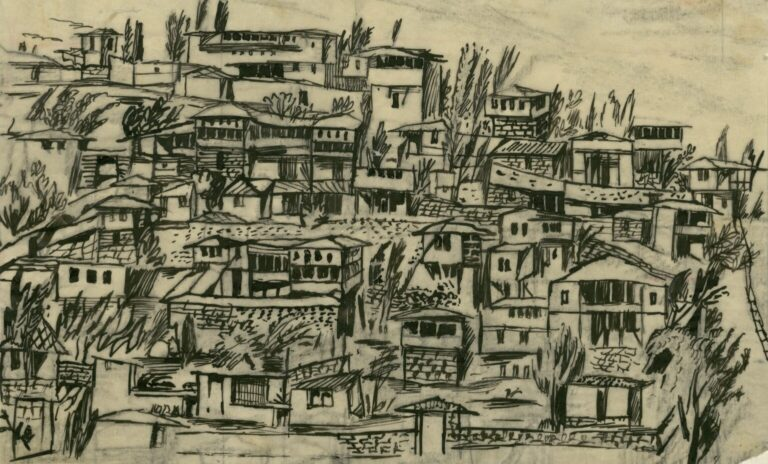
Pikionis profoundly shaped the architectural consciousness of modern Greece – perhaps more than any of his contemporaries – and continues to influence architects and thinkers today.
Through archival reproductions, sketches, and plans, the exhibition traces the breadth of his work across residential, educational, cultural, and urban projects, featuring:
- Moraitis House (1923)
- Karamanos House (1925)
- Lycabettus Primary School (1932)
- Kotopouli Summer Theatre (1933)
- Delphi Centre (plans, 1934)
- Thessaloniki Experimental School (1935)
- Apartment Block, Heyden Street (1936)
- Residence & Workshop for Froso Efthymiadou-Menegaki (1949)
- Potamianos Residence, Filothei (1953–1955)
- Xenia Hotel, Delphi (1951–1956)
- Forest Village, Pertouli (1953)
- Pouris Residence (1953–1955)
- Aixoni Settlement (plans, 1950–1957)
- Landscaping of the Acropolis and Philopappou Hill (1954–1958)
- Children’s Garden, Philothei (1961–1964)
The exhibition is accompanied by a fully illustrated catalogue of the same title, featuring an autobiographical text by Dimitris Pikionis alongside a carefully curated selection of archival material included in the display.

A Thousand and One Designs, Drawings and Shapes
DURATION: 22/06 – 23/11/2025 at Santirvan, Drama, Greece
Islamic art refers to the artistic creations of societies in which Islam is the predominant religion. However, this rich and multifaceted tradition transcends the boundaries of religion and includes luxurious secular works that reflect technical mastery and a high level of artistic achievement. As a whole, it characterizes the cultural identity of a world that spans a vast geographical area, from the countries of the Middle East and North Africa to Central and East Asia. Despite the differences among regions and historical periods, Islamic art maintains common elements that convey a sense of unity. This exhibition at Santirvan, highlights some of these core features, as reflected in a selection of works from the collections of the Benaki Museum.
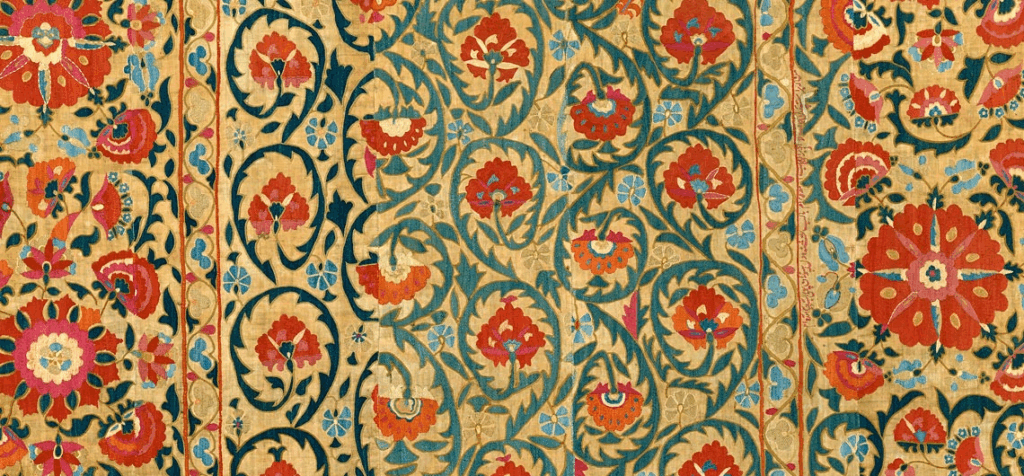
The history of the Islamic world consists of a network of dynasties and empires with diverse cultural and geographical backgrounds, each playing a defining role and leaving its legacy through art and architecture. Islamic aesthetics were influenced by local traditions, enriching the diversity of artistic expression across regions from North Africa to Southeast Asia. This enduring heritage underscores the impact of Islam on global history, as it continues to shape the religious, social, and cultural identities of millions of people around the world.