 PEPI NIKOLOPOULOU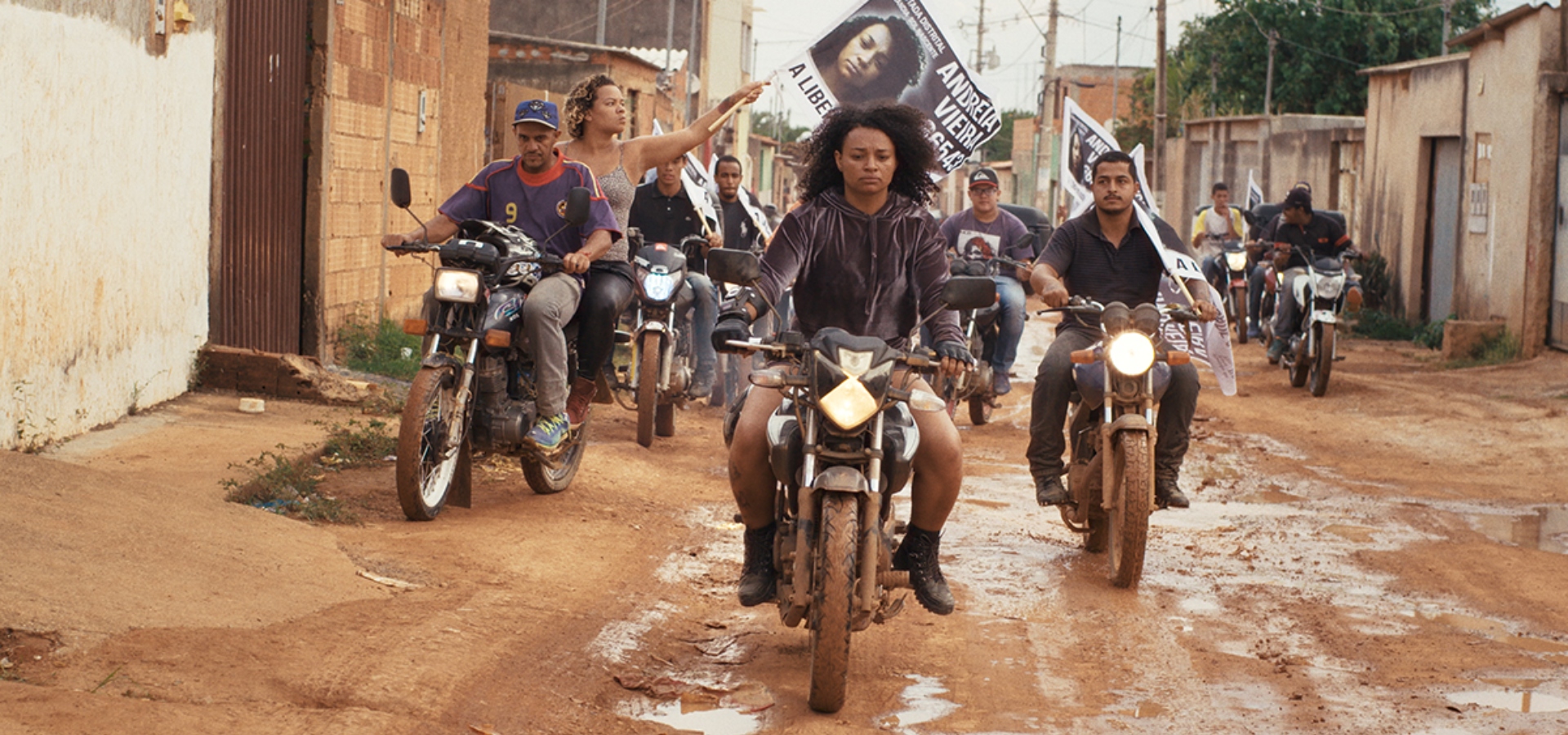
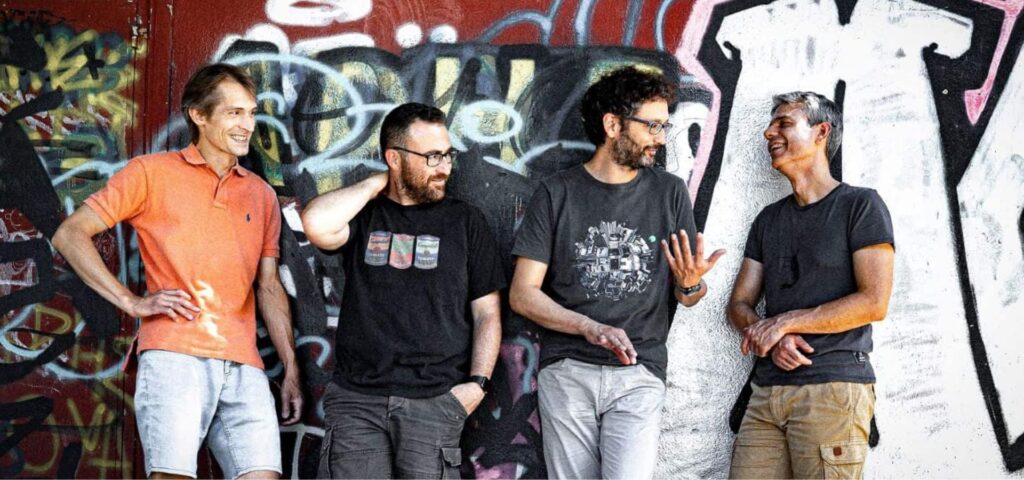
The two creators discuss the manifesto that gave birth to the new film-and-art festival, the challenges of production, and the “haunting” of memory
It’s not easy to describe Ethno☰hauntology vol1 in a single phrase. In its press release, it is introduced as a new film and art festival arriving in Athens this January, exploring how historical trauma, suppressed memories, and lost versions of the future return to haunt contemporary cultural memory.
Yet as soon as my conversation with Rafael Ramírez and Iakovos Vroutsis begins, it becomes clear that behind the title and the programme lies something more personal and at the same time, universal: a method, a gaze, a way of listening to the past as a force that continues to act within the present.
First things first: how do you pronounce it? And what does that symbol in the title mean?
I start with something simple, the kind of question any reader would ask the first time they encounter the name stopping at the symbol placed between the two words. Iakovos Vroutsis explains:
“It’s a symbol from logic and mathematics. It means correlation, co-dependence. What it says is that ethnos depends on the phantasmagoric. Because the hauntological, the ontological, has to do with the spectre, the ghost, with things that ‘aren’t there’ and yet are there, operating inside us. Like political beliefs or religion.”
Ethno☰hauntology, however, doesn’t present itself as a closed theory for the few. “It’s a political tool in the sense that you can use it for different purposes, for different realities.” Everything begins with a manifesto.
The starting point: the manifesto
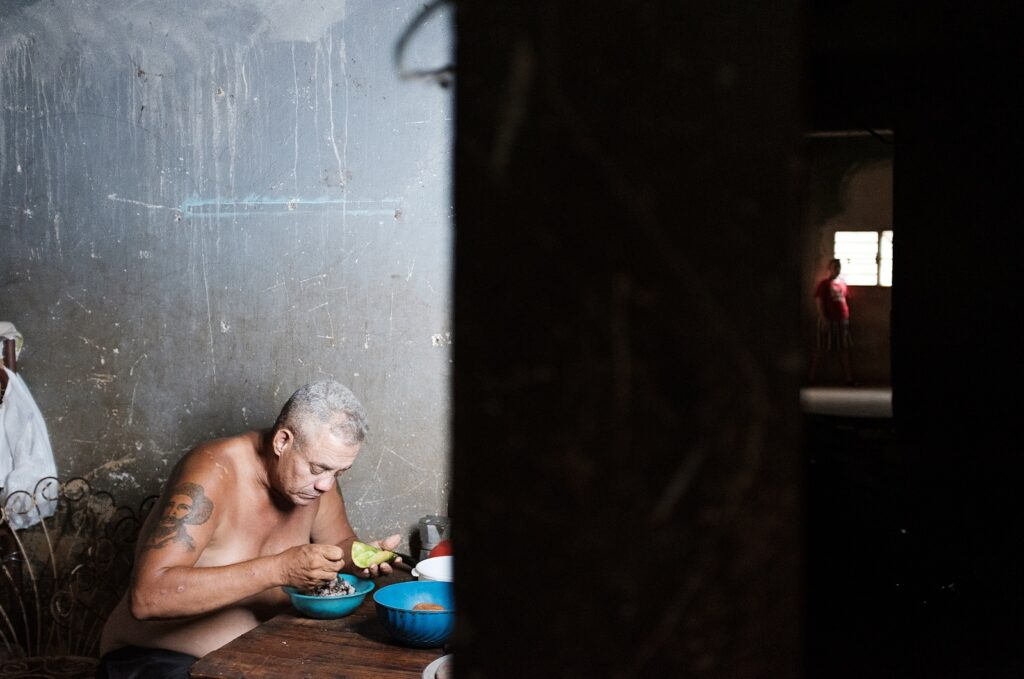
“The manifesto is essentially a condensation,” says Iakovos. “Ideas and thoughts by Rafael and a few other people come together in a text that isn’t a ‘declaration’ in the narrow sense. It’s a trigger for artistic creation but also for political thought and reflection on what came before. And above all, it speaks of a state of limbo we all feel: that frozen condition of survival, each of us from our own position. Rafael speaks about Cuba, but we can also recognise a closer European reality within it.”
A key concept appears in the manifesto: the “necropolitics of the present”. As he explains, its point of departure is theoretical (a Cameroonian philosopher who spoke, quite literally, about state structures that impoverish entire groups of people). Here, however, it is used differently as a shared experience of the now.
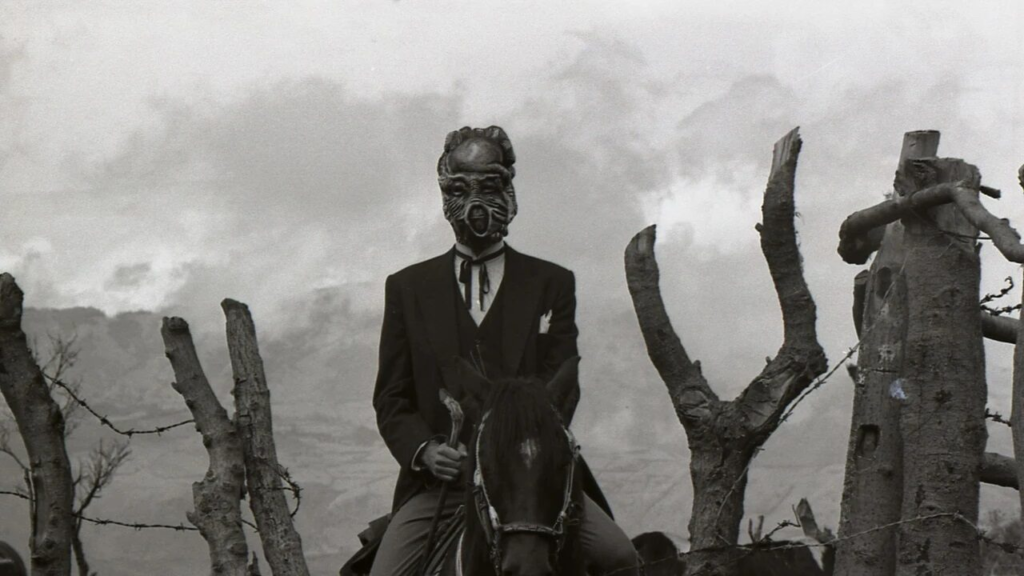
“We use it less literally,” he says, “as the feeling that we’re trapped in an ongoing anxiety of survival, under attack from everywhere from the supermarket, to – in some countries- much more literal attacks…”
And this condition prevents us from doing two things: first, thinking about the past seriously, not nostalgically, but in order to recognise mistakes. And second, imagining a future without those mistakes. That is why Rafael brings together two words: nation and haunting. Nation, as a concept, raises questions: who is left out of national narratives, and what does that mean for their lives? And haunting, as experience: what does nation and homeland mean when you are uprooted, when you live elsewhere and the flag follows you everywhere? The two concepts enter into dialogue and that dialogue is precisely what the festival’s symbol stands for: for us, they are equal; neither is subordinate to the other.”
How was the manifesto born? Is it personal or collective?
I ask Rafael Ramírez to return to the beginning. How does an idea become a method and then a festival?
“The manifesto is, of course, focused on cinema,” he tells me. “Because it came from my own filmmaking practice. Through shooting, through making films, I understood how this works how it can be applied. The deeper understanding came when I left Cuba.”
He speaks of migration as a psychic and political condition. About how a country, especially when it carries dictatorship, fear, crisis. never truly releases you. “You’re never free from your country,” he insists.
“The manifesto didn’t come so much from theory as from a sensation. In some parts I refer specifically to Cuba, but what I’m describing can be applied elsewhere also in Greece. That’s why what Iakovos says in the prologue of a publication we’re preparing is so interesting: why are we doing this festival here, in Athens? What use does it have for your own reality?
My basic position is that you can apply this most effectively on the land you belong to. But when you’re not in your country, it becomes even more intense. I, for example, am not in Cuba but I am in Cuba. It’s like Greeks in the diaspora: they live in Australia or America, but a part of them always remains in Greece. They depend emotionally and existentially on the country they left behind. So in a way, your homeland ‘hunts’ you. You’re never completely where you are.”
He says he already understood this condition in Cuba, but once he left, it became even more critical. Then you realise how “captured” you are by your country and when we’re talking about countries under dictatorship or deep crisis, that adds another layer. Even outside your country, you’re not always free: “I can’t, for instance, be publicly vocal in a protest against the Cuban regime, because I know there could be consequences. So ultimately, you’re never truly free from your homeland.”
And today, with what’s happening in Europe and the return of ethno-nationalism, he says it becomes even more visible: everyone remembers again “who they are,” which identity comes first, what defines them. The ghosts of the past keep operating in the present. Even political doctrines from the 19th century return as active platforms today. That is why, once you read the manifesto and begin applying it to reality, you can see many things with striking clarity.
“And art doesn’t need to be ‘denunciatory’ to be political. My starting point was a deep understanding of my condition as an immigrant not someone who left because of war or to survive, but someone who left for personal reasons. That gives you distance: space for thought and reflection.”
“If no one makes space for you, you have to make your own”
This festival wasn’t born overnight. Before it became an event, a title, a manifesto, a programme, it was a path often solitary. Rafael Ramírez arrived in Greece from Cuba several years ago with his Greek partner to begin their life here. And although his work travelled internationally, for a long time in Athens he seemed to move “outside the frame”.
Moving from early mockumentaries and hybrid shorts to his first feature (Winter Campaigns, 2019), he remains committed to a cinema where documentary and fiction coexist. He studied in Havana and at the international film school EICTV, has presented his work in programmes spanning Europe, the Americas and Japan, and remains active in film education as Head of the INTERZONA Master’s programme at EICTV.
“In Greece, for a long time, I felt the doors were closed,” he says. “I sent my films to venues, to people, I tried to find a context for them but there was no interest. Almost nobody responded. The only people who truly made space for me were a group of young people here, along with an anthropologist, who invited me to present my work. I did a masterclass too. It was the first time I felt someone ‘read’ me as I am, not as they expect me to be…”
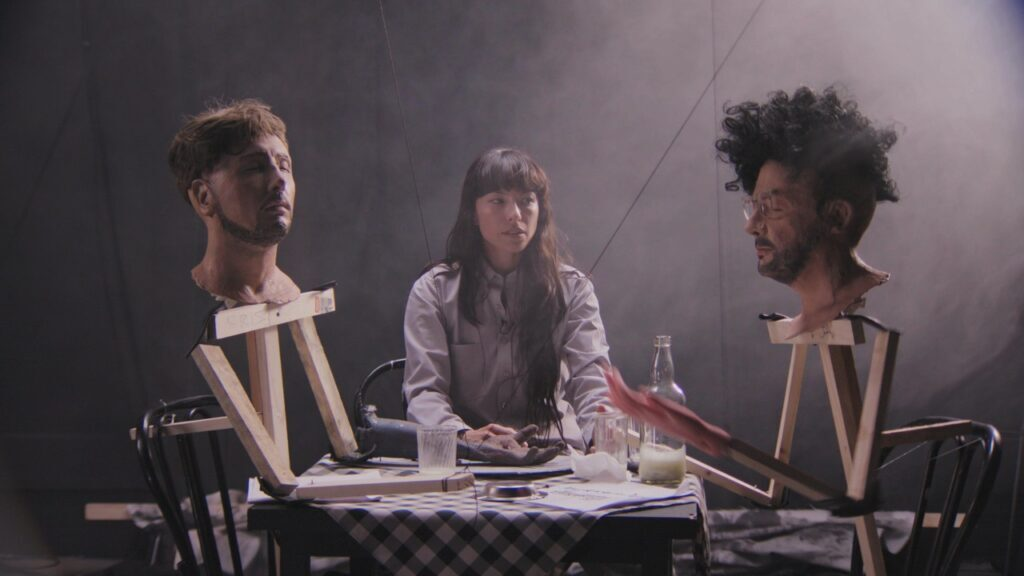
It was within that context that he met Iakovos: “From the start, I saw someone who knows cinema in depth, with a rare organisational strength. But above all, I saw generosity and clarity. We’ve been friends since 2019–2020. And about a year ago he said something very simple: ‘I read the manifesto. We have to do this.’ And that’s how the work began.”
The paradox, he says, is that while in Greece he felt invisible, abroad there was recognition: tributes in Spain, participation in Documenta Kassel– yet in Greece, silence and indifference. “That’s when I understood something: if no one makes space for you, you have to make your own space. Build it from scratch. And then see what follows.”
At the same point, Iakovos moves from theory into practice and into the production challenges. Not only because resources are limited, but because the times themselves make everything heavier.
“You don’t have the resources, you don’t have the people, you don’t have the time margin,” he says, explaining that the care a festival at this level requires, from the quality of the print to subtitling, demands what is increasingly scarce: time and money. And yet Ethno☰hauntology was built precisely on this paradox: doing a lot with little—and doing it well. That is why “success” here isn’t narrowly numerical. Even before the curtain rises, the sense the creators have is that the project has already “landed”: through the warm response, the atmosphere, the hunger of an audience that shows it’s there.
What are you trying to achieve? Is this a festival or a workshop?
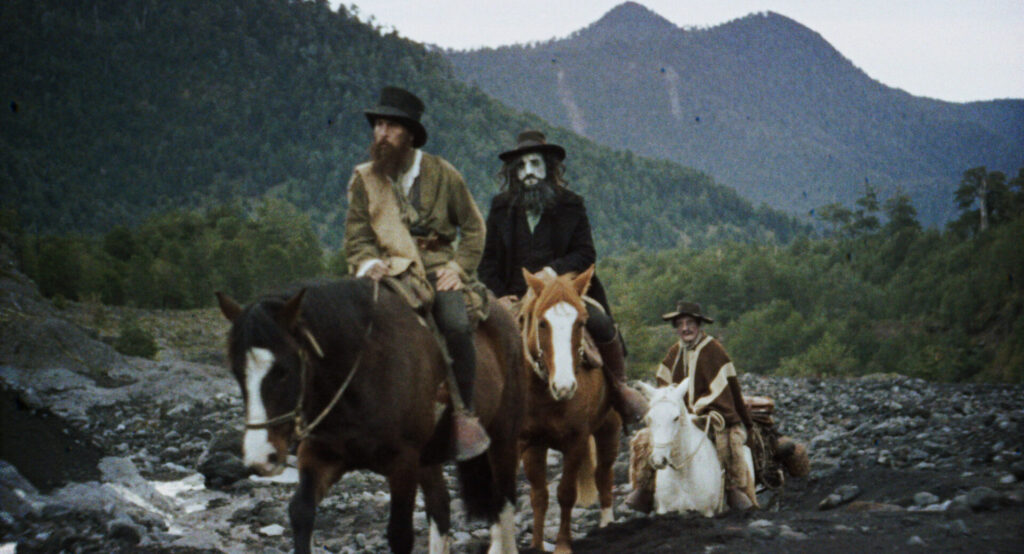
“We’re essentially trying to open a dialogue,” says Iakovos Vroutsis with enthusiasm. “To bring people together from different fields-cinema, anthropology, art. There isn’t a sender and a receiver in our minds.” He pauses, as if to avoid the misunderstanding the word “manifesto” can sometimes carry.
“It’s not a manifesto in the sense of ‘I’m telling you an idea, come and line up behind it.’ It’s much more open. Anyone can read it, choose what resonates with them, interpret it in their own way and from that, something can emerge, mainly an artistic outcome. Text, cinema, sound… The aim is dialogue and thought.”
Why Athens?
In recent years, Athens has become densely packed with festivals, screenings, events. It’s easy to get lost in the “noise”. I ask them directly: why here? And what audience do they imagine?
Iakovos is honest: “It’s a difficult question. I know our motives. Whether it will communicate—and with which audience, I don’t know.”
But he knows exactly why it was worth doing. He describes it as a response to an international festival landscape where films often follow specific paths in order to be “recognisable” and “selectable”. And that creates a paradox: works that could belong anywhere, distinguished only by language.
Ethno☰hauntology, he explains, looks for a cinema that is more direct, more human, more rooted in truths that aren’t “filtered” to fit moulds.

How did you curate the films? What highlights should audiences keep in mind?
The core of the film programme includes 31 films (short and feature length), many in Greek premiere, with screenings accompanied by (online) conversations with filmmakers and researchers.
“The point isn’t to watch a single film,” says Iakovos. “The point is the dialogue between them. The whole forms when you see three or four.”
Although he hesitates to single out favourites, he admits some films left a deep mark. Esquirlas by Natalia Garayalde, he says, was so intense he had to stop watching twice: “It’s an extremely powerful film.”
But his clearest choice is the opening film: Nuestra voz de tierra, memoria y futuro by Marta Rodríguez and Jorge Silva, an emblematic hybrid of documentary and fiction, the result of seven years spent living with an Indigenous community in the Colombian Andes. There, the struggle for land becomes cinematic memory and political act.
And here, the festival’s intention becomes visible: Latin American cinema doesn’t function as an “other world,” but as a mirror, something that concerns Greek audiences, here and now.
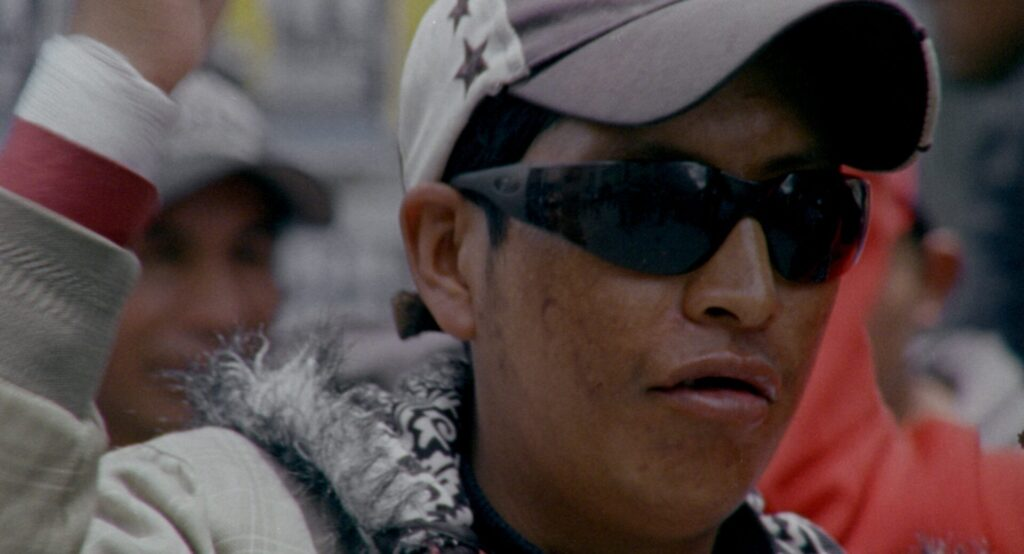
Naturally, Iakovos also makes a special mention of Rafael Ramírez’s Trilogía del Lenguaje (2017–25): a triptych he describes as the culmination of his work so far, a mysterious version of Cuba that has never been captured before.
The publication to be released after the festival
Alongside the film programme and the exhibition, the creators of Ethno☰hauntology are preparing a bilingual (Greek/English) publication to be released in Greece after the event. Rafael insists it won’t be a simple “catalogue” but a book with autonomy: a mapping of the manifesto’s theoretical field, with specially commissioned texts by Greek researchers and Latin American critics so that the Ethno☰hauntology methodology can be captured beyond the festival’s limited timeframe.
“Among them are Lydia Xynogala, an architect with theoretical work; Alexandros Papageorgiou, film critic and Greek translator of Mark Fisher, who writes on Angelopoulos in relation to hauntology. Iakovos writes the prologue before the manifesto, while from Latin America several of the strongest critics of ‘hard’ and experimental cinema contribute, such as Antonio Enrique Gonzalez Rojas, Pablo Gamba, and Jerónimo Atehortua. All of them are writing commissioned texts that connect Ethno☰hauntology’s ideas with the works and fields opened up within the festival.”
Ethno☰hauntology vol1 runs from 21 to 29 January at NEWMAN cinema, while at Kypseli Municipal Market (21–27 January) a major contemporary art exhibition will be presented, centred on the hypermedia installation Pabellón de Melancólicos.