 Pepi Nikolopoulou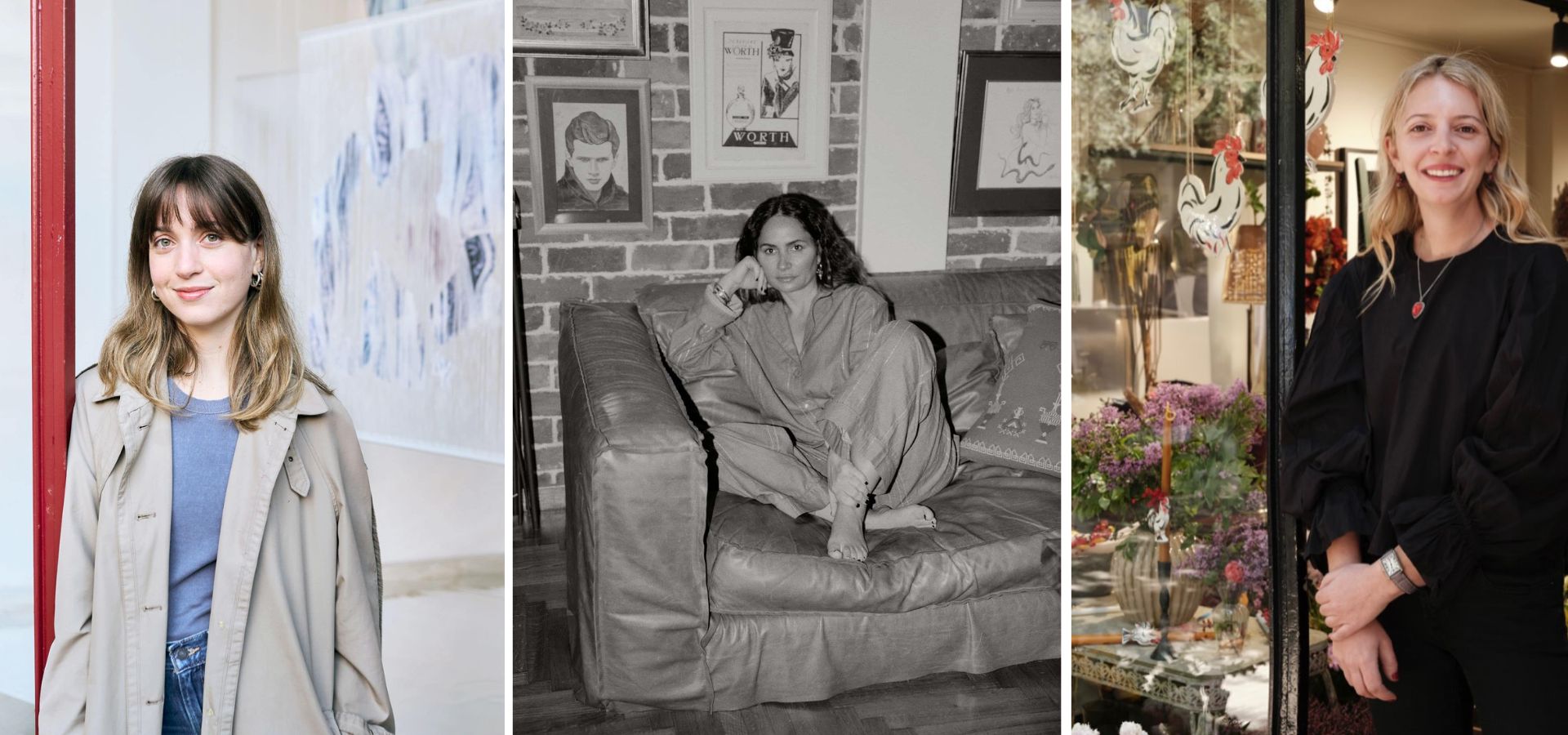
There is always a moment. A small, almost invisible moment when a thought transforms into a decision. On the occasion of International Women’s Day, elculture gave the floor to women who did not wait for the “right moment”. They created it. Women who dared, who took responsibility and who turned a professional choice into something deeply personal.
We did not ask them about numbers or strategies. We asked them about that moment:
When did they feel that “now is the time”?
What was the most difficult challenge they faced?
How does responsibility change when you experience it every day?
What does it mean to lead as a woman in a world that often still evaluates you differently?
And if they could go back, what would they say to themselves before taking the first step?
Their answers are not ready-made formulas for success. They are journeys marked by doubt, resilience, responsibility and persistence. They are real stories of courage and decision.
At this stop along the journey, we meet Valia Kapeletzi, textile designer and artist; Marietta Karpathiou, Creative Director of Ergon, a brand that translates Greek tradition into a contemporary language through fashion; and Nena Mageira, founder of the flower shop A Bloom Athens in Pangrati.
Valia Kapeletzi – Fabric as a Field of Experimentation
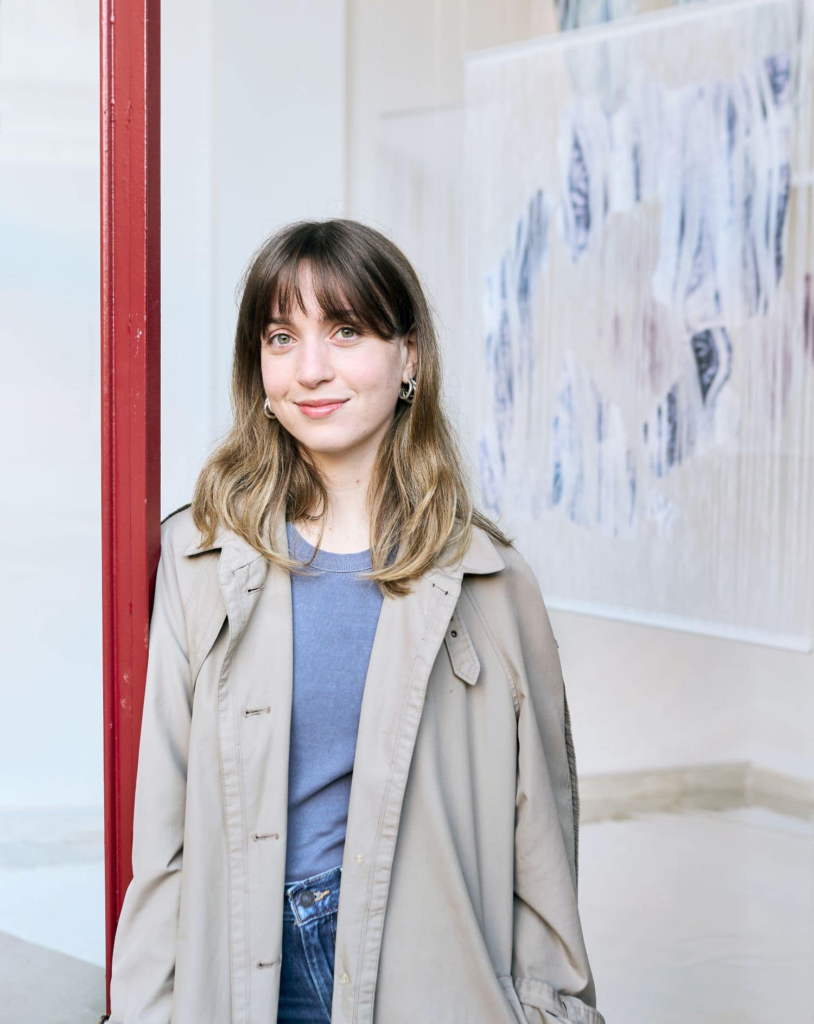
Valia Kapeletzi is a textile designer and artist based in Athens. She studied Textile Design at the London College of Fashion and worked as a textile developer in the studio of Iris van Herpen before returning to Greece to develop her own creative practice.
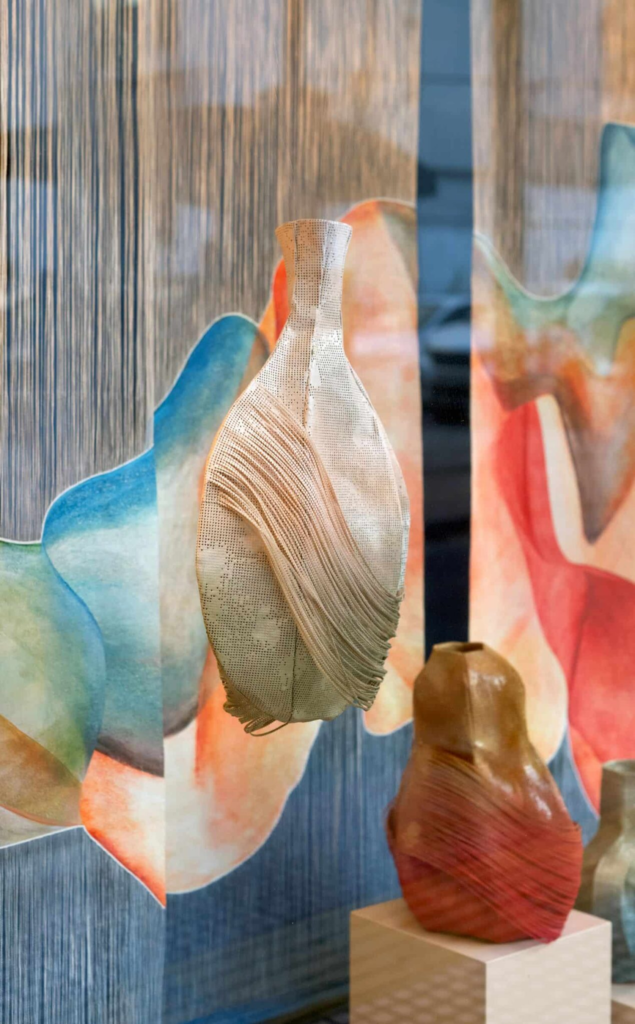
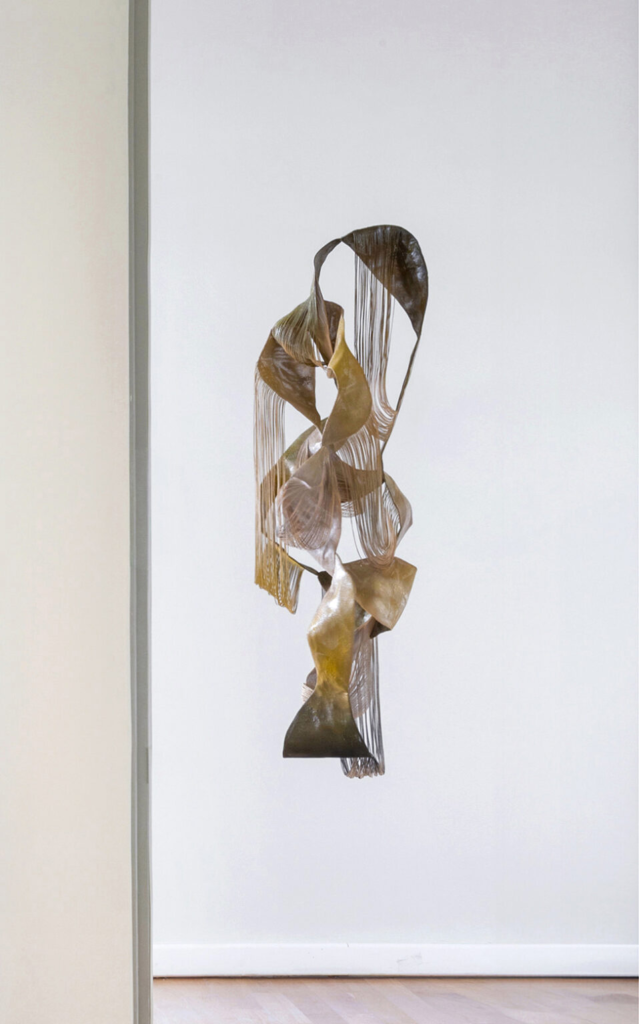
Her work moves between art and design, exploring the transformative possibilities of materials through experimentation with fabric and handmade techniques. Inspired by organic forms and natural textures, she creates textile installations and sculptural textiles that interact with light, transparency and space. From her studio in Athens, she continues to develop projects and collaborations that connect artistic research with contemporary design.
“The decision did not come through a single moment, but through a gradual realization. After my studies and an intense period working with Iris van Herpen, I felt the need to return to my own creative research and experimentation. For a few years, my personal direction had been on hold while I worked within an already established design universe.
When I returned to Athens, I began once again to explore what fabric means to me. At first I hesitated between returning to a design role or following my own path, but gradually it became clear that I did not want to invest all my creative energy in realizing someone else’s vision.
The real starting point came when I acquired my first studio. Having an independent workspace transformed creation from an open artistic process into a more structured professional practice. In that sense, the ‘business’ did not come before the creative work; it emerged naturally from it.
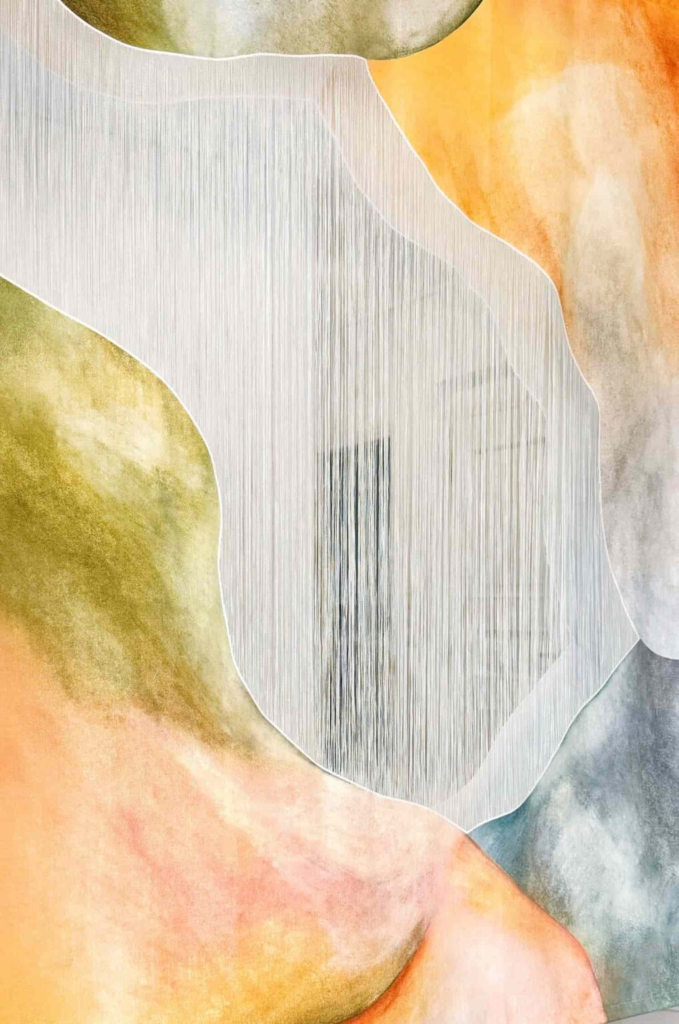
At every stage of my work new challenges arise, especially around how an idea can take tangible form. Gradually I realized that creation does not end with the conception of an idea; it requires care, organization and presence throughout the entire process.
An important lesson for me has been to participate actively in every stage, to communicate my expectations clearly and to protect the value of my work. Consistency and professional respect are not always a given, which is why choosing collaborators who share the same values is crucial. This process is still ongoing. Each project is an opportunity to apply what I have learned and to constantly refine the way I work.

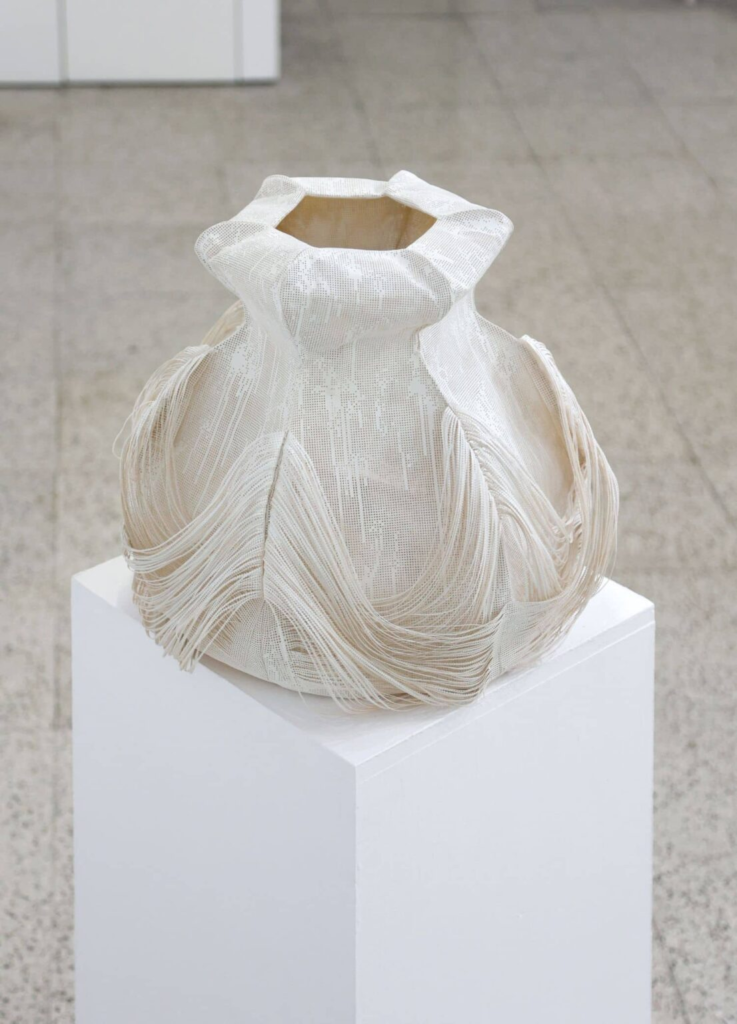
Today I experience my role as a continuous process of growth. Each exhibition or commission becomes an opportunity to create site-specific works that emerge from a dialogue with space and push the limits of both imagination and material. An important part of the responsibility lies in managing time and coordinating different projects without losing the creative space that the process requires.
The freedom to organize my work in my own way allows me to follow my instinct in design and choose collaborations that carry real meaning. Gradually, I feel that a small ecosystem of creative people is forming around me, supporting one another and allowing for meaningful collaborations. Although the process always includes trials and mistakes, at this moment I feel optimistic about the future and excited for the projects ahead.
If I could speak to the woman I was before making this decision, I would tell her not to be afraid to follow her creative path. If you don’t try, there is no way to know whether it will work or not. Doubts and difficulties are an inevitable part of the process, especially in a field that does not always offer stability or guarantees for the future. But trying is invaluable and, personally, this journey is what fulfills me the most. It would have been far more disappointing not to try at all than to try and not succeed.”
Marietta Karpathiou – Tradition in Contemporary Motion
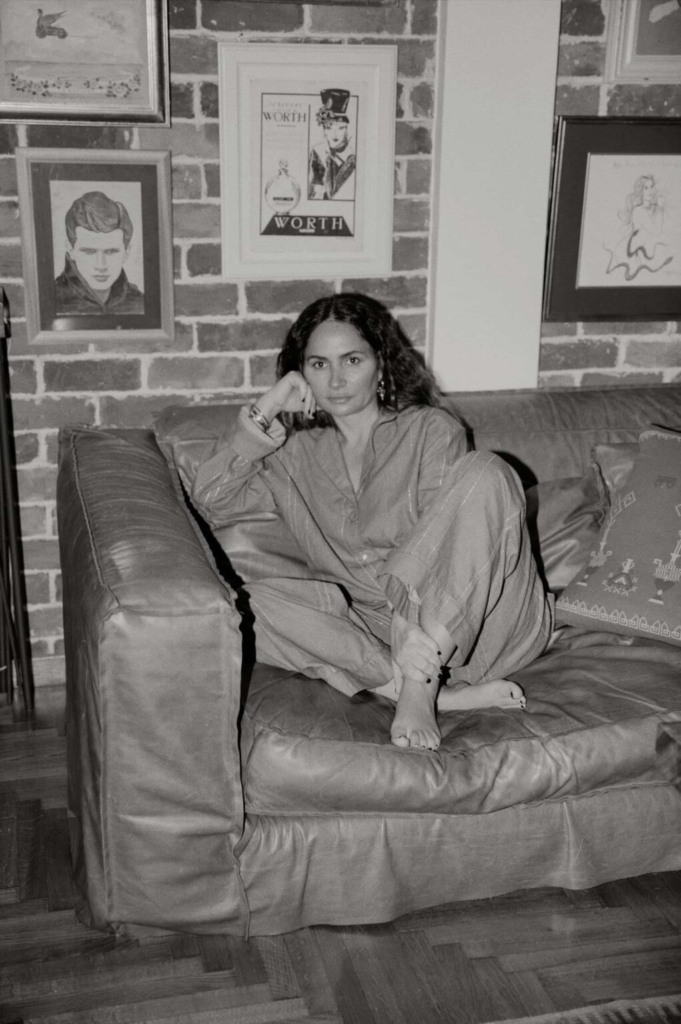
For Marietta Karpathiou, fashion is a way of speaking about one’s place. About twelve years ago the idea of ergon was born, a creative project that seeks to reposition elements of Greek memory and folk culture through a contemporary perspective, liberating folklore from cliché and giving it a new space to exist.
At the core of ergon, art, history and personal storytelling meet. References to antiquity, motifs inspired by folk traditions and images from everyday Greek life are transformed into contemporary objects that converse with the present.
Having studied Fine Arts in Rome, Marietta Karpathiou began shaping the idea of Ergon around 2014. The brand took its current form in 2016 with the presentation of its first collection, marking ten years this year since the idea reached its full expression.
Each piece is produced in limited series through a network of Greek workshops and collaborators. For her, creation is not only about the final object but also about the community of people who produce it. Even the name of the brand reflects this philosophy: ergon, a Greek word meaning work, act, or result. For Marietta Karpathiou, fashion is the outcome of a creative process that connects art, memory and personal images of place with the present.
In one of her designs appears the phrase “Come on, jump, don’t be afraid.” It comes from a childhood memory from Rhodes: a trampoline in the sea and a voice encouraging her to overcome her fear. Today the same phrase returns as a message on a scarf she designed for a charity exhibition, aiming to raise funds for children from the Dodecanese to study abroad. Perhaps this is also the deeper message of her work: an invitation to take the leap, even when you are afraid.
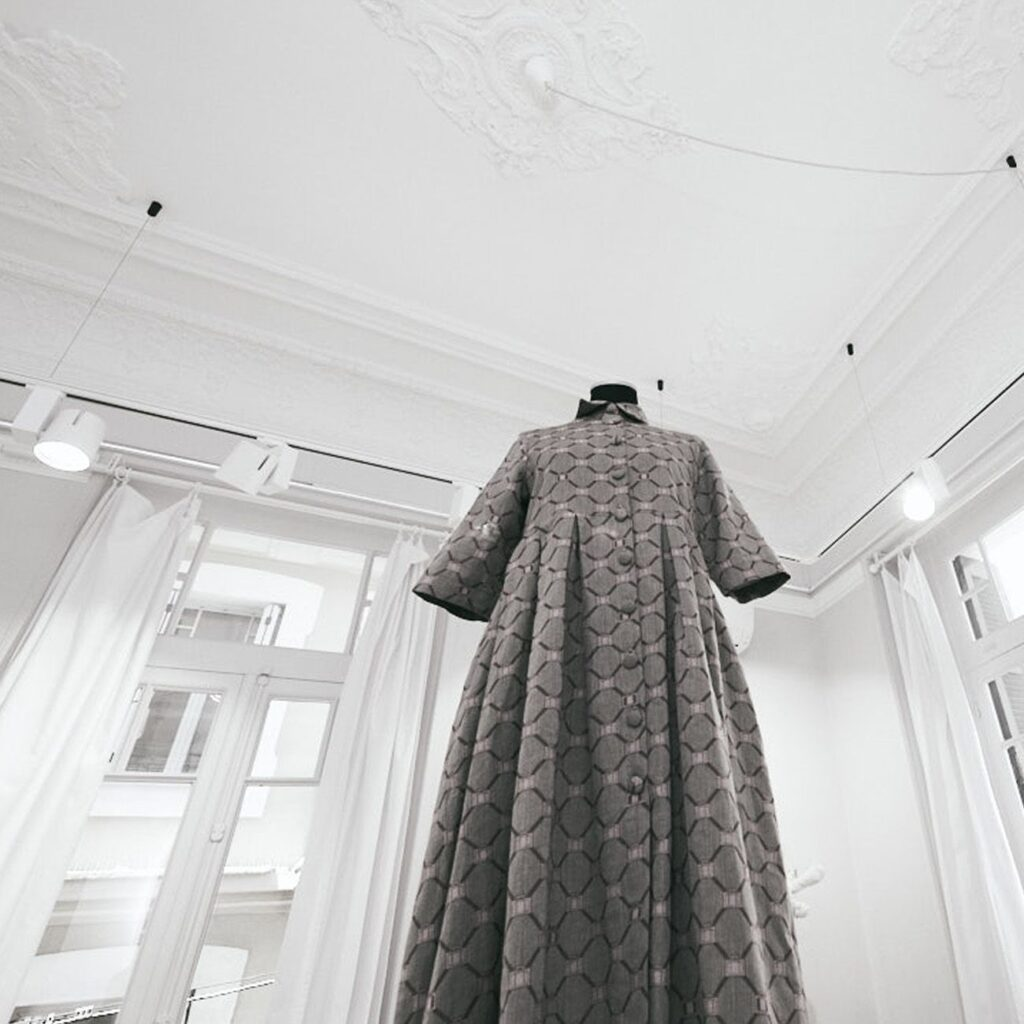
“In reality, I never felt that ‘now is the time.’ I simply started, and I have continued ever since. The idea first emerged about twelve years ago, but Ergon took its present form ten years ago when the first collection was presented.
I am particularly interested in the memory of Greece, but in the way I personally perceived it, as well as in the stories carried by small everyday objects. Clothing is simply the medium; essentially, it is a personal narrative.
The early years were also a period of exploration. Through ergon I began to find a way to speak about place and the images I carry, during a time when many small businesses around us were closing and the creative environment was extremely uncertain.
At first I searched for people who still knew the craft of the loom. Along the way I encountered only a few small family businesses already nearing the end of their cycle. Through these encounters, a different kind of collaboration emerged, along with an effort to give new space to these skills and small-scale productions.
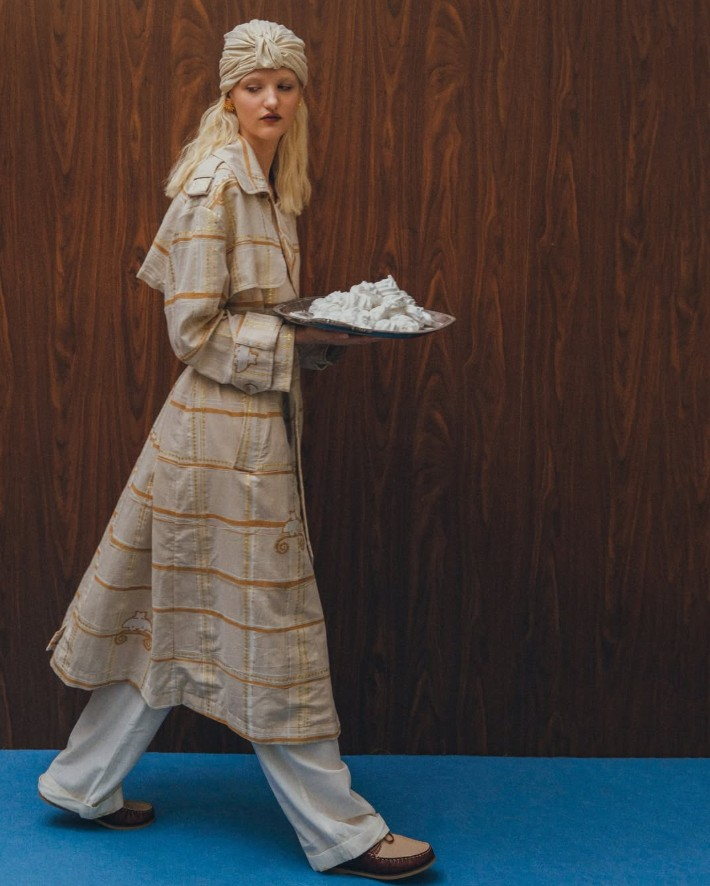
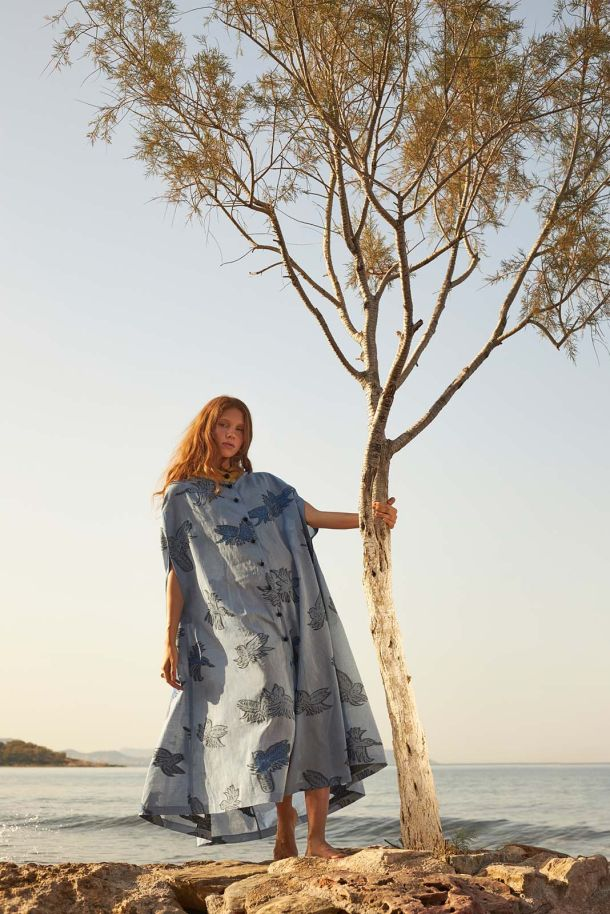
The difficulties remain essentially the same from the beginning until today. In fact, the challenges grow every day as the company expands and tries to maintain the same quality and consistency in its collaborations. Producing in Greece is not an easy choice. There are objective difficulties, from access to raw materials to the time and knowledge required to sustain such a process.
When you collaborate with small domestic family-run production units while also needing to respond to international timelines and rhythms, you often have to rebuild an entire chain of knowledge and collaboration. Despite the difficulties, however, it never crossed my mind to change direction. Producing in Greece is not just a practical choice; it is part of the identity of ergon itself.
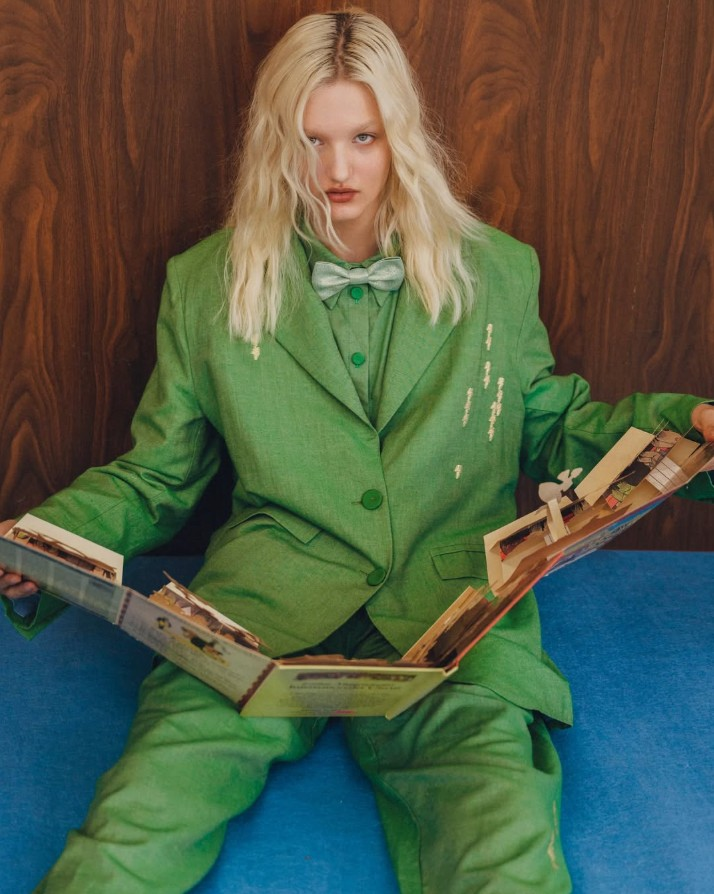
I do not primarily think of myself as a woman, but as a creative person. I hope that someday this distinction will no longer even be necessary.
For many years fashion was treated with a certain lightness, as something less serious. At the same time, it was a field where women were often present either behind sewing machines as seamstresses or in front of the camera as models, without having a real voice in the creative or entrepreneurial direction.
In the case of ergon, women form the core of the team. Without the women who make up the team today, ergon would not be where it is. It is not the effort of one person but a shared creative process of many people, many femininities working together.
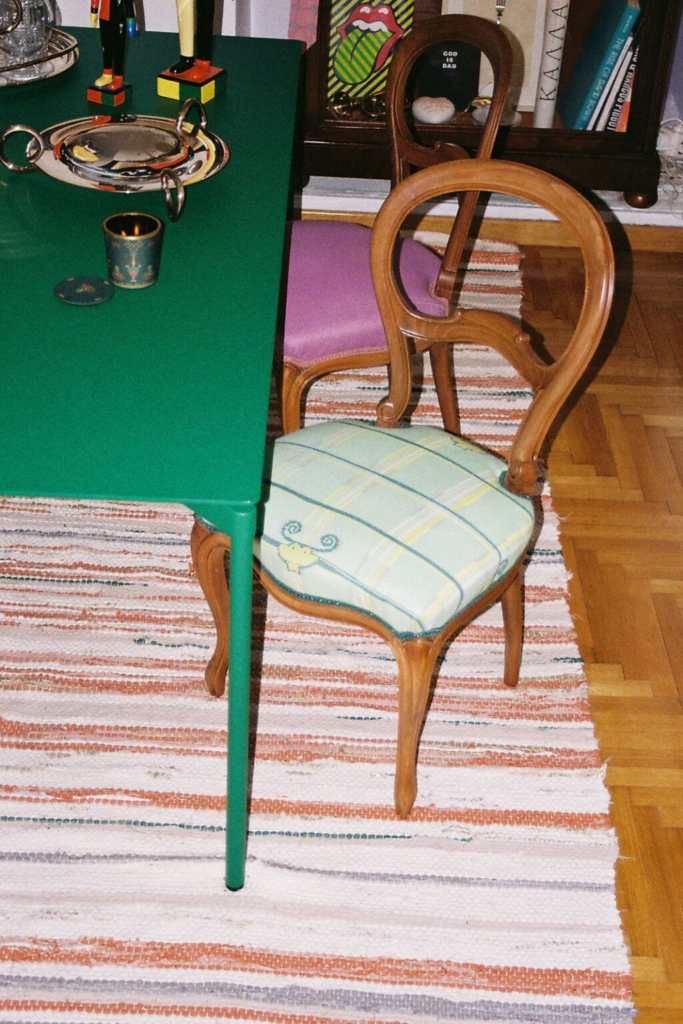
If I could speak to the woman I was before making this decision, I would tell her not to worry so much about her professional future. Through art I was essentially trying to find my path, and I was fortunate that my family encouraged me in this search.
As you grow older, you begin to see things about yourself that you might never have imagined. Your professional needs adjust and often take a completely different direction from the one you originally had in mind. ergon is the space where this process continues even today. It functions more as a cultural project than as a conventional fashion brand. What interests us is longevity, not trends. Greekness, for me, is a feeling, a shared memory that we all carry, but each of us experiences it differently.”
Nena Mageira – A Place Where Flowers and Human Connections Bloom
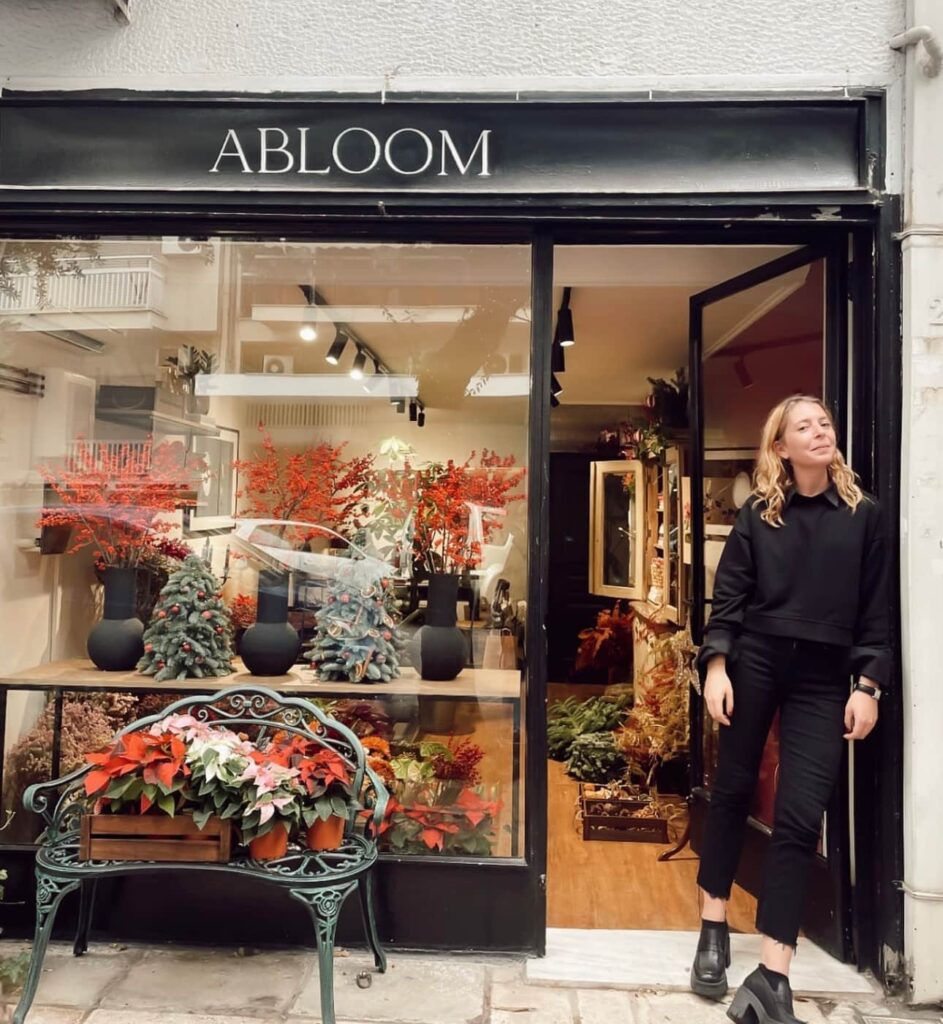
On Archelaou Street in Pangrati, Nena Mageira created ABloom Athens, a flower shop that feels more like a small floral design studio and a meeting place than a typical flower store. Living in the neighborhood herself, she knew from the very beginning that if she were ever to open a space of her own, it would be there, on a street that still preserves something of the atmosphere of an old Athenian neighborhood.
At ABloom Athens, every flower is selected with care, every arrangement shaped through a dialogue with the person who will hold it. In her space, flowers function in exactly this way: as small reminders of hope, joy and beauty within the everyday life of the city.

“It was a profession that had always enchanted me. From a very young age, in the countryside, I had my rose bushes; I would make bouquets for my mother’s house. It was she who passed this love on to me, a love that stayed inside me even when life led me down other paths.
I studied photography and, when I returned to Greece, I held my first exhibition and printed my first book. The exhibition went exceptionally well. And yet, afterwards, I felt creatively frozen. The last photograph in the exhibition was of a calm sea; today I think that, without knowing it, it was preparing me for a different journey.
I pushed myself to live quickly, to collect experiences for the ‘next project’. That is where I fell into the trap: everything had a purpose, nothing was spontaneous. The psychological pressure, the confinement of the coronavirus period and the transitional stages of adulthood led me to a serious health crisis, a psychotic episode that changed my life. It was a very difficult period. But I had my family and friends beside me, supporting me around the clock, and a family friend, Lilian, a strong woman I admired, who stood by my side supporting me both emotionally and creatively. For a long time, I simply breathed. I did not have the intensity of work, I did not have photography, I did not even have the language to describe what I was feeling.
That was when I made a decision: to begin life again from the start. To leave photography aside for a while and turn toward something that made me feel good, not necessarily in order to pursue it professionally, but in order to find a little light in such a dark period.
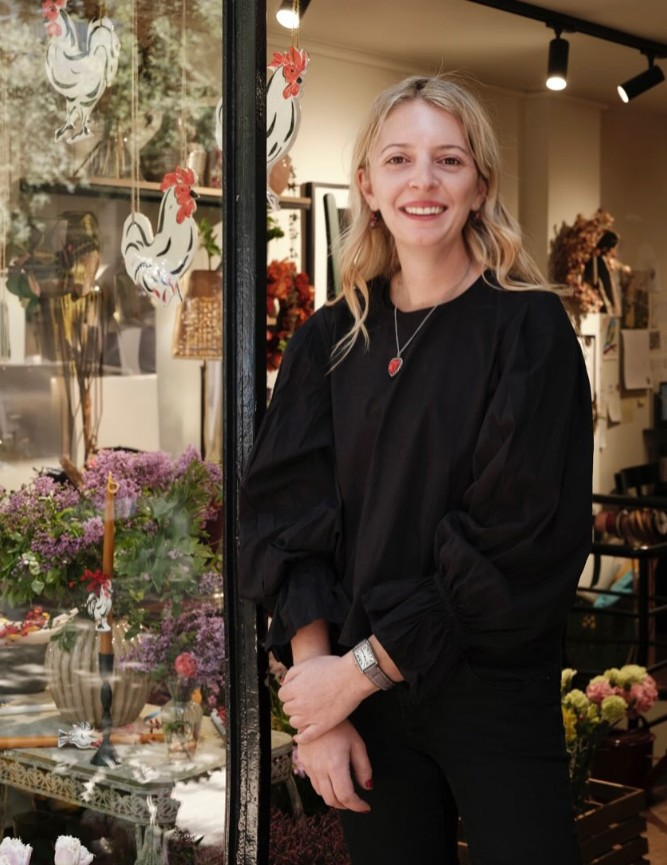
During that time when everything was professionally frozen, I began taking floral design lessons at home with a teacher who was truly pivotal for me. Every day I learned something about care, about flowers, about patience. Something beautiful entered my life again. I took lessons for a year.
I still was not completely well, but one morning I woke up with absolute clarity: this is what I want now. I want to open a space where I can express myself freely. Because as an artist I have many facets, as we all do. The very next day, I began looking for a shop in my neighborhood. I insisted on one specific street, Archelaou. Everyone told me I would never find one. There were five shops on that street. One of them became mine. Exactly as I had imagined it. And that was when I truly felt that ‘now is the time.’
The greatest challenge for me was at once personal and social. While trying to manage my own difficulties, I also had to stand before the world every day. Many people knew part of my story, but no one truly knew what I was carrying inside me. From the first day, my shop was different from the usual flower stores. I did not want it to be simply a place for selling flowers, but an open meeting place. At first I felt the need to define exactly what this space was and where it was going. Over time, however, I understood that there was no need to rush to give form to something that was still evolving.
Over time, everyone came to love it; it became a place of meeting for many people. What I learned was to trust time. To endure uncertainty. Not to be afraid when something is not fully defined. And the truth is that I still do not know where all this may lead. But for the first time, that does not frighten me. It interests me. And for me, that is enough.
Today I experience my role with greater calm. At the beginning, there was tension, the need to prove that I could make it. Now there is greater awareness. My role is not only creative; it is also organizational, human and supportive.
For me, responsibility means consistency, presence and care: for my space, for the people who work with me and for those who visit it. It means taking responsibility for my mistakes and not hiding behind them. It means understanding that the energy of a space begins with me. Leading as a woman does not mean adopting a ‘hard’ way of being in order to be taken seriously. It means leading with authenticity, with empathy but also with boundaries. It means being sensitive and at the same time decisive. Showing vulnerability, but also making difficult decisions when necessary.
Over the past year, I have learned not to push myself excessively. When I have days of weakness, especially working alone, I will not go to the shop, but that does not mean I am not working, the work is always on my mind. Energy plays an enormous role. In order to make beautiful things, I first need to be well myself. I would rather go for a walk by the sea, regain my strength, and then return to work unstoppable for as long as needed.
That is how work becomes joy rather than a burden.
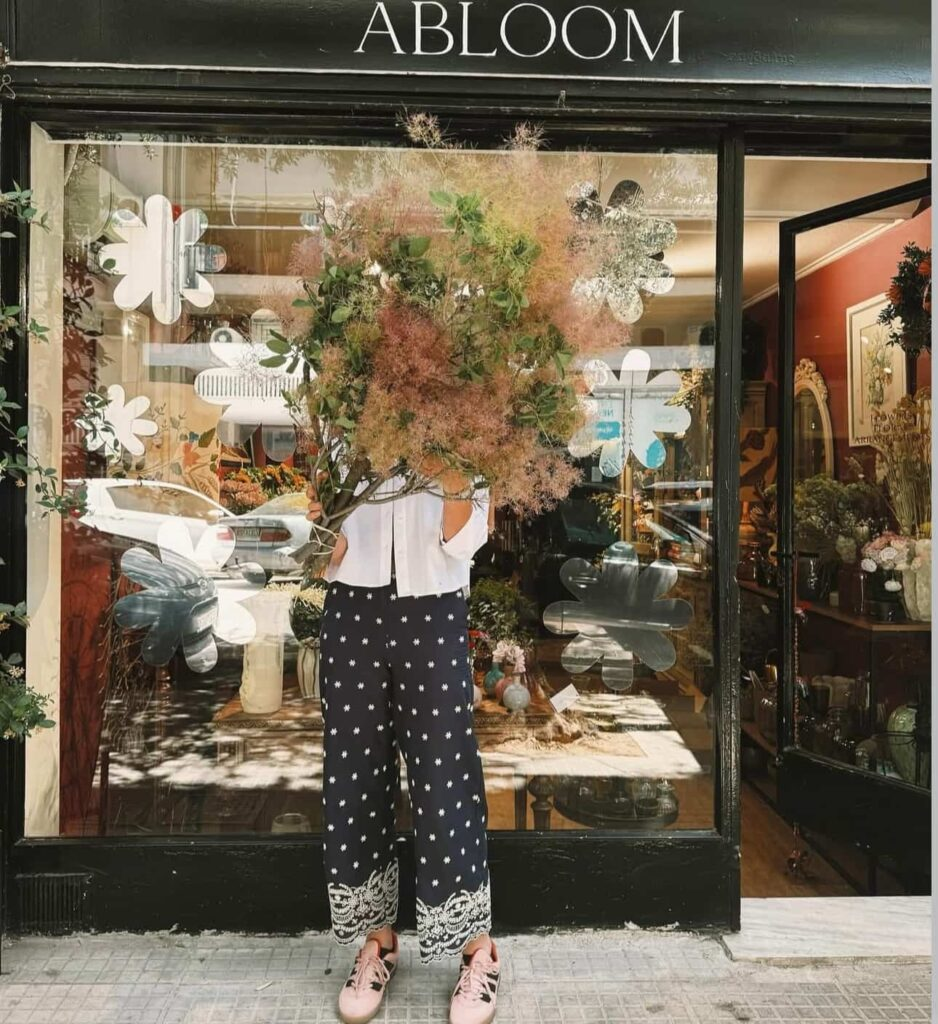
If I could speak to the woman I was before making this decision, I would tell her to trust herself more and not be afraid of uncertainty. Not to wait for the ‘perfect moment’, because very often it never comes. To know that the paths that seem uncertain are often the most important ones.
I would also tell her not to pressure herself so much to have all the answers. You do not need to know exactly where a decision will lead. What matters is to begin, to listen to your heart and to leave room for life to guide you. And of course, to remember that she already has the strength to endure and to create.”