 elc team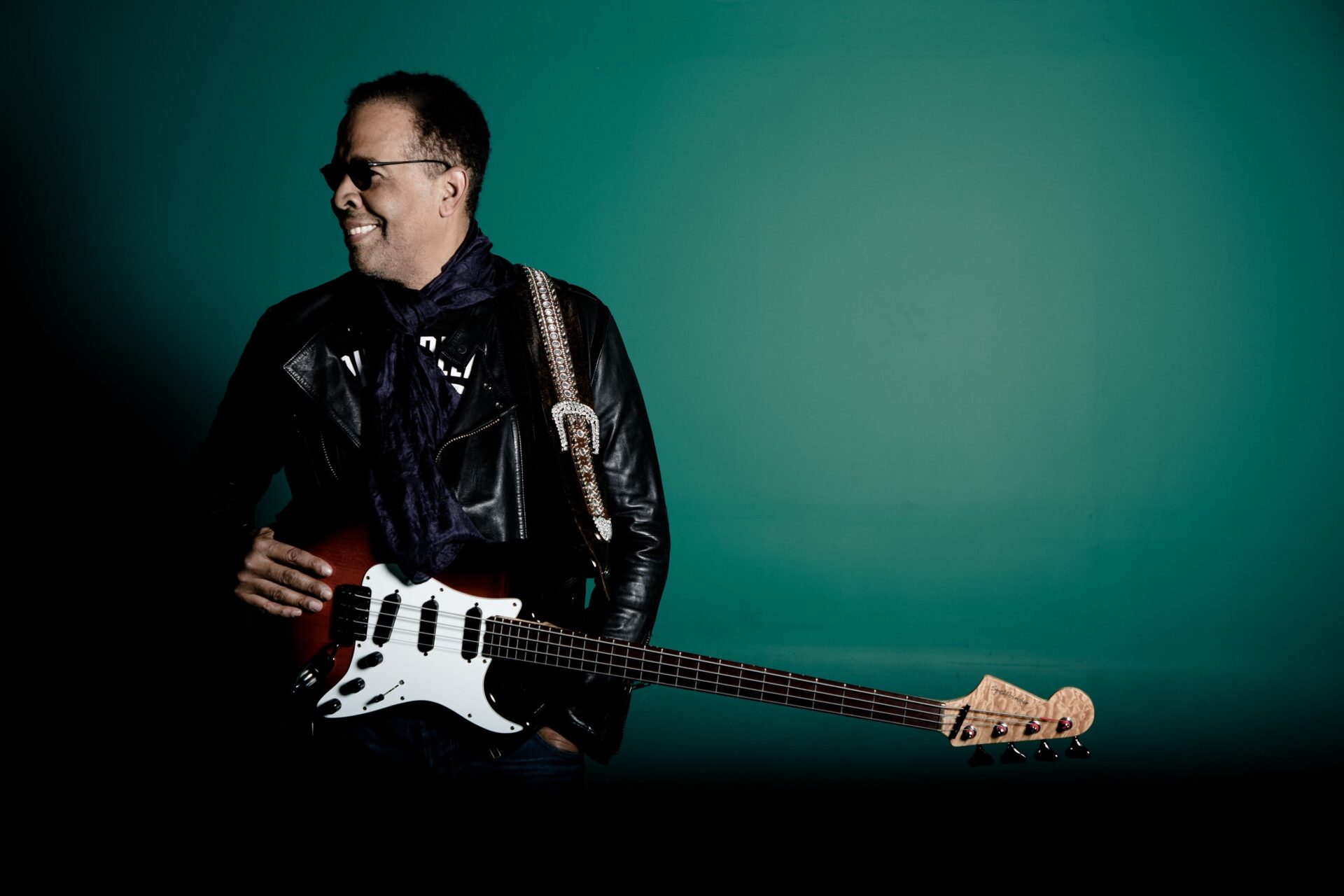
By Myriam Paraskevopoulou
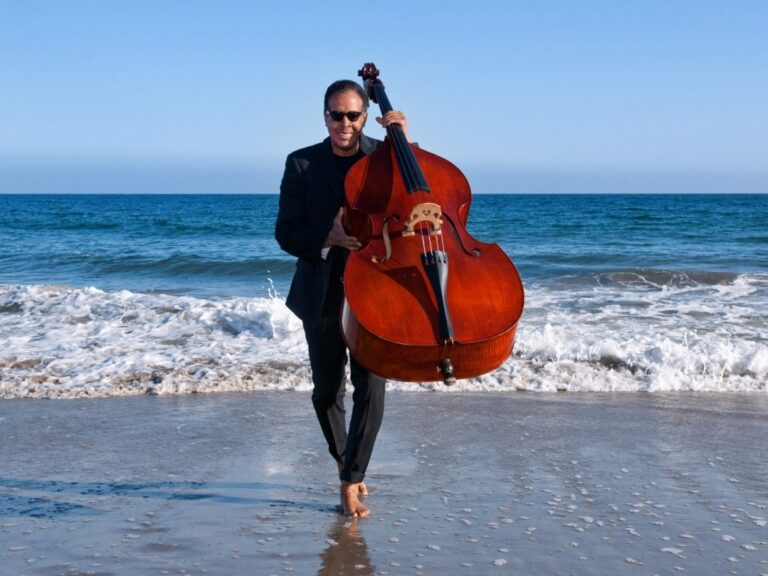
On the occasion of his concert at the Pallas Theatre on November 19, we spoke with 5-time Grammy Award winner Stanley Clarke about Miles Davis, the melodies he writes in the middle of the night, and his very first book, which he has just completed.
I get chills just thinking that, in the lines that follow, you’ll find words spoken by Stanley Clarke in response to my own questions. On streaming platforms, that surreal graphic collage shows him sitting on a throne, bass in hand, floating among the planets of the universe. And, instinctively, I think how fitting and not at all narcissistic it is, since his sound is certainly archived alongside all the evergreen musical codes in the spacetime of the infinite.
Stanley Clarke was born 74 years ago, fifty of which he has spent at the very top of the global music world. His mother sang opera and encouraged him to study music. That’s how he began learning the acoustic bass. In 1971, he graduated from the Philadelphia Academy of Fine Arts and moved to New York. The story of how he chose the bass can be found in his own words below. Before he even turned 20, he had entered the jazz scene with force, working with Curtis Fuller, Joe Henderson, Dexter Gordon, Horace Silver, Gil Evans, Stan Getz, and Art Blakey. New York at that time was in a state of jazz frenzy, producing melodies shaped by extraordinary personalities. With his undeniable virtuosity and influenced by the era’s giants, Mingus and Scott LaFaro Clarke was already being recognized by everyone and opened new paths for the bass, not only as a rhythmic instrument but primarily as a solo one. By age 25, he was considered a virtuoso. And the pieces he composed starting in 1976 have become reference works for every young bass student.
His meeting with a then up-and-coming pianist, Chick Corea, marked the beginning of entirely new musical directions in modern music. The creation of “Return to Forever” played a crucial role in the invention of jazz fusion the “jazz-rock” scene. With Chick and this band, they won Grammy Awards and achieved record-breaking sales. The group, with Clarke and Corea at its core, featured legendary musicians at different times: Airto Moreira, Flora Purim, Steve Gadd or Lenny White, Al Di Meola, Joe Farrell. Within five dreamy and highly productive years, Clarke established himself as one of the most significant figures in the field, becoming a sought-after bassist across genres and collaborating with artists such as Bill Evans, Miles Davis, Ray Manzarek of The Doors, and later Herbie Hancock and Wayne Shorter. A pioneer in orchestration as well, Stanley Clarke became a beloved composer in Hollywood, writing music for blockbuster films as well as television. But perhaps the most remarkable thing about him is that throughout his fifty active years, he has served every musical genre with excellence and deep feeling. A simple glance at his discography leaves no doubt.
I could write for hours, but I think it’s far more interesting to read his exact words. With a philosophical, almost poetic tone, he speaks to me about music as an extension of the soul, while his stories about Chick Corea and Miles Davis reveal how authentically their musical chemistry was born and how his unconscious yet deeply conscious love for the bass established him as one of the most important musicians of all time.
As I was reading Chick Corea’s explanation of the meaning behind “Return to Forever,” I arrived at a conclusion:
Maybe we are the “Forever” the “thing,” or the state that we so desperately search for.
Could you tell us how you and Chick Corea created the band “Return to Forever”?
Many years ago, I was playing in the band of the great saxophonist Joe Henderson. Our pianist couldn’t make a series of gigs we had in Philadelphia, at a club called The Blue Horizon, and Joe said he’d bring in a guy from New York Chick Corea. I had heard of Chick; I knew he’d played with Miles Davis, but not much more. What happened at that gig was truly remarkable. There was a musical connection between us that I wish every musician in the world could experience it felt like we were communicating telepathically through the music. I always knew where he was going, and he knew where I was heading. And that happened from the very first time we played together. It was one of those week-long gigs, playing six nights at a club, and somewhere in the middle of the week, Chick and I started talking about forming a band together. We talked about things we could do differently from everyone else, and essentially, that’s how Return to Forever began.
Why did you choose the bass instead of guitar, piano, or drums, especially at a time when rock music was sweeping young people like a hurricane? What drew you to this choice?
I started playing acoustic bass and spent many years studying the instrument, planning one day to join a philharmonic — maybe in Philadelphia or another orchestra. But when I was younger, I played at parties in cover bands. These bands needed an electric bass, so I started playing… and I liked it, because it was always fun. Even today, every time I pick up the electric bass, I feel that joy it’s the fun side of what I do. Not that the acoustic bass is sad, but the electric is always connected for me to the joy I felt when I first began.

How did you manage to turn the bass into a solo instrument, one that can take on a leading role?
It’s all about the compositions. The pieces I write for the bass are written specifically for the bass, and most of them sound good only when played on the bass. It’s that simple!
You switch styles while playing bass as effortlessly as breathing. Listening to your discography, one thing is certain: you serve every genre with virtuosity and soul. But which genre is truly closest to your heart?
I’d say straight-ahead jazz and much of classical orchestral music, because that’s what I started with as a child…
What was it like to play, jam, and share moments with Miles Davis?
I lived in the same neighborhood as Miles Davis, so I’d see him from time to time… Lenny White and I spent a lot of time at his house. Later, when I had my own band, I happened to open some of Miles’ shows. I remember one in Chicago in particular, where he told me I should play a bass solo — probably because he thought I was good at it.
Is the “Valkan Princess” the same person as the “Yesterday Princess”?
Yes.
How many times have you woken up in the middle of the night to play or write a melody?
Many times… If I have something unfinished in my mind related to music, it’s almost impossible for me to sleep. And when I finally fall asleep, it keeps “creating itself” in my head. I’ve written a lot of music for film and television, and many times I’ve completed ideas in the middle of the night in my mind, and in the morning, I’d simply write them down on paper.
Which classic rap album would you most like to reinterpret on bass?
Ice Cube’s How to Survive in South Central!
Have you ever thought about writing a book to share with the world the musical magic you’ve been a part of?
I just finished it… It will be released early next year, along with a double album.
Info
Stanley Clarke – Live in Athens
Date: November 19, 2025
Venue: Pallas Theatre
Address: 5 Voukourestiou St., Athens
Time: 20:30
Tickets: Available via viva.gr
Production: Dexameni Technon / Minos EMI – Universal Music Greece