 elc team
By Stelios Parris
EMST attempts to open the “document file” of the historic 1975 Greek Month in London and invites us to witness a moment in time, an event revisited half a century later.
From November 4 to December 4, 1975, an event of historic significance took place in London: Greek Month in London. The aim of this month-long initiative was to present to the British public an image of Greece’s cultural potential. The 1975 program included examples from various facets of Greece’s intellectual and artistic activity: visual art exhibitions, a Greek Film Week featuring screenings of films by Nikos Koundouros, Michalis Kakogiannis and Theodoros Angelopoulos, evenings of dance, music and poetry, as well as exhibitions dedicated to Giorgos Seferis, to resistance publications of the junta years, and to contemporary Greek writers.
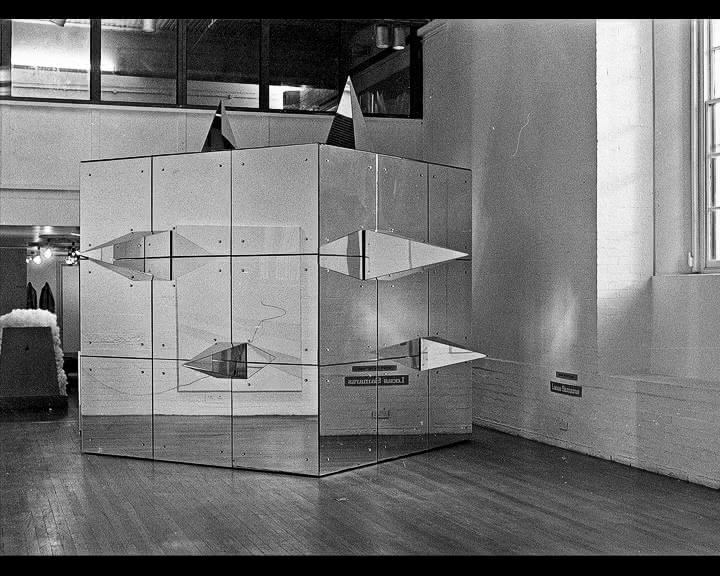
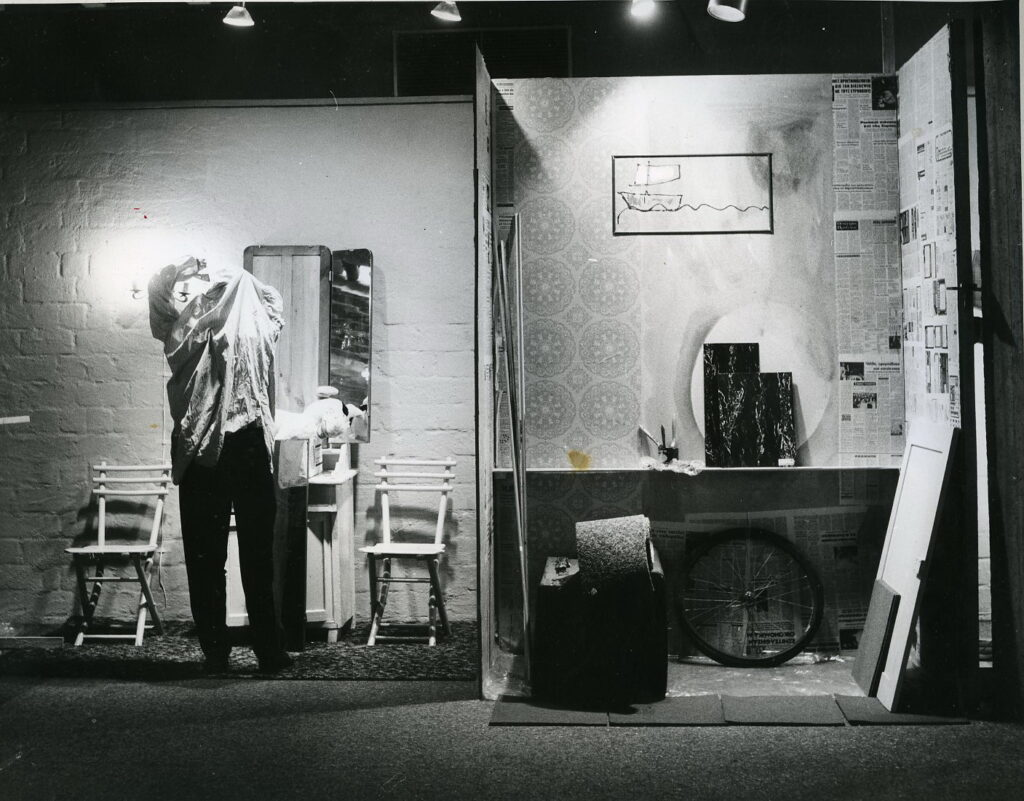
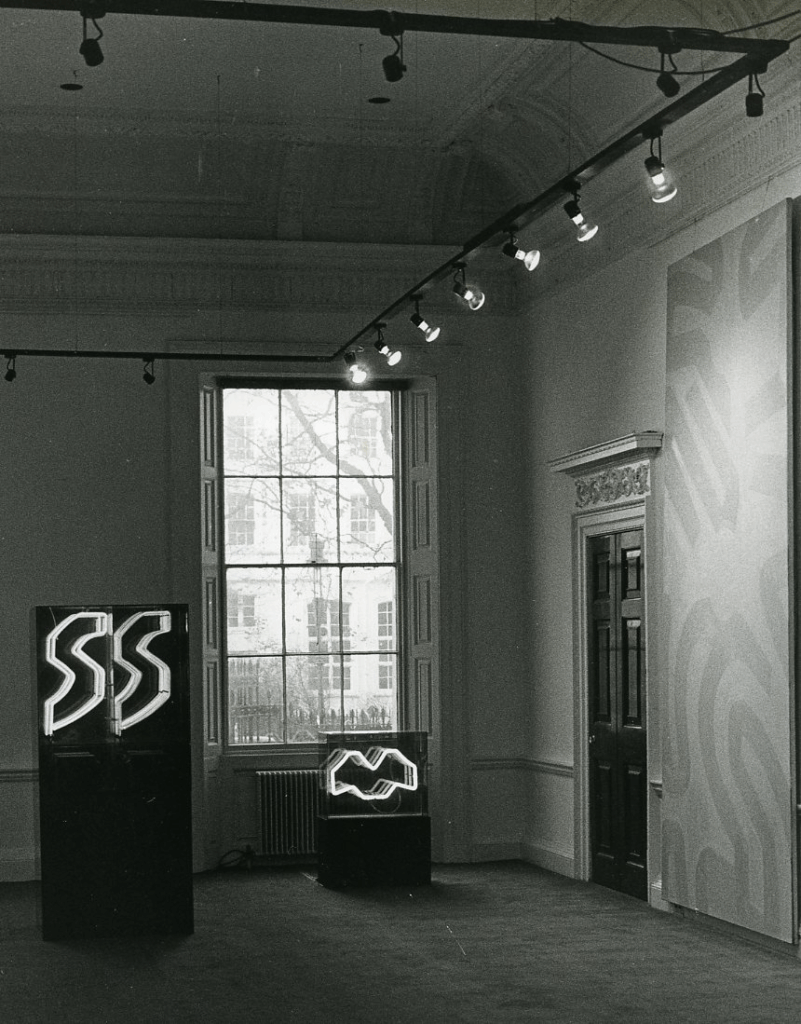
Its visual arts program included two exhibitions curated by Christos Ioakeimidis and Norman Rosenthal. The first was Four Painters of 20th Century Greece, held at the Wildenstein Gallery, which showcased works by Theophilos, Fotis Kontoglou, Nikos Hadjikyriakos-Ghika and Yannis Tsarouchis — four of the most important representatives of Hellenocentric Modernism. The second exhibition, which EMST focuses on today through Greek Month in London: 50 Years Later, was titled Eight Artists, Eight Attitudes, Eight Greeks. Held at the Institute of Contemporary Arts (ICA), it presented works by eight contemporary artists, most of them members of the Greek diaspora. In 1975 Londoners saw works by Stephen Antonakos, Vlassis Caniaris, Chryssa, Jannis Kounellis, Pavlos, Lucas Samaras, Takis and Kostas Tsoclis. Today, we will see works by the same eight artists — drawn from the EMST collection and other Greek collections works that resonate with the ones exhibited in London in 1975.
I met with the exhibition’s curator, Polina Kosmadaki, to learn more about what these fifty years mean.
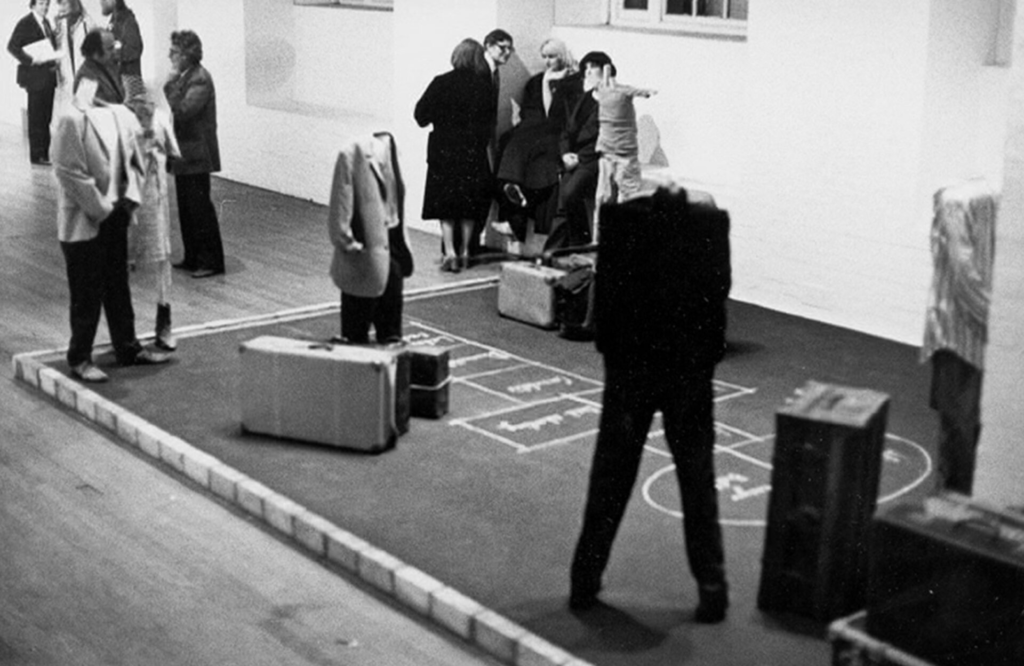
Installation view from the exhibition Eight Artists, Eight Attitudes, Eight Greeks at the ICA, London, 1975
“We’re here, Polina, for a journey through time 50 years later. You searched the archives, found evidence of this exhibition, and thought: let’s revisit it on its 50th anniversary?”
I had researched it earlier for an academic project, at art history conferences and for an ICA publication, because I have always been interested in exhibition history. I knew Christos Ioakeimidis, who curated the exhibitions. I had done the relevant research, spoken to him, interviewed him in 2013. He had very generously given me the archival material. I wrote two studies and then somehow moved on to other projects until the Artistic Director of EMST, Katerina Gregos, as part of the wider interest in the anniversary of the Metapolitefsi and that crucial period of 1974–75, invited me, knowing those texts to revisit the exhibition and approach the material curatorially. As a curator, I naturally look at research through a curatorial lens, and I found the challenge of creating an archival exhibition extremely compelling especially in collaboration with EMST, which is the ideal place for such a project. The artists represented in the original exhibition are “at home” here: their archives and works reside here. There was no museum of contemporary art in 1975, so the fact that the 50-year anniversary now integrates into the EMST program feels natural.
“As visitors today, will we see the art of 1975 and what Greeks then considered modern art?”
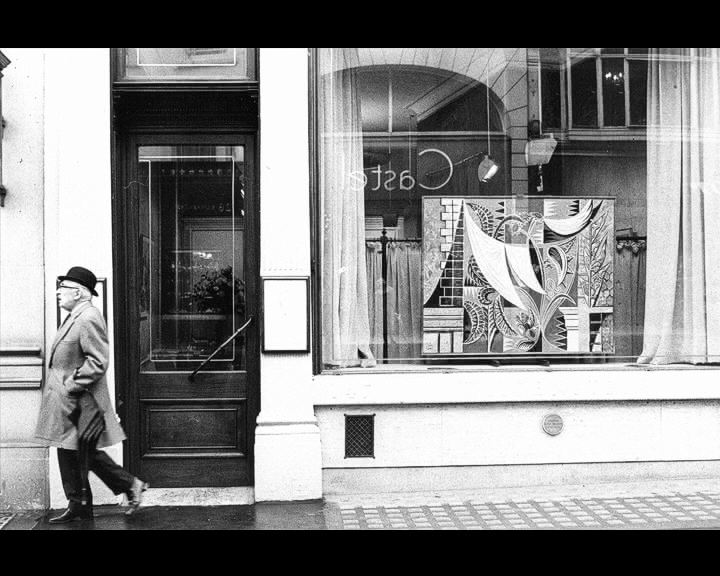
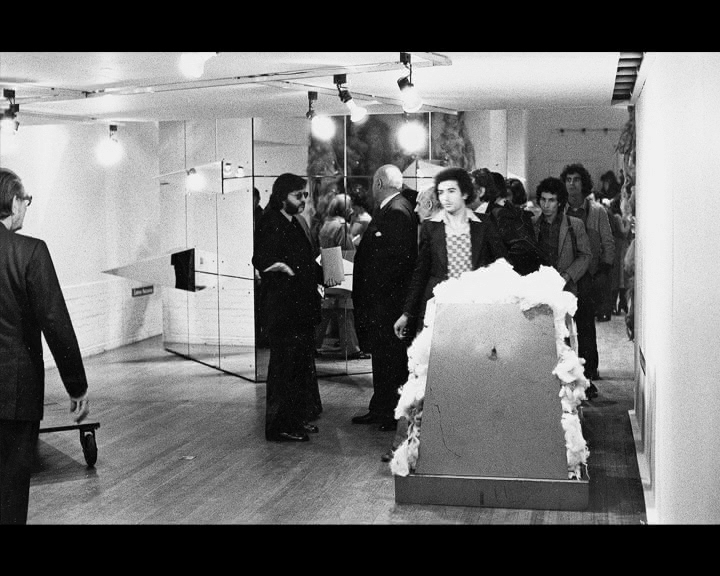
No. This is what we call an archival exhibition. It presents audiovisual and textual documents, aiming to “open” a folder of archival materials and place the viewer inside a specific moment inside a specific event. We unpack the event like visual art journalists but we try to make it an experience. The archive consists of work lists, letters exchanged by the curators of the time, artists’ handwritten notes, original photographs, and documentation of how the installation looked.
“So we’ll get to see how the exhibition actually looked back then?”
Yes including original photographs from the opening, the installation, the press conference, press releases, and more than 100 press clippings that show how the event was discussed. We see the before, the during, and the after. There are invitations to the receptions held during Greek Month: Lady Russell hosted a reception in honor of the curators; the Minister of Culture, Konstantinos Trypanis, Karamanlis’ representative in London hosted another. We see Alexander Iolas in his fur coat during the installation — he had loaned works. We see all the key figures embracing one another. There is the handwritten speech of Eleni Vlachou (publisher of Kathimerini), who played an important role. And then there is Dennis Zacharopoulos, who gave us a large part of his personal archive and was a crucial participant in the organization a young curator then, assistant to Ioakeimidis and Rosenthal. We see him everywhere in the photos and letters from his archive. These materials reveal all the behind-the-scenes stories.
“It truly sounds like a time-travel experience.”
Exactly, a journey. The archival core is at the center, surrounded by representative artworks from EMST’s collection and a few loans one or two from each artist. Not the actual works shown in 1975, but largely from the same period. Many original works were large-scale installations. Some are in EMST’s holdings like Caniaris’ Koutsó but they are monumental and could not fit in this gallery. Others, like Samaras’ Mirrored Room, also part of EMST’s collection, were not feasible to exhibit in full scale here. Instead, we present beautiful, representative works that offer fresh perspectives, hinting at the artistic identity that curators of the time wanted to present as Greek avant-garde of the 1970s.
“Was there really a Greek avant-garde then? Or was it more of a national support gesture ‘let’s help Greece,’ as it was emerging from the dictatorship?”
There absolutely was but much of that avant-garde developed abroad due to the dictatorship. This was one of the reasons the curators’ choices were criticized. A major question arose: could these artists be called “Greek artists” if they formed their avant-garde practices in the diaspora? Why were diaspora artists chosen? Is this still a Greek Month if these artists live abroad? Today, in a globalized, international environment, these questions feel almost quaint. But back then, they were serious so serious that they reached the Greek Parliament. Though it was not an official national representation (like a Venice Biennale pavilion), but a private initiative, MPs still demanded to know by what criteria the artists were selected.
“So the event caused uproar back then.”
Yes and the press coverage shows it. There is also an article by Theodoros Stamos, expressing objections with arguments many might still consider valid. There were resolutions signed by students of the Athens School of Fine Arts and by Greek artists living in London. The controversy revolved around whether other artists should have been included. The debate was intense. And while today we accept that a curator makes their own choices and takes responsibility for them, in 1975 that was not obvious. When Ioakeimidis was asked at the press conference why he selected these artists and replied, “Because these are the ones I wanted,” chaos erupted.
“And all this backstage conflict is part of the exhibition?”
Yes the resolutions, the newspaper debates, the headlines such as “Greek Month: A Trojan Horse” and “A Lost Opportunity.” Though a major chance to promote Greek culture, some believed it failed.
“So you’re inviting us to witness this entire debate — not just the artworks.”
Exactly. This conflict happened publicly, was later forgotten, and exhibitions like this help bring it back to the surface. What matters is not nostalgia but relevance. EMST, Katerina Gregos, and I are interested not in simply looking back, but in asking: what does this mean for today? How do we define political art now? How do we build genealogies of the Greek avant-gardes? How do we reassess artists or curators like Ioakeimidis or Zacharopoulos or Iolas whose roles are still incompletely understood? Exhibition history and institutional history are crucial for evaluating the cultural landscape. This exhibition influenced discussions around the creation of a Museum of Contemporary Art, and affected the careers of artists for example, Caniaris’ major ICA solo show the following year. Curatorial decisions are political gestures, shaping market, discourse and institutional frameworks. For me as a curator, writing this history is deeply important and I am glad EMST invited me to begin doing exactly that.
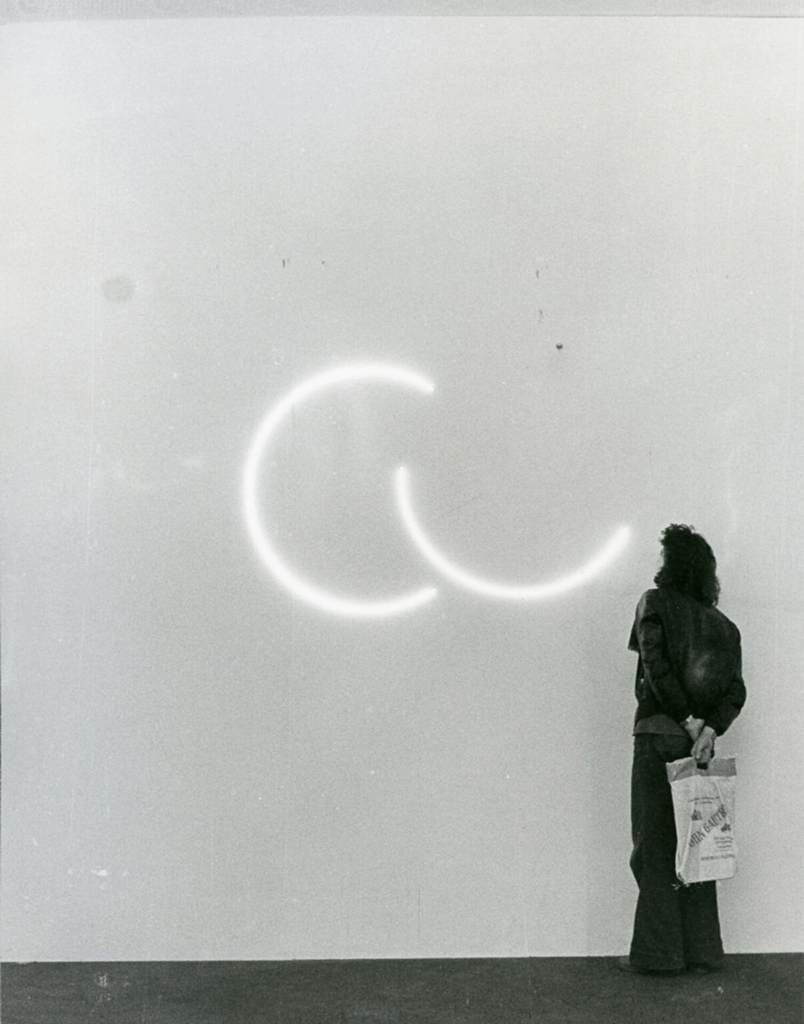
from the exhibition Eight Artists, Eight Attitudes, Eight Greeks, ICA, London, 1975.
“As the curator today, what responsibility do you feel?”
My responsibility, shared with colleagues is to understand where we come from. Not only to write artists’ histories, but to write the genealogy of our own profession. Exhibition history is enlightening. Curatorship is a powerful practice political, creative. It must always involve reflexivity. A curator must think about their own historicity, position, responsibility and lineage. I believe this exhibition encourages exactly that.
“What do you suggest to visitors as a kind of ‘guide’ for experiencing the show?”
First, read the materials though I tried hard to make the exhibition readable even without reading. It was a challenge: an archival exhibition where one can choose to read a lot or nothing at all. But “engagement” is important. I would suggest viewing the exhibition not as the past but as the present. That is key.
“We tend to want everything quick and digestible nowadays.”
It’s fine, let them see it quickly, the way they scroll through Instagram. I don’t mind. But let them see it as present, not nostalgic. These artworks exist today. How do they resonate now? If Greek Month took place today, what would it mean? For me, the least I want this exhibition to be is a time-travel journey. The most I want is for visitors to leave full of questions about the present.
Polina Kosmadaki dismantled my romantic idea of a ‘journey through time,’ but she was absolutely right. The past, through artworks teaches us. It isn’t static or museum-like; it’s a living organism. These artworks offer us the chance to question our present and our future. With this in mind, I visit Greek Month in London: 50 Years Later on the 3rd floor, Project Room 1 at EMST, on view until February 8, 2026.