 KATERINA PARRI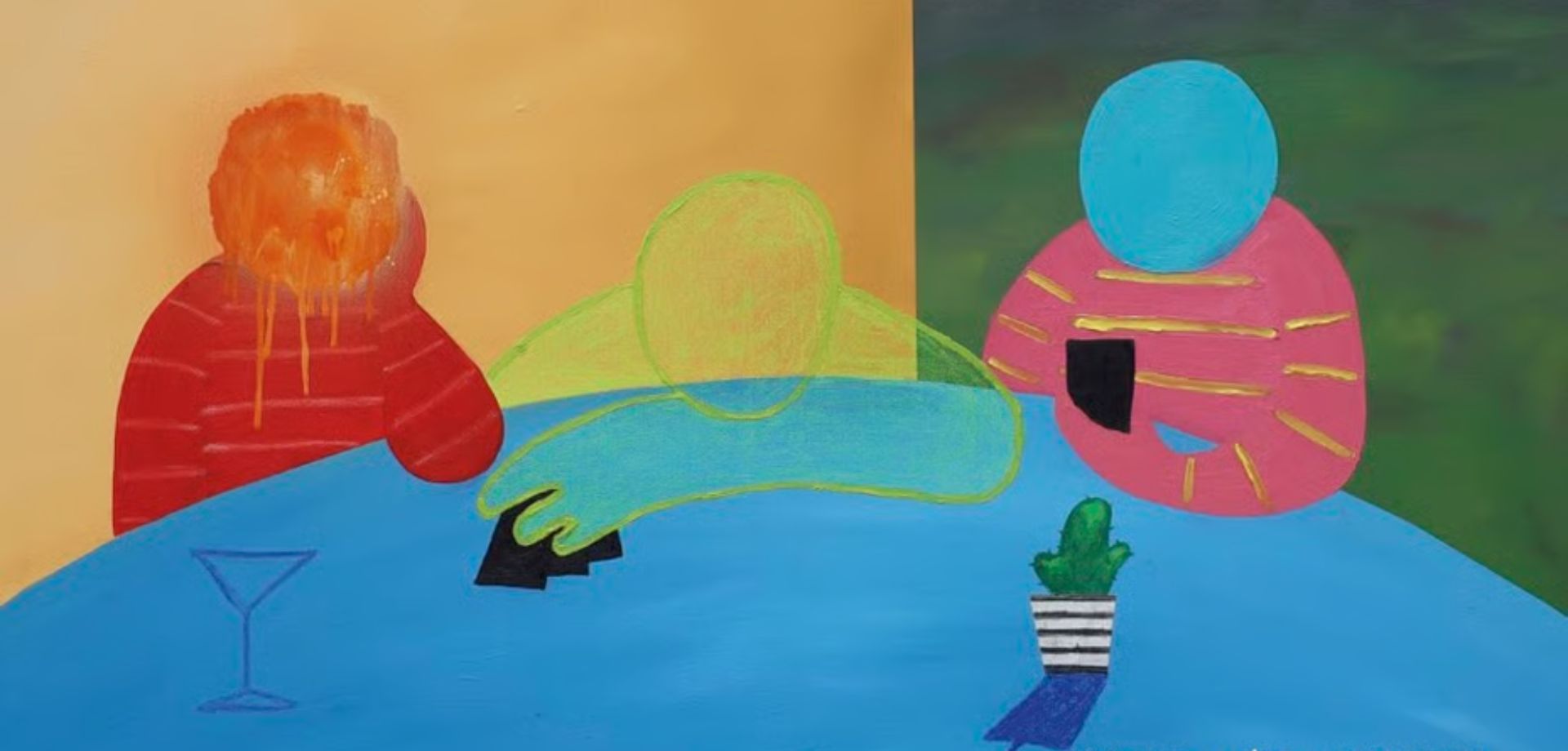
An interview to Stauroula Kleidaria
Wilhelmina speaks to elculture about art, possibility, and her new show in Hydra
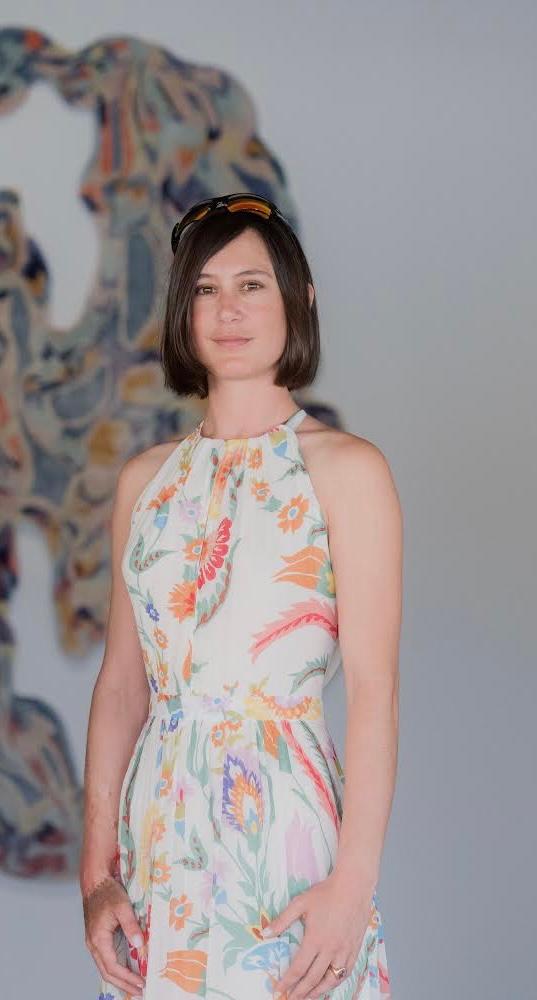
Wilhelmina created her own gallery in Mandraki, Hydra far away from home to prove that everything is possible. Her upcoming exhibition “Through & Through” with Luan Lamberty from 29th August – 3rd October is a must see.
She remembers reading an article about the Apollo exhibition by Jeff Koons at the DESTE Slaughterhouse Project Space in Hydra a few years ago which had caught her attention. It seemed so unusual. After visiting the exhibition Wilhelmina von Blumenthal carried on walking until she got to Mandraki Bay and stumbled across the space that is now her own gallery. It was love and first sight. They were both elegant and cave-like, facing the sea, surrounded by rocks and trees. She turned out she knew the owner from playing polo in Argentina in her early 20s. He didn’t have plans for it and she said “It’s a shame it would make a beautiful gallery”. Eight months later she opened the Wilhelmina’s gallery. Three years later and counting she’s still there and grateful to her friend, Greece and the Greeks–for welcoming her.
Wilhelmina von Blumenthal was born in England to a Spanish mother and an English father of German heritage. When she was nine or ten they moved to Luxembourg and it is still her home but really she feels she always grew up in between places. She read Modern Languages at Oxford and she has a Masters in Art History, Curatorship and Renaissance Studies from the Warburg Institute. She was starting a PhD but Covid derailed her research and then she saw a job at a contemporary art gallery called Nosbaum Reding based between Luxembourg and Brussels. She was supposed to be for one year while she waited for the pandemic to blow over but she fell in love with the profession – from meeting the artists, curators and critics and collectors to choosing the works, producing pieces, the logistics, art fairs, organising events. The work is so stimulating because you never stop learning. Every situation is new.

Talk us through your creative path, how everything started, at what point did art came to your life and how did you manage it.
I had a very innocent childhood. I read and played a lot – I liked to have adventures like those in children’s books like The Famous Five and Narnia. I knew all the fairytales and Greco-Roman mythologies, so there was a lot of climbing trees, building rafts and running around with water pistols. I loved horses and when I wasn’t riding I was playing ponies with my friends jumping over obstacle courses we built in the garden. In the winter my mother would sit with me in her lap in front of the fireplace and play me opera and ballet, Hollywood classics and as a family we would go to museums and galleries, discuss and analyse and make connections between other things we had seen, read or felt. All of this is still true except my gallery is now the garden where I get to play what has captured my imagination with these incredible artists, curators and art lovers who enrich and embellish these ideas and introduce me to new ones.
What is art for you and how is your creativity affects your lifestyle?
Being “arty” like any passion in life is about where you focus your time and attention. When someone says they aren’t arty it’s just a way of saying they don’t make room for it in their lives. I am insatiably curious about all kinds of art forms in all parts of the world from every era. I will travel great distances to see an exhibition or meet an artist, or attend a lecture, the books I read and documentaries I watch and the people I spend time with relate to art in some way. All my wits, my modest means and efforts go towards the art and artists I believe in.
What is your definition of beauty?
It’s that quality that keeps you looking and looking again. Whatever you are evaluating – a personality, a face, a painting, a tennis player, a building, an animal, nature, a mathematical equation, As a simple barometer if you feel about an artwork or a person the way you do about a Greek sunset you have found beauty.
Your creative path through making your own gallery.
One of the spooky things is that the creative part wrote itself. I had been bothered by how fast the art world moves, my topics of interest are dreams, mythology and nature so what were the chances that the space I had fallen across was on a Greek island far away from city life on a beautiful beach – a place where you could sink into art and nature with no pressures from the outside world. What were the chances that the owner of this amazing space would be an old friend?
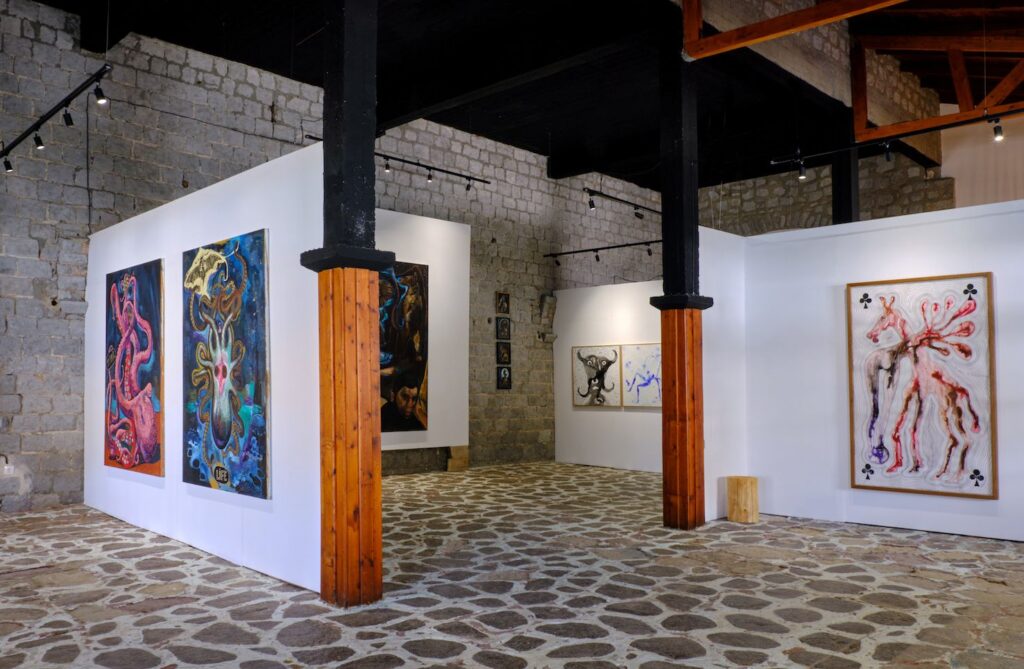
Without this friendship and trust I would not have dared embark on this adventure. Then, when I met the curator at the Old Carpet Factory, Ekaterina Jukowski, we realised an artist I had worked with called Bea Bonafini had collaborated with Electra Soutzglou’s Art Rugs Project in Athens and Soutzoglou had a direct historical connection to the Old Carpet Factory through her grandfather And Bonafini’s work is all about dreams, mythology, nature archeology – again what were the chances? Whatever the reality of it all I can say is that it felt like all these unexpected strands were being woven together by destiny. All I had to do was put in the work commit my resources and have a little faith. The biggest question mark hung over whether the gallery could be commercially viable outside the legendary DESTE week. I had a good feeling and it has paid off but at the time it was far from certain.
Tell us about the upcoming exhibition with Luan Lamberty.
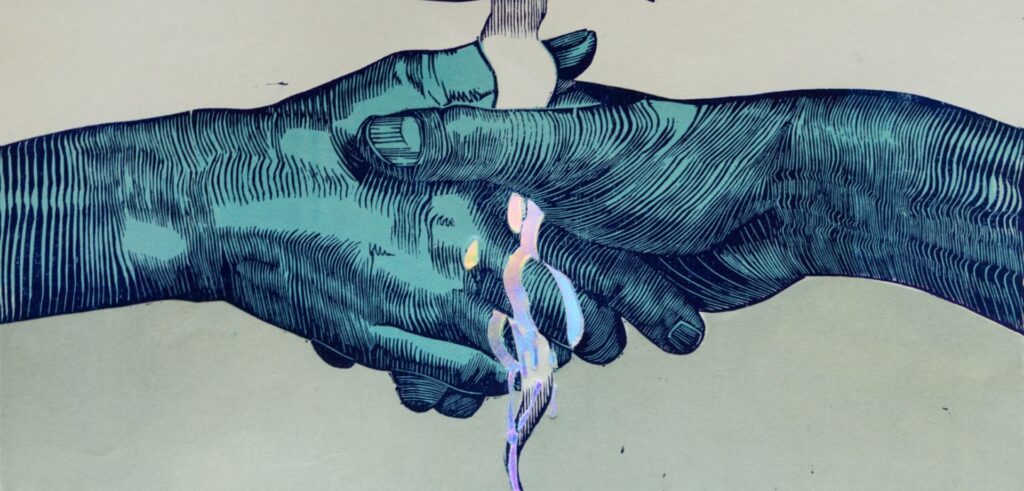
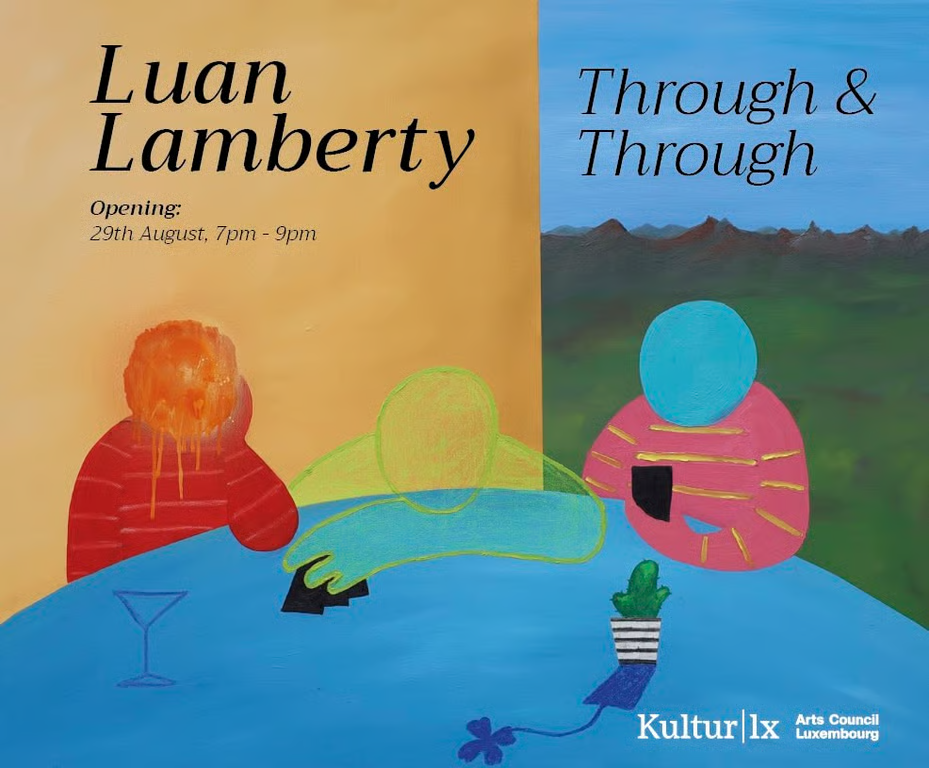
It’s the first solo exhibition I have held since I opened in 2023. It’s called Luan Lamberty : Through & Through. I don’t know how you translate that in Greek but in English this means something like “quintessentially Luan.” This is so impressive about him he is so young and already has such a distinctive universe. Already in 2022 when he won the Andrea Neumann prize he stood out for having a unique voice – from the characters that populate his work, to the colours and compositional themes once you have seen a Lamberty work you will always recognise one.
Since then I have been following his work and the ideas are developing in very interesting ways. The quality and the detail gets better and better. I know most people in Greece won’t be familiar with his work so I have included some early pieces so people can see the development for themselves. He also does animations and sculpture – again all recognisably part of his world. There is a lot of playing with perspectives : see-through figures vs opaque figures, transparent curtains, seeing through windows to the outside or from the outside in – all these interactions generate a lot of questions for the viewer to answer and at the same time you have the possibility to project yourself into the work. It is both enigmatic and universal.
What is in his work that you like the most?
You remember how I said beauty is the quality of not being able to get enough of looking at something or someone? I can’t stop looking at Lamberty’s work. The colours are unbelievable – as in you want to keep looking because you don’t know when you’ll see colours in that combination like that again. And his figures are so naïve and expressive. But there is always something a little off-balance that shifts the narrative. Then you notice another detail and it shifts again. Then you see a motif reappear again in another one of his paintings or one of his animations in a different context and it makes you rethink it in the first work you saw. It’s brilliant.
What lessons have you learned through your work?
For one thing setting up and running your own business. It was a steep learning curve and all the while being my own creative director, logistician, artist liaison, secretary, event planner, salesperson, post-sales person etc.
On a personal level I learned to trust myself. You will be amazed how many people will tell you “it will never work”. Everyone thought I was crazy for opening a space far from the port of Hydra and of all places Mandraki. It appears that for many decades it was quite an ugly bay. Having a history with a place is a beautiful thing, irreplaceable even, but sometimes the opposite, not having a history has its advantages because you approach with fresh eyes, unburdened by the past. Arthur and Janis Fitzwilliam have done an amazing job of restoring Mandraki to its former glory and this is what I saw. I also saw the remoteness as a strength. Four people stand out as having encouraged me to stand by myself – all strangers at the time and all women. The gallerist Isabella Ritter, the International curator Marina Fokidis, Electra Soutzoglou and Ekaterina Jukowski.
Which people have affected your work and in what way?
As far as running a gallery is concerned Alex Reding was my mentor – he taught me everything but most importantly no matter how complicated a project his answer was “yes we can do it” and then he would figure it out because in his mindset there is always a way. And he’s right. Just one example – the only thing I worried about when I started the gallery was whether I was doing the right thing setting aside a safe career back home with my family. It never occurred to me to worry about getting works to a Greek island I had never been to. I knew there had to be a way and I would figure it out. I got that from him.
However, I owe my whole approach to “discovery” as a gallerist to the Art Historian Aby Warburg through his library and his Mnemosyne Atlas which are governed by the “law of the good neighbour”. If you’re not familiar with his work – rather than having an objective and “saving time” by categorising images and books in a very logical fashion he created a space in which the ability to move, explore, browse and makes ones own connections were paramount – if you are looking for a specific book or image in the Warburg collection in theory you will “lose a lot of time” but in fact your ability to make discoveries increases because in the process of searching you discover new connections you never would have thought of. I live my life according to this law. I don’t see something seemingly irrelevant coming into my life as being a waste of time at all. In those deviations I find surprising connections which feed unexpected but nevertheless organically into my life and work.
When that magic moment of completing a project how do you feel?
The work is never complete or at least it shouldn’t be. An exhibition should be like Ovid’s Metamorphoses where one story dissolves and then elements reborn in some other form further down the line. In general you have to enjoy the moment but at the same time there should always be underlying your actions the question of “what has been achieved and where is this going next?”
The other thing is that, especially with the group shows, the idea is to research a theme with the artists and it works. By the end I have discovered so many more ideas. I think maybe after year ten years I will redo all the themes as a “part II” incorporating everything I learned the first time around.
What’s coming next?
This September I will be back at Art Athina for the third year in a row. I plan to apply every year. It’s a stunning fair and very well run. I am extremely pleased to be attending Asia Now this October for the first time with a solo booth by Han Jiaquan. He is a fantastic painter from Shanghai who has never been seen outside of China before this year. In January 2026 I have been invited by Kates-Ferri Projects in New York to collaborate together on an exhibition specifically with Iasonas Kampanis from my program. Kampanis will take part in a residency hosted by Kates Ferry and then participate at their gallery in a duo exhibition with the Mexican sculptor Salvador Jimenez-Flores for five weeks and I will join forces with Natali and Fabrizio Kates-Ferri during this time to run the exhibition together. It’s an amazing opportunity and the idea is to reciprocate next summer on Hydra with an artist in their program.
How do you feel about Greece and what do you keep in your heart?
There is a character in Cervantes 17th century novel “El Quijote” called Marcela who is a shepherdess and in an outburst of defiance she cries “I was born free and to live free I chose the solitude of the hills… I communicate my thoughts and my beauty to the trees and the water, I am an independent flame”. Perhaps a little bit over the top for the 21st century but the fact is I had a choice when I came to Hydra and came across the space at Mandraki to be a safe corporate slave at home in Luxembourg or be a free, independent spirit in Greece. It’s a very precarious existence but somehow here it seems natural. That’s what Greece means to me, independence, nature – true freedom.
What is your dream place in Greece and why? Can yuo share a story, a secret place or a tip?
Honestly Mandraki Bay is my dream place! I have the art I love, in one of the most beautiful bays in the world, eating great food at my Landlord’s restaurant Captain M, being visited by amazing people, swimming every day, traveling to town by boat and watching wild goats come down from the mountain to eat the plants outside the gallery every morning. How much more of a dream than that can you get?
What is your favourite place, anywhere in the world, and why?
I travel a lot and the world has so many extraordinary people and places but as Dorothea says there’s no place like home. Being with my parents and my dogs in the kitchen of the watermill where I grew up is my sanctuary. My favourite film is Gone With the Wind and whenever Scarlett doesn’t know what to do she goes back to Tara – it’s where she draws her strength and her resolve anew. The watermill with my family is my Tara.
Which is your favorite museum/gallery and the exhibition that you loved?
It’s so hard to pick just one but for me the Palazzo Strozzi has everything it’s a gorgeous building, a manageable size and all the shows are immaculately curated. The exhibition that stands out in my mind is “Verrochio : Master of Leonardo” from 2019 I think. It was a showstopper, 120 artworks by Verrochio, Leonardo, Botticelli, Perugino, Ghirlandaio – it was a masterclass in curating the way they showed the influence by comparing studies on paper to elements of composition that could be traced from Verrocchio to the other artists in his workshop who went onto become superstars. Sublime.
What is the best piece of advice you have ever received?
Get enough sleep. Memory, patience, intuition, discernment, enjoyment, patience, resilience, purpose, serenity, the ability to make good decisions and perform, to love others, take care of yourself, anything you can think of goes out of the window if you haven’t slept enough.
Info
Solo Show by Luan Lamberty : Through & Through
29th August – 3rd October 2025
At Wilhelmina’s Art Gallery
Mandraki Bay, Hydra, Greece, 18040