 elc team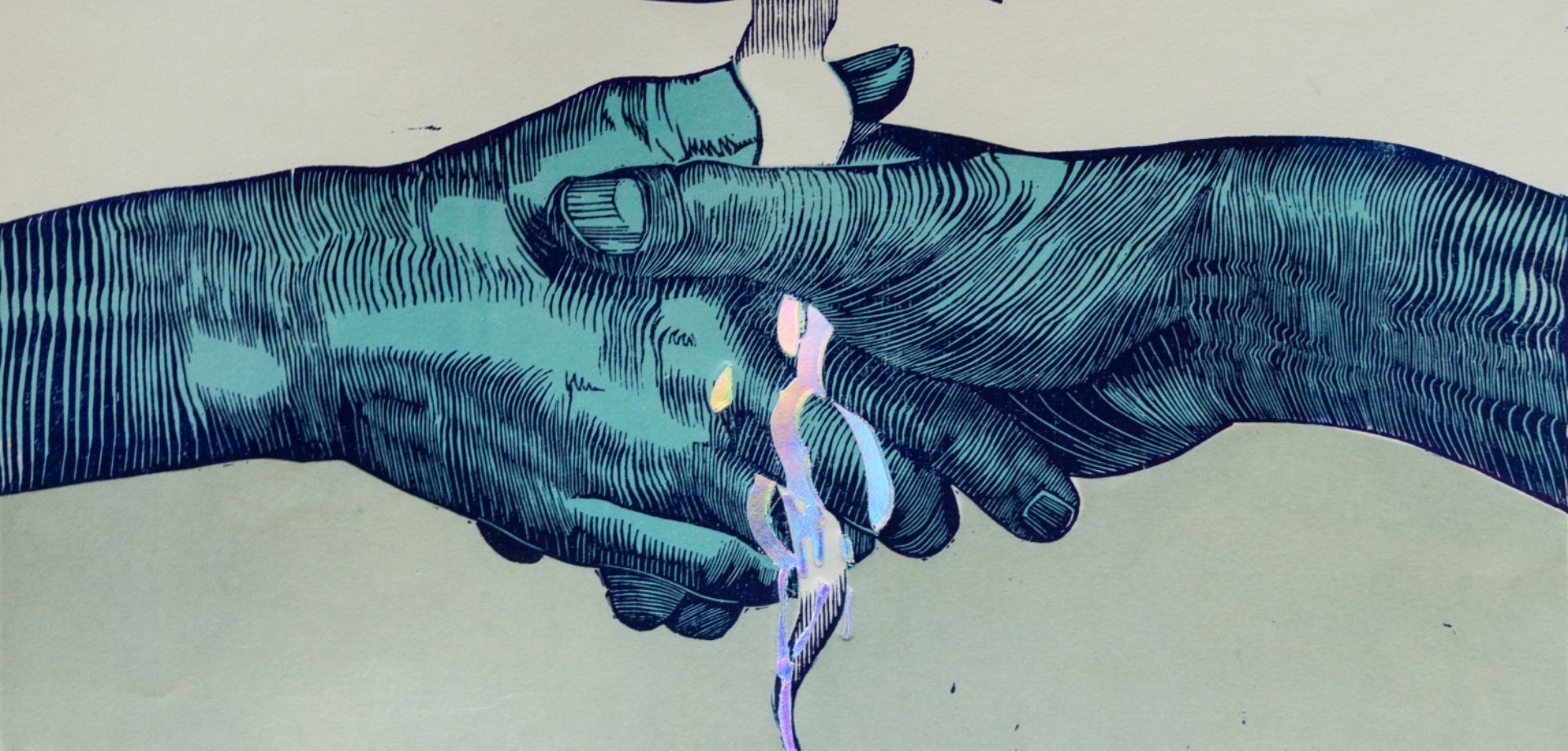
Through the Lens of Equilibrium: Euripidis Papadopetrakis’ New Exhibition. How does unconventional observation become a compass for a new sensory perception of the surrounding world? Can art, perhaps, function as a homeostatic mechanism within a society in constant turmoil?
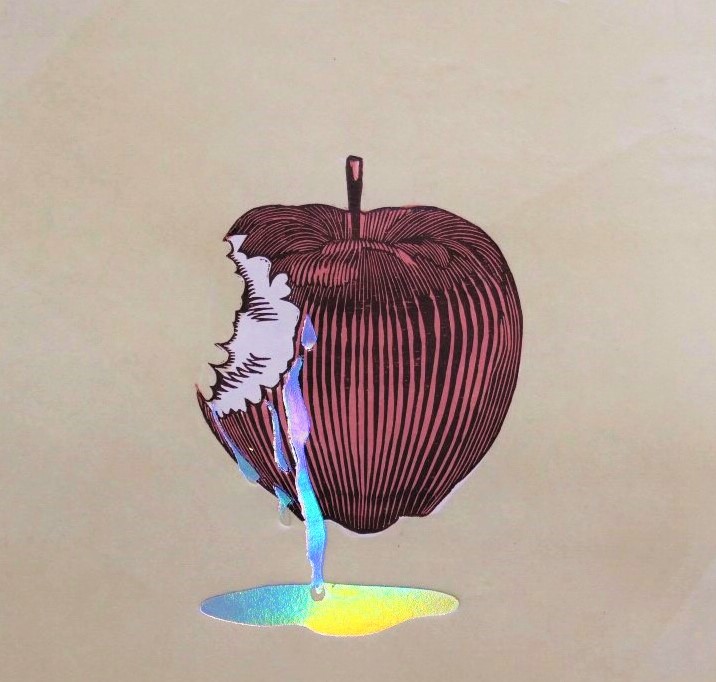
Through engravings, sculptures, installations, and interventions on readymade objects, Euripidis Papadopetrakis, in his new solo exhibition at a.antonopoulou.art, titled “Homeostasis Mechanisms,” outlines the experience of cosmic existence through the dual lenses of visual perception and introspective processing. In his “homeostatic mechanisms,” the artist explores – in a playful yet visually accessible manner – the fragile balance between image and text, rationality and irrationality, phenomenology and the brain’s neurophysiology.
Starting from the idea that the relationship between what we see and what we truly know can never be fixed, Papadopetrakis employs the logic of probability, hybrid forms, and suggestive imagery to highlight random or “predetermined” coincidences.
In Periodic Table, a monumental-scale work, an entire world of multiple possibilities is condensed through a series of woodcuts featuring seemingly disparate images. These images, however, are bound together by subtle, invisible connections, creating “elective affinities.” Nickel-plated three-dimensional sculptures reminiscent of modeling-kit plates and works that bring the historical evolution of engraving into the present – through its tools and materials – comment on the automatisms of human behavior.
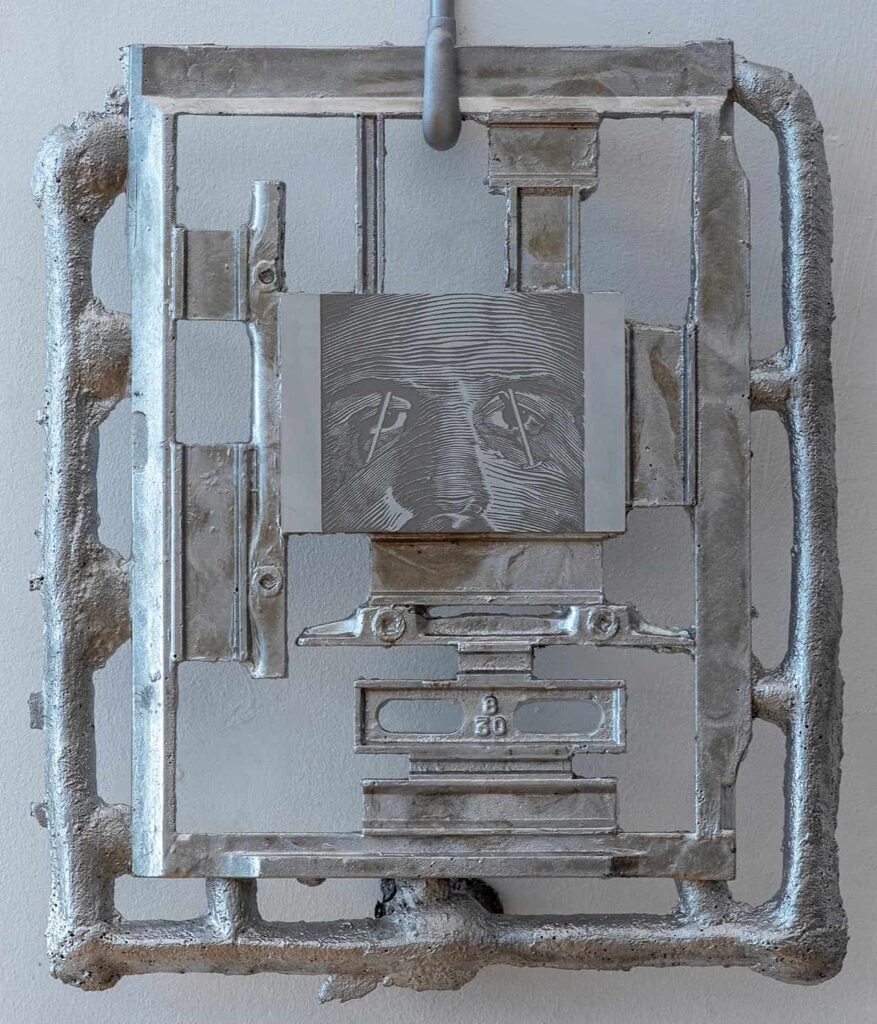
In Papadopetrakis’ practice, the theoretical foundation and research around visual expressive media — with a particular focus on engraving – are continuously enriched by an interdisciplinary approach, specifically exploring the relationship between natural and human sciences and visual creation. The artist adopts a mnemonic methodology as a tool to question how we perceive, comprehend, and interact with the world around us. As Frances Yates notes: “Before the invention of printing, trained memory was of vital importance, and the management of images within memory must have activated, to some degree, all the psychic faculties.”
As art historian and exhibition curator Vicky Tsirou writes in the catalogue:
“In Papadopetrakis’ Homeostasis Mechanisms, nothing exists in a vacuum. The underlying yet significant connections that run through the artist’s work are interwoven in a rhizomatic manner. If homeostasis, for the human body, functions as a defense mechanism against changing external conditions that disrupt its natural balance, we could argue that, in this era of liquid modernity, where ‘social forms cannot maintain their shape for long, dissolving more quickly than the time it takes to form them,’ Papadopetrakis’ work operates as both a balancing force and a reflective framework for negotiating the relationship between the self and the external environment.”

A few words about the artist
Euripidis Papadopetrakis (b. 1988) is a visual artist based in Athens. He studied engraving, book arts, and painting at the Athens School of Fine Arts (ASFA), where he also completed his master’s degree, while attending specialized workshops in artistic bookbinding.
His artistic practice revolves around classical and experimental printing techniques and the creation of hyperrealistic sculptures. His research and references are closely intertwined with science – both from an aesthetic perspective and as a commentary grounded in an unconventional dialogue between logic and metaphysics.
In 2021, he presented his solo exhibition Living Monuments at the Center of Mediterranean Architecture and has participated in numerous group exhibitions, some of which he also curated. He has collaborated on artistic productions and conducted workshops and lectures with institutions in Greece and abroad, while also being a member and founder of several artistic collectives and spaces.
In 2023, he co-published the book BURR (Dolce Publications) together with Vicky Tsirou, within the framework of the homonymous project. His works are part of both private and public collections.
Info
Opening Hours:
Wednesday, Thursday, Friday: 14:00 – 20:00
Saturday: 12:00 – 16:00
Address:
20 Aristofanous Street,
105 54, Athens