 PEPI NIKOLOPOULOU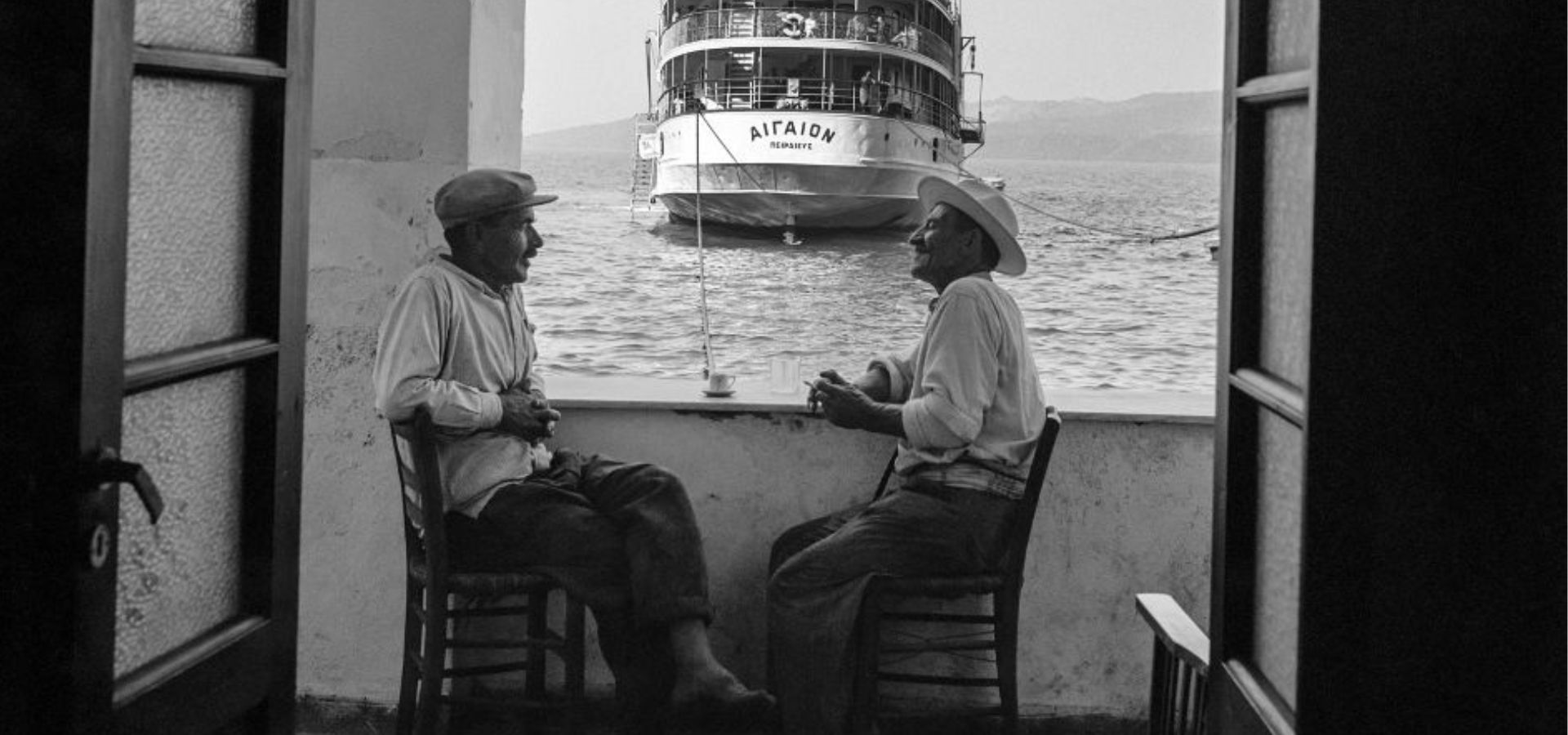
An interview with Robert McCabe on the occasion of his exhibition “Memories from the Aegean” in Paros
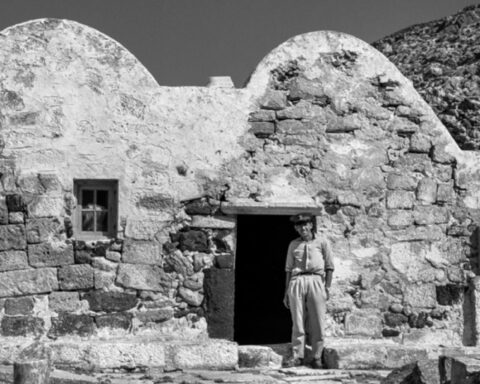
Before the Aegean became a postcard of global tourism, it was a place of silence, labour, stone, wind, and everyday ingenuity. Robert McCabe encountered it then, during his first journeys to the Greek islands, and captured it in a way that today feels almost invaluable. Not only because he documented a Greece that has since changed, but because he managed to see within it something that still endures: measure, simplicity, and the relationship between people, the landscape, and the sea.
On the occasion of his exhibition in Paros, titled Memories from the Aegean, hosted at the Porto Aoussa Art Space in Naoussa and bringing together 82 selected photographs from the Aegean, we return with him to those first journeys, to the images he never forgot, and to the truths Greece revealed to him. We spoke about his early travels to the Greek islands, the sea, the self-sufficiency of these places, and what continues to resonate through the images of a world that has now changed.
If you close your eyes and return to the Aegean of the decades you photographed, which place comes to mind first? And why?
Sorry, but two places come to mind at the same time! Santorini and Mykonos. Santorini was one of the first islands I visited when my brother and I first came to Greece in 1954. Our host’s family was originally from Santorini, and soon after our arrival we headed there. I had no idea such a place existed in the Aegean. I had studied geology and was familiar with marine calderas, but I had never seen one. Of course, our visit in 1954 preceded the devastating earthquake of 1956, so I had the opportunity to photograph the island before 80 percent of the structures were destroyed.
As for Mykonos, I didn’t have the opportunity to visit until 1955. Recently I found letters I had written home in the hours after my arrival. I was struck by the beauty of the island, by the hospitality, and by the deep religiosity of its inhabitants, as reflected in the large number of churches and religious festivals.
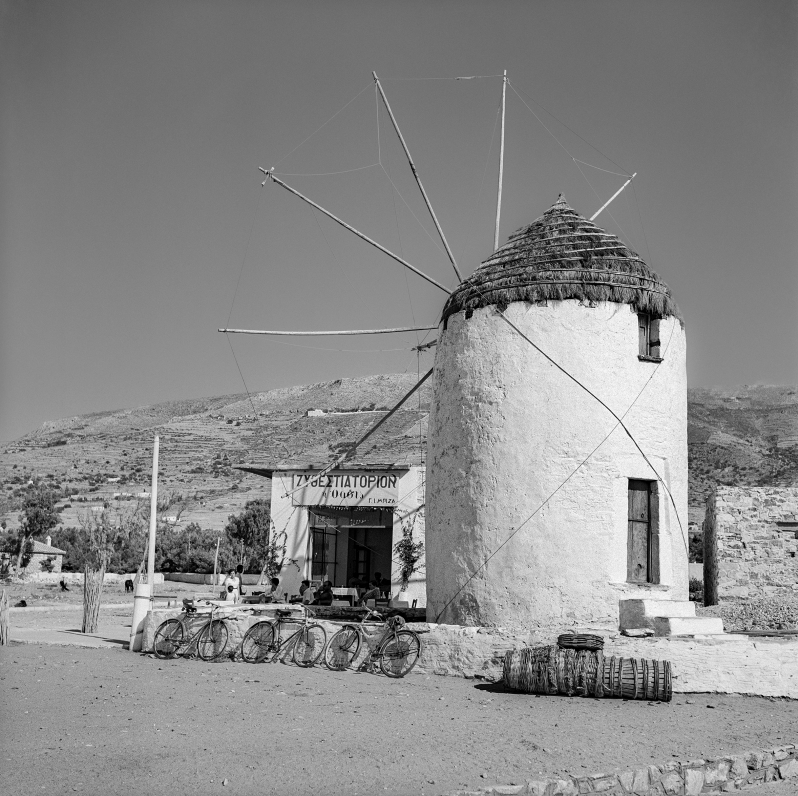
When you look at these images from the 1950s and 1960s today, do they feel like they belong more to you, or to a Greece that has since been lost?
Both, really. In some cases, they evoke very specific memories. In others, they simply document a way of life that has disappeared.
As a foreigner in Greece at that time, what did you notice that perhaps the Greeks themselves could not see?
Sometimes, when I would comment to a Greek on the beauty of the country, I would get the response of rubbing fingers together and saying, “Yes, but poor.”

In your work, the Aegean appears not only as a landscape, but almost as a character. What role did the sea play in the way you photographed?
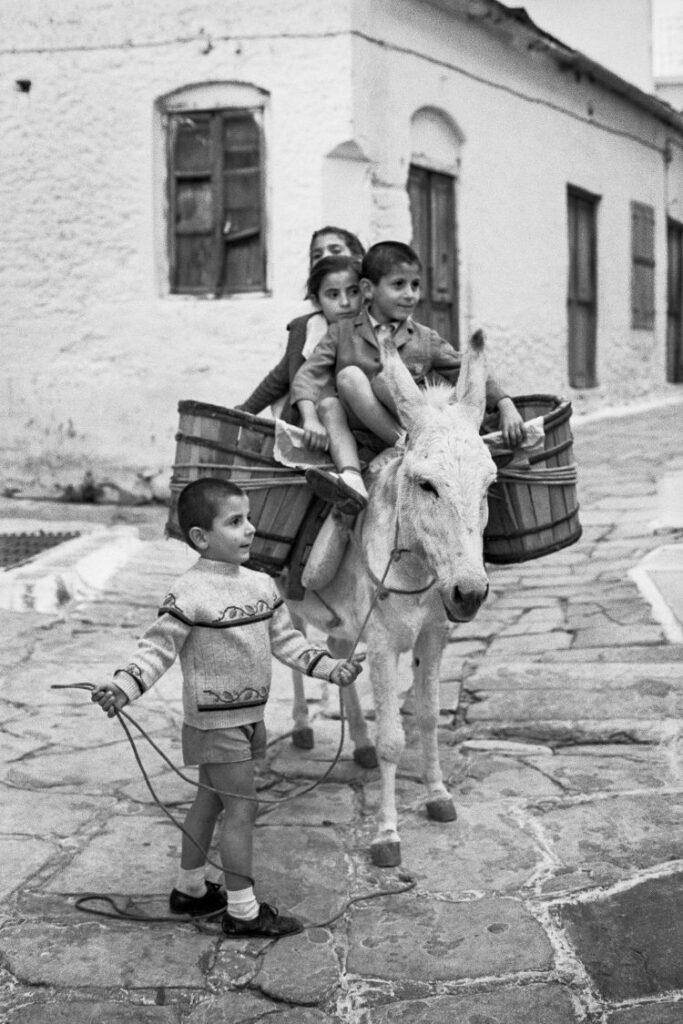
Of course, the sea was everywhere, and many of my photographs show people interacting with it. The sea certainly becomes, as you say, a “character” when you are at sea in 8 Beaufort.
There is a sense of simplicity in your images, almost a feeling of self-sufficiency. What did that Greece teach you about what it means to have “enough”?
The Greek islands are a wonderful example of self-sufficiency. Imagine the era before motor ships and modern means of transport, and the need to have water supplies and agricultural land sufficient to feed the population. It required resourcefulness and a great deal of physical effort. The terracing speaks volumes.
Is there a person you photographed whom you have never forgotten? What stayed with you from that encounter?
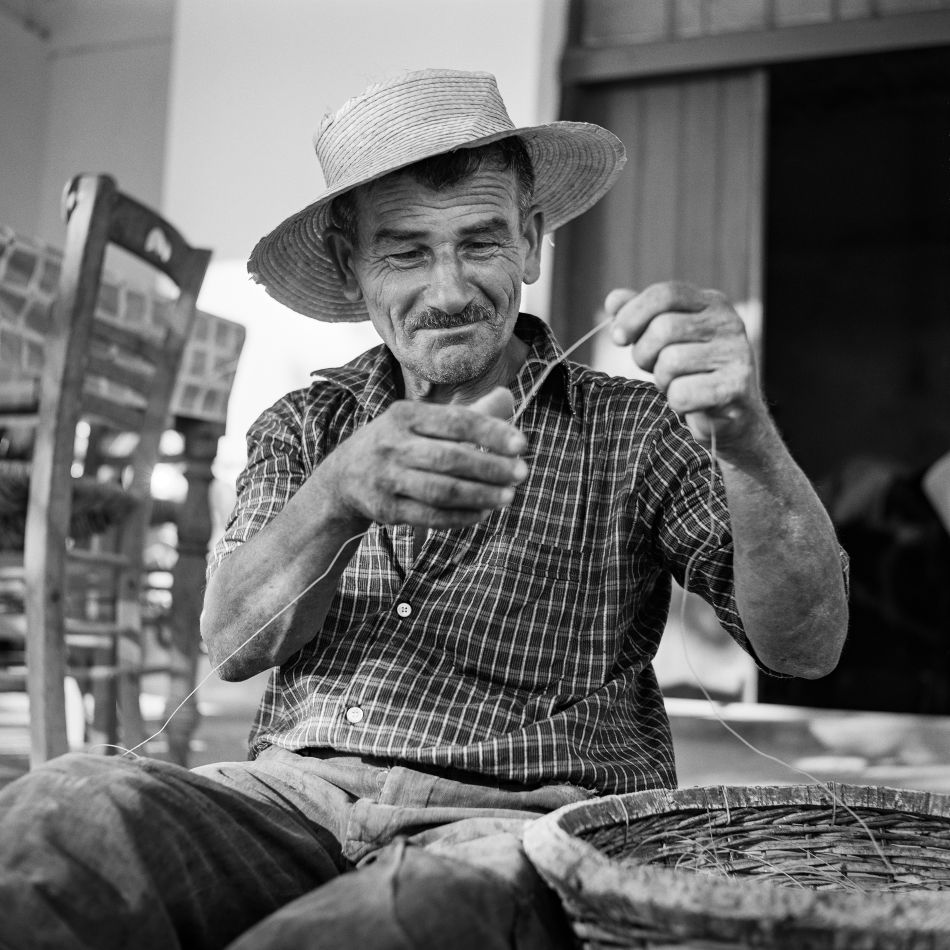
There are many examples, but one stands out. It was Father Gregory, the lone monk who maintained the monastery in the Strofades single-handedly for 39 years. Together with Katerina Lymperopoulou, we made a book about him, The Last Monk of the Strofades, which received an award from the Academy, something we are very proud of.
If you were to return today to the same place where you took one of your favourite photographs, would you feel the need to photograph it again, or to leave the image as it is?
I would probably photograph it again. To create a record of change or to evoke a memory.
If your work were a journey by boat through the Aegean, what would be its first and its final stop?
The first stop would be Sounion, with a pause in the shelter of the promontory of the Temple of Poseidon if the winds were strong. The final stop would be Kastellorizo.
Which image from your work would you want someone to encounter “from the deck” of a boat, as they approach an island?
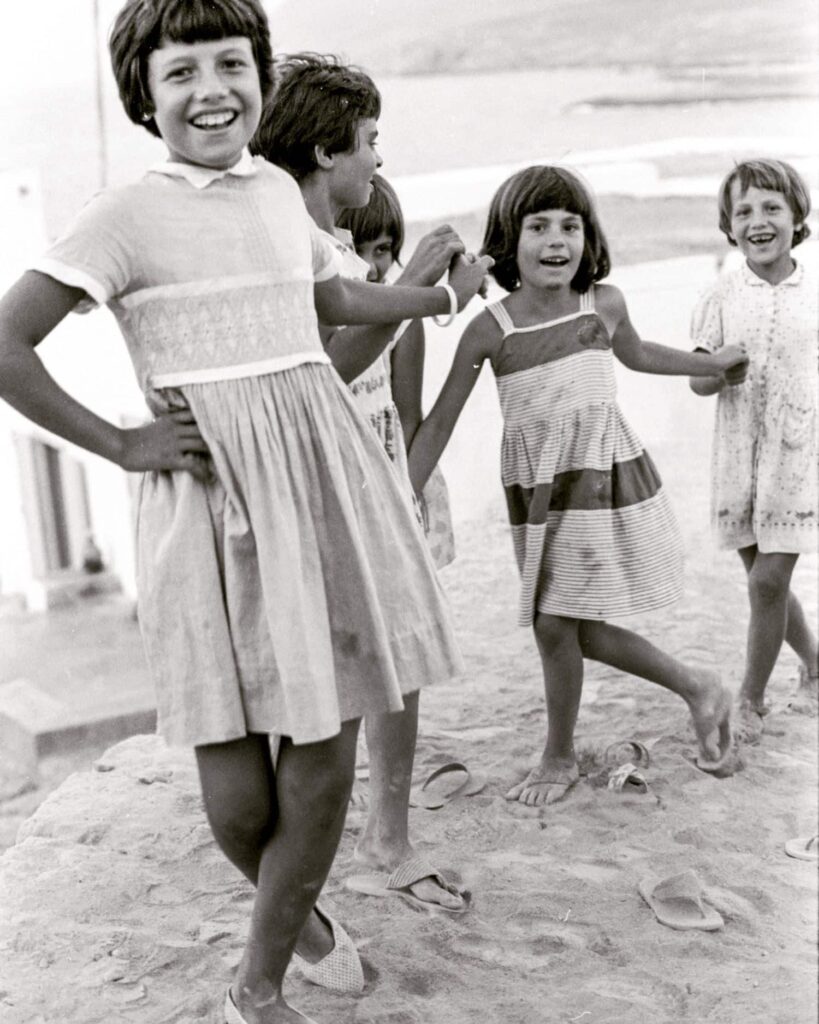
The Kasos dancers. That was the welcome I received when I first visited Kasos in 1965.
What did Greece teach you that no other country could have?
The value of family.
Info
Memories from the Aegean by Robert McCabe
March 28 – September 30, 2026
Art Space Porto Aoussa, Naoussa, Paros
The exhibition is hosted by the Environmental and Cultural Park of Paros. Curated and designed by Kostas Vidakis and Maria Somaripa.
Robert A. McCabe’s photographic album titled Aegean Memories/ Η Μνήμη του Αιγαίου is published by Patakis Publishers.
The bilingual edition brings together 300 photographs from his travels across the Aegean beginning in 1954, offering a complementary visual narrative of his photographic journey.