 elc team
By Sofia Triantou
A journey through 3,000 years of Greek culinary tradition. From Minoan ovens and Byzantine bakeries to today’s kitchens, bread with thyme remains a symbol of simplicity, care, and the deep connection between flavor, place, and wellbeing
Bread has been, for the Greek world, the most constant substance of nourishment: the beginning of the day, the foundation of every table, and I would say the first gesture of hospitality in earlier times. I will never forget being welcomed in a mountain village in Crete, in a traditional taverna, with wood-fired bread sprinkled with olive oil and local thyme, homemade cheese, and a tomato cut into quarters. The simplicity of that moment made me understand the value of quality ingredients. I wanted nothing else.
Alongside the simplicity of bread, the aromatic presence of thyme is a deeply rooted habit, with a history spanning more than 3,000 years. From the earliest agricultural settlements of the Aegean to the Minoan ovens, thyme appears as an ally of humankind: kneaded into dough or used as a seasoning to enhance flavor, but also to help preserve it in eras when food supplies had to endure without other methods of protection against microbial spoilage. Thyme contains bioactive compounds with anti-inflammatory and antimicrobial properties, qualities that science now clearly documents.
In classical Greece, the distinction between taste and health was nonexistent, a realization that feels strikingly timely today, and I would even say necessary. Aromatic plants were considered an integral part of a balanced diet, and thyme was associated with particular strength. From medical writers to the cooks of antiquity, references confirm that bread was not merely food for survival but a form of daily care: a kind of prevention practiced through the kitchen.
With the arrival of Byzantium, bread acquired even deeper meaning. It was used in ceremonies and celebrations, in everyday life and major events. Herbs-and thyme in particular-were now systematically recorded as ingredients that “keep food good,” preventing spoilage and offering each place its own aromatic identity. In the folk traditions of the islands and mountainous regions, this relationship was never broken. Thyme remains a natural preservative, a marker of place, and a humble form of prevention for stomach and breath. The women of the countryside used to say that bread with thyme “sits better” and “keeps longer.” Today, science acknowledges what they intuitively knew: the antimicrobial properties of thyme slow the growth of unwanted microorganisms in food and support the normal function of the digestive system.
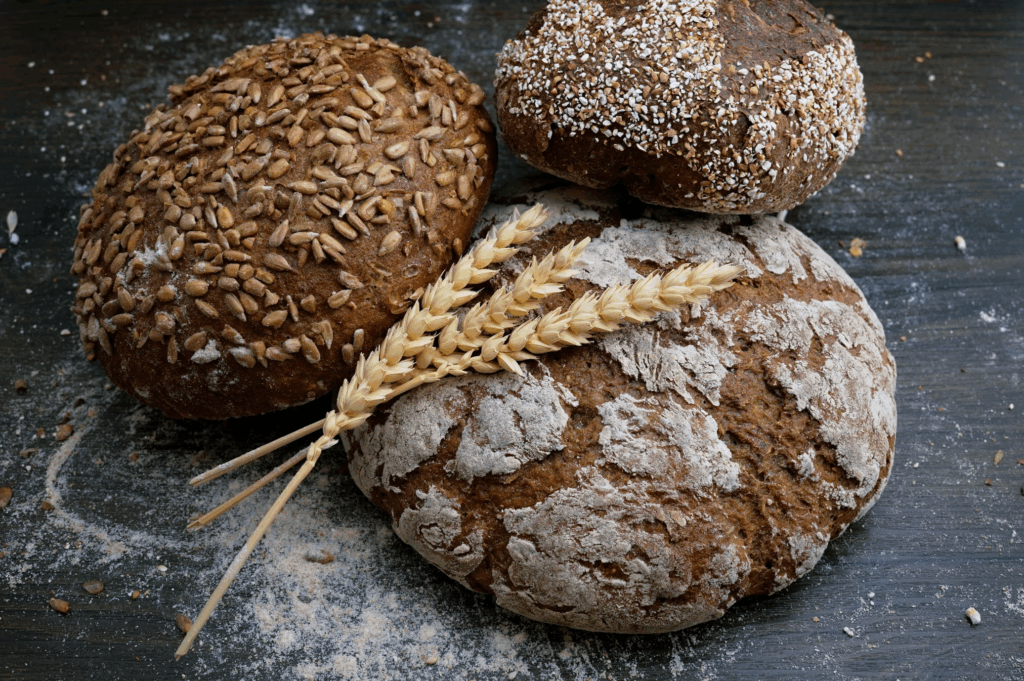
What is especially interesting is that thyme does not exist in a single form but in many. From the dense, intense thyme of the Cyclades to the varieties of the mountainous regions, every Greek landscape produces its own aromatic identity which, when added to dough, becomes a bite of place.
From Minoan ovens and Byzantine bakeries to today’s kitchens, thyme in bread unites practicality, flavor, and care. It is striking how something so simple can become a map of tradition and memory for every region. After all, through our travels we all know the countless Greek customs surrounding the scenting and preparation of bread: small local habits that highlight the deep connection between bread and herbs.
How can we honor this culinary heritage today?
– By choosing bread from small bakeries, flavored with wild Greek thyme and sourdough.
– By getting to know the different varieties: Cycladic thyme for vivid aroma, Cretan thyme for depth.
– By pairing it with local cheeses, olive oil, and seasonal vegetables, just as people did in earlier times.
A piece of bread with thyme reminds us that quality and care fit within even the smallest daily ritual.