
 Pepi Nikolopoulou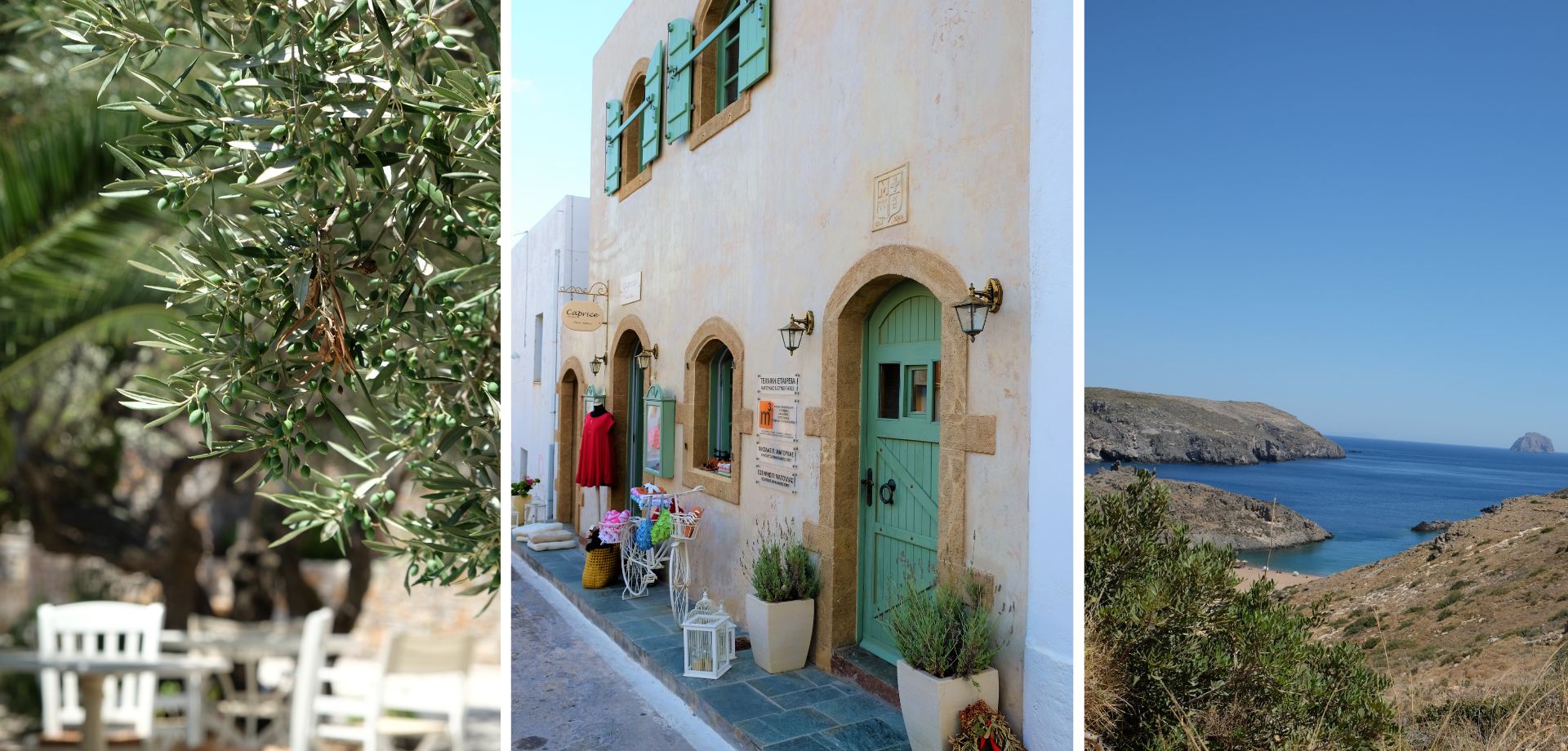
It’s not the kind of place that usually makes it into your top 5 summer plans. It’s distant. Demanding. But worth every single kilometer you travel to get there. You don’t just arrive at Kythera—you find it. And once you do, you feel it. It’s not easy, nor does it reveal itself right away. It asks for effort, winding roads, uphill walks, and wandering. Tsirigo to the Venetians, or the island of Aphrodite to the ancients—rugged at first glance, yet utterly, hopelessly lovable.
Though the island has long distances and an extensive road network, you can absolutely savor it in just 2–3 days.
Departure – Day One – A Visit to Chora
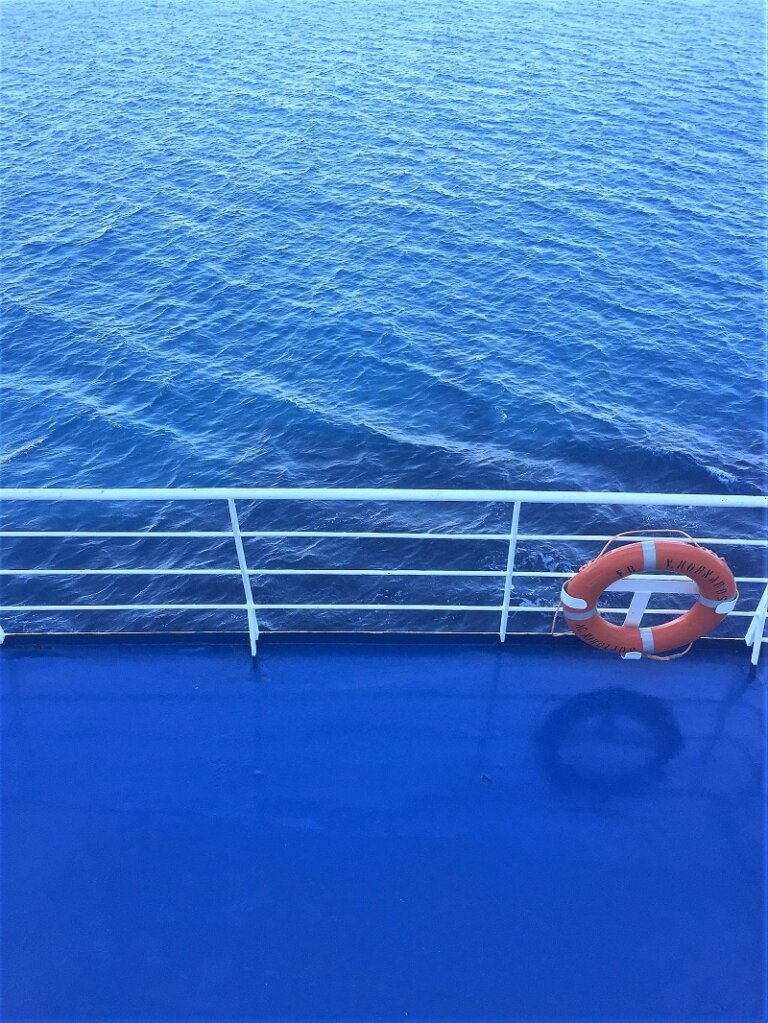
Twenty years ago, I first reached Kythera via Gythio (ferries also depart from Neapoli). This time, I chose the comfort of a cabin from Piraeus on the Vincenzo Kornaros, and a few restful hours later, I arrived at the port of Diakofti, with the sea breeze still fresh on my face.
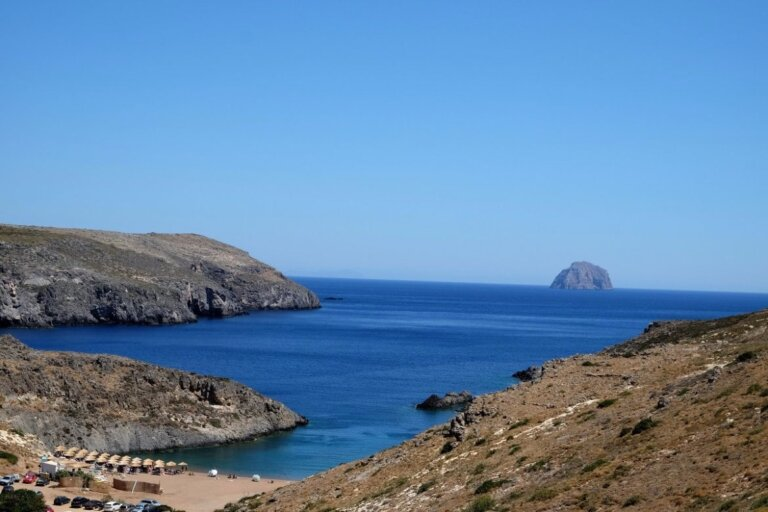
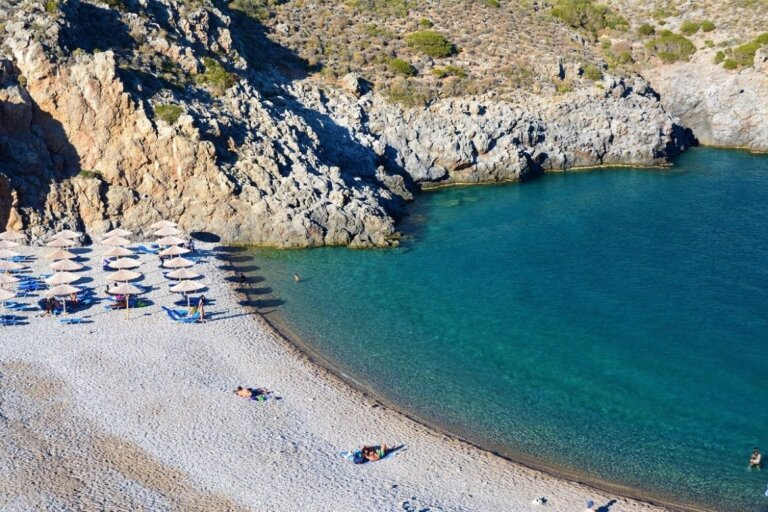
First stop: Melidoni. Me, my book, and my camera. A small bay with an organized beach—but peaceful. Fine sand, crystal waters, and a view toward Chytra rock. There’s a beach canteen that hosts parties day and night. An alternative way to get there? Hop aboard Captain Spyros’ boat from the little port of Kapsali.
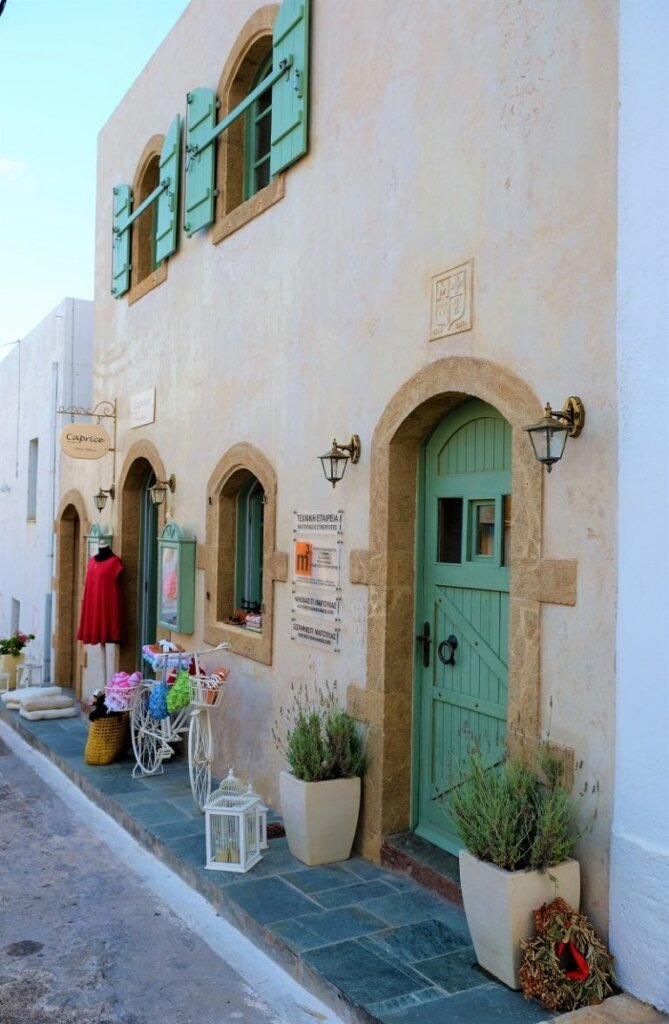
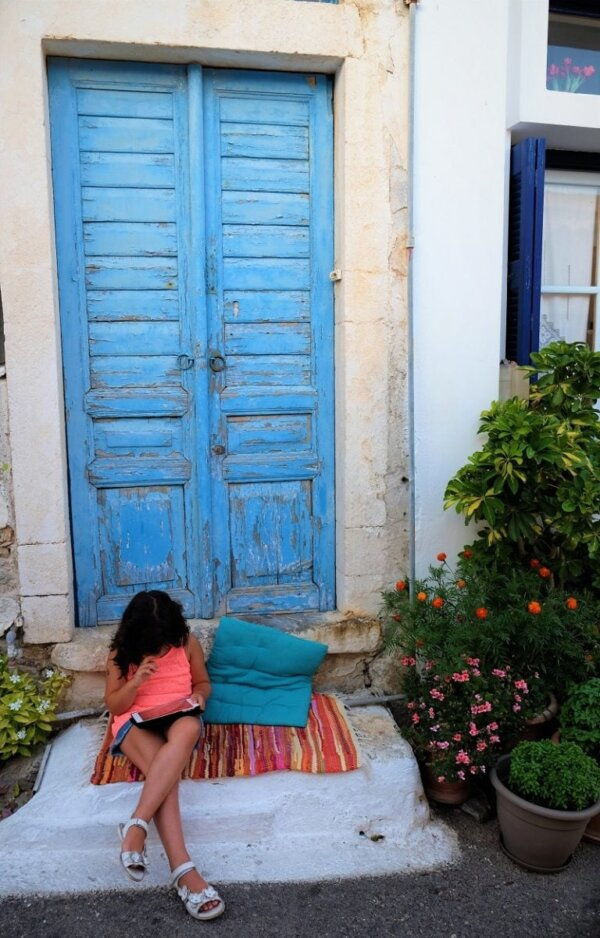
Even though it was still afternoon and the sun was high, we couldn’t resist heading to Chora. Mostly pedestrian, full of charming corners and small boutiques for every taste. Built on the southern side of the island, perched above Kapsali, this traditional village preserves its old-time architecture: narrow alleyways, whitewashed houses, and archways with a Cycladic breeze.

Chora has two squares: the first with all public services, banks, and the Town Hall. The second—Plateia Estavromenou—is where, in 1799, the French proclaimed the ideals of the French Revolution and established a republic after burning the Libro D’Oro, the Book of Nobles.
Day Two – The Cave of Agia Sofia
Next morning: destination Cave of Agia Sofia. A must-see.
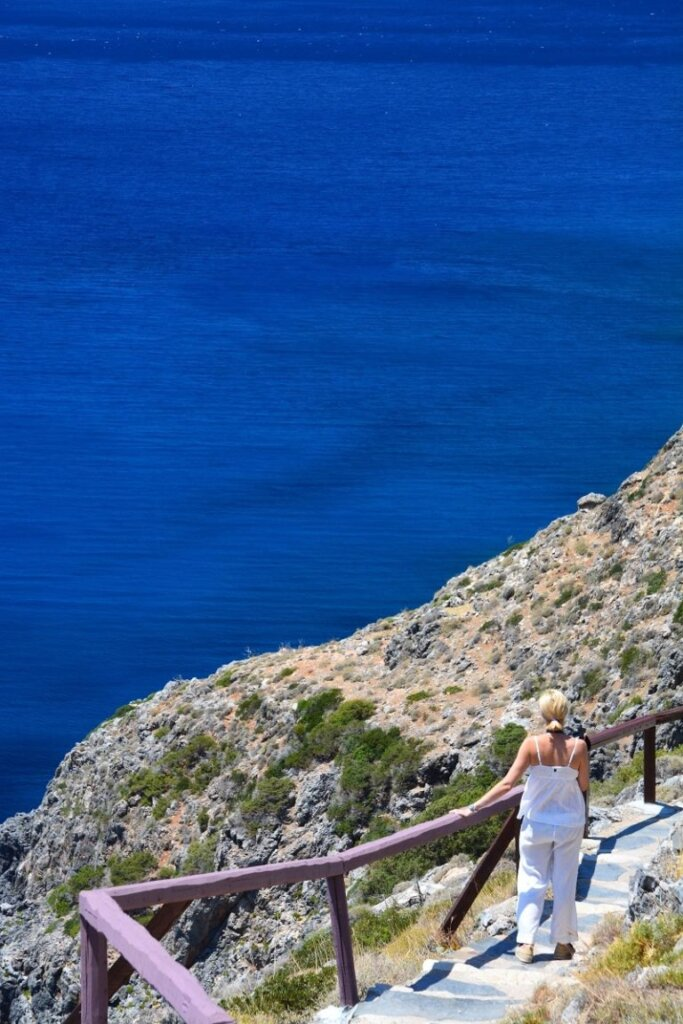
Located a few kilometers from the picturesque village of Mylopotamos, en route to the beach of Limnionas. You park on the roadside and descend a small path. Cliff on your left, clear signage along the way. Tours depart roughly every hour. The guides are deceptively casual at first—but their knowledge and passion will leave you speechless.
At the entrance, you’re greeted by life-sized frescoes of saints from the 13th century. Inside, stalagmites and stalactites offer a silent lesson on the meaning of time. Two names you’re bound to hear—if you don’t already know them—are Giannis and Anna Petrocheilos.
Born in different eras in Smyrna, they fell in love and married young. She adored mountaineering and was the first woman to summit Mount Olympus and the first Greek woman to climb the Alps. He loved caves, geography, and exploration. Together, they studied in Sorbonne, then returned to Greece to gift us a new understanding of our geological heritage.
Together, they discovered over 1,000 caves in Greece and crossed the most treacherous cliffs. We owe the revelation of this natural masterpiece to them.


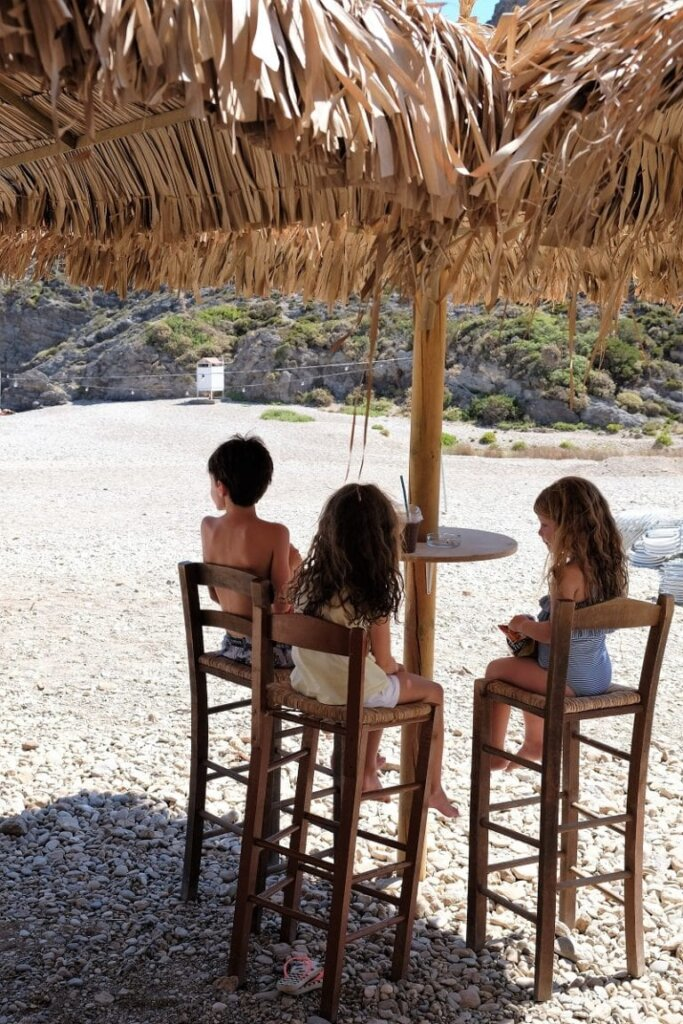
For a swim, we headed to Chalkos, a moderately organized beach with all the essentials. The rocky coast is perfect for diving. One of the island’s most popular beaches—be warned in August. Clear turquoise waters and a charming canteen await, ideal if you’re staying late.
Nearby lies Kalamos. After a swim, a quick visit to Filio’s Taverna, which had come highly recommended. A cozy and satisfying choice, serving delicious homemade food.
Evening drink? Back to Chora at the legendary Mercato, the nightlife hotspot since the 1990s. Lounge by the stone wall, or sit in the cobblestone alley on a cushion. The night begins with jazz and soul—and lasts as long as you can keep up.
Day Three – The Waterfall of Fonissa and Avlemonas
Car packed again, destination Mylopotamos—the village of legends and folklore. We were a bit late, and the day was hot, so it’s best to get there early to enjoy a morning coffee under the plane trees before the buses and noise arrive.
Our goal: the Fonissa Waterfall (also called the Fairy’s Waterfall). I remembered it as something magical. Twenty years ago, I swam in its icy waters. According to legend, it’s named after a murder: two women argued at the top of the cliff—one pushed the other, who fell to her death. The place had an eerie charm, a fairytale aura. A ravine full of paths, poplars, and plane trees—a true oasis.
But this time, the magic had waned. The water had dried up, and the once-vibrant woodland felt abandoned. A disappointment. Maybe next time.

In the afternoon, map in hand, I set off for a mini road trip through Kythera’s mountain villages—starting with a quick visit to Avlemonas, perhaps the island’s most beautiful seaside village. Located on the eastern coast, full of scenic coves. A swim at Kaladi is essential—just before reaching Avlemonas. For many, it’s the best and most famous beach on the island: pebbled, with pristine blue-green waters.
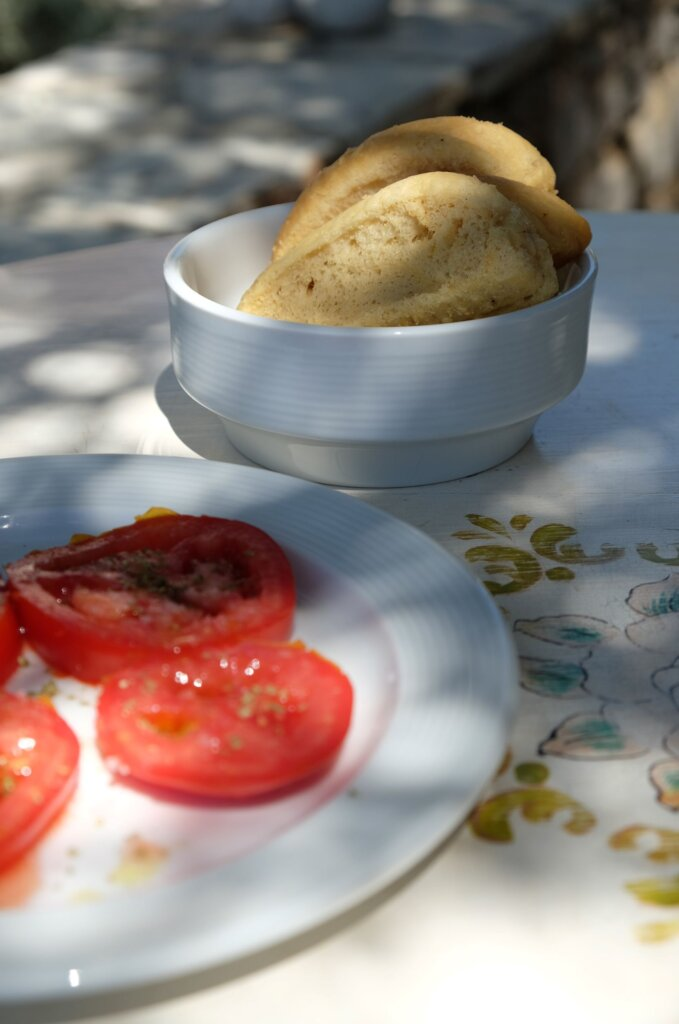
For the record, just off Avlemonas in September 1802, the ship Mentor sank—Lord Elgin’s vessel carrying the Parthenon Marbles. The sculptures rested at the bottom of the Kytherian sea before being recovered by Maltese divers. Dinner at Psomoladea, a fantastic local restaurant. “Psomoladea” is also the name of a traditional Kytherian salad—hearty and delicious.

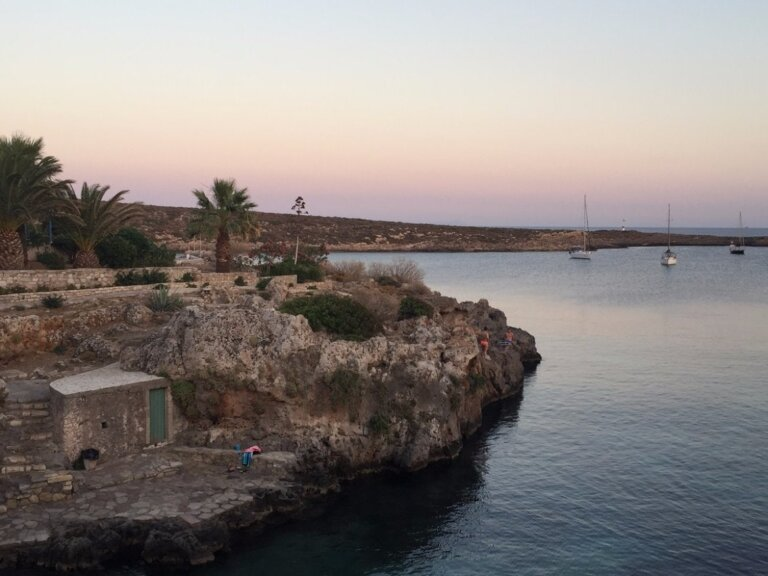
We continued to Mytata (from mitato, meaning shepherd’s hut), the oldest inhabited village on the island and once its agricultural heart. There we bought outstanding honey from Ola Meli Gala before heading to Pitsinades and Aloizianika, ending up in Fratsia—a village with a single square that’s worth visiting for Familia Tavern.
Expect big groups and couples alike—great food, a setting that feels like a scene from an Italian movie. Classic recipes with a twist. And yes, we ate again—something light, of course.
A Journey to Kythera
A must for those in search of unspoiled corners of the world. For those who want to step away, just for a while. A place where all roads lead to the same destination: yourself.
“And always it waits again for the moment to return
when the boat will appear in the harbor
like a sea bird in our dreams.”

